








Wellness Takes Center StageMarch 1, 2026
Reinvigorating Meetings & Events By Kathy MonteWellness Takes Center Stage
Reinvigorating Meetings & Events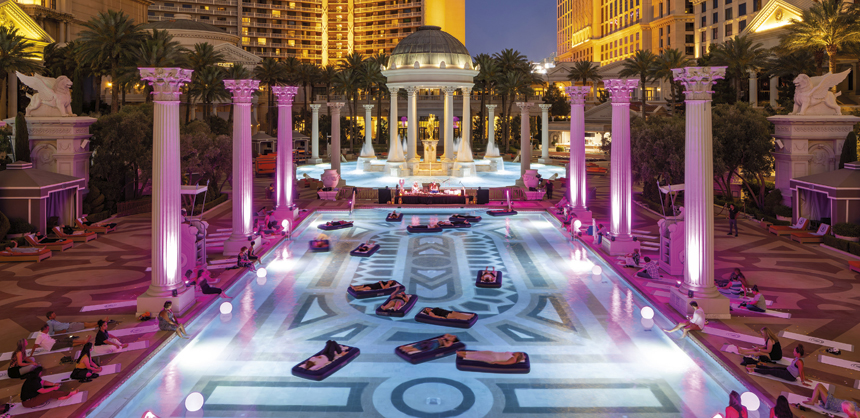
The Caesars Entertainment Wellness Summit showcased options such as this sound bath at Caesars Palace in Las Vegas.
The meetings, events and incentive travel industry is undergoing a fundamental shift in how organizations approach employee well-being. Once considered optional perks or nice-to-have amenities, wellness offerings have evolved into strategic imperatives.
For planners and corporate leaders alike, wellness is no longer about adding a yoga class; it’s about designing experiences that genuinely restore people.
The 14th annual Amex GBT INTER[action] conference, held at the end of last year at Caesars Forum in Las Vegas, showed how wellness can be integrated to meet the needs of attendees. This was the first time this group had convened there for the flagship program. More than 1,050 attended, including approximately 550 planners and 500 supplier partners, 70% from North America and the remainder representing markets around the world.
Caesars Entertainment has positioned itself as a thought leader in meetings wellness, supported by its comprehensive Meetings Wellness Guide, and this commitment was fully activated during the Amex GBT conference. Wellness programming drew strong engagement, and it aligned closely with insights from the Amex GBT 2025 Global Meetings & Events Forecast, which identified wellness-centered agendas as a major trend shaping future meeting design.
Megan Wilson, co-founder of Pneuma Lab, motivational speaker and mindset expert, kicked off the wellness programming with a keynote that concluded with a guided intention-setting exercise for the conference.
Pneuma Lab also participated in the Caesars Wellness Lounge, offering a Clarity Ink activation. Participants selected a design or word, articulated a personal intention and received a temporary tattoo as a take-home reminder, creating a meaningful personal moment and a visible conversation starter on the show floor.
Purpose-Driven Givebacks & Sensory Engagement
Caesars’ wellness philosophy extended beyond sessions to intentional attendee gifts. Conference gift bags were provided by Sudara, a certified B Corporation nonprofit that creates employment opportunities for women in India who are survivors of, or at high risk for, sex trafficking. Crafted from recycled sarongs, the bags reinforced Caesars’ commitment to social impact through meetings.
Another popular Wellness Lounge activation was an interactive gifting station where planners selected a reed diffuser from three customized fragrances, while learning how scent can be used strategically in meetings to influence mood, focus and memory. The experience was powered by Scentex, a wellness partner featured in Caesars’ Meetings Wellness Guide, that specializes in “scentscaping” environments and scent-based attendee gifts and activities.
“Today, we are becoming saturated by artificial intelligence and relentless audio and visual noise; our greatest opportunity lies in returning to the human body. By engaging our senses through thoughtfully curated sensory experiences, we reclaim presence, connection and a deeper awareness of what it means to be human,” says Tiffany Rose Goodyear, founder and CEO of Scentex.
Aura readings were also offered, with practitioners using aura imaging and interpretation to discuss participants’ current mind-body-spirit balance, energy levels and stress indicators.
Collectively, these experiences, paired with healthy food offerings, created an environment designed to support focus, presence and connection throughout the conference.
Unlike many conferences where wellness is relegated to early-morning sessions with limited attendance, Caesars and Amex GBT integrated wellness at high-impact moments. Activities were scheduled after lunch, immediately prior to the closing general session. Participation exceeded expectations, with more than 200 attendees at each experience.
“Part of the success of these activities had to do with timing, says Palmisano. “In years past, there were opportunities to do yoga by the pool or join the morning walk, but we did not see as much adoption, as it was early morning before the day started, and what we realized is that mornings are sacred — preparing for the day, connecting with families and friends back home or perhaps joining a colleague for breakfast,” says John Palmisano, senior manager, global business partner enablement, AMEX GBT Meetings & Events. “Programming the health and wellness during the day was intentional and those sessions were packed. We are already discussing adding activations for our future events like sound bath sessions and whole-body vibration chair pods. The more attendees can be recentered throughout the day, the more they will get out of their experience, resulting in positive results.”
Carolina Panoff, founder and CEO of Be You Disco, curated an immersive silent disco experience on the plaza outside Caesars Forum. The guided dance journey blended movement, mindfulness, creativity and connection.
“The silent disco brought a large circle of people with their eyes closed on a warm sunny Las Vegas afternoon at The Forum, just soaking in the content being provided,” says Palmisano.
“Everyone opted into the relaxation and focus content. It provided them a mindful break and prepared them for the balance of the day. Our attendees raved about the activations, and realized it was something they were craving, even if they didn’t realize it.”
Sepideh “Sepi” Eivazi, somatic practitioner, wellness guide and founder of Dawn of the Earth, who is a recognized member of the Breathe Initiative Members at Global Wellness Institute, led a somatic breathwork session.
“Conscious leadership is defined by the ability to create safety, not control results,” says Eivazi. “Hospitality reflects this through nervous-system awareness — cultivating spaces where individuals feel grounded enough to participate fully. Truly effective events start not with schedules, but with intention and a regulated environment.”
Eivazi’s session was extremely well-received. “Attendees’ posture noticeably shifted in the room during the breathwork session. This was exactly what we had hoped for – that people could stop, re-center, focus and absorb the experience of what was planned for the General Session,” says Palmisano.
A Growing Commitment
“Wellness is part of the Caesars DNA, and I’m thrilled to watch our initiatives grow and help attendees feel less stressed and more grounded,” says Reina Herschdorfer, director of marketing, national meetings and events, Caesars Entertainment. “Our wellness offerings during Amex GBT truly resonated with the group, which was incredibly rewarding to see. We plan to continue expanding our Meetings Wellness Guide, which launched in 2024.”
By integrating wellness as a core design principle, not an add-on, Caesars Forum and Amex GBT demonstrated how intentional environments can illuminate both insight and human connection in today’s meetings.
“Not only is wellness a personal journey, but it is also great for attendees and the community as a whole,” says Herschdorfer. “Wellness activities change the dialogue of an event. They increase engagement and change the way you feel. They help a group connect better and build stronger bonds, leaving everyone recharged, reinvigorated and not exhausted.”
Market Dynamics & ROI
Global wellness tourism reached $651 billion annually and is projected to hit $1.35 trillion by 2028. The corporate wellness market, valued at $53.54 billion in 2024, is expected to reach $63.9 billion by 2030. Most telling is the corporate retreats segment, which surged from $31.8 billion in 2024 to a projected $73.7 billion by 2034, reflecting a robust 9.1% compound annual growth rate.
These numbers represent more than market opportunity; they signal a reallocation of corporate priorities. According to EPIC Insurance Brokers & Consultants’ “Trends in Workplace Wellness” Report, 87% of companies now maintain formal wellness programs, up from 61% in 2020. Among Fortune 500 companies, adoption reaches 87%, while participation among small businesses climbed from 34% in 2021 to 58% in 2025. Organizations now invest an average of $650 per employee annually in wellness-related benefits, with 41% planning to increase spending over the next two years.
The ROI supports this investment. Ninety-five percent of HR leaders tracking wellness returns report positive outcomes, with more than half achieving returns exceeding 100%, according to Wellbeing Navigator. These gains show up across productivity, retention and healthcare costs: companies with structured wellness programs report 28% lower turnover and 21% higher productivity than those without formal support systems.
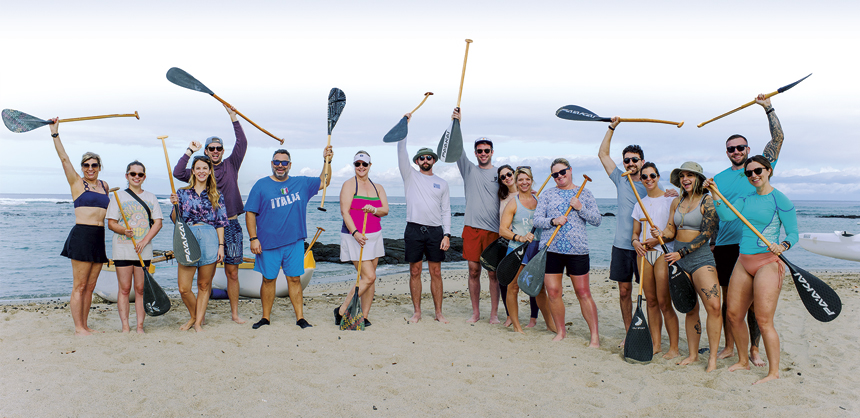
Offering incentive programs like this one from Olympian Meetings is a great way to keep your team feeling refreshed and motivated. Photo courtesy of Joanna Salazar
From Crisis Response to Mental Fitness
Mental health has moved from a standalone benefit to a core pillar of wellness strategy. Seventy-five percent of corporate wellness programs now include mental and behavioral health support — up from 52% in 2023. More importantly, the focus has shifted from crisis intervention to proactive mental fitness.
The Global Wellness Summit identifies “the rise of neurowellness” — regulating the nervous system — as wellness’s next frontier. Somatic practices such as breathwork, mindfulness and nervous-system regulation are becoming mainstream and increasingly incorporated into meetings, conventions and incentive programs.
A nervous system reset was featured at Caesars’ activation at this year’s PCMA Convening Leaders. This clinically-backed, therapeutic virtual reality experience is called Novobeing. David T. Stevens, co-founder of Olympian Meeting, was on hand to help.
“Novobeing is a fast nervous system reset that helps attendees drop into a more parasympathetic state, so their working memory and attention stop getting hijacked by stress, and they can actually absorb what they are hearing,” says Stevens.
“Wellness activities are game-changing from an ROI standpoint. One of the biggest takeaways from Freeman’s study last year was that people are looking for reduced cognitive load at events. This experience is designed to deliver exactly that so people walk away from an event with more knowledge and more value,” says Stevens.
A Wellness Retreat Offers Myriad Options
Lucine Sihelnik, founder of Gayatri Wellness, a sustainable community organization focused on fostering healthy living initiatives, brought an executive women’s retreat to The Lodge at Woodloch in Hawley, PA, in January. The all-inclusive luxury destination spa, set on more than 500 wooded acres with a private lake in Hawley, Pennsylvania, offered a turnkey environment designed for restoration and connection.
With 59 guestrooms, a 40,000-sf spa, a gourmet restaurant, comprehensive fitness programming and a robust lineup of educational forums, the property allowed attendees to personalize their experience. “This is the ideal setting for a retreat,” says Sihelnik. “Experiences are already thoughtfully curated, and our attendees could opt in or opt out. There’s a full schedule in place, so I didn’t have to build everything from scratch.”
Programming ranged from outdoor activities and spa treatments to classes such as tea ceremonies, journaling and flower arranging. “There truly is something for everyone,” Sihelnik adds. Additional amenities include a light-filled cardio and weight-training studio, spinning and rowing rooms, yoga and meditation studios, and dedicated dance and fitness spaces. Spa services emphasize natural ingredients and draw from European and Far Eastern traditions, as well as indigenous healing practices.
For group gatherings, meeting options include the 1,350-sf Fireside Room, featuring abundant natural light and state-of-the-art AV, the River Birch Board Room and several outdoor venues ideal for reflective or movement-based sessions.
The retreat opened with a welcome dinner in the property’s private chef’s kitchen. “Meals here are just spectacular,” says Sihelnik. “Every meal reflects a commitment to sustainable, farm-to-table cuisine.” The space was reserved exclusively for the group, creating an intimate setting that reinforced both community and well-being from the outset.
Wellness Lounges: A Meetings Industry Response
One of the most visible wellness innovations in meetings and events is the rise of wellness lounges and recharge zones.
The Brand Advocacy Summit, sponsored by Duel, was a one-day event held at Lightning Society in SoHo, New York City, bringing together brands including Bath & Body Works, Steve Madden, Beekman 1802, Amika, M.A.C., Loop Earplugs and MCoBeauty.
“As an advocacy-driven company, incorporating wellness is a natural extension of who we are — advocating for the best possible experience for every guest,” says Lauren Sawyer, senior field marketing manager at Duel.
That philosophy translated into tangible design choices throughout the event. A wellness lounge was positioned on the main floor near the stage, offering attendees a place to reset without stepping away from the programming. The space featured an herbal tea station serving blends from Noah Wellness, rooted in traditional Eastern remedies. The company’s founder — whose father is a Chinese herbalist — was onsite to prepare the teas and explain their restorative properties.
To further support attendee well-being, an esthetician provided five-minute hand massages, creating brief but meaningful moments of calm during a full day of sessions and networking.
“When we’re asking people to spend an entire day with us in a busy, high-energy environment, we’re intentional about being inclusive of everyone’s energy levels,” says Sawyer.
That mindset extended beyond the event space itself. Gift bags included Loop sound-dampening earplugs, acknowledging sensory overload as a real consideration for attendees.
“Incorporating wellness into our events isn’t negotiable for us — it’s a core initiative,” Sawyer says. “One of our company values is creating remarkable experiences, and a thoughtful event is one where people feel genuinely cared for. As Maya Angelou said, ‘People will never forget how you made them feel.’ We make sure our attendees feel seen and supported.”
What Attendees Expect in 2026
Wellness expectations continue to rise across generations. “People want wellness included in the agenda — not just through short stretch breaks, but woven throughout the entire event experience and long after they’ve hung up their lanyard,” notes Hilton’s 2026 research. “The best meetings won’t just place wellness at the forefront — they’ll create itineraries that leave people refreshed, recalibrated and ready to take on what’s next.”
As with any element of a meeting, it’s important to understand your audience. “Some trends are an obvious fit for certain demographics, but knowing your audience is key. Another key consideration is providing choice or options when possible. With so many age groups we cater to now, gone are the days of one size fits all… personalized experiences resonate now,” says Jacqueline Beaulieu, HMCC, MMP, senior director, marketing, advocacy and client strategy, Poretta & Orr, Inc. | Exhibits & Events. “We’re seeing everything from healthier food options and less focus on alcohol to tea stations and dedicated wellness zones that include meditation and quiet spaces. I even took part in a singing bowls session recently that was designed to be soothing and grounding.”
“In addition, there is a growing trend on movement-based activities like guided walks, morning stretch or yoga sessions and outdoor networking when the location allows. Sensory wellness is becoming more intentional as well, with softer lighting, natural materials and sound design being used to reduce noise and create calmer environments. There is also a noticeable rise in mental wellness programming, including short resilience or mindfulness workshops woven into the agenda rather than treated as optional add-ons,” says Beaulieu.
“I did not invent the trend, but I may have given it a name. I have started calling it “netwalking” suggesting a walk instead of a traditional coffee meeting. It seems to resonate and aligns well with the broader focus on movement, wellness and low-pressure connections. Walking side by side can create a more relaxed interaction, and the conversations tend to feel more relaxed and more memorable,” says Beaulieu.
Today’s food-and-beverage offerings at meetings and events must include genuinely healthy options. This is no longer a “nice to have” — it’s an expectation. In addition, wellness-minded attendees are increasingly prioritizing clarity, energy and balance over late nights at the bar, prompting planners to rethink what connection and celebration look like in a healthier context.
The Art of Living Retreat Center, tucked into Boone, NC’s Blue Ridge Mountains, offers a telling example. Once an occasional choice for corporate retreats due to its alcohol-free policy, the center has grown more popular as organizations embrace sober-curious and wellness-forward programming. What was once viewed as a limitation is now a differentiator.
“We’re seeing a clear shift in corporate meetings toward experiences that support mental health, stress regulation and meaningful connection,” says Kelsey Daniels, workshop sales and partnerships specialist, Art of Living Retreat Center. “Teams don’t just meet here, they experience a true reset. When people step out of traditional conference settings and into a space designed for mindfulness, nature and intentional pause, the conversations change. Teams leave not only aligned on strategy, but genuinely refreshed, more connected and able to return to work with greater clarity, resilience and focus.”
The Art of Living Retreat Center can accommodate up to 600, with a gathering hall that can host up to 3,700 attendees, making it viable for large-scale meetings and incentives. Beyond meeting space, the property is designed for restoration and meaningful connection. Amenities for downtime and teambuilding include daily yoga and meditation sessions, extensive hiking and nature access, an on-site Ayurveda spa and creative experiences, such as pottery classes in a dedicated studio, all reinforcing a more intentional approach to wellness-driven events. C&IT