








Smooth SailingSeptember 1, 2026
Why Planners Choose Meetings & Incentives at Sea By Maura KellerSmooth Sailing
Why Planners Choose Meetings & Incentives at Sea
Cruise ships are ideal for meeting and incentive programs as they combine dining, entertainment and networking.
Once viewed primarily as leisure vacations, cruises have evolved into sophisticated venues for meetings and incentive programs. Corporate planners who regularly host events at sea say today’s ships deliver predictable budgets, built-in networking, flexible meeting space and memorable experiences that keep planners and attendees coming back for more.
For decades, planners looking for the ideal meeting destination typically compared hotels, resorts and convention centers. Today, an increasing number are adding another option to the shortlist: cruise ships, which have evolved well beyond floating vacation resorts. Equipped with dedicated conference centers, advanced audiovisual capabilities, multiple dining venues and increasingly sophisticated wellness and entertainment offerings, today’s ships allow organizations to merge business objectives with immersive travel experiences while simplifying many of the logistical headaches of traditional meetings.
“What we’ve found is that every company wants their people to feel like they earned something special,” says Jennifer Kijewski, account manager, Meetings + Incentives at Cadence in La Jolla, CA. “A resort — even a beautiful one — can start to feel familiar. A ship is a destination in its own right.”
That sense of occasion is exactly what has made cruising a fixture of Michael Medoro’s business. As president of Aspect Marketing and Communications, Inc. in Cleveland, OH, Medoro has built cruise-based educational conferences for corporate human resources professionals into a core offering, and he’s watched the format graduate from a novelty to an expectation. “Cruising is a very budget-friendly venue,” Medoro says. “We started out only having five-night sailings and now are doing seven-night sailings. The conversation about the optics of holding a conference on a cruise hardly ever comes up anymore.”
One Contract, One Venue, One Budget
Kijewski and Medoro are hardly alone in citing operational simplicity as the biggest draw for hosting corporate gatherings at sea. Unlike a land-based conference, where planners may negotiate separate agreements for guestrooms, meeting space, catering, transportation, audiovisual services and off-site venues, cruises often consolidate those elements into a single contract.
“From the planning chair, the biggest gift is simplicity,” Kijewski says. “One master contract, one operations team, one timeline. On land, you’re juggling a hotel, a catering vendor, an AV company, a transportation provider and an off-site venue. On a ship, that all lives under one roof.”
Wendy Pangburn, president and executive travel advisor of Pangburn International, LLC in Washington D.C., discovered those advantages more than three decades ago. Her first meeting at sea, aboard the former Sea Goddess, came after a client suggested that combining executive education with a cruise might improve attendance. “I was in so over my head that I said, ‘What the heck, let’s give it a try,’” Pangburn recalls. The results surprised everyone. She says, “Meeting at sea was far less of a travel burden on my staff and was far more attractive to the client and, most importantly, to accompanying spouses.”
Three decades later, that early gamble has hardened into a planning philosophy. Pangburn now considers the all-inclusive nature of cruising one of its greatest advantages: “Budgeting in advance is far easier on an all-inclusive cruise package. I know what the accommodations will cost, what the food will cost, and there are no billing surprises at the end of the program.”
Kijewski, whose clients often need board-level sign-off well before a program is finalized, agrees the bundled pricing changes the tenor of those conversations. “When a client can see the full cost up front, planning gets calmer and approvals get faster,” she says. “Attendees never feel nickel-and-dimed.”
A Built-In Networking Environment
Beyond logistics, planners consistently point to a factor that’s difficult to replicate on land: attendees stay together throughout the program, continuing to interact during meals, entertainment, excursions and casual onboard activities rather than dispersing after sessions end. Medoro calls networking the single biggest benefit attendees report back to him. “They are a captive audience — not meant to be funny,” he says.
Pangburn describes the same dynamic as a deliberate planning strategy rather than a happy accident. “Using a ship as a host hotel means we almost held our attendees captive — in a good way,” she says. “They were no longer wandering off looking for something to do. Instead, they were networking in the restaurants, at the bars, in the gym and at the education sessions.”
Brian Kellerman, CEO and co-founder of GoGather in Escondido, CA, has designed cruise incentive programs ranging from lightly structured recognition trips to complete ship charters, and he leans on that same captive-but-content quality when he’s building an itinerary.
“Attendees can unpack once and still experience multiple ports along the way,” Kellerman says. For more structured programs, GoGather often reserves exclusive lounges or private venues onboard for evening receptions, shows and hospitality suites. “It starts to feel much more like a traditional incentive program,” he says, “but with all the conveniences of a cruise.”
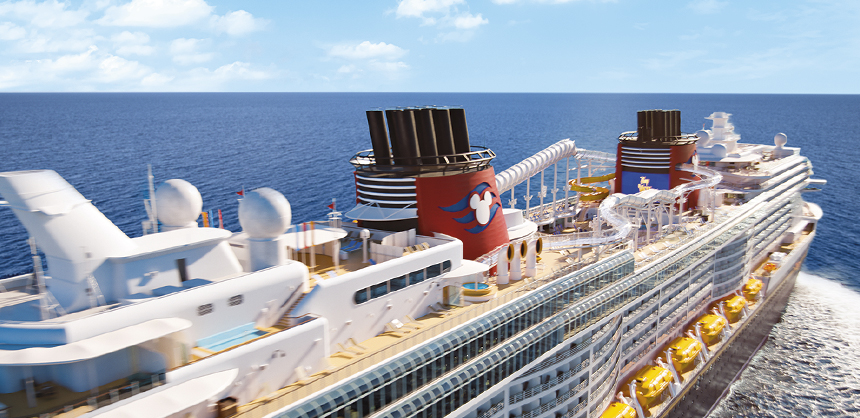
Disney Wish offers adults-only areas.
Matching the Ship to the Strategy
Selecting the right cruise line, planners agree, involves far more than choosing an appealing itinerary — it starts with the program’s objectives, the attendee demographics and the experience the organization is trying to create, then working backward to find the ship that fits. Pangburn says, “If you have a large contingent, you don’t want to be on a small ship where you’ll be limited with meeting space and private areas. But for smaller groups, you want the intimacy of personalized service.”
Those two filters — group size and meeting capability — are why experienced planners tend to gravitate toward different brands for different programs, and why knowing each cruise line’s real strengths matters more than chasing a glossy itinerary.
For mid-sized association and corporate audiences that want a familiar, aspirational destination, planners often point to Princess Cruises, which has built dedicated conference facilities into much of its fleet and sails Alaska, the Caribbean and Europe — itineraries that tend to resonate with incentive-qualifiers. Its wearable MedallionClass technology, which links attendees to reservations, dining and stateroom access, is the kind of detail Kijewski says quietly removes friction from a large-group embarkation without anyone noticing it’s there. Newer ships in the fleet, including Sun Princess, add multi-story atriums and group amenity packages, which may include a glass of complimentary wine, cocktail parties, shipboard credits, etc. — which planners can layer in as recognition perks without a separate line item.
When a program calls for genuine flexibility in how the day unfolds, planners frequently look to Norwegian Cruise Line (NCL). Its “Freestyle Cruising” model — no fixed dining times, no formal dress code — gives planners room to blend structured sessions with real unscheduled time, which several say shows up directly in attendee satisfaction scores. For executive tracks or VIP hospitality that need separation from the main group, NCL’s ship-within-a-ship enclave, The Haven, offers a private restaurant, lounge and pool deck, with duplex suites on the newer Prima-class ships suited to a small board retreat. Theaters like the Stardust Theater can seat roughly half a ship’s guest count for a single general session, while Studio B — built as an ice-skating rink — regularly gets converted into an unconventional stage for large-scale awards shows.
Value and access drive many planners toward Carnival Cruise Line, particularly for drive-to programs that cut air costs — Carnival sails from 13 U.S. home ports, including Miami, Galveston and Port Canaveral. Its Carnival Meetings & Incentives team can accommodate groups from 16 people to full charters of 3,500, with meeting space and standard AV equipment built into the group contract. Carnival doesn’t offer the multiple breakout rooms found on some ships, but its adaptable public venues — main theaters that convert between general sessions, award ceremonies and receptions — tend to suit the “out of the boardroom” atmosphere many companies are chasing, and its group coordinators can bundle in private departure lounges and pre-cleared boarding for VIP arrivals.
For a more upscale, contemporary feel, Celebrity Cruises markets its program under the banner “The Meeting Place,” scaling from intimate investor gatherings to full-ship charters on vessels with up to 1,500 staterooms. Planners running a leadership event often layer it into The Retreat, Celebrity’s suite-class enclave with its own restaurant and lounge, while the line’s Individual Incentive Travel Gift Certificates let companies reward top performers with a self-directed cruise rather than a fixed group sailing. On Edge-class ships, the cantilevered Magic Carpet platform — which repositions along the hull for dining, lounging or events — has become a signature venue for smaller VIP receptions that want a view no land-based rooftop can match.
Planners orchestrating family-inclusive incentive programs consistently turn to Disney Cruise Line. Its eight-ship fleet pairs Broadway-caliber entertainment with adult-exclusive pools, lounges and spas that keep business programming separate from family activity. On the Disney Dream, the Walt Disney Theatre seats roughly 1,340 for a keynote while the smaller Buena Vista Theatre holds about 400 for breakouts. Disney’s events team applies the company’s “Imagineering” process to corporate programs. For many companies, the ideal group size on newer ships like the Disney Wish is around 150 cabins or a full charter — large enough to feel like a proprietary event, small enough that Disney’s team can still customize character appearances and themed décor around a company’s brand.
For those who prefer an exclusively adults-only experience, Virgin Voyages is a great choice. They have four sophisticated and luxurious ships available: Scarlet Lady, Valiant Lady, Resilient Lady and their newest ship, Brilliant Lady, which allows for a wider itinerary, including places like Alaska and the Panama Canal, rather than just staying within the Caribbean and Mediterranean. Most of the cabins on all the ships feature a balcony and a hammock, a perfect symbol for relaxation.
Virgin can accommodate small and larger groups. A group is considered at least eight and up to 75 cabins. For those wanting something larger, they can make arrangements with the team. The ship can host up to 2,770 passengers overall.
Their ships have a variety of spaces for meetings and events, including indoor theater spaces like The Red Room, which can fit up to 800 attendees at full capacity, and outdoor spaces perfect for cocktail receptions, like the athletic club or dock. Whether planners want to create a more intimate workshop or a large-scale networking event, the ship is sure to have the perfect space, including built-in audiovisual technology. Dedicated event professionals work closely with planners to customize every aspect of their event, from creating branded receptions and private dining experiences to team-building activities and shore excursions.
Perks are available for groups, including one free cabin for every 10 cabins booked. Group savings of up to 15% off voyage fare are available on select sailings. They also offer a group bar tab per cabin up to $200 on more than 10 night voyages. On select sailings, they offer private space bookings and limited restaurant buyouts for larger groups as well. Attendees will find plenty to do in their off-time, from chic outdoor lounges and a nightclub to premium entertainment, including original theatrical performances and more than 20 unique dining venues. A group dining concierge can assist with reservations. For those who want to de-stress, there is a training center at the Athletic Club with a boxing ring, strength and gymnastics equipment, an adult playground, pools and more.
Attendees can choose from a variety of fitness classes, from Bungee classes to Barre, or go to the cycling studio. Then, they can relax at the spa or get refreshed at the salon. After all, an experience with Virgin Voyages is one an attendee won’t want to forget.
For executive retreats, board meetings and small, high-touch incentive trips, planners often rely on Crystal Cruises, the ultra-luxury line relaunched in 2023. Pangburn has run programs on Crystal Symphony, an all-suite, all-veranda ship carrying just over 600 passengers with butler service in every stateroom. She scheduled a nine-day educational program in Japan and South Korea aboard the ship, coordinating her sessions with Crystal’s own onboard enrichment lectures.
“The reviews from my attendees told me they loved the days at sea because we had a fantastic high-tech meeting room complete with great AV and ongoing beverage service,” Pangburn says. “Those ended up being some of the highest-rated days of the trip.” Crystal’s model includes no F&B minimums or meeting-room rental fees, and its partnership with sister brand Abercrombie & Kent adds curated shore experiences led by local guides — a detail that lets Pangburn hand off port logistics entirely and focus on the program itself.
Regardless of brand, Kellerman cautions that the most important factor isn’t the ship itself. “The real question is how they can help you create meaningful group experiences,” he says. “The most important factor is the cruise line’s willingness to partner with you.”
Designing the Right Experience
Experienced planners stress that successful “at sea” programs don’t happen automatically — they’re intentionally designed around a ship’s itinerary. “We treat sea days and port days as two different tools,” Kijewski says. “Sea days are ideal for business because the group is captive and the ship’s theaters, breakout rooms and private dining venues convert easily from a morning general session to an evening celebration. Port days are for reward and discovery.”
Medoro follows a similar formula, offering sessions during sea days and downtime during ports of call, supplemented by preconference webinars so attendees arrive prepared and spend less onboard time in lengthy presentations.
Pangburn has found that sea days — often viewed by first-time cruisers as dead time — frequently become the most productive days of the entire program, and she stacks her meeting programs into those days deliberately. Kellerman, meanwhile, has found mornings specifically to be the most productive window for business content. “Executive breakfasts, roundtables and brainstorming sessions work well before people head ashore,” he says. He also encourages planners to think creatively about where learning takes place — networking lunches in port, business messaging built into gamified activities or different venues throughout the ship.
Customization Is Key
Although cruises naturally provide dining, entertainment and activities, planners caution against assuming that simply booking cabins will create a memorable corporate program. “There are real advantages to all-inclusive,” Kellerman says, “but ‘set it and forget it’ is not the right approach.” His team frequently works with cruise operators to reserve private lounges, exclusive event spaces and branded hospitality suites throughout the voyage. For organizations seeking even greater exclusivity, Kellerman has organized complete ship charters, including one aboard a Windstar vessel where his team controlled the itinerary, hosted cocktails on the pool deck and finished with a black-tie evening. He has seen similar growth in partial and full ship buyouts, particularly on river vessels and smaller ships, where, as he puts it, “the ship itself becomes an extension of the company’s brand.”
Getting Everyone There
Travel logistics require a different mindset than traditional meetings, particularly around embarkation — a ship departs on schedule, and missing it means the meeting continues without an attendee. Corporate planners strongly discourage same-day arrivals. “We always recommend arriving the day before departure and staying close to the port,” Kijewski says. “That one night of buffer is important.”
She also advocates centralized air management, noting that travelers who book their own flights sometimes end up in the wrong city or even the wrong port. “Not a recoverable moment,” she says.
Pangburn recommends surveying attendees before committing to a sailing, choosing a familiar itinerary for a first program rather than an exotic one and promoting travel insurance early in registration.
As companies continue looking for ways to maximize budgets while creating experiences that strengthen engagement and reward performance, planners say cruise-based meetings deserve serious consideration alongside hotels, resorts and convention centers. The format combines transportation, accommodations, dining, entertainment and meeting space into a single environment where attendees naturally spend more time together — eliminating much of the logistical fragmentation of multi-vendor programs while creating opportunities for stronger networking and shared experiences that extend well beyond scheduled sessions.
“It’s not about the cost,” Pangburn says. “It’s about the experience and attendee satisfaction.” C&IT