








LouisianaMarch 1, 2026
For Culture, Cuisine & Connection By Maura KellerLouisiana
For Culture, Cuisine & Connection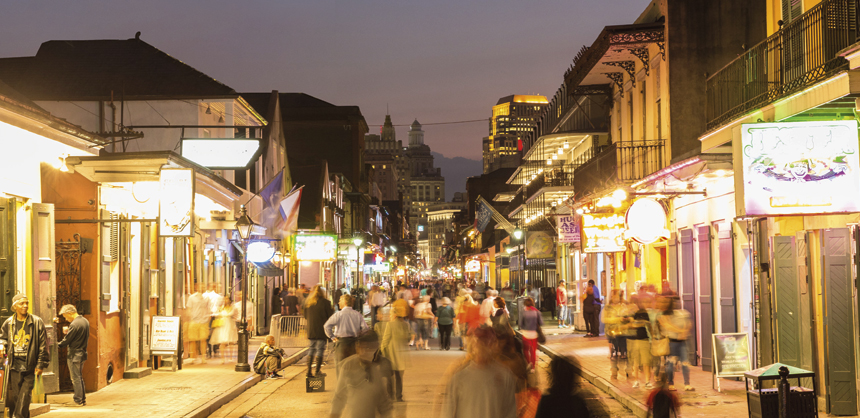
New Orleans’ famous Bourbon Street is known for its lively party atmosphere with bars and restaurants, and more, to explore within the historic French Quarter. Photo courtesy of New Orleans & Company/Zack Smith
When corporate meeting and event planners think about standout destinations, Louisiana might not always be the first place that comes to mind – but it should be. The Pelican State offers a rare blend of serious business infrastructure and unforgettable cultural experiences, making it one of the most compelling meeting destinations in the South. From historic riverfront cities and modern convention centers to award-winning cuisine and world-famous music, Louisiana delivers something many destinations struggle to achieve: events that feel both productive and personal.
What truly sets Louisiana apart is its personality. Meetings here don’t feel generic or interchangeable. They feel rooted in place. Attendees aren’t just moving between ballrooms and breakout rooms – they’re stepping into a culture defined by hospitality, storytelling, food and rhythm. And that sense of authenticity translates directly into stronger engagement, better networking and more memorable experiences.
Three cities in particular anchor Louisiana’s meetings and events landscape: New Orleans, Baton Rouge and Shreveport. Each offers a distinct vibe, venue mix and set of advantages while giving corporate meeting planners flexibility based on group size, budget and tone. Together, they showcase the diversity of what Louisiana can deliver – from polished capital-city professionalism to world-famous cultural immersion, to cost-conscious, high-ROI incentive programs.
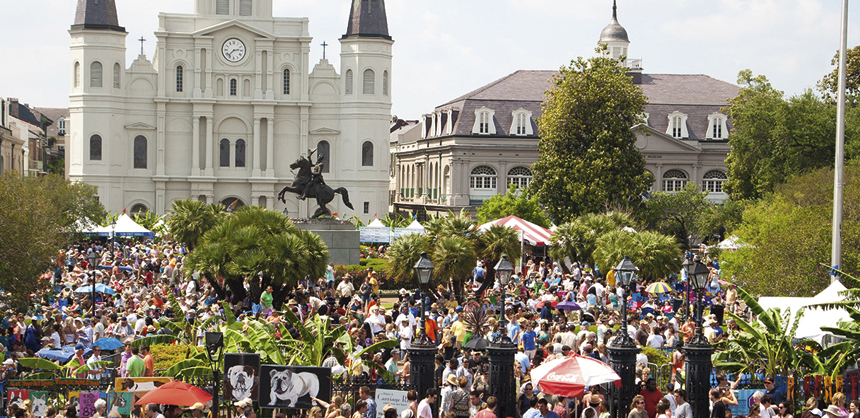
New Orleans has festivities year-round, including for Mardi Gras. Photo courtesy of New Orleans & Company/Zack Smith
New Orleans
If Louisiana had a flagship meetings destination, it would be New Orleans. Few cities in the world can match its ability to host large-scale events while offering such a rich cultural backdrop. New Orleans doesn’t just support meetings – it enhances them.
For Jihan Donawa Gibson, senior growth marketing manager at Swoogo, an event management software company in Los Angeles, CA, New Orleans embodied everything her company stands for.
Swoogo held its annual user conference, ‘Unconventional,’ in New Orleans last November. “This is our flagship event and allows us to bring together our customers for a week of thought leadership, product workshops, community strengthening, and most importantly, fun,” says Donawa Gibson.
The event welcomed more than 200 customers, prospects and partners, and leaned fully into the city’s personality. “We don’t believe in gatekeeping,” she says. “The week started with a welcome reception complete with an absinthe tasting and live alligators. Then, we had two days of content and a party in the Mardi Gras World Float Den.”
For Donawa Gibson, experiential design was critical. “We included a half-day of excursions because, as an event planner myself, I know the struggle of visiting a city just to see the inside of a ballroom,” she says.
Choosing New Orleans was intentional. “As the name of our conference implies, we are adamant about the location and structure of our event,” Donawa Gibson explains. “We like cities that are rich in history and hospitality. New Orleans really allowed us to let the good times roll.”
Her team infused the event with local flavor. They greeted attendees with warm beignets, had a second line lead everyone into the venue, used mini king cakes as giveaways, passed out hurricanes and entertained with dueling pianos.
Donawa Gibson believes New Orleans offers unmatched creative freedom. “It gives ‘unconventional’ by its very nature. You can book traditional space, but there are also so many other options to highlight the city. And the food, plus good airlift, makes everything easier.”
Her advice to planners? “Lean into using New Orleans & Company to help plan your program. And please, put more play into your event. Don’t sterilize it because it’s safe – otherwise you could have just had it in an airport meeting room.”
“New Orleans offers, compared to other destinations, an emotional intensity,” says Valerie Bihet, CEO at The Vibe Agency in Miami, FL. “The city brings a different layer of architecture, the music heritage, the culinary excellence, the walkable energy in the streets that allows planners to create flow without complex logistics.”
Bihet has firsthand experience designing high-impact corporate programs in New Orleans, having produced three major events there in 2025 alone – a leadership retreat for a food company, internal training for a cosmetics brand and a client event for a technology company.
“For the tech event, we staged it at the Caesars Superdome with the booths and workshops in the suites, and then an awards ceremony on the floor with a big stage we created,” she explains. “Then, we did an evening event at Mardi Gras World. People had a lot of fun with that.”
Bihet is currently working on another three-day event in the city for 180 attendees. It’s for a software company, and they invite their clients to come hear about the product and talk about their experiences.
For her, New Orleans stands apart from other destinations because it balances professional infrastructure with emotional resonance. “There is really a strong hospitality infrastructure, experienced vendor options, and they understand high-level corporate expectations,” she says. “That combination of soul and professionalism makes it very powerful and emotionally intense.”
But Bihet also cautions planners not to treat the city like a theme park. “You need to respect the culture,” she says. “If you collaborate with local artists – chefs, historians, musicians – they embody the authenticity of the city so attendees really feel the difference.”
Some of her most memorable moments come from incorporating movement and surprise into programming. “A second line with a brass band, candlelight in a courtyard – they create very emotional elements that solidify memories after the event ends,” she says. “Last January, we did a second line from the hotel to a restaurant. It started to drizzle, but with the music and the energy, it was magical. A year later, people are still talking about it.”
In a world dominated by digital meetings and compressed schedules, Bihet believes destination events matter more than ever. “When it’s strategically designed well, an event in New Orleans really transforms how teams see each other.”
New Orleans’ ability to host events of nearly any size is supported by a variety of facilities, hotels and venues. The Ernest N. Morial Convention Center is one of the largest convention facilities in the country, with more than 1 million sf of contiguous exhibit space. It regularly hosts major national and international conferences, trade shows and corporate events, all supported by a dense network of nearby hotels, restaurants and entertainment venues.
At the same time, many of New Orleans’ most iconic hotels are undergoing significant renovations and expansions, updating guestrooms and event spaces while preserving their historic character. These investments reflect a growing demand from both corporate and association markets – and a city preparing to compete for even larger, more complex programs.
But what makes New Orleans truly special isn’t just scale – it’s atmosphere. Attendees can walk out of a keynote session and straight into the French Quarter, where jazz music spills into the streets and historic courtyards double as event venues. Rooftop receptions, riverboat dinners and second-line parades aren’t just possible – they’re part of the city’s DNA.
New Orleans also offers an impressive range of unique venues. From grand historic hotels and modern waterfront hotels to restored theaters, museums and former warehouses, planners can design events that feel tailored rather than templated. It’s a city that encourages creativity in programming and rewards planners who think beyond traditional ballroom formats.
Food plays a huge role in the experience. In New Orleans, meals aren’t just breaks between sessions – they’re highlights of the agenda. From upscale Creole dining to casual po’boys and beignets, culinary experiences become built-in networking opportunities that attendees remember long after the final session ends.
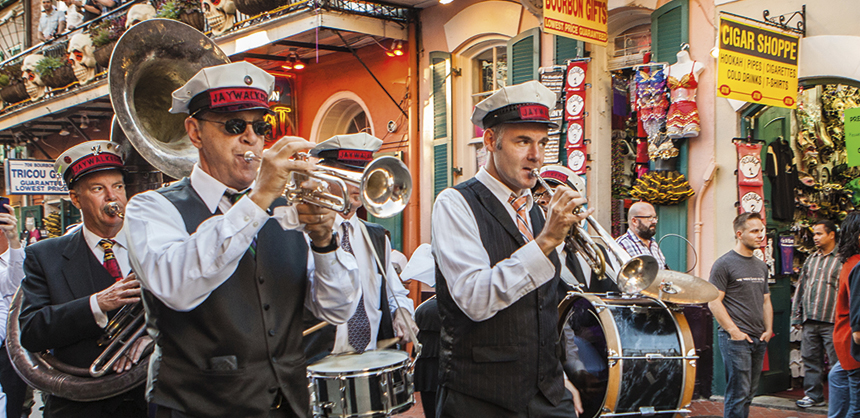
Many companies opt to create their own parade or include a second line band as part of their activities at an event. Photo courtesy of New Orleans & Company/Richard Nowitz
Small Meetings, Big Impact
While Louisiana, especially New Orleans, is known for large-scale conventions, it is just as effective for smaller, more intimate programs. Jennifer Clark, lead event strategist at techsytalk and owner of Emerge Events, in Hattiesburg, MS, planned a customer appreciation event in Louisiana for just 80 people and saw the same cultural impact.
“It was a small membership event,” Clark says. “We meet twice a year – fall at corporate headquarters and spring in a different location. The event includes meetings and opportunities to get to know the city.”
New Orleans stood out for both practical and experiential reasons. “It’s very walkable, which is important,” Clark explains. “And our attendees come from all over the U.S. and abroad, so the international airport matters.”
She highlights lifestyle as the differentiator. “There are great facilities for holding events, but the real reason people visit New Orleans is the culture – live music, phenomenal food, unique beverages, museums and art.”
Clark recommends working with local partners. “I always encourage working with New Orleans & Company and a local DMC like NOLA DMC. They can do as little or as much as you need.”
Her favorite tip? “Street name pronunciation as an icebreaker. Get a local to teach it – it’s tricky, but fun,” she says.
Baton Rouge
As Louisiana’s capital and a major hub for government, education and industry, Baton Rouge offers a professional foundation with a warm, welcoming feel. It’s a city that knows how to host serious conversations without sacrificing comfort or character.
At the center of Baton Rouge’s meetings scene is the Raising Cane’s River Center, a modern convention complex located right along the Mississippi River. With more than 200,000 sf of flexible meeting and exhibition space, it’s well-suited for regional conferences, trade shows and corporate executive meetings. The connected convention center, arena and performing arts theater allow planners to design multi-format events without needing to shuttle attendees across town.
One of Baton Rouge’s biggest strengths is accessibility. The city is easy to navigate, with short travel times between hotels, venues, restaurants and attractions. For attendees, that means less time in transit and more time connecting. For planners, it means fewer logistical headaches and more opportunities to focus on programming and content.
Baton Rouge also shines when it comes to off-site experiences. Groups can host receptions at the Old State Capitol, tour the USS Kidd, a decommissioned WWII destroyer, when it is available, or enjoy private dinners at local restaurants known for elevated Cajun and Creole cuisine. And because the city is home to Louisiana State University, there’s an energetic undercurrent that makes even formal events feel lively.
The presence of a major university also opens doors for academic and research-based meetings, training sessions and leadership development programs. For organizations that value learning and collaboration, Baton Rouge offers an environment that feels focused yet friendly.
Baton Rouge works especially well for meetings that value intimacy and efficiency, including executive retreats, leadership summits, training programs and regional conferences where conversation and collaboration take center stage. It’s not about spectacle here; it’s about substance supported by genuine Southern hospitality.
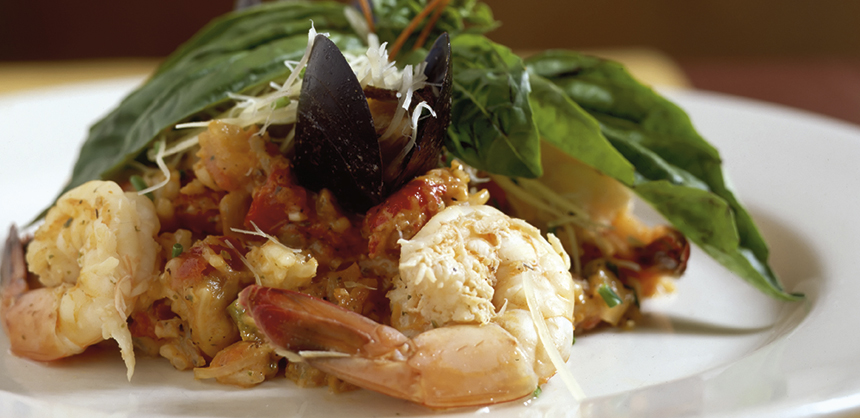
Louisiana’s culinary prowess becomes a draw for attendees. Photo courtesy of New Orleans & Company/Sarah Essex
Shreveport
Located in northwest Louisiana, Shreveport offers a different kind of meetings appeal, one that’s quieter, more affordable and highly practical. For corporate planners seeking strong value without sacrificing quality, Shreveport often flies under the radar in the best possible way.
The Shreveport Convention Center anchors the city’s meetings infrastructure, offering over 350,000 sf of space for conferences, expos and corporate events. Surrounding hotels and riverfront venues make it easy to house and entertain attendees within a compact footprint.
Shreveport’s biggest advantage is cost efficiency. Meeting space, accommodations, and food and beverage are often significantly more affordable than in larger markets, allowing planners to stretch budgets further, whether that means upgrading experiences, adding programming elements or simply staying within financial constraints.
The city also offers a growing arts and entertainment scene, with casinos, live music venues and cultural attractions providing after-hours options. Groups can enjoy riverfront receptions, casino buyouts or casual networking at local breweries and music lounges.
Shreveport is particularly well-suited for regional meetings, training events, healthcare conferences and corporate programs where practicality and ROI are top priorities. It’s a destination that proves great meetings don’t always require big-city prices.
Across Baton Rouge, New Orleans and Shreveport, Louisiana shares several advantages that consistently appeal to meeting professionals.
First is hospitality. Service isn’t transactional here, it’s personal. That warmth creates a positive emotional layer around events, which directly impacts satisfaction and engagement.
Second is flexibility. As Clark explains, Louisiana offers everything from massive convention centers to boutique venues, luxury resorts to budget-friendly hotels, urban nightlife to laid-back riverfront settings. Planners can match the destination to the purpose of the meeting, not the other way around.
Third is memorability. Louisiana events stand out because the destination becomes part of the story. People remember the food, the music, the atmosphere and the way the city made them feel. That emotional connection is incredibly powerful for brand events, internal meetings and incentive programs alike.
And finally, there’s authenticity. As Bihet explains, Louisiana doesn’t try to be like every other meetings destination. It leans into what makes it different, and that difference is exactly what keeps attendees talking long after the last session has completed. C&IT