








Florida Welcomes YouApril 1, 2026
Opportunities for Year-Round Outdoor Events, Teambuilding and Unstructured Downtime By Maura KellerFlorida Welcomes You
Opportunities for Year-Round Outdoor Events, Teambuilding and Unstructured Downtime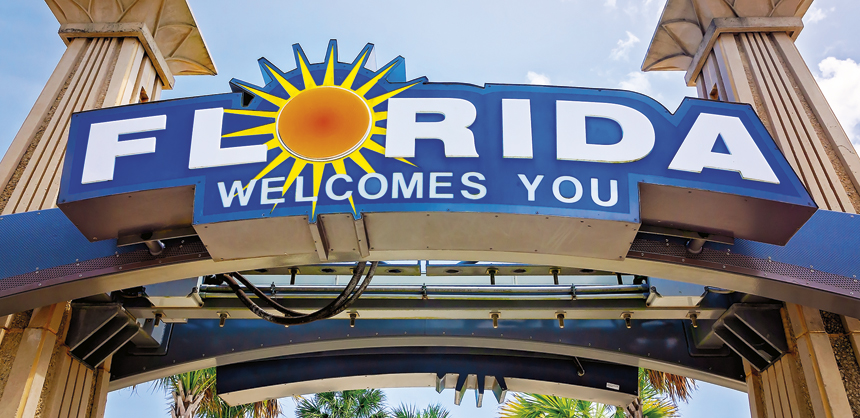
Florida has long held a reliable spot on corporate planners’ shortlists – and not just because of the weather. What keeps the state relevant year after year is how well it works operationally. Strong airlift, a deep bench of group-ready hotels and a wide range of experiences make it possible to match the right destination to the right program. Whether you’re planning a corporate leadership retreat, a citywide convention or a high-end incentive, Florida offers options that align with your goals, budget and attendee expectations.
What’s changed in recent years is how planners are using Florida more strategically. Rather than viewing it as a single destination, many are treating it like a portfolio – selecting specific markets based on program size, tone and desired outcomes. Orlando for scale and infrastructure. South Florida for glamour and international airlift. The Panhandle for natural beauty at a lower price point. And increasingly, secondary markets like Naples, Sarasota and Amelia Island for planners who want a more intimate, distinctive setting without sacrificing service quality.
Planners today are operating in an environment where attendee expectations are high and every event has to deliver. Florida answers that challenge with a portfolio of properties that spans iconic theme park immersive experiences, luxury beachfront resorts, sprawling convention-ready complexes and boutique gems with serious personality. Whether you’re managing a 50-person incentive trip or a 5,000-person general session, there’s a Florida property built for the occasion.

The Seminole Hard Rock Hotel & Casino, Hollywood is known for gaming, as well as top notch entertainment, fine dining and more.
The Perfect Fit
For Jen Ruthig, CMP, manager of events at Starkey Hearing in Eden Prairie, MN, a long relationship with Florida as a meetings destination has provided ample lessons. She recalls being deep into planning a fall corporate program in Orlando when a storm that wasn’t supposed to be a problem shifted and passed directly over the area. “Our focus was on clear communication with attendees and safety planning,” says Ruthig. “We ultimately had to end the program one day early, but attendee safety was the top priority.” She navigated it. The program survived. And she kept coming back to Florida.
Ruthig has run programs ranging from executive retreats to a 1,000-person customer conference with general sessions, breakout programming and a massive trade show — all hosted at Rosen Shingle Creek in Orlando. “The Florida location allowed us to incorporate outdoor events and take advantage of the state’s favorable weather,” she says. “We were able to host the event at a large conference hotel that delivered exceptional customer service.” Her advice to planners: start with clarity. “Florida is incredibly diverse, which is one of the reasons I enjoy planning events there – but it also means you have to start with a clear vision. Define what you want to achieve, the overall look and feel, and the budget you’re working within. Once those pieces are clear, it becomes much easier to narrow in on the right region.”
Ashley Krause is a director of business specialists for a food service distribution company in Houston, TX, and knows that dynamic well. She produced a food show at Rosen Shingle Creek in Orlando – branded as the Summer Soiree – and is currently booking a follow-up at the Ocean Center in Daytona Beach. The event was held indoors to beat the heat, but the team brought the outdoors inside with a gazebo, outdoor furniture and design cues that evoked alfresco dining. “A Florida setting can make a food show feel less like a formal event and more like an experience people actually enjoy being part of – which boosts energy, engagement and business results,” says Krause. “Florida works so well because it blends functionality with a built-in reward feeling. It makes it easy to plan indoor and outdoor events all year-round.”
Jill Garcia, chief inspiration officer and owner at The Hutton Group in Pittsburgh, PA, points to the breadth of hotel options across Orlando, Fort Lauderdale, Miami and Tampa, but also encourages planners to look beyond the marquee markets. “Destinations such as Naples, Sarasota, Palm Beach and Amelia Island offer exceptional venues, often paired with a more relaxed and distinctive atmosphere,” she says.
Planning for the Weather — and Around It
Every experienced Florida planner has a weather story. For Mary Higbe, founder and CEO of In Your Pocket in Plano, TX, it was returning to The Don CeSar on St. Pete Beach last fall as one of the first large groups back after the devastating 2024 hurricane season. “We had backup plans for backup plans, and The Don was wonderful to work with to ensure we could quickly pivot,” she says. “Fortunately, we didn’t need to.”
Krause’s approach is straightforward: “Plan early, build in weather contingencies – but take advantage of the outdoors when possible.” She structures programs outside hurricane season where possible and always ensures an indoor fallback.
Garcia’s team has hosted programs from August through November and finds that direct disruptions are rarer than the reputation suggests. “In most cases, events proceed successfully with proper planning, contingency measures and close monitoring of forecasts,” she says.
For additional peace of mind, Andrea Milrad Heilweil, vice president of sales & marketing at The Hutton Group, points to Visit Florida’s “Cover Your Event” program, which offers no-cost hurricane insurance. In 24 years of site selection, Heilweil’s team has had only two programs cancel due to hurricanes.
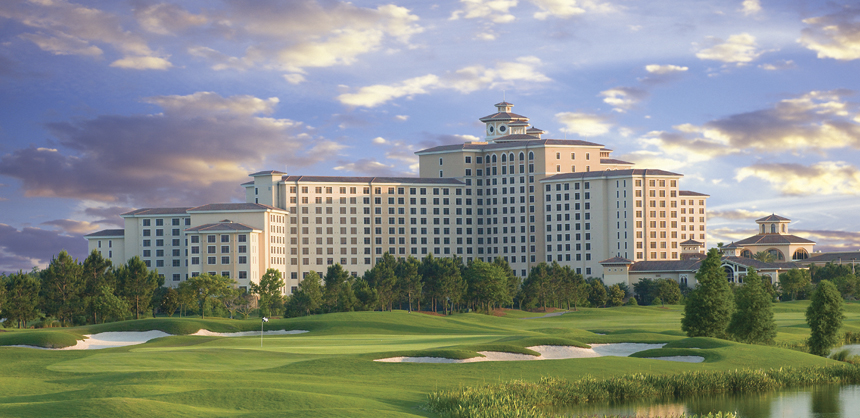
Rosen Shingle Creek in Orlando offers a championship golf course, plenty of amenities and 490,000 sf of meeting and event space.
Matching Venue to Group
With so many options, the challenge isn’t finding a Florida venue – it’s finding the right one. Krause frames her approach around the event’s primary objective: “We prioritize our event’s goal – choosing convenience for attendance, space and amenities for experience – and adjusting location or timing to stay within budget.”
It’s important to answer two key questions with every Florida program: Where are the majority of attendees flying in from, and what is the demographic of the group? “What will be their priority for leisure time – golf, adventure, theme parks, spas, nightlife?” Flight access matters more than many planners realize: The less friction you can have for your attendees to get there, the more likely they will be to attend.
Higbe adds a practical note about keeping attendees engaged once onsite: “Florida venues are well aware of the competition for attention and make every effort to have everything needed right on property.”
On budget, Florida’s diversity is both an asset and a variable. In fact, comparing costs across the state is “almost like comparing apples to oranges” – Miami bears little resemblance to Tampa or Orlando. Heilweil observes that while peak-season beachfront rates can strain a budget, “planners may potentially be spending less on décor because the destination does a lot of the work for you.” And Higbe has found that strategic date selection can deliver significant savings: “Depending on the time of year, Florida can be remarkably affordable.”
The Outdoor Advantage
One of Florida’s most consistent competitive advantages is the ability to move programming outside – and to do so reliably across most of the year.
Krause points to outdoor space as a tool for event elevation. For her company’s Summer Soiree, the team couldn’t use the outdoors directly – the Florida summer heat made that impractical – but they brought outdoor elements indoors: a gazebo, patio furniture and a design language that evoked warm-weather entertaining. The result was an event that felt like an experience rather than an obligation. “Florida’s atmosphere creates a unique, elevated time that can turn an obligation into a lasting impression,” she says. Heilweil echoes the operational upside: beachfront events and poolside receptions “add a level of uniqueness that enhances attendee engagement” while often reducing the need for extensive decor investment.
Higbe frames the outdoor advantage from the venue selection stage. When she walked the grounds of The Don CeSar before booking her 350-person user conference, the decision practically made itself. “With its location on the beach, I knew from the moment that I walked outdoors that our entertainment venues were built in – and you can’t beat the sunsets,” she says. That built-in sense of place – a setting that communicates something beyond a generic conference room – is at the heart of what Florida’s best venues consistently deliver.
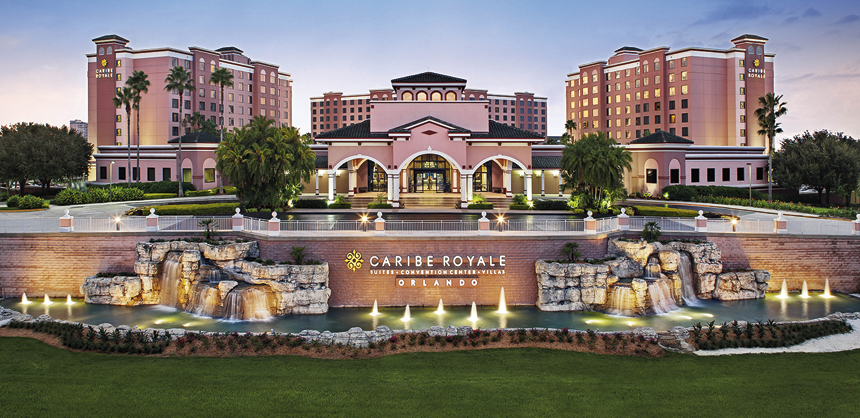
Caribe Royale Orlando offers 260,000 sf of meeting and event space minutes from theme parks and other popular attractions.
Orlando: The Meeting Capital
Orlando consistently ranks among the top three meetings destinations in the country, and it’s easy to understand why planners keep returning. Ruthig hosted a major customer conference here for nearly a decade, drawn by the infrastructure, the airlift, and an entertainment ecosystem that does the heavy lifting on attendee engagement.
For incentive programs especially, the Walt Disney World and Universal Orlando Resort campuses offer something almost no other market can match: exclusive access experiences that feel genuinely out of reach in ordinary life. The ability to have private events at the parks is the kind of differentiator that makes Florida a compelling sell to attendees. In fact, Florida is a great destination if you are trying to encourage folks to bring their whole families. That pull matters: when the destination itself becomes an incentive, registration numbers tend to reflect it.
The property options in Orlando reflect that range of program types. Disney Meetings & Events operates across the entire Walt Disney World campus – multiple resort hotels, theme parks and venues that don’t exist anywhere else. Private park buyouts, character meet-and-greets woven into receptions, after-hours events at EPCOT or Hollywood Studios: these are experiences that stay with attendees long after the conference ends. Universal Orlando has made comparable investments, with Loews Portofino Bay Hotel and Loews Royal Pacific Resort functioning as serious meeting and incentive properties. The Wizarding World of Harry Potter private buyout has become a perennial planner favorite. For planners who want proximity to the Disney campus without the full Disney price tag, the Walt Disney World Swan & Dolphin – and Swan Reserve – offer one of the most flexible meeting footprints in the market.
Away from the theme park corridor, Rosen Shingle Creek – where Ruthig ran her 1,000-person conference and Krause produced the Summer Soiree – is the independent standout. The property sits on 230 acres with a championship golf course and meeting facilities designed for serious scale, but what distinguishes it is the ownership culture. The Rosen family has managed Orlando properties for decades, and that tenure shows in food and beverage quality, sales team continuity and the kind of institutional knowledge that branded hotels can’t replicate.
For large-scale programs needing purpose-built infrastructure, Gaylord Palms Resort & Convention Center’s glass-enclosed atrium – a climate-controlled environment with restaurants and dramatic landscape features – creates naturally memorable space for opening receptions. And for incentive groups where suite accommodations matter, Caribe Royale Orlando remains one of thew destination’s best-kept meetings secrets, with a technically sophisticated convention center and recent renovations throughout. Planners who discover it tend not to look elsewhere.
Lee County
Lee County, located along the state’s southwest Gulf Coast, is becoming an increasingly attractive destination known for a laid-back vibe with cities like Fort Myers, Sanibel Island and Cape Coral being a draw. One advantage is accessibility. Southwest Florida International Airport provides direct flights to dozens of major U.S. cities and sits roughly 20 minutes from many hotels and meeting venues.
Punta Gorda/Englewood Beach
Punta Gorda/Englewood Beach is another popular destination that offers great amenities without all the crowds. Known for its beaches, golfing and fishing, it delivers small-town charm and exclusivity. Planners will find plenty of space and amenities at The Sunseeker Resort Charlotte Harbor. It boasts a championship golf club, world-class restaurants and bars, a 25,000 sf multi-dining food hall, as well as 60,000 sf of state-of-the-art meeting and event spaces.
Northeast Florida
Jacksonville is known for a lively vibe and vibrant atmosphere with a mix of skyscrapers, world-class museums, nightlife options, music halls and upscale lounges juxtaposed with 5.6 miles of beautiful riverfront perfect for a stroll in between meetings. The destination is home to more than 400 city parks as well as sandy beaches. The Southbank Hotel Jacksonville Riverwalk offers almost 40,000 sf of meeting and event space near some of the city’s most popular downtown attractions.
Tampa Bay & the Gulf Coast
The Gulf Coast offers several distinctly different properties worth serious consideration. The Don CeSar – a 1928 National Register landmark on St. Pete Beach – is the kind of setting that answers the venue question before the program is even designed. Higbe chose it for her user conference and described her site visit in terms that capture why historic properties earn their reputations: “We never want the question of ‘how was your conference?’ to be met with ‘I saw conference rooms.’” She found the built-in entertainment venues and location were great assets for the property.
Further up the coast, the Seminole Hard Rock Hotel & Casino Tampa occupies the opposite end of the atmosphere spectrum. For groups that want entertainment depth embedded in the environment, Hard Rock Tampa delivers with the excitement of the casino, live entertainment at Hard Rock Live and other resort amenities that keep attendees on property long after the sessions end.
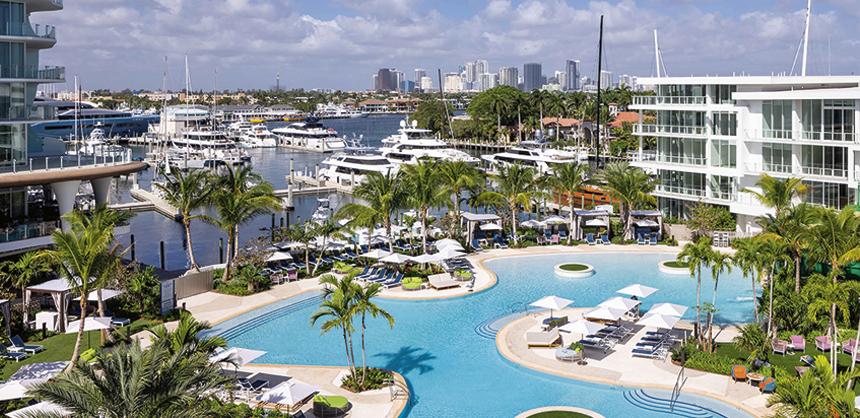
Pier Sixty-Six is a luxury waterfront venue in Fort Lauderdale not far from the beach and airport.
South Florida
South Florida’s meetings landscape is cosmopolitan, glamorous and strategically compelling. As Ruthig notes, if the goal is a beach setting with an upscale, urban vibe, Miami and Fort Lauderdale are strong options.
Heilweil’s 250-person conference at Pier Sixty-Six Resort in Fort Lauderdale last fall illustrated what the region’s weather makes possible: poolside receptions that are, in her words, “difficult to replicate in many markets.” The range of options – from Miami’s South Beach energy to Fort Lauderdale’s value proposition – means planners can calibrate to almost any program profile.
Loews Miami Beach Hotel combines serious infrastructure with genuine resort atmosphere – its meeting facilities are among the market’s most flexible, paired with a service culture that sophisticated corporate groups rely on.
For programs where the environment needs to communicate luxury at every touchpoint, the JW Marriott Miami Turnberry Resort & Spa – on Aventura’s Intracoastal Waterway delivers a resort atmosphere that feels unhurried in a market that rarely slows down.
For planners managing tighter budgets, Fort Lauderdale rewards a second look: the recently opened Omni Fort Lauderdale anchors a Broward County Convention Center campus that is now one of the most capable large-convention environments in the Southeast, with cost structures that compare favorably to Miami Beach.
Between Miami and Fort Lauderdale, in Hollywood, Signia by Hilton Diplomat Beach Resort handles scale and beachfront access in equal measure, drawing from both Miami and Fort Lauderdale for multi-origin groups.
The Seminole Hard Rock Hotel & Casino Hollywood with its 450-ft tall guitar-shaped luxury hotel is another popular choice. This location has all the excitement attendees crave. They can play at the casino, watch world-class entertainment, eat at high-end restaurants and relax in style. The property boasts 120,000 sf of meeting and event space, which includes a 7,000 sf poolside function area.
Northwest Florida: The Panhandle
The Panhandle is Florida’s most underrated meetings region. The Emerald Coast’s sugar-white sand and emerald-green Gulf water are among the most spectacular beach environments in the continental U.S., and the Hilton Sandestin Beach Golf Resort & Spa is the market’s anchor property – beachfront access, a multi-course golf program, full-service spa, multiple dining venues and meeting facilities that scale for programs of meaningful size.
Ruthig recommends it explicitly as a budget-smart alternative. The affordability gap relative to South Florida isn’t just a line-item win – it frees planners to reinvest in food and beverage, gifting or entertainment that elevates the attendee experience in ways the budget couldn’t otherwise support.
The Bottom Line
Ruthig still plans events in Florida. She builds contingency plans for hurricane season and schedules morning beach sessions so attendees can soak up sunshine before the outdoors heats up. “Coming from Minnesota,” she says, “I know that attendees from the Midwest are especially eager to enjoy sunshine and fresh air when they travel here.” Krause is already booking her next Florida event and Higbe is scouting local artisans for attendee goodie bags. The pattern is consistent: planners who know Florida keep coming back.
It is also important to determine what makes the difference between a good Florida corporate program and a great one. The key is to have a solid understanding of your attendees and what motivates them to attend events. Ensure that your schedule allows for people to enjoy the amenities available – if your schedule is too full, there won’t be enough time for them to truly enjoy the destination.
Higbe adds that local knowledge is a secret weapon: she schedules downtime on site visits to explore the surrounding area. “I like to give attendees a good sense of local flavor. That kind of detail – specific, personal, tied to place – is exactly what separates memorable programs from forgettable ones.”
“Florida has world-class resorts and meeting spaces with built-in entertainment – Walt Disney World, Universal, the Space Center and more – which makes the event feel like a vacation, not work,” Krause says. That’s the promise Florida has been making to corporate planners for decades. The infrastructure to back it up – the airlift, the hotel inventory, the CVB relationships, the experienced staffs – is what keeps planners coming back year after year to test it.
And Ruthig’s final insight is characteristically practical: start with a clear vision, then call the destination’s convention and visitor’s bureaus. “They truly know their destinations inside and out,” she says, “and are invaluable partners when it comes to answering questions, surfacing options and helping shape a program that really works.” C&IT