







Deep in the Heart of TexasSeptember 1, 2026
Unconventional Venues By Maura KellerDeep in the Heart of Texas
Unconventional Venues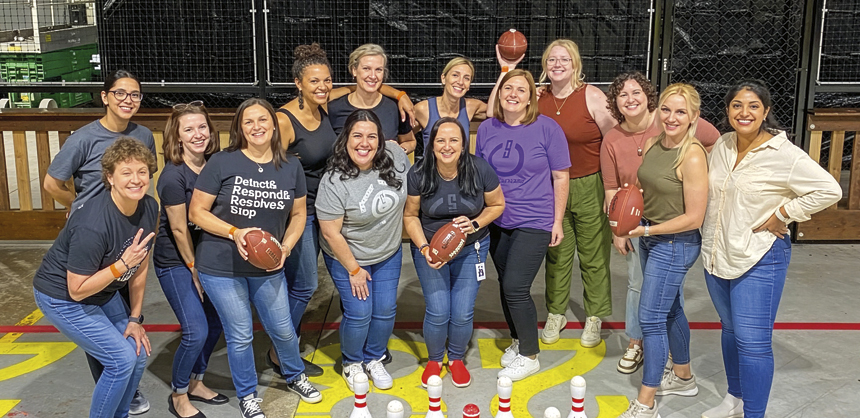
The Fowling Warehouse in Plano, TX, features fowling, which is a combination of football and bowling — perfect for teambuilding. Photo courtesy of Nicole Chattin
When Jocelyn Davis, experimental marketing & event strategy professional for Make it Behavioral in Mooresville, NC, thinks about planning corporate meetings in Texas, one particular memory comes to mind: a room full of architects and contractors gathered inside a brewery, talking building science over craft beer. It wasn’t a typical conference setting — and that was exactly the point.
“At first glance, it might sound unusual to host an educational program in a brewery,” Davis says. “But the environment completely changed the energy in the room. People stayed longer, they asked more questions and the networking felt much more natural.”
For corporate meeting planners, that versatility is one of the biggest reasons Texas continues to rise on the meetings map. The state doesn’t just offer convention centers and hotel ballrooms across its diverse cities and towns — it offers experiences. Ranches, museums, stadiums, breweries and music halls give planners opportunities to design events that feel memorable and distinctive.
Davis witnessed this dynamic firsthand while working as a trade show and event specialist for Huber Engineered Woods, where she helped coordinate the national educational program known as the Building Science Symposiums. The two-day event brought together architects and contractors to earn continuing education credits while hearing from industry experts, and Texas frequently became the destination of choice.
Nicole Chattin, CMP Fellow, CMM, and local event services manager at PwC in Keller, TX, also has seen firsthand how nontraditional venues in Texas can reshape the energy of a corporate event. In her work sourcing venues across Texas, she often looks for spaces that encourage interaction rather than passive participation.
“I’ve sourced several unique venues in Plano, TX, including the Fowling Warehouse,” Chattin says. “It’s a massive social sports entertainment venue that combines football and bowling — known as fowling — and the scale of the facility really stands out.” The venue features dozens of fowling lanes that naturally create an energetic, interactive atmosphere. The property also includes a private VIP lounge with six dedicated lanes, a private bar and lounge seating that can host smaller groups.
“I booked the VIP lounge for a previous company’s holiday party, and it was a great fit because the company culture was very casual and fun,” Chattin says. “The space provided a strong foundation for the event while still allowing us to transform it with décor, a DJ, photo activations and even rented arcade games.”
The venue also features staff who can run tournament-style competitions, adding a fun and competitive element that encourages attendees to participate rather than simply observe.
For Chattin, venues like these represent a broader shift in corporate meetings toward immersive environments that spark interaction and networking.
“Spaces like renovated warehouses, working ranches, breweries and other nontraditional venues allow groups to connect with the authentic culture of the state in a way that traditional ballrooms sometimes can’t.”
That sense of authenticity plays a powerful role in attendee engagement. “In Texas especially, there’s a strong sense of place — whether it’s live music, local food, Western heritage or large open spaces — and these venues bring that to life,” Chattin says. “For attendees, it often feels more like an experience than just a meeting.”
Event designer Tarin Wilson, founder of Plan A Events in Beverly Hills, CA, sees the same dynamic play out across the programs her company produces throughout Texas. For Wilson, creating a strong sense of place is often the difference between a corporate event that simply functions and one that attendees remember long after it ends.
“We’re always looking for ways to create a real sense of place,” Wilson says. “Our groups are very well traveled, so a standard ballroom doesn’t excite anyone. When the venue reflects the destination, people feel like they actually got to experience the city, not just fly in and sit in meetings.”
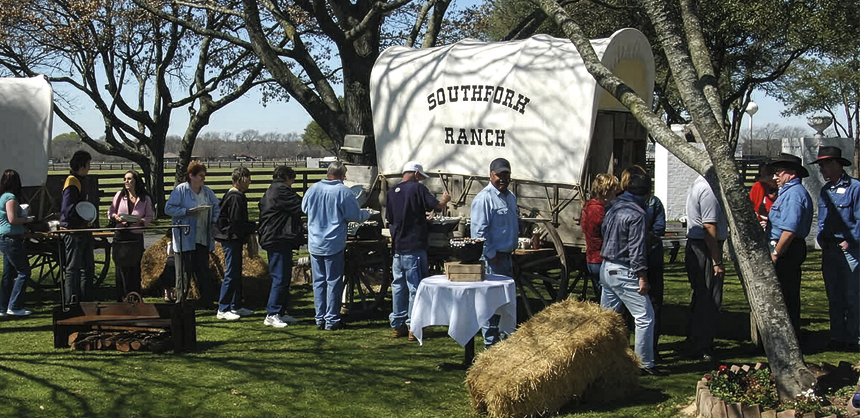
Southfork Ranch is always popular with attendees.
Ranches: Authentic Texas Experiences
Few venues feel more authentically Texan than a working ranch, and across the state, many of these properties have evolved into sought-after destinations for corporate retreats and incentive programs.
One of the best-known examples is Southfork Ranch near Dallas, made famous by the television series “Dallas.” The property combines sprawling ranch land with extensive indoor event space capable of hosting executive retreats, themed corporate celebrations and large-scale meetings. Groups often incorporate Western-style dinners, teambuilding activities or guided tours of the ranch while still benefiting from professional meeting infrastructure.
Elsewhere in North Texas, ranch resorts such as Wildcatter Ranch & Resort provide a blend of upscale accommodations and immersive outdoor experiences. Companies can hold strategy sessions during the day and then transition into activities like horseback riding, roping demonstrations or sunset dinners overlooking the Brazos River valley.
In the Texas Hill Country outside San Antonio, ranch-style venues including Rancho La Mission offer expansive grounds and rustic architecture that create a distinctly regional backdrop for corporate programs. Outdoor pavilions, fire pits and scenic landscapes make these venues particularly appealing for retreats and evening receptions.
Additional destinations across the state cater specifically to corporate groups seeking a ranch environment. Artemis Ranch in Lampasas provides private meeting rooms, rustic but opulent accommodations and curated activities such as clay shooting, wildlife viewing, stargazing, mountain biking and more. Triple Mountain Ranch in Clifton also offers a beautiful setting with plenty of venue options.
Other properties blend resort amenities with sweeping landscapes. For example, White Bison Ranch, in Athens, and JL Bar Ranch Resort & Spa, in Sonora, combine luxury lodging with hiking, kayaking and cowboy-style cookouts alongside conference facilities.
For Wilson, venues like these exemplify why Texas remains such an appealing destination for corporate programs. “Planners should really take advantage of the space that Texas offers,” Wilson says. “In my experience, in Texas, venues and hotels feel expansive, so design your event in a way that feels open and relaxed.”
She encourages planners to embrace the character of the setting rather than trying to replicate a traditional meeting environment. “Lean into the spirit of Texas with barbecue and Western wear,” she says. “Encourage attendees to bring their cowboy boots and hats. A cowboy hat bar where people can customize their own hat is almost always a hit, and they can wear it that same night for a social event.”

Mexican-inspired folkloric dancers celebrate San Antonio’s rich cultural heritage. Photo Courtesy of Tarin Wilson
Breweries & Interactive Venues
Casual, open-layout venues have also become popular with corporate meeting planners seeking environments that encourage conversation and collaboration.
For Davis, breweries proved especially effective during the Building Science Symposium series. Rather than hosting the educational program in conventional meeting rooms, she intentionally chose breweries for every stop on the tour, including events held in several Texas cities.
“Instead of a traditional classroom setup, attendees engaged in meaningful discussions and stayed longer for networking sessions.” The informal setting also had a noticeable impact on participation. “The atmosphere lowered barriers and increased participation,” Davis explains. “People were more comfortable asking questions and sharing ideas.”
Cities across Texas now feature brewery-style venues that double as event spaces. In Plano, destinations such as Legacy Hall combine food hall dining, craft beverages and live music stages that can host corporate receptions and social gatherings. Nearby entertainment complexes like the Fowling Warehouse introduce activity-driven experiences that encourage guests to interact rather than simply observe.
These venues reflect a broader shift in how corporate meetings are designed. Instead of rows of chairs facing a podium, many planners now favor environments that promote movement, conversation and collaboration.
Wilson says these kinds of spaces are particularly effective for networking-heavy programs. “When people are in a more relaxed environment, the conversations happen more naturally,” she says. “Those informal interactions are often where the most valuable connections are made.”
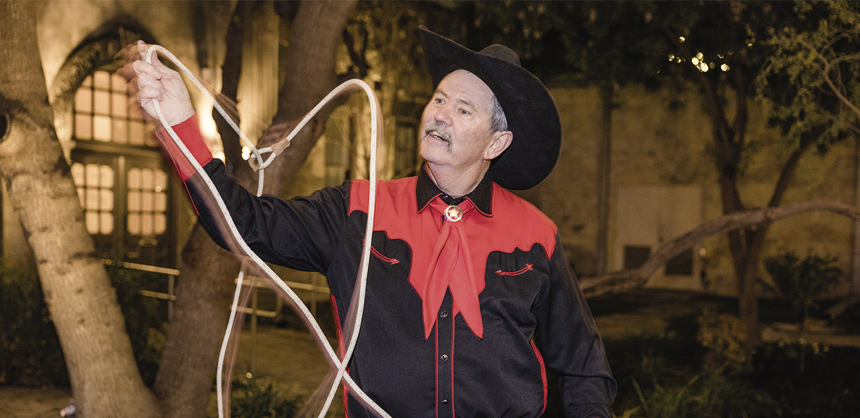
Cowboy roping demonstations are popular with attendees. Photo Courtesy of Tarin Wilson
Museums & Cultural Institutions
In Texas, some of the most memorable corporate events aren’t happening in hotel ballrooms – they’re unfolding inside contemporary art galleries, beneath towering dinosaur skeletons or within beautifully restored historic spaces. Museums and cultural venues are increasingly becoming go-to settings for meetings, receptions and corporate gatherings because they offer something traditional venues often can’t: built-in inspiration. Surrounded by art, history, science or culture, attendees naturally feel more curious, engaged and energized, turning an ordinary business event into an experience people actually remember.
In Fort Worth, the Modern Art Museum of Fort Worth and the Kimbell Art Museum frequently host corporate receptions and networking events, offering elegant gallery spaces and iconic architecture that elevate corporate gatherings beyond traditional meeting rooms.
Outdoor cultural venues can offer equally memorable experiences. The Fort Worth Botanic Garden provides landscaped gardens, scenic walkways and tranquil reflecting pools that allow groups to host receptions in a serene natural environment.
In El Paso, historic venues often incorporate historic architecture and sweeping views of the Franklin Mountains, while in Laredo, planners can host events in restored buildings and museums that celebrate the city’s border-town history. These settings add a layer of storytelling to corporate gatherings, allowing attendees to engage with art, science or regional history while networking and learning.
Music Halls & Entertainment Venues
Live entertainment venues offer another way to incorporate Texas culture into corporate meetings. Music halls, theaters and entertainment districts provide built-in production capabilities and dramatic staging that can transform a traditional event into a memorable experience.
In San Antonio, Stable Hall illustrates how historic spaces can be reimagined for modern events. Located in the Pearl District, the former 19th century draft horse stable for the Pearl Brewery has been transformed into a concert venue and event space featuring exposed brick, reclaimed wood and modern production systems.
Likewise, Dallas offers one of the state’s most iconic performing arts venues in Music Hall at Fair Park. It features Spanish Baroque architecture and regularly hosts Broadway productions and concerts, providing an impressive setting for corporate presentations and events.
In Irving, the Toyota Music Factory combines restaurants, performance venues and nightlife with meeting infrastructure that allows planners to integrate concerts and social programming into corporate events.
For those meeting in Austin, Austin City Limits Live at the Moody Theater delivers a state-of-the-art concert venue capable of hosting large conferences, product launches and entertainment-driven programs. Want to focus on both music and F&B? Stubb’s Bar-B-Q combines down-home Texas barbecue with access to indoor bars, multi-level patios and the outdoor Waller Creek Amphitheater with live entertainment. For an out-of-the-box event option, smaller events of up to 120 attendees can go to Pinballz Original Arcade, which offers plenty of fun and customizable event packages. Groups can also hop on a Lake Austin Riverboat and enjoy a band and something to eat while relaxing on the water. They have two boats, one fits up to 250 people, the other fits 125. These are just a few options.
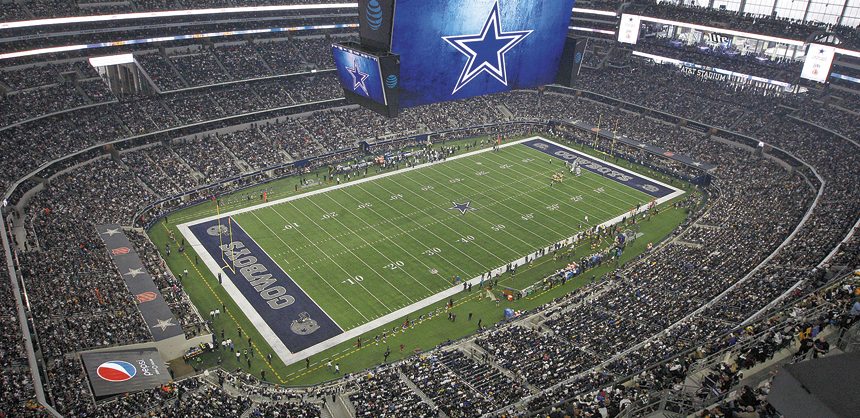
Arlington’s AT&T Stadium is a great venue to stage events.
Sports Venues & Historic Landmarks
What corporate group wouldn’t revel in attending an event at an awe-inspiring sports venue? Among the most recognizable is AT&T Stadium in Arlington, home of the Dallas Cowboys, where luxury suites, club lounges and field-level spaces can accommodate everything from executive meetings to large conventions.
Historic landmarks can create an even deeper sense of place. Wilson recalls one event her company produced in San Antonio that concluded with a private evening inside one of the state’s most famous historic sites.
“One that stands out was a conference for about 300 construction industry CEOs in San Antonio,” Wilson says. “We really leaned into the South Texas feel for the entire program.”
The event began with a full buyout of the St. Anthony Hotel, allowing organizers to transform the property into an immersive Texas-themed experience. “We bought out the St. Anthony, a Luxury Collection, Hotel so the property was exclusively ours, which immediately made the event feel more personal,” Wilson says.
The planning team also incorporated interactive experiences throughout the program. “We worked with a local leather goods company that had an Airstream trailer, and we parked it outside the hotel so guests could choose their attendee gift directly from the trailer,” she explains. “It felt very Texas and much more interesting than handing something out at a registration desk.”
During one break, attendees gathered for an unexpected activity that received a lot of buzz. “We even had armadillo races,” Wilson says with a laugh. “That turned out to be one of the most talked-about moments of the event.”
The program also celebrated San Antonio’s cultural heritage, beginning with an opening evening featuring Mexican-inspired décor, folkloric dancers and a mariachi band.
“For the closing night, we did a full buyout of the Alamo,” Wilson says. “Attendees had private tours, themed food stations — including one with a huge side of beef, cowboy roping demonstrations and a performance by Gary P. Nunn.”
Hotels and Convention Anchors
Even as planners increasingly explore unconventional venues, classic hotels continue to serve as the foundation for many Texas meetings by providing lodging, meeting infrastructure and central locations.
Jane Belli, director of meetings and conventions at Alcon, frequently organizes programs in Fort Worth, where the company’s U.S. headquarters is located. One of her team’s most trusted venues is the Worthington Renaissance Fort Worth Hotel, which hosts a variety of Alcon gatherings throughout the year. Belli says, “It is one of our most trusted and frequently used venues. Most commonly, we bring 80 to 120 of our customers together for weekend meetings several times throughout the year.”
The hotel’s adaptable meeting space allows the company to host programs ranging from smaller customer-focused gatherings to larger internal leadership events. “The Worthington offers an ideal setting for these programs, with flexible meeting space, exceptional service and a strong sense of the local Fort Worth culture that we love showcasing to our attendees,” Belli explains. “Beyond our customer meetings, we’ve also used it for larger internal programs, including leadership events with more than 200 attendees.”
Hosting meetings in Fort Worth also allows Alcon to highlight the city itself. Located in the center of downtown, the hotel places visitors within walking distance of restaurants, entertainment and cultural attractions, making it easy for planners to blend formal programming with opportunities for exploration.
Key Considerations
While unique venues can dramatically enhance corporate events, planners emphasize that creativity must always be paired with careful preparation and thoughtful planning.
“Nontraditional venues require careful vetting,” Davis says, noting that her team evaluated layout flexibility, audiovisual capabilities, acoustics, sightlines, power access and catering logistics before confirming that brewery venues could support an educational conference format.
Chattin echoes that advice and encourages planners to embrace what defines the state your event is held in. “For planners considering Texas in general, my advice is to lean into the culture and hospitality the state is known for,” she says. “Attendees appreciate when a destination feels authentic.”
At the same time, planners should work closely with venue teams early in the process to address transportation logistics, weather contingencies and technology requirements — particularly when working with historic or outdoor locations.
“You know what they say in Texas,” Chattin says. “If you don’t like the weather in Texas, wait five minutes and it will change.”
Wilson encourages planners to resist the temptation to keep everything contained within a single hotel ballroom. Instead, she believes programs should incorporate the surrounding destination so that attendees experience the character of the region. “We don’t design programs where everyone just stays at the hotel at night,” Wilson says. “We want people to get out, see the city and feel like they had a larger-than-life Texas experience.”
Whether that means hosting a reception at a historic landmark, organizing a dinner at a ranch or incorporating a stadium tour into the agenda, those experiences help attendees connect with the destination in meaningful ways.
“Texas has such a wide range of options — historic sites, stadiums, ranches, wineries and outdoor spaces,” Wilson says. “Those are often the places where the most memorable moments happen.”
After years of producing events across multiple cities, Davis says one lesson stands out above all others: the environment shapes engagement. She notes that when attendees feel welcomed and slightly removed from the traditional corporate setting, they are often more willing to participate in discussions, network with peers and remain fully present throughout the program. C&IT