








The Perfect Speaker MatchJune 1, 2026
Is Selecting the Right Speaker More About Fit Than Fame? By Zach ChouteauThe Perfect Speaker Match
Is Selecting the Right Speaker More About Fit Than Fame?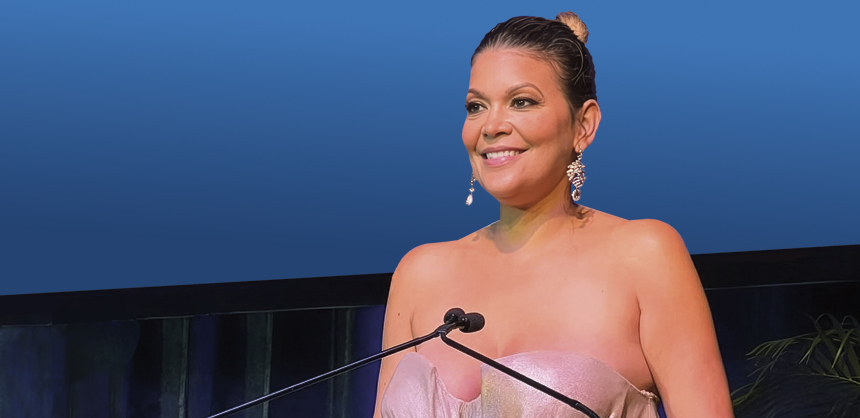
Speaker Aida Rodriguez speaks at the Multicultural Media Correspondents Dinner. Photo courtesy of ArcVoice Media
The perfect event speaker can energize a conference, ignite a sales retreat or turn a routine meeting into a moment people talk about for years. A misaligned speaker, however, can flatten the energy, confuse the message and leave attendees wondering why they showed up at all.
Finding the right voice for the room is both art and science; increasingly, planners are discovering that the best choice isn’t always the biggest name. To understand what truly matters in speaker selection, we spoke with six experts who live and breathe this world every day. Their insights reveal a clear truth: fit beats fame, and the most successful events start with understanding the audience, not the speaker.
Audience Comes First
Every expert we spoke with emphasized the same foundational principle: the search for the right speaker begins not with a name, but with the people in the seats.
Darryl Diamond, CMP, HMCC, owner/chief experience officer of Big White Dog Events, states it plainly: “Know your audience. Do they really need a big ‘keynote’ name? In many cases the best received speakers are already in the meeting’s area of focus, like an oncologist working on a groundbreaking study or a regional director who tried a new sales technique with his team. These speakers will usually cost much less and can deliver real takeaways that attendees feel their time was well spent.”
It’s a sentiment heard across the industry. Luis Vasquez, co‑founder of ArcVoice Media, says the biggest mistake planners make is starting with the speaker instead of the people they’re trying to reach. “The biggest mistake planners make is leading with a name or a topic instead of asking: who is sitting in those seats and what do they need to walk away feeling or knowing? Once you’re clear on that, the speaker search gets much easier,” says Vasquez.
Nikita Khandheria, founder and CEO of ERIA, takes the notion even further. For her, the first filter is not title, résumé or even topic — it’s sellability to the audience. “There are a lot of incredibly intelligent people, but if there’s no recognition factor, it’s harder to create excitement around the event. I’ve found that familiarity matters more than title alone,” she says.
That familiarity though, doesn’t have to come from celebrity. It can come from brand recognition, shared experience or even demographic alignment. As Khandheria explains, “A sales director from a beloved consumer brand will often resonate more than the CEO of a company nobody has heard of. Recognition creates trust before the speaker even walks on stage.”
In other words, the audience connects best with someone who feels relevant to them —someone who understands their world, their challenges and their aspirations.
Fit Beats Fame
The allure of a big name is undeniable. A celebrity speaker can boost registrations, create buzz and provide an event with a sense of prestige. But fame alone doesn’t guarantee impact on the audience.
Vasquez puts it bluntly: “Fit beats fame every time. A recognizable name with a mismatched message will underperform a lesser-known speaker who speaks directly to your audience’s lived experience. Relevance is the multiplier.”
This is especially true in corporate and incentive‑travel environments, where attendees are often looking for practical insights, inspiration tied to their roles or stories that reflect their own professional journeys.
Khandheria has seen this firsthand. She says, “The biggest mistake is choosing speakers based purely on title or popularity. Just because someone is a CEO doesn’t mean they’re interesting in a room full of people.”
Instead, she encourages planners to think about resonance — the emotional and experiential connection between speaker and audience. “The biggest thing I look at is whether the audience can personally identify with the speaker’s background or experiences. A polished keynote alone doesn’t create connection.”
This factor explains why some of the most powerful sessions she’s programmed have come from speakers who share lived experiences with the audience, not necessarily the highest-ranking executives.
Shannon Fouts, project manager II at GoGather, has seen the electrifying energy that happens when the right speaker meets the right room. “Finding the right speaker can make or break your event. I’ve attended events where the keynote session is empty and the room feels flat. The real magic is when a keynote speaker not only builds a buzz before the event but also onsite. When you can feel the energy and excitement in the room, that’s where a keynote speaker really shines and makes your event a success,” she says.
She mentions events featuring Jesse Cole, Tim Tebow, Steve Wozniak and Duncan Wardle — not because of their fame alone, but because they aligned with the audience’s goals, dreams and industry context. She says, “It’s key to find the right speaker for the attendee demographic. Who will speak to their goals and dreams?”
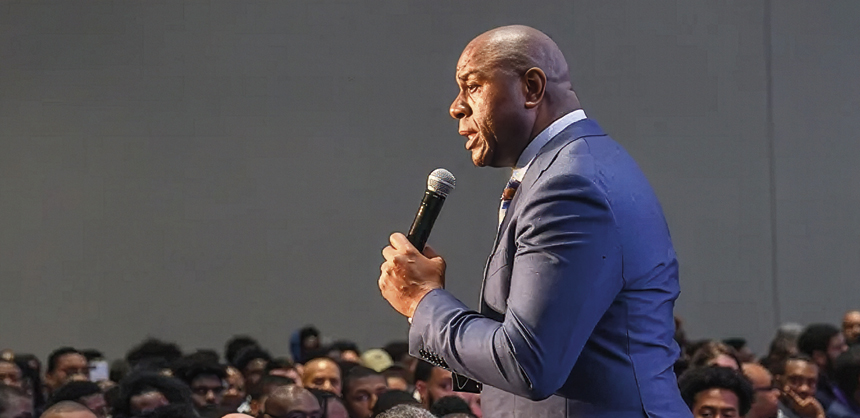
A celebrity speaker, like Magic Johnson, can boost attendance, but ensure their message fits your audience. Photo courtesy of Rave Speakers Bureau.
Shared Experience & Tailored Content
A great speaker doesn’t just give a speech — they deliver a message that feels crafted for the people in the room.
Khandheria makes this a non‑negotiable part of her process. “I always send speakers a demographic breakdown beforehand — age range, industries, roles, family status, founder vs. employee, etc. One of our highest-rated sessions happened because a speaker completely changed her examples after learning most attendees were first-time managers,” she says.
That level of customization is what separates a good talk from a transformative one. “The more tailored the content is, the stronger the audience connection becomes.”
Vasquez agrees, stressing that inspiration itself isn’t enough. He says, “Inspiration fades. Tools and frameworks stick. The best talks hand the audience something they can use the next morning.”
He urges planners to appraise speakers based on whether they offer actionable takeaways and not just colorful stories or motivation. “A keynote that changes how someone works or leads the following week — that’s what gets remembered and what makes planners look smart,” he says.
Bobbie Carlton, founder of Innovation Women, reinforces this idea with a practical lens. She asks, “Does the speaker offer actionable takeaways, not just ideas and concepts?”
She also stresses the importance of frameworks, the structured thinking that helps speakers communicate ideas clearly and efficiently. She asks, “Does the speaker have a framework that allows them to efficiently communicate their ideas?”
In short: the best speakers don’t just talk, they equip the audience with meaningful takeaways.
Vetting Speakers
Once a planner identifies potential speakers, the next step is vetting — and according to our experts, this is where many organizations cut corners.
Marc Reede, president of Rave Speakers Bureau, says the first filter he applies is simple but essential: video. He says, “If we want to guarantee that we keep this customer happy for many more meetings to come, that first filter we apply is getting a great short video from that speaker that showcases this speaker’s talents on stage.”
But video alone isn’t enough. Reede insists on a pre‑booking call or Zoom meeting between the speaker and the client. He says, “This ‘interview’ gives the customer every ability to pose any possible circumstance to the speaker to hear the speaker’s response.”
Carlton agrees that video is essential, but warns planners not to rely on sizzle reels. She says, “A sizzle reel shouldn’t be the final say on whether you book a speaker or not. It should be used to disqualify a speaker. Once you have watched the sizzle — which is just an ad for a speaker and a ‘best of’ collection — then you should request the whole presentation.”
Khandheria says you can often tell within minutes whether a speaker will be easy or difficult to work with. She says, “The best speakers immediately ask: ‘Who’s the audience?’ ‘What outcome does the client want?’ ‘What has this audience already heard this year?’ ‘How can I make this useful for them?’”
The difficult ones? “They usually make the conversation about themselves immediately— stage setup, accommodations, controlling every question or insisting on using the exact same presentation they always use,” she says.
The pre‑booking call, then, goes beyond logistics and becomes a window into the speaker’s mindset, flexibility and professionalism.
Practicalities Planners Can’t Ignore
Beyond content and charisma, the logistics of working with a speaker can make or break an event. Diamond stresses the importance of clear agreements. “Do: always get the speaker to sign an agreement clearly outlining their talk (date, time, format, topic), their other obligations (book signing, social media promo, etc), all deadlines and their compensation,” he says.
He adds, “Be clear about expectations and what happens if they’re not met.”
Diamond also urges planners to think about recording rights, rehearsals and promotional materials and asks, “Are you recording? Who controls the rights to that content? Are there rehearsals included? Will the speaker record a promo video for marketing?”
Reede highlights another logistical pitfall: timing. “Biggest mistake I see is when an organization just needs a speaker to fill a 30-minute keynote slot and they choose a speaker who (sadly) likes to talk for an hour,” he says.
He also warns about last‑minute travel issues — and the importance of having speakers arrive early enough to avoid disaster. “Another important request for a meeting professional to make is that their speaker spend the night prior to this keynote in the company’s hotel,” he says.
These details may seem small, but they can have a big impact on the success of an event.
Red Flags, Green Flags & Subtle Signals
Carlton challenges the common misconception that speakers who ask a lot of questions are difficult. She says, “More than once, I have heard event organizers say a speaker had a lot of questions, like it was a bad thing. This isn’t necessarily the red flag you might think. The savvy speaker is the well-prepared speaker.”
In fact, she states, those questions often indicate a speaker who is committed to customizing their message and delivering value.
Khandheria’s red flags are different, and often show up early. Speakers who focus on themselves instead of the audience, who resist tailoring their content, or who insist on rigid control over the format tend to be challenging partners.
Reede’s red flags are sometimes more dramatic, like the speaker who ignored a client’s request to keep things PG. “After the third swear word on stage, we were getting texts from our customer,” he says.
Green flags, on the other hand, are easy to spot: curiosity, flexibility, humility and a genuine desire to serve the audience generally reveal a speaker committed to the task.
Creative Formats
Today’s audiences are overstimulated, distracted and increasingly resistant to long static monologues. Khandheria has adapted by shifting the format rather than the speaker. She says, “I usually take risks with the conversation format rather than the person themselves. I still want someone credible and recognizable, but I’ll make the discussion itself more unexpected.”
She finds that conversational formats — fireside chats, audience‑driven Q&A or niche storytelling — create a sense of intimacy that modern attendees crave. “Audiences today want intimacy more than perfection. Attention spans are shorter, and people are overstimulated,” she says.
Reede notes that many corporate meetings now prefer moderated fireside chats for another reason: control. He says, “This takes the comfort right back to the meeting host and turns ‘unconventional’ into ‘conventional’ real quick.”
The format, thus, can be a strategic tool — one that reduces risk while increasing engagement.
The Need for New Voices
Vasquez is passionate about expanding the range of voices on stage. He says, “Don’t default to the usual voices. Every topic has its go-to experts, and most conference lineups call the same ones.”
He argues that audiences benefit from perspectives that are often overlooked. “A topic gets covered with more depth and more range when it includes perspectives that aren’t usually on the stage — women, people of color, LGBTQIA+ voices and multicultural speakers who bring vantage points the standard programming circuit often misses,” he says.
This isn’t just about representation, but delivering richer, more resonant content. “Audiences notice when a perspective feels genuinely new, and so do the people evaluating whether to come back next year,” he adds.
Carlton, whose platform represents more than 3,000 speakers, has spent decades advocating for broader representation. Her advice is simple: look beyond the obvious choices. “Sometimes, the best speakers are ‘zebras in a herd of horses.’ They are not of your industry but there are lessons that could be relevant,” she says.
Do You Necessarily Need a Speaker?
Diamond offers a provocative reminder: sometimes the best speaker is no speaker. He says, “This goes more to event design, but do you even need a speaker?”
In an era where interactivity and peer‑to‑peer learning are increasingly valued, this option is worth considering — especially for smaller groups or highly specialized teams.
Authenticity, Relevance & Connection
Across all six experts, a clear pattern emerges. The future of event speaking isn’t about celebrity, polish or prestige. It’s about:
- Relevance
- Authenticity
- Audience alignment
- Actionable takeaways
- Fresh perspectives
- Flexible formats
- Human connection
Speakers who can bring these elements to the event table, whether they’re household names or industry insiders, are the ones who elevate events from routine to remarkable.
As Fouts puts it, the right speaker doesn’t just fill a slot. They create a moment. “When you can feel the energy and excitement in the room, that’s where a keynote speaker really shines and makes your event a success.”
And as Vasquez emphasizes, the goal isn’t just applause — it’s impact. “A keynote that changes how someone works or leads the following week — that’s what gets remembered, and what makes planners look smart.”
In the end, finding the right voice for your event is about choosing the speaker who will speak to your audience, not just at them; one who will leave them thinking differently, feeling inspired and ready to take action. |C&IT|