








Outside ChancesJune 1, 2026
Creating a Memorable Alfresco Event Presents Unique Challenges By Zach ChouteauOutside Chances
Creating a Memorable Alfresco Event Presents Unique Challenges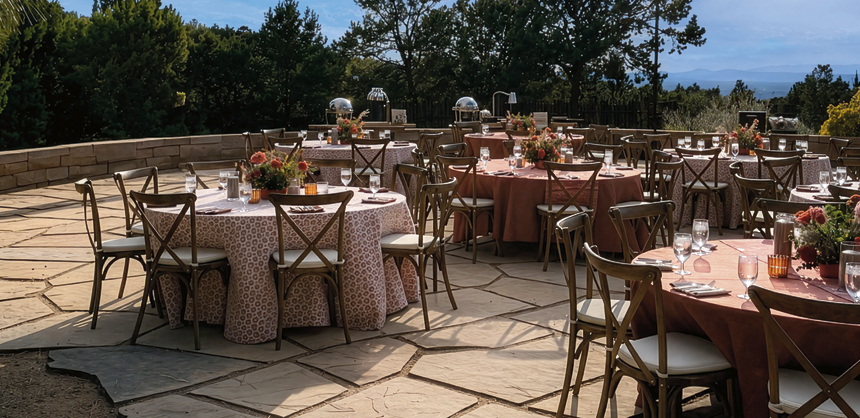
The environment became part of Parallax Group’s event at the Four Seasons Resort Rancho Encantado, Santa Fe, NM. Photo courtesy of Amanda Struss
It’s hard to deny that there’s something instantly special about an outdoor event. Attendees are removed from the indoor spaces typically associated with work and its adjoining stresses and provided with fresh air, scenery, and an atmosphere of leisure and serenity. And when it comes to a ‘sense of place,’ being in an open setting embraces a locale far more than a windowless ballroom or executive meeting hall.
That being said, alfresco affairs offer their own set of hurdles to navigate and intangibles to consider, from attendee comfort to proper décor and lighting — and even the weather and climate. So how do planners make the most of these ‘outside chances’ and optimize the environment to its fullest potential without overlooking a key detail or focusing on the wrong priorities?
We checked in with a group of knowledgeable planning professionals to gain their insights on outdoor meetings and events that leave a lasting impression attendees won’t soon forget.
Embrace the Culture
For Amanda Struss, principal of The Parallax Group in Lafayette, CO, the secret to an amazing outdoor event is not simply acknowledging the environment — it’s elevating it to the level of a cohost. At the Four Seasons Resort Rancho Encantado Santa Fe, she found a setting where the natural world can shape the core of a fresh-air function.
“One stand-out experience was a welcome dinner held on Monte Vista Terrace, where attendees were surrounded by pines, red rocks and an endless open sky,” she recalls. “From the beginning, we wanted the environment itself to feel like part of the event rather than simply the backdrop, so every element of the evening was designed to complement the setting and celebrate the spirit of Santa Fe.”
That approach drove every detail. The arrival walkway was lined with luminarias — a quintessential New Mexican touch that instantly signaled place, tradition and warmth. “Attendees were welcomed with live music and later a performance by members of a local Pueblo,” she says. The culinary program leaned into regional authenticity as well. “Dinner was distinctly New Mexican cuisine served alongside options from local breweries and distilleries. The palette of the evening drew from the surrounding landscape — rusty earth tones against the slate blue of the evening sky.”
Perfect Timing & Sensory Design
Struss stresses that timing isn’t merely a logistical factor but a design tool. She says, “We coordinated the evening so that just as the fire pits were lit and the sunset reached its peak color across the mountains, a tethered hot air balloon ascended for attendees to enjoy and photograph.”
This wasn’t spectacle for the mere sake of it; it was a crescendo in a carefully orchestrated sensory arc. “Attendees became increasingly engaged as each element unfolded — first seeing luminarias, a rare sight outside of New Mexico, then drawn in by the faint sounds of the instruments as they made their way toward the event, and finally, the thrill of seeing the firing of the hot air balloon.”
Each moment built on the previous one, forging a sense of discovery and building anticipation. “These were the types of things that would not have had the same impact in an indoor space,” she notes. The environment wasn’t just a backdrop — it was a narrative engine.
Planning for High-Altitude Unpredictability
Santa Fe’s high-altitude climate is famously unpredictable, and Struss urges planners to embrace that reality rather than fight it. “First and foremost, in a high-altitude setting like Santa Fe, weather fluctuations are simply part of the experience, so flexibility has to be built into the plan from the very beginning,” she says. “Don’t treat the backup plan as an afterthought.”
At Four Seasons Resort Rancho Encantado Santa Fe, the indoor alternatives are thoughtfully designed to maintain a connection to the outdoors — natural light, terrace access and architectural continuity. “The indoor alternative should feel just as intentional and well-designed as the outdoor vision,” she emphasizes.
Thinking Beyond the Property
Struss advises planners to “think outside the box and push boundaries on possibilities,” especially in destinations with strong cultural assets. One of her most memorable examples came from partnering with the Santa Fe Opera.
“In partnership with the Four Seasons, we had the distinct opportunity to host a beautiful plated dinner on the stage of the open-air Santa Fe Opera, with spectacular performances and a stunning sunset,” she says. “It was one of the most breathtaking and incredible evenings of my career.”
This type of partnership requires curiosity, relationship-building and a willingness to explore what’s possible beyond the resort’s footprint.
Engaging All Five Senses
Struss believes that the most memorable outdoor events enliven all the senses. “At Rancho Encantado, the landscape already provides such a strong foundation with the red rocks, pines, open sky, sunsets and crackling fires,” she says. “The goal is to design an experience that enhances that environment rather than competes with it.”
Her team often incorporates local artisans and purveyors to create authentic touchpoints. “Whether that’s a live action chile roasting station with the local grower, a hot air balloon turndown amenity that’s a nod to the famed balloon fest or gifting a set of Tesuque-based artisan hand-blown glassware after the event — the same glassware used at a dinner during the event.”
Attendee comfort is equally essential. “Something as simple as blankets draped over chairs or post-dinner lounge seating gathered around fire pits can completely change how attendees experience the evening,” she says. “Those small touches show thoughtfulness, and it goes a long way.”
Creativity Meets Practicality
Outdoor events, to an extent, require a different mindset. “Outdoor events require a different approach than indoor ones, especially when it comes to lighting, sound and attendee comfort,” Struss explains. Wind may require LED candles; sunset timing may dictate when umbrellas are removed; acoustics must be managed with precision.
“You’re not necessarily limited by the environment, but you have to ensure budget and expectations align to truly deliver an experience that takes those elements into consideration,” she says.
Ultimately, she believes the best events feel effortless. “When creativity and practicality work together successfully, attendees experience the magic of the setting without ever noticing the logistics supporting it — and that, as we say at TPG, is truly the art of hospitality,” she says.
Creating an Enchanting Experience
For Sarah Gough, events manager, of Atlas Experiences in Roswell, GA, the outdoor environment at Sedona, AZ’s Enchantment Resort was the soul of the Fiesta Di Sedona, a vibrant celebration created for Texas Lottery winners and their attendees. Held last fall, the event welcomed 160 attendees for an evening that blended cultural authenticity, local artistry and the breathtaking beauty of Boynton Canyon.
“The Fiesta Di Sedona at Enchantment Circle was designed as an immersive celebration for Texas Lottery winners and their guests, bringing together the vibrant spirit of Hispanic culture and the natural beauty of Sedona,” Gough explains. “Throughout the evening attendees explored a lively open-air fiesta featuring a curated local artisan market, live performers, regional cuisine and interactive cultural elements inspired by both Sedona and Hispanic traditions,” she says.
The event was also infused with the signature excitement of the Texas Lottery. “It was part of the Texas Lottery’s “Day of Luck” experience, created in partnership with Atlas Experiences to deliver “once-in-a-lifetime moments in one of the Southwest’s most scenic settings.”
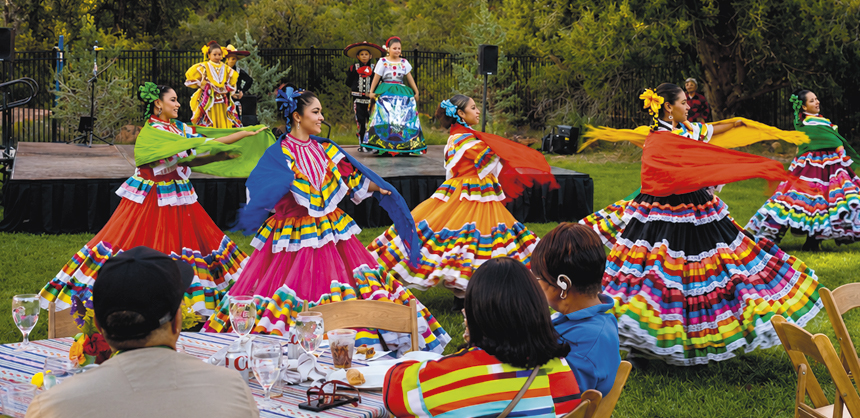
The Fiesta Di Sedona Enchantment Circle Show showcased Sedona, AZ’s, beautiful landscapes while highlighting Hispanic culture. Photo courtesy of Sarah Gough
A Landscape That Elevates the Experience
“Enchantment Resort’s outdoor setting became an integral part of the experience itself,” Gough says. The red rocks and sweeping canyon views created a naturally dramatic backdrop that elevated every moment. “The scenery was a photo opportunity in its own right, allowing the vibrant décor to pop against the rich desert tones and open skies.”
What made the setting especially impactful was the sense of immersion it created. “Surrounded by the raw beauty of the high desert, attendees felt instantly connected to the spirit of Sedona,” she notes. The environment didn’t just support the theme — it amplified it.
Details That Made the Event Unforgettable
Gough’s team layered in interactive elements that reflected Sedona’s creative and spiritual culture. “The event featured a variety of locally inspired interactive elements, including crystal agate calligraphy, crystal readings and a curated market of local artisans,” she says. These stations encouraged attendees to engage with the destination in meaningful ways while supporting local talent.
A custom photo opportunity positioned directly against the red rocks became a focal point. “It gave attendees a chance to capture the beauty and energy of the celebration in a uniquely scenic setting,” she says.
Live entertainment brought the fiesta to life. “Attendees enjoyed performances from talented guitarists, traditional folklórico dancers and lively mariachi musicians,” she says. “Together, these elements beautifully celebrated both local Sedona influences and Hispanic culture.”
Logistic Realities
Gough is upfront about the complexities of outdoor events. “Outdoor events naturally introduce a unique set of challenges and variables that require a higher level of planning, flexibility and coordination than traditional indoor events,” she explains. Weather contingencies, transportation logistics, restroom accessibility and temporary kitchen infrastructure all require careful planning.
One of her biggest lessons: the value of strong onsite partners. “The Enchantment Resort team proved to be an exceptional partner in helping anticipate these potential challenges and ensuring thoughtful solutions were in place at every stage,” she says.
Transportation and attendee flow were particularly important. “Distances may appear manageable but can feel much greater in practice for attendees,” she notes. Outdoor food service also required detailed coordination with the venue team.
Guidance for Fellow Planners
Gough’s advice is simple but meaningful: “One of the best ways to create an unforgettable alfresco event is to embrace the natural environment rather than compete with it.” Use the landscape as an extension of the design. Focus on details that complement the environment. And collaborate closely with venue and vendor partners.
“When a venue offers scenery as breathtaking as Enchantment Resort, nature often provides the most impactful décor at no additional cost,” she says.
Working with the Elements
For Melissa Soto, lead meeting planner for Lennox International in Richardson, TX, a memorable outdoor event is a symphony of sensory elements — ambience, comfort, authenticity, engagement, execution and a defining “wow” moment. “From my perspective, a truly memorable outdoor event isn’t just about a beautiful setting,” she says. “It’s about how every element works together to create a seamless, sensory experience that attendees feel part of rather than just attend.”
Her sunset reception on Flamingo Island, just off the coast of Aruba’s capital of Oranjestad, exemplifies that philosophy. The island’s turquoise water, white sand and iconic flamingos provided a stunning natural foundation — but Soto’s execution elevated it into something unforgettable.
Designing With the Environment, Not Against It
“I leaned fully into what makes the island special,” Soto explains. Arrival set the ideal tone. “Attendees were transported by private boat in the late afternoon, building anticipation and creating a sense of exclusivity,” she says. Timing was intentional: arrival aligned with softer daylight, when the heat eased and the colors of the water were at their most vibrant.
The layout respected the environment. “Rather than one central setup, the event was broken into zones — casual lounge seating near the shoreline, a bar tucked into natural palm cover and dining tables placed farther back to preserve open beach views,” she says. “Nothing obstructed the sightlines or disrupted the flamingos’ natural movement.”
Interaction with the environment was encouraged, not staged. “Attendees could walk the shoreline, take photos or simply observe the flamingos moving freely,” she says. Subtle cues ensured the animals weren’t stressed.
Subtlety as a Design Principle
Décor stayed light and tropical — “soft linens, natural textures and a color palette that mirrored the surroundings,” she says. As sunset approached, lanterns and candlelight were introduced gradually so the transition from day to night felt organic.
Sound was equally intentional. “A steel drum musician and later a mellow DJ created ambiance without overwhelming the natural sounds of the ocean,” she says.
The defining moment came at sunset. “Cocktails paused, music softened and attendees were naturally drawn toward the waterline as the sky shifted color,” she recalls. Flamingos wandered through the scene, completely unforced. “It felt like the island itself was participating in the event.”
Balancing Creativity & Practicality
“At Flamingo Island the creative vision might be ‘effortless luxury in a natural paradise’ — but making that real requires constant negotiation between inspiration and practicality,” Soto says.
Wind was a major factor. “Instead of designing a high-production beachfront dinner that risks wind disruption, we used low-profile tables, weighted décor and wind-resistant florals,” she explains.
Lighting required restraint. “Rather than relying on complex rigging, the design leans into lanterns, candles and discreet LED uplighting that won’t compete with the sunset or fail in humidity,” she adds.
Acoustics were handled through intimate programming — “a smaller speaker footprint, strategic placement and live or lightly amplified music that carries naturally over the sound of the water,” she says.
Weather contingencies were staged off-site, prepared to deploy quickly without disrupting the aesthetic.
Trends Shaping Outdoor Experiences
Soto sees a shift toward subtlety and integration. “Planners are moving away from ‘build it big’ toward ‘blend it in,’” she says. Wireless lighting, hidden audio and silent generators eliminate visual and sound clutter. Multi-sensory storytelling — menus inspired by local ingredients, ambient soundscapes and wildlife-safe engagement — creates deeper immersion.
“Even personalization is evolving — smaller, more intentional touches rather than large-scale branding,” she notes. “When those elements align,” she says, “you don’t just host an outdoor event — you create something people feel and remember long after it ends.”
A Sense of Place
If there’s a unifying theme from the expert planners we spoke with, it’s this: outdoor events thrive when they honor the environment rather than overpower it. Sierra Gillis, project manager with GoGather, captures that philosophy succinctly. “When planning events in outdoor spaces my goal is to enhance and complement the surroundings rather than detract from them,” she says.
For Gillis, that begins with design choices that feel natural to the space — colors, textures and details that harmonize with the setting.
Menu planning plays a surprisingly powerful role. “If I’m at a beachfront space surrounded by ocean air and palm trees, I’m going to plan a menu that feels like a cookout, grilled meats and vegetables and refreshing citrus drinks,” she says. “But, if I am in a rustic forest space, I’m going to plan a menu that highlights seasonal local produce and cozy comfort foods.”
She likens it to a perfect pairing. “Planning the elements of an outdoor event is like pairing a wine with the right cheese — if you don’t get it right, both can still be great; but once you get a taste of the perfect pair, it completely elevates your experience.”
Across Santa Fe, Sedona, the Caribbean and beyond, the message is clear as a blue sky: outdoor events are at their zenith when planners emphasize authenticity, anticipate challenges and let the landscape take the lead. Whether achieved via cultural integration, sensory layering, nature-driven design or just choosing the right menu for the setting, the most memorable alfresco experiences are those that feel rooted in place. |C&IT|