







Tech It to the LimitApril 1, 2026
How Innovative Tech & AV Are Reshaping Modern Meetings By Zach ChouteauTech It to the Limit
How Innovative Tech & AV Are Reshaping Modern Meetings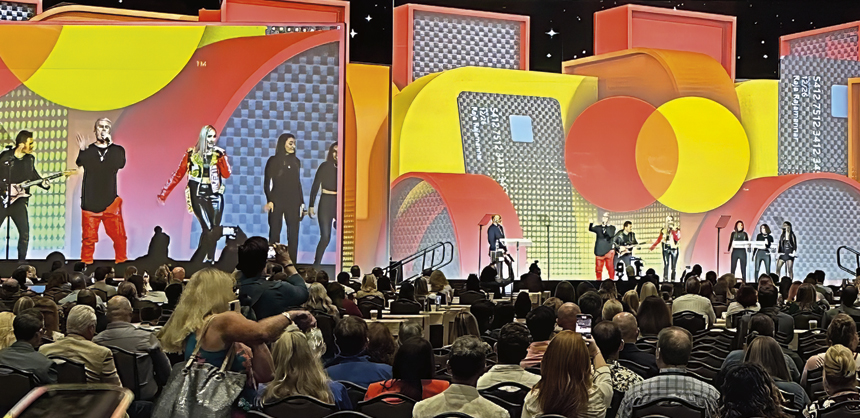
Reverse 3-D Mapping is all the rage for event planning. Photo courtesy of Event Designs New York
In the constantly evolving world of corporate events and conferences, technology has a bigger role than ever when it comes to making meetings memorable and immersive. Beyond just a support system, tech tools are typically the heartbeat of engagement, organization and impact. From augmented reality activations to AI-powered audiovisual setups, event professionals are embracing cutting-edge tools to turn traditional meetings into meaningful experiences. And increasingly, they’re turning to local tech partners who fully understand the nuances of their facilities, audiences and creative vision.
The Rise of Interactive AV Experiences
Kevin Verronneau, creative director at Event Designs New York, has helped guide technology in elevating even the most routine corporate gatherings. “Caption software and live translation software,” he notes, are among the top tech-related trends boosting current events. These tools, he says, not only enhance accessibility but can also broaden the reach of content across global audiences.
Another difference-maker? “Social media walls,” which have grown from passive displays to dynamic, interactive hubs that capture attendee attention.
“Social media walls that are interactive,” Verronneau explains, “allow user-generated content. You can integrate attendees’ photos and videos via a QR code on the wall, upload them directly to social media with the event hashtag and have them appear on the wall.” This spurs feedback and a loop of engagement, turning attendees into contributors and not just spectators.
Live polling and Q&A platforms are also gaining traction, making the old standby of ‘can I have a show of hands?’ seem a bit archaic.
“These platforms let attendees participate in live polls or ask questions during presentations,” Verronneau says. “You can display the results in real time, adding an element of excitement and instant feedback.”
AI and the AV of Tomorrow
While today’s tech may be impressive enough, the next horizon is already coming into shape. Eli Gorin, CMP, CMM, and CEO of Americas at ATS Group, is especially interested in the potential of artificial intelligence in AV. “Imagine if you could load up a presentation into an AI server that would review the presentation and provide suggestions on sound and lighting that would give the best possible effects to complement the presentation and engage the crowd,” Gorin muses.
This isn’t science fiction; in fact, AI-powered AV systems are already emerging, boasting bells and whistles like autonomous camera tracking, real-time noise cancellation and even predictive maintenance. These systems are capable of adapting lighting and sound dynamically based on speaker movement, audience feedback or even emotional tone — instantly forging a more immersive and responsive environment.
Gorin pictures a future where AI can analyze past speaker footage and tailor AV setups to fit their approach. “There is so much more that AI is going to be able to do to support our industry within all aspects that we are just starting to scratch the surface.”
AR, VR and the Immersive Shift
Verronneau sees augmented reality (AR) and virtual reality (VR) as the next big wave. “If the event has a physical component, you could create AR experiences that attendees can access through their smartphones, like product demos or immersive, branded experiences,” he says. “For VR, set up stations where attendees can interact in a virtual environment.”
These types of immersive technologies are already being used to simulate product launches, provide virtual venue tours and even play home to networking lounges in the metaverse. Based on Cvent’s 2025 event tech forecast, AR and VR are becoming more affordable and accessible, even for mid-sized events. They’re no longer just cutting-edge add-ons, but solutions for stronger engagement.
Silent Discos and Reverse Mapping: The Wow Factor
The most memorable tech isn’t necessarily the most complex — it’s the most unexpected. Verronneau, for example, mentions a recent hit: the ‘Silent Disco.’ “Attendees listen to live speakers on their personal headsets, while the venue itself remains silent to the outside,” he explains. “Each attendee receives a headset with multiple audio channels. They can choose the speaker or music they want to listen to, and the rest of the room stays quiet.”
This setup is ideal for multi-track presentations in open spaces, allowing attendees to curate their own experience without the distraction of overlapping sound.
Another big winner? “Reverse 3D mapping,” says Verronneau. This technique allows for hyper-targeted projection onto custom surfaces, turning ordinary objects into dynamic visual canvases.

Virtual Reality stations can provide deeper immersions.
The AV Pricing Dilemma and the Case for Local Partners
While the tech itself is dazzling, Gorin warns that the business side of AV can be murky. “Unfortunately, many planners are unaware of what they should be expecting when it comes to cost and service from AV providers,” he says. “Some of the pricing I have seen out there has been absolutely shocking — $2400 for a TV on a stand for a one-hour meeting? Or $850-plus for a rigging point per day?”
In response to this, Gorin emphasizes the importance of relationships and transparency. “We work with one exclusive AV provider based here in Miami,” he shares. “We work together as a partnership, as an extension of my team.” This partnership, he says allows for reasonable pricing, creative input and seamless execution — even when working with venues that have exclusive rights to services like rigging or Wi-Fi.
“The best way to find the best AV/tech firm,” Gorin advises, “is to ask colleagues who you know have experience putting on the type of shows or events that have similar AV needs as yours, and ask around for multiple options.”
Another smart approach here is working with an established firm such as Encore, with a long-established track record of providing cost-effective tech and AV solutions for events and venues of all sizes. From innovative projection mapping to LED walls and even high-tech lighting and production, they’ve rightfully earned their status as a top player in making events better.
Streaming, On-Demand and Hybrid Flexibility
The pandemic obviously boosted the demand for hybrid and virtual event capabilities, and that momentum still continues. “Live-streamed presenter and content including Q&A that is streamed and recorded to access via links provided to the clients for distribution,” Verronneau comments, is now a standard offering.
Platforms can now support real-time transcription, robust multilingual translation and automatically generated event summaries. These hallmarks are not only a boon to accessibility but also extend the event content’s lifecycle, letting attendees revisit sessions and share them with others.
Tools of Engagement and Gamification
Beyond its captivating bells and whistles, tech is also making events more enjoyable. “Use quizzes, challenges and games to encourage attendees to engage,” Verronneau advises. “You could have trivia about the event, the speakers or the organization, and reward the winners with prizes or recognition.”
Gamification strategies — like AR scavenger hunts, VR escape rooms and leaderboard challenges — have become standbys of today’s corporate events, enhancing networking, boosting energy and furnishing valuable attendee behavior data.
Personalization and Data-Driven Design
One of the most transformative recent tech trends is ‘personalization at scale.’ AI-powered platforms can now craft smart agendas based upon attendee preferences, past activity and stated goals. This can provide each individual attendee with a tailored experience, heightening satisfaction and event ROI.
Data analytics tools also assist in tracking engagement, pinpointing trends and shaping effective future events. “Data is only as good as the insights it provides,” according to Meetings & Incentives Worldwide. “Business intelligence tools help professionals turn metrics into actionable strategies that boost ROI.”
Sustainability and Security
As corporate responsibility is growing as a top priority, event tech is stepping up. Tools can now monitor carbon emissions from transportation, lodging and catering, helping planners create greener events. Security is also a key event goal, and platforms now offer GDPR compliance, ISO certifications and options for anonymizing data.
Conclusion: Tech With a Human Touch
Even with all the innovative resources, the goal of meetings remains the same: human connection. No matter how high-tech and cutting-edge the tools become, the essence of meetings and events remains steeped in face-to-face networking and conversation.
Whether a headset that lets you select your own audio adventure, an AI assistant that fine-tunes your lighting cues or a social media wall that transforms attendees into co-creators, the best event tech doesn’t simply dazzle, it deepens the attendee experience.
8 Smart Ways to Elevate Events With Modern Tech & AV
Whether you’re planning a high-stakes corporate summit or a lively networking mixer, the right technology can transform your event from functional to unforgettable. From immersive experiences to smarter logistics, here are eight powerful ways planners can use tech and AV to boost engagement, streamline operations and impress attendees.
1. Use AI to Optimize AV Design and Content Delivery
Artificial intelligence is no longer just a rising buzzword — it’s becoming a behind-the-scenes powerhouse in event planning and production. Imagine uploading your presentation to an AI platform that examines your content and suggests lighting, sound and visual effects that heighten audience engagement. Some new systems can even tailor AV setups predicated on a speaker’s style or past footage.
Consider seeking out AV partners that are delving into AI-driven tools for dynamic lighting, automated camera tracking and real-time sound modifications. Innovations like these can help forge a more immersive, responsive experience.
2. Make Events Interactive With Live Polling and Q&A Platforms
Audience engagement doesn’t need to be lifeless. Platforms like Slido, Mentimeter and Pigeonhole Live invite attendees to participate in real-time polls, submit in-session questions and view results instantly on screen. This elevates interaction and provides speakers invaluable feedback mid-presentation.
Interactive tools cultivate an environment of inclusion and keep attendees mentally on their toes and engaged. They’re particularly a big boost with hybrid events, where remote participants can sometimes feel a disconnect without active chances to get involved.
3. Turn Attendees Into Content Creators With Social Media Walls
With social media walls turning into dynamic, crowd-sourced storytelling tools, by integrating QR codes and hashtags, planners can inspire attendees to upload photos and videos that appear live on screen. This user-created content adds authenticity and doubles as organic marketing.It’s an easy way to turn attendees into collaborators and get them even more immersed in the event.
4. Consider Silent AV Formats for Multi-Track Events
Silent discos are becoming a clever solution for corporate events with overlapping sessions. Attendees wear wireless headsets and can select from various audio channels, allowing different presentations to run simultaneously in the same space sans noise interference. This potentially meets a perfect medium that can bring people together but also provides personal choices and flexibility.
Try hosting educational seminars, product demos and breakout sessions in open-plan venues. Verronneau remarks that this format “is ideal for managing noise levels at large gatherings and having multiple presentations in one large space.”
5. Stream and Archive Content for On-Demand Access
Hybrid and virtual elements are now pretty standard, but planners can go a step further by offering on-demand access to recorded sessions. This prolongs the life of your event content and reach, improves ROI and allows attendees to revisit key moments or share them with colleagues.
Select solutions that support live streaming with integrated Q&A, captioning and multilingual translation. Use branded portals or shareable links to ensure that recordings are easily accessible post-event.
6. Add AR and VR for Immersive Brand Experiences
Augmented and virtual reality are becoming accessible approaches to product demos, venue tours and interactive storytelling. AR can be easily deployed via attendees’ smartphones, while VR stations provide deeper immersion.
Verronneau advises: “Create AR experiences that attendees can access through their smartphones … For VR, set up stations where attendees can interact in a virtual environment.” These tools are very effective for tech-forward brands or experiential marketing campaigns.
7. Gamify the Experience with Challenges and Rewards
Gamification can be fun, but it’s also an established tactic to heighten engagement and retention. Trivia contests, scavenger hunts and leaderboard challenges can be customized around your event’s focus, speakers or top sponsors. Reward winners with prizes, recognition or some kind of exclusive access or experience.
Games connect with attendees’ competitive spirit and encourage exploration. Also, they’re a good way to gather data on attendee behavior and preferences.
8. Partner Smartly to Avoid AV Budget Pitfalls
Tech can elevate your event — but only if it’s cost-effective. Many planners are unaware of inflated AV pricing. The solution? Build relationships with trusted tech and AV firms who act as true event partners.
Gorin’s insight: “Ask your colleagues … for multiple options. You want to be sure that the company has an excellent team that can collaborate with your event needs and give great insights that may enhance your vision.”
Final Thought: Tech Is a Tool — Connection is the Goal
While cutting-edge gadgets and platforms are exciting, the real magic happens when technology deepens in-person human connection. Whether it’s a headset that lets attendees choose their own adventure, or a social wall that turns guests into storytellers, the best tech doesn’t just make an impression — it engages and inspires.
So, as you plan your next event, think beyond the checklist and ask yourself how tech can help you tell a better story, create a richer experience and leave a lasting impression. C&IT