








Digital WellnessFebruary 1, 2026
Overcoming Tech Overload By Zach ChouteauDigital Wellness
Overcoming Tech Overload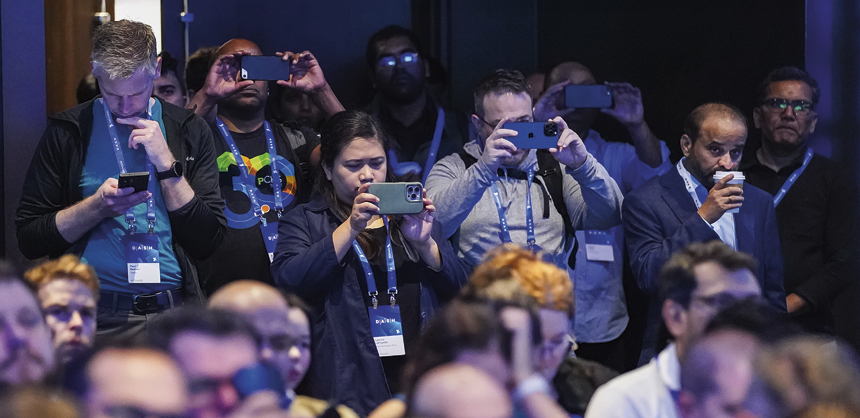
There is no escaping technology. Embracing it and adapting it to attendees leads to success. Pictured: Datadog’s DASH conference.
Within an industry — and world — that seems to become more tech-reliant on an almost daily basis, how can meetings pull off a balancing act between today’s digital tools and real-world interactions? Can a work-life balance still be achieved for both planners and attendees to find time to step away from AI and iPhones and reduce stress without impacting productivity?
The answer isn’t simple, but it’s increasingly urgent. As technology continues to permeate every aspect of event planning — from registration platforms and mobile apps to AI-driven analytics and virtual networking — planners are grappling with how to maintain human connection and mental clarity amid the digital deluge. The pressure to stay constantly connected, responsive and data-driven can leave little room for reflection or rest. And yet, the most impactful events are often those that allow space for genuine engagement, spontaneous conversation and moments of pause.
To explore this challenge, we reached out to a few corporate meeting planners and tech event experts for a deep dive into the topic. What we uncovered was a wealth of strategies to occasionally unplug without completely disconnecting — methods that support both productivity and wellness in a tech-saturated environment.
Knowledge is Power
Jim Spellos, owner of Meeting U, is widely regarded as one of the most influential tech educators in the meetings industry. Known for his engaging sessions on productivity apps, social media platforms, digital security and AI, Spellos has long championed the smart use of technology — not just its adoption.
When it comes to how much tech is too much, Spellos emphasizes a foundational principle: know your audience.
“Planners first need to understand the tech savvy-ness of their audience,” says the meetings tech guru. “Probably easier than it sounds … you know your customers and have a sense of the tools they use. But making sure the tech is in the sweet spot of where they are comfortable is really a low-tech conversation.”
Spellos encourages planners to engage in direct dialogue with attendees to better understand their preferences and comfort levels. This can be done through pre-event surveys, informal focus groups or even post-event feedback loops. The goal is to ensure that technology enhances the experience rather than overwhelms it.
“Ask the attendees questions that can help further gauge your knowledge. Find out what they think the meeting should do with respect to technology — or what other meetings they attend actually do — that it isn’t yet doing. I know it’s old school but having a group of attendees you can tap into can really help.”
This kind of proactive engagement not only helps tailor the tech experience, but also builds trust and rapport with attendees. It signals that their comfort and preferences matter, and that the event is designed with their needs in mind.
Spellos also cautions against overloading events with too many new tools at once. While innovation is important, it should be introduced thoughtfully.
“Meeting tech, especially the use of AI in the past few years, is changing how things are done. Staying up with trends, including reading industry magazines like this and attending industry events, is still essential for meeting planners. I wouldn’t be afraid to try a new tech every meeting, but integrating multiple different techs might be considered too much by your attendees.”
The key, he says, is moderation and relevance. Not every shiny new tool needs to be part of the event. Instead, planners should focus on technologies that genuinely enhance the experience and align with attendee expectations.
“There is no perfect infusion of technology at events, the same way there’s no perfect catering menu or perfect event destination. Everybody sees things through their own personal lens.”
Spellos recalls the early days of facial recognition in event registration — some groups embraced it, while others saw it as invasive. The takeaway? Tech should be tailored, not templated. Understanding the cultural, generational and professional makeup of your audience can help determine what tech feels intuitive versus intrusive.
Ultimately, Spellos believes that thoughtful tech integration is less about dazzling attendees with innovation and more about meeting them where they are. It’s about creating a seamless experience that feels intuitive, respectful and empowering. When planners take the time to listen, adapt and personalize, technology becomes a bridge — not a barrier — to connection. In a landscape where digital fatigue is real, that kind of intentionality can make the difference between a good event and a truly memorable one.
Battling Burnout, Embracing Balance
For planners, tech burnout isn’t just theoretical — it’s personal. Alicia Turlington, CMP, a corporate meeting planner with Full Circle Group, has experienced firsthand the toll that constant connectivity can take.
“During the event cycle phase, I am constantly either on my phone or laptop checking emails, text messages about the event, managing the registration platform, social media, finding vendors, sourcing vendors, reading reviews, scoping speakers, researching speakers, the list goes on and on,” she explains.
This nonstop digital engagement can lead to physical and emotional exhaustion, as Turlington discovered. “I am usually in a constant state of juggling all things related to an event. It’s no secret by any means, but I recognized the burnout by feeling a sheer state of exhaustion and actually seeing my motivation diminish to keep moving forward in getting the job done, she adds.
Her coping strategies are refreshingly simple — and effective. Whether it’s stepping outside for fresh air, squeezing in a quick workout or indulging in a favorite TV show, these moments of pause help her reset. “I will drop everything and go outside and take three breaths, or do a quick workout, or turn on the TV and watch an episode of the latest series that I am into,” she says.
These micro-breaks serve as a mental reset, allowing her to return to her tasks with renewed focus and energy. They also reflect a growing awareness in the industry that wellness isn’t a luxury — it’s a necessity.
Turlington also integrates wellness into the attendee experience. She has found that these offerings are not only appreciated but impactful. “I have included morning yoga sessions and mindfulness breaks, and the response was that it was a nice added touch,” she says.
She believes that the key to supporting a healthy work-life balance lies in intentionality and flexibility, as well as making work/life balance a goal and being aware and intentional of what that means and how to incorporate it, in addition to being flexible with schedules.
Time, she notes, is the most precious commodity — and the most elusive. “I always say I do not have enough time in the day. In a very constant environment, time goes by fast, and I can get overwhelmed. Pausing and taking a break to breathe, or meditating, helps me reset, and even taking an extended lunch helps me to keep going in the afternoon,” she says.
Her insights highlight a crucial truth: digital wellness isn’t just about limiting screen time — it’s about reclaiming time for rest, reflection and real-life connection.
Turlington’s experience underscores a broader shift in the meetings industry — one that values sustainability not just in logistics, but in human energy. As planners continue to navigate high-tech demands, embracing balance becomes both a personal and professional imperative. By prioritizing wellness for themselves and their attendees, they’re not just avoiding burnout — they’re redefining success. In today’s fast-paced environment, resilience starts with rest, and meaningful connection begins with mindful intention.
Encouraging Words
Jody Brandes, CMM, CTSM, CMP-Fellow, HMCC, associate director of internal meetings and strategy at Gilead Sciences, offers a pragmatic approach to encouraging real-life interactions in tech-heavy environments.
“Set out communal tables & lounge-type furniture with charging stations to encourage real-life interactions while attendees are near their devices,” she says.
Her strategy blends convenience with connection — creating spaces where attendees can recharge both their devices and their social batteries. These hybrid zones allow for organic networking while still accommodating the digital needs of modern professionals.
Brandes also recommends incorporating give-back activities that foster engagement and purpose. She says, “Create give-back activities, such as putting together hygiene kits for a local homeless facility, that makes them put down their devices and do something good, while also networking with each other.”
These activities not only promote social interaction but also instill a sense of shared mission and community. They remind attendees that events can be more than transactional — they can be transformational.
When it comes to work-life balance, Brandes believes it’s a personal journey. Planners can encourage wellness, but ultimately, individuals must define their own boundaries. “Everyone has their own definition of balance,” she says. “For some, it’s turning off email notifications on their phone. For others, they need to check email on weekends to clear out junk/spam.”
Her insights on tech usage at events reflect a measured approach. Mobile apps and polling software are useful tools, but only when they serve a clear purpose. “We have found for our attendees that their main interest in technology is to use a mobile app for the meeting agenda and general information. We use polling software — such as Slido — for on-the-spot feedback and engagement.”
Gamification, she notes, can be a powerful motivator, especially for competitive teams. “Sales teams are more competitive and will participate in gamification, especially if there is a prize or reward,” she explains.
Brandes’ approach is a reminder that digital tools should serve the event’s goals — not distract from them. When used thoughtfully, tech can enhance engagement, foster connection and support wellness.
Brandes’ perspective reinforces a central theme: technology should be a bridge, not a barrier. By designing experiences that blend digital convenience with human connection, planners can cultivate environments that feel both efficient and empathetic — where attendees leave not just informed, but inspired and genuinely connected.
Relying on the Right Tools
Eli Gorin, CEO of Americas at ATS Group, emphasizes that technology is now embedded in every phase of event planning — from ideation to execution. “We are totally reliant on technology within the research, design, planning, coordinating and evaluation phases of our events,” he says.
But with so many tools available, the challenge becomes one of discernment. “The real issue now is wading through the tons of technology out there that is available and finding the right things that will help streamline the process,” he adds.
Gorin advocates for thorough research and strategic integration to avoid tech overload. He also highlights the importance of internal coordination and clear standard operating procedures to ensure seamless collaboration. “Proper coordination within the team is key to ensure that no matter who is updating is doing so in a way that everyone can understand and pick things up where they left off,” he explains.
Work-life balance, he argues, is a systemic issue — one that requires cultural change within organizations. “There is an expectation of planners to be on-call 24/7, which is not OK and it’s also something that should not be expected of our teams,” he says.
Boundaries, he says, are essential — not just for wellness, but for sustainability. “If there is no real ability to have work-life balance because of an overwhelming amount of work, then there needs to be a real reassessment of how things are being done internally,” he adds.
Gorin’s perspective underscores a critical point: digital wellness isn’t just about individual habits — it’s about organizational culture. Companies must recognize that constant connectivity can erode productivity and morale over time. By setting realistic expectations and encouraging downtime, they can foster healthier, more sustainable work environments.
The Final Word
Kate McCarthy, CMP, director of global events with Datadog, is a vocal advocate for better balance — but admits that stepping away from tech is easier said than done. “My only observation is that work-life balance seems to be more of an expectation now than when I started my career 20-plus years ago, which is nice to see, and I support the people that work for me in the boundaries they set for themselves,” she says.
Her anecdote about vacationing without a laptop — only possible in the remote wilds of safari — speaks volumes about the modern planner’s reality. “I think the only time I didn’t take my laptop on vacation was when I went on safari and knew they didn’t have internet!” She says.
McCarthy’s story is a fitting metaphor for the digital wellness dilemma: escaping tech often requires escaping civilization itself. But even if total disconnection isn’t feasible, small steps — like setting email boundaries or carving out tech-free time — can make a meaningful difference.
A New of Kind of Connection
As the meetings industry continues to evolve, the challenge of digital wellness will only grow more complex. But the insights shared by these experts offer a hopeful roadmap: one that blends innovation with intention and productivity with pause. From communal lounges and mindfulness breaks to strategic tech integration and cultural shifts, the path forward isn’t about abandoning technology — it’s about using it wisely; the focus should be on creating events that energize rather than exhaust, and fostering environments where both planners and attendees can thrive.
Ultimately, digital wellness is a necessity, not a trend. And with thoughtful planning, open dialogue and a willingness to reassess, the meetings industry can lead the way in redefining what it means to connect. By prioritizing human needs alongside digital tools, we can build experiences that are not only efficient but also emotionally resonant. C&IT