








Leave No Attendee BehindDecember 1, 2025
Ensuring Accessibility is Key By Matt SwensonLeave No Attendee Behind
Ensuring Accessibility is Key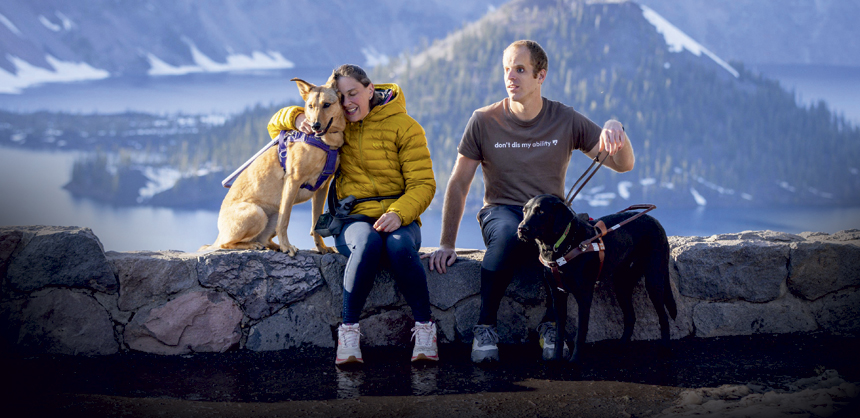
Travel Oregon recently worked with Wheel the World to get Oregon classified as the first state to be “Accessibility Verified.” Photo courtesy of Travel Oregon
Jake Steinman, founder and CEO of the TravelAbility Summit, used to describe the annual event as a travel conference built around accessibility and not an accessibility conference built around travel.
His mindset changed when the lone deaf attendee at a past event gave him a piece of her mind when she learned no American Sign Language translators were onsite. “I realized we need to walk the walk,” Steinman says.
As proof of progress, TravelAbility hosted 21 influencers with various disabilities at its 2025 conference in Oregon at Sunriver Resort, a scenic, outdoorsy destination near the Cascade Mountains that is about 45 minutes from the closest airport.
Nevertheless, Travel Oregon was the first bidding on the event with the intent of proving they are a model of accessibility, notes Steinman, who launched TravelAbility in 2019 and has created a range of travel-based conferences over the past quarter-century.
The fact that a conference dedicated to improving the experience for disabled travelers required a wake-up call is just one example of how the events industry lags behind serving a vast community many will eventually join as they get older.
According to the 2024 Destinations International’s Global Accessibility Report, 35% of survey respondents had the resources in place to make the meeting and event experience more accessible. That means that more than two-thirds were not prepared to meet the demand.
Meanwhile, Longwoods International, a hospitality-centered research firm, found in 2023 that 17% of American travelers identify as having a disability.
Arturo Gaona, chief partnerships officer & founding member at Wheel the World, an online platform that provides accessible travel planning and booking services for people with disabilities, estimates that the accessibility travel market is a multibillion dollar industry. But it has the potential to be much more, he says.
The travel industry has not been actively taking care of travelers with disabilities, he says. “Eighty percent of them are having bad experiences.”
While Gaona isn’t distinguishing between leisure and business travel in his analysis, evidence points to the meetings industry struggling to match the demand from those who need an extra hand.
Sherrif Karamat, CAE, president and CEO of the Professional Convention Management Association (PCMA) and the Corporate Event Marketing Association (CEMA), is among those ready to see improvements. “One area that I’m hoping that all of society can do better for is people with disabilities and special needs,” he says. “I don’t think that we do a good enough job.”
Customer Care
Rosemarie Rossetti, PhD, a noted consultant, speaker and author regarding accessibility in travel and events, who uses a manual wheelchair, often sees the lack of attention and customer care her work bemoans.
During a recent stay at a Las Vegas resort during IMEX America 2025, she experienced the frustrations that can turn off disabled individuals from traveling. First, the clothing rod in her closet was too high for her to reach. Fortunately, her 6-ft.-4-in. husband was traveling with Rossetti and could hang the clothes.
She also asked for a mini-refrigerator to store medicine at 42 degrees Fahrenheit. The hotel brought up a cooling unit that “could fit only one can of pop,” says Rossetti, who is based in Columbus, OH. The refrigerator only got down to 52 degrees, adds Rossetti, who tested it with a thermometer.
Despite complaints about both situations and assurances from management that improvements would be made, nothing changed during her stay.
This scenario is a reminder that planners can’t focus solely on meeting spaces when trying to create the best experience possible for attendees. The hotels they stay in and the destinations in which the event is held play important roles in how a conference is viewed, whether the attendee uses a wheelchair, is hard of hearing, has vision impairment, is neurodivergent, etc.
If the hotel’s elevators aren’t working, the doors are too heavy to open, the streets aren’t wide enough for wheelchairs or hospitality staff fail to show empathy, travelers with disabilities will remember and hold a grudge.
“How do you want the attendees to feel emotionally? Do you want them frustrated, angry, complaining, going to the extreme of posting on social media?” she asks. “They need to be treated equally.”
Steinman recalls complimenting a Salesforce event planner for offering accommodations for accessibility. Rather than simply accepting the compliment, the planner lamented that, despite her best efforts, disabled would-be attendees were so traumatized from poor travel experiences that they refused to go to the meeting in question.
“The bar is so low to seem welcoming,” Steinman says. “Whatever you do, it’s better than nothing.”
Leslie Walker, CHSP, CATP, who plans TBEX, a series of domestic and international summits for travel writers, and helps DMOs create inclusive travel campaigns, says there is no excuse for events not to provide opportunities to attendees regardless of abilities. “Ignoring accessibility isn’t a small oversight,” says Walker, who is a Creative Tourism Consultant for Leslie Walker Consulting. “It’s choosing to leave part of your audience at the door.”
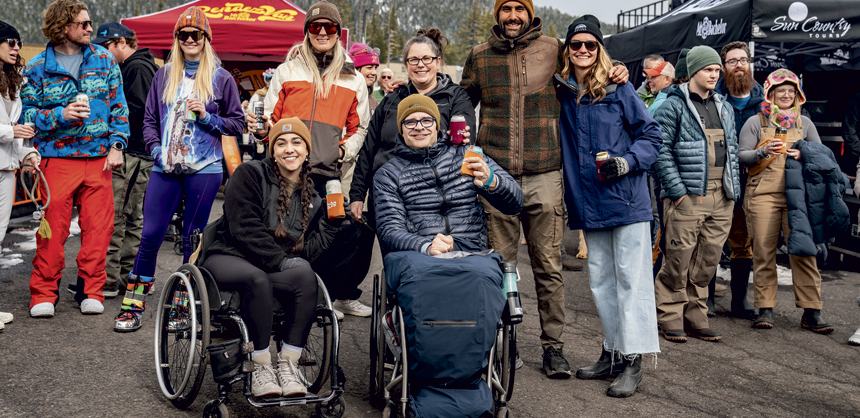
$58.2 billion is spent yearly by travelers with mobility disabilities. Pictured: Wheel the World and Visit Central Oregon promote accessibility. Photo courtesy of Wheel the World
Three Pillars of Accessible Travel
Amid the push from advocates to increase accessibility is the fact that Americans are living longer and working later in life. About 19% of adults ages 65 and older remain employed, compared to 11% in 1987, according to the Pew Research Center. The trend isn’t likely to slow down as Millennials age past 60. According to ZenBusiness, a company that helps entrepreneurs launch small businesses, 49% of Gen X are unsure if they can retire by age 65.
Companies have to take this segment of workers into consideration when planning events, notes Walker. And among the side effects of growing older are mobility challenges and diminished senses such as hearing and vision.
A National Poll on Healthy Aging sponsored by University of Michigan found that 19% of those over 50 identified themselves as having a disability. But the number jumps to 50% when factoring in physical, mental or cognitive functions listed on the Census Bureau’s American Community Survey (ACS) and in the Americans with Disabilities Act (ADA). Says Steinman: “Everybody knows somebody in their family that has a disability.”
Nevertheless, attendees with special needs remain underserved.
John Sage, CEO and founder of Accessible Travel Solutions, frequently consults with events on their inclusion efforts. The company assisted PCMA’s Convening Leaders the past two years. He says accessibility must be built on “Three Pillars of Accessible Travel:” facilities, customer service and information. Most organizations only focus on the first, but true accessibility requires all three, Sage says.
Before educating attendees on their options during conferences, companies need to be better informed themselves. Sage, who has used a manual wheelchair since suffering a spinal cord injury, notes he is the only CEO focused on accessibility serving on the World Travel and Tourism Council, an organization with about 200 members.
The lack of representation contributes to the missing knowledge and foresight needed to better serve attendees with disabilities, Sage says. “Companies in the travel industry don’t have much internal accessibility expertise, nor do they have accessibility tools,” he notes.
Rossetti, who has also assisted with PCMA and spoke on accessibility at IMEX America, says some basics that able-bodied individuals take for granted are often missed. Common concerns include:
- Restrooms with heavy doors, lack of power-assisted entry, double-door designs and inaccessible single-use facilities.
- Elevators closing too quickly, which poses safety risks. She notes injuries have occurred when timing is out of compliance.
- High food stations and buffet setups often prevent wheelchair users from accessing selections. Rossetti recalls not being able to see mashed potatoes at a shepherd’s pie food station.
The Role of the ADA
Planners relying upon venues’ ADA compliance are not covering the complete picture, Gaona says.
The federal guidelines are a good start but are dated. Additionally, he says the yes/no nature of accreditation doesn’t have the nuance travelers with special needs seek. Wheel the World measures hundreds of elements of venues and presents information to its users, who can then choose whether to book a hotel or other venue.
Sage adds the ADA only takes into account about 60% of factors his team evaluates. Among the most pertinent information lacking are furniture placement, bed height or shower reachability. “Doing accessibility right doesn’t just benefit disabled attendees. It shows that your business actually cares,” he says.
Steinman’s summits are built upon the foundation that the ADA doesn’t mandate what information venues provide to guests. “That means that if it works for half the people and doesn’t work for the other half, you don’t know which half they’re in until you get to the meeting, hotel or restaurant,” he says.
The TravelAbility Summit tries to fill that gap by bringing information directly to destination leaders, including CVB and hotel chain representatives who can enact change. The event includes a “Shark Tank” featuring the latest tools to serve travelers with disabilities.
Among the adaptive technologies presented recently is a battery-operated door hinge that can be installed in about 10 minutes for a fraction of the cost of installing fully automated doors. Hearing loops, assistive listening systems that send sound directly from a sound system to a hearing aid and live transcription services are other available options for planners.
Rossetti also notes that she and her husband helped with the design of a new Maker Table that fits five individuals in a wheelchair. The innovation, which features a paddle that adjusts the table height, debuted at EDspaces, a conference exploring the future of learning environments.
Steinman notes organizations like his can write off half of the cost for accessibility upgrades. “This is the intersection of economic value and moral value,” he says.
The Business of Doing What’s Right
To put the financial stakes in perspective, here are some statistics from MMGY Global worth noting:
- $58.2 billion is spent annually by U.S. travelers with mobility disabilities.
- 96% of travelers with mobility disabilities report experiencing accommodation issues during their trips.
- 86% have faced challenges with flights, including damaged mobility aids and inadequate assistance.
- 79% have encountered transportation issues at their destination, from inaccessible taxis to limited options for getting around.
Recognizing the connection between improved hospitality and greater revenue, destinations across the country are stepping up their efforts.
The greater Miami area became the first region that Wheel the World accredited as “accessible-verified.” Recently, Travel Oregon became the first to achieve the status on a statewide level.
Travel Oregon distributed nearly $9 million in grants, including $6.2 million to 65 projects in the past year, to ensure 20% of the state’s offerings met Wheel the World’s standards. All told, more than 750 hotels, restaurants and tourism businesses in 43 communities across the state were part of the effort. “This is the largest endeavor that a destination has ever done for accessibility in the world,” says Gaona, who adds that New York and Michigan are other states making significant strides.
Expedia Group research shows members of often overlooked travel segments respond favorably to brands and organizations speaking to their needs.
- 73% of underserved travelers are more likely to book again with brands that promote inclusive practices, compared to 62% of the general population.
- 76% of underserved travelers believe it is important to see themselves reflected in travel ads and promotions, compared to 69% of the general population.
Sage and Rossetti report popularity leading tours of convention centers for attendees in wheelchairs so they can see configurations and setups firsthand.
What Can Planners Do
Based on her experiences during interactive education sessions, Rossetti believes meeting planners are well-intentioned but lack the knowledge to proactively address accessibility concerns. Planners asked questions about stage setup, mobility concerns and AI-powered technology to address needs, she says.
Sage recommends event organizers begin with what they can control, such as improving registration questionnaires. “Open text boxes asking for accessibility needs don’t work because attendees won’t write paragraphs, can’t know what’s possible onsite and many don’t self-identify as disabled,” Sage says.
He adds that RFPs should by default include accessibility disclosures for all venues. The information provided in responses allows planners to assess the situation ahead of time. And, by asking the questions up front, organizations are implicitly encouraging improvements from venues behind the times, he says.
“The purchasing power of event organizers and business travel managers is enormous,” says Sage.
Organizers can’t only rely on negative feedback to create improvement plans, Sage adds.
According to Sage, three “silent groups” exist:
- People who don’t complain
- People who won’t return
- People who never registered due to lack of trust or information
Steinman, for his part, is trying to lead by example. The 2026 Summit in Tampa, FL, is purposely being designed to be a model for hospitality members to follow. He is asking Wheel the World to inspect the venues and will adhere to best practices. “We want the host to be a model for an accessible city of the future,” he says.
Brand reputation is on the line for organizations and companies who don’t address accessibility. “Poor accessibility damages attendee experience and can lead to frustration, social media backlash, complaints to boards, or long-term reputational harm,” says Rossetti. C&IT