CIT-Feat6-Crisis-147x147-1

Communicating In A Crisis: A Good Communications Plan Is Crucial To Keep Attendees Informed

DepositPhotos.com

The worldwide coronavirus outbreak underscores the need for planners to have crisis management plans. But a plan that doesn’t include a way to formally reach attendees or, if needed, emergency personnel, is incomplete at best. At worst, a non-existent or incomplete crisis communication plan (CCP) can exacerbate a crisis.

“If you don’t have a formal crisis communication plan, it’s too often that either nobody will respond to the problem, or too many people will, and there will be a conflict in messaging,” says Cindy Y. Lo, DMCP, CEO, chief event strategist at Austin, Texas-based Red Velvet Events.

Says Darnette Holbert, senior conference manager at Atlanta-based Meeting Expectations, “It’s more important than ever to have a plan in place. The CCP is the guiding document for the best way to respond, whether the crisis is caused by an active shooter, Mother Nature, civil disorder, data breach or something as simple as food poisoning.” Holbert helped create crisis response plans for Meeting Expectations.

Don’t Damage the Brand

Planning experts say that lack of a CCP or a poorly executed one can damage a planner’s reputation and professional brand. It can delay resolution of a crisis, thus increasing attendee anxiety or anger, which could be directed at planners. It can also hurt the financial bottom line of planners and stakeholders.

A CCP is far from a crisis panacea, but it’s always better to have one than not. “It cannot protect against acts of God, but it can be proactive in response and preparedness,” says Lynnea Walsh, director of operations for Total Event Resources. “It can also be proactive when determining threats that could happen based on political unrest, etc.”

A comprehensive CCP can make a crisis more bearable for everyone involved. “A good CCP can mitigate the impact of a crisis and it can identify and share specific scenarios, identify actions to take and the people responsible for them,” says Catherine Chaulet, president and CEO of Washington, D.C.-based Global DMC Partners. “This exercise is critical to avoid panic and aggravating the crisis.”

Alan Kleinfeld, CMP, LEO, director at Arrive Conference Solutions, which specializes in meeting safety and emergency plans, agrees. “Even before the extent of a crisis like the coronavirus is known, a good CCP can begin to inform audiences,” Kleinfeld says. “A CCP can dissipate tension and help people prepare. Sometimes, saying something as simple as, ‘We know something is happening, we’re on top of it and will be in touch as info becomes available’ can be beneficial and relieve anxiety.”

Rapid and competent execution of a CCP is crucial to its success. “The faster the plan is put into action, the sooner questions can be answered versus leaving room for unnecessary and sometimes wrong interpretations,” says Nikole Fridenmaker, CMP, CMM, owner of Fridenmaker Consulting, LLC, an Oviedo, Florida-based meeting and event management and consulting firm. “Delaying or waiting to see if a threat is ‘real’ could absolutely cause irreparable damage.”

Adds Fridenmaker, a 20-year corporate planning veteran, “A solid plan, quickly executed, can help people feel more secure during a crisis just by letting them know there are plans in place and that professionals are executing them,” she says.

Without prompt, consistent communication, the CCP team will constantly be playing catch-up to bad information. “Misinformation spreads faster than truth, especially if the truth is less dramatic, so it is important to make sure the truth is communicated accurately and quickly,” says AJ Bownas, vice president of event management for CSI DMC.

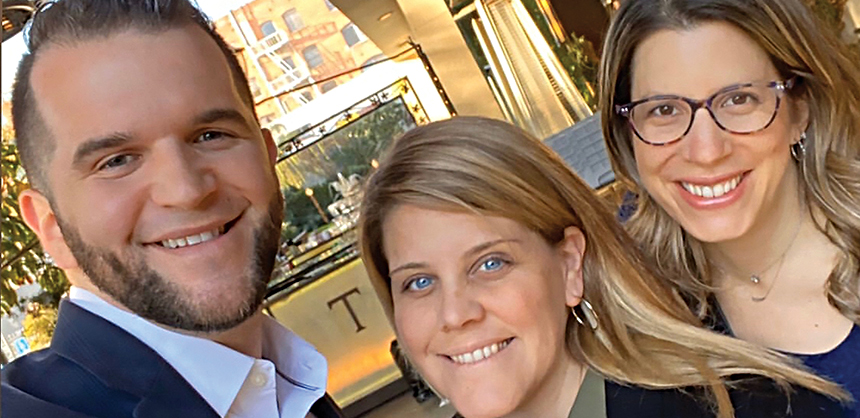
CSI DMC staff members Rachel Carey and Sean Thorndike. Experts say it’s important to communicate before, during and after an event. Photo by Joe Underbakke

CSI DMC staff members Rachel Carey and Sean Thorndike. Experts say it’s important to communicate before, during and after an event. Photo by Joe Underbakke

Here’s Good Advice

Experienced planners offer the following advice regarding all aspects a good CCP and prompt execution:

• Identify a process for figuring out unknowns. Be transparent, even about what can’t be disclosed and why.

• Explain upfront the concerns and issues involved, and questions that must be answered. Kleinfeld advises planners get an early start on CCP planning. “In reality, a CCP needs to be executed before a crisis,” Kleinfeld says. “The foundation of the plan should be well developed ahead of time. Team members should have roles assigned and have pre-scripted comments, filling in details later, for social media ready to go.”

• Set a goal for the CCP. The plan should aim to keep attendees informed and safe. The objective should also be to provide quick, consistent and accurate release of information to various audiences, including attendees, stakeholders, vendors, DMOs, social media and corporate officers.

• Brainstorm to anticipate potential scenarios. According to Holbert, “The most important thing for any crisis communications plan is to consider potential impacts that could arise. Basically, ask yourself to imagine all possible crisis scenarios, prepare plans and compile all the key contacts who would be needed in those situations.” Holbert says key contacts should include the project planning lead, client account executive, lead client contact, hotel lead, venue lead and client security lead, if applicable.

• Consider the types of crises that can activate the CCP. Says Fridenmaker, “If there isn’t an immediate threat, know what hierarchy of decision-making needs to take place in various scenarios to activate the CCP.”

Adds Chaulet, “Every plan should have an Identification/Analysis of Crisis section providing details on how the crisis is to be identified. Also, rank potential crisis scenarios from most dramatic to most problematic.”

• Form a crisis communication team to create messages, and determine the medium and timing for delivery. Kleinfeld advises that the CCP team should include a range of professionals involved with the meeting. He says, “It’s going to vary, but it could easily include people from the executive office, human resources, legal, communications/PR, IT and, of course, meeting planning. Subject matter experts may also be required, depending on the situation.”

When navigating the CCP, team planners should consider the management styles of stakeholders and corporate executives. “Some companies delegate authority better than others,” Fridenmaker says. “Sometimes, the person at the very top wants to be involved in all of it, so I think that your plan has to be created and put in place with the organization’s structure and culture in mind. But clear roles and everyone understanding those roles is critical.”

Fridenmaker also suggests that CCP team members have the qualifications and experience for the vulnerabilities you are most likely to face, and says it’s also important to know who the possible external partners will be and secure them well before a crisis. “Outside legal counsel and public relations are two areas that should be identified in your plan,” she says.

• Assign a team member to communicate with each audience. Having one person communicate with all audiences slows response and can create confusion among attendees and the public. Also, media statements should be shared with the entire CCP team to enforce one message and avoid conflicting information, Chaulet says. “In all major crises, the trap is to let the wrong people communicate, especially those who will let their emotions — which will be heightened from the crisis — get in the way,” she says. “A good communication plan will allow for real and accurate information to be shared by the right knowledgeable people even if it means sharing that they are not able to answer right away.”

• Determine which communication channels are best for reaching each audience and ensure that whoever handles live media can calmly respond to tough questions under pressure and is trained for the task. “A spokesperson needs to be assigned and that could be an executive, a PR person, a subject matter expert or any other staff who’s done some spokesperson training. Another important role is the person who coordinates team roles and the flow of information, and tracks what’s communicated to provide feedback on how messaging is received,” Kleinfeld says.

After It’s Initiated

Once a planner initiates a CCP, it must run as smoothly as possible to have the most impact. That’s why it’s crucial for the CCP to include a communications flow document. “It’s imperative for all size groups, “ says Walsh, who helped develop crisis plans for Total Event Resources. “Depending on the size of the group, and the reason for the meeting, communication flows can be complex.”

According to Chaulet, “A communications flow document is extremely critical as it helps all parties have a common document to work from, and anticipates questions that may not be thought of at the time of the crisis.” The flow document should give clear guidelines on who is, and is not, in charge of communication to specific audiences and stakeholders. The document should also include which crisis communication team members should reach out to various audiences and through which mediums. “A flow chart shows who the main contacts and alternative contacts are — always have at least two — when the crisis should be escalated to the main contacts and who can communicate key details,” Chaulet says. The flow chart should include each person’s title as well as all their contact information, she adds.

It’s also important to work closely with hotel and venue partners regarding their crisis plans. “The CCP should include the hotel’s security information and basic information about the hotel itself, such as whether the facility has a public address system,” Holbert says. The most effective CCPs are tailored to each meeting and don’t adapt a one-size-fits-all generic plan.

“A template might be a possibility but, as with emergency response plans, a CCP needs to be reviewed, rewritten and revised based on location, date, size of event, number of attendees, staff skills, etc.,” Kleinfeld says. “Get in the habit of reviewing and revising the CCP with each event or meeting you plan. ”

Fridenmaker says, in her experience, tailoring CCPs to specific meetings is paramount. “Destination is usually a secondary consideration, unless those destinations are in areas that are high-risk for terror events, social unrest or corporate ransoms. For example, “Are you holding a board meeting with key principals in your organization that need to be treated differently due to risks? Are you hosting a conference in the U.S. with a high-percentage of non-U.S. attendees?” Fridenmaker asks.

She once initiated a CCP at a meeting in Budapest with 800 U.S. corporate attendees. They were scheduled to return home via connections in Munich and Frankfurt. “At the midpoint of the conference, we learned of terrorist threats in Germany and that the U.S. State Department was recommending not to travel through the country,” Fridenmaker says. “We activated our crisis communications plan. The plan had our staff and leadership contact information, and emergency contacts, at-the-ready so we could move quickly. The CCP called for staff and leadership onsite to work with our human resources and our travel department.”

Finally, Fridenmaker presented a plan to the leadership team that would allow for all flights to be rerouted through other airports. “It was critical to the success of our program that we did not cause alarm amongst our internal team while we worked to resolve the issue,” she says. The CCP allowed her to avoid making several small decisions onsite that could have stalled response to the situation. “Thanks to having a plan, we were able to successfully overcome a significant challenge with little to no impact on our attendees and organization,” Fridenmaker says.

Holbert says it’s important for the CCP to anticipate worst-case scenarios when meeting in the U.S. and especially abroad. “The most important thing for any crisis communications plan is to consider all potential impacts that could arise for your meeting,” Holbert says.

While creating a CCP is time consuming, if it’s ever needed, it will likely turn out to be one of the best time investments a planner can make. C&IT


CIT-Feat5-Tech-147x147-1

Meetings Technology Is Evolving To Help Planners Deliver More Of Everything For Attendees

DepositPhotos.com

Here’s one thing we know: Technological advancements within the meetings and events sector are in a constant state of flux. This reality, coupled with the ever-changing nature of the way information is being presented during meetings and events, results in a need for planners to stay abreast of the technological changes gracing the industry.

Embracing Change

Brian Ludwig, Cvent’s senior vice president of sales, says that even compared to just a few years ago, the technology landscape for meetings and events looks very different.

“Technology is evolving at a rapid pace and it’s changing our industry,” Ludwig says. “Not only have these changes positively impacted the jobs of event professionals around the world, but in the past couple of years in particular, we have seen an explosion in technology that focuses on enhancing the attendee experience.” In the past, event organizers would rely on a handful of disparate tools to deliver an optimized attendee experience or to ensure efficiency in a few limited areas, such as online registration and check-in.

“Now, far more organizations utilize a comprehensive suite of solutions that help to elevate the overall experience and make planning events far more manageable, data-driven, technologically integrated, and most importantly, engaging,” Ludwig says.

Indeed, technology has come a long way in terms of speed, efficiency and ease of use. As Karen Gordon, vice president of growth for Goodshuffle Pro, an event software company in Washington, D.C., explains, an increase in both internet speed and quality of connectivity has resulted in better communication for event companies and planners with both their internal teams as well as externally to clients and attendees.

“We’ve seen an increase in apps being used for both companies and for specific events, as well as more mobile activity in general,” Gordon says. “As software becomes more advanced and intuitive, it is also changing the game for meeting and event planners who are looking to streamline their processes and keep things simple.”

Trends to Notice

As you might expect, the event experience revolves around our mobile devices more than ever. According to Ludwig, studies have shown that some people check their phones every 12 minutes. That’s more than 80 times a day.

“Event professionals recognize that if they don’t leverage mobile devices, audience engagement will suffer,” Ludwig says. “So, they’re turning what could be seen as a distraction into an opportunity — with mobile event apps.” They are becoming commonplace and for good reason — they drive engagement, deliver customized content and support more personalized networking experiences during the event.

“People attend events for two main reasons: That’s to learn and to network. Mobile event apps support both,” Ludwig says.

In the last year or so, Ludwig and his team at Cvent have also seen data and analytics come to the forefront. Event planners and marketing departments especially want to know how their attendees are engaging with their events. They want to know who went where, who spent time with which exhibitors or sponsors, who had appointments and who attended each session.

“They want to leverage that data to both make their events better, and to have better and more pointed follow up from sales and marketing after the event,” Ludwig says. Solutions such as RFID badging provide for passive attendance tracking which helps event professionals understand what their attendees are most interested in and how they’re engaging with the event and the content.

As Ludwig explains, this attendee information has completely transformed the way event planners analyze event data and has helped them continue to improve and elevate the event agenda, content and experience year after year.

Ludwig is also seeing pushes for more innovative technology at events — technology that adds that “wow” factor, including virtual reality (VR), augmented reality (AR) and voice-technology, such as chatbots.

“With an AR tool, for instance, we can treat attendees to an augmented reality experience with 3D mapping and dynamic signage and, with VR, we can help organizers source and select just the right venue without ever having to leave their office. Overall, the event technology space is becoming more dynamic, more exciting and more focused on the end-users, i.e. the attendees,” Ludwig says.

Meeting and events logistics planning, which includes items such as CAD drawings, floor plans, event diagrams and check-in, also are all being done digitally. As Gordon explains, as people turn toward the cloud for both security/stability and ease of use, she is seeing the rewards of these efficient processes brought to life in forms such as increased market reach and profit.

“Along with logistics planning being made simpler, we are also seeing online communication with clients through channels such as apps and chatbots, many of which are used at trade shows and conferences,” Gordon says. “This virtual communication is beneficial because it gives clients almost immediate answers to the most popular questions, while freeing up staff’s time to handle more individualized questions. This results in a much more efficient and effective event.”

Some of the latest meeting technology includes RFID badges and scanners that are used to identify and track attendees. Photo Courtesy Cvent

Some of the latest meeting technology includes RFID badges and scanners that are used to identify and track attendees. Photo Courtesy Cvent

Visual Stimulation at Events

As far as video at today’s events, LED walls are the video screens of today. They are modular, made up of individual displays that connect to form a single large screen. Highly customizable and offering flexible design options, LED walls have many benefits compared to traditional projectors.

“LEDs provide a very immersive experience. You can make LED walls into any size or shape you want — circles, squares, curved walls — any kind of wall is possible,” says Johnny Jan, director of creative services and marketing at Rental and Staging Network Member CPR Multimedia Solutions. “For event planners, this gives a better avenue to think about staging. The LED wall can be a part of the set design, or even wrapping around pillars. Meeting planners can even use LED walls as the curtain on stage, raising and lowering the displays as needed for the event.”

Projection mapping, which is light that projects images onto surfaces, also has many uses. It allows 3D objects of any size to become canvases for light. It drives interest and engagement along with brand awareness as event attendees share pictures of the awesome displays on social media. It also is a unique way to attract attention, leverage sponsorships and share messaging that shine brighter than the rest.

“Projection mapping draws your audience in and creates a truly immersive experience,” says Chris O’Halleran, senior project manager/technical director at Rental and Staging Network (RSN) member ON Services. “It allows you to take ordinary objects and make them extraordinary.”

Attendee Engagement

According to Zachary Rozga, CEO of TheCE, a platform that drives sales and captures leads in various marketing channels, including event marketing, says other organizations are having a hard time finding their old business model relevant in our constantly connected, career-fluid economy.

“Keeping attention, providing a great experience and creating loyalty — while at the same time keeping sponsors happy —is what keeps event producers awake at night,” Rozga says.

“Integrated sponsorship models are changing and brands are looking for more than just an impression on their logo pasted on a website, in the conference hall and connected to the email blasts that go out for the event.” Rather, the trends Rozga and his team are seeing includes audience engagement becoming a key factor for brand sponsorships.

“Proper audience engagement is a key factor in event planning and has to be seen as a continuous process,” Rozga says. “Gone are the days of hosting an event, advertising for people to attend, making sure things go smoothly during the event, and then sending them a post event feedback to figure out what gaps occurred so you can fill them for the next year. Truly successful events have become brands in their own right and then bring their sponsors into the entire life-cycle process.”

From the attendee perspective, the reaction to evolving technological offerings for meetings and events has always been one of interest and excitement. At Cvent’s most recent user conference, Cvent CONNECT, the company surveyed more than 4,500 attendees and asked them specifics about their technology experience.

“Event registration, pre-event communication, mobile event app, and onsite check-in all achieved nearly 90% satisfaction rates or higher,” Ludwig says. Cvent’s attendees also provided record satisfaction ratings for the event’s Innovation Pavilion, where technology comes to life and where attendees get hands-on interaction with Cvent’s current and future solutions.

“They specifically mentioned they enjoyed the addition of newer, more exploratory technologies like AR and VR. Ultimately, attendees embrace the tech that makes their experience less stressful, more enjoyable, more engaging, and more memorable, and we’ve seen the industry rise to meet that standard in the last several years,” Ludwig says.

Streamlined Efforts

Experts agree that when meeting planners come to understand the variety of tools available to them now, especially when it comes to comprehensive data analytics, many get overwhelmed and ultimately resort back to their manual event planning processes.

As Ludwig explains, it’s easy to be a bit apprehensive about all the data and technology available to event professionals. “We always encourage event planners to take it one step, one solution, at a time,” Ludwig says. “Don’t chase the bright shiny object. Choose tech that will help to accomplish the goals of the event. It doesn’t have to be an ‘all or nothing” approach and when they use the right technology, and break the information down into manageable data points, the ability to create bigger and better events grows exponentially. It’s a game changer.”

Besides not overlooking the power and value-add of data, Ludwig says the best advice is to start small, see what works well, and build over time as you see the improvements. It might be as simple as replacing the arduous task of manual registration and switching to an automated system.

“Once you recover those countless hours, you’ll find there’s more time to invest in the event and its programming and be able to expand the solutions that are right for you and your audiences,” Ludwig says.

Gordon agrees that the biggest and most common mistake meeting and event planners make when it comes to technology is being scared of it. As she explains, people turn down something before they’ve properly explored it, resulting in misunderstandings of what the technology is and then ancient processes are dragged out.

“Think of all the time and money that could be saved with a simple fix,” Gordon says. Another common mistake Gordon sees are event planners falling for what’s trendy over what’s practical. She sees companies invest in “the next best thing” before they invest in basic business software for their employees.

“You’ll save time and money in the long run if you do the necessary research from the get-go,” Gordon says.

Steve Wildemann, president of Rental and Staging Network and president of Advanced Staging Productions, says the prominent mistake meeting planners can make when it relates to event technology is not bringing in their audio-visual partner soon enough. “Many planners don’t realize an A/V team can help assess a potential venue based on the client’s needs,” Wildemann says. “If looped in too late, last-minute grandiose ideas may not be possible with their time or budget restraints.”

Also, when it comes to early communication, an A/V team needs to know more details than people think. It starts with the goal of the event, who the stakeholders are and what outcome is desired to details such as names and contact information of other vendors to ease communication, information on who is arriving and unloading when so event set-up runs smoothly, and a detailed event schedule so the team is prepared to deal with issues such as the sound of clinking silverware during a keynote speech.

“Audiences are also increasingly tech-savvy, with exceedingly high expectations for how an event should run,” Wildemann says. “An A/V, lighting, and technical support team provides the tools you need to communicate your message. However, event management is more than that. New developments in event technology allow you to create beautiful settings, immersive environments, and interactive experiences.”

The awareness of potential threats in public spaces has brokered an acceptance and appreciation for having technologically enhanced security measures, such as drones that can surveil crowds. DepositPhotos.com

The awareness of potential threats in public spaces has brokered an acceptance and appreciation for having technologically enhanced security measures, such as drones that can surveil crowds. DepositPhotos.com

Secure Technology

As technology continues to make inroads within the meetings and events industry, the focus on event IT security also is paramount.

Jon Harris, CPP, PSP, senior consultant at Guidepost Solutions, says whether it is the presence of security cameras, personnel screening or simply additional security personnel, the awareness of potential threats in public spaces has brokered an acceptance and appreciation for having enhanced security measures.

“As far as the actual technology, the greatest leaps are consistent with the security industry en masse; automation, analytics and the operational value-add becoming more prevalent,” Harris says. “In fact, the automation and analytics are a definite trend — whether it is autonomous security drones or leveraging security camera footage for proactive analysis of potential threat, these technologies are being adapted for deployment in the event and meeting space.” Additionally, Harris has seen an appetite for passive personnel screening technologies, which allow greater levels of access into event spaces, while still providing the ability to check attendees for potential contraband.

One of the biggest challenges as relates to the security technology at meetings and events is that meeting planners need to strike a balance between creating a safe and secure event, and cultivating a pleasant experience for the attendees.

Also attendees want speed and ease, to be kept safe and things made convenient. Much like air travelers, attendees are likely to embrace technology that makes their experience easier and more convenient.

“If the screening process is passive and secondary checks are done by exception, only when the initial passive screening requires it, the majority of the attendees will benefit from this practice, with only few being inconvenienced,” Harris says. “Access control through mobile apps, which also provide valuable event information, are likely to be embraced; people are used to using their phones for access — airline tickets, movie tickets, possibly even their homes. This ability to validate the identity of the attendees, while using a familiar technology, has a high likelihood of acceptance.”

Harris thinks we will see more interactive usage of security technology to enhance the overall event experience, such as an autonomous security robot capable of performing patrol rounds and telling you where you can find the nearest Starbucks. “Sounds like a sci-fi movie? This is actually happening at events today,” Harris says.

What’s Ahead

With technology advancement experiencing an exponential rate, Rozga suggests meeting planners start thinking now about privacy and compliance. As he explains, increased data scrutiny is coming and event planners, by and large, are either not thinking about it or are completely unaware of it.

“Some of the new technologies that are being promoted for the event industry create some serious privacy risks, such as facial recognition software, that really should be addressed before being dove into,” Rozga says.

Security and privacy issues aside, facial check-in, AR/VR, live sentiment analysis via facial analysis, chatbots, wayfinding, wearables and recommendation engines — these are just a few of the cool tech concepts that Cvent thinks will make a big splash at future events.

“Far from replacing in-person events or rendering them irrelevant, we’re watching technology actually enhance meetings and events, and further cement them as invaluable business opportunities,” Ludwig says. “Digitization is not a replacement for in-person events, it’s a supplement. Tech is now being fully woven into the fabric of these events, rather than serving as a mere accessory to them, and we expect the fusion between technology and events will become even more seamless as the industry continues to grow and develop.”

Also in the sustainability vein, events will begin to incorporate more remote technology. Rozga was recently at an event that featured a full-sized hologram of a featured speaker who was three time zones away. “It felt like he was in the room,” Rozga says. “As costs drive down and bandwidth goes up, these will probably become the norm.” C&IT

CIT-Feat4-Contracts-147x147

The Art Of The Deal: Knowing What To Do At The Beginning Of The Process Can Prevent Problems Later

Attendees enjoy themselves at GameStop’s recent annual GME Conference. Just like any event, planners had to negotiate contracts well beforehand. Photo Courtsey EPNAC

Attendees enjoy themselves at GameStop’s recent annual GME Conference. Just like any event, planners had to negotiate contracts well beforehand. Photo Courtsey EPNAC

The ideal contract both minimizes financial risks for one’s organization and secures the most favorable concessions from the other party. As new risks and concession opportunities continue to be identified, contracts with hotels and other meeting venues have grown lengthier and more complex. Thus, it is always worthwhile to revisit the ever-evolving topic of contract negotiation.

As Judy Payne, CMP, director, meetings and travel with Grapevine, Texas-based GameStop aptly puts it: “A contract is a living thing, and you have to maintain it and grow with it as the times change.” Toward that goal, Payne says she and her planner colleagues at GameStop “attend as many contracting sessions as we can, and share with other planners and get their ideas.” In these discussions, instructive cases often emerge where planner X had a bad experience with hotel Y that could have been avoided with certain contractual terms, and, as a result, the planner has included those terms ever since.

“Contracts are based on bad experiences,” says Jonathan T. Howe, founding partner and president of Howe & Hutton, Ltd. “If you have a bad experience, you don’t ever want it to happen to you again, so you’re going to try and protect yourself by putting something in the contract that will alleviate or at least reduce the potential for risk that you might encounter.” Over the years, this process has led to many contracts addressing contingencies with a very low probability of occurring, thus expanding the document and giving hoteliers, planners and legal experts more to review.

On the planner side, it’s not only a matter of inserting and negotiating for one’s boilerplate clauses. It’s also crucial to pay close attention to the language of the hotel’s form contract, under the assumption that it will tend to benefit the supplier on all counts. “You don’t think that the landlord’s form lease is favoring the tenant, and it’s the same thing with the form hotel contract,” Howe says. He gives an example of a clause he thinks favors the supplier in case a dispute goes to court: “The first clause I look for is a prevailing party clause, which says whoever wins the case gets their attorney fees and everything else paid by the other side. I do not like prevailing party clauses unless I’m sure my client is always going to win, which is not something I can always bank on.”

Another example is contract language that specifies the meeting space usage in terms of square footage while leaving out the specific meeting venue, which allows the hotel to relocate the group to a comparable space if it is convenient to the hotel. “They’ve been doing that a few years now,” Payne observes. “So, we make sure that they put the room name in our boilerplate and as part of the language. It stipulates that they cannot change our meeting room without prior written authorization from us.”

A hotel form contact may well have certain surcharges and fees left out, which later come as an unwelcome surprise to the group. It is especially important to get clear on these costs beforehand in an age when hotels seem to be following the airline industry’s example and constantly adding on fees, some of which may be questionable. “We have the so-called resort fee. Now, we have what’s called a destination fee, a booking fee — it’s all over the lot,” Howe says. “What I put in the contract is this is the amount of money my attendees are going to spend, not a nickel more. So, I have the absolute cap as to what it’s going to cost.”

Handling A/V Issues

For groups that prefer to use their own A/V vendor, the disclosure of any fee for not using in-house A/V is a key part of contract negotiation. If the hotel refuses to waive this fee, it may not be a deal-breaker, however. “A lot of times, we’ll try to have a happy medium and throw them a bone: If you can be competitive on your pricing, I’d be happy to consider using the in house” service, explains Karen Zunkowski, director of global event marketing for South Jordan, Utah-based Ivanti. If the hotel simply requires the use of in-house A/V, Zunkowski’s team will sometimes try to negotiate spending a certain amount with the in-house A/V company for part of the service, along with permission to use Ivanti’s A/V company for all other A/V needs.

Prior to negotiating for such concessions, they must be evaluated by the planner seeking them. For example, is a waived fee for utilizing outside A/V something needed, desired or merely a “perfect world” concession? Those are the three categories Howe uses to organize the concessions list before the contract negotiation begins, and how concessions are divided into those groups will, of course, be determined by the particular meeting’s requirements. Under the “needs” column go concessions that “I absolutely positively have to have. If you can’t give those to me, let’s not even waste each other’s time,” Howe explains. “My middle column is my ‘wants’ column. I’d like to get these, but I’m flexible. Third is my ‘interests’ column: These would be terrific but, if I don’t get them, the world will not come to an end.”

The justification for pursuing these mere interests on top of needs and wants is simple: “If you don’t ask, you don’t get,” Howe notes. More strategically, “interest” concession requests can sometimes be deployed to get “want” concessions, because a hotel may deny the first and compensate by granting the second. “Let’s say I go to the sales manager and say, ‘Look, I need to have free valet parking for my board of directors.’ He comes to me and says, ‘I can’t do that; we outsource our valet parking and we have a contract with the company.’ ‘Well, maybe if you give me 15 room upgrades on a space-available basis for my board.’ ‘Hey, we can do that.’ Now, what I know, that he doesn’t know, is that I only have five people driving to the meeting, so I couldn’t care less about valet parking, but now I’ve made 15 members of my board happy, which makes me happy.” Thus, negotiating for a mere interest — free valet parking — ultimately resulted in acquiring a desired concession.

It will also be observed that a room upgrade is a “soft money” concession, as opposed to an F&B discount, for instance. These are typically easier to negotiate, and may provide significant value to the program. Another example of a “soft money” concession is the opportunity to display sponsor promotions in the meeting venue. “We try for complimentary sponsorships, so maybe visibility opportunities in the common areas where we can hang banners,” Payne says. “As long as they’re not charging us a fee for the visibility opportunity, we’re able to capture additional sponsorship money to kind of offset additional costs that we’re seeing from the hotels.” She notes that hotels in general have been agreeable to this concession.

Apart from considering any desirable “soft money” concessions, it’s also important to consider which concessions are high on the wants list and deserve the focus in negotiation. For a meeting like Ivanti’s user conference, internet service is a big cost center, so a discount on that service is a priority. “We try to make sure that we can negotiate a discount or flat rate for our Wi-Fi or internet service,” Zunkowski says. “Being a tech company, our IT team that supports us onsite knows the costs involved with internet access, so it’s a little bit of a hot button. That’s an area where we feel we can save a lot of money if we negotiate that upfront.”

DepositPhotos.com


Pay Extra Attention to Attrition

Conversely, it’s also helpful to consider which concessions are low on the want list, as these can sometimes be dispensed with as leverage in the negotiation. For example, Payne notes that her group has very good performance on the room block so, while 20% to 30% attrition is desirable, she can agree to 15% in exchange for, say, a complimentary TV channel for sponsorship opportunities that can be sold to GameStop’s partners.

Attrition is a complex component of any hotel contract, one that can include numerous terms that would benefit the group, such as resell and audit clauses; the cumulative vs. per night method of calculating attrition and the lost profit vs. lost revenue method of calculating attrition damages.

While Payne has not found the resell clause the easiest one to negotiate for, she says, “We’re sticklers that our room nights are cumulative when it comes to attrition. We don’t want to be held to room nights for every particular day; we want it to be cumulative over that four to five days that we’re there,” she explains. “That way, if something does change or maybe the agenda closes early, we have the flexibility to then maybe enhance occupancy a little bit on the front or back end. So, as long as it’s cumulative, we have a bigger safety net when it comes to our attrition clause.”

The audit clause is also important to both Payne and Howe. “Ronald Reagan was right, ‘Trust, but verify,’” Howe says. “So, I always want to have the opportunity to run my list against your list. I might be registered for the meeting as Jon Howe, but on my credit card it’s Jonathan Howe. The hotel says to you, ‘We didn’t have a Jon Howe.’ Every time we’ve done a verification, we have always found people who were in attendance at the meeting but the group didn’t get credit for.”

Interestingly, resistance to some of these attrition clauses and calculation methods has come from hotels in “up and coming” cities, those that are just becoming first tier or newly popular second-tier cities, Payne observes. “They may not be used to all the new language and the flexibility that the larger events might need. So, if they push back against three, we will determine which is most important to us” toward reaching an agreement.

Similar to negotiating an attrition percentage, coming to agreement on cancellation terms is facilitated by the hotelier’s knowledge of the group’s history of performance. “When going back to the same cities that know our show, they know we’re reliable, and they’ll let us have even more flexibility” on cancellation terms, Payne relates. Examples of flexibility on the venue’s part include agreeing to a re-booking clause and a sliding scale for cancellation fees.


Force Majeure

Of course, such fees cannot be applied when an “act of God” prevents the group from meeting, per the force majeure clause. And a very topical issue today is whether COVID-19 can fall within that clause. “Right now, I’d say unless you’re planning on having people coming from China or from some other place in which travel has been banned, the fear of COVID-19 is not going to be a force majeure,” Howe advises. “It’s got to be a reality that prevents people from being able to get to the meeting and for the meeting to be conducted.” In most cases, then, penalty-free cancellation under the threat posed by the pandemic could not be achieved under force majeure. A different sort of clause would have to be negotiated, with language to the effect that “if we know that our attendance is going to be below such a percentage point, we reserve the right to cancel without liability,” Howe says. “But, if I’m a hotel, I’m not going to sign a clause like that.”

However, Payne has had some success negotiating for a clause under which a group is entitled to a discount in the event that a natural disaster compromises, though does not physically prevent, attendance. “Our event takes place not only during hurricane season but peak hurricane season, which is the three weeks around Labor Day. So, we have a clause for a one-time reduction of up to 15% off of the peak nights. It’s for an impending or documented hurricane or natural disasters making it impractical though not impossible for individuals to travel,” she explains. “Because while we might have our meeting in, let’s say Indianapolis, if the hurricane hits in the front end of our event in Orlando, we know that all of our attendees in the Florida area might have a problem attending.”


Hotel Responsibilities

Contracts should also protect the group if the hotel fails to perform as required for the meeting, such as by conducting disruptive renovations or not providing the agreed-upon meeting space. But the situation becomes more complicated with a meeting involving a convention center and multiple hotels. If the convention center fails to perform, not only should the group be entitled to penalty-free cancellation with the center, but also, arguably, with the hotels. After all, the group only booked the hotels insofar as it could have a satisfactory meeting at the center. Payne describes the one case where GameStop had to invoke this clause: “The escalators in the center were failing and there had been multiple injuries at prior events. Once we found out, we sent a specialist down to do some investigating and found out that the safety of the escalators was not adequate. We gave the convention center three months to update the escalators and become on par with where they should be and, when they didn’t, we went with documented proof from the specialist.” Ultimately, her group was able to walk away with no fees.

When dealing with multiple venue contracts, it is ideal to finalize them all simultaneously, as opposed to committing to the hotels prior to the convention center, or vice versa. These scenarios can reduce one’s leverage in negotiating the unsigned contracts. “When I do have to contract for a citywide, I make sure that I do it as a package. I won’t submit one or two at a time,” Payne explains. “I do the center and every single hotel at once. Everybody has to be on the same page, and I will hold them until the language looks right on every single one and we’ve all agreed. It takes longer to do it as a package, but you have a lot more negotiating power when they know you’re holding until everything’s done the right way.”

Part of doing contracts the right way is to negotiate fairly and prioritize maintaining a solid working relationship with the other party. Unfortunately, COVID-19 may well create friction between planners and their contracted venues over whether the threat counts as a force majeure, the damages owed if the meeting is held with significantly reduced attendance or the severity of the penalty in cases where the meeting must be cancelled. In such cases, it is important to bear in mind that the pandemic situation is temporary — unlike a good planner/supplier relationship. Thus, both parties should do their best to endure that any such friction does not escalate into a disruption of a long-term partnership. C&IT

CIT-Feat3-TeamBuilding-147x147

Common Goals: Get Everyone Working Together To Enhance the Bottom Line

Planners say teambuilding activities are important today because technology has allowed us to replace face-to-face interaction. Photo Courtesy Amy Zellmer

Planners say teambuilding activities are important today because technology has allowed us to replace face-to-face interaction. Photo Courtesy Amy Zellmer

These days, teambuilding activities are the “name of the game,” with meeting planners investing time, resources and energy into establishing and incorporating innovative teambuilding activities into events of all sizes.

For Amy Zellmer, SMMC, vice president of meetings and incentives at GMR Marketing, teambuilding is becoming more multidimensional and immersive. For Zellmer, effective teambuilding events are carefully curated, collaborative experiences within the larger program, and attendees should walk away having learned something about themselves, their peers and their company or the host organization.

“Whether through fun activities, excursion-based teambuilding, or community service, it’s important to weave in elements that teach, foster collaboration and create memories,” Zellmer says.

The impact of technology on our daily interactions with fellow coworkers is also playing a big role in teambuilding trends that we are seeing within the meetings and events industry. As Zellmer explains, technology leads our daily communications and lessens the need for personal interaction. This can boost productivity, but the cost is less face-to-face time.

“Relationship building is, and always will be, an advantage to those who realize its importance,” Zellmer says. “A team that invests in their cohesiveness and prioritizes purposeful personal interaction will see stronger results when things are going well, and will face challenges more proactively when they’re not.”

Hillary Bamont, account director at Key Events, says the concept of teambuilding has definitely changed throughout the past several years because the work environment, and those who are entering the work environment, are changing the way we communicate.

As Bamont explains, different generations have a preference on how they communicate. For example, most Gen Xers like to pick up the phone or have a face-to-face conversation whereas most millennials prefer email or text.

“This creates a human disconnect and barriers which can sometimes lead to a tense work environment,” Bamont says. “Teambuilding is more important now than ever because it bridges those gaps and cultivates relationships that need to be reinforced in order to build successful teams.”

She points to a teambuilding activity they did for a corporate social responsibility (CSR) program. “We produced a summer picnic for a major San Francisco Bay Area tech client and worked with a nonprofit called ‘Project Wreckless’ — a program that brings at-risk youth off the streets and into a vocational program that provides automotive repair and restoration skills that preps them for future jobs and careers in the automotive field. For a $5,000 donation, the organization provides the shell of a vintage car to paint motivational messages and pictures onto the car. It’s designed as an interactive activity for group events and then the car gets repainted in white as a blank canvas for a future event. This integrates into the vocational training as at-youth teens learn how to paint and restore cars through this process,” she says.

According to Kristine Liggio, CMP, executive director at the Center for Automotive Education & Training, the type of teambuilding that resonates with attendees really depends on the company. In Liggio’s experience, budgets for employee events took a major hit after the economy went down in 2008. “It’s come back to some degree, but not nearly at the level it once was,” Liggio says. “A company with a younger staff is more likely to emphasize teambuilding events.”

Teambuilding activities can be anything from participating in an escape room challenge to one team cooking and serving food to another. Photo Courtesy Amy Zellmer

Teambuilding activities can be anything from participating in an escape room challenge to one team cooking and serving food to another. Photo Courtesy Amy Zellmer

Trends to Notice

A big trend facing the teambuilding arena resides in the area of CSR. According to Bamont, teams feel a sense of gratification when they are giving back to their communities. “We have started to organize CSR components with incentive trips,” Bamont says. Key Events recently organized a trip to a school for the disabled in Mexico where the group spent the day with the kids and put together new wheelchairs for them. “It was incredibly gratifying to be a part of something that we will continue to do for groups,” Bamont says.

The most popular teambuilding events the Key Events team is seeing include programs that have a CSR component attached to it. They also are seeing less of the “beach Olympics”-type teambuilding events and companies are focusing more on charities or nonprofit organizations that are near and dear to their company culture.

“We just coordinated a city clean up day in downtown San Francisco for a technology firm where street teams were put together to clean the streets of San Francisco and to hand out bagged lunches to homeless people,” Bamont says. “Tapping into people’s emotions in a positive way brings out the best in everybody.”

Over the holidays, the Key Events meeting planners also worked with a team of about 100 people for a major high-tech firm. The lead of this division felt like people were overworked and needed to bond with their teammates in a way that really tapped into their personal emotions as sort of a “reality check.”

As Bamont explains, teams were divided into groups of 10 and each team was given $250 cash to “pay it forward.” They could disperse the money any way they wanted, but the only requirement was they had to document it through a presentation.

“There wasn’t a dry eye in the room after each story was told,” Bamont says. “We did everything from groups going into a children’s hospital and giving a family with a terminally ill child money to help with Christmas presents, to paying for someone’s groceries to buying coats for the homeless and gifting them on the street. It was a fulfilling day for all and something the company has incorporated into every department.”

Liggio stresses that adults in general want teambuilding events that are fun, although definitions of what is “fun” may be different based on the generation. And they also want to have a solid takeaway where they feel their time was well spent.

“Ax throwing is a new thing that started last year and seems to have caught on,” Liggio says. “I personally haven’t done one but a few colleagues have. Gaming events using technology, outdoor and adventure events, culinary events and charity events are very popular. Surprisingly, alcoholic events have become less popular for the younger employees.”

Escape rooms also became a trend a few years ago and planners think it’s still a great activity for teambuilding.

“If the goal is to get staff to bond, have fun and work together in an environment outside the office, this is a winner,” Liggio says. Analytical thinkers enjoy the mental challenge, extroverts enjoy the team environment and introverts can participate as much or as little as they want without feeling put on the spot.

“There is an element of competition — to beat the clock — and you can create teams running several escape rooms at the same time,” Liggio says.

Establishing the Best TeamBuilding Activities

When it comes to creating innovative, memorable and impactful teambuilding activities for a group, one thing that the meeting planners at Key Events always ask is: What are some of the business challenges teams are currently facing and what is the goal? To improve morale? To reinforce team relationships? To understand each person’s personality?

Then the planners recommend activities based upon those answers. “It also depends on the groups involved,” Bamont says. “Some groups within organizations tend to be incredibly competitive so we build teambuilding events around sports or games, whereas another group may tend to be more reserved so we try to focus more on teambuilding that brings out their personality types.”

Liggio says the main question meeting planners need to ask with any event is almost always the same: What is your client ultimately trying to achieve? But that is often easier said than done, as it is not always easy to get to the real answer.

Do they want to reward the team with a fun experience outside the office? Are they trying to get buy-in for a new way of doing things? Are they trying to solve personnel issues, departmental issues or generational gaps? Is this a “one-off” or will there be a series of follow up events?

“It’s also really important to know the past history. What worked? What didn’t? Why?” Liggio says.

Lauren Grech, CEO & co-founder of LLG Events & LLG Agency, says the most effective teambuilding activities a planner can incorporate into an event are those that are charitable and give back to a certain community or cause.

“This is a perfect way to enhance the passion around your meeting or event’s theme, because it connects the theme to something purposeful,” Grech says. “And by volunteering and participating in philanthropy, people always receive more than they give. It’s a ‘feel-good’ activity where people are proud of their time spent helping others, and it creates lasting memories and great word-of-mouth marketing for your meeting or event.”

Of course, teambuilding isn’t appropriate for every event. For example, as Zellmer points out, it’s not the best use of time when attendees are unlikely to need each other once they leave the room. But the opposite applies among attendees with similar roles and responsibilities, especially when they are from geographically diverse locations.

“In these cases, building a strong network of peers is critical when attendees don’t collaborate on a regular basis,” Zellmer says. “A good example would be a meetings industry program, where teambuilding can help vendors and buyers broaden their networks.”

It’s vital that meeting planners understand the purpose of a program, attendee demographics, and any challenges the company or organization may be facing. This context can help planners assess the teambuilding need and select activities that directly support desired results.

Also, as Zellmer explains, teams whose performance is interdependent but who rarely spend time together will need a different activity than a team that works together every day.

“Celebratory events require a different approach to teambuilding than an annual sales conference or leadership meeting,” Zellmer says. “And, of course, in all cases, planners must additionally factor for logistical challenges, budget, agenda and key learning from previous events. Ultimately, selecting a teambuilding activity requires deliberate fact finding and purposeful planning to net the best results.”

For GMR Marketing’s meetings and incentives group, it’s not the actual activity that drives their decision, but the opportunity to incorporate key messaging and align with the desired results.

“Teambuilding, regardless of the activity, requires thoughtful integration into a well-curated attendee journey,” Zellmer says.

A recent program challenged GMR Marketing to foster collaboration, encourage participation from a diverse group of attendees, and share key messaging in a fun, high-energy atmosphere.

“By telling a story through the power of experience, we exposed attendees to information previously shared in a more traditional format,” Zellmer says. “Attendees completed custom challenges that required teamwork and showcased individual attributes. In the end, teams found themselves with a new bank of knowledge they then used to curate the ending to the story.”

And while the traditional mindset might believe that teambuilding activities wouldn’t apply to a conference or event where there are competitors within the market, Grech says there is an opportunity for everyone in this industry to create service-level agreements.

“Working together is the only way to ensure we pull off a seamless event with the highest quality and levels of service possible,” Grech says. “The questions you’ll want to ask should be to decide which exercises are best for your audience, so pay attention to the overall event theme and what will resonate within your attendee’s demographics.”

It’s important for meeting and event planners to re-evaluate what they hope to achieve with their teambuilding. Yes, networking and furthering relationships is obviously great, but you can educate more on collaboration with these exercises as well.

For example, a technology-based exercise might seek to educate on social media policies, using intriguing event media to decipher who should be tagged and credited when posting about an event that had multiple vendors working on it. “It might involve physical demonstrations of building event decor to explain how roles and responsibilities are allocated between planning and design teams,” Grech says.

L-R: Carly Long, Paul Grech and Lauren Grech, of LLG Events & LLG Agency, at Bridelux Symposium. Lauren Grech says the best team-building events help the community. Photo Courtesy Lauren Grech

L-R: Carly Long, Paul Grech and Lauren Grech, of LLG Events & LLG Agency, at Bridelux Symposium. Lauren Grech says the best team-building events help the community. Photo Courtesy Lauren Grech

Embracing Challenges

Teambuilding activities can certainly prove challenging for the orchestrators as meeting planners are dealing with many different types of personalities and interpersonal relationships.

Not surprisingly, the most common mistake made as it relates to teambuilding activities is not understating the audience. Bamont advises meeting planners to take time to ask the right questions and to understand what resonates with the groups for whom they are coordinating the teambuilding.

“There are so many factors that go into creating a teambuilding event and if it’s not orchestrated correctly, it won’t be effective,” Bamont says.

Another big mistake for planners to avoid would be to not do proper follow through after the event. As Liggio explains, a meeting planner can have the most engaged teambuilding event, but if there is no management follow up, it might completely undo and even reverse any positive effects. This might not fall under the meeting planner’s job responsibilities, so it’s not always easy to accomplish.

“Getting the wrong read on the participants can also be a disaster,” Liggio says. “I am sure many people can remember being at some event where they were rolling their eyes at having to do some mortifying ice-breaking exercise. Adults like fun, but at the same time, they are still adults. You have to keep that in mind when trying to figure out what activities they might respond to.”

Zellmer also advises meeting planners to avoid choosing activities based on buzz, rather than strategy. Just because it’s trendy doesn’t make it a good fit.

At GMR Marketing, their focus has always been on crafting experiences that aren’t just impressive in the moment, but that have a lasting impact on attendees. As Zellmer explains, the power of a strategically designed experience to make real change for an organization is unquestionable, but is just starting to be really understood in many industries.

“Taking time upfront to learn about the organization, the purpose of the program, the attendees and the desired outcome will help you craft an experience that positively impacts attendees,” Zellmer says. “Skipping the research could mean the teambuilding falls flat and is possibly counterproductive.”

On the Horizon

There is a huge push for teambuilding events around helping the environment. Bamont predicts we will see everything from beach clean up days to teambuilding focused on developing plans on how companies can reduce their carbon footprints. “People are passionate about this and applying passion to teambuilding will never go away,” Bamont says.

What’s more, Zellmer believes that, as technology continues to change the way we work together, we’ll only see the demand for live teambuilding activities, as part of larger events and experiences, continue to rise. “And the standards — the client’s demand that the activity stays true to the program’s purpose and drives the desired result — will continue to rise as well,” Zellmer says.

Like other meeting and event professionals, Grech hopes that teambuilding will continue to be integrated into meetings and events with education in mind, so that the industry can instill these standards of collaboration and community for future generations.

“If we, as the industry, are setting these standards, then the media and representation of our events will follow,” Grech says. “There will be less ‘stealing’ of event media and improper crediting, and greater transparency for clients on the large number of event professionals involved in executing a successful meeting or event.” C&IT


Drew Bird Photo | Visual Storyteller

Spoken Word: Avoid the Pitfalls That Come With Selecting the Wrong Speaker

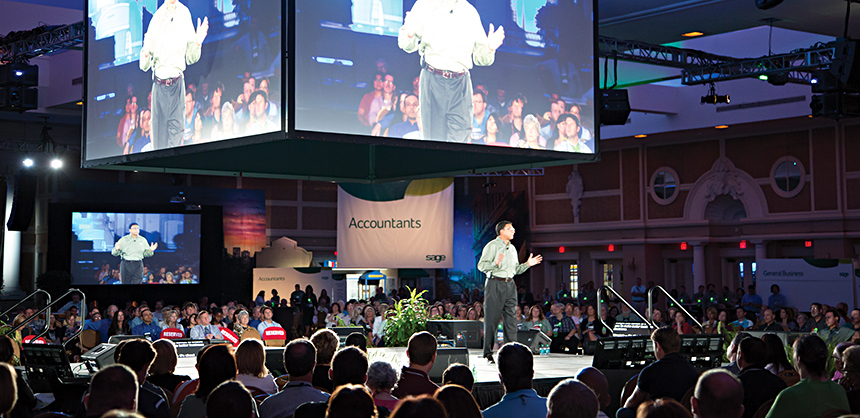
Former U.S. Women’s National Soccer Team player Abby Wambach speaks at Cvent CONNECT 2019. The event had several well-known speakers entertain attendees. Photo Courtesy Cvent

Former U.S. Women’s National Soccer Team player Abby Wambach speaks at Cvent CONNECT 2019. The event had several well-known speakers entertain attendees. Photo Courtesy Cvent

One of the marks of a great conference, meeting or event is how memorable the speakers are.

A great speaker is there for the audience and creates content that is fun, valuable and will be remembered. A bad speaker is one that thinks it’s all about him or her, or delivers something boring or not of interest to attendees.

Factors that are considered when booking a speaker vary based on the organization and their event goals. Sometimes, it’s the draw of a celebrity, while other times content is king.

Steve Markman, founder and president of Markman Speaker Management, LLC, a multi-service speaker agency based in Needham, Massachusetts, says today’s speaker marketplace has literally thousands of speakers who are potentially available as a keynote or featured speaker for an organization’s events. “At the end of the day, your primary objective should be to hire memorable keynote speakers that will give you a good return on your investment,” he says. “You want your attendees to walk away from a keynote presentation saying,‘That was great,’ and to remember your event many months later, even remembering the names of the keynote speakers. Then, you will know you made the right choices.”

Kris Young, vice president of Heroic Productions in Bloomington, Minnesota, says, when selecting a speaker, it’s best to start with the end in mind, asking the question: What would success look like? “For instance, in order to get a solid answer, you’ll need to talk to someone who knows and understands the purpose for the event — why they are spending money bringing their people together,” she asks. “If this is the company you work for, the person who owns the event will be able to give you a run-down of the overall agenda, tell you who else will be speaking, explain key messaging, audience size, demographics and venue — including how the room will be set, theater seating, at rounds, etc., as well as information about the stage size.”

However, if this is a new client, Young notes you should make sure you know something of the company culture and whether they like interactive presentations or prefer a more formal approach. “You will also want to know which day the outside speaker is needed and where on the agenda his/her presentation will fall,” Young says. “Make sure you have an understanding of what comes before the speaker and if the speaker’s presentation is expected to support key messaging from the executives.”

If so, the selected speaker will need to spend time on the phone with the executive or executives and will likely want to come in early to be sure to hear those presentations before delivering his or her own presentation.

Doug Binder, senior creative director of InVision, recently worked with two different companies on events with very similar audiences. One filled the agenda with movie and sports stars. The other went with below-the-radar, mid-level practitioners. “More than anything, the selections defined the culture of the event and the vision of the company,” he says. “In that way, both were successful.”

Look to the past

Amberlee Huggins, president and chief marketing officer of CSI DMC, suggests looking at similar conferences from the past to see what sort of speakers were successful. “Have speakers typically been a well-received part of the format? Do you have surveys handy from years prior that you can reference?” she asks. “Considering your audience demographic and their interests is key.”

This means checking in with leadership and other stakeholders (e.g. sponsors) for their feedback on previous years too, as there can be wide variances in experiences and takeaways. “Be open to potential speakers recommended by leadership and sponsors, but have a clear understanding of their goals,” Huggins says. “Leadership may have specific messaging they want delivered throughout the event, and this can impact your decision on speakers. Speakers suggested by sponsors may carry external messaging or appear as a pitch in presentation, so be clear about your purpose in your recommendation search.”

From here, build an outline of what you are looking for. This is what you will send to speakers bureaus along with basic information, such as the date, budget and location. Include both the content and preferred presentation type, and don’t forget to ask for video clips. “When you narrow the options down to your favorites, create an opportunity to connect directly with the speaker,” Huggins says. “You may start with a bureau or their agent; however, it is important you connect with the person who will be addressing your audience. They are essentially ‘applying’ for the role and it’s important to get to know them before signing.”

This is when you can ask them questions about their flexibility — are they prepared to be on a panel or conduct a workshop, or only keynote? — and talk through the delivered materials. “One tip I love is to ask the speaker to submit a one-minute video of themselves talking and answering some questions,” Huggins says. “This allows you to see more of their personality, active listening ability and willingness to respond to your requests. It also lets you see them now, in the present day, instead of just footage from a few years ago.”

Rachel Andrews, director of meetings and events for Cvent, says the job of finding the speaker for a smaller internal meeting will be completely different than what goes into finding a big-name keynote for a multiday conference, but the level of importance really is the same. “A keynote speaker can make or break your event, so it’s imperative that planners give themselves enough time and resources to find the right speaker — one that fits their overall event theme, budget and satisfies attendee expectations,” she says,

For keynotes at large conferences, Andrews often starts the brainstorming process a year out from the event. “To kick start the process, we leverage data from post-event surveys and even social media responses to previous keynote speakers,” she says. “Once we have a solid grasp on past event data and attendee feedback, we often crowdsource initial ideas from within our team and look for inspiration from other recent trade shows, conferences and events. At this stage in the process, no idea is too crazy.”

Then, armed with the event data and initial speaker suggestions, she and her team go through multiple rounds of executive-level brainstorming to ensure that proposed speakers align with the conference’s goal/theme and with the overall corporate brand mission. “We’ll also work hand-in-hand with a speaker agency to help identify speakers that align with our unique event needs and parameters. Then, we get the list down to a top 10-15 — and the debate begins,” Andrews says. “To help us decide, we often group our speakers based on topic, theme or agenda diversity. We put together focus groups that include people from within our organization and even previous attendees. It’s imperative that we get a well-rounded perspective.”

Melissa Park, a New York-based event producer, says a planner should always meet with a client to understand their event goals, vision and any sort of speakers they may already have in mind. “Investigate all of the speakers suggested by the client and reach out to any who accept direct inquiries to gauge their availability, interest and fee,” she says. “I always request an in-person meeting or conference call to present my findings, rather than just sending them a deck, as I like to gauge the feeling in the room and watch reactions as each potential speaker is introduced. It also gives me a chance to address any concerns or questions in real time.”

Ruth Zukerman, co-founder of indoor cycling businesses SoulCycle and Flywheel Sports, shares her story at Cvent CONNECT 2019. Photo Courtesy Cvent

Ruth Zukerman, co-founder of indoor cycling businesses SoulCycle and Flywheel Sports, shares her story at Cvent CONNECT 2019. Photo Courtesy Cvent

The Perfect Formula

Jennifer Nelson, director of business development and global event services for American Express Global Business Travel — Meetings & Events, says sometimes it’s easy for planners to get wrapped up in the “what” of the event, such as planning the perfect evening function, selecting just the right menu or creating high-energy networking opportunities.

“While this part of the planning is essential, it is also important to take a step back from the details to first understand the ‘why’ that will guide all the meeting design decisions, including speaker selection,” she says. “The first step for any conference should be establishing the desired outcomes for the organization as well as for the participants.”

Once you understand the why and how you want your event attendees to feel, you’ll then have a solid idea of what you want a speaker to cover. For example, do you want someone who can speak on leadership or do you want a comedy-focused speaker who can entertain your attendees with company-appropriate content?

“Typically, you will have two or three solid options,” Young says. “At this point, it’s a good idea to have individual calls with each of your finalists and your decision makers. This way, the speaker can talk about why they are a good fit and answer questions directly. It’s often on these calls that decisions are made. On a call, it is easier to get a sense of the speaker’s style, what differentiates them and how they will deliver that outcome you are seeking.”

According to Markman, while it often works well to have a speaker with your required experience, the primary goal should be for the presenter to have content that is applicable to your audience, even without prior experience with your audience profile. “That could mean content that cuts across all industries and job functions,” Markman says. “Conversely, it’s often good to get a perspective from someone in a different industry to allow for thinking out of the box.”

For Huggins, the ideal formula involves a speaker with a captivating presence, relevant information and the ability to truly connect with attendees. “A speaker might have a great ‘go-to’ pitch, which can be a distraction when searching for the perfect fit. Their relatability needs to go deeper than the way they carry themselves and their delivery needs to complement the content,” she says. “There are endless options for charismatic, compelling speakers out there who will be perfectly entertaining and interesting but may not connect with attendees or teach them anything they will remember a week or even a day later.”

The right speaker will understand and relate to attendees through shared passion or life experience. Attendees need to be able to see themselves in the speaker and vice versa.

Amaia Stecker, managing partner with Pilar & Co., is encouraged by increasing trends toward diverse speakers but strongly recommends avoiding diversity for diversity’s sake. “The speaker should be able to relate to themes of relevance to your organizational mission and goals, and help the attendee understand and relate to them,” she says. “Don’t be afraid to think outside the box. Look to folks who can accurately help your audience connect to the story at hand as part of the bigger theme for the organization.”

Economic Concerns

Like any other hired service, the fee absolutely plays a role in choosing speakers. This is especially true for speakers with name recognition or who must travel, as their fees have reason to be higher. “If budget is a concern, be upfront about it, and be prepared with non-monetary offerings that may be appealing to the speaker,” Huggins says. “There are many ways for a speaking opportunity to be mutually beneficial. If you have a few room nights within your hotel block that would otherwise go unused, offer them an extra night or two as a vacation. If your program includes a great catered networking opportunity, extend them an invitation.”

If there’s an opportunity for the speaker to participate in community engagement or a giveback, that may have some appeal as well. Get creative. If budget is a concern, ask questions about what could be of interest to them. “We all want Oprah or Sir Richard Branson, or Ellen DeGeneres, to speak at our events, but they aren’t within most dream meeting budgets,” Andrews says. “But, while budget and fee are top concerns, they shouldn’t be the first concerns. Your attendee demographics and interests, your event theme, goal and objectives, your brand — all these things should be considered first when selecting a speaker.”

Then, once you come up with your initial speaker wish list, after considering these factors first, you’ll be able to narrow down your options by bringing budget and fee into the equation. There are plenty of incredible thought leaders who have great content for every budget.

Consider a classic, rather than the flavor of the day. Big names from five years ago can still be topical and often have better name recognition than their newer-to-the-circuit peers. Plus, their fees should be more reasonable.

Binder says don’t be afraid to make an offer to these big-time names, as most agents won’t approach their clients without a specific offer in-hand. Furthermore, they might take a reduced fee because of availability, travel convenience or just because they like you or your company. “Some big-name speakers will take a more reasonable fee if it goes to their charity — especially if their cause aligns with your company’s CSR program,” he says. “Also, check the CEO’s social media. They often contain surprising names that might be amenable to a personal invitation and a reduced fee.”

Nelson recommends reaching out to national or local speaker’s bureaus or TED organizations. “You can share the general topic you need a speaker for and work with these resources to help build a list of potential speakers,” she says. “Once you have a shortlist, you can review their online highlight reels, videos from previous engagements, and check for their availably and cost. The client is the final decision maker. Of course, they trust our recommendations and experience with speakers, but they will have final approval of who takes the stage to address their attendees.”

Young says to stay away from choosing based strictly on internet searches, as this can be both time consuming and risky — unless you have seen the speaker present live and know their content well and/or have multiple referrals.

Speaker’s bureaus are a popular go-to. They often have a broad reach, massive speaker portfolios, and deep expertise in matching the right speaker with the right event. Bureaus can be a great help to source speakers that align with your conference objectives and brand promise without a ton of legwork.

“A speaker’s bureau is a good choice if you have a good relationship with an experienced bureau agent,” Young says. “Keep in mind that most bureaus have exclusive speakers. This means they have a vested interest in getting those speakers booked. This is not to say they would suggest someone who wouldn’t be a good fit, it is just something to be aware of.”

Speaker consultants and speaker management companies are also good avenues to explore. “Check speakers’ social media outlets and hunt for more ‘raw’ footage,” Huggins says. “Reviewing their content from multiple angles, especially less curated content, will protect you from hiring a speaker that falls short of expectations.”

Park notes to pay attention to social media, as well. “In this digital world, LinkedIn and other social media platforms literally bring announcements and highlight videos right to your fingertips,” she says. “I can almost guarantee that if any of your connections attend a conference, whether it be in-house or external, and one of its speakers is amazing, you’re going to see it in your feed. If you like what you see, it’s easy to jump on over to the events social pages or follow the hashtag to watch how much engagement the particular speaker inspired.”

Common Mistakes

One of the top mistakes Andrews has seen at large events is leading with “a name” vs. a quality speaker who can connect to attendees on a deeper level. “While celebrity keynotes can drive event interest and get you some attention on social media, if they can’t relate to your target audience, they probably won’t help you drive registrations — or at least not the registrations you’re looking for,” Park adds. “Also, looking at each speaker individually, but not how they’ll fit into the other speakers at your event, can be a potential downfall. You might find 20 great speakers for 20 different sessions but realize when it’s too late that they’re 80% male and all from the same industry. Attendees are looking for diversity.”

Even after thoroughly vetting and selecting a speaker, Nelson says it would be a mistake to not conduct planning meetings.

“These touch bases will help you work with the speaker to tailor their address to your audience and ensure that logistics are nailed down,” she says. “Onsite, you should plan time for the speaker to rehearse so that they feel as comfortable as possible when it’s time for them to perform.”

When choosing someone, Huggins says to be authentic and share expectations with the speaker.

“They should be fully briefed on the audience demographic, any areas to focus on or avoid, what has worked well in the past and what has not,” she says. “Listen to what they ask you. A signature attribute of a good speaker is that they have a toolbox of questions to ask, which helps craft the message to fit the needs of the audience beyond the needs of ego.”

And if it doesn’t feel right, move on. Forcing a connection with a speaker who just does not fit the group may come back to haunt you.

“A bad speaker can’t see themselves from the audience’s point of view. Being a speaker, a trusted resource on a matter, is a privilege,” Huggins says. “A bad speaker does not ‘temperature check’ a room. They may use the stage as a platform to talk about their own agenda, versus recalibrating their approach to ensure the greatest outcome for the audience.”

A great example of this is the speaker who talks through the Q&A time because their planned session went over. They forget that they are providing a service. They are there for the attendees, not the other way around.

Remember, even if a speaker is well-rehearsed and engaging, content is king. If the speaker delivers content that does not align with your attendees or your business, their address will fall flat and fail to connect. C&IT


CIT-0405.2020-550x736

Las Vegas: The Meetings Capital of the World Looks to Reopen

CIT-Dest2-LasVegas1-860x418Stephanie Glanzer, senior vice president and chief sales officer for MGM Resorts, says it will take a while for “business as usual” in Las Vegas, and her company must adjust “to a new world.”

When you think of the Las Vegas area, what comes to mind? Awe-inspiring entertainment? Definitely. A wide array of state-of-the-art venues for meetings of all sizes? Certainly. Resorts that offer amenities aplenty? Absolutely.

With nearly 150,000 rooms, Las Vegas offers the best group value proposition in the world. Area resorts play host to 6.5 million meeting, convention and incentive delegates annually, ranging in size from 10 to more than 175,000 attendees.

However, the COVID-19 crisis has brought the good times to an abrupt halt in Las Vegas. When the pandemic hit, the casinos, resorts and restaurants  closed, but area executives have been devising plans to one day soon get meetings and conventions up and running again. “We recognize that when we do reopen our doors, it won’t be entirely back to business as usual and we will be adjusting to a new world in how we do business and how we host events,” says Stephanie Glanzer, senior vice president and chief sales officer for MGM Resorts. “We have a task force in place to look at what this new guest experience will look like as it relates to safety, health and comfort while continuing to create and deliver memorable and meaningful events.”

Adds Glanzer, “We’ve made it our mission as an organization to make this process as seamless as possible for our clients. It’s not just about addressing their most immediate needs, but earning their business for years to come, long after this is behind us,” she says. “As a company, we are working closely with each of our clients to identify new future dates and conceptualize events that reflect their new business needs and potential travel patterns for their attendees.”

For Karla Singson, who has worked as an event planner, Las Vegas has been such a great option for meeting planners because there is always something for everyone in the region. “Due to the high tourist traffic, there’s options for literally every meeting type, every demographic and every budget,” Singson says. “For me, the best feature of Vegas is variety, and that’s why people of all ages, races and agendas come to Vegas for both business and pleasure.”

What usually makes Las Vegas events memorable for attendees is the plethora of unique experiences. And there are a wealth of great activities in the area for gamblers and non-gamblers alike. Some of the iconic tourist attractions, locations and activities include a visit to The Mob Museum, with exhibits and displays about all things related to The Mob; The Neon Museum, which displays dozens of iconic neon signs from Las Vegas’ past on 2.6 acres; and the thrill rides at The STRAT Hotel, Casino & SkyPod, which features the Stratosphere Tower, one of the tallest observation towers in the U.S. Other easy-to-please activities include the sushi buffets, the comedy shows and the venerable Cirque du Soleil.

Singson personally has enjoyed taking meeting and event attendees to one of the area’s machine gun shooting ranges and indoor skydiving sites. “The celebrity chef restaurants are great too,” Singson says. “Whenever I take attendees to these venues, they’re usually very pleased, and are telling all of their friends back home what a great experience they’re having.”

For Caroline Kay, owner and meeting planner at C. Kay International, historically, she has gotten a higher percentage of people to attend the conferences she manages in Las Vegas. “Las Vegas offers several benefits for meeting hosts and their guests. The convenience is unbeatable — there’s a great selection of domestic and international flights to Las Vegas and McCarran International Airport is less than 3 miles from the Las Vegas Strip,” Kay says. “There’s ample capacity and options for meeting spaces, accommodations, restaurants and nightlife. And there’s lots of sunshine.”

Kay also says that it’s easy to make events stand out in Las Vegas for guests by organizing unusual activities beyond the scope of traditional meetings. To make conferences special, Kay has organized helicopter tours over the Hoover Dam, day trips to the Grand Canyon National Park and hikes to nearby Red Rock Canyon National Conservation Area. “I even took a team to the Las Vegas Motor Speedway to drive Lamborghinis,” Kay says. “An after party or cocktail reception at The Neon Museum is always memorable. In Las Vegas, attendees can see amazing live entertainment, enjoy a spa, and choose from amazing eating and drinking options. The choices are endless.”

Starting the day with a private flight over the Grand Canyon at sunrise and ending the day with front row seats at a Cirque du Soleil show is one of the best memories meeting planners can offer to guests says Valerie Bihet, meeting planner and director at the VIBE Agency. “Another once-in-a-lifetime experience is a backstage tour with the Cirque du Soleil team or a cooking class with one of the celebrity chefs,” Bihet says.

MGM Resorts officials are looking forward to reopening the 380,000-sf MGM Grand Conference Center.
MGM Resorts officials are looking forward to reopening the 380,000-sf MGM Grand Conference Center. 

Tips For Success in Las Vegas

Bihet says that Las Vegas’ biggest draw is that it is a city that offers a wide range of options for hotels — from large capacity in terms of rooms and meeting spaces for multiday conferences to smaller budget-friendly hotels that are still on or near The Las Vegas Strip but without the expense of the flagship properties. “It’s important to play off the above,” Bihet says. “The amount of rooms in the city allows it to be very competitive between properties for a group. And remember, it’s the city of entertainment. You can find top-of-the-line restaurants, shows, venues and activities. Truly, it’s the dream city for all event planners. Everything you need for a group is located on the same street — The Strip — which makes it very convenient.”

In addition, Bihet loves that Las Vegas offers a nice balance between the city — and all of its lights and attractions — and nature.

The Las Vegas Convention and Visitors Authority offers a wealth of planning options and tools for meeting professionals. There also are so many venue options in Las Vegas that it can pay to work with a local venue-finding company to get the best deals and some great concessions. But budget carefully. What’s more, always check to see what else is going on in Las Vegas, and in the selected hotels, when you’re planning to hold an event there.

As Kay explains, it’s tough to organize a smaller event when there’s a gigantic “Let’s take over Las Vegas” event happening at the same time. “And remember how hot it can get in Las Vegas in the summer. The prices may be better, but you’ll pay for it in other ways,” Kay says. “It gets plenty hot in the summer when you’re loading in and out, and have loading dock doors open. Wear comfortable shoes and stay hydrated. The walk from a hotel room to the conference center, in the same hotel, could easily be more than a mile.” Attendees will have a better experience in Las Vegas if they come in spring or autumn as the temperatures can fluctuate very quickly in winter or summer.

Bihet also says choosing the right hotel location and style to match a client’s identity is one of most important first elements of making a Las Vegas-based event a success. Then, you build the rest of the program from there. “You also need to find the right balance between indoor and outdoor activities,” Bihet says. “We know that fresh air does wonders for people’s attention and engagement, so outdoor activities are needed to keep people happy and positive.”

Looking for an offbeat venue? Bihet recommends taking advantage of the original and beautiful venues the city has to offer, like a private dinner at the aforementioned Neon Museum. For a unique view of the city’s skyline, enjoy a cocktail reception in the High Roller, the 550-ft. tall, 520-ft. diameter Ferris wheel on The Strip; the Skyfall Lounge, on the 64th floor of the Delano Las Vegas; or at the 1,149-ft. tall Stratosphere Tower.

And what about the non-gamers in the group? While Las Vegas is known for gambling, in reality there are many things to do outside of the traditional casino experience. In the city, visitors can enjoy activities such as scavenger hunts, a racing circuit, zip lining, or strolling and shopping on Fremont Street. There are also many spas for a day of pampering or a shopping trip to the luxury malls. And, outside of the city, planners also can organize memorable teambuilding events 45 minutes away at Sandy Valley Ranch, with cowboy-themed activities which include horseback riding, working cattle, rodeos and more.

The High Roller looms over the GO Pool at the Flamingo Las Vegas on Thursday, April 5, 2018, in Las Vegas.  CREDIT: L.E. Baskow/Las Vegas News Bureau

The High Roller looms over the GO Pool at the Flamingo Las Vegas on Thursday, April 5, 2018, in Las Vegas. CREDIT: L.E. Baskow/Las Vegas News Bureau

New Venues Aplenty

Because Las Vegas is ever changing, new resort and venue options frequently emerge to offer the latest and greatest. The soon-to-open, 550,000-sf Caesars Forum conference center is the newest addition to the Caesars Entertainment family. The massive venue features 300,000 sf of flexible meeting space and the world’s two largest pillar-less ballrooms.

Las Vegas is waiting to welcome Circa Resort & Casino, the newest entertainment and hospitality hub in Downtown Las Vegas slated to open by the end of the year. When open, it will play host to the longest outdoor bar, as well as a split-level casino with more than 1,350 slot machines. One of the resort’s most celebrated features will be its outdoor pool amphitheater, complete with six rooftop pools that will also boast a massive 14-million pixel screen playing the day’s most celebrated sporting events and games.

Resorts World Las Vegas and Hilton are partnering to bring three of Hilton’s brands together for a $4.3 billion integrated resort. Scheduled to be open next summer, Resorts World Las Vegas will include a 3,500-room resort, as well as a 5,000-capacity state-of-the-art theater, 350,000 sf of meeting and convention space and a 220,000-sf pool complex with seven unique pool experiences.

In 2022, the much-anticipated The Drew Las Vegas is scheduled to grace the north end of the Las Vegas Strip and will feature 3,780 rooms, as well as retail, nightlife and more than 550,000 sf of convention and meeting space when it opens. As of press time, the project has been put on hold due to the COVID-19 outbreak, a factor that could easily affect any of the construction projects, although many sought to press forward despite the crisis.

As new properties arise, existing properties in Las Vegas continue to renew and redefine themselves. Tropicana Las Vegas, A DoubleTree by Hilton hotel, recently underwent an expansion that includes a new conference facility, which can be divided into as many as 38 breakout rooms, as well as a 25,000-sf ballroom and 55,000-sf pavilion for exhibits and general sessions. For smaller gatherings, the Churchill room and Ashton rooms are great options.

Treasure Island Hotel & Casino also recently underwent $1.7 million in renovations to its upper-level convention floor and meeting space. In addition, the resort’s new $6.5 million lower-level meeting and events space offers some of Las Vegas’ newest meeting facilities with its 30,500 sf of space.

And while Sahara Las Vegas has been a staple within the Las Vegas resort scene, it is undergoing a $150 million transformation including exterior upgrades, all new restaurants and a renovated lobby with a new poker room. The property also boasts 85,000 sf of flexible meeting space and a collection of entertainment venues, lounges, two rooftop pools and the luxurious Amina Spa.

Speaking of spas, Caesars Palace Las Vegas Hotel and Casino features the 50,000-sf Que Baths & Spa, as well as the Garden of the Gods Pool Oasis, which includes seven different pool experiences, cabanas and ideal sunbathing spots. When it’s time for gathering for the scheduled meeting or event, Caesar’s Palace features 300,000 sf of meeting space. The 51,000-sf pillar-less Octavius and Forum Ballrooms can each accommodate as many as 5,555 attendees and can be reconfigured into as many as 25 separate breakout rooms.

Also part of Caesars Entertainment’s family of Las Vegas destinations, Harrah’s Las Vegas Hotel & Casino boasts a 25,000-sf conference level featuring state-of-the-art technology, including advanced A/V, presentation and communication features. The flexible meeting space offers myriad options in one convenient location.

Long cherished since it made its first appearance in Las Vegas in 1976, Station Casinos has been offering some of the best meeting spaces in the area for decades. Operating 10 distinct venues dotting the Las Vegas landscape, Station Casinos features a variety of options to accommodate groups of all sizes. For example, its Red Rock Casino Resort & Spa, which overlooks the stunning Red Rock Canyon, offers more than 94,000 sf of flexible meeting rooms.

Likewise, Station Casinos’ Green Valley Ranch Resort, Spa, & Casino features 65,000 sf of customizable meetings and conference space. The resort’s 40,000-sf conference center features two expansive ballrooms and up to 12 customizable breakout meeting rooms.

Another of Station Casinos’ resorts perfect for groups is the Texas Station Gambling Hall & Hotel, which offers 40,000 sf of space for meetings, banquets, weddings and other events and is capable of accommodating groups up to 1,100 attendees.

Space is obviously prolific in Las Vegas. Take Wynn Las Vegas and Encore, for example. Recently named the largest five-star resort in the world, Wynn Las Vegas offers 290,000 sf of flexible meeting space, three ornate ballrooms with the capacity of 20,500 sf to 50,000 sf and 39 meeting rooms.

Of course, hosting events poolside will earn accolades galore, and Wynn features XS Nightclub, a 40,000-sf venue that opens up to a 45,000-sf outdoor pool deck.

ARIA Resort & Casino also is a favorite among meeting planners who have chosen Las Vegas as their destination. In addition to five expansive theatrical stages, ARIA boasts a wealth of flexible meeting spaces, including seven ballrooms ranging up to 51,000 sf. The additional breakout meeting rooms range up to 3,400 sf to host smaller programs.

While meeting venues already mentioned are being built and renovated, other new aspects of life in Las Vegas still garner attention. Construction teams are working to complete the new Allegiant Stadium, home to the National Football League’s Raiders, for the upcoming NFL season. Complete with 65,000 seats, the venue will offer high-tech features, ultra-high-definition video screens and windows that allow fans to see the Las Vegas Strip from inside.

To enhance the ease and accessibility of the Las Vegas Convention Center, the Boring Company is expected to complete a futuristic “people mover” by the end of this year, underneath the convention center.

Using autonomous electric Tesla vehicles, passengers will be transported underground, reducing the otherwise 15-minute walk down to a little more than a minute. C&IT


Fans wait for Alejandro Ferandez to perform at The Mandalay Bay Events Center on Saturday, Sept. 15, 2018 in Las Vegas, Nev. Fern‡ndez is one of numerous artists performing during 2018 El Grito festivities celebrating Mexican Independence Day in Las Vegas. CREDIT: Joe Buglewicz/Las Vegas News Bureau

Meetings In A Post-Pandemic World: Planners Look To The Future

2018-0484Benoit Sauvage, CMP, DMCP, CIS, founder and CEO of Connect DMC, says the meetings industry will be better prepared for the next crisis. Joe Buglewicz/Las Vegas News Bureau

COVID-19 will likely dominate thoughts for months to come. Even as our industry gains forward momentum, questions remain. We asked four planners for their take on meetings going forward.

Top-of-mind issues

Derrick M. Johnson II, CMP, DES, Philadelphia-based independent planner and PCMA board member, puts questions — and possible solutions — in perspective. He says, “Every day presents new obstacles for planners, much different than anything we’ve ever seen, which creates unprecedented uncertainty. What will events look like once social distancing eases? Will people immediately go back to meeting face-to-face? Will travel budgets exist?”

Uncertainty makes the future difficult to assess. Johnson also sees the evolution of virtual meetings as a top issue. “Much of our community still sees events as black or white instead of in color, i.e. ‘This meeting should go online’ instead of ‘What elements of this event can be virtually executed?’ The learning outcomes are very different online vs. virtual and, just as face-to-face meetings and events have various structures and ways of executing, so do virtual meetings and events,” he says.

Another issue for Johnson is “unplanning” a meeting. “A lot of focus goes into putting together an annual meeting for 2,000 people; however, even more effort goes into canceling it,” he says. “Everything from the negotiations, communication plan and community engagement needs to be executed at high levels and, in most cases, very quickly. Many planners haven’t stepped into the unknown when it relates to unplanning their financially sustainable events.”

Alisa Walsh, CIS, president of EventWorks in Los Angeles and 2020 president of the SITE SoCal board of directors, also sees significant uncertainty as an issue, especially related to re-booking dates. “While we know our programs need to move dates, it’s exceedingly difficult to determine when those dates will be, or when it will be ‘safe’ to meet again. And, even when we re-book, how will attendees feel about travel, person-to-person interaction, etc.? Gauging our attendance and, therefore, the financial commitment we’re willing to enter into with hotels/venues will be difficult to determine.”

Event-related challenges remain largely the same, says Katie Smith, CMP, CMM, event director at Meister Media Worldwide in Willoughby, Ohio. “But we now face areas of impediment outside our ability to control, including a COVID-19 vaccine, corporate-mandated travel restrictions, domestic and international travel restrictions, and VISA and passport restrictions. Most importantly, how do we authentically market future in-person shows to potential attendees and sponsors, respectful of their legitimate health concerns should social distancing become the norm?”

Florida-based Benoit Sauvage, CMP, DMCP, CIS, founder and CEO of Connect DMC and director for the SITE International board of directors, looks squarely ahead to a non-pandemic world. His top-of-mind issues include how best to add sustainability components to programs, how to incorporate corporate social responsibility (CSR) without sacrificing program budgets/time, how to present the destination in a more authentic and experiential way, and how to sell luxury to millennials and Gen Xers.

Responding to a new “normal”

One key to working through current realities is nimbleness, along with the ability to adapt as things change. And, for some, the approach should be cautious.

“Ultimately, it will be a bit of trial and error,” Walsh says. “As planners, we’ll be forecasting very conservatively and asking for hotels’ flexibility in regard to attrition and room-block commitments. While I do believe live events will return, it will be a slow progress back to the point where people feel comfortable in large audiences. We’ll need to acclimate to the use of technology and hold smaller programs in various areas, perhaps with a central ‘hub’ being broadcast to each location simultaneously.”

Johnson says it’s important to seek information, adding, “I believe in lifelong learning and the power it has to enable us to better prepare for unthinkable experiences. I read, listen to futuristic podcasts and even watch science fiction movies — not just for entertainment purposes but to see the world in a different light with hopes of obtaining some concept or idea that might be useful today. Seeing how drones are used in recent sci-fi movies, for example, directly correlates to how we can potentially deploy them in reality, to achieve mundane tasks such as sanitizing streets.”

He also calls it “vital” to learn to be comfortable in uncertainty. “Unfortunately, I cannot control everything; however, the one thing I can control is myself and my actions. When I’m able to give 100% of me to any situation, I know that’s when the best results are produced. We’re also stronger together. Our profession is built around connecting people. Learning from others, connecting with people in this time of social distancing is the most important thing we can do,” he says.

Sauvage says solution-oriented teamwork is key at his company. “We have a vibrant and ambitious team that’s noticing all these potential issues,” he says. “We’re proposing solutions that fit our clients’ requirements without destroying their budgets, and creative solutions and suggestions that can be implemented in their agendas. You’d be surprised,” he says, “how simple it is at times to supply these needs from a younger perspective. It’s not all that difficult as long as you’re willing to change.”

What the pandemic has taught us

Sauvage says he and his company “will definitely learn from this moment and adjust. We always do. This is not our first crisis and will surely not be the last. If companies aren’t willing to adapt, they may not endure these crises. Our team is well trained in how to cut back effectively as necessary and to survive with the vital elements year after year.” Yet, he adds, every employee understands the drastic measures possible when facing a global crisis such as the pandemic.

He says the most important lesson, however, is to take a step back and regroup. “We noticed how important it was to actually take the time to slow down and make sure we were on the right path with our clients’ needs but also with our company’s needs in mind. Sometimes, with our busy lives, we forget how to take a moment to adjust and find fresh solutions to the same challenges,” he adds.

Johnson echoes the importance of “taking time,” saying,“The biggest lesson I’ll take away from the pandemic is not taking for granted the physical time I have with people and, as a meeting professional, looking at how I can help make that time for attendees even more valuable.”

There are other lessons, too. “If COVID-19 has personally taught me anything,” Johnson says, “it’s that the world isn’t ready for what global warming will do to humanity. This pandemic is a dress rehearsal for the effects of global warming and we’re beyond the simple acknowledgment of the science. This industry must look at every aspect of our community and ensure we’re creating sustainable events, and reducing our carbon footprint. If not, then a critical takeaway from this experience is lost.” He adds, “Finally, we must look at all meetings in a physical and virtual sense. Just as there are many forms of physical events — theaters, classrooms, etc. — the same is true for virtual events. These technology investments, while previously not a priority, may see a boost in production given today’s need.”

Smith points to amplified appreciation of partners — hotel sales people, DMCs, decorators, CVBs and vendors — as an important lesson. “We couldn’t have achieved what we have without them and it’s heartbreaking to see how many of my partners have been adversely affected by the pandemic,” she says. “This is also an ideal time to evaluate how we’re conducting our internal business — what efficiencies we can bring to bear and how to better collaborate with other departments to optimize all the intelligence within our company. We also plan to evaluate current in-person events with an eye toward making them more interactive, experiential and relevant.”

Will 2020 change the planning process?

The answer is yes. Walsh sees drilling down on contracts as ever more important given issues created by COVID-19, and she’s already working on changes. “My team and I have already undergone various contract revisions to ensure we’re protected through disasters such as this. Our industry is very relationally focused, though, and nothing is guaranteed.”

Smith is on a similar path. “We’re working with our hotel partners to update the force majeure clause in contracts. We’re also revisiting event insurance, contingency and risk-assessment plans. We’re revising attendee registration cancellation policies in response to this as well. And virtual event offerings will become an important aspect of our event portfolio, even when in-person events resume,” she says.

Sauvage is also taking a closer look at contracts and agreements in place. He says, “We’ve started thinking on a good middle ground where both clients and ourselves can protect our interests.”

Of course, it’s not just about contracts. “There’s no doubt this will change the approach to face-to-face meetings,” Walsh says. “I believe human interaction is a necessity and there’s no replacement for the feeling of earning that incentive trip — that once-in-a-lifetime personal experience. That said, how we prepare and communicate prior to the event is going to be even more crucial than ever.”

Sauvage doesn’t believe in-person interaction will necessarily decrease, “and the proof is the feeling we all get after being under quarantine for a few days — we need that person-to-person time. While some incentive programs’ lower-tier rewards may be supplied online,” he says, “the ultimate prizes remain to be experienced in person.”

Johnson sees changes occurring in phases as the world slowly returns to normal. “I believe how we plan and prepare for meetings will change based on the phases we’re in. Currently, we’re in phase one of social distancing. Planners are unplanning meetings and looking at ways to move to virtual formats. In phase two, as social distancing eases, I believe groups will be hesitant to make financial commitments to future events because of fear of the unknown. Planners will be looking for more flexible cancelation clauses in contracts to limit financial exposure of their organizations.” He adds, “The collaboration between the partners and planners in this stage becomes the most crucial. The destinations that demonstrate their value in addition to commitment to health and safety will be prioritized over others. How the pandemic has changed many destination and venue policies and regulations will be important for planners to hear to decide where to place events.”

Further, he says, “Every event should be examined during ideation to determine not which one method of production works best, but what combination of methods works best. Planners can no longer expect to plan events one way and leverage simple tools in executing them. They must be prepared to reach various audiences in different capacities. Whatever the reason, our new normal is customization — and not in the way of customizing the F&B or registration experience. We’ll need to provide stakeholders options to engage with us in person or virtually.”

Woman is using app on laptop for video connectKatie Smith, CMP, CMM, event director at Meister Media Worldwide, sees in-person meetings continuing alongside many more virtual meetings. DepositPhotos.com

Opportunities even in crisis

Many planners are taking the extra time created by the pandemic to catch up on back-burner projects and facilitate change with an eye toward moving forward better and stronger. Walsh says she’s fortunate that working from home is the norm for her team, although she admits there was an adjustment to “our loved ones also working alongside us for better or worse.” She says her team has developed great habits in virtual communication, “and while we’ve pressed pause on the planning process for many programs, we’ve been presented with the unique opportunity to complete our ‘finally’ projects — the projects we’ve had on deck for years and have been too busy to complete. We’ve ‘finally’ been able to take the time to better our brand, our processes and, therefore, our team.”

For Sauvage, this time is an opportunity to act with intention. “We’ve invested time in remodeling our website and marketing collateral, enhancing education and we’ve emphasized a sensitive approach to our clients. We know it’s not time to buy and sell, but it is time to remain present and be willing to help each other. We will remember the suppliers that supported us during these difficult times just as we know our clients will remember us if we do so in turn.”

Workplace changes are inevitable whether planners are independent or on staff, and Johnson says this time is an opportunity to embrace diversification, particularly into the virtual world. “The mindset and ability to diversify an event’s platform is key to production. Being knowledgeable of the various options and tools will be vital to the success of the industry. For planners on staff, this transition into diversifying meetings may come a little easier,” Johnson says. “While some people may not have the skills, background or even desire to strategize in the virtual world, ensuring your team has a thought leader in this environment becomes vital. This person will need to look at all aspects of the meeting and understand what translates and what doesn’t. It will be this person from the team to understand that and recommend accordingly.”

Smith’s organization is also looking in that direction. “At our B2B media organization, we’ve been advancing the business of agriculture though digital, print, in-person and custom offerings,” she says. “Since learning of COVID-19, our plan is to double down on the importance and variety of digital engagement offerings for our audience and commercial supporters. Virtual event offerings will be an important aspect of our event portfolio, even when in-person events return.”

Where will we be a year or two from now?

“This is very exciting to think about,” Johnson says. “As an industry and world, I don’t think we recover, but rather, evolve from this pandemic.”  First, he says, “I see the event planner role evolving into more production. With all the new pieces needed to execute the collaborative efforts of virtual and face-to-face, there will be a need for a control officer managing the experience. Next, I hope sustainability will become a focus of the industry and that not only will planners produce more sustainable events, but corporations will also adopt many of the regulations the events industry puts into place. The road map we create will demonstrate to the world what’s possible in executing in a more sustainable environment. Finally, groups will be more global. With expansion into virtual, the reach and scope change for many. At the end of the day, we’re all humans and I think we begin seeing more of that every day.”

Walsh thinks one year from now will look very different than two years from now. “One year from now, I think corporate events will slowly be coming back into the picture as virtual begins to tire and businesses feel safe sending employees traveling again. However, we’ll still be very cautious and may even limit the number of large gatherings allowed. Two years from now, I do believe the events and meetings industry will be back up and running, with a new appreciation for the value of in-person opportunities.”

Smith, too, sees in-person meetings continuing along with virtual-meeting technologies. “For the in-person aspect, specifically, the answer is more difficult. The two biggest factors, in my mind, are a vaccine for COVID-19 and people’s willingness to travel. When it comes to dealing with people’s emotions and fears, we’re entering new terrain that, as event organizers, we may not be able to adequately address for some. That said, I’ve heard from many of our attendees and commercial supporters who are anxious to return to in-person events. I think the self-quarantine has reminded us that we’re social animals and crave face-to-face communication.”

On a different note, Sauvage says that if another pandemic arises, they’ll be more prepared. He adds, “Policies may be put in place to ensure company survival. I believe the industry will come back strong. The amount of business may change but we’ll all have renewed strength to make the most of it.”

As Walsh says, nothing is guaranteed. Yet, by all accounts here, there’s every reason for optimism that the meetings industry will emerge from 2020 better and stronger. C&IT


Business people communicating over board in office

Rooms Evolve to Meet the Needs of Today’s Attendees

CIT-2020-03March-Feat3-Meeting-Room-Future-860x418-2The Oregon Convention Center’s Oregon Ballroom was refreshed with ceiling tiles to mimic looking up through a forest canopy.

Meeting Rooms of the Future

When you think of the meeting rooms of a few decades ago, what comes to mind? Carousel slide projectors for presentations? Certainly. Poster-sized easel paper for brainstorming? Absolutely. A centralized speaker phone for collaborative discussion with those not in attendance? Definitely. Luckily, today’s meeting rooms have dramatically changed to become technologically advanced settings that help facilitate better engagement of meeting attendees.

According to Linda McNairy, global vice president, Americas – American Express Meetings & Events, the definition of meeting room has evolved over recent years to support various meeting types.

“With alternative spaces, indoor, outdoor, experiential, virtual, etc., the options are endless, based on ongoing demand from meeting organizers and attendees to deliver on event experiences and individual attendee personas,” McNairy says.

Although in-person meetings are still far and away the standard format, hybrid/virtual meetings are growing in some regions according to American Express Global Business Travel’s 2020 Global Meetings and Events Forecast.

And comparing last year’s survey results to the 2020 results of the percentage of planners who use hybrid/virtual meetings in more than 10% of meetings, North America has seen an uptick in that number, going from 43% to 58%. Europe has seen an even larger increase, jumping from 49% up to 66%.

“Adjustments like having cameras built into TV monitors or installing better audio systems improve the effectiveness of virtual/hybrid meetings by supporting more seamless communication,” McNairy says.

Indeed. As Jason Vossler, product line manager, Dell Large-Format Monitors explains, meeting rooms have evolved from being a physical space that only facilitate face-to-face meetings to one that allows for collaboration from anywhere in the world with participants joining meetings virtually.

“Modernizing the meeting space and simplifying the end-user experience is also necessary to attract and retain millennial talent in the workplace,” Vossler says. “This year, millennials will make up 50% of the global workforce. They’re drawn to environments with comfortable spaces, outfitted with modern technologies that will improve their productivity.”

Business people communicating over board in office

Virtuality at Its Best
Today’s meeting rooms are all about the sights and sounds of the event. Visual attributes are vital components to engage meeting attendees but so, too, are the sounds within the space — whether it is an expansive meeting room that holds 200 or an intimate boardroom for 12.

As Peter Herr, associate director of Global Marketing, Systems Group, at Shure Inc. explains, meeting rooms have evolved to become virtual meeting rooms from multiple locations, bringing in participants from other parts of the world or co-workers who are working from home. This requires a reliable collaboration technology that allows for seamless sharing of information.

“While videoconferencing is popular, the most critical part of a virtual meeting is audio,” Herr says. “Seeing someone on the screen is nice, but if you can’t hear them properly, the meeting is likely not going to be productive.” Capturing the audio from a speakerphone on the table of a conference room has limitations, so many meeting rooms are being networked to include dedicated microphones that are placed on the tabletop or even mounted overhead to capture audio from meeting participants without picking up the shuffling papers, vibrating cell phones and sliding of materials that can disrupt audio on some tabletop microphones.

Shure recently commissioned a study of 401 business professionals and IT decision-makers with Illuminas, a firm specializing in market research in the tech industry and found that 87% said virtual meetings were critical and 86% confirming that they are growing in importance. In fact, three out of four said their businesses plan to allocate bigger budgets next year to accommodate virtual meetings.

As such, Herr stresses that virtual meetings are growing in importance and, as a result, there are four key areas that meeting planners need to focus on to make this virtual undertaking a success:

• Network — The first step is to ensure the meeting room is configured with a network and is ready to support networked audio.

• Security — Of course, when discussing the network, one crucial consideration is security. Many audio devices can be password protected, and it is also possible to encrypt the networked audio stream.

• Acoustics — Once you’re happy that everything is as it should be with the A/V gear and the network, it’s time to look at the meeting room itself. The importance of room acoustics should never be underestimated. After all, if you were designing a music studio, you wouldn’t just throw a pair of loudspeakers in any room and expect them to sound amazing; you’d want to make sure that the room was treated properly so that the loudspeakers sounded their best in the space. The same thinking should also be applied to conferencing systems. No amount of technology can fix your outbound audio if the room itself is acoustically poor, so invest time in this at the early stages. What makes a good sounding space depends on your needs, so it’s worth speaking to acoustic consultants if your budget allows.

• Microphone selection — Central to the quality of audio is the microphone being used. Meeting planners want to make sure everyone in that room has a voice. There are a number of different methods to cover everyone effectively, whether wired, wireless, table or ceiling arrays, and a number of innovations that can make achieving reliable, high-quality audio much easier.

Herr also thinks technology will play a greater role in overall ease of use within the meeting room environment. It has to be simple for the users to participate in the meetings without worries about setup.

“What we’re seeing now is technology really improving audio quality of meetings, so people are able to hear each other in a much clearer way,” Herr says. “Only 36% of business professionals surveyed believe their organizations have the right technology to support virtual meetings.”

Where Design & Functionality Meet
Connecting, presenting and collaborating effectively are universal business concerns. As Vossler explains, ease of use, quick start up time, on-screen annotation with data capture, wireless casting and remote collaboration capabilities are the top five requests within a 21st century presentation solution.

“Meeting planners and attendees are looking for easy-to-use technology that drives a seamless user experience in the meeting space,” Vossler says. “When we use our computers and smartphones, we expect a fast and seamless experience. This includes being able to instantly share information, chat over video and connect accessories that boost our experience or productivity.” And, yet, when it comes to conference rooms and other shared spaces, meeting planners often struggle to find the same straightforward, uncomplicated experience.

Recently, Vossler has seen companies moving from the use of traditional white boards and projectors to large-format monitors in meeting rooms and classrooms for their collaboration needs. “In today’s fast-paced workplaces, collaboration is paramount and central to the culture and workflow,” Vossler says.

And while connectivity is key within today’s meeting environment, high-quality meeting spaces play a big role in the overall meeting experience for meeting planners and attendees alike. As McNairy explains, if the business portion of an event takes place in a stuffy, windowless room, even the most engaging offsite activity cannot make up for that.

“This is an ongoing issue for meeting professionals. Many of our 2020 Global Meetings and Events Forecast survey respondents cited the need for more inviting spaces with natural light,” McNairy says. American Express’ Meetings Express platform, which provides users with a consistent global program for sourcing small, simple and recurring meetings, allows users to add specific filters when searching for a venue including accommodation and natural daylight.

Matt Woodburn, co-founder of ESP Presents and Exchange 312, adds that, with offices heading toward a more collaborative open seating community floor plan, it’s even more important now to have private spaces that exude creativity, comfort and flexibility, while keeping the meeting focus the top priority.

“We’re seeing an advancement in built-in-technology, improvement of sound treatments and overall a more creative approach to the design,” Woodburn says. ESP Presents is an event production firm that creates innovation-driven experiential events. The company works alongside national brands, creative marketing agencies and major nonprofit associations.

Take the Oregon Convention Center, which recently completed a $40 million renovation. Part of that momentous project was updating the venue’s meeting spaces. As Craig Stroud, executive director of the Oregon Convention Center (OCC) explains, the OCC team has found that meeting attendees today expect venue interiors to be design-forward with bright, updated surroundings, locally made artwork and plenty of natural light.

“Attendees want to be inspired by their surroundings, so a huge focus of the renovation was a design refresh inspired by Oregon’s natural beauty,” he says. “The focus included incredible ceiling installations, such as a reverse topographical map of the Cascade mountain range as well as separately hung honeycomb pieces in the Oregon Ballroom. The ceiling installation in the ballroom creates the effect of looking up through a forest canopy to those below.”

These design touches serve functional purposes as well. OCC leadership has also found that attendees and planners want technological flexibility from their meetings — namely flexible projection capabilities, various lighting formations and colors — but they don’t want to have to view the equipment itself.

So as part of the OCC renovations, state-of-the-art A/V, projection and lighting equipment have been expertly hidden behind the ceiling installations. OCC has also created hidden wall panels, adorned with upholstered wallpaper picturing a forest grove, that are able to open. “The unsightly equipment can then be hidden behind the panels until its needed, out of sight and out of mind,” Stroud says.

Coveted Design Attributes
With technological designs aside, the interior of today’s meeting rooms are also dramatically changing.

“The boardroom narrative that was iconic of meeting rooms in the past is being replaced by an inspirational turn that aims to create a more unique residential experience,” says Kellie Sirna, co-founder and principal of Studio 11 Design. “We’re seeing a shift toward residential-style furniture, plusher textiles and artwork, and we always design flexible configurations that can accommodate many different guest scenarios.”

Stacy Elliston, co-founder and principal at Studio 11 Design, also adds that meeting rooms should feel like collaborative work environments that are flexible to how peoples’ needs change throughout the day.

“By integrating technology into the design approach, we’re able to create spaces that feel intuitive,” Elliston says. Examples of elements that create this sense of ease and modernity include dimmable lighting and furniture with built-in charging convenience.“It has become important to provide a place or places for those that must step out of a meeting to take a call be able to do so in a more private, quiet area,” Elliston says.

Carol Galle, CMP, president and CEO at Special D Events, says meeting planners know it’s a challenge for properties to be all things to all people. “We have some clients that respect the uniqueness of a historic property, for instance, and so we help them incorporate that vibe into their event. Other clients prefer a blank slate and consider a property’s uniqueness to be a distraction if it carries over to the meeting space,” Galle says. “Hotels have adapted by keeping their character in the open spaces but ensuring meeting rooms are sleek, flexible and have natural light. Natural light, by the way, is something that most of our clients cannot live without. It’s not a trend. Our clients are never going back to meeting rooms with four solid walls.”

It’s a fine line to walk because Special D Event’s clients, for example, expect the venue to provide a true experience and/or be a destination that authentically represents the area. Galle and her team share their clients’ frustration with large cookie-cutter type hotels where you could fly in, meet and fly out without ever getting a sense of the community. “But,” Galle says, “as much as we love the creativity and style of boutique hotels, sometimes we simply need a larger property that offers multiple meeting rooms of different sizes.”

She adds, “Successful evolution for larger properties means incorporating character into the building design and open spaces while offering meeting rooms that are modern, high tech and have natural light.”

When it comes to the technology gracing today’s meeting rooms, Galle says the affordability and flexibility of flat screen displays allows planners to configure the meeting room set any number of ways.

“Even when the monitors are built in, which we love because it saves our clients money, the look is much cleaner,” Galle says. “Years ago, we worried that windows in a meeting room would compromise A/V. But, now, the exceptional brightness of the newer flat-screen monitors eliminates any concerns about daylight. The intersection of monitors that tolerate daylight with a global interest in healthy work environments changed the conversation about meeting space.”

On the Horizon
Engagement within the meeting room environment is still the central theme of the meeting industry today. As McNairy explains, meeting planners are tasked with making sure that attendees are fully engaged with an event so they are using a variety of strategies. “Whether that means choosing an outside-the-box venue, introducing local culture and food to attendees, or incorporating wellness into the meetings program,” McNairy says.

“Also, many clients are requesting sustainable choices across all elements of their meeting, so I’d say this is something that is certainly being expected of the meeting room environment,” continues McNairy.

In addition to sustainability, security and data privacy will continue to be a focus area for the meetings environment, especially elevating venue privacy, and having secure Wi-Fi for meetings and events where confidential information is being shared. “I believe technology will also drive meeting room design and enhancement, as engagement and technology are closely linked,” McNairy says. “For example, meeting rooms will have to support growing utilization of augmented reality and holographic technology.”

McNairy recently presented to a room with more than 800 attendees via holographic technology, and could both hear the audience and see them so that she could interact naturally even though she was in a capture studio outside of the general-session room.

“Other elements in meeting rooms will have to evolve,” McNairy says. “For example, the holographic technology carried very specific lighting and connectivity requirements. We would not have been able to utilize this technology if our meeting space was not equipped to support these requirements.”

According to Sarah Neukom, co-founder of ESP Presents and Exchange 312, technology will continue to advance as more companies are exploring remote work environments. So coming together from various locations will remain at the forefront. “And making sure that creativity can be inspired through productive conversations and tools to get there — digital white boards, comfortable chairs, easy access to healthy snacks and drinks,” Neukom says. “A successful meeting is when everyone is engaged, productive and leaves with more inspiration than they started with. The environment that’s created is what fosters all of that.”

Moving forward, Vossler foresees meeting rooms will evolve to include frictionless technology that is more intuitive and user-friendly. “Imagine walking into the meeting space and the display technology automatically detects that you’re in the room through the use of proximity and biometric sensors so your presentation is automatically cued up to start without fiddling with the settings,” Vossler says. “Coupling this with analytic data capture allows administrators to tailor their presentation environments based on the user experience, providing valuable ROI data to justify their investment.”

As technology evolves, more meeting rooms will be better synced with other elements. “A key thing to remember is that achieving high-quality audio in rooms of different shapes and sizes doesn’t have to be a difficult task,” Herr says. “By following a number of guidelines, both technical and non-technical, it’s possible to improve the acoustics of a room and create a space that is not only comfortable but fit for a purpose — facilitating communication and collaboration, sharing information and making decisions.” C&IT

CIT-2020-03March-Dest2-Arizona-147x147

Arizona – A Southwestern Destination Offering Amazing Outdoor Activities for Attendees

L’Auberge de Sedona was the venue of choice for Ensign Services Inc.L’Auberge de Sedona was the venue of choice for Ensign Services Inc. 

What makes Arizona an ideal place for a meeting? Planners who have booked events there will tell you there are many reasons, including near idyllic weather, a range of lodging possibilities from rustic western ranches to luxury high-rise resorts, a mix of adventure and culture adding color to any event, and towns and cities throughout the state each offering something unique.

PHOENIX
Downtown Phoenix is a thriving, revitalized urban center and the location of multiple group-friendly hotels. Amanda Solon, senior manager of events for Netsmart, brought her attendees for a meeting there headquartered at the Sheraton Phoenix Downtown and Renaissance Phoenix Downtown Hotel. Both are a short distance from the Phoenix Convention Center, where conference sessions took place.

“Phoenix was a great fit in terms of airlift and ease of access from the airport to downtown,” Solon says. “And the hotels downtown, from a quality and accessibility standpoint, were very easy to navigate. This was our first program going from a hotel to a convention center with attendees split between two hotels, and it was very simple for the attendees and for myself as the planner. I also really appreciated the walkability and safety in downtown Phoenix.”

The CVB was an important partner. “The folks at Visit Phoenix took great care of me and my group,” Solon says. “They offered many services that made my program even more memorable for the attendees such as discounts at local venues, information on when and where to go and how to take advantage of the city.”

The two downtown hotels worked well for the group, but in different ways, Solon explains. “The Renaissance Phoenix Downtown Hotel is unique and has a super-friendly staff that I’ll remember forever. The Sheraton Phoenix Downtown was just the right size and price for many attendees. Both hotels are in great locations and an easy walk to the convention center.”

As for the convention center, Solon adds, “The stacked space there is very easy to navigate.”

While all three venues worked for the program, Solon thinks that bringing all three together is important to facilitate the best coordination throughout the event. “I think one thing planners should know is to bring all the groups together — the hotels and the convention center — at some point and make sure everyone is on the same page and collaborating,” she says.

Solon’s group made use of multiple offsite venues as well. “We hosted our large offsite event at Corona Ranch outside of the city by a few miles,” she says. “It was an amazing event and I would highly recommend this unique venue to any group coming to Phoenix. We also hosted multiple dinners at various restaurants throughout the city, with groups ranging from 10 to 50 people. All them had great service and food quality.”

Although there were a few challenges, Solon thinks that at least some of them resulted from the fact that she was a first-timer planning an event at a convention center. For others in the same situation, she says, “Talk with a planner who has done this  or call me and I can help make sure the right questions are being asked. There were small issues I ran into that could have been avoided if I knew what I was looking for versus facing the issues at times when I didn’t really have time to face an issue.”

One standout of the event for Solon was the experience at the Renaissance. “My advice would be to stay at the Renaissance Phoenix Downtown Hotel. I received some of the best service I have ever had. I think it comes from the top down there — happy people making other people happy,” she says.

And then there’s Phoenix itself, which Solon thinks is underrated. “From my perspective, the entire city was very welcoming and valued my group. The focus on human directional signage and safety was unmatched. My group really appreciated the hospitality,” Solon says.

The Sheraton Phoenix Downtown is just wrapping up a comprehensive renovation. Rooms have been refreshed and feature such forward-thinking amenities as height-adjustable tables that transform into standing desks. The final phase of the renovation, slated for a spring/summer completion, will turn the lobby area into a welcoming space for community networking and co-working. Among the features are community tables and charging tabletops, as well as multipurpose studios. On completion, the redesign will have revamped rooms, F&B outlets and lobby space.

CIT-2020-03March-Dest2-Arizona-860x418-2The Fairmont Scottsdale Princess’ Copper Canyon hosted DIRTT Environmental Solution’s Partner Camp 2019. Courtesy of DIRTT Environmental Solutions

SCOTTSDALE
Scottsdale has its own persona that manages to meld uber upscale properties, spas and shopping with its historic western roots in Old Town Scottsdale.

Laura Bartley, leader, client experience, with DIRTT Environmental Solutions, a manufacturer of customized interiors, chose the Fairmont Scottsdale Princess for the company’s partner event last fall. Before last year, Bartley says, “We hosted our event at a wonderful property, but we had outgrown the space, which meant we had to split our attendees between three different locations and shuttle them to the conference location each day.” She called that scenario “a logistical nightmare.”

The Fairmont Scottsdale Princess was the solution. “We wanted all of our attendees under one roof. This property allowed for that. We also wanted our conference rooms grouped together instead of sprawling across the property, and we were able to accomplish this at the Fairmont,” Bartley says.

She also notes the ease of accessibility. “It was easy to get to the property whether we were taking a chartered bus, which we could book directly through the Fairmont, Uber, a taxi or were driving ourselves,” she says, adding, “We had everything we needed under one roof, including enough hotel rooms, tons of meeting space, fabulous reception venues, and world-class food and beverage. And, I cannot say enough about the staff at this property.”

There was a great deal more that made the Fairmont a good fit. “The rooms were clean, modern and beautiful. The meeting spaces were spacious and had great access to the outdoors, which is always a plus when attendees are in meetings all day. The food and beverage during the day and at the receptions was exceptional, and the onsite entertainment and events team were with us every step of the way,” she says.

Bartley calls the resort PSAV team “absolute rock stars who brought our vision to life,” adding, “The onsite graphics team and print shop made our lives significantly easier, and the sales team, event coordinators and concierge staff were like family. We truly didn’t know how we were going to function without them once our program was over.”

The pricing was just right as well. “The team was flexible with pricing to ensure we were staying on budget while still delivering an excellent experience to our attendees. Everything from room pricing to menu selection, to print needs to entertainment options were very competitively priced,” she says.

From start to finish, all functions were set on the Fairmont property. “Our welcome reception was a beach party at the Sunset Beach pool, which has its sand flown in from California.  It offers a relaxed, tropical atmosphere and was the perfect way to welcome our attendees. Our second-night reception was a dance party at The Plaza Bar. We hired DJ Mars through the Fairmont and he was fantastic. We ended up extending his play time by an hour because no one wanted to leave,” Bartley says.

The group’s final reception was staged at one of the property’s most engaging venues. “Our wrap-up reception was a western-themed event at the Fairmont’s western village, Copper Canyon. This space is something to be seen. We hired the Mogollon Band to play country and rock music for us and we had an absolute blast,” she says.

Bartley thinks this property has so much potential. “If you can dream it, odds are the Fairmont can bring your dream to reality,” she says. “We were able to bring the themes of our events to life thanks to the wonderful kitchen and bar staff. Each theme was really obvious and beautiful each night. And the PSAV team was such a pleasure to work with. They ensured we had music bumping at every turn during our receptions.”

Bartley thinks much of the success of her programs has come down to the staff. She thinks others will experience the same level of service. “You’re in good hands. The staff will treat you and your attendees with white gloves from the minute you begin your planning journey with them and even after you’ve returned home. Onsite, you’ll have a dedicated concierge team at your service. All you need to do is send a text to the group and whatever you need is handled for you. Our devoted concierge team was spectacular. No request went unanswered and was taken care of within seconds. The banquet teams were super friendly, helpful and fun,” she says.

Bartley also liked that she and her team were able to honor an exceptional member of the resort staff thanks to a program designed for exactly that. “Fairmont also has an MVP program where the planner gets to identify a member of the service team that was outstanding during the event. At the end, you get to recognize them and present them with an MVP button. It was a wonderful experience,” she says.

Even in a scenario where almost everything is fabulous, there can be challenges. In this case, it’s important to note that some partnerships simply work better than others. “The only challenge we experienced was that our original Fairmont contact was not a good fit for our team. We ended up getting paired with Stephanie and immediately our perspective changed. Stephanie turned us from being skeptics of the property to fanatics,” she notes.

Bartley believes groups will have a positive experience at the Fairmont. “You’re going to love it. It was truly a seamless and pleasant experience from beginning to end. Put your trust in the team at Fairmont and you won’t be disappointed. Our attendees said that our program at the Fairmont was by far the best one yet.”

She strongly advises going on a site visit and touring the entire space. “Taste the food at the different restaurants as well as what offerings are available from the banquet menus. To see it is to believe just how amazing this property is,” she says. “But be honest about your expectations and what you’re trying to achieve. This team is here to help you and to make your vision become a reality. They’ll strategize with you to ensure you’re delivering the proper message while sticking to your budget. Enjoy it and put your trust in this amazing team. They won’t let you down,” she says.

Last year, Fairmont Scottsdale Princess completed a room and pool renovation. Technology was bumped up in all rooms, including the addition of an Echo Dot with an “Ask the Princess” menu and a resort text service making it easier for attendees to connect with resort staff for requests and questions. The recent upgrades were a continuation of improvements and upgrades made over the past several years.

Another Scottsdale property with something new is the mid-century modern, with a touch of contemporary pizzazz, Hotel Valley Ho, which relaunched its completely revamped signature restaurant, ZuZu, last fall. Highlights include The Kitchen Table, an action station where the chef cooks tableside each evening. Planners can also take advantage of The Rosie Room, a chic new private dining space.

The Phoenician, a Luxury Collection Resort, in Scottsdale, another favorite of groups, wrapped up a three-year resort-wide renovation last spring and the opening of its new tavern. And, the city-owned Talking Stick Resort Arena is embarking on a $230 million renovation over the next two years. Stay tuned.

Also of interest to planners is The Scottsdale Resort at McCormick Ranch, which just completed renovation of its meeting and banquet spaces, and added a third break station; the Hyatt Regency Scottsdale Resort & Spa at Gainey Ranch completed renovation of its suites; and the Westin Kierland Resort & Spa revealed its newly designed rooms. Perhaps, the biggest news is that Caesars Entertainment announced plans for the Caesars Republic Scottsdale, scheduled to open in 2021, which will be the company’s first non-gaming hotel in the United States.

Near Scottsdale, Sanctuary Camelback Mountain Resort & Spa features inspiring Paradise Valley views and the surrounding mountains. The resort offers 9,000 sf of indoor and outdoor meeting space, and is ideal for small groups, business professionals and associations who seek a productive, focused and well-orchestrated meeting.

For team-building exercises, attendees can participate in an “Iron Chef America” inspired food battle, and enjoy hiking and other activities. Attendees can also enjoy Sanctuary’s private upper lawn, which can accommodate up to 80 attendees for a seated event, or 120 for a standing reception or buffet, and overlooks Mummy Mountain and the valley. A larger, lower lawn overlooks the McDowell Mountain Range and can handle 100 attendees for catering and 200 for receptions and buffets.

SEDONA
Sedona is best known for its rumored mysterious vortexes, places of spirituality and healing resulting from unseen energy. Whether you believe that or not, it’s inarguable that Sedona is a place of extraordinary natural beauty and a fine place to meet.

One of the town’s most engaging hotels for groups is L’Auberge de Sedona, set along Oak Creek. That’s where Kelly Wallerstedt, therapy resource assistant with Ensign Services Inc., brought a leadership group last fall. “Our group is made up of therapists in skilled nursing facilities,” Wallerstedt says. “They’re selected by performance and a lengthy application. L’Auberge is the perfect destination for them to get completely away from everything and recharge. This is our fourth year coming to Sedona, and we have several people who continue to apply just because of the location.”

One of Sedona’s top attributes is its wealth of activities that take visitors deep into the region’s compelling landscape. This group took advantage of several adventure- and nature-oriented options. “We sent a group on a Pink Jeep Tour with a cookout. We also had a group go on a horseback ride with a cookout and music. That one was with M Diamond Ranch. It was our first time using them, but we’ll definitely go back. We also had a few different groups go out hiking with Trail Lovers Excursions. The groups were based on skill level, and everyone enjoyed it very much. All the activities provided a different look at what Sedona has to offer and views of the beautiful red rocks,” Wallerstedt says.

This was the third year the group was based at L’Auberge. “We love the location and the staff, and it’s perfect for what we want to accomplish during this type of meeting,” she says. “L’Auberge is a great place for getting away from the hustle and bustle of everyday life. Set by the creek in Oak Creek Canyon, it lets you really take in the location and focus on the meeting. I think our best meeting outcomes are in Sedona. The scenery is inspiring.”

All of the meeting functions were held within the hotel’s meeting space, with A/V provided by PSAV, which Wallerstedt notes “met all of our needs.” Catering was also excellent and, thanks to Sedona’s idyllic weather, the group was able to use outdoor space. “Breakfast and lunch were provided outside every day, and dinner was down by the creek. You definitely want to have the F&B part of the meetings outside,” she says.

The resort’s staff also earned Wallerstedt’s praise. “I worked with Julianne Ryan. She was very attentive to the needs of our group and made sure everything happened as planned. We give our attendees a welcome gift when they arrive and Julianne and her staff made sure each package was delivered to the specific individual,” she adds.

If booking L’Auberge is a consideration, Wallerstedt advises starting the planning process early since the location is in demand. Not only is L’Auberge an excellent choice for businesses wanting to recharge or motivate their groups, but also for Arizona locals wanting to get away from the heat of the valley. “The weather is always beautiful and so many offsite activities help bring your group together,” she says. “Offer yoga in the morning, an afternoon hike and some downtime for attendees to explore Sedona. Just sitting down by the creek with a glass of wine was enough to keep us coming back.”

Tucson offers spectacular views.

TUCSON
Tucson is another city with plenty to entice meeting planners and groups. Like Sedona, it has a wealth of outdoor activities, as well as the stellar Arizona-Sonora Desert Museum, which offers group programs. Also of interest is the multimillion-dollar renovation of the Tucson Convention Center, including a $9.2 million expansion of meeting rooms, slated to be completed next year.

In lodging news, DoubleTree by Hilton broke ground last spring adjacent to the convention center. The six-story hotel will feature a second-story pool, 4,000 sf of event space, a restaurant and two bars. It’s expected to open later this year. The DoubleTree by Hilton Hotel Tucson – Reid Park in midtown is undergoing renovation and will also reopen this year. And, at Tanque Verde Ranch, a popular ranch option for groups, a new 20,000-sf event barn opened last fall.

The Ritz-Carlton, Dove Mountain, 30 minutes north of Tucson, wrapped up a room renovation. A favorite of incentive groups, it’s one of only eight properties in the world to make it onto Forbes Travel Guide’s verified lists of the World’s Most Luxurious Hotels and World’s Most Luxurious Spas.  This year, it’s offering planners an incentive package for meetings and events booked in May, June, July, August, September and December that includes a variety of upgrades, concessions and perks. Ranger Ainsley, the resort’s new yellow lab “guest ambassador,” is a perk everyone can enjoy. C&IT

CIT-2020-03March-Col2-Hall,Lauren-147x147

A Match Made in Heaven: How Group and Meeting Planners Can Find the Right Venues

Mark Boisclair Photography, Inc.Enchantment Resort in Sedona, Arizona. CREDIT: Mark Boisclair Photography, Inc.

Let’s take a glimpse inside the mind of a modern event planner. On any given day, they’re likely consumed with thoughts of budgets, guest lists, event size, space requirements, locations, venue options, amenity requirements, contracts, confirmations and, of course, steadily shrinking timelines. Cue the checklists that never end, and clients’ complete reliance that the meeting, event or party they’ve imagined will come to life in a few weeks’ time. No pressure, right?

Perhaps, contrary to popular belief, event planning isn’t all glitz, glamour and Hollywood-esque parties. Sure, it might be some of that, but mostly it requires a lot of work, meticulous planning and attention to detail, a collaborative approach and a little (or a lot) of help from technology. Rewarding? Absolutely. But the modern event landscape, especially with the continued rise of small meetings and corporate events, provides a long list of demands for event planners and venue spaces alike.

Finding the Perfect Venue
Arguably one of the most important items on that list of demands? The venue. In our world, an event can only exist when a venue has been secured. Oftentimes, the venue will make or break the event, helping to curate the perfect backdrop to the gathering, meeting, celebration or party in question. In the case of a wedding, the bride and groom might have dreamed about their ideal venue space for years, with no detail spared. In the case of a corporate meeting or conference, the venue will play a critical role in ensuring attendees are comfortable, supported, engaged, and leave the event feeling inspired and connected to their company.

In the past, this pivotal step was also a notoriously difficult one. Event planners were tasked with vetting and booking the perfect venue, while hotels and venues were tasked with marketing their space to prospective planners. Supply and demand — sounds pretty simple, right? Well, it wasn’t. Burdened by the limitations of manual processes, the time required to identify, tour and book a potential venue for an event simply took too long, while venues’ sales teams struggled to keep up with RFPs and basic inquiries. Both parties were subject to the arduous process of email catch-up and phone-tag, repetitive questions and a far-too-complicated path to booking. Within a landscape that is oftentimes ruled by tight deadlines, this way of doing things simply wasn’t cutting it for planners or venue spaces.

A Better Way of Doing Things
Fortunately, venue management technology is changing the game. Closing the gap between planners and venues/hotels, management technology acts as an integral central platform to ensure the process of securing a venue is, dare we say it, easy.

Planners: picture a virtual one-stop-shop marketplace. With a few clicks of your mouse, you can find everything you need that relates to a prospective venue. First, you search by location and date. From there, you scan the list of available venues, gauging their aesthetic, capacity details and price. Once you’ve narrowed it down to a few options, you delve a little deeper, taking a 3D virtual tour of the grounds and floor plans, viewing options for customized packages, detailed descriptions of amenities, FAQs and more. The information doesn’t stop there, though. Without having to send a single email-borne RFP, you can generate an instant quote, capitalize on a last-minute booking opportunity, send (and receive a reply to) an automated RFP in minutes, book and pay online. No missed phone calls, no days lost between correspondence — ultimately, no headaches at all. With floor plans, 3D tours, packages, real-time rates and availability all displayed online within a user-friendly platform, booking becomes entirely painless. Those tight deadlines we spoke of? No problem. You’ve got this under control.

From the perspective of the hotel or venue, we realize a similar benefit. Freeing their sales staff from the confines of manual RFP follow-up, each member of the team can better serve prospective clients, answer questions in a timely fashion and provide personalized, attentive service. The function space receives real-time global visibility and the platform can be accessed from anywhere, 24/7. Staff are able to easily manage the sales pipeline and compare budgets to actuals while ditching spreadsheets in favor of instant automated reports and built-in resource management. This ensures space is yielded effectively, and venues can spend time cultivating meaningful, memorable relationships with event planners that encourage future partnerships (and glowing reviews).

Let’s face it, from planning the event itself to managing budgets, getting permits, confirming transportation and catering, booking security and/or entertainment, and ensuring attendees have everything they need, event planners have enough to worry about. Venue management technology makes it easier for event managers to organize great conferences, events and meetings, whilst ensuring hotels and venue spaces can effectively market and yield their space any time of the year. Suddenly, venue management technology becomes the middleman that venues and planners didn’t know they needed, and that middleman is very good at his job. C&IT

CIT-2020-03March-Col2-Hall,Lauren-110x140