2016_09_Medical_KneeReplacementSurgery_MacBook12-3Source_MacBook

Medical Moves

DepositPhotos.com

For Joan Hablutzel, director of events and interim co-executive director of education at a medical group focused on obesity, the COVID-19 pandemic has created myriad challenges for the meetings and events within the medical community she serves. For example, her Denver, Colorado-based organization recently had to cancel a face-to-face event scheduled for earlier this year. As Hablutzel explains, they knew they had to switch to a virtual option and modify the event accordingly.

“I made a quick decision that we were going to focus only on education for a virtual option, and put less emphasis on other aspects like networking or a virtual trade show,” Hablutzel says. With that decision made, they were able to start researching virtual platform vendors that were simple and more economical. Initially, the group didn’t have a budget for switching to a virtual format, so they had to keep that in mind. “We also sent out a survey to our face-to-face attendees, members and our speakers to determine which days of the week they would prefer to have a virtual conference take place,” Hablutzel says. “To make it easier, we tried to keep our education lineup exactly the same as it was scheduled in the face-to-face event. It was important to keep all of the same sessions and speakers.”

Fortunately, 95% of the speakers were still available to present virtually — either in a pre-recorded session or during the live event. “The biggest challenges have been timing and not knowing what will come up at the event,” Hablutzel says. “Luckily, our virtual platform vendor has been really great to work with, and they’ve been making changes and helping us figure things out as we’ve been going along.”

Justin Hartman, meeting planner and director of Mediasite Events, an event company that orchestrates virtual events, and his team work with medical and pharmaceutical organizations of all sizes around the globe to create engaging virtual education programs for physicians, patients, members and the general public. Sharing information and user engagement is extremely important to the medical community, Hartman says. And data shows higher-than-average content usage, and content typically has a longer shelf life on average, among Mediasite’s medical and pharmaceutical “attendees.” In addition, typically, the medical community participates in and accesses educational events and content outside of traditional business hours, as they are likely working and with patients during the day.

Recently, the Foundation for Research and Education in Dermatology (FRED), an education group serving dermatologists and residents in training to become board-certified, needed to get information out fast around concerns that some drugs used to treat psoriasis may make patients more prone to contracting COVID-19. With just three days notice, FRED turned to Mediasite Events to reach dermatologists with streaming event video so that they receive the timely information they need to treat patients. “In the past, an event like this would have been in person, limiting capacity to roughly 300 to 500 in-person attendees,” Hartman says. “In addition, there were regional limitations which further limited the reach of the critical information to the medical community. Once taken virtually, over 1,800 online attendees were able to participate and receive the breaking medical treatment information for their patients.”

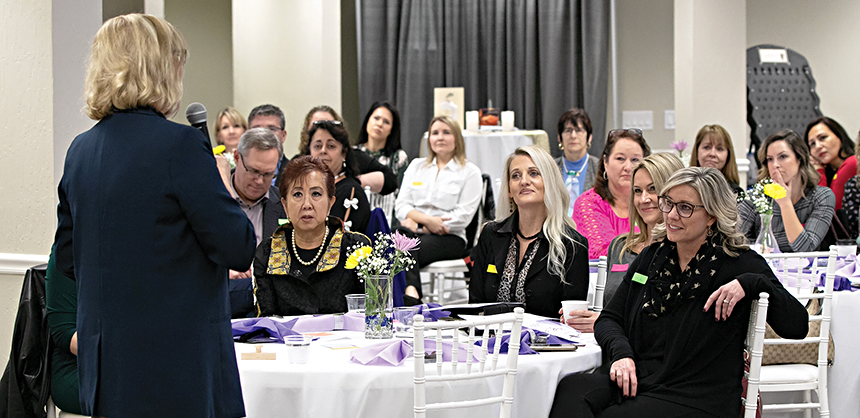
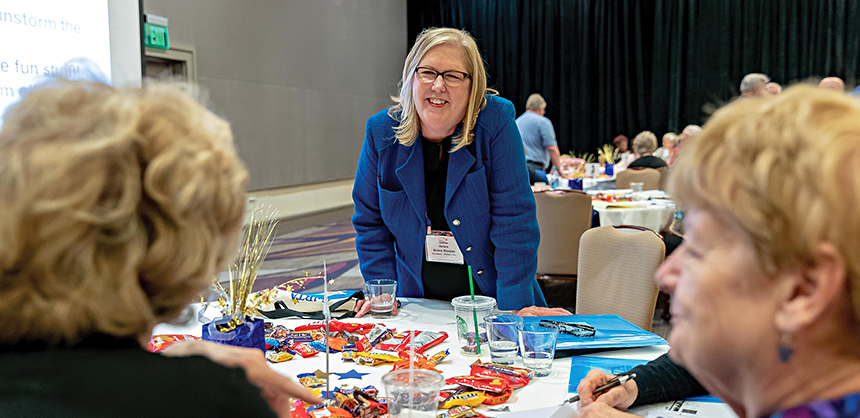
Med/pharma meetings are heavily geared toward continuing medical education content. Planners were forced to take face-to-face meetings virtual when the COVID-19 pandemic struck. Courtesy of Joan Hablutzel

Med/pharma meetings are heavily geared toward continuing medical education content. Planners were forced to take face-to-face meetings virtual when the COVID-19 pandemic struck. Courtesy of Joan Hablutzel

Nuances Aplenty
Beyond this virtual meeting experience resulting from the COVID-19 pandemic, Hablutzel’s group typically has events that are educational meetings for clinicians who are interested in obesity medicine or treating patients with obesity. It is geared for practicing clinicians and heavily oriented toward continuing medical education (CME) content, with networking being a secondary purpose. While planning virtual meetings offers a wealth of challenges to planners, beyond the confines of virtual meetings, some of the unique aspects of planning meetings in the medical field come along the lines of CME requirements. As Hablutzel explains, the Accreditation Council for Continuing Medical Education (ACCME) has some very strict requirements when it comes to how education is developed and carried out, as well as how sponsorships can be integrated. “In a face-to-face event, it’s easy to keep the sponsorships and exhibitors separate from the education. It is more challenging to get the exhibitors and sponsors the value they seek in a virtual environment,” Hablutzel says. “Other industries don’t necessarily have this challenge, and it can make it easier for them to have sponsorships or exhibitors involved in the actual conference itself.”

Caytie Pohlen-LaClare, founder and president at The LaClare Group Inc., has been working with medical device companies for more than 20 years. The types of meetings LaClare’s team typically orchestrates are both internal company meetings and external meetings with their clients in attendance. The internal meetings are typically for company staff and include national sales meetings, regional team meetings and logistics support for companies attending major industry conferences. The external meetings — with attendees who are health care providers — include investigator meetings, health care provider training events and product launch road shows. The LaClare Group has also produced meetings and events in locations throughout the United States, Canada, the Caribbean and Europe.

As most people are aware, this industry is highly regulated, especially when meeting attendees are health care providers. “For example, there are limits on meal costs, types of hotels and giveaways — no pens,” Pohlen-LaClare says. “Although most companies have a compliance team, it is vital for planners to know and understand the regulations around meetings and events. It saves everyone time and potential legal trouble if you follow all regulations from the start.”

When considering potential meeting venues, The LaClare Group verifies no competitor companies will be having meetings there at the same time. In fact, they add a clause in each contract to specifically address that issue. “Often, health care provider training events will be held in a hospital or cadaver laboratory, which adds layers of complexity,” Pohlen-LaClare says. “Extra planning is needed for coffee breaks and lunch to either be catered at the facility or held at a nearby restaurant. It also means booking transportation to/from the laboratory and finding nearby hotels for overnight stays.”

For meeting planners moving med/pharma meetings to virtual, Hablutzel recommends they focus on the content first. Identify what type of content they want to deliver and then what type of experience they want attendees to have. “With most medical meetings, content is king, and so you need to maintain the integrity of your content,” Hablutzel says. “Also, don’t be afraid to start small.” That’s one of the reasons her group is only doing education for its first virtual event as they expect to learn a lot from this experience. “For our upcoming conference, we will be doing a hybrid model. We’ll add in networking and a virtual trade show to the virtual component,” Hablutzel says. “About 50% of our sessions are pre-recorded with a live Q&A and the other 50% will be live. This allows us to have some comfort knowing that at least 50% of the content fits within the allotted time slots, won’t have technical glitches and meets our education guidelines. That way, we can focus our time on the parts that will be occurring live.”

Ongoing Challenges
One of the challenges planners may experience in the medical industry is scheduling, especially since there is currently a need for medical personnel to help treat COVID-19. This could mean they no longer have as much time for continuing education. On top of that, a lot of attendees may not work a typical Monday to Friday, 8 a.m. to 5 p.m. schedule. That’s why some planners create educational opportunities and host these types of events on the weekend or in the evening.

A few years ago, The LaClare Group planned and operated a 16-city “road show” for a medical client’s product launch. “It was like the movie ‘Groundhog Day’ because we repeated the same two-day training meeting in a new city every week,” Pohlen-LaClare says. For every hotel/meeting venue, The LaClare Group had to verify that no competitors were holding meetings at the same venue and same dates, and verify all meals were in cost-compliance and were sensitive to attendees’ dietary needs. They also had to ensure that all aspects of the meetings were in compliance with public records laws by accurate record keeping of all  health care providers in attendance, which day(s) they were there and what meals, if any, they had. They also had to verify their travel — airplane, train, etc. — and make sure that hotel room reservations were in full compliance, so nobody could stay in the host city extra days before or after the meeting.

In addition, the A/V elements had to be flawless in each city and they had to make sure the computer-simulator devices were shipped and arrived on time in each city. “To add an extra level of challenge, the road show occurred a short time after the Sunshine Act was enacted, so many attendees were unfamiliar with the rules and regulations we had to follow,” Pohlen-LaClare says.

To meet the requirements of the Physician Payments Sunshine Act, which passed in 2013 and is part of the Affordable Care Act, medical/pharmaceutical companies must keep accurate records of any type of physician payments and submit reports annually. To maintain this data, it is vital that meeting planners have an accurate recordkeeping system in place. “At each meeting or event, sign-in sheets track who attended and on which day(s),” Pohlen-LaClare says. “We also keep track of what the meeting expenses are on a per-person basis since there are strict cost parameters within the legislation. Most meeting venues, restaurants and caterers are now familiar with these rules and have created special menus that are within compliance guidelines.”

Brooke Davis, vice president at Global Access Meetings and Events, and her team were recently on-site for a medical sales training meeting for a drug that was not yet approved and approval was expected on arrival day. “The company received a Complete Response letter from the FDA — meaning the drug wasn’t approved — and so we had to cancel the meeting on-site, send all attendees home and work with the hotel on minimizing cancelation costs,” Davis says. “Emotions and disappointment were at a high as some attendees were losing their jobs, so it was imperative for us to respond compassionately, provide assistance and be on point with our stakeholders to manage the financial loss of canceling the rest of the meeting.”

Global Access Meetings and Events also holds many health care provider interactions at global congresses as they present an opportunity for exhibiting companies to meet with their key opinion leaders who were already planning to attend the congress. “When organizing a health care provider meeting, we typically will have at least 10 participants attending from different countries, and all have different spend caps. For example, if someone from France was attending a dinner meeting, we are not allowed to spend more than 60 euros on their meal, all taxes/gratuity included,” Davis says. “If we are holding the meeting in Chicago, this dinner cap is very difficult for dinner as it is more typical to spend at least $125-$150/person for dinner. To circumvent this, we prefer to work with venues who have pharma menus on hand where, for a set price, everything is included. In some cases, the physician may opt out from the meal altogether and, therefore, we wouldn’t report any spend against them. This certainly presents many strategic challenges for the planner to stay compliant while accommodating the health care providers in attendance.”

Tips for the Medical/Pharma Meetings Trade
To further streamline medical-based meetings and events, planners should do the following:

• Create robust, standard processes and procedures for the entire planning process. Spending time upfront figuring out your procedures will save time in the long run and help prevent errors.

• Have a full understanding of the Sunshine Act. Whether you are an outside, third-party planner or an internal corporate planner, it is imperative that you understand how your company interprets and enforces the Sunshine Act portion of the Affordable Care Act. The Sunshine Act can be somewhat vague in certain areas — meals must be “modest” — so you need to understand what your client requires.

• Maintain an ongoing process of recordkeeping for each meeting. That way, it doesn’t become an overwhelming task at the end of each year.

• Make sure contracts with meeting venues/hotels include non-compete clauses that specify the meeting planner must be notified if any identified competitors are holding meetings in the same venue. Good contracts should include a force majeure clause that allows for  everything from ash clouds over the Atlantic to pandemics that would prevent a meeting from being held.

Davis says meeting planners working with medical and pharmaceutical entities stay up to date on education and the latest guidelines. As the guidelines are constantly changing, it is important for planners to be the resource for clients to provide the latest information, as well as aligning with their internal compliance departments. “For launch programs, work with the hotel to ensure the hotel contract has a tiered/fair cancellation policy and rebooking opportunities in case of the meeting canceling,” Davis says. “It is our job to protect our clients and treat their money as it is our own to minimize the financial exposure and liability as much as possible.”

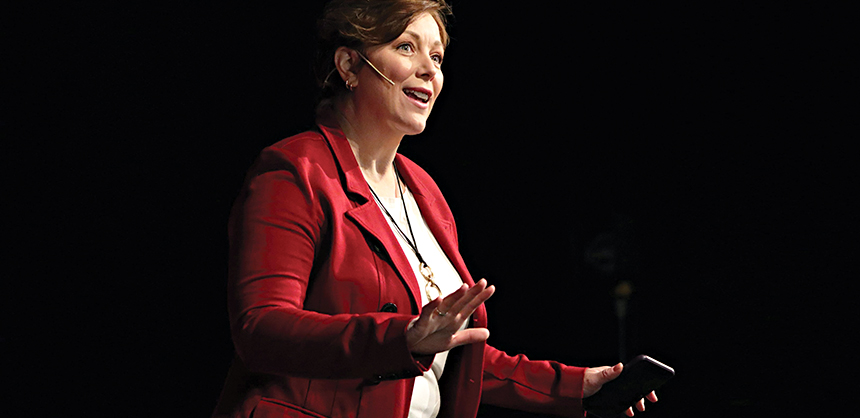
There is already a robust emphasis on virtual med/pharma meetings, which allow attendees to witness procedures online. Courtesy of Justin Hartman

There is already a robust emphasis on virtual med/pharma meetings, which allow attendees to witness procedures online. Courtesy of Justin Hartman

Future Outlook
Meeting experts agree that the industry is going to look different. From combined virtual and face-to-face events, to one hybrid event or pivoting to virtual-only events, medical meeting planners have to consider all options. This also changes every aspect of a conference when face-to-face events resume — from how events will provide food to social distancing standards — adding yet another complexity to event planning. “After all of this is said and done, attendees may be more hesitant to travel and many of us have space and hotel contracts booked out several years based on increasing attendance numbers,” Hablutzel says. “The question becomes —How do we work with our other industry partners to make the new future work for everyone?”

Pohlen-LaClare thinks the impact of COVID-19 on future medical training meetings remains to be seen, however, she anticipates that many health care providers may continue to be restricted from traveling to meetings. Some solutions include smaller training courses for just the staff of a specific hospital/clinic, offering livestream online courses, or a combination of live meetings with some attendees in the room and others attending via livestream. “For corporate meetings with internal staff only, such as an annual sales meeting, we anticipate they will likely have reduced budgets,” Pohlen-LaClare says. “If they occur at all, these meetings will likely utilize locations and venues that are more cost-effective and conservative so the company does not appear to be extravagant or wasteful in spending. Large meetings and conventions will be slow to return to normal and will probably not be held until 2021 or later.”

Davis agrees that virtual med/pharma meetings will have a much greater impact in the short term while the industry adjusts to the rules and restrictions, and potentially long term. “For instance, when recruiting for live advisory boards, reasons for invitation declines were mainly because of unavailability,” Davis says. “Physicians typically receive many invitations — whether it be to advisory boards, congresses or speaker meetings, and their time is limited. Therefore, being able to attend a virtual advisory board, still receive an honorarium check and provide key feedback is much more attractive than having to take time off from work or their family to travel for a day meeting.”

Global Access Meetings has integrated a virtual platform that would allow these physicians to attend meetings they might not otherwise be able to attend. “We are now developing reimagined meetings — what meetings will need to look like now in order to keep attendee health a top priority. It is imperative to work with properties to ensure we have the correct contract clauses in place that protect our clients in case of another pandemic,” Davis says. “We are collaborating with other leading meeting experts to learn from each other. And from a planner perspective, we must evaluate the attendee experience from the moment they arrive to ensure we are allowing for social distancing at attendee registration, in our meeting set ups, breaks, meals, transportation and group events. We are excited for when we can bring people together again and we will be prepared to adapt and evolve as our industry continually changes.” C&IT


moving

Moving Forward

CIT-June-July-2020-Feat1-Industry-Pic1-860x418-quote

Is the meetings business as we have known it changed forever? Will we operate within a new normal, or will there be a time post-COVID-19 when we can all get back to business in the way we always have? These questions are at the forefront for meeting planners, and hotel and resort management, as they begin reopening properties at this unprecedented time. Industry leaders weigh in on how they have been coping with the pandemic, what steps they have taken to ensure employee and attendee safety, and what they expect to happen in the future.

Employee Impact
When faced with ever-tightening restrictions, some resorts and hotels were forced to furlough employees while others were able to have them work from home or stay working on a limited basis.

“We were very fortunate that we were able to keep our sales teams intact throughout the closures to continue communicating closely with clients and plan for upcoming events,” says Stephanie Glanzer, CMP, SVP and chief sales officer of MGM Resorts International.

“We staff our hotels according to business demand and, unfortunately, we are unable to keep our entire workforce busy right now. Our associates are the heart of our business, and we’re working diligently to minimize the impact for them,” says Dan Surette, SVP and chief sales officer of Omni Hotels & Resorts.

“In the early stages, we instituted telework wherever possible,” says Harris Rosen, president and COO of Rosen Hotels & Resorts. “We did proceed with a temporary furlough for some of our associates during the severe downturn in our enterprise. We were able to continue to pay salaried associates at reduced rates in an effort to ensure that they would remain safe and aware of how much we value their contributions to the organization. Our intent is to have them return as we enter into a phased reopening based upon the level of consumer confidence and occupancy.”

When employees do come back, they will find themselves undergoing a series of processes to ensure they are healthy enough to return. Michael Massari, chief sales officer of Caesars Entertainment, says their employees fill out a questionnaire in which they list whether they have any of the symptoms or have been around someone who has had COVID-19. If they are symptomatic or have had interaction with someone who is, then they undergo a COVID-19 test. If they test positive, they are sent home to quarantine, but if negative, they go back to work. They also get their temperature checked daily before entry and follow other safety procedures, such as wearing masks.

From left: Steve Enselein, Hyatt Hotels Corporation; Harris Rosen, Rosen Hotels & Resorts; Dan Surette, Omni Hotels & Resorts

From left: Steve Enselein, Hyatt Hotels Corporation; Harris Rosen, Rosen Hotels & Resorts; Dan Surette, Omni Hotels & Resorts

Keeping it Clean
In addition to figuring out the best way to maintain their workforce, the executives had to determine the best way to keep returning attendees and guests safe, adding that new sanitation and safety protocols were implemented.

Steve Enselein, SVP of Events at Hyatt Hotels Corporation, says meeting planners can do a virtual tour to see the property ahead of time and how meeting spaces will look under social distancing guidelines. Attendees can bypass the front desk and use Hyatt Mobile Entry to access their room and other public spaces utilizing their mobile device. Hotels are cleaning more frequently utilizing hospital grade disinfectants on all high-touch surfaces, in addition to adding hand sanitizer stations at the entrance of all of the venues and during meal service. Masks and gloves will be made available for attendees and items such as pens and pads that cannot easily be sanitized will be eliminated. In addition, Hyatt has designated at least one Hygiene and Wellbeing Leader at every hotel to ensure their new protocols are being met. He says that they are also, “evolving banquet menus to provide planners with more options, such as individually pre-packaged items and plated meals rather than buffets.”

Rosen says that they also reimagined their buffets utilizing social distancing and servers, and implemented electrostatic spraying in guest rooms after checkout, as well as constantly cleaning high-touch areas. He adds, “We adhere to all social distancing guidelines and have installed floor markers where appropriate throughout our properties. We have strategically placed hundreds of hand sanitizing stations. Plexiglas shields are in place, most notably at the front desk, cashier and hostess stations.”

Glanzer adds, “We have implemented a comprehensive Seven-Point Safety Plan that includes numerous health and safety protocols throughout our properties to ensure guests have a safer, more comfortable experience as they return to our resorts, including custom handwashing stations on the casino floors, Plexiglas barriers at the front desk and at gaming tables, and spacing of tables throughout our food and beverage outlets. In our guest rooms, attendants have been trained on enhanced cleaning and disinfection protocols. Upon check-out, guest rooms will be thoroughly cleaned and disinfected and seals are placed on the doors so guests know their room has been sanitized before they enter. We are also removing all unnecessary items, such as throw pillows and magazines, and other printed collateral, to streamline the room.” Additionally, she says each guest will receive an amenity kit in their rooms with two face masks, a bottle of hand sanitizer and a device that opens doors with a hook, and a stylus to push buttons to minimize the amount of touching.

She sees digital innovation coming out of this crisis to be a positive. “Hotel guests now have the option of contactless check-in where they can download the MGM app and receive a digital key that allows them direct access to their rooms, bypassing the front desk altogether. We have also implemented a new digital experience throughout our restaurants. When guests arrive, they will scan a QR code that puts them into a virtual queue and they will receive a text when their table is ready. When guests are seated, they will be presented with another QR code that leads them to a digital menu that replaces the standard physical menu which will still be available upon request.”

Massari says, “Literally, we spent the last 12 weeks going through every procedure on our properties and modifying them given the current situation. So I think what you’ll find is that almost every procedure through the entire property has been changed or modified – the amount of times we clean our surfaces, the amount of times that employees wash their hands, how often or whether we go into occupied spaces like guest rooms.”

“We have increased the frequency of sanitation of high-touch surfaces and public areas with EPA-certified cleansers that are CDC-compliant,” Surette says. “High-touch areas include the front desk counter, guest room keys, elevator buttons, restrooms and door handles. Additional sanitizing stations are placed throughout the hotel in public spaces for guests and associates to access easily, and use regularly. Our housekeeping associates are exercising additional precautions when cleaning and sanitizing all guest rooms each day. For requested items, including in-room dining, housekeeping attendants will deliver with a contactless procedure by placing the item outside the door. Elevated disinfecting efforts have been applied to high-touch areas and items such as door handles, safety latches, phones, light switches and alarm clocks. Once the cleaning process is complete, our housekeeping staff will seal a single-use, plastic bag containing high-touch items, such as the TV remote, pen and door hanger with a sticker that reads ‘Safe & Clean.’ We are also providing new guest room sanitation amenities, including individually wrapped wipes and masks for our guests to use throughout their stay.”

When it comes to F&B, he says they also have made changes. “Instead of a self-serve buffet, our team will recommend staffing buffets with a server-attendant wearing PPE.”

From Left: Michael Massari, Caesars Entertainment; Stephanie Glanzer, MGM Resorts International

From Left: Michael Massari, Caesars Entertainment; Stephanie Glanzer, MGM Resorts International

New Normal?
Now that all of these new processes are in place, the question becomes is this the new normal? Glanzer says, “These measures will remain in place for the foreseeable future. As we’ve begun to reopen our properties, the demand has exceeded our expectations and we are looking forward to seeing this ramp up in the coming months. As it relates to meetings specifically, we understand that moving forward in the short term, meetings will look different. Groups may be smaller or they may pivot toward a hybrid of in-person meetings with a virtual component. But, we believe that with challenge comes innovation. This crisis has proved once again that the hospitality and meetings industries are resilient, made up of extremely passionate professionals. It has forced us to look at our business in a different way and develop creative alternatives to how meetings have typically been done”

Surette thinks there will be a virtual component as things return to normal and that social distancing and PPE measures will be in place until there is a vaccine. Some of the other adjustments may also stick around for the long term. “Many different economic and social variables will determine when business levels will reflect what they were before the global pandemic, but we are encouraged about the level of activity with group opportunities for later this year and 2021,” he says. “For every industry that was hit hard, there are others that have benefited, and some will need to travel and hold meetings before others. Meetings, in theory, should be a catalyst for a faster recovery as we all have proven again and again that face-to-face collaboration drives results and new opportunity. Drive market or regional meetings travel will come back first and then, over the next 60-90 days, the broader meetings/conference business will accelerate.”

Rosen thinks things will get back to normal “in early 2022. This lockdown experience has provided me with an opportunity to reflect upon my time in the industry. I honestly believe that we will rebound in time and adapt to the required new safety protocols, much the same way we did post-9/11. I remain committed to providing our guests with the finest provision of hospitality product and service.”

Massari worries that people will not have the budgets to attend events.“You have to think about how much money you are going to spend at that trade show given the fact that you had less advertising spend this year than you had last year. Some companies may go bigger, but others may say, ‘I’m going to have a presence. But, I’m going to send four people instead of 10.’” He says they will likely not reduce the number of participants but will just limit the number of shows they will attend.

He does believe face-to-face meetings will rebound soon. “The human desire to interact with other people face to face is like a gravitational pull. I don’t have any worries about when we get back together face to face or whether we’re going to get back together face to face. It’s going to happen because it’s just a human condition that’s required to be met. They will figure out a way to do this in a common sense and safe manner . . . whether that comes together in the next couple of weeks, couple of months . . . I doubt that it’s going to be a number of years. I think we all want this too badly.”

Surette agrees. “The hospitality industry has been through a lot in the last 25 years and, after each crisis, we bounce back stronger by taking those learnings forward. I am confident we will get through this one as well.” C&IT


CIT-June-July-2020-Cover-550x736

Cruise Control

The 4,002-passenger Norwegian Bliss in Miami.The 4,002-passenger Norwegian Bliss in Miami.

While the global health crisis has “docked” the cruise industry for the last several months, the return of leisure travelers and corporate groups to the high seas isn’t too far off.

Recently, a webinar featuring speakers from major cruise lines drew fairly positive results from polls of the travel agents in the audience: Most described their clients as “interested but cautious,” and more than 50% had taken new bookings, primarily for next year. The first speaker was Katina Athanasiou, CITP, chief sales officer for Norwegian Cruise Line, who reported that “We continue to see a push in booking for 2021 and 2022.”

Separate from the webinar, Jerilyn Giacone, director, charters, meetings & incentives for Crystal Cruises, brings positive news regarding the return of group business. “We are actively quoting and booking incentive groups and charters for 2021 and 2022, and still have space available, so now is the time to start the conversations with clients who may have put their 2020 plans on hold,” Giacone advises. Pre-pandemic, Crystal’s group business had been on an upswing, she adds. “On the incentive group side, Crystal has seen a nice growth trajectory for the last two years, and 2020 was poised to be a banner year for incentive group programs — particularly aboard our Ocean ships — and a record year of full-ship charters on Crystal River Cruises and the Crystal Esprit yacht. While we’ve had to postpone many of these programs due to the global health crisis, we have thankfully been able to reschedule most for 2021 and 2022.”

Leisure Before Groups
Naturally, leisure guests will return before groups do. “They’re already lined up to get back on ships as soon as they’re in the water,” says Karen Devine, CITP, founder & CEO, 3D Cruise Partners, the contracted cruise buyer for many of the major incentive companies around the United States. “So, the positive reporting from the industry on booking is because of the retail guest.” Following the return of leisure, it is likely that many of the initial cruise meetings will be on smaller ships and charters. A charter allows a group to control who is on board and dictate COVID-19 protocols for all guests, in addition to those dictated by the cruise line. “From early indications, the ability to charter a small vessel like our river ships and yachts will continue to be popular,” Giacone says. “These vessels accommodate a smaller number of guests with abundant onboard space, providing a secure environment for corporate programs and special event occasions.”

Paving the way for those initial group bookings are the various special deals being extended by cruise lines, spurred by the current challenge to their business. Celebrity Cruises’ Take Ten offer is an example. Planners earn up to 10% of total cruise fares when booking any of Celebrity’s 2020 sailings, and they can also Take Five on 2021/2022 sailings.

But, discounts, more favorable cancellation terms and the like will do little to encourage planners if they perceive a significant risk of COVID-19 contagion for their seafaring attendees. 3D Cruise Partners is certainly doing its part to correct this perception with facts. According to the CDC, “the current total number of worldwide COVID-19 cruise cases — including guests and crew — is .0006% of the total global impact,” states the 3D Cruise Partners’ “Reality vs. Perception” report. “With over 340 vessels sailing at any given time — as was the case in March when ships were sailing — representing over 550,000 guests and crew, it is clear how minimally impacted the cruise industry was overall, and the vast majority of vessels had no issues whatsoever.”

Strict Cleanliness Standards
Another key part of making planners and groups feel comfortable is the CDC-approved protocols that will be in place, from new cleanliness practices to social distancing. “They’re starting to get announced, which is fantastic news,” Devine says. “So, it’s starting to become a much more positive conversation.” She stresses that the cruise industry’s hygienic practices had been quite stringent before the pandemic. “Cruise lines have practiced enhanced security and sanitation practices for many years — and, thus, perhaps a reason why the number of cases on ships was minimized,” states her company’s report. “As one example, hand sanitizer is constantly utilized, and the use of it enforced. Crew stands at the entrance of the ship and dining venues to apply it, and dispensers are in abundance throughout a ship.” Furthermore, “unlike airlines, trains, hotels, restaurants and other land-oriented venues, cruise lines are required to report guest or crew illness to the CDC” and “U.S. Public Health regularly and frequently inspects ships in the U.S. to ensure safety and sanitation practices are in place, and operable in accordance with the very strict regulations for cruise ships.”

On top of these practices, there will be new sets of protocols geared toward the current health crisis. Norwegian, parent company to Oceania Cruises and Regent Seven Seas Cruises, was the first major cruise line to announce its augmented program, dubbed Sail Safe, and comprising part of Norwegian’s Peace of Mind, along with Flexible Booking. Sale Safe consists of six initiatives: (1) enhanced screening protocols, (2) all-new air filtration, (3) increased sanitation measures, (4) responsible social distancing, (5) enhanced medical resources and (6) extended ship-to-shore safety. “This is about partnership with world-class experts in fields of health and safety, and infectious disease,” Athanasiou said in the webinar. “We’re continuing to take every precaution so guests can continue to explore the world with Norwegian with the ultimate Peace of Mind.” She went on to elaborate on each of the Sail Safe initiatives:

• “(1) All guests and crew are committed to undergoing extensive pre-embarkation health screening, temperature checks and continuous monitoring throughout the voyages, etc.”

• (2) “We are installing medical-grade air filters on all of our ships, H13 HEPA filters to be specific, that remove 99.9% of airborne pathogens to ensure that clean air is continuously put throughout. H13 HEPA filters are fine enough to catch particles of COVID-19.”

• (3) “All ships will be thoroughly cleaned prior to every single voyage in accordance not only with our protocols but those we are developing in partnership with the CDC.”

• (4) “Staggered embarkation and check-in processes will be implemented across all of the fleet to ensure proper social distancing, in addition to the reduction of capacity in our public spaces and how our guests flow to and from various venues and activities across the ship . . . I think [social distancing] is going to be a phased and evolving approach which the entire industry works through. I anticipate that . . . there may be things that occur on Day 1 that do not on Day 30, Day 60, etc.”

• (5) “Our enhanced medical resources will include onboard testing for COVID-19. We’re also committed to increasing our medical teams fleet-wide, in addition to dedicated isolation or other areas across the ship so we can take care of any guests that show symptoms.”

• (6) “Last, but certainly not least, because this is so critically important, is our extended ship-to-shore safety, and that means we’re partnering with our local destinations and tour operators to ensure that our industry-leading sanitation protocols that we’re creating on board our vessels extend fully to the shore-side experience. So, we will only visit safe, open ports of call and work to make sure we have the right itineraries and providers to make sure everything we’re doing on board [for guest safety] is extended when we go shore side.”

Some of these protocols, particularly social distancing, will likely be eased when the pandemic subsides or when a vaccine or cure is found. Others, such as enhanced sanitation and air filtration, will likely be permanent. The protocols being developed by Royal Caribbean International, Carnival Cruise Line and other major brands will surely be equally as robust, and encourage group bookings once those protocols are CDC approved.

Oceania Sirena is one of Oceania Cruises’ newest ships.

Oceania Sirena is one of Oceania Cruises’ newest ships.

New Ships, New Adventures
Also helping to encourage the return of groups are new ships by brands such as Celebrity, Crystal and Silversea, which promise new experiences for attendees. Celebrity Apex, the brand’s latest Edge-class ship, was introduced last spring. The vessel offers new menus and dishes, new venues, and new entertainment and artwork. Groups can take advantage of The Theatre, which provides stage-automation systems that control everything from the rotating platforms to a new, 180-foot curved video wall. In addition, the 1,970-sf Meeting Place offers a pantry, bar and A/V systems. The Magic Carpet, an elevating venue with a full bar and live performance space, delivers different experiences on every deck it visits. In addition to the recent introduction of Celebrity Apex, the company is investing $500 million via The Celebrity Revolution program to modernize the entire fleet with new staterooms, suites and spaces.

Sovereign Alliance, an event-planning company, has utilized Celebrity’s Millennium, Infinity and Summit ships for its clients. Michael O’Fallon, CEO and founder of Sovereign Alliance, notes that guests have praised the ships’ theaters, meeting spaces and dining rooms as “open and comfortable.” “We have also sailed on the Solstice-class with similar praise that was indicative of the Millennium-class vessels,” he adds. “The primary difference in regard to customer feedback on the Solstice-class was high praise in regard to the spaciousness and openness of the accommodations.” O’Fallon also commends Celebrity for its group activities, saying, “Our groups primarily enjoy onboard activities that are structured toward their interests. This is easily accomplished with the professionalism of the Celebrity staff and crew,” he says. “Corporate ‘kick-off’ events with music, awards and special performances have worked very well for our corporate clients.”

The maiden voyage of the new Crystal Endeavor will be Tasmania & the Fjords of New Zealand, a 14-night cruise embarking late this year. “Crystal Endeavor will have all the features that our larger ocean ships have — multiple dining venues, including Nobu Matsuhisa’s Umi Uma, full-service spa and salon, fitness center, entertainment venues, enrichment programming — but for just 200 guests in all-suite, butler-serviced accommodations,” Giacone explains. “This will offer guests a wonderfully comprehensive Crystal Experience aboard the most spacious, purpose-built luxury expedition vessel, as well as an intimate, personalized atmosphere with a 1:1 service ratio.”

She adds, “For incentive charter programs requiring over 85 identical-size accommodations, the majority of the suites on board will be 304 sf, plus an Owner’s Suite and two-bedroom Expedition Suite for executives hosting the achievers. This ship will appeal perfectly to groups who are seeking a truly ‘wow’ experience for top producers or clients, as the itineraries are longer — 10 nights or more — and reach more remote corners of the globe. The experiences offered aboard Crystal Endeavor will be more intrepid and specialized according to the destinations, making them very special, perfect options for select groups and charters.”

Another recent achievement of the Crystal brand is in the area of sustainable operations: The sister ships of Crystal River Cruises — Crystal Bach, Crystal Debussy, Crystal Mahler and Crystal Ravel — have all earned Green Award certification (www.greenaward.org). Ships include features such as a diesel-electric power plant and advanced wastewater treatment systems.

New to Silversea Cruises this summer is the brand’s first-ever destination-specific ship, Silver Origin. The all-suite, all-balcony, 100-guest vessel — of which the company took delivery just weeks ago — will sail year-round in the Galapagos Archipelago. Highlights include panoramic views from the Explorer Lounge, butler service, sophisticated interiors and Ecuadorian-inspired cuisine. “We have a bigger opportunity than we’ve ever had in the incentive market for higher-end expedition cruises,” Devine says. But the growing opportunities for meetings at sea, once the industry gets back on course, go well beyond expedition. “Every single category of cruise is building and developing, which just furthers the offerings for customers to choose from depending on the demographics of the client participants and their budget,” Devine observes. “What’s so interesting to me is that we’ve got better and bigger ships in the short [program] market than we’ve ever had before. We have more seven-night Mediterranean and Northern Europe cruises than ever before. We have more river cruise opportunities than we’ve ever had, and, with that, what’s really popular are tandems — two or three ships that sail together and they do the same experience. So, because there is so much build, it allows us flexibility to completely customize something for a client.” The expanded Northern European itineraries (from Southampton and London up through Ireland to Scotland) were becoming very popular with groups because the ports are less familiar to the well-traveled attendee than those of the Mediterranean and Caribbean.

Giacone confirms the rising popularity of European itineraries. “The most popular itineraries for incentive groups have historically been our seven-night Mediterranean Ocean voyages in spring/early summer and September/October,” Giacone says. “Crystal Symphony will be in Europe in both 2021 and 2022, and we’re seeing great interest in those itineraries from groups who are planning ahead and looking forward to these special events again. Closer-to-home itineraries are also quite popular, like Crystal Serenity’s 2022 return to Alaska and the New England/Canada sailings — both regions offering several seven-night options. Depending on the region, hundreds of available shore excursions can be booked to suit the groups’ needs, or our land programs team will work with them to create their own private experiences, from simple car-and-driver services to elaborate full-day explorations and evening events.”

Among Norwegian’s new destinations from 2021 to 2023 are Antarctica; Greenland; Cape Town, South Africa; Asia, including ports in Japan, the Philippines, Malaysia, Cambodia and Brazil, with calls in Fortaleza and Salvador de Bahia.

The Regent Seven Seas Navigator in Bermuda. Norwegian recently announced its augmented program, dubbed Sail Safe.

The Regent Seven Seas Navigator in Bermuda. Norwegian recently announced its augmented program, dubbed Sail Safe.

No Virtual Cruises
When cruise meeting planning resumes, it will benefit from these new ships and new ports, as well as special offers by cruise lines anxious to re-establish their pre-pandemic level of group business. In addition, the traditional advantages that sea meetings often have over land meetings remain intact. O’Fallon describes a few of them: “(A) Theater, meeting and lounge events have audiovisual elements built into their structures with full mixing consoles, integrated amplification, lighting and professional microphones. This is a tremendous cost savings over hotel-based events. (B) There are no F&B requirements for the space that is reserved for meetings and events. And (C) keeping the camaraderie and ‘togetherness’ of the group is easily accomplished as they ‘journey together’ to their next destination.”

Neither that camaraderie nor the experience of cruising is achievable via a virtual medium, so there is no doubt cruise meetings will resume. “Inevitably people want to travel. So, it may take a while for the industry to get back to where it was before all this happened, but it will. The demand is there, thanks to the retail market, and group business will follow,” Devine says. “What I’m expecting is that the fourth quarter of this year will start to get some interest, minimally for ’21 and I would say a lot for ’22, because companies are going to take a little while to sit back and recover themselves.”

Indeed, the recovery process from such an unprecedented blow to the meetings industry cannot and should not be rushed. But when the process is complete, cruise meetings will regain their rightful place as one of the industry’s most compelling options. C&IT


Test PDF

[flipbook pdf="https://www.themeetingmagazines.com/wp-content/uploads/2020/05/CIT-2020-04-05-TEST2.pdf"]

Col4-Tiersky,Howard-147x147

Make Your Online Meeting More Engaging

It’s not easy to keep participants engaged in meetings, even when you’re sitting across the table from them. But when everyone is sitting in their individual houses — often with spouses, kids and barking dogs in the next room — it’s even trickier to pull this off. With much of America working from home now, it’s crucial that we make “meeting engagement” a priority.

You want people on the edge of their seat listening, questioning, offering up ideas. You don’t want them emailing, checking Facebook or just being a passive listener.

The good news is that there are some simple things you can do that skyrocket engagement. Some of them are common sense. Others may be kind of surprising. You can check out impactfulonlinemeetings.com for some helpful resources.

Read on for some practices that will keep people focused and tuned-in:

Ask people to share a funny or embarrassing story. When facilitating introductions, which you should always do when people don’t know each other well, help participants get to know each other by sharing a brief fun fact or a funny story. According to Slack’s Ultimate Guide to Remote Meetings, “one study found that workers who shared a funny or embarrassing story about themselves with their team produced 26% more ideas in brainstorming sessions than workers who didn’t.”

Turn on video to squelch multitasking. Encouraging or even requiring participants to turn on their video cameras immediately makes them more engaged because they can be seen and, therefore, their reactions are part of “the show” versus something private. Also, they’re less likely to multitask — which is an engagement killer — since they can be seen by others.

Give people roles so they’re not just “webinar watchers.” Seek to involve as many people as possible with presentation roles in a meeting. Sometimes, we even do this “on the spot.” For example, at a meeting to review selected customer feedback that had been received on a product, we put the feedback on a slide, picked three participants, and asked them to alternate between reading the 15 to 20 lines of feedback to the group — no rehearsal needed.

Work together on a deliverable. For example, you’re probably familiar with a Strengths, Weaknesses, Opportunities and Threats (SWOT) analysis. Instead of presenting a completed SWOT to your meeting participants, put a link to a blank SWOT slide in Google Slides and ask them all to simultaneously work on filling it in. In under two minutes, you will have a completed SWOT that represents the collaborative efforts of the group. This can also be done with a wide range of other types of documents: idea lists, project plans, lists of competitors, etc.

Compel attendees to use the chat feature. You can increase participation and get feedback by asking your audience to enter something into the chat. Ask a question like, “What do you think is the most important aspect of our customer service?” and ask everyone to quickly go to their chat and enter a one- or two-word answer. You then not only know they are “still there,” but you are engaging with them and getting some feedback. You are in dialogue with your audience.

Do a spontaneous poll. Most online meeting platforms have the ability for the host to put a multiple-choice poll out to all attendees and then show a graph of responses. If an important issue comes up spontaneously that you want to poll, send a private text to a person who is “on point” to support presentation needs and ask them to quickly create the poll — it takes 1-2 minutes — and ask them to text you back when it’s ready. Keep the discussion going while you wait and, then, when you get the message that the poll is ready, let the group know you’d like to poll them on the topic — that will be the cue for your support person to put the poll up on the screen.

You will look like a magician since you “just happened” to have a poll ready to go on the very topic that came up spontaneously on the call. It’s good if your participants think you are all-knowing; they are less likely to try to multitask without being noticed.

Hold breakout sessions. In most meetings of more than eight people, usually most of the talking is done by just five to seven participants. This is one reason why during live workshops I often break larger groups into breakout teams, so they can come up with ideas, work on prioritization, action planning — whatever the work is — in smaller groups and then come back to the larger group and report on the work they did. Several of the major online meeting platforms, including Zoom and Google Hangouts, now offer breakouts.

We give each team clear instructions for the work they are to do, in writing, and then usually give them 20 to 40 minutes to do it.

A compressed time frame forces the group to organize quickly, get to work and focus on progress, not process or perfection. I’ve been amazed over the years that, sometimes, when clear instructions, a small team and a tight time frame are combined like that, you get work done in a half hour that might have taken days, weeks or months if done “the usual way.”

Don’t be shocked if you find people love working together virtually. It’s not unusual to find that you get more done than ever before. Great things can happen when everyone is present and focused, even when it’s from the comfort of their own homes. When the pandemic is over, you may not want to go back to the old way of working. C&IT

Col4-Tiersky,Howard-110x140

Howard Tiersky is the CEO of FROM: The Digital Transformation Agency, and author, along with Heidi Wisbach, of “Impactful Online Meetings: How to Run Polished Virtual Working Sessions That Are Engaging and Effective”. He is a successful entrepreneur who has been named by IDG as one of the “10 Digital Transformation Influencers to Follow Today” and by Enterprise Management 360 as “One of the Top 10 Digital Transformation Influencers That Will Change Your World.” For more information, visit impactfulonlinemeetings.com.

Col3-Kern,Merilee-147x147

7 Growth Strategies Sure to Spur Fresh Success

Growth. All businesses and professionals should desire it and most certainly need it. But achieving and sustaining growth in today’s uber-complex environment —whether corporate, entrepreneurial or personal career growth — takes multifaceted vision, ingenuity and agility. Indeed, a lack of growth in business speaks volumes.

But, even as businesses at large strive to thrive, so, too, must the individual professionals that drive them. At the end of the day, a business’ success, or lack thereof, is a direct reflection of the people therein — from ownership and management to frontline and support staff, and everyone between.

For some insight-oriented motivation, here’s a glimpse at how some business owners and professionals are growing their businesses and capitalizing on opportunities in their respective industries.

#1 – Embrace Your Uniqueness

Whether with respect to a company’s offerings, approach or image — or to staffers themselves — uniqueness and authenticity can be key in attracting and entrenching customers. Sure, it’s easy to play it safe, but to fully achieve breakthrough goals and hit seemingly impossible targets requires taking risks.

Harvard-trained lawyer Chinwe Esimai, the first African to secure a global executive role at one of the world’s largest banks, encourages individuals to embrace “shining in their own lanes.” By not downplaying her efforts or her Nigerian-born immigrant background and by staying true to her uniqueness, Esimai achieved extraordinary success with a banking industry leader.

#2 – Increase the Value of Your Brand

For companies, your brand isn’t your brand until you’ve legally maximized all of your resources. This is according to patent lawyer JiNan Glasgow George, who underscores that, for multibillion-dollar companies such as Apple or Nike, their trademark, logo and patent is what they focus on to drive value. George explains that intellectual properties provide protection against other companies from “borrowing” your ideas while also solidifying the uniqueness of your brand.

When it comes to one’s personal trademark, Karen Tiber Leland, author of “The Brand Mapping Strategy: Design, Build, and Accelerate Your Brand,” suggests developing your brand by design, not default. “Know precisely where you are so you can discern where you need to go,” she says.

#3 – Double Down on Failure

Many in business are understandably discouraged after taking a loss, let alone experiencing a series of losses or rejections. However, with a fresh point-of-view on failure, you just might be able to turn those setbacks into growth. In fact, in his book, “WTF?! (Willing to Fail): How Failure Can Be Your Key to Success”, Brian Scudamore, founder and CEO of 1-800-GOT-JUNK?, explores the notion of “failing upward” and, in the process, “using setbacks to change your business for the better.”

Speaker and business guru Anthony Russo was able to wrangle his fear and rejection worries to an extent that he built a seven-figure business in less than 18 months. Russo achieved this remarkable revenue benchmark by “doubling down” that, as he puts it, “is the art of leveraging failure to accelerate success.” By this, he means absorbing everything he passively learned from each prior failure and proactively learned about each situation by seeking and researching new tactics and trying again.

#4 – Fractionalize Unforeseen Problems

Unanticipated problems or events are always spontaneously occurring, and that unpredictability can wreak havoc on the most well-conceived plans, sabotage timelines and send expenses soaring. This is why many companies invest so largely in prevention development teams, which try to solve problems before and after they happen to keep the momentum and productivity flowing. Franchise and small business expert, Brian Clark, owner of Service Team of Professionals (STOP) franchises, uses a simple method to avoid unforeseen obstacles from overtaking his businesses. According to Clark, “Every problem can be solved by asking the right questions and breaking down the problem. Fracturing each challenge to small, accomplishable tasks will not only be less intimidating, but also easier to maneuver.”

#5 – Work Smarter, Play Harder

Productivity is a key priority in the labor supply-and-demand chain. It’s easy to focus on profits and products, dismissing the “how” it all gets done. Many businesses and professionals have been taught strategies to “work smarter not harder.” But well-respected business adviser and company CEO, Richard Polak, subscribes to “work smarter, play harder.” He’s advised the world’s largest companies, including the likes of General Electric, to focus on time and output. To invest in the well-being of its staff, as well as invest in technologies that boost its efficiency and capacity, thus maximizing work time and morale to boost bottom lines.

#6 – Embrace Value System-Driven Victory

Pak Hou Chau, the tech entrepreneur who operates in various sectors, such as social networking, e-commerce and esports, did the unthinkable. As a value-driven entrepreneur, Chau had undertaken a successful Initial Coin Offering (ICO) to raise nearly $2.5-$3 million for his esports platform. But, subsequent to raising these funds, he had an epiphany. Chau returned the money from investors and told his team they were going to start raising sales-driven capital from scratch. Why? As months passed after the ICO, Chau harbored an ominous feeling. “Deep down in my heart,” he recalls, “I felt that something was wrong.” One reason for that was the newly-established investors from the ICO. “They were offering advice that did not resonate well with me or my team, and it was starting to obviously impact the company culture,” Chau laments. He believed he could build his new business directly with the customer, in this case, as a community-based marketplace. So, Chau pressed ahead without the ICO-driven funds and ultimately launched his community-based solution. Chau feels that, at the end of the day, it’s really about the conscience of the entrepreneur. He personifies this notion and walks the walk . . . all the way to the bank.

#7 – Control What You Can

While cliché, they are undeniable truths: Perception is reality and “image is everything,” as painfully vain as these maxims sound. From one’s physical appearance to how one behaves, people tend to judge first and reason later. The same holds true for a business facility. Whether an office lobby, a retail display window, a website home page or even the body condition of fleet vehicles, aesthetics play a mission-critical role in overcoming the litany of obstacles and objections that are initially present with a new engagement.

Epitomizing these philosophies is former Ms. Olympia 50+ Sheryl Grant, who, after leaving a corporate career, discovered that transforming her body began with a shift of what she could control: her mindset. She developed what she now calls the “F.I.T. for Business” model based on principles of faith, intuition and tenacity and went on to win Ms. Olympia her first time competing at age 55. Today, Grant teaches entrepreneurs and executives that, while they can’t always control their external surroundings, they can determine how they respond to situations. She imparts that their perspective and beliefs often drive success, or lack thereof, and play a big role in shaping their future.

As the old adage goes, there’s more than one way to skin a cat . . . and there’s certainly more than one way to spur growth for your business or career trajectory. The seven strategies above, particularly when employed in multiplicity, can catapult your professional endeavors to new heights. It’s never too late, and there’s no better time than now. C&IT 

While cliché, they are undeniable truths: Perception is reality and “image is everything,” as painfully vain as these maxims sound. From one’s physical appearance to how one behaves, people tend to judge first and reason later. The same holds true for a business facility. Whether an office lobby, a retail display window, a website home page or even the body condition of fleet vehicles, aesthetics play a mission-critical role in overcoming the litany of obstacles and objections that are initially present with a new engagement.

Epitomizing these philosophies is former Ms. Olympia 50+ Sheryl Grant, who, after leaving a corporate career, discovered that transforming her body began with a shift of what she could control: her mindset. She developed what she now calls the “F.I.T. for Business” model based on principles of faith, intuition and tenacity and went on to win Ms. Olympia her first time competing at age 55. Today, Grant teaches entrepreneurs and executives that, while they can’t always control their external surroundings, they can determine how they respond to situations. She imparts that their perspective and beliefs often drive success, or lack thereof, and play a big role in shaping their future.

As the old adage goes, there’s more than one way to skin a cat . . . and there’s certainly more than one way to spur growth for your business or career trajectory. The seven strategies above, particularly when employed in multiplicity, can catapult your professional endeavors to new heights. It’s never too late, and there’s no better time than now. C&IT 

Col3-Kern,Merilee-110x140

As the executive editor and producer of “The Luxe List,” Merilee Kern is an internationally regarded brand analyst, strategist and futurist. As a branding and marketplace trends pundit, Kern spotlights industry innovators, change makers, movers and shakers. Experts, brands, products, services, destinations and events are spotlighted in her cross-media platform that reaches millions monthly through syndication channels in print and online publications, as well as broadcast TV and terrestrial radio. Connect with her at TheLuxeList.com


Paul McDermott Photography

3 Reasons RFP Software Is The Next Must-Have Tool In Event Management

Anyone involved in the events industry is familiar with requests for proposals (RFPs). From city-wide conventions and association conferences to incentive trips and large-scale promotional events, each opportunity starts with an RFP. They’re everywhere.

We have recognized that RFPs are a great tool for growing your book of business, but the process can be monotonous, laborious and time-consuming. Even the most experienced event managers and business development teams sometimes dread having to respond to requests. Regardless, the fact is that the RFP process is deeply ingrained in the industry and it’s not going away. So, I guess my question is “Why not make it better?”

The inefficient and dated method of responding to RFPs manually has historically been a headache. The constant rewriting of answers, redundancy of questions from one RFP to the next and running around to consult with other departments is incredibly inefficient. But, unfortunately, it has for the longest time been our process — until we discovered RFP software.

RFP technology changes the way we create proposals. We knew we had room to improve our process so we recently invested in an RFP management platform called RFP360. Our end goal is to save time and win new business. Deploying the software at Paragon Events is making our proposals easier, our team more connected and automating our process to save time. This has resulted in better proposals and faster wins. Below are three reasons RFP software is a must-have tool for event management.

1. The Need for Speed

RFP software changes the game when it comes to speed. One of the challenges we face is that RFPs come in through various channels and in different formats. For instance, we might have 10 different RFPs, and each includes 10 of the same questions. The questions are phrased in a slightly different way or in a different order, but essentially they ask for the same information. While we really only need to answer those 10 questions once, we didn’t have a good way to find and use content from past proposals. As a result, our team was responding to the same questions over and over, creating 100 slightly different versions of the same answers. Some responses were updated from old content, while others were written entirely from scratch. It was a huge waste of time.

This is one of the main reasons we invested in RFP technology. When I sat down with Ashley Kunes, our director of Business Development and Customer Experience,  we estimated that she spends around 25 to 30 hours per week developing each proposal from scratch. She then would have to dedicate even more time securing input and approval from the accounting department, the event managers and various other subject-matter experts. Before we knew it, our team had spent a week’s worth of billable hours to respond to a single request. Now, with the benefit of technology, we save time by using proposal content from a centralized knowledge library. We can upload answers from previous proposals, categorize, tag and store them in our customized, searchable library. The quality of our RFPs continues to improve as we expand and optimize the library to convey our brand and value in a clear, concise way.

We don’t have to create every great proposal from scratch because we’re already starting with great content. Building proposals from our marketing-approved knowledge library keeps the Paragon Events brand voice consistent. The newfound efficiency frees Ashley and the business development team to spend more time finding new RFP opportunities, building relationships and meeting with potential new clients.

2. The Clarity of Collaboration

The RFPs are now collaborative. To be successful, they require input from a lot of people spread across multiple departments. But, with the process in its current format, collaboration is a challenge. From version control issues to unresponsive colleagues, the old process of emailing the proposal around was inefficient and risky. With real-time collaboration in the RFP software, updates to the content can be made at any time. So, if we change a policy, update vendor information or adjust a timeline, we simply update the necessary responses in the library. Then, we can rest assured that every proposal moving forward will automatically have the right information right away.

One unique thing about the RFP software we use, RFP360, is that they offer access to our knowledge library through extensions. These knowledge extensions are compatible with Chrome, Firefox and the Microsoft Office Suite. So, no matter if the proposal is in Word, Excel, Cvent or even just an online proposal, we can simply open the extension, highlight keywords and access our knowledge library without leaving the native app. For greater visibility and control, I can see the audit history of the library and review any changes my team makes to the responses. I can also track a proposal’s progress, see who hasn’t reviewed it and ensure it has my final approval before it’s submitted. The dashboard report view can be critical when we only have a few days to respond to a request with a tight turnaround. Every minute is precious and the ability to track and send reminders for approval can be the difference in meeting or missing a crucial deadline.

3. The Acceleration of Automation

We take our knowledge library collaboration to the next level with automation. The fewer manual tasks required per proposal, the faster our response time. When we upload a new RFP into the platform, “answer intelligence”, powered by AI, identifies questions in the proposal that already have answers in the knowledge library. Then, with a few clicks, up to half of the proposal is automatically completed. From there, we can spend the time we saved focusing on tailoring the content to the client.

In addition, the software automates notifications, tracking and reporting throughout the response process. RFP automation reduces our risk of human error and improves the consistency of our responses. We can also more accurately collect data about RFP trends, what our clients are asking for and which of our responses are most successful.

From speed, accuracy and efficiency to collaboration and automation, in the end, RFP software is helping to make missed deadlines a thing of the past.

Winning streaks

RFP software allows us to streamline the process, shorten the response window and elevate our responses. It gets us into consideration faster and gives us even more opportunities to win. At Paragon Events, we are lucky to have an incredibly talented team. This technology allows us to leverage their knowledge and expertise during the RFP process without taking time away from their primary roles. It’s a valuable tool that helps our business development team grow our book of business while minimizing the pain of the RFP process.

Paul McDermott Photography
Renee Radabaugh, CMP
is the president and CEO of Paragon Events Inc. She has more than 30 years of experience in the event planning and event marketing industry, specializing in corporate, government, nonprofit, healthcare and high-end social events, as well as large-scale meetings, conferences and trade shows. Visit paragon-events.com.


Col1-Fell,Deborah-147x147

How Brands Can Manage A Travel Industry Crisis

Travel isn’t always a bed of roses. There are natural disasters, tainted products, bad actors, data breaches, regional and global viruses, and events big and small that require industries to step up, speak up, and do whatever it takes to take care of their employees and customers. As the COVID-19 outbreak affects dozens of countries, it’s an appropriate time to offer advice on how to handle an industry crisis.

1. Protect Your Employees, Guests and Brand

Brands have a responsibility to ensure life safety for associates and guests. Government safety regulations vary around the world, but standards, processes, communications and training can save lives and reputations. This is especially apparent with the impact of COVID-19 on international travel. An aesthetically pleasing environment will never be able to substitute for a reinforced building structure, visible exits, immediate mitigation, transparent communications or an effective emergency response plan.

For example, Marriott’s leadership puts safety and people first. They have rigorously committed to protecting associates and guests around the world. Most notably, during the September 11 terrorist attack on the World Trade Center in New York, hotel staff members worked alongside firefighters to evacuate guests from the World Trade Center Marriott. Tragically, two lost their lives when the remaining portion of the building collapsed. What they sacrificed was obviously not an expectation, but it would be gross error to describe what was done from a life safety perspective without honoring them.

2. Develop a Communications Plan

Silence is not golden when it comes to crisis management. Develop an internal and external communications plan to keep associates informed, and stay in touch with loyal customers. Global brands must have a response team identified, business continuity plans in place, and a crisis communications team and agency. Individual and small groups of hotels can also benefit from identifying the team or individual who will be the central communicator.

Additionally, a clear process for internal communication is key. Facebook groups are good for check-ins, and it’s important to have access to cell phone numbers and email addresses for all associates and family members. Depending on the crisis, regular updates may be necessary to make sure company messages are getting out, as opposed to risking rumors or speculation by the media due to lack of information.

Most importantly, do not hide from the media. They have a job to do and are providing news to their readers and viewers. Best practice is to prepare a statement and answer questions — even if just in writing. Being proactive with employees, consumers and the media gives businesses a chance to tell the story from their perspective.

3. Listen to Customers

It’s important to provide information and listen to what customers think. Find information on social media and ask employees to share what they are hearing from customers. Depending on business impact, adding short surveys to communication updates can give a pulse on what people are thinking and provide important information as next moves are considered to recover lost business momentum.

4. Collaborate with Competition

Pay attention to competitors who have also been impacted. Don’t be afraid to collaborate with them. It may take everyone’s effort to rebuild and restore reputation. Sometimes, the entire industry needs to work together to recover. For example, hurricanes are not generally selective when they hit a major tourist destination. Working together to get up and running again, sharing contractors, relocating guests or employees for a period of time, or just communicating with competitors can help.

The Chamber of Commerce and Ministry of Tourism often work to pull everyone together to develop action plans, and, at times, provide funding to generate new business and restore momentum. Don’t wait to get involved with local tourism or economic organizations.

5. Rebuild Customer Confidence and Business Momentum

“When is it time to start marketing again?” was the question asked after September 11. Most advocated waiting; however, Marriott International took a different approach. The company took on an industry-wide effort through the Travel Industry Association of America. Bill Marriott played the lead role in encouraging companies from across the travel industry to create an ad campaign encouraging business and leisure travelers to hit the road again. It was an industry-wide effort — cruise ships, airlines, hotels — along with President George W. Bush, telling them it was OK.

Meanwhile the internal Marriott team debated whether company advertising should resume. Consumer feedback indicated the company could market right away provided the message was light and had a valuable offering. “Come Out and Play” was launched portfolio-wide, encouraging families to plan time away together over a weekend of fun. This helped to increase traffic and room night hotels, which also meant front-line team members could return to work when rebuilding the business was crucial.

Bottom Line

Process and training, resource identification and tactical plans are the basic advance planning requirements to help minimize personal and brand risk in challenging times, which will inevitably occur. Once a crisis emerges, such as COVID-19, history tells us that the impact on the travel industry will extend for many months. Identifying ways to continue to operate and provide a customer experience should be a key focus. For instance, if the hotel’s occupancy has tanked, close off several floors so that you can be both operationally efficient and provide an upgraded guest experience for those choosing to stay in your hotel. If the airplane has more open seats than full, provide instant upgrades if load balancing allows. “This too will pass,” as the saying goes, so it’s important to maintain focus on the consumer experience.

Lastly, keep in mind employees are watching what management does as much as consumers are. Crisis times are when company values and CEO integrity and leadership are put to the test. Don’t fail. C&IT

Col1-Fell,Deborah-110x140

Deborah S. Fell is a Chief Outsiders CMO and results-generating, strategic marketing and growth executive based in Washington, D.C. She helps large and small B2B and B2C organizations clarify positioning, turn around mature brands and create critical foundations for new brands to drive revenue and share. With a passion for listening to the customer and leveraging insights, market analysis, experience and instincts, she helps clients sharpen strategies and gain traction on a new roadmap for growth. Visit chiefoutsiders.com.


CIT-Dest2-LasVegas-147x147

Las Vegas: The Meetings Capital of the World Looks to Reopen

CIT-Dest2-LasVegas1-860x418Stephanie Glanzer, senior vice president and chief sales officer for MGM Resorts, says it will take a while for “business as usual” in Las Vegas, and her company must adjust “to a new world.”

When you think of the Las Vegas area, what comes to mind? Awe-inspiring entertainment? Definitely. A wide array of state-of-the-art venues for meetings of all sizes? Certainly. Resorts that offer amenities aplenty? Absolutely.

With nearly 150,000 rooms, Las Vegas offers the best group value proposition in the world. Area resorts play host to 6.5 million meeting, convention and incentive delegates annually, ranging in size from 10 to more than 175,000 attendees.

However, the COVID-19 crisis has brought the good times to an abrupt halt in Las Vegas. When the pandemic hit, the casinos, resorts and restaurants  closed, but area executives have been devising plans to one day soon get meetings and conventions up and running again. “We recognize that when we do reopen our doors, it won’t be entirely back to business as usual and we will be adjusting to a new world in how we do business and how we host events,” says Stephanie Glanzer, senior vice president and chief sales officer for MGM Resorts. “We have a task force in place to look at what this new guest experience will look like as it relates to safety, health and comfort while continuing to create and deliver memorable and meaningful events.”

Adds Glanzer, “We’ve made it our mission as an organization to make this process as seamless as possible for our clients. It’s not just about addressing their most immediate needs, but earning their business for years to come, long after this is behind us,” she says. “As a company, we are working closely with each of our clients to identify new future dates and conceptualize events that reflect their new business needs and potential travel patterns for their attendees.”

For Karla Singson, who has worked as an event planner, Las Vegas has been such a great option for meeting planners because there is always something for everyone in the region. “Due to the high tourist traffic, there’s options for literally every meeting type, every demographic and every budget,” Singson says. “For me, the best feature of Vegas is variety, and that’s why people of all ages, races and agendas come to Vegas for both business and pleasure.”

What usually makes Las Vegas events memorable for attendees is the plethora of unique experiences. And there are a wealth of great activities in the area for gamblers and non-gamblers alike. Some of the iconic tourist attractions, locations and activities include a visit to The Mob Museum, with exhibits and displays about all things related to The Mob; The Neon Museum, which displays dozens of iconic neon signs from Las Vegas’ past on 2.6 acres; and the thrill rides at The STRAT Hotel, Casino & SkyPod, which features the Stratosphere Tower, one of the tallest observation towers in the U.S. Other easy-to-please activities include the sushi buffets, the comedy shows and the venerable Cirque du Soleil.

Singson personally has enjoyed taking meeting and event attendees to one of the area’s machine gun shooting ranges and indoor skydiving sites. “The celebrity chef restaurants are great too,” Singson says. “Whenever I take attendees to these venues, they’re usually very pleased, and are telling all of their friends back home what a great experience they’re having.”

For Caroline Kay, owner and meeting planner at C. Kay International, historically, she has gotten a higher percentage of people to attend the conferences she manages in Las Vegas. “Las Vegas offers several benefits for meeting hosts and their guests. The convenience is unbeatable — there’s a great selection of domestic and international flights to Las Vegas and McCarran International Airport is less than 3 miles from the Las Vegas Strip,” Kay says. “There’s ample capacity and options for meeting spaces, accommodations, restaurants and nightlife. And there’s lots of sunshine.”

Kay also says that it’s easy to make events stand out in Las Vegas for guests by organizing unusual activities beyond the scope of traditional meetings. To make conferences special, Kay has organized helicopter tours over the Hoover Dam, day trips to the Grand Canyon National Park and hikes to nearby Red Rock Canyon National Conservation Area. “I even took a team to the Las Vegas Motor Speedway to drive Lamborghinis,” Kay says. “An after party or cocktail reception at The Neon Museum is always memorable. In Las Vegas, attendees can see amazing live entertainment, enjoy a spa, and choose from amazing eating and drinking options. The choices are endless.”

Starting the day with a private flight over the Grand Canyon at sunrise and ending the day with front row seats at a Cirque du Soleil show is one of the best memories meeting planners can offer to guests says Valerie Bihet, meeting planner and director at the VIBE Agency. “Another once-in-a-lifetime experience is a backstage tour with the Cirque du Soleil team or a cooking class with one of the celebrity chefs,” Bihet says.

MGM Resorts officials are looking forward to reopening the 380,000-sf MGM Grand Conference Center.

Tips For Success in Las Vegas 

Bihet says that Las Vegas’ biggest draw is that it is a city that offers a wide range of options for hotels — from large capacity in terms of rooms and meeting spaces for multiday conferences to smaller budget-friendly hotels that are still on or near The Las Vegas Strip but without the expense of the flagship properties. “It’s important to play off the above,” Bihet says. “The amount of rooms in the city allows it to be very competitive between properties for a group. And remember, it’s the city of entertainment. You can find top-of-the-line restaurants, shows, venues and activities. Truly, it’s the dream city for all event planners. Everything you need for a group is located on the same street — The Strip — which makes it very convenient.”

In addition, Bihet loves that Las Vegas offers a nice balance between the city — and all of its lights and attractions — and nature.

The Las Vegas Convention and Visitors Authority offers a wealth of planning options and tools for meeting professionals. There also are so many venue options in Las Vegas that it can pay to work with a local venue-finding company to get the best deals and some great concessions. But budget carefully. What’s more, always check to see what else is going on in Las Vegas, and in the selected hotels, when you’re planning to hold an event there.

As Kay explains, it’s tough to organize a smaller event when there’s a gigantic “Let’s take over Las Vegas” event happening at the same time. “And remember how hot it can get in Las Vegas in the summer. The prices may be better, but you’ll pay for it in other ways,” Kay says. “It gets plenty hot in the summer when you’re loading in and out, and have loading dock doors open. Wear comfortable shoes and stay hydrated. The walk from a hotel room to the conference center, in the same hotel, could easily be more than a mile.” Attendees will have a better experience in Las Vegas if they come in spring or autumn as the temperatures can fluctuate very quickly in winter or summer.

Bihet also says choosing the right hotel location and style to match a client’s identity is one of most important first elements of making a Las Vegas-based event a success. Then, you build the rest of the program from there. “You also need to find the right balance between indoor and outdoor activities,” Bihet says. “We know that fresh air does wonders for people’s attention and engagement, so outdoor activities are needed to keep people happy and positive.”

Looking for an offbeat venue? Bihet recommends taking advantage of the original and beautiful venues the city has to offer, like a private dinner at the aforementioned Neon Museum. For a unique view of the city’s skyline, enjoy a cocktail reception in the High Roller, the 550-ft. tall, 520-ft. diameter Ferris wheel on The Strip; the Skyfall Lounge, on the 64th floor of the Delano Las Vegas; or at the 1,149-ft. tall Stratosphere Tower.

And what about the non-gamers in the group? While Las Vegas is known for gambling, in reality there are many things to do outside of the traditional casino experience. In the city, visitors can enjoy activities such as scavenger hunts, a racing circuit, zip lining, or strolling and shopping on Fremont Street. There are also many spas for a day of pampering or a shopping trip to the luxury malls. And, outside of the city, planners also can organize memorable teambuilding events 45 minutes away at Sandy Valley Ranch, with cowboy-themed activities which include horseback riding, working cattle, rodeos and more.

The High Roller looms over the GO Pool at the Flamingo Las Vegas on Thursday, April 5, 2018, in Las Vegas.  CREDIT: L.E. Baskow/Las Vegas News Bureau
The High Roller looms over the GO Pool at the Flamingo Las Vegas on Thursday, April 5, 2018, in Las Vegas. CREDIT: L.E. Baskow/Las Vegas News Bureau

New Venues Aplenty

Because Las Vegas is ever changing, new resort and venue options frequently emerge to offer the latest and greatest. The soon-to-open, 550,000-sf Caesars Forum conference center is the newest addition to the Caesars Entertainment family. The massive venue features 300,000 sf of flexible meeting space and the world’s two largest pillar-less ballrooms.

Las Vegas is waiting to welcome Circa Resort & Casino, the newest entertainment and hospitality hub in Downtown Las Vegas slated to open by the end of the year. When open, it will play host to the longest outdoor bar, as well as a split-level casino with more than 1,350 slot machines. One of the resort’s most celebrated features will be its outdoor pool amphitheater, complete with six rooftop pools that will also boast a massive 14-million pixel screen playing the day’s most celebrated sporting events and games.

Resorts World Las Vegas and Hilton are partnering to bring three of Hilton’s brands together for a $4.3 billion integrated resort. Scheduled to be open next summer, Resorts World Las Vegas will include a 3,500-room resort, as well as a 5,000-capacity state-of-the-art theater, 350,000 sf of meeting and convention space and a 220,000-sf pool complex with seven unique pool experiences.

In 2022, the much-anticipated The Drew Las Vegas is scheduled to grace the north end of the Las Vegas Strip and will feature 3,780 rooms, as well as retail, nightlife and more than 550,000 sf of convention and meeting space when it opens. As of press time, the project has been put on hold due to the COVID-19 outbreak, a factor that could easily affect any of the construction projects, although many sought to press forward despite the crisis.

As new properties arise, existing properties in Las Vegas continue to renew and redefine themselves. Tropicana Las Vegas, A DoubleTree by Hilton hotel, recently underwent an expansion that includes a new conference facility, which can be divided into as many as 38 breakout rooms, as well as a 25,000-sf ballroom and 55,000-sf pavilion for exhibits and general sessions. For smaller gatherings, the Churchill room and Ashton rooms are great options.

Treasure Island Hotel & Casino also recently underwent $1.7 million in renovations to its upper-level convention floor and meeting space. In addition, the resort’s new $6.5 million lower-level meeting and events space offers some of Las Vegas’ newest meeting facilities with its 30,500 sf of space.

And while Sahara Las Vegas has been a staple within the Las Vegas resort scene, it is undergoing a $150 million transformation including exterior upgrades, all new restaurants and a renovated lobby with a new poker room. The property also boasts 85,000 sf of flexible meeting space and a collection of entertainment venues, lounges, two rooftop pools and the luxurious Amina Spa.

Speaking of spas, Caesars Palace Las Vegas Hotel and Casino features the 50,000-sf Que Baths & Spa, as well as the Garden of the Gods Pool Oasis, which includes seven different pool experiences, cabanas and ideal sunbathing spots. When it’s time for gathering for the scheduled meeting or event, Caesar’s Palace features 300,000 sf of meeting space. The 51,000-sf pillar-less Octavius and Forum Ballrooms can each accommodate as many as 5,555 attendees and can be reconfigured into as many as 25 separate breakout rooms.

Also part of Caesars Entertainment’s family of Las Vegas destinations, Harrah’s Las Vegas Hotel & Casino boasts a 25,000-sf conference level featuring state-of-the-art technology, including advanced A/V, presentation and communication features. The flexible meeting space offers myriad options in one convenient location.

Long cherished since it made its first appearance in Las Vegas in 1976, Station Casinos has been offering some of the best meeting spaces in the area for decades. Operating 10 distinct venues dotting the Las Vegas landscape, Station Casinos features a variety of options to accommodate groups of all sizes. For example, its Red Rock Casino Resort & Spa, which overlooks the stunning Red Rock Canyon, offers more than 94,000 sf of flexible meeting rooms.

Likewise, Station Casinos’ Green Valley Ranch Resort, Spa, & Casino features 65,000 sf of customizable meetings and conference space. The resort’s 40,000-sf conference center features two expansive ballrooms and up to 12 customizable breakout meeting rooms.

Another of Station Casinos’ resorts perfect for groups is the Texas Station Gambling Hall & Hotel, which offers 40,000 sf of space for meetings, banquets, weddings and other events and is capable of accommodating groups up to 1,100 attendees.

Space is obviously prolific in Las Vegas. Take Wynn Las Vegas and Encore, for example. Recently named the largest five-star resort in the world, Wynn Las Vegas offers 290,000 sf of flexible meeting space, three ornate ballrooms with the capacity of 20,500 sf to 50,000 sf and 39 meeting rooms.

Of course, hosting events poolside will earn accolades galore, and Wynn features XS Nightclub, a 40,000-sf venue that opens up to a 45,000-sf outdoor pool deck.

ARIA Resort & Casino also is a favorite among meeting planners who have chosen Las Vegas as their destination. In addition to five expansive theatrical stages, ARIA boasts a wealth of flexible meeting spaces, including seven ballrooms ranging up to 51,000 sf. The additional breakout meeting rooms range up to 3,400 sf to host smaller programs.

While meeting venues already mentioned are being built and renovated, other new aspects of life in Las Vegas still garner attention. Construction teams are working to complete the new Allegiant Stadium, home to the National Football League’s Raiders, for the upcoming NFL season. Complete with 65,000 seats, the venue will offer high-tech features, ultra-high-definition video screens and windows that allow fans to see the Las Vegas Strip from inside.

To enhance the ease and accessibility of the Las Vegas Convention Center, the Boring Company is expected to complete a futuristic “people mover” by the end of this year, underneath the convention center.

Using autonomous electric Tesla vehicles, passengers will be transported underground, reducing the otherwise 15-minute walk down to a little more than a minute. C&IT


CIT-Dest1-Miami-147x147

Miami: A Unique Combination of International Flair and Island Vibe

Docks on Intracoastal Waterway, Miami Beach

Docks on Intracoastal Waterway, Miami Beach

Florida has a variety of destinations suited for convention and incentive programs, small and large. But there’s only one Miami, the city perhaps best known for its magic carpet of sugar-white sand that lines the Atlantic coast as far as the eye can see.

However, William D. Talbert III, CDME, president and CEO of the Greater Miami Convention & Visitor’s Bureau (GMCVB), wants everyone to know that Miami is more than a beach. “In sales, you want to be able to distinguish yourself from the competition,” says Talbert, before ticking off a list of elements that help define his city beyond the sand. “For one, Miami has gone from being a cultural wasteland to one of the top art and culture destinations in the world. We thought we were pretty cool as is, but Art Basel came here 19 years ago and, today, the show brings in billions of dollars in contemporary art.”

International Appeal

Talbert continues, “People also come here for our international flavor. We are America’s most diverse community, and more than 50% of the people who live here were not born in the U.S. People from all over the world feel comfortable here. Not many places are like that, and the diversity of our community gives us a competitive advantage.”

On Cvent’s tally of the top meeting destinations in the U.S. last year, Miami leapfrogged such established convention cities as New Orleans, Phoenix and San Francisco to land in the list’s No. 9 slot. Perhaps a key reason for that jump is last year’s $620 million renovation of the Miami Beach Convention Center (MBCC), a facility Talbert describes as having been an “old, tired box.”

“It involved an expansion of about 263,000 sf, the bulk of which was a 60,000-sf ballroom, separate from the four exhibit halls,” Talbert says. “We went from a box with no windows to waves, glass and a sense of place. We can now have two meetings going on at the same time. And, before, when you left the convention center, you went into an asphalt parking lot with no trees.” Today, the parking lot is a 6-acre public park with wandering paths, a central lawn, a play and fitness area, and a Veterans Plaza.

Airport Advantage

But, Talbert says, Miami’s key advantage over many rivals is its airport, which is conveniently located less than 15 minutes from downtown. “It’s the only airport in the U.S. that serves more than 100 airlines,” Talbert adds. “And that’s not just service from Latin America, but from Europe and even from Africa. Miami International Airport is part of the county government, and when they pitch new air routes, the airport has a member of our team at the table. We’re not there in the abstract. We’re physically at the table and able to commit marketing dollars on the spot.”

Shene Norwood, Americas event manager, for Global Travel Meetings & Events, for Ernst & Young, cites Miami’s airport as a recurring asset. Earlier this year, she held sector meetings and training workshops for attendees on diversity and inclusion. “The airport is quite convenient,” explains Norwood, who has planned a number of events in Miami. “We had people flying in from everywhere, international as well as domestic, so we were able to get reasonable fares.”

Norwood says she usually uses the same few hotels, but due to the level of attendees for the February meeting, she wanted something more upscale, and wound up choosing Eden Roc Miami Beach and Nobu Hotel Miami Beach. She continues, “These people work long days and long hours, they work hard, and we wanted to reward them. We didn’t want them to feel like they were working. I had never explored this particular area of Miami Beach, but there are a lot of cool spots there. If you don’t want to do a typical meeting, some of the historical hotels offer meeting space with real flair. The hospitality was amazing from the moment I walked in the door at Eden Roc. It was classy and glamorous, and provided a wonderful backdrop for our meeting.”

One other thing Norwood said she liked about Eden Roc was that, in keeping with the focus of her meeting, “They are very diverse and inclusive. There are some places in Miami that are stuffy. Eden Roc is not one of them.”

Renovated in 2018, Eden Roc includes the hotel-within-a-hotel Nobu at Eden Roc, the brand started by famed Japanese chef Nobu Matsuhisa and Robert De Niro. The Nobu wing occupies Eden Roc’s original tower, built in 1956 by famed architect Morris Lapidus. Norwood found the rooms at the two hotels to be fairly comparable, and her attendees were split randomly between the two sides. Nobu does have an adults-only pool that was added earlier this year, but otherwise the facilities are mostly shared.

For the event, meeting space was important, and Eden Roc gave Norwood plenty of options, ranging up to the 8,963-sf Pompeii Ballroom and Promenade. “There are a lot of breakout rooms,” Norwood explains. “They could probably use a renovation in the basement part, especially as there are no windows, but we loved being upstairs in the ballroom and the breakout rooms there. We also used rooms in the penthouse.”

Norwood says logistics for the overall meeting were challenging, but that the Eden Roc staff helped make it a team effort. “The hotel was on the hop for everything,” Norwood adds. “The event manager was Melania Currie and, from sales to execution, she made it all work.”

Eden Roc is noted for its food. Its Malibu Farm specializes in farm-to-table, California-style dining, while Nobu features Japanese cuisine. Norwood says the chef adapted the seafood-oriented Nobu menu for the group’s vegans and vegetarians. She said there were also two evenings in which they enjoyed offsite dining.

“We had a group at Pao by Paul Qui and they set up a private section for us,” Norwood says. “At Bâoli Miami, we bought out the restaurant. These were great events and, after each of the dinners, we had drinks at a small hotel, Faena, and on the upstairs patio at Townhouse Hotel.” The group also had an evening event on the lawn at Eden Roc and a daytime event next to the beach.

Norwood had a couple of tips for planners setting their first event in Miami. “Don’t go over holiday weekends because it’s more expensive,” Norwood says. “I did another event over President’s Day weekend, right after the one at Eden Roc, but the price was much higher. And make sure you plan some fun time. There’s a lot of great restaurants that can serve groups of 100 to 200 if you buy them out. Miami nightlife is great.”

DepositPhotos.com

New Center Spurs Growth

Last year’s renovation of the convention center may have helped propel a number of hotel projects. Twenty-three new hotels opened around the city, and 19 more are projected to open this year.

At the end of last year, The Biltmore Hotel Miami in Coral Gables completed a $35 million property-wide restoration and redesign of all accommodations, as well as its 18-hole, par-71 golf course. The iconic resort, a national historic landmark dating to 1926, also completed refurbishment to its lobby, spa and fitness center, as well as to 75,000 sf of conference, meeting and banquet space. The main theme transpiring throughout the transformation is South Florida’s natural landscapes, incorporating the sage green of local foliage and the Mediterranean architectural inlays that dominated the property’s original design.

At the same time, the 1,504-room Fontainebleau Miami Beach revealed its refurbished, all-suite Sorrento Tower. Guestroom interiors in the 18-story oceanfront tower were designed by Marzipan Interior Design, inspired by the work of famed hotel designer Gio Ponti. The new look blurs the lines between Art Deco and Mid-Century Modern while incorporating a palette of sea colors. New furniture pays tribute to 1950s Italy, including lounge chair seating, retro lamps and a steamer trunk for each room. The hotel offers 107,000 sf of indoor meeting rooms and event venues, including the 31,358-sf Sparkle Ballroom.

The top three suites at Loews Miami Beach Hotel were redesigned at the beginning of the year, including a pair of two-story units. Ideal for a CEO or top executive, one presidential suite is oceanfront, with a wraparound balcony that can double as an intimate venue for a private cocktail party, dinner or gathering. A second presidential suite is city-facing and offers views of South Beach and Biscayne Bay, and features an in-room gym on the second floor. Each Presidential Suite comes with daily use of two-story private cabanas with full bathrooms, shower, private concierge, rooftop sundeck and more — a perk exclusive to the suites. The new suites follow the $50 million renovation of Loews Miami Beach completed two years ago.

The Trump National Doral Miami recently added the 7,230-sf Crystal Ballroom on the top level of the clubhouse. This new, round function space, suitable for seating up to 400 banquet-style, opens onto an 8,039-sf outdoor terrace with spectacular views of the famed Blue Monster Golf Course and surrounding area. In all, the resort now boasts 100,000 sf of indoor function space.

Plans for an 800-room hotel for Miami Beach’s Convention Center District were also announced recently, projected to open in 2023. The 17-story Grand Hyatt Miami Beach development was approved by Miami Beach voters in 2018 and will be at the intersection of 17th Street and Convention Center Drive, within walking distance of the beachfront, Lincoln Road Mall, New World Symphony, The Bass Museum and The Fillmore Miami Beach.

“The Grand Hyatt is going to be the least convention-headquarter-looking hotel in the world,” Talbert says. “You won’t know it when you’re going from the lobby of the Grand Hyatt into the lobby of the convention center. It’ll be so seamless.”

Among the improvements that wrapped up last year at the Hyatt Regency Miami downtown were a new lobby with modern architecture, a renovation of guestroom flooring and development of The Market, offering such options as a salad bar, fresh bakery station and barista station. There were also enhancements to the hotel’s meeting space, including paint, lighting and new banquet equipment. The Hyatt Regency’s meeting facilities encompass more than 100,000 sf and the hotel is directly connected to the James L. Knight Center.

Plans for an 800-room hotel for Miami Beach’s Convention Center District were also announced recently, projected to open in 2023. Photo Courtesy GMCVB

Plans for an 800-room hotel for Miami Beach’s Convention Center District were also announced recently, projected to open in 2023. Photo Courtesy GMCVB

Many Selling Points

For a pharmaceutical meeting handled by Maureen Fletcher, meeting manager for American Express, easy access to Miami International Airport was again a key selling point for the city, and for the Hyatt Regency. The hotel’s location is also close to a lot of restaurants and offers easy access to the Metromover.

“I’ve held multiple programs at this hotel for several different sales forces and I can speak to how awesome the team is,” Fletcher says. The annual sales meeting was held in the spring.

“As a national meeting, the client wanted a location that would be appealing to everyone,” Fletcher explains. “There was a lot of natural sunlight in the meeting space, and meals were held outside, which was great for our attendees, to be able to get them out for some natural Vitamin C.”

Fletcher says the level of service at the Hyatt Regency is fantastic. “The food is delicious and their attention to detail leaves a lasting memory,” she adds. “I haven’t had a bad meal yet. You can tell the chef really cares about the whole experience. They’ll also work with all sorts of dietary restrictions and special meals. All of the meals and breaks have themes and they decorate their tables to match. We had doughnuts on one break, and the napkins and runners had brightly-colored doughnuts to really call it out. They work extremely well with meal caps and compliance.”

Fletcher says the hotel and convention center work well together, but she notes there are separate prices and room rental fees to be negotiated for the convention center. “All of the hotel meeting space is located within three floors, and there’s easy access between the hotel and convention center,” Fletcher says. “The ceilings in the main ballroom are low, and rigging points aren’t readily available but, if you have a great production team, they can make it work. They are quick to respond and readily available if anything comes up.”


Great Experience Overall

Valerie Bihet, director of the Miami-based VIBE Agency, says she has found Miami to be an ideal destination for both her American as well as European clients. For a pair of meetings last spring, Bihet used The Palms Hotel & Spa in Miami Beach. Each meeting drew both American and international guests. “The accessibility with flights was a big selling point,” Bihet says. “We were able to get everyone to Miami from various international cities pretty easily. But the fact that Miami is a great destination, with sunny weather and all its local amenities is really a big benefit, too.”

Bihet continues, “We travel a lot for events to identify the right city for each group, wherever that may be; but, it’s nice when we can work in our home too. Miami isn’t right for everyone, but when we get that group that wants to escape the cold or get the tropical, beachy feel without the price of international travel, Miami is great for that.”

Bihet says she knows the staff well at the Palms. “I have worked with the Palms for many years and they are always very professional and attentive to the client’s needs,” Bihet says. “That makes the entire experience that much smoother for me and my clients. It has the right resort/Caribbean vibe, without having to travel to an island, which can be a logistical challenge or simply too pricey for some groups. The location on the water is near the buzz and attractions of South Beach without being in the thick of it. There’s still a sense of quiet and solitude, which helps to keep guests focused on the event, and not completely distracted by what is happening outside on the beach.”

The Palms Hotel offers boutique-style exclusivity, with more than 8,000 sf of newly renovated meeting and event space, including the 2,652-sf Royal Palm Room with a capacity for 120 attendees, classroom-style.

“A lot of the meeting spaces have natural light, which is great to bring that outdoor feeling inside as much as possible,” Bihet says. “People are happier and more engaged when there is natural light, so I really like that aspect.”

Bihet notes that the ballroom can be challenging. “It has columns, so that’s an important consideration. It can still work with the right setup, but you need to be creative.” Bihet adds that the property has several great outdoor spaces for banquet functions and receptions when the weather cooperates.

She continues, “The staff — from the F&B team to the conference staff — are all very flexible and always looking for solutions. They really make it easy to work there and bring whatever vision you have for your clients to life. This makes for a great experience overall.” C&IT

The Eden Roc Hotel is home to culinary hotspot Nobu. Courtesy Photo

The Eden Roc Hotel is home to culinary hotspot Nobu. Courtesy Photo