CIT-2025-DEC-JAN-FEAT-Power-Place-147x147

The Power of Place

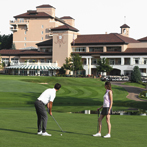
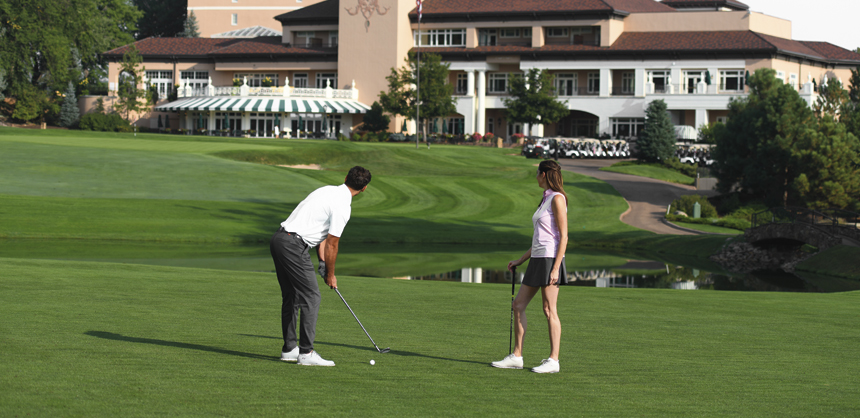
The historic Gideon Putnam Resort & Spa, which reopens in the spring, offers more than 12,000 sf of meeting and event space in Saratoga Spa State Park in New York.

The historic Gideon Putnam Resort & Spa, which reopens in the spring, offers more than 12,000 sf of meeting and event space in Saratoga Spa State Park in New York.

Hosting corporate events and meetings at historic venues offers a unique atmosphere that can leave a lasting impression on attendees. Filled with distinctive architectural elements, historical venues provide a sense of character, while requiring corporate meeting and event planners to embrace the unique logistical and accessibility challenges of these historical gems.

“Historic venues play a distinct role in elevating the guest experience at corporate events. They carry a legacy and a sense of occasion that you simply can’t build into a ballroom,” says Chris Weinberg, founder & CEO of Chris Weinberg Events. “The architecture, craftsmanship and cultural significance create an atmosphere that encourages people to connect more deeply with the purpose of the gathering. Attendees feel the impact the moment they walk in.”

For Weinberg and the corporations with which she works as a meeting planner, the appeal of historic venues is twofold: history and storytelling. As she explains, these venues immediately ground the event in something meaningful. The space does the heavy lifting – original materials, dramatic ceilings, iconic detailing – all offering visual and emotional value that is impossible to replicate in a newly constructed space.

Most recently, Weinberg and her team planned The Event Summit, a corporate leadership and education experience for 100 attendees, hosted inside the Historic Alfred I. DuPont Building in Downtown Miami. Built in the 1930s, it features over 8,000 sf of art deco architecture, including original brass accents, marble flooring, architecturally significant vault doors and limestone walls.

“Another prime example is The Biltmore Hotel in Coral Gables — a National Historic Landmark known for its Mediterranean Revival architecture, stately ballrooms and legendary hotel history,” Weinberg says. “We’ve designed corporate celebrations and executive gatherings there as well.”

Michelle Hogan, executive producer at OVC Productions, has been an event designer and producer for over 25 years and has extensive experience planning events in all different types of venues. Her favorite venues are historic locations, as they have personality, unique architecture and interesting stories.

In Hogan’s experience, some of the key benefits of hosting a corporate event in a historic venue are the rich history and stories that come with an amazing space. “Having a historian or someone very familiar with a property can make for interesting diversions from the typical meeting content and really celebrate the history, culture and interesting occurrences that have happened at that venue,” Hogan says.

Hogan and her team orchestrated a corporate event at the Hotel Del Coronado in Coronado, CA. Built in 1888, this wonderfully iconic hotel was the playground for many of Hollywood’s elite and also the background for many movies filmed at this location.

“There were also romantic tragedies that happened at the venue so having a historian on property to share the wonderful attributes and stories about the hotel was such a benefit to the corporate meeting,” Hogan says.

Hogan also planned a corporate event at the Wabasha Street Caves in St. Paul, MN. These are caves built into the side of the hill that housed all of the gangsters that were running from Chicago.

“There are still bullet holes in the walls and hidden caverns behind the actual caves where they would hide during a raid,” Hogan says. “Doing an event in a space like this is 100% memorable.”

For Amy Green, co-founder and partner at BDI Events, historic venues are both timeless and unique. Their locations, architecture and design details have stood the test of time, and there is often nothing like them in a city.

“They also offer a ton of value in design and décor since so many beloved historic venues have such a rich palette to build upon for the event,” Green says. “In addition, they continue to be exciting draws for attendees — to either come back to a beloved place for a memorable special event or to experience it for the first time.”

When one of Green’s corporate clients wanted to make a memorable impact at an educational roadshow event in San Antonio, where else but the Alamo could offer that historic touch and broad appeal?

“As visitors to the Alamo know, the attraction can be quite busy, so in this case, hosting a private event offered exclusive access to the historic site where attendees wouldn’t have access on their own,” Green says. “This allowed guests to experience the Alamo in an entirely new, personalized and memorable way.”

With more than 15 years of experience in event planning, project management and operations, Leslie Taborga, director of strategic partnerships at GoGather, has led countless large-scale conferences, but her recent event at the National Building Museum in Washington, D.C was one for the books.

Recently, Taborga and her planning team hosted over 1,200 attendees from a major tech user conference for an evening that merged the museum’s historic grandeur with modern event design.

The event featured creative lighting that brought the museum’s architecture to life, along with a lively dance floor and DJ, two custom lounge areas and colorful dining spaces inspired by the conference palette. A favorite element for attendees, many of whom work in construction, engineering and architecture, was the exclusive after-hours access to the “Brick City” exhibition, which showcased iconic buildings from around the world recreated entirely from LEGO bricks.

“Hosting a corporate event in a historic venue gives you a chance to tap into the story of the city you’re in. It gets attendees excited about where they are traveling to for your event,” Taborga says. “These spaces allow you to highlight local culture through food, music and design in ways that a standard ballroom just can’t.”

Taborga points out that historic event venues can also turn into an educational experience. “At our recent event at the National Building Museum in D.C., we were able to keep the Brick City exhibit open after hours, which gave attendees a fun and meaningful connection to architecture and design, which was perfect for our audience of construction and engineering professionals,” Taborga says. “And of course, the architecture itself is often stunning. The details, the scale, the history — it all creates a backdrop that instantly elevates the experience and makes the event feel one-of-a-kind.”

Remember the Alamo? The historic site has been undergoing a $550 million renovation and redevelopment while still open, which will be completed in 2027. Photo courtesy of Visit San Antonio

Remember the Alamo? The historic site has been undergoing a $550 million renovation and redevelopment while still open, which will be completed in 2027. Photo courtesy of Visit San Antonio

Battlefield Leadership, a leadership consulting and training company, recently orchestrated their corporate event at the Saratoga Arms Hotel, an historic boutique hotel and event venue in Saratoga Springs, NY. Battlefield Leadership plans executive leadership programs where they bring corporate groups together in historical locations. Group sizes vary from 12 to 30 people, and they work with clients across different industries, including financial services, insurance companies, agriculture and more.

According to Tess Ritchie, meeting logistics coordinator at Battlefield Leadership, historic venues offer more unique and memorable settings for corporate groups. “At a historic venue like Saratoga Arms Hotel, attendees also get a more personalized experience, as the hotel is on the smaller side and offers such a tailored experience. They are also able to stay right onsite and they always comment on how much they enjoy the fact that each guestroom is uniquely designed, unlike most chain or big box hotels,” Ritchie says.

Madison Doise, director of logistics at Battlefield Leadership, adds that historic locations and venues like Saratoga Arms Hotel are filled with interesting stories, past lives, architectural and design elements and so much more.

“Our planning and logistics team works hand in hand with Saratoga Arms Hotel’s onsite coordinators to seamlessly plan the unique and meaningful events and experiences,” Doise says.

Another popular historical site in Saratoga Springs is the Gideon Putnam Resort & Spa, which offers more than 12,000 sf of indoor/ outdoor meeting and event space. Located within the 2,200-acre Saratoga Spa State Park, the venue also has 124 guestrooms.

Embracing Challenges

Planning a corporate event at a historic venue comes with its own set of challenges. According to Weinberg, their uniqueness lies not only in their beauty, but also in the operational considerations that come with preservation and age.

“A few realities planners must navigate include load-in and load-out logistics, limited elevator access, fixed pathways and extended timelines,” Weinberg says. “There are also catering constraints as historic buildings lack built-in kitchens or require full mobile setups.”

In addition, marble floors and heritage materials gracing these venues often require specialty padding and coverings. Electrical access, rigging points and acoustics must be carefully assessed, and unmovable architectural features, décor, staging and attendee flow must adapt to the environment.

“Every space — from a former bank with vault doors to a landmark hotel with irreplaceable stonework — tells you what it will allow,” Weinberg says. “Yet, the payoff is worth it. When the attendee walks into a venue layered with decades of history and remarkable design, the event becomes more than a program — it becomes a moment in time they will always remember. I believe that’s the true value of hosting corporate events in historic venues: You’re not just creating an experience — you’re honoring a legacy.”

Hogan’s advice for fellow corporate event planners — when entertaining the thought of doing an event in a historic venue, while they do have character, charm and fabulous stories, you must take into account buildings built before 1920 always have power challenges.

“If you’re going to have quite a large production and your power is needed for a large LED walls, lighting and audio, make sure to check that out as you’re going through the site visit so that there aren’t any challenges during your event,” Hogan says. “Another consideration is older venues typically have columns throughout the ballroom space due to their original construction of holding up the building so site lines can be an issue. This is just something to keep in mind while drawing out your floor plans. And the final caveat would be the lack of infrastructure for rigging as far as putting truss in the ceiling, rigging lights from the ceiling and also projection. Once you overcome these challenges, look forward to an amazing event in an equally amazing venue.”

In Green’s opinion, historic venues are amazing, but she agrees that sometimes small details like electricity, power and Wi-Fi can be tricky. When older venues were built, it was often with much less wattage, circuits and outlets than we are accustomed to in newly built spaces.

“It’s always a good idea to make sure your venue partners are helping to access your activations and power needs and help with a plan to make sure no circuits are blown in the course of the event,” Green says. “Also, check the acoustics, and maximize your AV set up in a space that may not have it built in.”

As an event planner based in Pittsburgh, PA, Kristin Kane, owner of Kristin Kane Events, has a wealth of historic venues from which to consider thanks to Philadelphia’s historical significance.

For Kane, hosting a corporate event in a historic venue adds an instant sense of character and sophistication. As she explains, these spaces bring built-in ambiance such as grand architecture, beautiful details and a story behind every wall. Features like this tend to make an event feel more intentional and memorable.

“Attendees are drawn to the charm and prestige of a setting with history, and the unique backdrop often elevates photos, branding and the overall experience,” Kane says. “Choosing a historic venue also reflects a connection to the community and a respect for craftsmanship that modern spaces can’t quite replicate.”

Kane says that hosting an employee appreciation event at the historic Penn Theater in Butler, PA, a suburb of Pittsburgh, offered something truly special for attendees. The restored art deco details and vintage charm created an atmosphere that felt both elevated and nostalgic, which was perfect for an evening that blended business with celebration.

“The venue’s history as a local landmark added depth to the experience, giving attendees a sense of connection to the community while enjoying a modern, well-curated event,” Kane says.

Another corporate event held in the boardroom above Your Parent’s Basement in Butler, PA, a suburb of Pittsburgh, offered a completely different kind of experience, one inspired by Disney’s Haunted Mansion. According to Kane, the historic architecture of the building provided the perfect foundation for the eerie, elegant theme. “Every detail, from the lighting to the décor, played into the immersive atmosphere, creating a memorable balance of sophistication and whimsy,” Kane says. “It was a creative use of a local historic space that showcased how even a boardroom can be transformed into something truly unforgettable.”

As long as you take into account the challenges intrinsic to choosing a historic venue, you are sure to make a statement with your attendees when selecting a space from a bygone era. If done with care, your event will be one that might just go down in history. C&IT

CIT-2025-DEC-JAN-FEAT-Meeting-Site-147x147

Choosing Your Next Meeting Site

CIT-2025-DEC-JAN-FEAT-Meeting-Site-860x418


Today’s planners are not always sticking with the tried and true, but are searching for fresh ideas, bolder venues and experiences that break out of the ballroom. They are on the lookout for new hotels, unique neighborhoods and other hidden gems that will keep their attendees coming back for more. Here, we explore some of the top destinations to hold events.

Chicago, IL offers plenty of arts and culture, live entertainment and fine dining perfect for offsite events. Photo courtesy of Choose Chicago

Chicago, IL offers plenty of arts and culture, live entertainment and fine dining perfect for offsite events. Photo courtesy of Choose Chicago

Chicago

When it came to looking for a new venue for an upcoming event in the Windy City, Patrick Crosson, chief experience owner of PC Events + Experiences, tried out one of the popular local activities — a 90-minute river cruise highlighting the city’s architecture. As impressive as the buildings on the tour were, he was more impressed by the inside of some of the historic skyscrapers.

“There’s actually a lot of meeting spaces in Chicago that people don’t realize exist,” says Crosson. “These are hidden gems.”

Among Crosson’s clients is a technology company based near Willis Tower, which at 110 stories high is also one of the largest skyscrapers in the world. Fittingly, this company shoots high for its internal meetings. A night at Wrigley Field won’t cut it.

So Crosson has searched Chicago’s nooks and crannies for unique spaces, like the second floor ballroom in the old post office or Venue Logic in The Bridgeport Art Center.

In this regard, Chicago stands out among the destinations seeking to woo events.

“There’s so much action that happens along the river and the waterfront,” says Crosson, noting the myriad restaurants available to attendees.

Staying downtown allows easy access to popular attractions like Grant Park, a 319-acre central hub that includes Millennium Park (where you can find “the Bean”), Buckingham Fountain, the Art Institute of Chicago and the Museum Campus.

Clinton Harris, director of corporate conventions, meetings and travel at Ace Hardware Corporate, likes to rotate between cities for their events yearly. “I do like having some distance between cities, so that there’s newness involved,” Harris says. “We want our shows to feel fresh.”

Due to space and timing, his company can be limited in choices. Yet, the hardware giant makes the rounds among some of the country’s most renowned cities, including Chicago, Las Vegas, Orlando and New Orleans. Ace Hardware’s recent conference in Chicago, which drew 20,000 attendees, was a homecoming for the company, which was founded there and is now based in Oak Brook, IL, just 30 minutes outside of the metropolis.

Harris praises Choose Chicago for assistance securing discounts and other logistics. “They are genuinely good people who really work hard to provide an experience that will make you want to come back,” he says.

He found several Hilton Hotels, The Hyatt Regency and Marriott Marquis to be convenient places to accommodate his attendees. The bulk of participants stayed on a hotel block along Michigan Avenue in the heart of downtown.

Because Chicago has so many entertainment options, Harris encourages attendees to explore the city on their own.

Kentucky’s Louisville Slugger Museum & Factory offers tours, custom bourbon experiences at Barrels & Billets or seated dinner in The Skybox.  Photo courtesy of Louisville Tourism

Kentucky’s Louisville Slugger Museum & Factory offers tours, custom bourbon experiences at Barrels & Billets or seated dinner in The Skybox. Photo courtesy of Louisville Tourism

Louisville

Next year, Ace Hardware will be venturing to a new destination for its fall conference: Louisville, KY. Harris is counting on the destination’s charm and bourbon to win over his attendees.

Louisville is no stranger to welcoming out-of-towners, as it has hosted its share of large-scale events, including MPI events and many others, in addition to smaller more intimate gatherings.

More than 100,000 attendees catch the Kentucky Derby there yearly at the Churchill Downs. That location, as well as the Muhammad Ali Center, with its panoramic views, and Louisville Slugger Museum & Factory are some of the highest profile unique venues for receptions, galas and special events.

Keystone Elevate recently attracted 350 attendees there, The event was held at the Omni Louisville, which is not far from the Louisville Slugger Museum & Factory, as well as the bustling downtown scene, including Whiskey Row Distilleries, Fourth Street Live and Main Street. The hotel also offers a heated rooftop pool, a speakeasy and 70,000 sf of meeting and event space.

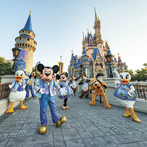
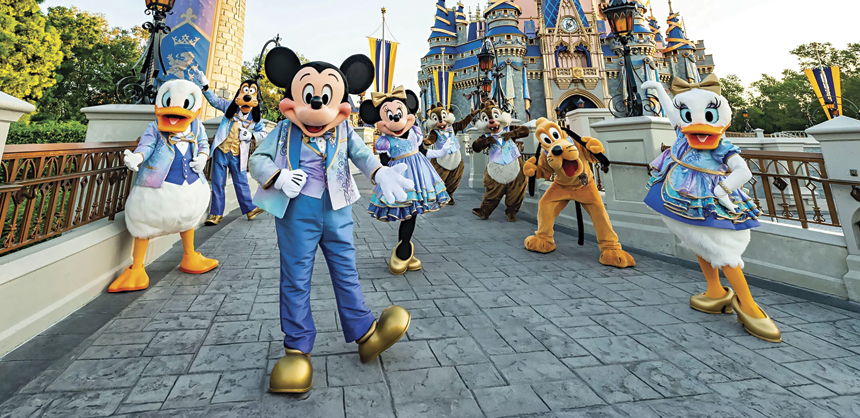
The Disneyland Resort in Anaheim, CA is home to two theme parks, three hotels and has over 170,000 sf of meeting and event space.

The Disneyland Resort in Anaheim, CA is home to two theme parks, three hotels and has over 170,000 sf of meeting and event space.

Anaheim

Thanks to its myriad attractions, Anaheim, CA, fits like a glass slipper for many event planners.

You can take attendees to Downtown Disney, and do buyouts at the nearby House of Blues or some of the other restaurants, says Erika Kulovitz, founder, CEO and executive producer of Akire Productions, an events agency that produces and assists with shows across the country. “When you go to an offsite, there is always a wow factor.”

Disneyland Resort is naturally a popular option for private receptions of off-night visits, especially for attendees contributing to the growing trend of bringing families along on business trips.

The city is easier to maneuver through than next-door Los Angeles, and is easy to get to from Los Angeles International Airport, adds Kulovitz.

Families will enjoy Anaheim, but the nightlife also supports adults. Kulovitz adds she has never felt overwhelmed with leisure travelers headed to Disney when staying at a hotel for an event.

The Envoy Hotel in Boston, MA offers heated igloos accommodating 10 people on their rooftop.

The Envoy Hotel in Boston, MA offers heated igloos accommodating 10 people on their rooftop.

Boston

For a major market, Boston, MA is about as manageable as Tier One destinations come.

“The draw of it is the intimacy of the city,” says Lynann Dumas, senior buyer for meetings and events for the Boston Beer Company, which hosts an annual incentive for wholesalers at Fenway Park annually and keeps Beantown in its rotation for its yearly internal conference in September.

Adds Kulovitz: “What I really love about Boston is its different pockets of neighborhoods and experiences.”

With the country set to celebrate its 250th anniversary in July 2026, Boston figures to be among the busiest destinations. Its place in history, as celebrated on the Freedom Trail and in Faneuil Hall Marketplace, are certainly part of the city’s appeal. Dumas, who lives in Washington, D.C. but sees Boston as her second home, also loves the historic aesthetics that spill into Cambridge and Brighton.

Yet, new additions are also high on Dumas’ experiences. Boston Beer Works enjoyed a night out at the MGM Music Hall at Fenway. Dumas, who previously worked at Marriott International, was also impressed with The Omni Boston Hotel at the Seaport. “The staff was absolutely amazing; they rocked it,” she says.

MGM Grand Resort in Las Vegas offers plenty of unique venues inside and out, as well as fine dining, live entertainment and more.

MGM Grand Resort in Las Vegas offers plenty of unique venues inside and out, as well as fine dining, live entertainment and more.

Las Vegas

The meetings industry is picking up the slack for a slump in international tourists to Las Vegas. Events continue to attract thousands of attendees.

Despite some grumbling about high hotel room rates and resort fees, additions like the Sphere, which sold more than 1 million tickets for its “Wizard of Oz” experience, are tough to replicate. Another major addition is The Las Vegas Grand Prix, which combines sports and corporate experiences.

Likewise, few cities can hold vast conferences or have space for meetings needing a last-minute home, given the plethora of facilities available on The Strip and beyond. Caesars Entertainment has plenty of options, as does MGM Resorts, Resorts World, The Venetian, Wynn and Encore Las Vegas, Treasure Island … the list goes on and on.

Miami

As one of the 11 U.S. host cities for the 2026 FIFA World Cup, Miami, FL figures to attract a swath of corporate and luxury brands eager to take advantage of the one-in-a-generation event. With a vibrant, multicultural living and entertainment scene and a major international effort, Miami is ideal to wow valued customers, host incentive winners or to mix business with pleasure.

The highly anticipated 800-room Grand Hyatt Miami Beach recently had a groundbreaking. Greater Miami Convention & Visitors Bureau President & CEO David Whitaker says in a statement about the development, “Grand Hyatt Miami Beach will further strengthen our ability to compete for premier meetings … by offering a level of integration and convenience that meeting planners increasingly value.”

As planners await the 2027 debut, they have plenty of other options at their disposal. The Greater Miami CVB has 110 partner hotels and 15,985 hotel rooms to consider.

Kaseya Center recently hosted the 2025 America Business Forum that drew leaders, entrepreneurs and innovators from around the world. The venue is fitting for a destination ranked among the world’s top 10 sports cities.

Many other unique meeting spaces are tied to pro sports teams, including Inter Miami CF, which gained global attention when professional soccer player Lionel Messi joined the team. They play at Chase Stadium in Fort Lauderdale.

Sports Summit USA 2025 recently occurred at loanDepot Park in Little Havana. The conference attracted 50,000 attendees, representing sports leagues, brands, investors and talent from more than 50 countries, and focused on artificial intelligence in sports, inclusion, equity and sustainability.

Aside from the World Cup, marquee competitions like the Orange Bowl, Miami Open, Miami Marathon and F1 Miami Grand Prix are prime places for brand activations and customer-appreciation events.

Another annual marquee event is the Discover Boating Miami International Boat Show, owned by the National Marine Manufacturers Association in partnership with the International Yacht Brokers Association and produced by Informa Markets. More than 100,000 international attendees, as well as more than 1,000 exhibiting brands, flood Miami for the show, which has a nearly $1 billion impact on the local economy.

People come from all over to enjoy sunny South Florida, and accessibility is key. The Greater Miami area was named as a Certified Accessible Destination recently by Wheel the World.

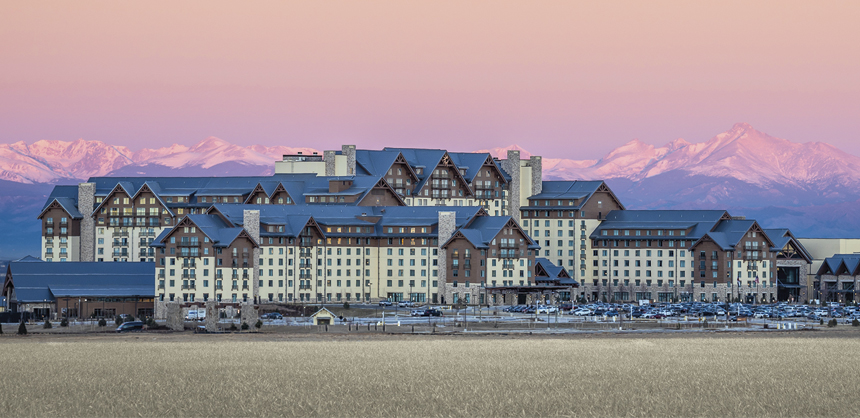
At 172 acres, The Gaylord Opryland Resort & Convention Center in Nashville, TN is the largest non-gaming hotel in the continental United States based on meeting space.

At 172 acres, The Gaylord Opryland Resort & Convention Center in Nashville, TN is the largest non-gaming hotel in the continental United States based on meeting space.

Nashville

It’s hard to find a destination that has climbed the corporate meetings’ charts as quickly as Nashville, TN. Speaking to the city’s accessibility, it was recently awarded the 2034 Special Olympics USA Games, which will bring in 4,000 athletes and serve as the center for many corporate brand activations.

In another coup, Nashville is taking the reins of Cvent Connect from San Antonio, TX in 2026. “Nashville’s vibrant culture, rich musical heritage, exceptional hotels and unique event venues make it the perfect backdrop for our conference,” says Rachel Andrews, senior director of global meetings and events at Cvent, in a statement. “We’re thrilled to start planning next year’s event and can’t wait to welcome our thousands of attendees to explore a new city and enjoy all that Nashville has to offer.”

Nashville has plenty of options and is a perfect choice for music lovers. The Renaissance, JW Marriott, Hyatt and Omni are among the most in-demand hotels for meetings in the country. Nashville was set to open nearly 3,000 new hotel rooms in 2025, more than any U.S. city other than New York, according to STR statistics.

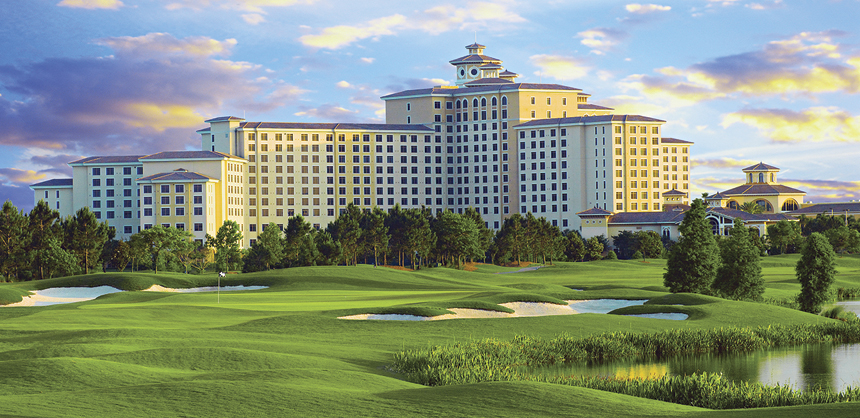
Rosen Shingle Creek in Orlando, FL offers 490,000 sf of meeting and event space, as well as a 18-hole championship golf course.

Rosen Shingle Creek in Orlando, FL offers 490,000 sf of meeting and event space, as well as a 18-hole championship golf course.

Orlando

A corporate meeting in Orlando, FL can take on a life of its own. Ace Hardware buys out Universal’s Islands of Adventure for a night out so attendees are able to enjoy one of the many in-town attractions.

Of course, DisneyWorld and other theme parks are big draws, but the destination is diversifying its options. The city is filled with things to do, and plenty of dining options. Visit Orlando actually released a cookbook featuring celebrity chefs, MICHELIN Guide honors and local James Beard Award nominees to highlight its culinary scene.

Kia Center, home of the Orlando Magic and Inter&Co Stadium, where the MLS’ Orlando City Soccer Club and defending NWSL champions the Orlando Pride play, are two large sports arenas that double as event venues. Topgolf and 4Roots Farm Campus are popular sites for teambuilding and offsite excursions.

The city is always expanding and changing. Among its revamps, The Walt Disney World Swan and Dolphin have been undergoing a $275 million renovation and expansion project.

Three major events highlighting Orlando’s appeal are:

  • The 2025 PGA Show, which held its largest show in 15 years with more than 33,000 attendees and 1,100 exhibitors
  • The North American Veterinary Community’s (NAVC) VMX Veterinary Meeting 2025, which hosted a record of nearly 30,000 attendees and 735 exhibitors
  • InfoComm 2025, the largest technology exhibition and conference in North America focused on the pro AV industry, which welcomed a record 31,000 attendees from 97 countries

Scottsdale

Scottsdale, AZ was the only U.S. city recognized in BCD Meetings & Event’s latest trends report. It’s easy to see why.

The city is a mere 15-minute drive from Phoenix Sky Harbor International Airport, but has a distinct collection of resorts and restaurants that attract corporate meetings and incentive travel programs.

As a desert destination, the dramatic scenery never gets old. Some numbers that fall in Scottsdale’s favor:

  • Over 70 meeting-friendly hotels and resorts
  • Nonstop airlift from more than 120 cities
  • More than 300 days of sunshine

There are some major renovations in the works. ADERO Scottsdale Resort will double its current event space at the beginning of 2026. There will be a $42.2 million renovation of The Scottsdale Plaza Resort & Villas, which will be renamed Kimpton Miralina Resort & Villas. In addition, the JW Marriott Scottsdale Camelback Inn Resort’s spa is undergoing a $24 million upgrade.

Keeping an eye on emerging venues, unique offsite experiences and city-specific trends can help planners stay ahead and create memorable events that are perfectly suited to their audience. C&IT

CIT-2025-DEC-JAN-FEAT-Bragworthy-147x147

Brag-Worthy Experiences

The demand is growing for incentive trips to go beyond the ordinary and become highly curated, culturally immersive experiences. Photo courtesy of Brigade Events

The demand is growing for incentive trips to go beyond the ordinary and become highly curated, culturally immersive experiences. Photo courtesy of Brigade Events

Post-pandemic, corporations have embraced extravagant incentive “wow factor” events and travel experiences. More than simply fancy lodging, today’s extravagant incentive trips are featuring once-in-a-lifetime experiences that provide lifelong memories and brag-worthy social media posts. From staying in luxurious hotels to enjoying private yacht charters with Michelin-level chefs to spa buyouts with floating sound baths, to private beachfront concerts with A-list performers, the sky is the limit when it comes to extravagant corporate incentive trips.

Trends to Notice

Corporate incentive travel has transformed from a reward trip to a more personalized, immersive experience. Companies are seeking experiences that feel once-in-a-lifetime as opposed to merely luxurious. Julie Blank, director of strategic accounts at Brightspot Incentives & Events, says her team is seeing a strong emphasis on “bucket list” moments tied to the destination itself, like skiing legendary Colorado terrain in the winter with private access or guides or enjoying private outdoor concerts in the summer. The focus seems to be less about extravagance and more about meaning and memory.

“We’re seeing corporations lean into experiences that feel once-in-a-lifetime,” says April Zorsky, partner and chief creative officer of Brigade Events. “This includes full property buyouts, highly produced multi-day journeys and itineraries that blend business milestones with luxury hospitality. What’s evolved is the expectation. Incentive trips are no longer about just rewarding top performers with a beach stay. They’re designed to immerse attendees in culture and reinforce the company’s brand values. Think private concerts, behind-the-scenes access or sustainability-minded luxury adventures.”

Zorsky says extravagance today is less about opulence and more about access and transformation. She’s seeing a growing demand for highly curated, culturally immersive experiences that take guests far beyond the typical incentive trip.

For example, Zorsky recently produced an unforgettable incentive program for 16 couples across three iconic Italian cities. The theme centered on three pillars of Italian culture: food, fashion and fun.

The opening day in Milan was all about fashion. Guests enjoyed private fittings for custom-made jackets. Days later, those jackets were delivered to another city, where attendees wore them to a private dinner and concert. Later that evening, attendees had cocktails and an exclusive behind-the-scenes tour of one of Italy’s premier designer ateliers, offering rare access to the brand’s most coveted pieces. The evening culminated with dinner at the Armani Hotel, overlooking the Duomo, a moment that felt cinematic in its layering of exclusive experiences.

“It was a day that built from one “wow” moment to the next, each one inaccessible to the average traveler,” Zorsky says.

Back in the U.S., the Brigade Events team has designed immersive touchpoints like a private whiskey tasting at Whiskey Thief Distilling in Kentucky, where attendees experienced the journey “from barrel to bottle.”

“In Mexico, we took attendees from a custom boot bar to a city tour on horseback, with stops at historic cantinas for an ice-cold cerveza and authentic cultural insights,” Zorsky says. “Activities like these go beyond entertainment, they create connective moments that bond teams and leave a lasting impression.”

As co-founder and CEO of Inspired Travel Group, Danielle Riddle has planned incentive trips for companies throughout the U.S., Canada and across the globe. She has seen firsthand how corporate incentive travel has evolved beyond those standard “sun and sand” packages into extraordinary, once-in-a-lifetime experiences.

Over the past few years, Riddle says corporate incentive trips have really moved beyond the traditional resort stay model.

“Companies are looking for ways to create experiences that feel once in a lifetime, whether that’s exclusive access to a cultural landmark, a private performance, a private, fully serviced luxury villa or a culinary experience that can’t be booked on OpenTable,” Riddle says. The emphasis now is on personalization and creating shared moments that bond teams together — not just rewarding performance, but strengthening loyalty and connection.

“Today, we’re seeing top-performing employees getting rewarded with everything from yacht charters in the Mediterranean to private cultural immersions in Kyoto,” Riddle says. “Companies are recognizing that meaningful, unforgettable travel experiences drive deeper loyalty, engagement and performance than a simple bonus check ever could.”

When curating these elevated incentive programs, Riddle and her team are seeing clear trends emerge:

  • Personalization & exclusivity: Bespoke itineraries tailored to the individual achievers rather than cookie-cutter group or team trips
  • Adrenaline meets luxury: Pairing high-adventure activities (safaris, glacier trekking, etc.) with ultra-luxury accommodations and services
  • Wellness & sustainability: Integrating wellness retreats and eco-conscious experiences to align with corporate values
  • “Instagrammable” moments: Trips designed with shareable wow-factors that amplify work culture online

“We’ve noticed a real shift in what companies want from incentive trips. It’s less about all-inclusive hotels and room upgrades, and more about giving people those ‘bucket list’ moments they’ll talk about for the rest of their lives. When teams share something truly extraordinary together, it creates a bond that a bonus just simply can’t replicate,” Riddle says.

One recent program Riddle put together was at the Rosewood Kona Village on Hawaii’s Big Island, set right along the lava fields with traditional hale-style bungalows that feel deeply connected to Hawaiian culture.

“The group did a private night swim with manta rays, which is absolutely magical. We also arranged a helicopter flight over the island’s active volcanoes, with a private landing at a hidden waterfall for a champagne toast,” Riddle says. “Pair that with ocean-to-table dining and sunrise canoe paddling organized by the resort, and it really became something that felt both luxurious and authentic.”

Inspired by Dia de los Muertos and the James Bond film “Spectre,” Brigade Events created a sense of mystery at this event in Mexico. Photo courtesy of Israel Palacios /@israhyperactif

Inspired by Dia de los Muertos and the James Bond film “Spectre,” Brigade Events created a sense of mystery at this event in Mexico. Photo courtesy of Israel Palacios /@israhyperactif

Another corporate incentive trip that Riddle planned took place at the Four Seasons Tented Camp Golden Triangle in Thailand. Imagine luxury tents overlooking the jungle where Thailand, Laos and Myanmar all meet.

“It’s one of those places you can’t forget once you’ve been,” Riddle says. ‘The team spent time with rescued elephants, went on long-tail boat rides along the Mekong River and hiked through the jungle to a picnic at sunset. At night, they’d gather around the campfire for storytelling dinners. It was adventurous, but it also had this grounding, meaningful quality that made people feel closer to each other.”

As Riddle explains, trips like these aren’t just perks. They’re about connection, belonging and creating memories that keep people engaged and proud to be part of their company.

“That’s the real power of incentive travel right now,” Riddle says. Garrett Peterson, senior director of marketing & Product at The Creative Group, says exotic, long-haul destinations are in demand.

“Programs are pushing to long-haul luxury locales. We see clients moving their incentives to places like Morocco and Japan, where they can deliver that ‘once-in-a-lifetime’ factor that top performers crave,” Peterson says. “It’s about one destination, deeper immersion. Instead of moving between multiple hotels or cities, we see our clients now preferring to anchor in one luxury property and explore through curated day trips. It allows for richer experiences without fatiguing the attendees with constant transfers.”

Peterson says hyper-personalization is key. From executives personally flying in to surprise every winner with an in-person announcement to seven-day, fully curated experiences in one destination, tailoring every detail to the individual is slowly becoming the ultimate marker of luxury.

Some of the more popular activities Peterson has seen in high-end incentive trips over the past few years include:

  • Luxury retail takeovers. Private store openings and personalized gifting afternoons create exclusivity and prestige.
  • Hyper-personalized end-to-end events and experiences. For one luxury automotive client, every element (from five-star accommodations to dining and excursions) was tailored to each individual or couple’s preferences. Though the program took place in a single destination, every attendee enjoyed a uniquely curated journey.
  • High-energy road rally/driving adventures. Recent programs have included SUVs off-roading in Whistler, Jeep rallies to paniolo ranches on the Big Island (with Kona coffee and cultural stops), racing supercars in Las Vegas and classic car drives through Provence for a Michelin-starred lunch.

One of the biggest challenges Peterson faces when planning extravagant corporate incentive trips is managing expectations with flat budgets. Inflation plus static corporate allocations mean he is often balancing “extravagant” with “cost effective,” without diluting the attendee’s experience.

“Making ‘the right’ trade-offs that serve the overall experience is important,” Peterson says.

“Many programs also target elevated brand experience and target dealer or channel audiences; both flawless service and seamless brand infusion are non-negotiable.

“Designing incentive trips that authentically express the brand is an exciting challenge, but one that demands extreme intentionality and attention to detail,” Peterson says.

Making It Meaningful

Planning a high-end incentive trip is like staging a major theatrical production. Lead times are everything: it can often take up to a year and a half, as well as multiple site visits and an army of experts to get it right. From custom linens and production builds to booking A-list entertainment, if you don’t start six to 12 months out, it’s nearly impossible to deliver at the level these groups expect. I always encourage planners to do a pre-planning trip; walking the beach, meeting the chefs and purveyors and testing the watersports are some of the best ways to make sure every moment is curated perfectly for the group.

“The challenge is always in the details. Extravagant experiences often involve complex logistics, special permissions or unique venues, so planning has to be meticulous,” Riddle says. “Another layer is inclusivity; Not every executive wants to skydive or climb a mountain. The trick is building itineraries that balance adrenaline with alternatives that are equally memorable, so every participant feels comfortable, valued and part of the celebration.”

Riddle says it comes down to connection. Extravagance alone doesn’t create impact. It’s about weaving in personal touches and company values.

“That might mean having leadership share the story of why this reward matters, creating moments for genuine team bonding or including a purpose-driven element like a local give-back project,” Riddle says. “When people feel the experience was crafted with them in mind, it becomes much more than just a lavish trip. It becomes something they’re proud to have been part of.”

Blank says the biggest challenge seems to be the balance in the content between delivering wow-factor experiences that seem extravagant, while showing value and impact to leadership. Because incentive groups can often be 100+ attendees, there is a lot happening behind the scenes to pull off effortless experiences.

“Groups want branded moments, curated tracks so that attendees can choose their own adventure and experiences related to the company’s values,” Blank says.

Peterson recommends incentive meeting planners use data and attendee insights to anticipate needs, craft tailored moments and balance surprise with thoughtful communication.

Exotic destinations are in demand, such as The Creative Group Leaders Circle’s trip to the Sabi Sand Game Reserve in South Africa.

Exotic destinations are in demand, such as The Creative Group Leaders Circle’s trip to the Sabi Sand Game Reserve in South Africa.

Make People Feel Seen

“The most ‘extravagant’ thing is often the simplest. Ensure every touchpoint simply feels personal, human and deeply aligned to the individual,” Peterson says.

Erin Howe, CMP, meeting & event planner at The Howe Group, LLC, says companies are wanting to make their incentive trips more special. By that she means, adding personal touches based on the attendees’ likes and dislikes and choosing a destination that someone may not be able to travel to on their own.

“Add the personalized special touches. Maybe during an awards evening where they celebrate the winners, surprise them with a message from their family back home, praising their accomplishments,” Howe says. “Have their favorite food and beverage waiting for them in their room when they arrive. Anything that is personalized is meaningful.”

For Zorsky, the key to successful incentive travel experiences is personalization and storytelling. As she explains, extravagance on its own can feel hollow if it doesn’t connect back to the attendee’s effort and the company’s values.

“Curating moments where attendees feel both recognized and part of something bigger, whether that’s through intimate breakout dinners, giving back to the destination community or weaving in thoughtful touchpoints that reflect each guest’s preferences, turns extravagance into emotional impact,” Zorsky says.

The Future of Extravagance

What do corporate meeting planners envision the future holds for these types of incentive travel activities?

Riddle believes the extravagant corporate incentive travel industry will continue to see growth, but also evolution.

“More and more, companies view incentive travel as a strategic investment in culture and retention. I expect we’ll see greater emphasis on exclusivity and access, things you simply cannot replicate on your own, paired with a stronger focus on sustainability and wellness,” Riddle says. “The future is about experiences that are both extraordinary and responsible.”

At the end of the day, Riddle stresses that incentive travel isn’t just about rewarding success. It’s about creating moments that employees carry with them long after they’ve returned home — moments that remind them why they’re part of the organization and why their contribution matters. That’s what makes these programs so powerful when they’re done well.

“As competition for both talent and customer loyalty increases, we see brands continuing to invest in high-touch, high-impact incentive experiences,” Peterson says. “The bar for service, exclusivity and personalization will continue to rise, making these programs more integral than ever in strengthening relationships and driving performance.”

Zorsky believes the demand for extravagant incentive trips will only grow, especially as hybrid and remote work change how companies build culture.

“Incentive trips are becoming one of the few in-person moments that can truly unite teams and celebrate achievements in a memorable way,” Zorsky says. “The future isn’t just ‘bigger and flashier,’ it’s about creating transformational trips that are both extraordinary and aligned with the next generation’s values, rooted in sustainability, wellness and purpose-driven experiences.” C&IT

CIT-2025-DEC-JAN-DEST-Vegas-147x147

Las Vegas

CIT-2025-DEC-JAN-DEST-Vegas-860x418


Top performers attending a retail incentive trip got the VIP treatment at The Wynn Las Vegas. As they stepped out of the stretch limousine provided by the event planner, Heather Pilcher, CSEP, CMP, CEO of Blue Spark Event Design, hotel staff greeted the attendees with a standing ovation at the resort’s private entrance. “Our arrivals felt intimate, polished and genuinely celebrity level,” says Pilcher.

As a bonus, anyone who lingered for a few moments could catch a glimpse of actual stars, including Magic Johnson and George Lopez, making their own grand entrances.

Only in Las Vegas would such an extraordinary moment be commonplace. Indeed, you most certainly don’t need to catch “The Wizard of Oz” experience at Sphere to know you are not in Kansas anymore.

Bright Lights, Big City

Even detractors of the destination’s high prices and over-the-top atmosphere acknowledge the city’s standing as one of the premier sites for meetings and events. In an era where experience trumps all other aspects of a meeting, Las Vegas has an abundance of options.

Not only do the stars come to town regularly to catch a show or take a meeting, the venue operators are celebrities themselves. There is no greater concentration of restaurants owned by world-famous chefs like Jose Andres, Bobby Flay, Gordon Ramsay and Giada De Laurentiis, than on the famed Las Vegas Strip.

Yet for all of the flashing signs, neon lights, and, of course, colorful fountains, there is very much a practical side to meeting in Vegas. The industry’s largest corporate events, including CES and the World of Concrete, can only fit comfortably in a destination that shatters boundaries other cities would not dare to tread.

Wynn Las Vegas & Encore Las Vegas offer unique meeting venues, including a nightclub, theater, beach club, ballrooms and more.

Wynn Las Vegas & Encore Las Vegas offer unique meeting venues, including a nightclub, theater, beach club, ballrooms and more.

Where else would anyone dare to place a $2 billion Sphere to elevate the guest experience even though venues across the city are replete with A-list musicians, comedians, magicians and more.

It takes little effort to keep Las Vegas feeling fresh to returning attendees. For instance, ConferenceDirect for the first time incorporated the F1 X Experience during its CDX event. “It was such a highlight,” says J.J. Wills, the company’s senior vice president of marketing programs and business development, who ran the event for meeting planners. The activity was new, but the objective was a staple of events everywhere. “The immersive blend of competition, energy and teamwork really helped build connections in a fun, interactive way,” says Wills.

Underscoring the point that new options like the F1 activity build upon classics, CDX’s primary venue was the legendary Caesars Palace.

“The beauty of Las Vegas is that there’s truly a venue for every kind of meeting or incentive, whether you’re focused on high-end intimacy or large-scale production, luxury or casual fun,” says Wills.

Bellagio Hotel & Casino is known for its beautiful water show, but also for its world class entertainment and cuisine, and versatile meeting spaces.

Bellagio Hotel & Casino is known for its beautiful water show, but also for its world class entertainment and cuisine, and versatile meeting spaces.

Hotels and Resorts

In large part due to the variety, the meetings and events scene is thriving in Las Vegas even as international leisure travel has declined from previous records.

Online complaints about prices have done little to dissuade events from coming to town. Resort fees will never be popular but enough planners view them as coming with the territory, at least for now.

When planning an event in Las Vegas, Pilcher comes in with her eyes open. Fitting for a gaming destination, going all-in on the destination’s excess is her best advice. “When we bring clients to Las Vegas, our goal is always to elevate their experience through thoughtful dining, unforgettable entertainment and VIP access to the shows and sporting events that define the city,” Pilcher says. “Pair that with the nonstop energy of The Strip and you have a destination that delivers incredible moments for reward and incentive programs.”

Aria Resort & Casino offers 500,000 sf of meeting and event space, as well as fine dining and entertainment options.

Aria Resort & Casino offers 500,000 sf of meeting and event space, as well as fine dining and entertainment options.

The array of hotels and resorts and other venues allows planners to pick their spot while achieving a balance between work and play.

The Wynn Las Vegas “delivers elegance, exceptional service and a calmer, more refined slice of The Strip, which instantly sets the tone for premium incentive programs,” notes Pilcher.

Meeting spaces total 560,000 sf at The Wynn Las Vegas and Encore Las Vegas, including outdoor areas like the pavilion and garden event grounds. Beyond the ballroom, planners can utilize unique onsite venues like XS, Encore Beach Club and the 1,480-seat Encore Theater.

Jim Cavanagh, an account executive at The Creative Group who plans kickoff sales, product launches and other corporate events, including incentives, adds that the experience of the Wynn’s long-tenured staff is evident in the service. “The service and product quality is always at the highest levels,” he says.

Wills has enjoyed success at MGM’s Mandalay Bay, home of IMEX America, which will host MPI’s World Education Congress in 2027.

A $100 million redesign of Mandalay Bay’s 2.1 million-sf convention center was completed in 2024. Upgrades included new technology infrastructure, additional dynamic digital signage and a fresh design that complements the resort’s tropical-inspired brand.

Sophie Wawro, former global president of ShopTalk, which holds an annual springtime event at Mandalay Bay that was among the first events to enjoy the new amenities, praised the project. “We enjoyed hosting our event in the newly remodeled convention center, using features such as the new digital signage and other upgraded amenities. Outside of the fantastic convention space, we love holding our events at Mandalay Bay because of the great team and how the property has such extensive capabilities we can utilize, such as the restaurants, rooms and even the beach,” she said in an MGM press release about the improvement.

W Las Vegas at Mandalay Bay surprised Pilcher “in the best way” when she attended IMEX as a first-time attendee in 2025. At the end of the Strip, the property is among the most accessible to Allegiant Stadium (home of the Raiders) and Harry Reid International Airport.

“What stood out the most is the sense of calm throughout the decor and atmosphere. After weaving through high energy casino floors all day, walking into the W feels like an exhale,” says Pilcher, who says W, a Marriott property, has the added bonus of in-room coffee pots, which she calls “a small miracle during an otherwise whirlwind Las Vegas week.”

Valerie Bihet, founder of VIBE Agency, which produces events for high-end luxury brands and other upscale corporations, says the entire Mandalay and W package presents vast opportunities for planners. “Mandalay Bay is versatile for groups needing both main-program scale and an elevated suite/VIP layer,” she says. “It’s very easy to separate experiences while staying on one campus.”

Of course, you can’t talk about Las Vegas without mentioning the Bellagio Hotel & Casino. The fountains are an attraction to attendees regardless of where they stay, but the property has beauty from the inside as well.

“The Bellagio features exceptional private dining options with prime views of the fountains, and there’s nothing quite like watching them dance during a beautiful dinner,” says Pilcher.

“It adds a touch of magic and just enough ‘Ocean’s Eleven’ energy to make guests feel like they’re part of something special.”

The Bellagio has 3,933 guestrooms with 510 suites and features five outdoor pools and more than 200,000 sf of meeting and convention facilities. An approximately $150 million transformation was announced as completed last year on the Spa Tower. It included suite improvements across various room types, including the 850-sf Salone Suites, 1,500-sf penthouses, 2,500-sf executive hospitality suites and the one- and two-bedroom Bellagio suites.

Bihet describes that the Bellagio is the quintessential Las Vegas experience. She says the property is “iconic, polished and perfect for VIP-heavy programs. It delivers that classic Las Vegas prestige and a refined setting for high-level dinners or awards moments.”

The Venetian Resort Las Vegas offers an authentic gondola ride indoors, as well as extensive shopping, restaurants and more.

The Venetian Resort Las Vegas offers an authentic gondola ride indoors, as well as extensive shopping, restaurants and more.

Aria Resort & Casino is “modern, sleek, and extremely efficient for corporate programs,” adds Bihet. The resort has 500,000 sf of event space, including unique venues like Cypress Executive Lounge, South Primrose Verandas, Easy’s Cocktail Lounge, as well as 10 onsite restaurants and multiple nightlife settings.

Meanwhile, a $300 million renovation of MGM Grand Hotel & Casino’s main tower room and suites promises to add to the impressive offerings at a world-famous venue. More than 4,200 rooms and suites are being upgraded, including 110 new suites offering spacious, luxurious accommodations ideal for C-Suite executives.

The 850,000-sf MGM Grand Conference Center continues to impress, featuring pre-function spaces enhanced with natural light and an outdoor Marquee Courtyard.

MGM Grand is “reliable for big multi-track conferences, strong operations and is easy to execute high-volume programs smoothly,” says Bihet.

Park MGM and the accompanying NoMad strike a different and welcomed tone for smaller groups (there is 77,000 sf of indoor and outdoor event space), adds Bihet. A smoke-free property, there is a greater emphasis on wellness, including providing a break from the whirlwind on the strip. “It’s ideal for executive offsites or incentives that want Vegas without the overload,” Bihet notes.

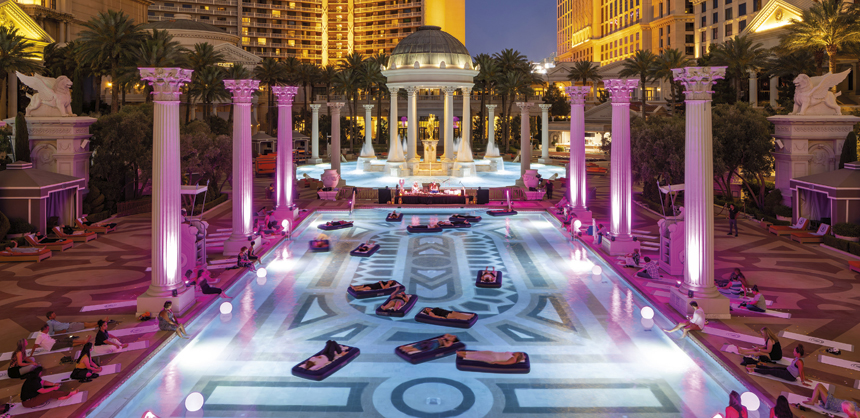
In terms of fame, few properties compete with Caesars Palace. There are more than 30 restaurants and venues onsite and 300,000 sf of event space. Two pillarless ballrooms are the centerpiece of the conference center that can hold 5,555 attendees and be broken into 25 distinct configurations.

Wills says Caesars surpasses its impressive reputation when raving about the service at Caesars Palace for CDX. “It was a true collaboration to design an event that met our needs while showcasing the property,” she says. “The Caesars team helped us integrate wellness activations into our programming, which was not something attendees expected in Las Vegas, and they turned out to be a welcome surprise.”

High-end brands will be impressed, too, adds Bihet. “It’s great for global leadership, awards programs and client-entertaining where brand prestige matters,” she says.

Paris Las Vegas Hotel & Casino and Horseshoe Las Vegas, also Caesars properties, are practical choices for larger groups due to their strong connectivity and ability to host breakout meetings, says Bihet. Both have 150,000 sf of meeting space. Replicas of the Eiffel Tower and Arc de Triomphe remain striking visuals, and help the Paris elevate its reception experience.

Bihet is also a big fan of the cluster of Harrahs Las Vegas, The LINQ Hotel & Casino and The Flamingo Hotel & Casino. “The advantage is the tight multi-property setup: easy lodging spread and one central program hub.”

Meanwhile, Sarin Bachmann, senior vice president of RX Jewelry Portfolio, has found phenomenal success for the JCK, the world’s largest jewelry industry trade event, at The Venetian Resort Las Vegas. In 2024, JCK welcomed more than 17,300 attendees and 1,900 exhibitors from around the world, with guests arriving from 130 countries, the event’s website reports.

“Their team and facilities are incredible partners who help us deliver a seamless and elevated experience for tens of thousands industry professionals each year,” says Bachmann.

As a 25th anniversary present, The Venetian received a $1.5 billion facelift, covering all 4,000 suites. Of note, $188 million has been earmarked to improve the 2.25 million sf convention center that’s among the largest venues in the destination. Improved catering and updated technology are part of the package.

Resorts World Las Vegas, with 250,000 sf to accommodate social and corporate groups, stands out for its ability to host business conferences, as well as UFC fights and rodeo events onsite. Resorts World features 50 multi-functional, state-of-the-art meeting rooms, six ballrooms and an expansive rooftop with dramatic Strip views. Bihet says Resorts World is “great for modern formats and groups wanting something different from the legacy Strip icons.”

Adding to the appeal of Resorts World is a stop on The Vegas Loop, a route for attendees to reach other properties and attractions via an electric vehicle.

SAHARA Las Vegas is another popular resort for corporate groups. It recently hosted the Business of Her: Women’s Conference 2025 and has more than 80,000 sf of flexible meeting and event space.

AREA 15, an immersive entertainment destination, has many unique spaces, including a decommissioned Boeing 747.

AREA 15, an immersive entertainment destination, has many unique spaces, including a decommissioned Boeing 747.

Dining Around

Wills agrees the dining scene makes for a buffet of tasty options for group dinners, receptions or client meals. Some of her favorites include Crossroads at Resorts World, Giada at The Cromwell and L’Atelier De Joël Robuchon at MGM Grand Hotel & Casino.

Spiegelworld’s venues specialize in melding F&B with entertainment. Some of the company’s most popular sites are:

DISCOSHOW and Diner Ross Steakhouse, serving up a healthy amount of disco-era glam, hosts 500 attendees.

At The Venetian, Atomic Saloon Show’s saloon has an Old West motif, ideal for hundreds of guests and flexible enough for intimate gatherings in its private rooms: Boozy’s Corner and Cow Hide.

Located on the Roman Plaza outside Caesars Palace, Absinthe is one of the city’s most famous show-stoppers. It seats 585 guests and hosts receptions for up to 470. For a more whimsical approach, planners can turn to the Green Fairy Garden, home to Pier 17 Yacht Club and No Pants.

Superfrico combines eclectic art, roaming performances and heirloom dishes at The Cosmopolitan of Las Vegas. “The Blue Room at Superfrico was fun, spicy and full of energy,” says Stephanie Nunn, senior B2B sponsorship manager at Rocket Mortgage. “My guests were laughing nonstop, completely immersed in THE PARTY, and the food was so good. Every detail was handled flawlessly and my clients were beyond impressed.”

For the planner who doesn’t want to choose just one restaurant, Lip Smacking Food Tours handles all of the logistics for convention groups up to 500. Experiences are available to cover different sections of Las Vegas, including The Strip, Arts District and historic Fremont Street.

Unique Venues

The Neon Museum and The Mob Museum are distinct ways to experience Las Vegas, Wills notes.

A fun outing is a trip to Swingers for “crazy” miniature golf. Stadium Swim at the Circa Resort & Casino allows attendees to cool off on a hot day and is another one of “only in Vegas” reception venues.

More traditional sporting venues to have a grand time as a group are Allegiant Stadium, which frequently hosts corporate groups for on-field receptions or gatherings in the suites, and T-Mobile Arena, operated by MGM and where the Las Vegas Golden Knights NHL team plays. Both also host concerts and special events. Allegiant, for instance, hosts WrestleMania in 2026. The Oakland Athletics plan to move permanently to Las Vegas in 2028 and will play at a brand-new Major League Baseball stadium.

Area 15 is an immersive entertainment campus set on 35 acres. Entertainment options include a VR flight simulator, AR-enhanced dodgeball, axe-throwing and bar and arcade. Business groups can also enjoy interactive performances and innovative F&B offerings, the venue’s website says. Event spaces seat up to 2,500 attendees and go as intimate as 20 for a VIP or board meeting.

Sphere is the proverbial whole ball of wax. Not only does it provide remarkable branding opportunities on the outside, but is also home to unique experiences like “The Wizard of Oz” special presentation and premier concerts, including Kenny Chesney, No Doubt and The Eagles. “There’s nothing like this in the world; it should be experienced,” Cavanaugh says.

The Power of Meetings

The thriving events scene in Las Vegas is a testament to the power of meetings for any destination. Decreased international visitation, particularly from Canada, has put a dent in the city’s leisure market. However, the meetings business continues to grow.

Event planners like Pilcher say there is no way to replicate the vast array of options. The F1 Experience and Sphere are examples of two recent additions in an ecosystem that already includes many concerts, shows and entertainment options.

“Las Vegas is always reinventing itself and can cater to any and all tastes,” notes Cavanagh.

As attendees continue to evaluate events based on their experiences more than the traditional meetings, Las Vegas and its neon lights will continue to shine brightly.

“Bachmann believes the allure of Las Vegas plays a role in attendees walking away achieving professional and recreational goals from the late springtime event. “Las Vegas has no shortage of memorable experiences from vibrant nightlife including concerts, shows and the breathtaking Sphere to cultural attractions, all in one place,” Bachmann says.  C&IT

CIT-2025-DEC-JAN-DEST-Florida-147x147

Florida

Key West’s laid back culture and cuisine make it a unique destination for an event or incentive program. Pictured: Key West Songwriters Festival. Photo courtesy of Mark Hedden / Florida Keys News Bureau

Key West’s laid back culture and cuisine make it a unique destination for an event or incentive program. Pictured: Key West Songwriters Festival. Photo courtesy of Mark Hedden / Florida Keys News Bureau

When planning a meeting or incentive trip in Florida, the destination rarely stays in the background. Meetings unfold on beaches, across waterfront promenades, inside theme parks, aboard yachts and beneath palm-lined terraces, so environments become part of the program itself.

That’s why for planners, Florida is not simply a place where corporate meetings live, it’s a setting that helps them thrive.

“Florida continues to be one of the most compelling destinations for meetings and incentives,” says Chris Weinberg, CMP, founder & CEO of Chris Weinberg Events. “It’s the accessibility, year-round hospitality infrastructure and the blend of culture, cuisine and natural beauty.”

What gives the Sunshine State its sustained edge is not just weather or capacity, but how intentionally planners can match emotional outcomes to distinct markets. For instance, Orlando energizes massive youth conferences and trade-heavy meetings; Tampa Bay rewards collaboration inside a walkable, waterfront core; South Florida thrives on destination-driven incentives and cultural immersion; The Gulf Coast leans into restoration, luxury and intimacy; and Daytona Beach injects adrenaline into traditional convention structures.

Each city delivers differently. Together, they form one of the most versatile meeting and incentive portfolios in the country.

Just minutes from theme parks and the convention center, Rosen Shingle Creek has plenty of meeting space and a championship golf course in the heart of Orlando.

Just minutes from theme parks and the convention center, Rosen Shingle Creek has plenty of meeting space and a championship golf course in the heart of Orlando.

Orlando

Orlando offers a number of compelling reasons for planners to choose the destination for their meetings and incentive trips, as the city can deliver memorable, highly attended events with ease due to the community’s commitment to hospitality and exceptional service.

For Christopher Young, CAE, chief program officer of DECA Inc., Orlando offers something special. “We have a conference of more than 25,000 high school students and teachers, so it requires very specific needs,” Young says. “Hotels that can offer an abundance of double/double rooms to total over 10,000 on peak, competitive events halls, an exhibit hall and lots of workshops, and ample activities for our attendees to engage in when their conference day has concluded.”

Those requirements continue to bring DECA back to Orlando repeatedly, including for the 2025 International Career Development Conference. “With that many attendees, they need attractions that can engage their interest and desire to explore a city beyond the conference itself,” Young says.

Orlando’s true strength often appears in quieter operational moments. DECA relies on more than 1,000 volunteer business professionals to evaluate students during competition, a talent pool that few destinations can supply at that scale.

“In partnership with Visit Orlando and the greater business community, DECA was able to recruit more than enough volunteers,” Young says. “They went above and beyond to explain the significant impact DECA provides not only immediately on the local area, but also for the future of our workforce.”

During the National Association of Home Builders and the National Kitchen & Bath Association shows this year, Visit Orlando hosted a planning team dinner at Michelin-recognized Capa Steakhouse at Four Seasons Orlando Resort at Walt Disney World Resort. The event included a police escort to the venue, a local guitar player and ended on the restaurant’s rooftop balcony to view the fireworks from both the Magic Kingdom and EPCOT. The client shared with Visit Orlando that they had never received this level of VIP treatment from any other city.

The Grand Hyatt Miami Beach will offer 800 guestrooms and 90,000 sf of meeting and event space a few blocks from the ocean when it opens in 2027.

The Grand Hyatt Miami Beach will offer 800 guestrooms and 90,000 sf of meeting and event space a few blocks from the ocean when it opens in 2027.

Miami

Miami offers the perfect balance of world-class infrastructure and practical advantages for successful events.

The 800-room Grand Hyatt Miami Beach, slated to open in 2027, is highly anticipated. It will provide about 90,000 sf of indoor space with an additional 10,000 sf outdoors. It offers easy access to shopping and dining, and the nearby beach, as well as a resort-style pool deck with panoramic views.

For Weinberg, the power of South Florida lies in contrast with how quickly a group can move between high-energy urban programming and total coastal seclusion. Her team has executed programs at properties including The St. Regis Bal Harbour Resort, Kimpton EPIC Hotel Miami, The Biltmore Hotel Miami-Coral Gables and the Hilton in Key Largo, often blending multiple markets into a single itinerary.

At the St. Regis Bal Harbour, Weinberg hosted a 65-person executive leadership retreat designed around strategic alignment and privacy. “The group required absolute discretion, impeccable service and spaces that created an atmosphere of calm focus,” she says.

South of the city, the Florida Keys serve as the emotional counterweight. With programming centered on wellness, snorkeling, sailing, eco-tours and outdoor receptions, the Keys lend themselves naturally to executive retreats and incentive programs focused on connection and restoration.

For a 120-person international incentive program, Weinberg paired downtown Miami with Key Largo to create emotional contrast within the same trip. “The Keys’ natural beauty and slower pace set the tone immediately,” she says. “Miami added the international energy.”

One sunset welcome reception in Key Largo delivered an unscripted moment few planners would ever forget. “At a sunset reception, a pod of dolphins surfaced offshore as the group gathered,” Weinberg says. “It wasn’t planned, but it was truly unforgettable.”

Florida’s weather and seasonality always sit just beneath the surface of planning strategy.

“We always prepare a Plan B and Plan C,” Weinberg says. “Florida rewards foresight.”

Sitting on the Intracoastal Waterway, The Omni Fort Lauderdale Hotel provides expansive meeting spaces, six dining venues and a great view.

Sitting on the Intracoastal Waterway, The Omni Fort Lauderdale Hotel provides expansive meeting spaces, six dining venues and a great view.

Fort Lauderdale

Fort Lauderdale’s array of hotel offerings, as well as its culinary talent and unique dining scene, are big drivers for meeting planners to choose this Florida city. Add in the year-round beautiful weather, outdoor venues and an abundance of activities, and it’s no surprise that Fort Lauderdale is becoming a favorite meeting destination.

The new Omni Fort Lauderdale Hotel recently opened on the Intracoastal and offers 120,000 sf of meeting and event space as well as 801 guestrooms.

Another popular spot for meetings is Pier Sixty-Six with its world-class amenities and marina views. It offers more than 43,000 sf of flexible indoor and outdoor meetings and events spaces with 16 meeting rooms and three signature ballrooms.

Lauren Halpern, CMP, a meeting & event planner with Make a Statement Events, noted Fort Lauderdale and nearby Hollywood offer a perfect balance of accessibility, beachfront beauty and vibrant local culture. The company’s annual incentive program is held in South Florida and brings together 64 attendees. “The goal is to celebrate award winners and their guests with a special four-day, three-night experience,” she says. “We selected a destination just 30–45 minutes from company headquarters to ensure accessibility. Staying close also allows the leadership team to easily attend the awards dinner, which is an important highlight of the program.”

Halpern suggests attendees take full advantage of Hollywood Beach’s walkability and the variety of nearby excursions.

“Incorporating local flavor into the program elevates the attendee experience and makes the event feel truly distinctive,” she says. “Since most participants come from across the U.S. — often from rural areas — the setting feels especially unique and memorable.”

By day, attendees gravitate to the Hollywood Broadwalk for kayaking, paddleboarding, water taxis and casual beachfront strolls. By night, Halpern designs full-scale emotional punctuation.

“Evening events are always a highlight — the opening reception poolside overlooking the beach, a beautifully decorated awards night and a grand finale aboard a 132-foot yacht cruising the Intracoastal,” she says.

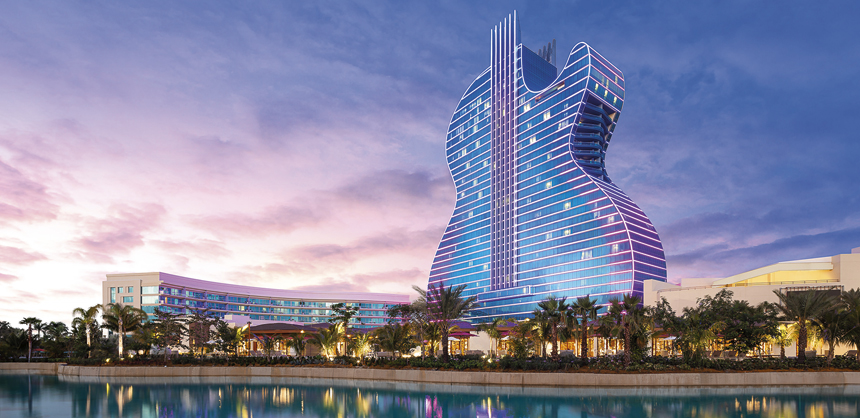
The iconic guitar hotel serves as a beacon to all those seeking great entertainment, fine dining and lively gaming at the Seminole Hard Rock Hotel & Casino Hollywood. Photo courtesy of Costea Photography, Inc.

The iconic guitar hotel serves as a beacon to all those seeking great entertainment, fine dining and lively gaming at the Seminole Hard Rock Hotel & Casino Hollywood. Photo courtesy of Costea Photography, Inc.

Also in Hollywood is the Seminole Hard Rock Hotel & Casino. It offers 1,271 rooms and suites, as well as 120,000 sf of meeting and event space, including a 38,000 sf exhibition hall and plenty of room for poolside functions. Outside of the event itself, attendees can enjoy games, entertainment, gourmet dining and high-class shopping options.

Halpern says that they intentionally include local culture into the experience of their events. Past programs have included Calle Ocho food tours in Little Havana and Everglades airboat adventures.

“These moments create lasting memories and reinforce the sense of celebration,” she says.

Ronni Burns, CMP, a former senior events and incentive leader who is still a board member with Tupperware Brands, has brought multiple incentive programs and board retreats to the area, including an 85-person incentive and recognition trip for four days and three nights held at Margaritaville Hollywood Beach Resort; a 100-person couples incentive trip for five days and four nights that took place at B Ocean Resort Fort Lauderdale Beach; and a 40-person couples Board of Directors meeting for three days and two nights was hosted at Riverside Hotel Fort Lauderdale.

“The water taxi transfers instead of conventional taxis are the winner,” Burns says, also mentioning that the diverse options of entertainment, shopping and beaches are all not far away.

For Burns, Fort Lauderdale’s defining advantage is how naturally movement becomes part of the experience. Between yacht charters, Everglades excursions, Las Olas Boulevard dining, beachfront concerts and waterfront buyouts, Fort Lauderdale delivers incentive drama without the density that can overwhelm attendees in larger urban cores.

Chris Weinberg Events found The St. Regis Bal Harbour Resort to be ideal for an executive leadership retreat. Photo courtesy of The Louis Collection

Chris Weinberg Events found The St. Regis Bal Harbour Resort to be ideal for an executive leadership retreat. Photo courtesy of The Louis Collection

The Gulf Coast

For Debra Hull, vice president of Events of a Lifetime Productions, Florida’s Gulf Coast is as much a personal landscape as it is a professional one.

“Bringing corporate groups into our backyard is one of our favorite things to do,” Hull says.

At The St. Regis Longboat Key Resort, Hull designed a 26-person executive incentive and strategic retreat that blended beachfront receptions, Ringling Museum tours, marine lagoon snorkeling and private cruising from Marina Jack. “Close your eyes and you would think you were in the Caribbean,” she says.

The luxury setting amplified the program’s emotional stakes. “One attendee actually proposed during the program,” Hull says.

She says a major differentiator on Florida’s Gulf Coast is how easily planners can have luxury without losing warmth or personalization. “The service standards here allow us to create highly elevated experiences that still feel effortless and intimate,” she says. For example, at The St. Regis Longboat Key Resort, the design flexibility of terraces, penthouse spaces and beachfront venues allowed her team to customize every transition point of the program, from sunrise strategy sessions to evening culinary moments without ever breaking the flow of the guest experience.

Across Florida, Hull says planners must remain vigilant about weather, transportation and seasonal pricing. “We problem-solve quietly so our clients never feel the tremors,” she says. That proactive mindset allows Florida programs to feel effortless even when conditions behind the scenes are anything but.

Fort Myers, with its history and charm, is a great place for meeting planners wanting to get away from it all.

Fort Myers, with its history and charm, is a great place for meeting planners wanting to get away from it all.

Fort Myers

Fort Myers continues to draw planners seeking relaxed coastal experiences supported by simple logistics. Southwest Florida International Airport provides smooth national access, while downtown Fort Myers offers walkable streets lined with independent restaurants, historic venues and waterfront gathering spaces.

The surrounding islands and beaches naturally lend themselves to kayaking, dolphin tours, wellness programming and sunset receptions. Hotels across the destination emphasize indoor-outdoor meeting flexibility, allowing sessions to transition fluidly into pool decks, terraces and coastal dining environments.

Sustainability initiatives continue to gain traction, particularly among groups seeking nature-forward experiences without sacrificing service.

Daytona Beach

Daytona Beach occupies a unique place in Florida’s meetings landscape by pairing true meeting capability with iconic, high-energy offsites. The Ocean Center, currently undergoing a $40 million renovation, delivers more than 205,000 sf of flexible indoor and outdoor meeting space just steps from the Atlantic Ocean.

Multiple oceanfront resorts and lifestyle hotels support the center within walking distance, while additional properties surround Daytona International Speedway.

Beyond the ballroom, Daytona’s offsite experiences lean unapologetically experiential. Groups incorporate exclusive Speedway programs, PopStroke mini-golf buyouts, events at Jackie Robinson Ballpark and beachfront campfires that transform evening receptions into coastal rituals. The ability to provide exclusivity without overwhelming crowd density remains one of Daytona’s strongest incentives for planners.

Every February, the Knights of Sant’ Yago Knight Parade makes its way down 7th Avenue in Ybor City in Tampa celebrating Latin culture.

Every February, the Knights of Sant’ Yago Knight Parade makes its way down 7th Avenue in Ybor City in Tampa celebrating Latin culture.

Tampa

Tampa feels both energized and navigable. The meetings momentum here continues to be fueled by the expansion of the Water Street district, which clusters hotels, dining, nightlife and waterfront experiences within a clean, pedestrian-friendly footprint.

Tampa is an ideal choice: a vibrant, accessible city with a wide range of excursion options that appeal to every participant type.

Tampa’s offsite experiences range from high-adrenaline driving at The Motor Enclave to culturally rich programming at the historic J.C. Newman Cigar Factory. That close proximity proves critical when Tampa’s shared calendar of sports, tourism and conventions create real-time logistical challenges.

Florida’s Flexibility

Florida’s enduring appeal is not built on any single skyline, shoreline or ballroom. It is built on contrast and on the planner’s ability to move easily between those contrasts inside a single state.

In one week, a sales executive may watch sunrise wash across Longboat Key before a strategy session. The next, an incentive winner may spend an afternoon cruising the Intracoastal in Fort Lauderdale and end the evening aboard a yacht beneath city lights. Another group might find its most meaningful connection on a catamaran in the Florida Keys as dolphins surface just offshore.

What binds these moments together is not geography, it is flexibility. After all, Florida allows planners to design emotion as deliberately as logistics. The environment delivers the memory.

For meetings and incentives, Florida is not simply where programs take place, it’s how they come alive and become memorable. C&IT

CIT-2025-DEC-JAN-DEST-Texas-147x147

Meeting BIG in Texas

CIT-2025-DEC-JAN-DEST-Texas-860x418


Due to its great location, unique venues and facilities, memorable “Lone Star” cultural attractions and extraordinarily favorable business climate, Texas has become a favorite destination for corporate and incentive meetings and events. From enjoying world-renowned BBQ in Austin to experiencing world-class meeting facilities in Dallas, to the state’s overall cultural richness, Texas is a destination for meeting planners who are looking for everything from high-tech urban venues to secluded Hill Country resorts.

Centrally located, Dallas Fort Worth International Airport makes Dallas an easily accessible destination for companies to gather for conventions, meetings and incentive events. With multiple entertainment districts and continuous new hotel openings and upgrades, the venue options throughout the area are constantly evolving. This means that corporate event planners can tap into diversified meeting experiences for events of all types and sizes.

Dallas also provides affordable event costs without compromising quality or experiences for attendees. In addition, varied cultural offerings mean events planners will find no shortage of entertainment to offer attendees, including the vibrant Dallas Arts District, as well as numerous professional sports teams.

Plano

Recently named the 2025 Destination of the Year by the Texas Travel Awards, Plano, Texas is truly the land of plenty. Blending historic charm with modern luxury, the city brims with attractions and amenities. With about 60 hotels of various price points, more than 1,000 restaurants, world-class shopping, a lively arts and nightlife scene, abundant natural beauty and four walkable shopping, dining and entertainment districts, Plano is the perfect destination for a meeting of any size.

Conveniently located near Dallas/Fort Worth International Airport and Dallas Love Field Airport, Plano offers everything corporate meeting planners are looking for, including fine dining, exceptional shopping, nearby sports venues, top-notch public golf courses, inviting day spas, a variety of interesting and entertaining attractions and much more.

Angie McCart, event coordinator at WealthWave, held an event at the Dallas/Plano Marriott at Legacy Town Center earlier this year, bringing in 1,000 attendees to the annual convention and awards gala.

“We have attendees from all over the country so Texas is a nice centralized location,” McCart says. “The Dallas/Plano area is great because of the proximity to the airports and the Legacy Town Center is a great venue for an event.”

McCart says that the weather and ease of travel in and out of Texas also makes it a great location for an event.

What keeps planners coming back to Plano is the fact that three of Plano’s four walkable entertainment districts are within a one-mile radius and are located right outside the doors of their respective hotels.

For instance, the 404-room Dallas/Plano Marriott at Legacy Town Center is the anchor hotel at The Shops at Legacy, an outdoor shopping and dining district in an urban village setting. The outdoor luxury shopping and dining district, Legacy West, is situated right outside the doors of the Renaissance Dallas at Plano Legacy West Hotel. And the Hilton Dallas/Plano Granite Park is next to The Boardwalk at Granite Park, a unique restaurant park overlooking an inviting water feature and live music stage. This is extremely favorable to meeting planners and attendees, as attendees can find post-meeting dining and entertainment within walking distance from their meeting site and hotel.

Plano also has several outstanding venues that offer various options for corporate meetings and events. The Plano Event Center, which has capacity for up to 5,000 attendees, features a column-free exhibit hall that recently underwent renovations. The city’s distinct walkable districts also combine business with leisure and provide world-class shopping, award-winning restaurants, and art venues to explore.

Recently, the City of Plano officially broke ground on the Miyako Hybrid Hotel Plano, a more than $100 million development. Slated for completion in fall 2027, this elegant property will become the third Miyako Hybrid Hotel in the United States and the first in Texas.

The 350,000-sf luxury hotel will offer 217 thoughtfully designed guestrooms, a signature restaurant and a rooftop bar with sweeping views of Legacy. The project will introduce a collection of flexible, modern meeting spaces that directly address the region’s growing demand for high-quality corporate meeting accommodations.

Known for its blend of sustainability and Japanese-style hospitality, the Miyako Hybrid brand emphasizes exceptional, intuitive service. The Plano property will further this mission with eco-friendly building materials, water-conservation systems and advanced energy-efficient technologies, delivering a hospitality experience where innovation and warm, attentive care meet.

Fort Worth

Fort Worth is the Unexpected City, where Texas hospitality meets modern amenities, creating a standout setting for meetings and events. Downtown’s Sundance Square is steps from the convention center and packed with restaurants, shops, nightlife and galleries. Just minutes away, the Cultural District brings added luxury with The Crescent Hotel Fort Worth, home to Canyon Ranch’s first wellness club, and Bowie House, Auberge Collection, one of only three Texas hotels to earn two MICHELIN Keys.

For a taste of the West, attendees head to the Historic Stockyards for twice-daily cattle drives, a year-round rodeo and the Hotel Drover, Autograph Collection’s scenic patios overlooking the Trinity River. Explore what’s new across the city, from MICHELIN recognized BBQ and tacos to exciting venues that will give your next event a true Fort Worth feel.

The Fort Worth Convention Center is undergoing a major expansion. Phase 1 was recently completed and they are working on Phase 2. By 2030, the expanded facility will feature increased contiguous exhibit space, additional loading docks and new ballroom and meeting spaces at the north end of the building, making it an even better venue for hosting conventions. The convention center is surrounded by 4,000 downtown hotel rooms.

DFW International Airport is also expanding capacity with additional gates as well as the construction of a brand-new terminal.

Amanda Carter, CMP, PMP, chief events program manager at Emerson, recently hosted NI Connect, the annual flagship event, at the Fort Worth Convention Center. NI Connect brings together Test & Measurement industry leaders, partners and customers for several days of networking, education and collaboration. This year, Emerson welcomed approximately 2,000 attendees from across the globe.

“It was an exciting opportunity to create meaningful connections and showcase innovation in a dynamic setting,” Carter says. “Texas is always a strong contender for us because of its affordability and the competitive incentives offered by its cities. When we went to bid, Texas — and specifically Fort Worth — stood out as the best choice. Accessibility was another major factor. With DFW offering extensive flight options and the city’s central location, it’s easy for attendees from across the country and internationally to get here. Fort Worth also delivers a unique blend of Texas charm and modern amenities, which made it an ideal setting for NI Connect.”

On the planning side, Carter says the highlight was absolutely the people who helped make this event a success. “Moving our event from Austin to Fort Worth was a big transition, but our partners — from the convention center to the city and hotels — made it seamless,” she says. “Their collaboration helped us deliver an exceptional experience. As the program manager of a large event like NI Connect, I’m so grateful for a team of talented, passionate professionals that help make our event a success.”

For attendees, the standout moment was the conference party at Billy Bob’s Texas, the world’s largest honky-tonk. “We bought out the entire venue for an epic Texas-sized celebration complete with a fantastic local band, a custom cowboy hat experience and even a mechanical bull,” Carter says. “Attendees are still talking about that night almost a year later. It was classic Texas all the way, with the charm of the Stockyards right outside the door. The mini Highland cows, burros and longhorns were the biggest hit of all. Those authentic touches created an unforgettable experience that truly captured the spirit of Texas.”

Carter and her team at Emerson walked away from their first event in Fort Worth to nothing but praise from attendees and employees. The city is safe, walkable, and offers the perfect mix of Texas charm and bigcity experiences.

“Meeting planners should embrace the local culture and work with partners like Visit Fort Worth. They were instrumental in helping us create unique experiences that attendees will remember for years,” Carter says. “Texas offers incredible versatility, and Fort Worth, in particular, combines accessibility, hospitality and character. Build in time for attendees to explore the city’s cultural districts and dining. It adds a personal touch that makes the event truly stand out.”

The new Austin Convention Center, currently under construction, will nearly double the meeting and event space to 620,000 sf. It is slated to open in 2029.

The new Austin Convention Center, currently under construction, will nearly double the meeting and event space to 620,000 sf. It is slated to open in 2029.

Austin

Celebrated for its blend of tech-forward culture, amazing food scene, diverse venue options and vibrant entertainment, Austin has proven to be a favorite Texas destination for event planners. The city offers both polished and relaxed meeting and event venue options, making it a great choice for team-building, client engagement and attendee gatherings.

From sophisticated hotels and convention centers to authentic BBQs and outdoor spaces, Austin is teeming with meeting options.

Amanda Brubaken, CMP, event and tradeshow manager at U.S. Bank, has hosted a few events in Texas over the past year. Two favorites of hers come to mind: one was an approximately 25-person advisory board meeting held at The Loren Hotel Austin at Lady Bird Lake and the other was an approximately 90-partner roundtable at the Kimpton Pittman Hotel in Dallas.

“Since we have such a broad client and partner base across the country, we like to host these events in either a central location or cities that are easy for air travel – ample flight options, minimal connections,” Brubaken says. “Both Austin and Dallas can offer this.”

At the Austin event, Brubaken sourced snacks and drinks that were made locally to include in the welcome backpack that each attendee received upon check in at the hotel. Additionally, she had planned to host an evening event at a local barbecue restaurant with a mobile boot company to fit attendees with their own cowboy boots.

“A few weeks before the event, one of our suppliers fell through and I had to pivot. Instead, we brought our attendees to the flagship Tecovas store for a shopping experience — where they could still be fitted for their own boots,” Brubaken says. “Tecovas was so accommodating and our attendees loved being at the flagship store.”

The Omni PGA Frisco Resort & Spa boasts an 18-hole golf course and 127,000 sf of meeting and event space.

The Omni PGA Frisco Resort & Spa boasts an 18-hole golf course and 127,000 sf of meeting and event space.

Frisco

Frisco has long been featured as a favorite Texas locale for corporate events — thanks in part to its award-winning facilities, such as the impressive Omni PGA Frisco Resort & Spa golf course, as well as the culinary scene, modern venues and unique team-building activities. Recently, Frisco has seen a “boom” of sorts in terms of new venues and options for corporate meeting planners to consider.

The recently opened Rollertown Beerworks is ideal for hosting large-scale events, festivals and concerts. The production facility features a brew house with a 13,000-sf, two-level indoor/outdoor taproom, beer garden and rooftop deck.

For planners looking for interesting outdoor venue options, consider the Kaleidoscope Park & HALL Park Hotel, Autograph Collection in Frisco. Opened late last year, Kaleidoscope Park is a place where nature meets culture and art abounds. This nearly 6-acre dynamic, innovative arts and culture destination is home to free, year-round public programming, including films, diverse musical and dance performances, and a variety of health and recreational activities. Corporate teams and attendees can enjoy cultural experiences and artistic productions throughout the year.

Last year, Active Arena opened in Frisco, bringing more than 15 interactive experiences that blend physical games with cutting-edge tech — perfect for corporate groups and teams to enjoy. Interactive games are built for laughs, adrenaline and unforgettable memories. At Active Arena, the goal is to provide a fun and safe space where attendees can try exciting new experiences — and maybe even get inspired to explore them in real life.

The popular San Antonio River Walk offers a narrated boat tour, dining, shopping and entertainment.

The popular San Antonio River Walk offers a narrated boat tour, dining, shopping and entertainment.

San Antonio

San Antonio is defined by its unique blend of historic charm and modern amenities. Not only does the region provide meeting planners with diverse venues from which to choose — like ranches, riverfront locales and historic theaters — but San Antonio also offers a wealth of entertainment options and new venues that are ideal for corporate groups.

For instance, Signia by Hilton La Cantera Resort & Spa recently unveiled a $40 million refresh. The resort features 496 guestrooms, including 34 boutique-style villas and an adults-only floor, all showcasing refined regional décor inspired by Texas’ iconic King Ranch Estate.

The historic Gunter Hotel also completed a $57 million renovation with refreshed guestrooms, redesigned 20,000 sf of meeting spaces, rooftop pool, new dining/bar venues, and a music-themed vinyl library concept. The hotel originally opened under a different name in 1837, and after many changes, opened under its current moniker in 1909.

Recently, San Antonio also welcomed Pullman Market in the Pearl District featuring 40,000 sf of full-service restaurants, artisan butcher and fishmonger concepts, unique team-building classes and much more.

The city is also eagerly awaiting the 200-room Monarch San Antonio, which is coming to the downtown area next spring. Adjacent to Hemisfair and near the Henry B. González Convention Center, this luxury hotel will also bring 10,000 sf of event space to the region.

When it comes time to relax and enjoy all that San Antonio has to offer, attendees will revel in the easy access to the city’s most-celebrated gems, including the Alamo, River Walk, museums, zoo and SeaWorld. For team-building activities, attendees can enjoy Let’s Roam app-led scavenger hunts near the Alamo, as well as team-focused yoga events, walking trails and other destination-experiences that celebrate San Antonio’s history while helping attendees recharge between sessions.

Laredo & El Paso

Since Laredo and El Paso both lie along the Rio Grande, the natural border between Texas and Mexico, the local culture is a melting pot. This fusion translates into everything, including the cuisine. The area is known for its affordability.

Visit El Paso, which was named DMO of 2024 at the annual conference of the Texas Association of Convention and Visitor Bureaus, can help planners navigate their stay. There are plenty of meeting venues available from boutique spaces to the convention center for large gatherings. The new Mexican American Cultural Center offers 20 unique rental options. Accessibility is made simple, as its Streetcar Transit System shuttles people from the convention center to downtown hotels and attractions with ease.

In Laredo, the historic Plaza Theatre is under renovation. But there are plenty of other spaces available, including at the Sames Auto Arena, which is the largest indoor convention space in South Texas. It includes 32,000 sf of continuous open floor space. It has a seating capacity of up to 10,000 with 14 luxury suites, six meeting rooms and a private club. Other popular spaces for events include Texas A&M International University, the Laredo Center for the Arts and more.

With everything Texas has to offer, whatever your group’s size and requirements, there’s a city waiting to give you a Lone Star-size welcome with exactly the facilities you need to hold any event. C&IT

CIT-2025-11-cover-147×197

Spice Up Your Next Event

MasterChef winner Claudia Sandoval displays her creative F&B at a private Destination Concepts event.

MasterChef winner Claudia Sandoval displays her creative F&B at a private Destination Concepts event.

Large gatherings of corporate meeting and event attendees bring about a unique set of challenges — none more so than the area of food and beverage.

As attendees become food savvy, crave variety and demand a wider range of flavors, memorable food and beverage options for large groups are now viewed as a key focus area for planners to please attendees and keep them coming back for more.

Wendy Spivak, principal and co-founder of The Castle Group, a Boston-based events management firm, is seeing several strong trends emerge around food and beverage (F&B) offerings. “There is a clear shift toward sustainability, including efforts to reduce food waste, greater use of recyclable serving vessels, clearly marked recycling stations and locally sourced ingredients,” Spivak says. “There is also growing demand for non-alcoholic options, such as inventive mocktails, wellness and energy drinks and expanded tea and coffee bars.”

Health-conscious menu planning has become a priority, with some attendees requesting fully vegetarian meals or menus that emphasize lighter, balanced dishes. Interactive food and beverage experiences are also gaining popularity, allowing attendees to engage more directly with their meals through chef-attended action stations, build-your-own break stations, wine pairings or chef-led presentations during dinners.

Spivak and her team recently worked with a corporation that was highly focused on sustainability for their CEO Summit of about 215 attendees. They were grateful that the host hotel was very amenable to supporting these efforts through F&B selections. “They worked with us to create custom menus that highlighted locally sourced ingredients and sustainable meats, utilized full ingredients to minimize waste and donated unused food to a local rescue organization,” Spivak says.

They did this while still featuring unique menus that remained high-end and distinctive, reflecting both the event destination and the attendees’ home region. They highlighted the sustainability measures through curated signage and recycled-paper menus at the final night dinner, which noted ingredient sourcing, included the corporation’s sustainability statement and featured a message from the chef about the hotel’s commitment to sustainability.

When working with corporations on meetings and events, Hank Stampfl, CEO & founder of Revel Rouge Events, aims to embrace new trends while avoiding being too faddish. As he explains, chic, branded details like custom ice cubes, branded napkins or toast stamps with the company’s brand are fun ways to extend a company’s identity into the menu.

“A major shift we’re seeing is toward more intimate dining experiences. Even for large corporate groups, community tables encourage connection and conversation,” Stampfl says. “We also love creating personalized menus and napkins based on each attendee’s RSVP food and beverage selections, adding a personalized touch for each attendee.”

This past summer, Revel Rouge Events planned a large-scale brand event with the HASK Corporation, the clean hair care line. The event featured custom ice cubes and a playful “Donut Touch My Curls” station with glazes inspired by the ingredients in their new Curl Care Collection.

“Every element is tied back to the brand’s story, showing how food and beverage can become part of the narrative rather than just an amenity,” Stampfl says.

Chef Bill Roll, private chef and assistant professor of culinary arts at Brookdale Community College, says that, in his experience, large corporate groups are gravitating toward experiences that are not just about eating, but about engagement. Trends include interactive chef stations, globally inspired menus and wellness-focused options that balance indulgence with lighter, health-conscious choices.

“Sustainability also plays a big role, guests want to know that ingredients are responsibly sourced, seasonal and local whenever possible,” Roll says. “Creativity often comes through in the storytelling: menus that highlight a region, a cultural theme or even a company’s values.”

One memorable corporate event Roll worked on was a corporate retreat at a private country club for over 2,000 attendees.

“Instead of the standard buffet, we designed a series of live chef action stations inspired by international street markets,” Roll says. “Each station represented a different global city. Think handmade pasta in Florence, fresh sushi rolls in Tokyo and a taco bar with house-made tortillas in Mexico City. To elevate the experience, we paired each station with craft cocktails or mocktails tied to that region. The result was not only a meal, but a journey that allowed attendees to explore different cuisines while engaging directly with chefs.”

Attendees indulged in different types of creative cuisine at the Asian Night Market in Los Angeles. Photo credit: DCI

Attendees indulged in different types of creative cuisine at the Asian Night Market in Los Angeles. Photo credit: DCI

In his role as senior designer of Destination Concepts Inc. (DCi), Stewart Calhoun is seeing some unique, innovative approaches to large-scale dining options. “Incorporating multisensory elements into food and beverage experiences is a growing trend, and attendees are consistently wowed by eclectic displays and artistic presentations,” Calhoun says. “This approach is especially impactful at themed events, where F&B can be seamlessly integrated into the décor — transforming it from a standard buffet into a central part of the experience. By elevating the visual and experiential aspects of F&B, these displays create memorable moments that engage meeting attendees beyond taste alone.”

Calhoun stresses that “variety is the spice of life,” and today, accommodating diverse dietary preferences and restrictions is not just a courtesy, it’s a must. Thoughtful menu planning directly enhances the personalization of the attendee experience, making everyone feel seen and included.

Calhoun and the event planning team at DCi have crafted menus that are not only inclusive of dietary requirements but also invite the entire group to explore new flavors and cuisines. To guide attendees through their culinary journey, Calhoun has implemented a few creative strategies beyond a well-curated menu:

  • The Food Guru – A knowledgeable chef stationed onsite to answer questions and provide insights into the menu offerings.
  • QR Codes – Strategically placed scannable codes that reveal detailed ingredient lists, empowering guests to make informed choices with confidence.

“By blending inclusivity with creativity, these approaches ensure that every attendee – regardless of dietary preference or sensitivity – can fully enjoy the experience,” Calhoun says.

For a high-impact financial company sales summit, the DCi team transformed the heart of downtown Los Angeles into an immersive Asian night market experience for 800 attendees. Inspired by the iconic 626 Night Market — the original and largest Asian-themed night market in the U.S. — this event brought the corporation’s vision of a “never-before-seen” experience to life.

“Set beneath towering cherry blossom trees, glowing neon signs and twinkling string lights, guests explored a vibrant culinary landscape through custom-designed food stalls,” Calhoun says. “Each stall offered a taste of authentic Asian cuisine, including ramen, sushi, dumplings, stir fry and Peking duck — placing food and beverage at the epicenter of the evening. The atmosphere was further elevated with dynamic entertainment, featuring Taiko drummers, a 360-degree photo booth and a high-energy DJ that kept the energy flowing throughout the night. The result was a fully immersive, unforgettable experience that delighted attendees and set a new standard for corporate event creativity.”

DCi also recreated the energy and fun of the famous Texas State Fair for a corporate group of 1,800 attendees. “Infusing regional classics into events is both on-trend and has mass appeal — recreating a popular local event so attendees can experience it is a true treat,” Calhoun says. “It’s widely known that the Texas State Fair is all about the food so our custom state fair experience featured a wide range of food and beverage options to bring the theme to life.”

The DCi team sourced 18 diverse stations and food trucks and five specialty cocktail bars. In addition to classic fair food like cotton candy, popcorn, corn dogs and funnel cake, they served local specialties like BBQ brisket, mini-margaritas, whisky tastings, mango on a stick and more. Interactive stations, such as the Frito Boat bar and Nitro Ice Cream, added to the fun, along with unique items like biscuits branded with the program logo.

“This is a great example of where F&B plays an integral role in presenting a complete experience for the attendees,” Calhoun says.

Technology is also becoming paramount in effectively orchestrating F&B for large-scale corporate gatherings. At a recent tech conference in Chicago, Jordan Kaye, founder and CEO of Analog Events, integrated food and beverage into the guest journey through a proprietary AI agent.

“Attendees pre-ordered coffee and lunch through the agent, which also helped manage seating charts and dietary preferences,” Kaye says. “This gave us highly accurate counts for large group meals and allowed us to personalize service at scale. Instead of a one-size-fits-all setup, every guest felt seen and catered to — even in a large-format conference environment.”

Embracing Challenges

When planning F&B offerings for large numbers of attendees, some of the biggest challenges planners face with large-scale groups are with dietary restrictions and accommodating unique needs, or ensuring there are enough good food options for those with specific restrictions.

“Between vegetarian, vegan, gluten-free, halal, kosher, nut-free, dairy-free, and allergies, there are a lot of things to consider when trying to create a menu that appeals to the masses,” Spivak says. “Another challenge is managing expectations against rising costs. Many attendees have certain expectations for food offerings or quality, especially if they are paying to attend the event. This, mixed with rising food costs and client budgets, can make delivering on those expectations challenging.”

Roll says the biggest challenge of developing memorable F&B offerings for large-scale groups is balancing scale with quality. Too often, planners underestimate how complex it is to serve hundreds (or thousands) of guests while still delivering food that feels fresh, flavorful and elegant.

“A common mistake I see is overcomplicating the menu. Planners sometimes want to offer too many items, which can slow service and dilute execution,” Roll says. “Another challenge is timing: ensuring food and beverage service flows seamlessly with the event schedule. The best outcomes always come when chefs and planners collaborate early in the process, so the food becomes an integrated part of the event, not just an add-on.”

Being sustainable for large-scale group events can also be challenging. As Spivak explains, not all venues are amenable to supporting specific F&B requests in a truly meaningful way, plus ensuring there is enough food for a large group while minimizing waste, making service quick and efficient while using sustainable packaging, and sourcing local ingredients in large quantities may not always be feasible.

“Also, trying to keep large-scale menus fresh and exciting, without banquet fatigue, can be a fun challenge to work around,” Spivak says.

For Stampfl, wait service at large-scale events is often treated as an afterthought, but he sees it as a chance to choreograph something truly special: movement and timing that elevate the energy of the room and become a defining feature of the event.

“From the initial welcome beverage to seamless staff movement throughout the event. Timing is the biggest challenge to orchestrate with large events,” Stampfl says. “Pacing service with programming and minimizing lulls is key. Another common mistake is under-preparing staff; briefing them to embody the event’s tone transforms service into part of the overall experience.”

Additional challenges include:

  • Consistency and quality at scale — For large groups, maintaining consistent quality from the first to the last bite is always a challenge. It’s essential to work with a vetted culinary team that can deliver excellence across the board.
  • Elevated expectations — Today’s attendees often have discerning palates, thanks to the popularity of culinary shows and a growing interest in food culture. Staying ahead of F&B trends and offering innovative menu options is key to impressing this audience.
  • Overlooking personalization — Customization is no longer optional. Planners must consider dietary preferences and restrictions, and ensure that non-alcoholic beverage options go beyond basic sodas and water to include thoughtfully crafted alternatives.
  • Treating F&B as an afterthought — You can design the most stunning and immersive environment imaginable, but if the food and beverage fall short, the experience suffers. F&B should be a central part of the event strategy — not just a logistical detail.

“The biggest challenge — and a mistake we see often — is not truly understanding the audience. Food and beverage isn’t just logistics; it’s identity,” Kaye says. “We create attendee avatars or archetypes for each event to understand how different attendees might actually eat. It’s about moving beyond “feeding the masses” and toward personalization. Think of it like curating a Las Vegas buffet plate uniquely for each person — but now, with AI tools, we can scale that kind of customization faster and more efficiently than ever before.”

Upcoming Trends

Spivak and her team are anticipating a focus on personalization will continue to grow as a F&B trend with large-scale corporate groups — whether that means more flexible meals and snacks where attendees can choose when to eat on their own time or the selection of foods, snacks and beverages offered being customizable by the attendees.

“We also suspect the importance of sustainability to continue to grow,” Spivak says. “Right now, it feels like true sustainability efforts at events are a luxury that can come with a cost, but I anticipate that will continue to become more of a requirement than a request, and become more accessible to more groups with venues getting involved in supporting the efforts more thoroughly. Sober living is also continuing to increase in popularity, so expect to see more focus on zero-proof beverages — getting creative with mocktails, offering wellness-focused drinks, and more non-alcoholic beer and wine options.”

Roll believes the future of F&B for large corporate groups lies in personalization and technology. Guests increasingly expect menus tailored to dietary preferences and restrictions, and with the help of pre-event surveys or apps, planners will be able to customize experiences more than ever before.

For Kaye, the real future lies in customization– taking attendee orders ahead of time, aligning portions to real demand, and using data to eliminate waste. And when there is surplus, it’s about being intentional with composting, recycling or donating.

“We expect to see caterers, planners and even attendees taking a much more active role in reducing environmental impact while still delivering exceptional culinary experiences.” Kaye says. “Food is one of the most universal ways to create connection. When it’s treated not as an afterthought, but as a centerpiece of the event, it has the power to surprise, delight and bring people together. The best events understand that a meal isn’t just sustenance — it’s storytelling.” C&IT


CIT-2025-11-FEAT-OpenerAOE-147x147

2025 Awards of Excellence

CIT-2025-11-FEAT-OpenerAOE-860x418We at Corporate & Incentive Travel magazine are proud to present the winners of our 41st annual Awards of Excellence. We thank our subscribers — the meeting and incentive travel professionals — for judging which hotels, resorts and conference centers best served their needs by excelling in staff service, accommodations and meeting facilities, F&B, event setups and arrangements, ambience and accessibility. The subscribers also choose the convention and visitors bureaus that go above and beyond in service and support, promotional assistance, supplier, facility and venue information, coordination and liaison with local attractions and transportation, and comprehensive assistance with accommodations and site inspections.

While others may be content to rest on their laurels, these industry-leading winners prove what it means to be ‘best in class’ by continually reinventing themselves through renovations and rebrandings. Communicating and marketing effectively is all about making real connections through relationship building. When you make it personal, you make meetings and events an unqualified success — and then everyone is a winner.  We salute all the winners of our Awards of Excellence on these pages and invite you to read the success stories of many of the winners featured in this annual section in our digital edition. C&IT

CIT-2025-11-FEAT-CelebritySpeaker-147x147

Is a Celebrity Speaker Worth It?

Photo courtesy of GDA Speakers

Motivational speaker Nando Parrado talks about survival, resilience, leadership and the power of teamwork. Photo courtesy of GDA Speakers

Nando Parrado is a name you may not be familiar with, but are probably familiar with his story. Parrado is a survivor of the 1972 Andes plane crash that became the subject of a best-selling New York Times book and Oscar-nominated Netflix film.

“His message is one of the most powerful testaments to the human spirit I’ve ever seen,” says Gail Davis, president and founder of GDA Speakers, a renowned speaker management company.

Davis first heard Parrado’s story during a keynote at an EDS conference and it changed the course of her life. She made it her mission to help share the remarkable journey, signing Parrado to become the anchor member of her then-fledgling bureau.

Parrado has now delivered more than 300 keynotes and remains Davis’ most-requested speaker.

“The takeaway is that event planners shouldn’t overlook speakers without household recognition,” says Davis. “With the right fit, their impact can equal — or even surpass — that of a celebrity.”

As corporate meeting planners adapt to match changing expectations from attendees and overcome budget challenges stemming from inflation, supply-chain difficulties and tariffs, Davis’ message is echoing throughout the events industry.

Only 1% of event professionals polled by Freeman’s 2024 annual trends report list celebrity speakers as their preferred keynote content. Instead, 39% favor talks on innovation and 34% want to hear from industry leaders and experts.

“Breaking the myth: Celebrity speakers don’t drive event registrations,” notes events strategist Nicola Kastner in the report.

Listen to Your Audience

Freeman’s 2025 trends report builds upon that research to highlight the difference between how planners view attendees’ journey and how delegates experience a conference.

In this year’s analysis, 25% of event organizers view a celebrity speaker as a “peak moment” at a show, but attendees list objectives like building vendor relationships (41%), learning and development (20%) and making connections (19%) as their most pivotal time. As a result, 78% planners think their attendees have experienced a “peak moment,” but 60% of attendees say they did not.

Such a disparity may be discouraging for planners to read, but practical consequences supersede bruised feelings. According to the report, attendees who experience “peak moments” are 85% more likely to return to that same event the following years. If only 40% of attendees feel like they enjoyed the event’s highlights, more than half of participants could stay home in the future.

Ken Holsinger, Freeman’s senior vice president of research and insights, attributes the findings to Generation Z’s priorities. The younger crowd doesn’t appear to be all that impressed with brands and events trying to make a splash. They rather want to achieve actionable goals, Holsinger says.

Gen Z objectives are:

28% cite networking and making connections

25% attend for product and service exploration

25% go for learning and inspiration

“We’re not telling planners they can’t do those fun things,” Holsinger says. “We’re just telling them to get the table stakes right.”

In other words, the money invested in an A-list celebrity may be better spent on an activation or experience on the show floor.

Adding A-Listers

Aaron Pugh, president of Vet Together, a reverse tradeshow for animal care practitioners and their vendors, opted to pony up for Nicole Kidman for the event’s second iteration, held recently at the New Orleans Ernest N. Morial Convention Center.

While Pugh can’t directly correlate the show’s growth to Kidman’s star power, he says it played a role in attracting 1,100 attendees and launching a colocated sister show for dental professionals, Smile Together.

“It adds something to the show,” says Pugh. “People like hearing about celebrities and there’s some level of credibility you earn.”

Generally speaking, younger events may have to take additional steps to attract audiences. Pugh says that hiring an A-lister with a high fee signals that an event is invested in the long haul.

The Together Media shows presented Kidman as a business woman with whom attendees can identify. According to Pugh, both the veterinarian and dental industries have experienced a significant shift toward women-led practices in a field previously dominated by men. Likewise, Kidman has risen to the top of media, a field men have previously earned higher salaries in and gained more influence than women.

Having even a loose connection to the industries proved valuable as recruiters fielded questions from potential attendees asking Kidman’s relevance to the event, Pugh adds.

“She sends a very powerful message about women and what they can do in industries that have traditionally been male-focused,” says Pugh. “I think that will resonate with our audience.”

Likewise, NiCE Interactions weaved its messaging into tapping “Veronica Mars” star Kristen Bell for a special appearance. NiCE, which helps organizations deliver authentic experiences through AI, built excitement by billing Bell as “the nicest person in the world,” connecting her to its “Create a NiCE World” campaign.

Bell more than lived up to the persona, and her charm was essential toward achieving the company’s objective at the conference, which attracted more than 2,500 attendees to the Aria Resort & Casino in Las Vegas, says Gerrie Price, vice president of demand generation at NiCE.

“During her onstage conversation with NiCE CEO Scott Russell, she shared heartfelt and humorous stories about kindness, authenticity and connection, which resonated deeply with the audience,” says Price. “As an AI company, one of our goals with this campaign is to illustrate that while AI can power incredible experiences, authenticity and human connection remain at the heart of every great interaction. Kristen personified that balance perfectly.”

In terms of ROI, Bell’s involvement generated a measurable uptick in social media engagement and helped build strong pre-event momentum, notes Price. But the feel-good moment on stage was the big prize.

“Her keynote reinforced the emotional connection between our brand and our audience, and helped communicate one of our core messages — that AI, when used with purpose, can make customer experiences feel more human and meaningful,” says Price.

American sportscaster Joe Buck with inspirational keynote speaker John O’Leary at a Goodwill Dallas event. Courtesy of GDA Speakers

American sportscaster Joe Buck with inspirational keynote speaker John O’Leary at a Goodwill Dallas event. Photo courtesy of GDA Speakers

Making the Right Match

There is a time and a place for celebrity keynotes, says Meta Nelson, speaker manager and founder of Meta Speakers, a management firm representing eight clients, including former Dallas Cowboys star Darren Woodson and former U.S. Senator Martha McSally. But she says it’s the responsibility of speaker managers like herself and bureaus, like Davis’ company, to ensure the presenter is a good match for the audience.

“Darren can charm the socks off of anybody,” says Nelson of Woodson. “But Martha might be more of a hit for your audience if you have a strong tie to the military and wellness.”

She adds that Woodson “crushes it on a Q&A and really draws people in.”

Don Jenkins, vice president of Premiere Speakers Bureau, adds that one person’s definition of a celebrity may be completely unknown to someone else. “Who’s a celebrity can be very dependent on that audience,” he says.

Woodson, for instance, would be instantly recognizable to Cowboys fans during the team’s championship runs in the 1990s. However, teammates like Troy Aikman and Deion Sanders who have added to their fame with post-career achievements in the spotlight, might gain more traction on social media promotions.

The Good, Bad and the Ugly

While there is genuine debate with whether an event needs a big-name speaker or not, planners should also keep in mind that celebrities aren’t created equally.

Jenkins notes some keynotes struggle to connect with their audiences because they haven’t invested the time and research into who they are speaking to. This can also manifest itself in a celebrity’s willingness to be an active participant at a show through social media interactions and dispositions during meet-and-greet sessions.

A speaker’s reputation precedes them, adds Jenkins. “Speakers bureaus are a very small industry; we share our successes and our horror stories,” he says.

CNN host and personality Anderson Cooper went above and beyond the norm by participating in the “ice bucket challenge” during Connect Marketplace back when the challenge first started. Other examples of celebrities who prove their worth include:

Earvin “Magic” Johnson — “His charisma and energy on stage are unmatched, and he pairs that presence with meaningful business lessons and takeaways,” says Davis.

Kevin O’Leary — The “Shark Tank” star “personally takes pre-event calls with clients, customizes his presentations, and engages in audience Q&A,” says Davis.

On the flip side, celebrities are not always a sure-thing. Sometimes, things happen that will lead to them not coming. There can be genuine scheduling conflicts that arise, but a pattern of cancellations is seen as a turn-off.

Jason Sudeikis, for instance, is known for playing the extremely likeable Ted Lasso on television, but was seen attending a women’s basketball game at the same time he was supposed to have given a keynote prior to cancelling. That’s just one of several instances where he has been a last-minute no-show.

“If there is a celebrity who has a high probability of a cancellation, we don’t recommend that person,” says Jenkins.

Adds Davis: “The best strategy is to plan as far in advance as possible and make sure your agreements have strong language around cancellations.”

Should there be a cancellation, Davis suggests planners utilize their speaker bureau relationships to find a replacement as quickly as possible.

Another safeguard is to schedule the speaker to present virtually, which Jenkins says he has seen a noticeable increase in requests for during the second half of 2025. While it may not have as much impact as an in-person appearance, remote chats and speeches cut down travel considerations, including the cost of flying the speaker in and out of town.

And because there is a convenience factor for the keynote, speakers may lower their fees by as much as 25%, Jenkins says. To save additional costs, planners can agree to pre-recorded presentations. Another cost-cutting measure is to plan a fireside chat, a format speakers prefer because it is easier to prepare for than going solo on stage.

Somewhere in between the standouts and no-shows are celebrity keynotes who fulfill their contractual obligations for the event but don’t resonate with the crowd. This can be due to the speaker not fully understanding their audience’s background and goals, says Nelson.

It’s these experiences that have many in the speaker industry suggesting shifting away from the big name to getting impact.

Connecting with Attendees

Rachel Andrews, global head of events at Cvent, says the event tech giant has intentionally adapted its approach to keynotes based on attendee preferences. Its events, including Cvent Connect, held the past two years in San Antonio and moving to Nashville in 2026, continue to use celebrities but do so “in a more meaningful way,” says Andrews.

For instance, Cvent Connect pulled on emotional heartstrings in conducting a fireside chat with James Van Der Beek. The actor, best known for the 1990s television show “Dawson’s Creek,” has a certain nostalgia factor, but his public battle with colon cancer is universally inspiring.

“He was deeply committed to showing up and to using his platform (and our conference) to spark honest conversations about resilience and perspective,” says Andrews. “The result was powerful and deeply human. His authenticity reminded all of us of the importance of courage, vulnerability and showing up when it matters most.”

Such a powerful moment goes a long way toward an event adding a “return on experience” to go along with the traditional “return on investment.” It’s also why Cvent conducts a thorough process for selecting its speakers at each event.

Diversity, culture, topical expertise, industry relevancy and, of course, the price tag all play a role. Melissa Proctor, chief marketing officer of the Atlanta Hawks, met the standard this year due to the large number of event marketers in attendance. Erik Weihenmayer, the first blind person to climb Mount Everest, was another uplifting keynote who spoke toward accessibility and defying potential limitations.

While attracting attendees is not an issue for Cvent Connect, which attracted more than 3,500 customers and partners, as well as more than 200 exhibitors to San Antonio, TX, Andrews says having a strong set of keynotes indicates it is a prestigious event.

“It’s never lost on us that we put on this experience for a very discerning audience of event professionals and hoteliers who know what great events look like,” says Andrews. “So, we’re always looking for new ways to raise the bar and delight our attendees. And the fact is keynote speakers can be a big part of that.”

Adding Mark Jeffries as the event’s emcee has been transformational, notes Andrews.

“Having a professional who can guide your attendees, engage with them in a natural way and keep everything on track is an immediate level-up,” she says. “Professional emcees don’t get enough credit for the immense value they bring and attendee satisfaction they deliver.” C&IT


CIT-2025-11-FEAT-PlanningFatigue-147x147

Preventing & Overcoming Event Planning Fatigue

CIT-2025-11-FEAT-PlanningFatigue-860x418Corporate meeting and event planning comes with built-in pressure, and fatigue can creep in from all directions. Sometimes, it’s the company setting the stage, and other times it’s the planner who pushes themselves too hard.

Kara Olsen, manager of shows and events at SalonCentric, relates event planning to being a professional high stakes juggler.

“As with juggling, the adrenaline is real. The stakes are high; the audience is watching, the pins are likely on fire, and someone is doubting that you can actually juggle. I believe the biggest reason for fatigue is the adrenaline rush — saying ‘yes’ to everything and everyone to make “it happen” over time runs its course on planners,” Olsen says. She has found that people often see planners as walking checklists, often not considering that the tasks associated with planning any level of event come with personalities of stakeholders, emotions of vendors and coworkers, and physical labor.

“The biggest telltale sign of planner fatigue is when we stop celebrating the little wins and moments,” Olsen says. “When outcomes lose their magic and turn into constant fire-drill trainings, planners who once used to lean into the magic, roll their eyes and say ‘great … next.’”

Prior to the pandemic, Jessica Cutler, owner of ENVENTS, was entering year five of owning her corporate event planning business. Before starting her company, she had spent an additional seven years planning events for corporations.

“My mantra had always been, ‘Never ‘no’ — just a different level of ‘yes.’ But, as you can imagine, never saying ‘no’ took a serious toll on my life. I reached a point where, when new projects came in, I felt exasperated and angry. I’d think, ‘Don’t they know how much I’m already doing for everyone else?’ Everything became ‘woe is me,’ and my sarcasm was biting: ‘Oh, you work 40 hours a week? I remember my first part-time job.’ My heart had grown so bitter that it seeped into every part of my life —  my business, my marriage, my friendships — turning me into someone I didn’t even want to be around,” Olsen says. “Then, the pandemic hit, and it was like a slap in my bitter, event-planning face. I always say 2020 was the year of clear vision. Losing all the business I had been so ungrateful to receive forced me to confront something I had been avoiding for years: myself. I worked on healing my heart, flushing out the bitterness and learning to embrace gratefulness while accepting, understanding and loving my limits.”

When ENVENTS came back, Cutler came back with it — this time with clear boundaries and a new vocabulary that included the word “no.”

“‘No’ to anything that didn’t bring me joy. ‘No’ to never providing less than my best. And sometimes, ‘no’ to good things, so I could make space for the great ones,” Cutler says. “That shift changed everything.”

“On the company side, one of the biggest culprits of fatigue is unrealistic expectations — thinking one person can pull off an entire event without the support of marketing, registration staff, speaker managers or onsite help for check-in, banquets and logistics,” says Shana Davison, CMP, founder and managing director at ASPIRE Event Management. “When those resources aren’t in place, the planner quickly becomes a ‘team of one,’ and that’s a fast track to burnout.”

On the planner’s side, the long, irregular hours and constant stress of juggling every moving part take their toll. According to Davison, when communication breaks down or the planning process itself isn’t clear, it often feels like the meeting planner is firefighting instead of actually working toward the “big picture” goals. That constant reactive mode is exhausting.

“The signs of fatigue don’t always show up right away, but they’re pretty familiar once you’ve lived through it,” Davison says. “Sleep gets disrupted, stress headaches become the norm, strategic thinking gets clouded, and even your body feels it through weight fluctuations or low energy. But maybe the clearest red flag is when the passion fades. When the work that once felt creative and energizing starts to feel like a grind, that’s when you know event fatigue has set in.”

For Davison, one instance comes to mind in which fatigue showed up less in the work itself and more in the environment around it. When she was offered a new opportunity as a meeting planner at a company, she was excited to bring her expertise and passion to shape the outcome of an annual event.

“Unfortunately, the existing team dynamics just weren’t healthy — people weren’t collaborating, and the culture didn’t allow us to thrive together. While I hadn’t lost my passion for planning, I could feel the toll it was taking on me personally,” Davison says. “It was a reminder that sometimes overcoming fatigue isn’t about changing the work you love — it’s about changing the environment around you so you can do that work at your best.”

“The Greatest Show” themed event, produced by ENVENTS, engaged attendees.

“The Greatest Show” themed event, produced by ENVENTS, engaged attendees.

Andrew Roby, event producer at Andrew Roby Events, says that event planners are constantly faced with internal and external demands that lead to fatigue. Unrealistic workloads and timelines are at the top of the list due to short notice requests, as well as the consistent reduction in event budgets despite an increase in demands.

Due to high demands from corporations and the pressure to execute perfect events, some event planners find themselves needing to always be “on,” which places them in an environment where phone calls are answered at any time of the day and emails are checked over the weekend.

“Depending on the size and scale of events, event planners are also dealing with large vendor teams who are in need of equal if not more attention than the corporate group or department,” Roby says. “There are dozens of moving parts for events so when one is hinge fails and creates a domino effect, it is up to the planner to seamlessly fix it before the issue requires attention from others.”

Many events also require both emotional tax and physical labor from event planners that vary from event to event. An event can last 12 to 16 hours for one day, and for multi-day events, you can quickly hit 40 hours of work within three days, with more work to be done.

“That, plus the expectation that you are the calm in the storm even when things around you are going wrong, is the emotional masking that leads to fatigue,” Roby says.

What has saved Roby from fatigue is setting boundaries and building that into the weekly rhythm with his team.

“We put on ‘out of offices’ each day at 2 p.m. — our signature block states our office hours, and we ensure corporate clients know our office hours are not a limiting thing, because when we are not in the office, we are doing production work for their events,” Roby says.

Roby is also a big proponent of technology and relies on it to streamline corporate event planning processes to simplify the process and lessen fatigue and stress.

“If someone wants a recap of meetings, my AI automatically sends them a recap after our meeting. We have email templates and delegate time-consuming tasks to our admin team or contractors,” Roby says.

An Ounce of Prevention

Preventing fatigue really comes down to two things: how you take care of yourself and how you set yourself up at work. On the personal side, Davison says the basics matter more than we give them credit for — staying hydrated, moving your body, eating well and actually giving yourself permission to rest. Even small daily habits can make a big difference in keeping your energy steady.

“On the work side, it’s about creating systems that support you instead of drain you,” Davison says. Find a process that works for you — whether it’s project management software, detailed checklists or a simple calendar with reminders — and stick to it. Build in checkpoints, like regular morning stand-ups with your team, so everyone stays on the same page and you’re not carrying the full mental load alone.

Olsen adds that it’s easy to suggest ‘boundaries’ as a buzzword — but the hard part is truly understanding what boundaries even mean to you. “Understanding that an empty cup cannot be poured from is essential,” Olsen says. “Everyone fills their cups differently and there is no one way to pour. Building rituals to serve yourself, your energy and your peace is the goal and should come first. It could be a walk, a Netflix binge, a good book … something that involves your full attention. Say ‘yes’ to filling your own cup — the outcome shows up when you are with a client onsite, saying ‘yes’ to their requests calm, cool and collected.”

Attendees dressed the part at this speakeasy event.

Attendees dressed the part at this speakeasy event.

Another big step for preventing fatigue is advocating for yourself and for the profession. “Event planners need a seat at the table where decisions are made,” Davison says. “Too often, we’re expected to execute without being involved in the strategic conversations, and that’s where misalignment — and extra stress — comes from. Being part of those conversations not only helps protect your sanity, but it also ensures the event actually supports the company’s goals. And finally, remember you don’t have to be a ‘team of one.’ Speak up about the resources you need — registration support, marketing help, onsite staff — because having the right team around you is just as much a part of preventing burnout as drinking water or getting to the gym.”

For Roby, one of the most important steps a corporate meeting planner should take is to admit that you are fatigued. As Roby explains, there’s no way to address it if you don’t know how fatigue shows up in your body and your meeting planning. The other is to stop using social media as a benchmark for success.

“What you see on social media is half the truth. You never know how good or bad a meeting planner is doing away from social media,” Roby says. “The other advice is to master your power to say ‘no.’ You can’t say ‘yes’ to every request. Every task and every request is not urgent nor requires your direct attention. Delegate.”

Indeed, Cutler has established clear steps she uses to prevent fatigue:

Boundaries matter. You don’t have to be available 24/7, and you shouldn’t be. Setting clear communication windows not only protects your focus and sanity, but also sets the tone for mutual respect. By establishing expectations upfront, you create a framework that honors both your client’s needs and your own, allowing you to deliver excellence within your loving limits.

Systems save energy. Templates, checklists and project management tools free up mental space so we can focus on what really needs our attention.

Delegation is strength, not weakness. A reliable team or vendors turns the impossible into the achievable — and keeps planners from carrying it all alone.

Recovery is non-negotiable. Rest, movement and intentional downtime aren’t luxuries — they’re what keep you energized and creative. After large events, schedule dedicated recovery days to reset. This might mean saying no to another piece of business, but protecting your time allows you to show up stronger for the next opportunity.

Most importantly, meeting planners have to stay connected to the why — the reason you do this work in the first place.

“When fatigue threatens to dull the spark, remembering that we’re creating moments, memories and meaning helps us push through with purpose,” Cutler says.

Roby also recommends asking for help. The corporate meeting and event planning industry talks a great deal about collaboration, so start by leaning on other event planners for big projects, for advice and other resources to help you fight fatigue. Also, ensure you dedicate more time to your health. Exercise, proper healthy meals and enough sleep are not luxuries, they are your right.

“The more we get comfortable with these things and express their importance, the easier it becomes to fight fatigue and how it shows up in your personal and professional life,” Roby says.

Dealing with Existing Fatigue

And if you’re already feeling fatigue, Davison says the first step is giving yourself permission to pause and really reflect. Ask yourself: Does the joy and fulfillment this career brings still outweigh the challenges it’s putting on me personally? That clarity can be grounding.

“From there, it doesn’t have to be all-or-nothing. Sometimes, it’s about shifting, not quitting. If you’re in a lead planner role and the weight of “owning everything” is what’s wearing you down, consider — moving into a more focused role like speaker management, registration, sourcing or hotel logistics,” Davison says. “Narrowing your scope can help you rediscover the parts of event planning that you love without carrying the entire load.”

Olsen always says to teams she works with — “If you need a minute, take a minute.” Tag-team someone else in.

“I can’t stress this enough. Giving yourself permission to step away and think for a minute can be the small reset that saves the event. Fatigue does not mean you are a bad planner or that your failing — it means you have given your all, for an extended time,” Olsen says. “Consider it a sign to serve yourself with a new perspective and fresh eyes. Don’t be afraid to connect with other planners. Community is magic — sharing and hearing stories often reminds me that I am not alone — and that there are people just like me — chaos-loving coordinators who thrive in planning just like you.”

Indeed, it’s also important to lean on your network. Other planners get it, and talking openly about the fatigue can remind you that you’re not alone. And finally, don’t be afraid to ask for help — whether that’s advocating for more team support, seeking mentorship or even talking with company leadership about workload and resources.

“Sometimes, the best way through fatigue isn’t about ‘toughing it out,’” Davison says, “but about reshaping the role so it’s sustainable and brings you back to why you started in the first place. At the end of the day, this career is demanding — but it’s also deeply rewarding. My encouragement to fellow event professionals is to keep following the parts of this work that light you up. Lean into your passion, because that’s what keeps the long days’ worth it and turns fatigue into fulfillment.” C&IT