CIT-2026-02-FEATPowerOfPlayA_147x147

The Power of Play

At a Taco Bell Foundation event, they partnered with a local shelter, made a donation and had a puppy yoga event for attendees.

At a Taco Bell Foundation event, they partnered with a local shelter, made a donation and had a puppy yoga event for attendees.

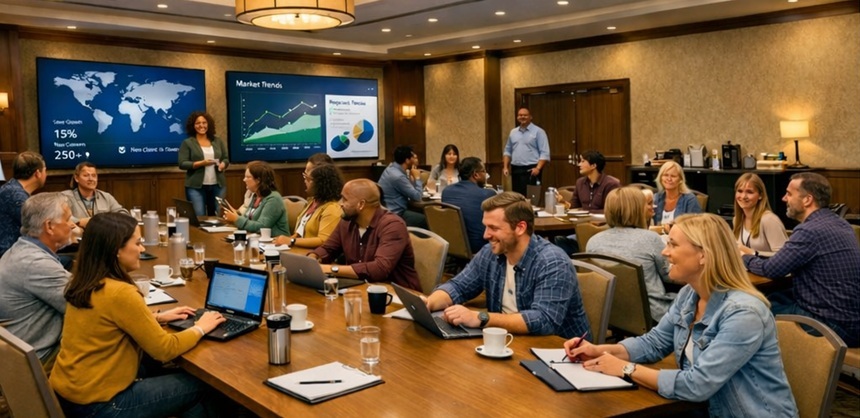
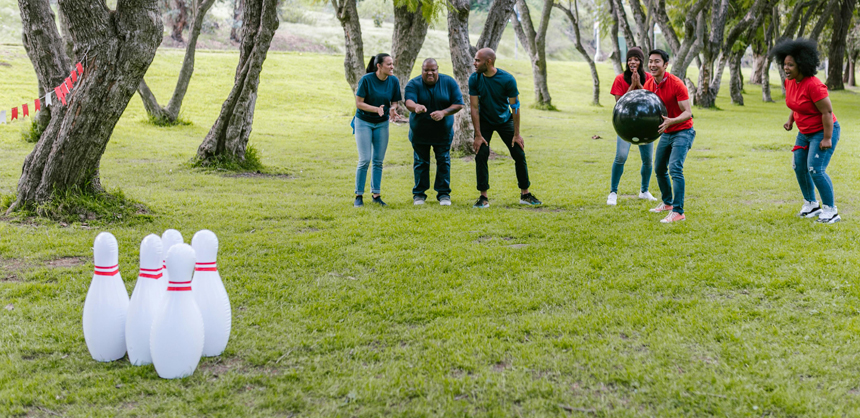
Corporate planners find it’s increasingly important to include fun and engaging activities to build teamwork and trust. Whether through CSR projects like building something for the community, working together to create a performance or engaging in icebreaker activities to get to know each other better, team building activities are essential to making a team run more smoothly.

Christine Goodman, a global project manager at ConferenceDirect, first became familiar with Base Camp, a children’s cancer foundation, when her son became afflicted with the disease that would take his life at 16 years old.

Despite the tragic outcome, she recalls the care Base Camp took to support the entire family.

In a full-circle moment, Goodman coordinated a corporate team-building activity for Siemens Energy, her employer during her son’s illness, benefiting the foundation based in Orlando, FL.

Goodman’s belief was the group of engineers attending the meeting would value a bonding experience directly benefiting children battling cancer. As it turns out, Goodman may have underestimated the effectiveness of the program building 20 bicycles.

“It wasn’t just a noble activity — it paid dividends in how people worked together,” she says.

Corporate Social Responsibility (CSR) projects like building bicycles for ailing kids or disadvantaged communities are a powerful way for corporate events to leave a positive impact on a destination.

As a bonus, for all of the good that the final products do for the recipients, the experience is just as stirring for the participants.

The laughter, smiles and hugs demonstrate the emotions and enjoyment attendees experience during CSR activities. Often, it’s these memories that last longer than the one-on-one appointments, happy hours and keynote speeches that comprise traditional corporate meeting agendas.

Creating Meaning

The combination of helping those in need and building connections with teammates makes such charitable team building among the most popular options offered by Wildly Different, an Orlando-based team-building company that led the bicycle-making at the Siemens Energy meeting.

“You’ve given up three days of your personal life. You want to feel like those three days meant something,” says Jane Schuliger, who runs operations for the company.

Wildly Different is among many organizations planners and DMCs can partner with for group activities across the country. Typically, the company will identify a local cause or unique exercise to help attendees unwind and gain a greater sense of appreciation for the meeting destination.

Schuliger’s official title is Chief Fun Officer, which gives a sense of Wildly Different’s approach to strengthening bonds.

Your group can be working to benefit sick individuals, but the moment doesn’t need to be and shouldn’t be all serious work. The two hours away from the meeting rooms are a chance to meet new friends, strengthen existing relationships, test boundaries, and, most importantly, have a blast, says Schuliger.

Without the fun, there won’t be nearly the same impact, notes Tyler Kempf, creative director of Second City Works, a corporate team-building extension of the famed Chicago-based improv company. It has assisted Adobe, HubSpot, Facebook, Uber and other large corporations.

Having seen how quick-thinking and humor naturally forged ties between comedians, Second City has taken those same principles and applied them to companies seeking to enliven their workforce.

“There’s always a sense of play, and there’s always team building,” says Kempf. “We don’t even need to focus on team building. It’s inherent to the results of the program.”

A Wildly Different build-a-bike activity became a bonding moment for engineers at Siemens Energy.

A Wildly Different build-a-bike activity became a bonding moment for engineers at Siemens Energy.

Coming Together

In many regards, team building at corporate events is more important than ever.

While we are several years removed from the COVID pandemic, its after-effects are felt to this day. Isolation then heightened already existing societal issues. In 2023, the U.S. Surgeon General declared an epidemic of loneliness. In a different era, workers would congregate in the office, chitchat around the water cooler, and engage in post-work gatherings like happy hour or a team trip to a ballgame.

In today’s age, the corporate workplace is shaped by hybrid and/or virtual policies that have lasted through the pandemic and the effects of mergers and acquisitions.

The corporate workforce is seemingly struggling to adapt to today’s new world. While events aim to create a community among attendees to foster regular attendance, their own teams are likely struggling with associates and team members developing trust and friendship. According to the Pew Research Center, 53% of remote workers say working from home hurts their ability to stay connected.

Those who come into the office, if only a few times per week, often fall victim to the trap of working within silos, and thus, do not interact regularly between departments. Fewer than two in 10 of those who are only able to work onsite said they have been engaged at work, according to Gallup’s State of the Global Workplace report.

The drain is felt by employers and employees. A study from The Corel Company found 41% of employees have either quit or considered leaving their company due to poor teamwork. Meanwhile, Salesforce reports that 86% of organizational leaders say ineffective collaboration and communication is at the root of a company failure.

Sales kickoffs, internal meetings, training and other gatherings are rare opportunities to interact in-person. Corporations cannot afford to not make the most of the time together.

As important as a gathering’s primary objective is, it’s wise to dedicate at least one or two hours to a team-building activity. While the break may not seemingly align with the rest of the agenda, it could very well be the most productive stretch of the event.

“It’s not just about a moment — it’s about fostering community for the long term,” says Daniel Horgan, founder and CEO of CoLabL, which specializes in events for young professionals.

Workers are inclined to capture that missing chemistry and notice the pitfalls of separate workplaces. A study from Resume Builder found that one in four remote employees say working remotely has led to a decline in their social skills.

These are more than just numbers for the staff at Wildly Different, which has seen the challenges firsthand. “We’re just finding that a lot of people are disconnected in the workplace,” says Schuliger. “When they’re coming in for a meeting, it’s so important to be face to face.”

Child’s Play

Like a school dance, there are likely to be quite a few wallflowers upon entering a team building event, says Horgan, who has worked with some of the world’s largest brands, including LinkedIn, Pfizer, Apple, Starbucks, Deloitte, Cisco, Taco Bell and Gap Inc.

Horgan regularly partners with Fit City Adventures, a San Diego-based team-building company that supports events across the country. Among their most successful collaborations has been a multi-year partnership for professional development conferences for 350 Taco Bell Foundation “scholars.”

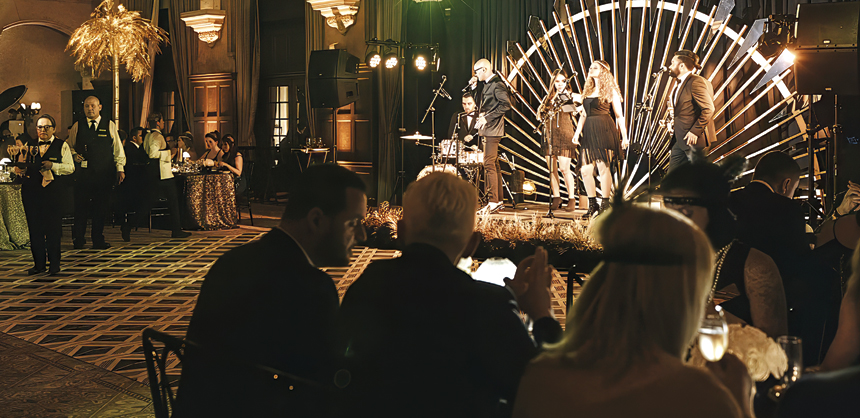
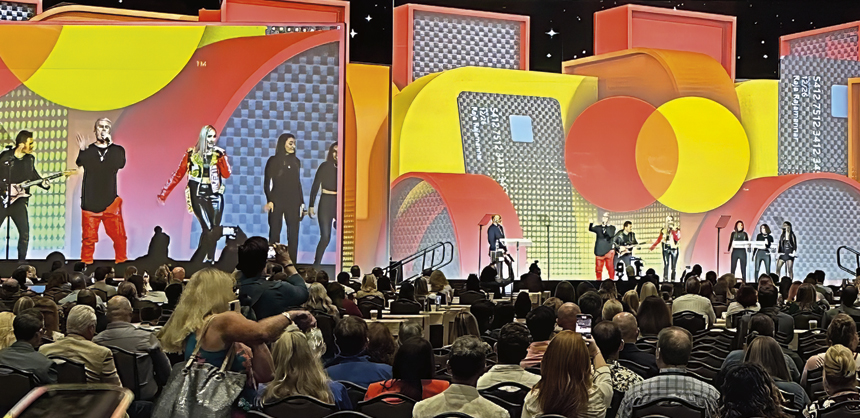
Fittingly for a younger crowd, popular activities have included graffiti art projects and DJ challenges, in which teams build a set and perform during a showcase.

The idea is to have so much fun, attendees are getting caught up in the team-building dynamics without even noticing it. Sparking multiple senses speeds engagement, Horgan finds.

“As soon as you walk into the room, the music is going, the lighting is set — you’re about to immerse yourself in the experience,” he says.

Survey results show the impact. Horgan says at last summer’s conference, 96.8% of attendees maintained at least one new connection post-conference more than 90 days later and 97% made progress on a personal or professional goal that they set at conference.

“These stats showcase the impact of creating engaging experiences rooted in creative expression, community building and growth opportunities,” he says.

Setting the right tone before diving into the primary team-building activity is key, agrees Schuliger. Wildly Different typically spends the first hour of a two-hour session breaking the ice, she says, adding that simple nostalgia-based games reveal personal connections naturally.

Second City likes to engage in fast-paced word games or having attendees either sit down or remain standing based on prompts from the facilitator, adds Kempf.

By sharing information in the games, team members are tearing down the walls blocking communication and collaboration, notes Kempf. “We are inviting people to be vulnerable with each other, and that’s where the real connection happens,” he says.

That initial breakthrough can lead to quick results. “At the beginning, they’re shy; but by the end, they’re cracking up, singing, totally relaxed with their team,” Schuliger says.

At the Taco Bell Foundation events, Horgan likes to host a team-building moment on the first night to set the stage for the rest of the program. “By doing that on the very first night, you set the example that this is a safe space,” he says.

On the event’s third day, Horgan holds another activity to elevate those new connections, emphasizing the importance of community.

The lesson applies to all corporate events. Savvy companies use the gatherings to create enthusiasm for the future and instill loyalty, both of which will translate into better productivity in the office.

That’s why Schuliger is such a fan of creating events for philanthropic causes like Base Camp. Two of Wildly Different’s most popular programs are “The Art of Giving,” where teams put together art kits for ailing children, and “The Red Wagon Brigade,” where participants build and decorate wagons before collecting toys that will be donated.

“It gives you more of an affinity for the company … you’re part of something bigger that this company is doing, and doing it together as a team,” says Schuliger.

Health and Wellness

Amid the isolation crisis in the country, it’s not surprising attendees are leaning into activities rooted in health and wellness. Fit City reports 82% of people consider wellness to be a top priority in their lives, which is spilling over into conferences. This also is a chance for team members to get to bond over shared activities and get to know each other better.

Events have long offered basics like morning 5K runs, yoga classes and spa treatments. Trying to keep the options from becoming stale, Fit City and other team-building organizations are seeking out new experiences.

“Choose Your Adventure Day” featuring hiking and biking opportunities is among the wellness trends that Fit City Adventures Chief Experience Officer Angela Minardi listed in a presentation at IMEX America.

Other breaks from the norm include puppy yoga, which enlivens the standard meditation, and group Tai Chi classes, often conducted in a scenic setting.

Horgan notes that he’s added a CSR element to puppy yoga to leave a greater lasting impression. “We partnered with a local shelter and made a donation; it became a full-circle moment,” he says.

Kempf points out improv is a powerful way to sharpen the mind and build trust. But he adds one two-hour class with Second City won’t cure all of a dysfunctional office’s ills.

“Improv is yoga for your social skills; you can’t go to one class and suddenly be a yogi,” he says.

The classic corporate golf or tennis tournaments remain popular options to get team members into the fresh air to have a good time and enjoy personal chats.

Pickleball has grown in popularity not as a sport, but as a corporate team-building opportunity. Beyond a class or conference tournament, planners can take groups to venues blending the game with F&B like Chicken N Pickle, a chain operating off a similar model as Topgolf, another regular team-building site.

Scavenger hunts and escape rooms are other activities that companies are likely to sign up for.

Schuliger says she will purposefully pair attendees from different departments together to spur interaction that has not been occurring in the workplace.

Seemingly insignificant, that small talk builds bridges that lead to collaboration. Schuliger says the following is the improved thought process: “Now I know the people in accounting … When I call them, they’re going to respond.”

Valuable Additions

Few would dispute the benefits of team-building exercises at events, but planners feeling a time and financial crunch may feel they have no choice but to stick to a by-the-books agenda.

Schuliger says she recently talked to a planner in that situation and their event suffered. “She says, ‘We didn’t do team building the last couple of years, and we’re getting pummeled in surveys.’”

She sympathizes with that planner, and suggests corporations should reconsider their priorities in an age when building bonds in the workplace is so challenging.

“They think the content is king,” Schuliger says. “But long term, we say the relationships you build during those two hours are king.”

Horgan agrees, adding that casual experiences can have outsized impact: “These activities might feel off-topic, but that energy is what people remember.”

Continuing, Horgan says: “Building community is key. Companies that focus only on transactions are the ones struggling.”

He concludes by predicting corporate events would do well to follow the lead of yogis who look inward to find peace. “Companies that stay focused on internal relationships are the ones that continue to innovate and succeed,” he says. C&IT

CIT-2026-02-FEATBetterTogetherA_147x147

Better Together

Photo courtesy of rawpixel.com

Photo courtesy of rawpixel.com

Riding in a cab into Manhattan, Sherry Huss got a call that would forever change The Freeman Company’s strategy for its annual leadership summit. On the other line was Ken Holsinger, the company’s senior vice president of industry research and insights, pitching his hometown of Boise, ID, as an ideal destination for a new style of retreat.

Rather than huddling in the woods or a posh resort, The Freeman Company transformed downtown Boise into its own summer camp in 2023, Camp Buck, complete with group songs, memorable storytelling and experiences worth writing home about.

The results were everything Huss, Freeman’s head of community, could ever dream for. But truth be told, Huss may cherish even more the memories of planning the event than the grand results.

In taking over the whole city, Huss relied upon her uncanny ability to nurture relationships and build connections. She and Holsinger walked the streets together, imagining Boise’s unique venues as hubs for their camp. Introductions to venue operators would open doors to speakers, students, community members and organizations that became integral to the entire experience.

The team at Visit Boise presented ideas and facilitated the logistics for the new-look summit, which attracted 263 Freeman members to the mountain town and set the standard for leadership conferences going forward.

“If the community gets involved in an event, it’s going to come out better,” Huss says. “That philosophy has helped me in everything I do.”

Here, we showcase how simple partnerships can have a big impact on events.

Understanding the audience is crucial to a successful event, such as this Victoria’s Secret event held by Distinct Event Planning.

Understanding the audience is crucial to a successful event, such as this Victoria’s Secret event held by Distinct Event Planning.

Partner Up

Lucretia Williams, president and CEO of Distinct Event Planning, LLC, has been a force in the Midwest events scene for 27 years. Her entrepreneurial spirit has made the Columbus, OH-based Williams a favorite of corporate groups like Victoria’s Secret, the NBA, Ohio Wealth and more.

Williams’ secret to maintaining a level of excellence across meetings is that she works with vendors she can trust — not just to provide quality F&B and amenities, but also to cater specifically to a group’s preferences.

For instance, a health care company is going to favor education over activations while other industries aim for a high-energy atmosphere.

“It’s very rare that I work an event where I don’t have a relationship with that vendor,” says Williams. “When I partner with those who I have relationships with, I know they care about my client just as much as I do.”

Among her favorites are Cameron Mitchell for catering; Bell Tree Productions for AV and ZenGenius for event design and activations.

“We collaborate together as one big family to produce an amazing event that the client would have never been able to do on their own,” says Williams.

Understanding the audience is crucial to a successful event, notes Williams. She had a fresh reminder of that principle recently when organizing The Women’s Business Enterprise National Council’s convention in Cleveland, OH, an event dedicated to women business owners like Williams. In the case of this event, the planner was also an attendee.

She leaned on partnerships with Mills James, a local AV company, and also local catering for the event at the Huntington Convention Center that also included an excursion to MGM Northfield Park for a music and gaming themed reception.

Williams is active in industry organizations, including MPI and previously the Industry Live Events Association, to build connections with partners. “Being members of those associations is very important; that’s where I start with building those relationships,” she says.

The Freeman Company coordinated with Visit Boise to create a summer camp atmosphere downtown for their Camp Buck event.

The Freeman Company coordinated with Visit Boise to create a summer camp atmosphere downtown for their Camp Buck event.

Taking Over Boise

Back in Boise, Huss likens each visit of her tour to peeling back an onion until she reaches the core principle of Camp Buck.

The city may not have the biggest convention center in the United States, nor are its hotels anywhere near as large as the skyscrapers in the Big Apple. But there’s an experience to be had by embracing Boise’s vibe, which Huss compares favorably to Austin, TX with its vibrant businesses and community members.

“Why don’t we treat this as a downtown campus?” asked Huss, noting event professionals like those at Freeman are used to walking a lot at a meeting, just in a convention center or hotel.

So rather than saving Boise’s unique venues for an off-site excursion, Huss flipped the script and went exclusively with important sites within the city.

Naturally, the journey starts with a nod to another food that needs peeling: The potato. Named after Jack Simplot, the famed “old farmer” who concentrated on the spud, Jack’s Urban Meeting Place — or JUMP — takes what could have been a tractor museum and transforms it into an interactive creative center and community gathering place.

Huss jumped at the idea of taking over the five-story venue that mixes indoor and outdoor gathering space. It became the home for breakout sessions, happy hours and the closing reception in a variety of large, open meeting spaces. The five-story Spiral Slide only added to the summer camp feel.

From there, the blueprint was in place to create a truly citywide event. Notable venues and experiences included:

  • Basque Block – a Spanish-inspired street where attendees enjoyed dancing and paella during the opening night party. Freeman’s staff was able to explore The Basque Museum & Cultural Center at their leisure.
  • The Egyptian Theatre – a historic home to music and opera performances that was transformed into the general session stage. Attendees snacked on popcorn and candy just like they would do as kids.
  • Treefort Music Hall – which annually hosts a popular music festival, was fittingly used for an after-hours event complete with musical performances. The venue has several bars and lounge spaces, as well as an arcade.

Attendees feasted at local F&B venues, including Warehouse Food Hall, where they got a gift card to pick their own meals, and three other notable restaurants. Freeman leadership hopped from restaurant to restaurant to mingle with the staff, notes Huss.

“Freeman’s event was a game changer for Boise,” says Andrew Heidt, vice president of sales at Visit Boise. “While we’ve certainly seen events utilize various venues around the city, Freeman took it to the next level by seamlessly integrating all that Boise has to offer — from its truly walkable downtown, inspiring venues to the vibrant local culture.”

The Exhibitionists band performed after hours at The Tree Fort Music Hall in Boise during the Camp Buck event.

The Exhibitionists band performed after hours at The Tree Fort Music Hall in Boise during the Camp Buck event.

Making Connections

The emotional backdrop of Camp Buck can’t be overstated. Freeman, one of the event industry’s top general service contractors, felt the effects of the pandemic internally and from the hit the industry took as a whole.

With the pandemic ebbing in 2023, there was a need to connect in meaningful ways — a yearning that has hardly diminished since, with remote work, older workforce retirements and corporate restructuring, including layoffs and downsizing.

Organizations like Freeman may only have a few opportunities per year to gather in-person. Huss, as head of community, knows better than most how important it is to take advantage of such opportunities. Sitting around a boardroom or in a meeting space can’t build the same type of camaraderie as, say, huddling over a campfire.

It’s incumbent on planners to create environments that naturally provoke conversations, goal-setting and teamwork. Huss may be a veteran planner but knows she can’t do it alone.

That hands-on attention from Visit Boise, as well as the connections that the CVB made on Freeman’s behalf, helped Huss accomplish her goals to motivate, integrate and inspire attendees.

A mix of alternative formats, thoughtful networking and balanced content programming brought the event’s storytelling theme to life.

Activities included a downtown scavenger hunt created by Feed First Events, yoga and hiking opportunities, typewriter poetry and create-your-own screen-printed T-shirts led by Brigade Screen Printing & Embroidery.

“I would do anything for Visit Boise,” says Huss. “They definitely care about their city. We’re still able to grow together, and that doesn’t happen enough in our industry.”

Arguably the highlight of the three days came when no less than 56 team members participated in a garage band concert where Freeman’s leaders showed off their outside-of-work talent. The willingness to share a different side of their lives is a testament to the effectiveness of the summit.

Freeman’s post-event survey results reveal:

  • 99% of attendees (a healthy mix of long-term employees and those with Freeman for less than 10 years) left the event with a strong sense of excitement to be a part of the company, reflecting a shared sentiment of inclusivity
  • 97% of attendees left optimistic about the direction of Freeman
  • 90% of sessions had a positive sentiment rating of 50 or higher
  • 60% agreed that the alternative event venue contributed to a positive Camp Buck experience, and 74% said the same about session content.
Richmond Region Tourism has a hands-on approach when highlighting the benefits of Richmond, VA. Photo courtesy of f11phot

Richmond Region Tourism has a hands-on approach when highlighting the benefits of Richmond, VA. Photo courtesy of f11phot

Moving into the Motor City

A proactive CVB can introduce a planner and subsequently, his or her organization, to a region they’ve never visited before and provide an authentic experience to attract repeat visits.

For instance, Visit Detroit made for a smooth transition from Las Vegas to the Motor City for Siemens’ Realize LIVE event over the summer, says David Taylor, the software company’s vice president of industry strategy, marketing and global execution.

Detroit, MI’s location in the Midwest made it appealing for the users and companies that rely on Siemens’ software for everything from phones to planes and even race cars. Attendance grew about 30% from the previous year to 3,000 participants. Taylor expects a similar increase when the event returns next year for the second of its two-year contractual agreement.

Visit Detroit’s team helped guide Siemens on the right hotels, venues and experiences to make Realize LIVE feel like a top-tier tech event, Taylor says. Properties included The Detroit Foundation Hotel, Detroit Marriott at the Renaissance Center and The Courtyard by Marriott Detroit Downtown, all of which are close to Huntington Place, Detroit’s convention center.

Recommendations for off-site venues include:

  • Social Brews for the employee party after Realize LIVE
  • The Apparatus Room (inside Detroit Foundation Hotel) for group dinners and both the VIP Advocacy reception and Mendix’s social gatherings
  • Union Assembly for group dinners
  • The Yard at Corktown for a sales workshop dinner and for the global events team’s gathering
  • Detroit Tigers Suite, which was hosted by Visit Detroit as part of the Realize LIVE workshop
  • Museum District, Midtown for VIP and spousal activities, including tours, wine tasting and workshops

“It’s the knowledge of everything going on in Detroit that’s there for you to take advantage of,” Taylor says of the CVB’s value. “I live in the Detroit area. I know the great places for my wife and I to go for a meal, but I don’t know the great places to take 100 people.”

The timing also worked out that Siemens incorporated the 2025 Chevrolet Detroit Grand Prix, an Indy Car race featuring teams (Penske and Andretti) sporting vehicles powered by the company’s technology, into the event.

“It was a well-oiled machine,” Taylor says of the event.

Southern Hospitality

The Midwest is not alone in making attendees and planners feel welcome. Just ask the team at Richmond Region Tourism. Richmond, VA, is among the country’s most historic state capitals, let alone cities. Yet Clymer Berry, executive vice president of the International Motorcoach Group, hadn’t experienced it firsthand until planning the organization’s strategic alliance meeting for 300 tour operators and industry vendors and suppliers.

About a 90-minute drive from Washington, D.C., and a little over four hours from Charlotte, Richmond is a promising location for tourism entrepreneurs. IMG has members in the Mid-Atlantic region, adding to the appeal.

Sensing the opportunity to increase exposure and visitation via travel companies, Richmond Region Tourism, as the CVB is known, successfully placed a bid on the summer 2025 event.

Due to the event’s relatively small size, IMG prefers second-tier destinations so attendees can get a true sense of the city without feeling overwhelmed. Berry was impressed by the Richmond CVB’s hand’s-on approach on the site visit that extended to the conference itself.

Because the attendees create tour packages, it’s important that the annual gathering highlights the entire destination and not just the host hotel, Berry says. To that end, there are four off-site events, including a tailgate luncheon with buses parked in and around the party. The Westin Richmond served as the host hotel.

Attendees got a taste of Richmond during an evening reception at the Virginia Museum of History and Culture, a setting that provided historical context to attendees. As per the RFP, the CVB sponsored the reception, which served a variety of Southern-style dishes.

Berry cites a custom luggage tag collaboration and assistance creating a custom wine-pairing dinner as two other noteworthy collaborations with the CVB.

“We do these meetings every year and that was probably one of the biggest hits I’ve ever seen,” Berry said of the customized luggage tags. “People were looking for leftovers. If there’s a giveaway and people are really looking for it afterwards, that says something.” C&IT

CIT-2026-02-FEATBuilt4BelongingA_147x147

Built for Belonging

An important factor in meeting planning is ensuring accessibility. Photo courtesy of Photographee.eu

An important factor in meeting planning is ensuring accessibility. Photo courtesy of photographee.eu

Even in the often-exclusive world of corporate and incentive meetings, inclusivity is a vital element of a positive event experience. After all, regardless of what it means to be inclusive, what could be more important than making every attendee feel valued at your next meeting?

We reached out to a quartet of event experts on the value of inclusive event design — and a variety of ways to make sure your next event is welcoming, accessible and brings every guest into the fold.

Building Inclusivity Through Human-Centered Design

For David Stevens, co-founder of Olympian Meeting, inclusivity isn’t a surface gesture but at the very core of event design. “Inclusivity is not a checkbox; it is the foundation for genuine human connection, a.k.a. Social Health,” he says. “I view it through the lens of wellness across physical, mental, social and environmental dimensions. When people feel safe, rested, nourished and acknowledged, they engage more fully.” His approach begins with respecting human needs — movement, meals and meaning — so that every participant has the chance to perform at their best.

Stevens emphasizes that inclusivity begins with the basics, saying, “If a venue ignores air quality, light, sound or movement, you have already left part of your audience behind.”

His priorities include natural light, quiet sleeping rooms, nutrient-dense food and schedules that allow for recovery rather than endurance. Language and imagery must reflect belonging, not be token gestures. Accessibility goes far beyond ramps and entryways. “It includes energy access, sensory comfort and giving everyone what they need to thrive. We also only bring in certified and credentialed partners to ensure every activity is available to everybody,” he says.

For Stevens, inclusivity is inseparable from business outcomes. He says, “The evidence is clear: people perform better when they feel well and welcome. Wellness and inclusivity are not expenses; they are performance drivers.” He positions them as investments that enhance focus, creativity and retention — directly aligning with executive goals. “A brand that supports human well-being builds trust and loyalty faster than one that only markets it. There’s even an Oxford study to prove it.”

He also recalls a leadership summit where inclusivity reshaped the experience. “We replaced the late-night networking drinks with a morning mindfulness run followed by a recovery breakfast. Participation exceeded expectations, and surveys showed higher energy on day two and stronger post-event collaboration. Moving together without hierarchy dissolved barriers more effectively than any structured team-building activity,” he says. For him, inclusivity is not abstract — it is measurable in energy, cohesion and outcomes.

His guidance to other planners is straightforward yet profound: “Start with biology, not branding. Everyone eats, breathes and needs rest. When events are designed around shared human rhythms, instead of rigid schedules, authentic connection happens naturally.” He encourages small rituals — mindful pauses, group movement, locally sourced nourishment — that allow people to stop performing and start belonging. “Real inclusivity happens when we remove the barriers that prevent people from being human,” he says.

From Stevens’ viewpoint, inclusivity is not about checking boxes but about designing events that honor the rhythms and needs of the human body. By centering wellness, accessibility and authentic connection, he illustrates how inclusive design can dissolve barriers, strengthen collaboration and drive both personal and organizational success.

Curating Luxury Experiences That Include Everyone

Amanda Hietter, CEO and founder of Across the Horizon Travel, also believes inclusivity is the foundation of meaningful event design. “To me, inclusivity means creating experiences where everyone feels seen, valued and able to fully participate, no matter their background, physical abilities or personal preferences. When I curate a retreat or group experience, my goal is to make every attendee feel like the itinerary was designed with them in mind,” she says.

An excellent event, she explains, is not measured by perfect planning or luxury lodgings alone. “Success isn’t just about flawless logistics or five-star accommodations; it’s about connection. If attendees leave feeling transformed, inspired and cared for in ways that honor their individuality, that’s true success. Inclusivity is woven into that; it’s what turns a luxury event into a meaningful, human experience.”

Hietter believes inclusivity begins long before the event itself. “Representation starts at the planning table. When I collaborate with coaches, corporations or retreat leaders, I intentionally recommend speakers, facilitators and vendors who bring different perspectives, cultural backgrounds and lived experiences,” she says.

Programming should embrace diversity in tangible ways, says Hietter, who adds, “I also encourage my clients to design programming that celebrates diversity, whether that means highlighting global influences in the cuisine, including wellness practices from different traditions or partnering with local businesses in the destinations we visit.”

For her, luxury is not about exclusivity but about thoughtful curation. “Luxury doesn’t mean exclusive; it means thoughtfully curated,” she says. “The best events feel rich in both experience and perspective.”

When it comes to venue selection, Hietter is clear: “Accessibility is non-negotiable. When sourcing venues, I make sure they meet ADA standards, offer mobility-friendly rooms and restrooms, and have transportation options that accommodate wheelchairs or special mobility needs.”

Her strategy, though, goes beyond physical access. “Beyond physical access, I look for sensory-friendly spaces, quiet areas for rest or prayer and technology that supports visual or hearing accessibility during sessions. I believe everyone deserves to experience the same level of comfort, ease and inclusion, especially in luxury travel settings,” she explains.

Inclusivity also extends into dining practices. “Every group I design for receives a detailed intake form before travel that allows me to learn about their dietary preferences, food allergies and cultural or religious considerations. I then work closely with chefs, caterers and resort staff to ensure that every meal honors those needs without compromising quality or creativity.”

She takes equal care with cultural and religious observances: “When it comes to cultural and religious needs, I take time to understand prayer schedules, dress codes and traditions that should be respected. Whether it’s offering halal or kosher meals, scheduling around observances, or ensuring modesty-friendly options at wellness activities, my goal is to make sure each traveler feels comfortable, respected and celebrated,” she says.

Through her words, Hietter makes it transparent that inclusivity is not a throw-in but the locus of effective event design. By centering representation, accessibility and respect for cultural and personal needs, she aims to transform luxury travel into something deeper: a human-centered experience where every participant feels seen and valued.

Having someone on hand to do ASL or translate when needed is important. Photo courtesy of Credit: Михаил Решетников

Having someone on hand to do ASL or translate when needed is important. Photo courtesy of Credit: Михаил Решетников

Removing Barriers to Create Participation

For Rob Wilcox, founder & consultant of Rain Event Consulting, inclusive event design is about far more than compliance. “Inclusive event design, to me, means creating experiences where everyone, regardless of ability, background or identity, can participate, engage fully and do so comfortably and meaningfully. It’s not about checking a compliance box; it’s about intentionally removing barriers and creating a sense of belonging, where no one feels ‘othered,’” he says.

Success, he explains, is gauged through participation and return. “When people show up, feel valued, actively contribute and come back, you’re doing something right,” he says. “To quantify this, start defining what success looks like early in your event planning process. Understand your audience demographics, identify potential barriers and set measurable inclusion goals. Then implement strategy, design and technology to deliver against them.”

Indicators such as accessibility usage, participation rates, survey feedback and retention all help confirm whether participants truly felt connected and included.

Wilcox stresses that inclusion must be embedded from the very beginning, saying, “Early in your event planning process, define what inclusion looks like and how it will be measured. Inclusion can’t just be added later; it has to guide the direction from the start.”

Aligning stakeholders on goals, identifying barriers and setting desired outcomes are essential first steps. He also views each event as a learning opportunity. “Because planning can often overlap with execution, use each live event as a real-time audit. Observe who participates, who doesn’t and why. Capture accessibility feedback onsite and through post-event surveys. Those insights can become your blueprint for making the next event more inclusive and measurable,” he says. For him, inclusive design begins with intent but succeeds through planning, measurement and iteration.

Accessibility, Wilcox insists, must be worked into every event choice. “Accessibility should be part of the design from the start; remember, it can’t just be added later. Begin by understanding who will attend and what barriers might limit their experience. Use this as a filter when making decisions throughout your planning,” he says.

He breaks accessibility into three dimensions:

  • Physical: Beyond selecting venues that are ADA compliant, look for spaces with intuitive navigation, flexible layouts, clear sightlines and good acoustics. For instance, spaces that generate overwhelming echoes and noise can overstimulate attendees with sensory sensitivities. If unavoidable, consider providing an alternative route to the meeting space or offering complimentary valet parking for those who choose to drive.
  • Digital: Because digital channels enable the most personalized experiences, they should meet at least WCAG 2.1 accessibility standards. By applying these standards across all touchpoints, such as registration sites, event apps and presentations (both in-person and virtual), and utilizing tools that provide captioning, translation and screen reader compatibility, you can help make your content both accessible and inclusive.
  • Sensory: Everyone processes sensory input differently. Specifically, for neurodivergent attendees, unfiltered sights, sounds or smells can be overwhelming or even painful. Whenever possible, work to reduce overstimulation by using soft lighting, minimizing background noise and offering places of respite. If parts of the event involve bright lights, amplified sound or immersive technology, clearly communicate this information in advance. Thoughtful sensory design and transparent communication allow every participant to engage comfortably and on their own terms.

Wilcox’s perspective makes it clear that inclusive design is both intentional and practical. It begins with defining success, continues with embedding accessibility into every choice and culminates in measurable outcomes that confirm participants felt valued.

Designing Events Where Everyone Belongs

Joan Eisenstodt, who had more than 50 years of experience as a consultant in the meetings industry before her retirement, emphasizes that the language of inclusion is shifting. “Belonging has replaced diversity, equity and inclusion in terms used to convey those concepts. For those attending, for the first or even fifth time, a corporate meeting, there are still unknowns of how we will fit in regardless of our good work, title or hierarchy,” she says.

She reminds us that many know the discomfort of not belonging when faced with vague instructions. “We interpret, without specifics stated, illustrated or by asking for examples for terms used to describe meeting or event attire: Business? Casual? Business casual? Resort? Resort casual? Black tie optional? Interpretation and meaning differ by industry, company, location or setting; by country culture and gender; by type of event,” she says.

For Eisenstodt, this is not a trivial matter. “What meeting professionals and events can do to help others not make assumptions and ensure a sense of belonging is increasing participation,” she explains.

She insists that inclusion must begin at the earliest stages, saying, “Consider how you plan beginning with the RFP/RFQ and research the culture of the destination or area, the venue and any off-site venues at which events will be held. How does their marketing, staffing and knowledge reflect the culture of the meeting, and its owners and sponsors? Be conscious of scrutinizing and asking about their staffing, facilities and how staff are trained to work with people unlike them.”

Language access is also a part of this. “Learn how many people in the destination and on property speak other languages and which ones, including ASL or other sign languages,” she says. Even health considerations matter. “Given that respiratory illnesses are still spreading, include ‘medical mask wearing is welcome. We encourage acceptance of those who choose to do so.’”

Eisenstodt underscores that disabilities may not be announced but are always present: “There will be people with disabilities at your event. They may not disclose them and yet they exist: those who wear hearing aids for whom loud music interferes with conversation, those who have arthritis or need to or have had knees or hips replaced, those with long COVID or those with chemical sensitivities who, when entering a specifically scented venue, need to grab their EpiPen to avoid a serious, fatal reaction.”

Accessibility, she emphasizes, must be explored in detail. “Determine how accessible and accommodating the destination is, including transportation and whether mobility aids can be transported to and from airports, activities and if the venues are sufficiently easy to navigate,” she says. Even décor and sound systems matter. “If using centerpieces, those too tall or wide block views. Music that is so loud conversations become impossible is another impediment to a sense of belonging.”

Menus, stages and outdoor settings all require consideration. Eisenstodt advises, “Choose menus and learn the preparation and serving protocols to ensure safety. Provide stair rails to stages and always ensure an ADA-approved size-, placement- and incline-appropriate ramp to the stage. You never know when your CEO or guest speaker may have an accident just before travel and need the use of a mobility aid to participate.”

She adds, “Consider disabilities and whether all attending can be outdoors at the times planned. For some with autoimmune illnesses or conditions, or on certain medications, being in bright sun is not permitted. A beach event in the evening? Can wheelchairs or mobility scooters access it? Will hearing aids, many dependent on Bluetooth technology, work? Will the blind participant who attends alone and does not know others have someone describe the scenery and assist, if desired, with navigating spaces? Will guide dogs be permitted anywhere at the property or when using transportation?”

Her plea is straightforward: “No eye-rolling please. It is not about being PC or woke — it is about event professionals ensuring a sense of comfort for interaction.” She warns that when someone is “the only one,” they feel spotlighted and singled out. Activities must be designed inclusively. “If spouses, partners or any ‘plus ones’ are included, ensure the activities are designed for all for participation,” she says.

Eisenstodt says it is important to consider the role of the C-suite staff in welcoming others. Assess how to include those who have religious restrictions, such as the inability to drink alcohol, or other cultural issues, such as speaking English as a second language. This applies also to sexual orientation and gender identity. Those who are transgender, for example, might not feel as comfortable with those they have not met. Ask individuals what will make them feel part of the group. Listen and implement their advice.

Finally, Eisenstodt says that company protocols shape behavior. She explains, “Every company has protocols by which they operate. They include the ethical behaviors for the meeting or event: alcohol consumption — if one is driving themselves to and from the event, what is acceptable and what may bring personal or reputational harm; use of legal drugs during the event; the order in which people are seated; the accessibility to CEOs or Board presidents, and whether discussing office or company gossip is appropriate.”

Eisenstodt’s decades of experience distill into one essential truth: belonging is not achieved through slogans but through meticulous, empathetic planning. At the end of the meeting day, while inclusivity may mean different things to various groups and planners, it is clearly an essential element of a truly successful event. C&IT

CIT-2026-02-DEST-CaliforniaA_147x147A

California

California is a great choice for meetings and events with its variety of venues, diverse landscapes and ideal weather.

California is a great choice for meetings and events with its variety of venues, diverse landscapes and ideal weather.

When it comes to convention and incentive destinations, can any U.S. state boast a more diverse allure than California?  Sun shines for most of the year and weather extremes are rarely tested.  Small cities and large beckon planners. Pre- and post-conference attractions are many and varied.

Anaheim

Anaheim is one of the nation’s top meeting destinations, anchored by the Disneyland Resort, which is celebrating its 70th anniversary through summer 2026. The resort is entering a new era of growth with DisneylandForward, a long-term, city-approved development framework that allows Disney to thoughtfully evolve and expand its Anaheim footprint over the coming decades.

More than a single project, DisneylandForward provides the flexibility to introduce new attractions, immersive experiences, hotels and entertainment offerings, while also delivering meaningful public benefits. The plan includes major investments in parking, pedestrian connectivity and transportation infrastructure, helping to ease longstanding congestion around the resort area. For meeting planners, DisneylandForward represents sustained confidence in Anaheim’s future, signaling long-term growth in room inventory, experiential venues and off-site options that strengthen the destination’s ability to host large-scale, citywide conventions. Disney estimates a $1.9 billion investment over the next decade, including the addition of at least four new attractions at Disney California Adventure, further reinforcing Anaheim’s global appeal.

Momentum continues beyond the resort district with OCVIBE, a transformative entertainment and lifestyle district rising adjacent to the Honda Center. Designed as a walkable, mixed-use campus, OCVIBE will introduce chef-driven dining, live music venues, curated retail, public gathering spaces and year-round programming, with select components opening as early as 2027. For meeting planners, OCVIBE unlocks new possibilities for hosted receptions, sponsor activations, venue buyouts and post-conference nightlife, all within close proximity to Anaheim’s convention and hotel core.

As part of this broader vision, the Honda Center itself is undergoing a $1 billion renovation and modernization, aligning the arena with the OCVIBE district. Planned upgrades include enhanced premium and hospitality spaces, upgraded technology and expanded food-and-beverage offerings. Once complete, the reimagined venue will serve as a high-impact option for general sessions, opening-night events, concerts and large-scale receptions, seamlessly integrated into a larger district designed for pre- and post-event experiences.

Anaheim’s OCVIBE, currently under construction, is a lifestyle and entertainment district that will be perfect for events.

Anaheim’s OCVIBE, currently under construction, is a lifestyle and entertainment district that will be perfect for events.

Looking ahead, Anaheim’s evolution continues east of the Anaheim Convention Center with Katella Gateway, a proposed mixed-use development designed to further densify and energize the city’s meetings corridor. Planned as a vertical, walkable campus, Katella Gateway would introduce a blend of new hotel accommodations, residential towers, dining, retail and public spaces along Katella Avenue, strengthening the connection between the convention center, resort area and surrounding neighborhoods. For planners, the project represents the next phase of Anaheim’s long-term strategy: increasing nearby room supply, expanding off-site venues and creating a more connected urban meetings environment that supports citywide events well into the future.

More recently, the 1,574-room Hilton Anaheim, one of the largest convention hotels on the West Coast, completed a multi-million-dollar, full-property renovation. Enhancements include fully reimagined guestrooms, refreshed meeting and ballroom spaces, new dining concepts and upgraded outdoor amenities. Located steps from the Anaheim Convention Center, the revitalized Hilton offers planners modernized inventory, improved flow and elevated onsite experiences that support both large conventions and high-end meetings seeking proximity and polish.

For its 400-attendee Annual Global Team Meeting last February, Edwards Lifesciences based its group at The Westin Anaheim Resort. Although the company headquarters are located just 12 miles away, employees come in from around this world for the meeting, and Anaheim’s central location allows for easy access from John Wayne Orange County Airport, 13 miles away, and Los Angeles International Airport (LAX), 35 miles north. Katrina Headle, specialist with Edwards Lifesciences, says the company’s event is on the cusp of requiring a convention center type space, but has been able to stay within the hotel environment to this point.

“The Westin Anaheim opened in 2021, so everything was still pristine — from the lobby, to the sleeping rooms, to the meeting space,” says Headle.  “It was simply an amazing property with an even more amazing staff. In addition, there are very few venues in Orange County that can accommodate a group this size with both sleeping rooms and meeting space.” With design hinting at Anaheim’s citrus history, the Westin is equipped with 47,542 sf of indoor/outdoor meeting and event space. Headle also connected with Visit Anaheim to assist with a team-building event, sourcing a local nonprofit that met the company’s criteria of a STEM-based activity.

“Our meeting coordinator was so polished and professional,” says Headle. “She thought of everything and was visible throughout the two-day meeting, from early morning to the evening. And the catering was perfect — the options, taste, presentation and service. We knew that our group of foodies would expect and enjoy all of the offerings. We would love to go back to the Westin for another event,” adds Headle.

Due to the size of the group, Edwards opted to use two of the dining options on the Westin property for large team dinners, including Fleming’s Prime Steakhouse & Wine Bar and Puesto. “If you do a restaurant buy-out, be early, very early, to check on things to ensure that your vision is being implemented while you still have time to make changes,” Headle suggests.

San Francisco is known for its unique attractions and venues. Photo courtesy of Mariusz Blach

San Francisco is known for its unique attractions and venues. Photo courtesy of Mariusz Blach

San Francisco

San Francisco is on the rebound, fueled by an AI boom and the steady return of office workers.

“California, and San Francisco specifically, is a tremendous location for us,” says Thomas Amaral, senior director and head of global event operations for Informa Connect. They pull in almost 30,000 attendees each spring for their game developer’s conference, utilizing more than 50 Bay Area hotels along with venues large and small across the city. “A good portion of our audience base is in California, but for those flying in, three major airports offer a lot of flight options, including direct flights from Europe and Asia.”

The event is centered around San Francisco’s Moscone Convention Center, and Amaral notes that the city’s walkability provides a huge advantage over other urban options. He also suggests leveraging neighboring venues like the Yerba Buena Center for the Arts, Yerba Buena Gardens and the 31,000-sf rooftop City View at Metreon to create a campus-like experience for a citywide. “This creates a natural intimacy for larger events of 20,000 to 50,000 people,” explains Amaral. “All types of areas can be leveraged — robust lobbies with natural light, below-ground halls, outdoor balconies, a park with cultural monuments, a gazebo and benches — with outdoor walkways connecting everything. A 10-minute journey on foot offers variety and excites the senses, avoiding arduous walks down never-ending foyers from one room to the next.”

For those looking to keep costs down, Amaral suggests reframing the agenda to allow an on-your-own lunch, or offer a single course meal instead of the three-course lunch, or schedule a coffee break rather than having it flowing continuously. “You could be faced with hard decisions,” says Amaral. “It’s important to know and compare costs with similar cities, and between facilities within the city, so you can answer questions about market rates from internal stakeholders, sponsors and others.”

Informa’s GDC Festival of Gaming at the Moscone Center in San Francisco brings in 30,000 attendees each spring.

Informa’s GDC Festival of Gaming at the Moscone Center in San Francisco brings in 30,000 attendees each spring.

Although Informa Connect uses a wide variety of hotels, there are new developments across the city worth highlighting. The Westin St. Francis on Union Square introduced two new outdoor event spaces, located on the exterior of the hotel’s historic Landmark Building. The hotel offers more than 56,000 sf of flexible space across more than 35 meeting rooms, blending historic grandeur with modern luxury.

Hyatt Regency San Francisco, located steps from the Embarcadero, continues to elevate meeting and event capabilities through customizable functionalities. The hotel features 72,000 sf of customizable venues, including the 11,125-sf Grand Ballroom, modern technology, picturesque waterfront views and a world-class culinary team, all just steps from the Financial District.

Last fall, the hotel proved an ideal setting for the University of California San Francisco, which hosted a two-day Continuing Medical Education Meeting for 525 attendees, focused on Management of the Hospitalized Patient. “San Francisco is our home,” says Dawn Bohlmann, senior conference manager at UCSF’s Office of Continuing Medical Education. “It only feels natural to bring our attendees from all over the world to us to teach to them in this amazing location.”

Bohlmann calls the Hyatt Regency a perfect fit for the university’s meeting: “We utilize the Grand Ballroom and the second-floor rooms (the Seacliff Level) for our breakout spaces, which provides an easy transition for the attendees from one floor to the next when we need to break out into small groups. The atrium also lends well to our group to use it as a function space for our reception as well, providing beautiful views of the bay.”

“The staff at the Hyatt Regency is exemplary and always provides premium level service for us when we host our meetings here,” adds Bohlmann. “They are, hands-down, my favorite team in San Francisco.”

San Jose McEnery Convention Center offers 520,000 sf of meeting and event space.

San Jose McEnery Convention Center offers 520,000 sf of meeting and event space.

San Jose

San Jose is home to Silicon Valley, the hub of global innovation and where more than 2,500 AI companies have blossomed in recent years, including NVIDIA, currently the most valuable company in the world, along with tech giants Alphabet (Google), Apple, and Microsoft, among others.

It’s only natural that San Jose is changing the landscape on how connections and meetings take place, creating San Jose One Connection, a collaborative contract for one group across multiple hotels and the San Jose McEnery Convention Center. Originally a partnership between the convention center and its connecting properties, the San Jose Marriott and Hilton San Jose, the program has expanded citywide. This simplified contract allows meeting planners to sign one document through a single destination contact for ease while sourcing spaces and sleeping rooms for the best available proposal.

Sacramento

California’s capital is an obvious pick for government gatherings, but it’s also an affordable location compared to most other cities in the state, according to Marcia Durst, CMP, owner, Durst Event Strategies, LLC. “It was a great fit even for our international attendees,” suggests Durst, regarding a 1,600-attendee software conference she handled last fall. “Some flew into San Francisco, and extended their stay there. Others flew to Sacramento via San Francisco International Airport.” A $1.3 billion expansion of Sacramento International Airport is slated to debut possibly as early as later this year.

For the software event, Durst based the group at the 505-room Hyatt Regency Sacramento and used the SAFE Credit Union Convention Center, which completed a major renovation and expansion in 2021. “It fit this group perfectly,” says Durst. “Access to the Hyatt ballroom is right across the street from the main entrance so it’s pretty seamless to expand by using both venues. The hotel also has one of the best event services teams I’ve worked with. They really buy into the success of your event by offering suggestions of how other groups have used the space.”

The hotel offers 27,000 sf of meeting space, including a 15,544-sf Regency Ballroom. Durst says part of the hotel’s appeal is the longevity of staff, across all departments. “That really says something to me about how management takes care of their team,” suggests Durst. “It shows in the way they interact with clients and guests. The whole process from booking to planning and execution felt very much like a partnership, rather than a strictly transactional relationship.”

Durst adds: “Having access to the Hyatt planner portal is really helpful for tracking real-time housing data. The event planning team uses Social Tables and you can collaborate on room sets. Sometimes, it’s just easier to make small adjustments yourself rather than writing up detailed directions for the changes you want.”

Just 4 miles from Los Angeles International Airport, Marina del Rey offers waterfront dining and recreation, as well as 100,000 sf of meeting and event space.

Just 4 miles from Los Angeles International Airport, Marina del Rey offers waterfront dining and recreation, as well as 100,000 sf of meeting and event space.

Marina del Rey

Although the L.A. Live complex in downtown Los Angeles has redefined meetings and events in the nation’s second largest city since its opening in 2012, the many smaller communities surrounding L.A. have carved out their own identities that provide options for meetings small and large.

Marina del Rey, for instance, sits immediately north of LAX, the region’s largest airport. The scenic waterfront destination offers a quiet luxury setting and relaxed atmosphere, exemplified by 304-room The Ritz-Carlton, Marina del Rey, which holds the distinction of being the closest Ritz-Carlton hotel to the water in the United States.

For Greenfly, developer of an AI-powered sports platform, Marina del Rey made sense for the company’s annual off-site meeting because one-third of its team lives in California. “It is the most cost-effective destination for us,” says Avelene Schodorf, Greenfly’s office manager.  “We had team members flying in from all over the world, including Hong Kong, the UK, Canada, Romania and Australia, and Marina del Rey is only five miles from LAX.”

Schodorf continues: “There are many hotels to choose from in the marina, but the 159-room Courtyard by Marriott Marina del Rey had enough rooms for our group and it was at a decent price point.  We held all our meetings inside the hotel’s conference room, which had a great sound system and a large projector screen that suited all our tech needs.”  The only caveat Schodorf had with the conference room was that it lacked windows.

Long Beach

Jennifer R. Saliba, founder & president of Rhino Consulting, chose the 376-room Marriott Long Beach Downtown for a 200-attendee annual professional educational conference, the Southern California Treasury Summit, held at the end of last year. “Long Beach was clean, easy to navigate and genuinely walkable, which made a big difference for attendees moving between the hotel, sessions and downtown dining,” explains Saliba. “Being located close to the freeway made arrivals and departures seamless, and the waterfront setting and access to outdoor recreation created a relaxed, energizing atmosphere that was perfect for sponsor-hosted events and informal networking. Within just a few blocks, you could find an incredibly diverse mix of restaurants, from casual local favorites to more elevated dining, which really showcased California’s vibrant food scene. It felt like a destination where business and experience naturally blended.”

The city’s strategic location worked well, centralized between the region’s key business hubs, with multiple nearby airports making it convenient for out-of-state attendees. “From a planning perspective, the combination of accessibility, strong hotel amenities and a well-rounded destination helped deliver value without feeling overextended,” adds Saliba. The hotel has 24,505 sf total meeting space, including the 7,480-sf Bixby Ballroom. “Having everything under one roof simplified logistics and created a more cohesive experience for attendees. It allowed for smoother transitions between sessions, networking and breaks, and reduced the need for transportation or complex wayfinding that can sometimes come with larger convention facilities.”

Saliba says the Marriott felt like the right fit right from the beginning. “It had a high-end feel without being stuffy, and the modern design immediately set the tone we wanted for the conference,” notes Saliba. “This is a hotel that genuinely makes a planner’s job easier. The layout is intuitive, the lobby bar and food options are fantastic, and the staff, from sales and AV to catering and onsite operations, is outstanding. Communication is clear, execution is seamless, and the menu options are both creative and reliable. This is a hotel that knows how to support meetings at a high level.”

Twenty-two stories up, City Sights at Altitude Sky Lounge is a rooftop indoor/ outdoor venue that overlooks San Diego.

Twenty-two stories up, City Sights at Altitude Sky Lounge is a rooftop indoor/ outdoor venue that overlooks San Diego.

San Diego

Esri, a global market leader in geographic information system (GIS) software, has held its annual user’s conference at the Hilton San Diego Bayfront since 2009, just after the hotel first opened. “It’s the hotel facility, the people that work the convention center — which we use every square inch of — and the flexibility we have within those spaces, that has made our partnership with the Hilton and San Diego stand out,” explains Michele Cole, Esri’s head of global event and experience marketing.

The citywide draws 20,000 attendees and involved room blocks at a total of 52 hotels for the most recent gathering, last summer. In addition to the 1,190-room Hilton, Esri particularly leans on two other hotels adjoining the San Diego Convention Center: the 1,366-room Marriott Marquis San Diego Marina and the 1,628-room Manchester Grand Hyatt San Diego. “I’ve got three big, solid hotels right there,” explains Cole, who runs 30 conferences and 200 trade shows globally. “In other cities they don’t always function as well. Here, they have this continuous flow.”

Esri partners closely with both the convention center and the San Diego Tourism Authority, and is currently contracted through 2031. “Across the board, between the hotels, the convention center, the tourism and hospitality sector, and the unions, San Diego is the best I see in the country,” says Cole. “I ask for everything, but no ask is too hard — if they can’t do it, we figure it out. I think they’re amazing.”

Cole says meetings are not treated as an afterthought at the Hilton San Diego Bayfront. “It’s not a transient hotel. It was designed for large meetings,” adds Cole. “Each ballroom comes with its own foyers and amazing space, and the hotel pool is available for buyout opportunities. There are amazing branding opportunities throughout the hotel, and you can do six different events simultaneously, which I do. The hotel was designed for flow, but the spaces are separated enough that you can keep them distinct.”

“For me, San Diego really comes together as a unified destination to support their meeting and convention business,” Cole concludes.

With its great weather and endless options, California continues to be a great option for planners, no matter the size of the event. C&IT

FeldmanJames-147x147

Personalizing Attendee Experiences Without Cloning Yourself

FeldmanJames-110x140James D. Feldman, CSP, CITE, is a Certified Speaking Professional specializing in AI implementation for hospitality, tourism and MICE industries. He writes monthly columns for Corporate & Incentive Travel Magazine and other Coastal Communications’ magazines, and publishes the AI Sauce Newsletter for entrepreneurs.

I have a philosophy that AI is like A1 sauce — a little enhances everything; too much ruins the dish.

Let’s tackle the biggest challenge facing incentive planners: how to create personalized experiences for hundreds of attendees when you’re not actually there.

You know the dream. Every attendee gets exactly what they need, exactly when they need it. The vegetarian doesn’t get offered the steakhouse. The early riser gets the sunrise hike notification. The spa enthusiast sees the massage special before anyone else.

The nightmare? Trying to do this manually for 300 people across multiple properties. There’s good news, though: Technology has caught up to your ambitions.

The Personalization Paradox

Here’s what keeps you up at night:

  • Your client’s CEO wants “memorable, personalized experiences” for top performers.
  • Their CFO wants “scalable, measurable results.”
  • The attendees want “frictionless, mobile-first convenience.”

Oh, and you need to deliver all three while managing 12 other programs.

The old playbook — great properties, unique activities, welcome gifts — still works if your competitors are doing the same thing. They’re not anymore.

What Actually Works:
The Pre-Stay Power Play

The best incentive programs start personalizing before anyone boards a plane. Registration isn’t just about dietary restrictions anymore. Modern platforms let you gather preferences that matter — travel style, social preferences, activity interests and work patterns.

Tools like Cvent and Certain build this intelligence directly into registration flows. The data feeds everything that happens next.

Smart Room Assignments

Your quiet, reflective high achievers probably don’t want rooms next to the pool bar. The networking butterflies do.

Property Management Systems like Mews now integrate with CRM platforms like Salesforce. Upload your attendee data, set parameters and let the system suggest room blocks matching personality profiles to property layouts. One planner told me this reduced “Can I change rooms?” requests by 60%.

The On-Property Experience: Tech That Feels Human

Once attendees arrive, personalization gets real. Technology stops being impressive and starts being invisible — exactly what you want.

Dynamic Communication

Nobody wants 17 group emails. Everyone wants information relevant to them.

Platforms like Akia and Canary let you segment messages by interest or activity signup. Spa bookers get wellness tips. Golf enthusiasts get course conditions. Late arrivals get modified welcome information.

Mobile-First Everything

Your attendees are already on their phones. Meet them there. Digital room keys eliminate check-in lines. (63% of attendees prefer them, according to Hilton’s 2025 Trends Report). QR-code ordering eliminates waiting for poolside service. Digital concierge eliminates the need to hunt for the front desk phone. Mews reports that one in eight attendees choose online check-in when offered. For incentive groups where every minute counts? That’s 60 people not standing in your welcome reception line.

AI That Handles the Boring Stuff

DialogShift resolved 97% of attendee queries for Hotel Oderberger. Think about what that means for your onsite team. Questions like “What time is the welcome reception? Where’s the gym? What’s the WI-FI password?” are answered instantly, in any language, freeing your team to handle actual problems and create actual moments.

The Upsell Opportunity Nobody Talks About

Here’s where it gets interesting for your budget: Personalized technology doesn’t just improve experience — it generates revenue, offsetting program costs.

Oaky increased upsell revenue at The Old Stocks Inn by 400% through automated, personalized offers: room upgrades for attendees with status; spa packages for wellness enthusiasts; private dining for couples; activity add-ons based on registration preferences.

The key? Timing and relevance. Nobody wants spam. Everyone wants a great offer at the right moment.

Your 90-Day Implementation Plan

Your program launches in 6 months. Here’s your roadmap:

  • 90 Days Out: Integrate registration platform with property PMS and CRM. Build attendee profiles beyond dietary restrictions.
  • 60 Days Out: Pre-assign rooms using profile data. Build a mobile-first communications plan.
  • 30 Days Out: Deploy pre-stay preference confirmation. Enable online check-in options.
  • On Property: Monitor real-time feedback. Track engagement with personalized offers. Adjust communications based on behavior.
  • Post-Event: Analyze preference data versus participation. Measure upsell conversion. Identify patterns for the next program.

The Integration Reality Check

The tech is ready. Integration is still the challenge. Most properties have a PMS, many have a CRM, and some have messaging platforms. Few have them talking to each other properly.

Your site selection process needs to evolve. Don’t just ask about square footage and AV. Ask: “What’s your PMS and what does it integrate with? Can you accept pre-event data feeds? What mobile-first attendee services do you offer?”

Properties that can’t answer aren’t bad properties. They’re just not ready for personalization at scale.

The Human Element

AI technology enables personalization. It doesn’t create it. Your onsite team still matters more than any app. Technology handles information delivery so your team can focus on experience delivery.

When systems already know dietary restrictions, your team looks brilliant. When early risers get automated sunrise activity notifications, you look thoughtful. When attendees book massages via QR codes, everyone’s time is freed up for what matters more.

What’s Next

Look at your last incentive program. How many attendee interactions were repetitive and could be automated? Was it personal but impossible to scale manually? Was it valuable but buried under operational noise? Those gaps — that’s where technology lives.

The goal isn’t replacing human touch with digital efficiency. It’s freeing up human touch by eliminating digital inefficiency.

Remember: AI is like A1 sauce. Use it to enhance what you’re already serving, not to replace the meal entirely. C&IT

CurcilloJoe-147x147

Five Ways to Protect Your Bottom Line in the Age of AI

CurcilloJoe-110x140Joe Curcillo is the Maestro of Integration — a strategist, speaker and author of “Beyond the Prompt: Leading with Purpose in the Age of AI,” part of The Generalist’s Advantage Leadership Series. A former trial attorney turned leadership advisor, he helps leaders cut through noise, break silos and lead with clarity. The book is on Amazon, but he offers it free at joecurcillo.com.

Artificial Intelligence, also known as AI, has moved from shiny headline to background noise. It drafts reports, crunches numbers and spits out answers before you finish your coffee. Impressive, sure. But here’s the truth: AI doesn’t carry consequences. It doesn’t look a client in the eye. It doesn’t feel the ripple effects of a decision. And it sure as hell doesn’t take responsibility for your bottom line.

If the answer the machine generates tanks your revenue, alienates members or erodes trust, you’re the one left holding the bill. That’s why strategy — and the leadership behind it — matters more than ever. No algorithm owns the outcome. You do.

So let’s move past the hype. Here are five deliberate moves you can make right now to protect your bottom line — and lead beyond the prompt.

1. Sit With the Fog

AI thrives on clarity. You ask, it answers. But authentic leadership lives in the fog — messy, high-stakes decisions where trade-offs collide.

Budgets. Hiring. Strategic shifts. These aren’t clean equations; they’re ambiguous, political, human. AI can draft a neat pro/con list. Your job is to pause and ask: What’s missing? Who wins? Who loses? What happens next?

If you skip that step, the hidden costs will show up later as disengagement, member churn or bad investments.

Picture a board reviewing a new initiative.The AI-generated summary makes the case sound airtight. But the leader who slows down, who asks, “What does this mean for our youngest members? What will this signal to partners two years out?” is the one saving the organization from a six-figure mistake.

Do this now: At your next meeting, call a “Fog Check.” Ask the three questions:

  • What’s missing?
  • Who wins?
  • Who loses?

Don’t let the quick answer become the wrong one.

2. Keep Ethics at the Center

AI doesn’t care if the answer is fair, inclusive or aligned with your mission. It just optimizes. That’s your job.

Associations and businesses don’t just move fast — they’re trusted to move right. Shortcuts that ignore ethics show up later as lawsuits, reputational hits and fractured relationships. That’s not a side issue. That’s a direct strike on your bottom line.

We’ve all seen organizations save weeks of effort by letting AI automate outreach — only to discover the model baked in subtle bias that alienated the very people they most needed to reach. The “time savings” evaporated into months of damage control.

Do this now: Before green-lighting an AI-driven idea, ask: Does this align with our values?

Would I defend this decision five years from now?

If not, stop.

3. Think in Systems, Not Silos

AI speeds up silos, marketing automates campaigns, finance accelerates forecasts and operations run smoothly. It all looks good until those isolated wins collide.

Generalist leaders — the ones who see the whole map — know that a $10,000 savings in accounting isn’t a win if it creates a $100,000 problem in member experience.

Your job isn’t to celebrate local brilliance. It’s to orchestrate the system. Otherwise, the hidden costs will eat your margin alive.

Think about your own teams: When IT rolls out a new platform without consulting HR, the disruption isn’t just technical — it’s cultural. AI multiplies the risk when every department starts adopting tools in isolation.

Do this now: Assign a “system scanner” to your next initiative. Their role: flag downstream impacts before final sign-off.

4. Synthesize, Don’t Just Search

Anyone can search. AI makes that trivial. But leadership isn’t about collecting inputs — it’s about creating meaning.

Think of a conductor: every instrument makes noise on its own, but only with synthesis does it become music. Same with leadership — you’re the one who connects the dots between data, context and lived experience. That’s where margin lives. It is not in the draft AI that spits out, but in the connections only you can make.

A leader who notices that a single line in a market report echoes a member’s frustration last week is doing more than analysis. They’re weaving lived reality into strategy. That’s not a “nice to have.” It’s the difference between a good idea and a profitable one.

Do this now: Before proceeding, demand at least one hidden link between data, feedback and long-term strategy in your next planning session.

5. Protect the Human Work

AI will keep getting faster. That’s not the threat. The danger is forgetting the work only humans can do.

Machines don’t build trust. They don’t mentor. They don’t sense when silence in a room means resistance. That’s the work that keeps members engaged, employees loyal and revenue steady.

Don’t outsource it. Double down on it. Make time for mentoring, storytelling and coaching. That’s not soft work — it’s bottom-line protection. When people feel seen and supported, they stay. Retention is the margin. Trust is currency.

Do this now: Block 30 minutes this week for a conversation that’s not about tasks — only trust. Meet with a stakeholder, employee or partner — your choice.

Horizon Check

You don’t need to outrun AI. You need to hold the horizon and lead beyond it.

The leaders who thrive now aren’t the ones who chase speed or shiny tools. They’re the ones steady enough to sit in ambiguity, disciplined enough to keep ethics central, wide-eyed enough to think in systems, skilled enough to synthesize and human enough to protect the work only people can do.

That’s what holding the horizon means: keeping your eyes fixed on long-term direction while navigating the fog of daily complexity. AI can generate. But only leadership delivers. Protecting your bottom line isn’t about the machine. It’s about doing the five things the machine never will— today, not tomorrow. C&IT

CIT-2025-12-2026-01-issue-cover-147x197

Outlook 2026

CIT-2025-DEC-JAN-Outlook2026-860x418As we enter a new year, meeting and event planners are shifting their priorities, analyzing what worked last year and what didn’t and wondering what the new year will bring. What are attendees wanting now? Have their expectations changed?

We talked to two industry insiders about how they view 2026. And they found that personalization and connection are key…


CIT-2025-DEC-JAN-Outlook-Deventer-110x140Paul Van Deventer
President & CEO, MPI

Adaptability and an eagerness to learn essential new skills in our quickly evolving business landscape are more important than ever. This is especially true for professionals who are intent on ensuring their events continue to deliver engaging experiences as the wants and needs of their attendees and stakeholders evolve.

The good news: MPI’s quarterly Meetings Outlook research reveals a business events industry on a positive trajectory entering 2026 as event professionals have successfully adapted to the macro-economic challenges and uncertainty most experienced in 2025. With the unwavering demand for in-person events, I’m optimistic that this momentum will continue in the year ahead.

As event professionals strive to meet the needs of their myriad stakeholders and increase the focus on events-centered community and engagement, MPI, too, is laser focused on these issues. Vibrant communities of engaged professionals will always be the foundation of a healthy and robust global meeting and event industry.

I’ve seen firsthand — and have heard from countless professionals, both veterans and newcomers alike — the value of the industry-leading professional education and diverse community created and supported by MPI, all of which will propel the industry’s future.

AI everywhere

One area where astute planners must remain flexible and able to continually adapt: technology. With, of course, the most widespread and dominant tech change agent in our industry at this moment being artificial intelligence (AI).

In fact, the percentage of event professionals using AI tools has grown by 60% since late 2023. MPI’s Meetings Outlook research earlier this year found that the percentage of respondents who say they use AI regularly has nearly doubled (from 22% to 43%). Meanwhile, in that same time frame, the percentage of event professionals who say they never use AI has fallen nearly two-thirds (from 48% to 17%).

Yet, of those who currently use AI, less than half rated their ability to leverage the tech to help deliver meaningful experiences and events as “good” or “excellent.”

As the prominence of AI has grown, I’ve repeatedly heard, “If you fail to learn how to use AI, you won’t be replaced by it, you’ll be replaced by event pros who know how to utilize it.” So, while I certainly expect the influence and use of AI to grow across this industry even more in 2026, event professionals will require continually evolving education in order to maximize the efficiencies and benefits of AI while reducing the potential pitfalls.

Foreseeing the impact of AI, in 2024, the MPI Academy launched the AI Enhanced Event Professional certificate — a hands-on educational program that empowers meeting professionals to lead the future of events by leveraging AI-driven tools and strategies to design impactful, immersive and tech-forward experiences.

And this year, we expanded on this important focus with the AI for Event Sales certificate program to equip event professionals with the tools to integrate AI into every stage of the sales cycle, enhancing lead generation, client communication, proposal development and data-driven decision-making.

The growing importance of in-person events

Curiously, this tech boom — from the increasing prevalence of AI in our personal and professional lives to the growth of remote work and virtual communications in recent years — intersects with face-to-face meetings in a very unique way that expands the value proposition of convening in person.

Enter the “Milli Vanilli effect” — a cultural backlash to widespread AI-generated content in which people seek out authentic, in-person experiences and interactions. After all, interacting with others on a face-to-face basis is the ultimate way to ensure you’re dealing with a real, genuine human rather than a chatbot.

Even though younger professionals — digital natives — use AI the most among the various generations working today, they actually trust it the least, according to research from Freeman, George P. Johnson and others. Face-to-face builds trust in ways that remote experiences and communication simply cannot — and that’s a truth applicable to every generation.

A community for 2026 and beyond

That’s a glimpse of where we see the meeting and event industry headed in 2026 and the steps we’re taking to ensure the success of this wonderful global community. But it’s important that you’re engaged and involved, too! Whether that’s by taking advantage of our education and networking offerings at industry events such as IMEX Smart Monday, MPI’s own annual gatherings — the World Education Congress, European Meetings & Events Conference or theEVENT — or by becoming an MPI member and helping to empower your local community through one of our nearly 70 chapters and clubs worldwide, our mission is clear. Because when we meet, we change the world.


CIT-2025-DEC-JAN-Outlook-Gregg-110x140Annette Gregg
CEO, SITE & SITE Foundation

Every year, the Incentive Travel Index (ITI) offers something close to a mood check for our industry, a pulse reading on what motivates people, what is shifting in buyer behavior and how incentive travel continues to redefine its place in the world of work.

The 2025 edition, produced by SITE and the Incentive Research Foundation (IRF), in partnership with Oxford Economics, drew responses from over 2,700 professionals across 90 countries. That scale of participation confirms the ITI as the most authoritative and comprehensive annual survey of the global incentive travel marketplace.

And the mood? Still upbeat, but definitely evolving.

Incentive Travel: Stronger Than Ever, But Not Static

Incentive travel continues to hold its place as the most powerful motivator for top performers. Across every respondent group, buyers, suppliers, DMCs and DMOs, the consensus is clear: the value of incentive travel remains rock solid, even as the business of delivering it becomes more complex.

Nearly half of all business event activity worldwide is now classified as classic incentive travel. That means the sector has not just recovered but is continuing to expand its share within the broader business events ecosystem.

Budgets are not shrinking either. The majority of respondents expect to increase spend per person in both 2026 and 2027. These increases are not just to keep up with inflation but to elevate quality. Buyers are investing in better hotels, upgraded dining, richer cultural or adventure activities and longer program durations. The post-pandemic emphasis on “value” has matured into a focus on “experience quality.” Incentive travel is not merely back, it has leveled up.

The Generational Hand-off: From Presidents’ Clubs to Pop Culture

One of the most intriguing findings from this year’s ITI comes from a deliberately provocative statement posed to respondents: Younger generations of qualifiers would rather see Taylor Swift than Hawaii.

Thirty-nine percent of respondents agreed that they would, 30% were unsure and 32% said they wouldn’t — so a net of 7% of respondents did indeed agree that “Younger generations of qualifiers would rather see Taylor Swift than Hawaii.”

While few respondents believe the beach has truly lost its allure, the responses to this question uncover a deeper truth. For Millennials and Gen Z, shared cultural experiences can carry as much emotional weight as a tropical resort. The idea of “once-in-a-lifetime” has expanded to include pop culture milestones and collective emotional moments.

For these younger qualifiers, experiences that are personal, relevant and authentic matter most. They want trips that reflect their worldviews and identities. The data also indicates that they are more likely to decline an incentive trip if the destination or design clashes with their personal values. This signals a significant generational shift. The new wave of participants is looking for meaning and alignment, not just indulgence.

So while the beaches of Hawaii still beckon, the music festival, the exclusive concert or the community impact project might now stand alongside them in the incentive planner’s toolkit. The implication is not to abandon traditional luxury, but to layer it with cultural resonance and emotional connection.

The New Motivators: Meaning, Connection and Care

The 2025 data tells a clear story: incentive travel is no longer viewed solely as a prize for performance, but as a strategic element in human capital management. More than 60% of end-user respondents say their incentive travel programs are now somewhat, or fully, integrated into their organization’s HR and employee-experience strategy.

This alignment marks a cultural shift. The incentive trip is no longer the end point of a sales contest; it has become part of a broader engagement and recognition ecosystem. It supports retention, well-being and a sense of belonging. It strengthens workplace culture by creating emotional connections between company leaders and employees.

The demographic diversity of qualifiers is also increasing. Programs are welcoming a more balanced mix of genders, generations and geographies. This evolution is changing the social chemistry of incentive groups. Programs that once skewed heavily male and sales-focused are now more inclusive, diverse and multidimensional.

This broadening of participation also means that program designers must account for a wider range of preferences and expectations. Some participants seek relaxation and downtime, others crave adventure or social impact. The most successful programs now deliver multiple pathways to engagement rather than a single formula.

Destinations: Familiar Names, Fresh Dynamics

The Caribbean, Western Europe and Mexico are the top three regional destinations for North American buyers for 2026 and 2027, with Canada and South America climbing impressively. Yet, what stands out in this year’s Index is less where people are going, but why they are choosing those destinations.

Safety remains the number one “must-have” consideration, encompassing health, personal security and geopolitical stability. The biggest disqualifiers are political risk, extreme weather and difficult air access. In an increasingly unpredictable world, reliability and perception of safety are as valuable as beauty or prestige.

At the same time, for North American buyers, there’s a marked increase in the use of destinations that are a shorter distance from the participant’s origins and also of all-inclusive resorts. Both are being chosen for ease of organization, improved quality and predictable budgets. They also suit the current appetite for social connection, allowing participants to stay together in contained, high-quality environments.

Innovation in destination selection is also evident. Roughly one-third of all incentive programs planned for 2026 and 2027 will take place in destinations that have not been used by the same organization in recent years. The appetite for novelty, exploration and storytelling remains strong.

AI Joins the Planning Committee

For the first time, ITI explored how artificial intelligence is being used in incentive travel planning. The findings reveal that AI has quietly but rapidly entered the workflow of agencies, suppliers and corporate buyers.

A majority of respondents report using AI for destination research, budgeting and content creation. Tools such as ChatGPT, Microsoft Copilot and Canva Magic Studio are being used for everything from drafting invitations and post-event reports to optimizing budgets and personalizing participant communications.

However, relatively few respondents report using AI for risk management, sustainability tracking or predictive modeling. These areas may represent the next frontier as the technology matures. The overall picture is one of cautious experimentation rather than wholesale adoption, but the trend is unmistakable: AI has become a behind-the-scenes collaborator in the incentive planning process.

Pressures and Priorities

When asked about short-term challenges, respondents placed rising costs, talent retention and geopolitical instability at the top of the list. Longer term, sustainability and climate change climb sharply in importance, especially for non U.S. buyers, alongside the need to align incentive travel with the evolving expectations of the workforce.

Another consistent theme is financial pressure. Agencies in particular report that margins are under strain, even as client expectations grow. The ITI’s new line of questioning on pricing models revealed a shift toward hybrid and open-book approaches, reflecting a broader demand for transparency. Clients increasingly want to understand how their investment translates into impact and value.

The survey also highlights ongoing logistical challenges, from visa complications to supply-chain delays and airlift limitations. Yet, the resilience of incentive professionals shines through. Despite the obstacles, the sentiment remains optimistic. Most respondents expect program volume to rise in the next two years.

So, Would Gen Z Really Pick Taylor Swift Over Hawaii?

Probably not. But they might prefer a trip that combines both — the concert experience and the paradise backdrop. The real point of that provocative question is not to suggest the end of traditional group incentive travel, but to emphasize how the emotional center of motivation is shifting.

For a new generation of participants, the best reward is one that feels personal, relevant and purposeful. The magic lies not in the destination alone, but in how the experience makes them feel seen, valued and connected. The challenge for incentive professionals is to design programs that tap into these deeper motivations without losing the sense of celebration and wonder that defines the category.

The Industry’s North Star

Since its inception, the Incentive Travel Index has acted as the compass for our profession, combining data, dialogue and direction. It remains the definitive benchmark for understanding where incentive travel has been, where it is now and where it is heading.

As the global workforce continues to evolve, one truth holds steady: nothing motivates quite like travel. But what counts as motivating is changing fast. The ITI gives us the insight we need to keep pace with those changes and to build programs that are both inspiring and inclusive.

Incentive travel has always been about more than luxury. It is about recognition, connection and transformation. As we adapt to new generations, new technologies and new values, the power of shared experience remains our strongest asset. Whether it is a Taylor Swift concert, a rainforest trek or a rooftop dinner in Paris, the heart of incentive travel is still the same: bringing people together to celebrate what they have achieved and to remind them of what is possible.

The bottom line, when it comes to creating any meeting or event, planners need to keep their attendees in mind and ensure they are catering to their needs. Offering them opportunities to network, collaborate and give back is key. Also staying adaptable in today’s ever-growing reliance on AI is also paramount. C&IT

CIT-2025-DEC-JAN-FEAT-International-147x147

International Flavor

CIT-2025-DEC-JAN-FEAT-International-860x418


Attendees at today’s corporate meetings and events are a diverse group of individuals — stemming from a variety of ethnic backgrounds, cultural traditions, experiences and taste preferences. As such, providing multicultural food and beverage options at corporate events has quickly become a core element of providing inclusive and memorable experiences for all.

Kelley Troia, chief astonishment officer at Clandestine Events + Experiences, designs executive-level corporate gatherings for clients ranging from the NBA to IndyCar to Aramco. Her work focuses on curating high-trust, high-taste moments, and she finds that food and beverage are often the most immediate way to create cultural connections and belonging, especially when you can do it thoughtfully.

From her experience, Troia is seeing some key trends emerging in the multicultural food and beverage space at corporate gatherings. Some of these include:

  • Cultural storytelling through menus: weaving local and multicultural influences into meals so they become anchor moments attendees retell
  • Non-alcoholic experiences: the rise of curated zero-proof cocktails and inclusive beverage rituals that still feel celebratory
  • Coffee as connection: barista pop-ups becoming a go-to format for engineered networking as they create pause, presence and cultural variety without the formality of a seated meal

“People aren’t asking for ‘global food’ as a category anymore. They want something real and specific,” Troia says. “It’s not ‘Asian night,’ it’s a Szechuan hot pot moment. It’s not ‘Mexican food,’ but Oaxacan mezcal rituals. The trend is toward deeper storytelling through food, not just fusion or one-off dishes.”

Troia stresses that food is a form of tourism and one of the fastest ways to build connection. “When you honor a culture through its cuisine in an authentic way, you’re signaling respect and inclusivity. In a corporate setting where trust is everything, that goes a long way,” Troia says.

Earlier this year, Troia produced an event for a corporation where the centerpiece was an open-fire cooking experience. Chefs suspended fish, cabbages, pineapples and grapes over flames. It was primal and elevated at the same time. Guests gathered around, drawn in by the smoke and the theater of it all.

“Nothing was staged for Instagram. It was authentic, chef-driven and rooted in tradition,” Troia says. “And the conversations that night ran deeper because of it.”

Sharon DeFelices, CMP, owner at EIR Meetings & founder of Blueprint for a Healthy Meeting®, recognizes that one of the biggest challenges in today’s meetings and events is moving beyond generic menu solutions to truly reflect cultural diversity.

As she explains, attendees increasingly expect thoughtful, inclusive offerings that acknowledge both cultural traditions and religious practices — particularly when events coincide with significant holidays.

For example, providing a blanket “vegetarian” option often overlooks the nuances within different vegetarian diets, which can vary widely across cultures. Likewise, the growing popularity of Indian and South Asian cuisines highlights a strong opportunity to integrate these flavors into event menus in an authentic and meaningful way.

“Attendees are not only looking for variety, but also for menus that signal respect, awareness and inclusivity,” DeFelices says. “When planning events, it is important to recognize the distinction between cultural food and food culture. While interconnected, they represent different aspects of the dining experience. Cultural food refers to the traditional dishes that are unique to a community or region, whereas food culture reflects the broader practices, customs and values that shape how food is prepared, shared and experienced in daily life. Thoughtfully considering both can create a more meaningful and inclusive approach to food at events.”

One of the biggest trends Jumi Aluko, founder and event producer of Jumi Aluko Consulting, is seeing when it comes to multicultural food and beverage trends is simple: Attendees want to feel seen. “They want the food they experience at a corporate event to feel like an extension of who they are and what they may eat in their day-to-day lives,” Aluko says. “For example, if the majority of your event attendees do not eat pork for cultural or religious reasons, it would be incredibly tone deaf to have a menu with multiple pork options.”

Aluko says it’s key that a menu accurately reflects the individuals in the room because it shows thoughtfulness and respect and that the event is for them, not just for the bottom line. “That’s the real trend: moving away from a narrow focus on one or two dietary restrictions and instead curating menus that prioritize inclusivity, cultural awareness and authenticity,” Aluko says. “Attendees remember food in so much detail. When you bring in a meal that’s memorable, attendees latch on to both the food experience but also the event experience. And the same goes for bad food.”

Aside from a good meal, incorporating multicultural food and beverage matters because your attendees are diverse. “Your event is only successful because of attendance. So why ignore the unique qualities of your audience by not including food that could draw people closer together and enrich their event experience?” Aluko says. “Why not use food as an educational moment? Imagine being the event that not only delivered strong content but also introduced someone to a new cuisine — that’s impact on multiple levels and people value learning in more ways than one.”

Perfecting the F&B Experience

It’s also vital that corporate meeting planners know who’s behind the menu. Is the chef someone who really knows this food? Does the menu match the moment of the event? Are you trying to energize, slow things down for intimacy or celebrate? Can everyone eat and enjoy it given their restrictions? And most importantly, does it feel authentic or does it feel like a tourist trap?

“In my opinion, this isn’t a trend, it’s the baseline. Companies are global. Teams are diverse. The food should reflect that reality,” Troia says. “When it’s done well, it won’t just continue; it’ll become expected.”

When planning corporate events, DeFelices recommends planners keep the following in mind when diversifying the menus:

  • Identify some traditional or staple foods for the diverse attendee audience.
  • Consider meal patterns, structure and timing.
  • Acknowledge and plan around some religious dietary practices and holidays.  If you are hosting during a holiday season, offer some traditional dishes that hold cultural significance.
  • Understand that for some cultures, meals are often communal and there is high value for social bonds at meal times. Work on the agenda to allow time for that connection.

“Ask questions. Attendees will appreciate being considered and cared for,” DeFelices says. “Learn about the demographics of the group if you see an extraordinary amount of vegans/vegetarians. If you are able to poll the attendees about their dining habits, you can create memorable meals that will have them talking.”

Recently, DeFelices worked to successfully incorporate multicultural F&B into a corporate event through interactive food stations. “A ramen station, for instance, proved to be extremely popular. It not only allows guests to customize their meal — making it approachable even for selective eaters — but also aligns with current dining trends,” DeFelices says. “Similarly, an Indian curry station featuring rice and naan can provide a flavorful and creative lunch option that broadens the culinary experience. Another favorite is a lentil-stuffed roasted tomato or zucchini boat. This dish offers a healthy, plant-forward choice with strong cultural resonance, appealing to a wide range of attendees.”

Aluko says the audience profile should be the primary guide when selecting the type of multicultural F&B to include. Who’s in the room? What are their cultural backgrounds, dietary preferences and expectations?

“As a planner who often serves multicultural audiences, I see clients lean into their own dynamic cultures and want to ensure diverse foods are represented throughout the event. What works for one group may not work for another so knowing the target audience should always drive the menu,” Aluko says.

The destination is another key factor when curating a menu. As Aluko explains, food is one of the best ways to highlight what makes a location unique, and attendees appreciate when menus reflect the local culture.

“At the same time, not everyone has an adventurous palate, so I think it’s key to have that balance of flavors of the destination and familiar staples,” Aluko says.

The event type also matters. For multi-day events, you can’t serve the same thing every day and expect people to stay engaged. Aluko recommends corporate planners consider themed days, nods to specific cultures or unexpected twists to keep meals fresh.

“If it’s a single-night gala, the approach to curating a menu is slightly different but you can still design a multicultural menu with intention,” Aluko says. “It just comes down to how you frame and execute.”

Aluko has incorporated multicultural F&B across a wide range of corporate events, and the approach always starts with understanding who’s in the room. For some corporate gatherings, that means blending different cultural influences so the menu feels representative of their community. For others, it means being intentional about what not to serve.

“A recent example is a conference I produced where we intentionally left pork off the menu. For this audience, including pork would have been culturally insensitive and out of step with their preferences,” Aluko says. “Instead, we worked with the venue’s culinary team to design alternative options that were aligned with the attendees’ needs and showed that the menu was curated for them, not just pulled from a standard catering package.”

Things To Avoid

Troia says the overly “Instagrammable stuff” is passe. Rainbow bagels, neon cocktails, over-the-top buffets — it looks fun for two seconds and then falls flat.

“People are too well-traveled for gimmicks. They want something that feels real and crafted. Also, boozefests with no non-alcoholic options are definitely out,” Troia says. “You’ve got to consider those who drink and those who don’t.”

In addition, meeting planners should avoid themed “costume party” food and that includes throwing one token dish on the menu without depth.

“Also avoid hiring chefs who don’t actually cook that cuisine. And don’t forget beverages — global wine or tea programs carry as much storytelling weight as the food,” Troia says. “And be sure you know your audience. Don’t serve heavy southern fried food to a room full of cardiologists.”

Buffet menus labeled simply as “Mexican” or “Asian” no longer resonate with today’s attendees. Culinary tastes have evolved, and so have expectations for authenticity and creativity.  Catch-all buffets feel uninspired.  When chefs and culinary teams craft menus where each item complements the others, the experience feels intentional and elevated.

In her experience within the corporate meetings and events arena, DeFelices says a frequent misstep planners make is selecting menus based on their own tastes rather than the demographics and needs of their attendees.

“For example, breakfast menus often default to the familiar trio of bacon, eggs and potatoes,” DeFelices says. “Expanding beyond these standards not only adds variety but also introduces flavors that resonate across cultures. Spices such as garam masala pair beautifully with blueberries, while chai and cardamom can elevate apple compote as a topping for hot cereal or yogurt.”

Another common oversight DeFelices sees within the corporate meeting planning space is failing to request modifications to regional dishes offered by venues. For instance, if you are planning a corporate event in Texas with Muslim attendees, it’s essential to move beyond traditional Texan staples and design a menu that feels inclusive.

“Planners should feel confident collaborating with hotels and caterers to adapt or customize offerings, rather than forcing standard menus to accommodate a diverse group,” DeFelices says.

In Aluko’s experience, she often sees planners fall back on the same basics: the standard breakfast of eggs, bacon, fruit and yogurt with a basket of muffins; lunch filled with cold pasta salads or dry grab-and-go sandwiches at lunch for the sake of convenience; or an overload of veggie options as the core nod to health and wellness.

“Even grazing boards and charcuterie, which once felt fresh, coo and photo-worthy, now often come across as overdone and unappealing — especially once they’ve been picked over.

“Food is too dynamic to settle for basic and should never be an afterthought, which is why I love curating menus for events,” Aluko says. “I really believe food sets the tone for the entire event and can be just as memorable as the content or production.”

A few additional mistakes Aluko sees being made include corporate meeting planners not really understanding what multicultural food and beverage means. She says it’s not just about adding one “international” dish to the menu. It’s about intentionality, respect and authenticity to the attendee.

“There’s a tendency to make assumptions without considering the input of diverse stakeholders, which can lead to menus that feel tone-deaf,” Aluko says.

Another common mistake is letting someone with a limited palate or without a culturally dynamic background dictate what a “multicultural” menu should look like, which creates a narrow view that doesn’t reflect the audience.

“It’s like going out to eat with a friend who only orders based on their restricted diet. They’re only suggesting what works for them, not what the whole group might enjoy,” Aluko says.

Also, choosing a venue that doesn’t align with the audience profile can be problematic. The venue and catering team play a key role in the food and beverage experience and if the venue’s default menu doesn’t fit the audience, it’s the planner’s responsibility to push for alternatives or bring in outside options.

“Another mistake is assuming people won’t care and writing off the menu as ‘just food,’” Aluko says. “In reality, one of the most memorable parts of the event experience is food. Ignoring the importance of diversity in F&B is no different than ignoring it across any other aspect of an event. As planners, it’s easy to fall into the trap of offering a long list of food items that look different but are essentially the same at its core. We have to move past that and make sure we’re creating  well-rounded options that accurately reflect the uniqueness of the individuals in the room and elevate the attendee experience.” C&IT

CIT-2025-DEC-JAN-FEAT-Attendee-Behind-147x147

Leave No Attendee Behind

Travel Oregon recently worked with Wheel the World to get Oregon classified as the first state to be “Accessibility Verified.” Photo courtesy of Travel Oregon

Travel Oregon recently worked with Wheel the World to get Oregon classified as the first state to be “Accessibility Verified.” Photo courtesy of Travel Oregon

Jake Steinman, founder and CEO of the TravelAbility Summit, used to describe the annual event as a travel conference built around accessibility and not an accessibility conference built around travel.

His mindset changed when the lone deaf attendee at a past event gave him a piece of her mind when she learned no American Sign Language translators were onsite. “I realized we need to walk the walk,” Steinman says.

As proof of progress, TravelAbility hosted 21 influencers with various disabilities at its 2025 conference in Oregon at Sunriver Resort, a scenic, outdoorsy destination near the Cascade Mountains that is about 45 minutes from the closest airport.

Nevertheless, Travel Oregon was the first bidding on the event with the intent of proving they are a model of accessibility, notes Steinman, who launched TravelAbility in 2019 and has created a range of travel-based conferences over the past quarter-century.

The fact that a conference dedicated to improving the experience for disabled travelers required a wake-up call is just one example of how the events industry lags behind serving a vast community many will eventually join as they get older.

According to the 2024 Destinations International’s Global Accessibility Report, 35% of survey respondents had the resources in place to make the meeting and event experience more accessible. That means that more than two-thirds were not prepared to meet the demand.

Meanwhile, Longwoods International, a hospitality-centered research firm, found in 2023 that 17% of American travelers identify as having a disability.

Arturo Gaona, chief partnerships officer & founding member at Wheel the World, an online platform that provides accessible travel planning and booking services for people with disabilities, estimates that the accessibility travel market is a multibillion dollar industry. But it has the potential to be much more, he says.

The travel industry has not been actively taking care of travelers with disabilities, he says. “Eighty percent of them are having bad experiences.”

While Gaona isn’t distinguishing between leisure and business travel in his analysis, evidence points to the meetings industry struggling to match the demand from those who need an extra hand.

Sherrif Karamat, CAE, president and CEO of the Professional Convention Management Association (PCMA) and the Corporate Event Marketing Association (CEMA), is among those ready to see improvements. “One area that I’m hoping that all of society can do better for is people with disabilities and special needs,” he says. “I don’t think that we do a good enough job.”

Customer Care

Rosemarie Rossetti, PhD, a noted consultant, speaker and author regarding accessibility in travel and events, who uses a manual wheelchair, often sees the lack of attention and customer care her work bemoans.

During a recent stay at a Las Vegas resort during IMEX America 2025, she experienced the frustrations that can turn off disabled individuals from traveling. First, the clothing rod in her closet was too high for her to reach. Fortunately, her 6-ft.-4-in. husband was traveling with Rossetti and could hang the clothes.

She also asked for a mini-refrigerator to store medicine at 42 degrees Fahrenheit. The hotel brought up a cooling unit that “could fit only one can of pop,” says Rossetti, who is based in Columbus, OH. The refrigerator only got down to 52 degrees, adds Rossetti, who tested it with a thermometer.

Despite complaints about both situations and assurances from management that improvements would be made, nothing changed during her stay.

This scenario is a reminder that planners can’t focus solely on meeting spaces when trying to create the best experience possible for attendees. The hotels they stay in and the destinations in which the event is held play important roles in how a conference is viewed, whether the attendee uses a wheelchair, is hard of hearing, has vision impairment, is neurodivergent, etc.

If the hotel’s elevators aren’t working, the doors are too heavy to open, the streets aren’t wide enough for wheelchairs or hospitality staff fail to show empathy, travelers with disabilities will remember and hold a grudge.

“How do you want the attendees to feel emotionally? Do you want them frustrated, angry, complaining, going to the extreme of posting on social media?” she asks. “They need to be treated equally.”

Steinman recalls complimenting a Salesforce event planner for offering accommodations for accessibility. Rather than simply accepting the compliment, the planner lamented that, despite her best efforts, disabled would-be attendees were so traumatized from poor travel experiences that they refused to go to the meeting in question.

“The bar is so low to seem welcoming,” Steinman says. “Whatever you do, it’s better than nothing.”

Leslie Walker, CHSP, CATP, who plans TBEX, a series of domestic and international summits for travel writers, and helps DMOs create inclusive travel campaigns, says there is no excuse for events not to provide opportunities to attendees regardless of abilities. “Ignoring accessibility isn’t a small oversight,” says Walker, who is a Creative Tourism Consultant for Leslie Walker Consulting. “It’s choosing to leave part of your audience at the door.”

$58.2 billion is spent yearly by travelers with mobility disabilities. Pictured: Wheel the World and Visit Central Oregon promote accessibility. Photo courtesy of Wheel the World

$58.2 billion is spent yearly by travelers with mobility disabilities. Pictured: Wheel the World and Visit Central Oregon promote accessibility. Photo courtesy of Wheel the World

Three Pillars of Accessible Travel

Amid the push from advocates to increase accessibility is the fact that Americans are living longer and working later in life. About 19% of adults ages 65 and older remain employed, compared to 11% in 1987, according to the Pew Research Center. The trend isn’t likely to slow down as Millennials age past 60. According to ZenBusiness, a company that helps entrepreneurs launch small businesses, 49% of Gen X are unsure if they can retire by age 65.

Companies have to take this segment of workers into consideration when planning events, notes Walker. And among the side effects of growing older are mobility challenges and diminished senses such as hearing and vision.

A National Poll on Healthy Aging sponsored by University of Michigan found that 19% of those over 50 identified themselves as having a disability. But the number jumps to 50% when factoring in physical, mental or cognitive functions listed on the Census Bureau’s American Community Survey (ACS) and in the Americans with Disabilities Act (ADA). Says Steinman: “Everybody knows somebody in their family that has a disability.”

Nevertheless, attendees with special needs remain underserved.

John Sage, CEO and founder of Accessible Travel Solutions, frequently consults with events on their inclusion efforts. The company assisted PCMA’s Convening Leaders the past two years. He says accessibility must be built on “Three Pillars of Accessible Travel:” facilities, customer service and information. Most organizations only focus on the first, but true accessibility requires all three, Sage says.

Before educating attendees on their options during conferences, companies need to be better informed themselves. Sage, who has used a manual wheelchair since suffering a spinal cord injury, notes he is the only CEO focused on accessibility serving on the World Travel and Tourism Council, an organization with about 200 members.

The lack of representation contributes to the missing knowledge and foresight needed to better serve attendees with disabilities, Sage says. “Companies in the travel industry don’t have much internal accessibility expertise, nor do they have accessibility tools,” he notes.

Rossetti, who has also assisted with PCMA and spoke on accessibility at IMEX America, says some basics that able-bodied individuals take for granted are often missed. Common concerns include:

  • Restrooms with heavy doors, lack of power-assisted entry, double-door designs and inaccessible single-use facilities.
  • Elevators closing too quickly, which poses safety risks. She notes injuries have occurred when timing is out of compliance.
  • High food stations and buffet setups often prevent wheelchair users from accessing selections. Rossetti recalls not being able to see mashed potatoes at a shepherd’s pie food station.

The Role of the ADA

Planners relying upon venues’ ADA compliance are not covering the complete picture, Gaona says.

The federal guidelines are a good start but are dated. Additionally, he says the yes/no nature of accreditation doesn’t have the nuance travelers with special needs seek. Wheel the World measures hundreds of elements of venues and presents information to its users, who can then choose whether to book a hotel or other venue.

Sage adds the ADA only takes into account about 60% of factors his team evaluates. Among the most pertinent information lacking are furniture placement, bed height or shower reachability. “Doing accessibility right doesn’t just benefit disabled attendees. It shows that your business actually cares,” he says.

Steinman’s summits are built upon the foundation that the ADA doesn’t mandate what information venues provide to guests. “That means that if it works for half the people and doesn’t work for the other half, you don’t know which half they’re in until you get to the meeting, hotel or restaurant,” he says.

The TravelAbility Summit tries to fill that gap by bringing information directly to destination leaders, including CVB and hotel chain representatives who can enact change. The event includes a “Shark Tank” featuring the latest tools to serve travelers with disabilities.

Among the adaptive technologies presented recently is a battery-operated door hinge that can be installed in about 10 minutes for a fraction of the cost of installing fully automated doors. Hearing loops, assistive listening systems that send sound directly from a sound system to a hearing aid and live transcription services are other available options for planners.

Rossetti also notes that she and her husband helped with the design of a new Maker Table that fits five individuals in a wheelchair. The innovation, which features a paddle that adjusts the table height, debuted at EDspaces, a conference exploring the future of learning environments.

Steinman notes organizations like his can write off half of the cost for accessibility upgrades. “This is the intersection of economic value and moral value,” he says.

The Business of Doing What’s Right

To put the financial stakes in perspective, here are some statistics from MMGY Global worth noting:

  • $58.2 billion is spent annually by U.S. travelers with mobility disabilities.
  • 96% of travelers with mobility disabilities report experiencing accommodation issues during their trips.
  • 86% have faced challenges with flights, including damaged mobility aids and inadequate assistance.
  • 79% have encountered transportation issues at their destination, from inaccessible taxis to limited options for getting around.

Recognizing the connection between improved hospitality and greater revenue, destinations across the country are stepping up their efforts.

The greater Miami area became the first region that Wheel the World accredited as “accessible-verified.” Recently, Travel Oregon became the first to achieve the status on a statewide level.

Travel Oregon distributed nearly $9 million in grants, including $6.2 million to 65 projects in the past year, to ensure 20% of the state’s offerings met Wheel the World’s standards. All told, more than 750 hotels, restaurants and tourism businesses in 43 communities across the state were part of the effort. “This is the largest endeavor that a destination has ever done for accessibility in the world,” says Gaona, who adds that New York and Michigan are other states making significant strides.

Expedia Group research shows members of often overlooked travel segments respond favorably to brands and organizations speaking to their needs.

  • 73% of underserved travelers are more likely to book again with brands that promote inclusive practices, compared to 62% of the general population.
  • 76% of underserved travelers believe it is important to see themselves reflected in travel ads and promotions, compared to 69% of the general population.

Sage and Rossetti report popularity leading tours of convention centers for attendees in wheelchairs so they can see configurations and setups firsthand.

What Can Planners Do

Based on her experiences during interactive education sessions, Rossetti believes meeting planners are well-intentioned but lack the knowledge to proactively address accessibility concerns. Planners asked questions about stage setup, mobility concerns and AI-powered technology to address needs, she says.

Sage recommends event organizers begin with what they can control, such as improving registration questionnaires. “Open text boxes asking for accessibility needs don’t work because attendees won’t write paragraphs, can’t know what’s possible onsite and many don’t self-identify as disabled,” Sage says.

He adds that RFPs should by default include accessibility disclosures for all venues. The information provided in responses allows planners to assess the situation ahead of time. And, by asking the questions up front, organizations are implicitly encouraging improvements from venues behind the times, he says.

“The purchasing power of event organizers and business travel managers is enormous,” says Sage.

Organizers can’t only rely on negative feedback to create improvement plans, Sage adds.

According to Sage, three “silent groups” exist:

  1. People who don’t complain
  2. People who won’t return
  3. People who never registered due to lack of trust or information

Steinman, for his part, is trying to lead by example. The 2026 Summit in Tampa, FL, is purposely being designed to be a model for hospitality members to follow. He is asking Wheel the World to inspect the venues and will adhere to best practices. “We want the host to be a model for an accessible city of the future,” he says.

Brand reputation is on the line for organizations and companies who don’t address accessibility. “Poor accessibility damages attendee experience and can lead to frustration, social media backlash, complaints to boards, or long-term reputational harm,” says Rossetti. C&IT

Wordly, which was implemented at Knowledge 2025, provides instant translation, as well as transcription services. Photo courtesy of ServiceNow

Wired for Connection

Wordly, which was implemented at Knowledge 2025, provides instant translation, as well as transcription services. Photo courtesy of ServiceNow

Wordly, which was implemented at Knowledge 2025, provides instant translation, as well as transcription services. Photo courtesy of ServiceNow

A peek behind the curtain of ServiceNow’s massive artificial intelligence-based event known as Knowledge reveals a veritable wizard with the emerging technology. Kurt Smith, the senior director of strategic events at ServiceNow, pores over data to suggest which sessions might best suit attendees — and subtly point those conference-goers to touchpoints advantageous to the tech giant.

“Knowing what we know about you and knowing what you’re interested in, we can get to hyper-personalization faster than we ever could before,” says Smith, whose resume includes previously running events at Salesforce, Cisco and SAP.

When producing an event attracting more than 20,000 tech enthusiasts from around the globe to Las Vegas, ServiceNow cannot afford for its attendees to get lost in the crowd as it presents itself as a leader in AI. Smith’s tactics, which are comparable to how the consumer industry attempts to match customer preferences with revenue goals, are the next step in the evolution of business events.

Tahira Endean, MSc, CITP, CMP, CED, author and co-founder of The Strategy Table, as well as head of program at IMEX — arguably the event industry’s most influential trade show — has been dabbling with AI for a long time. Working at a government agency in British Columbia, Canada, the Vancouver-based Endean organized a technology summit about a decade ago featuring Raymond Kurzweil, a computer scientist sometimes referred to as “The Godfather of AI.”

“Fast forward … and everyone’s freaking out about AI,” Endean says. “This isn’t new. It’s just exponentially easier to use, and it’s in everything that we do.”

Therein lies the opportunity and fears surrounding AI. There is no escaping it, whether you are signed into ChatGPT, searching the Internet, shopping or just listening to music.

With a few prompts, the technology can devise a whole business or marketing strategy, suggest ideal agendas for attendees and supply the content to maximize attendance, among many other capabilities. On a smaller scale, AI helps us spell better, catch grammatical errors and capture a desired tone when writing.

But as smart as the technology is, AI can’t do it alone, says Bob Mitchell, a content consultant for events, principal/ founder of Mitchell Partnership Alliances. There still needs to be that person pulling the strings, relying on AI as a tool and not a replacement for the good old-fashioned human touch.

Wordly, which was implemented at Knowledge 2025, provides instant translation, as well as transcription services.

Pre-Event Engagement

Jessica Montefusco, CMP, president and chief experience officer at Wicked Experience Design, a boutique corporate events planning agency, sees AI as the first draft of the content she’ll submit for clients. “I use it for know-before-you-go or reminder emails,” she says.

Marketing is a common use of AI among entrepreneurs who don’t have a large staff — Wicked Experience Design has three employees, including Montefusco. Compiling information and presenting reports isn’t necessarily easy now, but requires less manual labor due to technological advances.

ChatGPT and Google Gemini are among the most commonly used commercial-grade AI platforms. Planners can use them for free for the basics, or pay a monthly subscription for enhanced versions. Because AI is a learning tool, it is meant to improve the more a person or company uses it by capturing the company’s approved verbiage and tone.

But in order for the AI to mimic an organization’s voice, it needs a starting point. That’s just the start of where humans come in. Challenges arise when teams start relying too much on the technology and don’t provide the appropriate quality control, says Endean.

“We’re so exhausted by all of the things that we are fed on a constant basis that we don’t know if they are authentic or not,” she says. “Nobody wants to feel like they’re being lied to or manipulated. We need humans to be talking to other humans.”

To Endean’s point, a 2024 Global Wireless Solutions (GWS) research report found that Generation Z is more skeptical of AI than Millennials and older generations who appear willing to use the technology if it improves their productivity. Edelman, a public relations and marketing consultancy firm, found that Gen Z members actively seek out brands that share their values.

Losing that human connection can cause short-term and long-term consequences for corporate events, Montefusco says.

“At the end of the day, attendees crave personalization and the human touch and all of the things that AI can’t produce,” says Montefusco.

AI can suggest the best agendas to maximize attendance as well as help attendees with networking. Photo courtesy of ServiceNow

AI can suggest the best agendas to maximize attendance as well as help attendees with networking. Photo courtesy of ServiceNow

ShowTime

Once attendees are onsite for a show, AI has its chance to shine.

Within the confines of a hotel, convention center or unique venue, the content presented will have all of the qualities audiences crave.

  • Keynote speeches and panel discussions will (or should) be exclusive content presented by respected figures in their industries.
  • Networking opportunities present chances to mingle and drive new business and solutions.
  • Chance encounters in line for food or the restroom can become spontaneous lightbulb moments.

“The real value in meetings is the fact that we are together with other humans to have honest dialogues about things that could potentially change the world,” says Endean, who just released a new book, “Our KPI is JOY: How Live Events Catalyze Happiness, Productivity and Trust.”

Human interaction is what drives attendance, and it’s the job of planners like Smith to use all of the tools available to ensure attendees make the most of the time there.

Smith and Endean liken their efforts to event app recommendations for sessions or activations to how Netflix or Amazon will suggest titles or goods based on past preferences. “What we’re trying to do in real time now is match up your CRM [Customer Relationship Management] profile with your event profile,” says Smith. “Now, we’re going into a really interesting space.”

Peggy O’Flaherty, co-founder and CEO of Vinly, a tech startup using AI to help people build and sustain meaningful relationships, takes it a step further. “It’s almost like dating apps because dating apps very specifically curate an introduction to a person based on attributes,” O’Flaherty says.

AI matchmaking can take an attendee’s profile and filter through the role roster of participants to a select few that they are likely to hit it off with, notes O’Flaherty. An attendee can then use AI to craft a warm introduction — one of the most powerful forms of everyday content — to set up a meeting at the conference, she adds. The AI assistance is particularly helpful for individuals who are not confident in their writing or are naturally shy, continues O’Flaherty.

Dave Deasy, chief marketing officer at Wordly, an AI-powered translation agency, says the technology has essentially eliminated the language barrier at events at a fraction of the cost of human translators.

Offering more than 60 different languages with real-time translation has made Wordly an in-demand company at conferences and other functions like government operations and church services. Wordly, which was among the 2025 Inc. 5000 list, now has more than 5 million users and achieved more than 200% sales growth over the past three years.

“We live in a global world, and there’s a strong appetite for cost-effective ways to make it easy for everyone to be able to communicate,” says Deasy.

Smith has been impressed with implementing Wordly at Knowledge. Not only does the technology allow speakers and attendees to use their first language and understand each other, it also allows individuals with hearing challenges to follow along through its transcription service.

“We get a lot of bang for our buck,” says Smith. “We no longer need to use human translators 99.9% of the time.”

Deasy says the most common use is attendees following along on their phones, but planners can also share the transcript in real-time on stage.

In addition to the wide array of available languages, Wordly has cut down the lag time on translation to a fraction of a second, adds Smith. “There used to be a second delay, and now it’s 1/100th of a second delay, so you don’t even notice. You wouldn’t even know that it’s going to the cloud and coming back down that quickly.”

Meanwhile, IMEX records more than half of its education sessions and uploads key takeaways and complete transcripts to the event almost immediately through the AI-based Snapsight. With 15,800 participants, it is unrealistic to expect attendees to make all of the programming at IMEX, and Snapsight allows all of the delegates to still have access to the education, says Endean.

That said, Endean says the system only goes so far compared to seeing a speaker in-person. “Reading a full transcript of the best session is not the same as sitting in the room and watching that speaker connect with you,” she says. “The reason you remember that speaker is because that speaker made you laugh or cry.”

Over Time

Mitchell, who came into events through his media background, says planners and company marketers need to come into their events with the mentality of a TV producer. They need a strategy to disperse their content to as wide an audience as possible in a user-friendly manner.

“Content for events, conferences and trade shows are so underutilized,” Mitchell laments. “And they are so underutilized because the events industry looks at itself as a one-and-done proposition.”

Keynotes, presentations and sessions are prime sources for blogs, podcasts, social media posts, white papers and more, says Mitchell.

Mitchell adds there are many affordable programs that quickly transcribe and edit content that can be posted on an event app, website or different platform that continues the conversation after the event.

“I always say, ‘Think like a content company; act like a media company,’” says Mitchell, adding to the chorus that it’s up to humans to use AI to their advantage. “Technology is not a panacea. You need to have an editorial plan.”

Smith isn’t particularly fond of the term “multi-channel” but says AI makes it easier to reach audiences regardless of their generation or the platform they use. In this regard, it can help move event planners into a new era of communication, he says.

He notes too many presentations rely on PowerPoints and cookie-cutter videos, comparing it to reading the Sunday “New York Times.” AI can facilitate content into myriad formats to capture the largest audience possible.

“A lot of event presentations and content are still in that format; it’s still very analog in nature,” Smith says. “Everything now is TikTok, and short and fast. We’re moving quickly to that so we can embrace those formats and also continue to attract that audience that we really need to attend.” C&IT