







Second-Tier CitiesAugust 1, 2013

Great Reasons to Make Them Your First Choice By
August 1, 2013

Second-Tier Cities

Great Reasons to Make Them Your First Choice
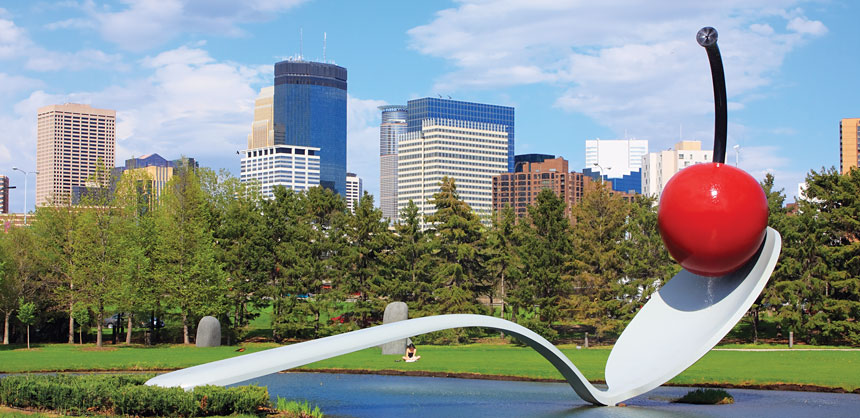
A highlight of the Minneapolis Sculpture Garden is the monumental fountain-sculpture Spoonbridge and Cherry by Claes Oldenburg and Coosje van Bruggen. Credit: Meet Minneapolis

A highlight of the Minneapolis Sculpture Garden is the monumental fountain-sculpture Spoonbridge and Cherry by Claes Oldenburg and Coosje van Bruggen. Credit: Meet Minneapolis

Top-tier cities such as New York, Chicago, Los Angeles, Las Vegas and Orlando command a lot of attention in the meetings world, and deservedly so. But that doesn’t mean that the so-called second-tier cities should be your second choice. In fact, these mid-sized cities often offer great values and unique venues that are well worth a closer look.

In a recent blog post, Christine Shimasaki, CDME, CMP, and managing director of empowerMINT.com for Destination Marketing Association International, described the distinctions between top-tier and second-tier cities. She notes that second-tier cities are “often characterized by smaller population, smaller convention facilities and less direct airlift.” Last, but certainly not least, she says that second-tier cities have an “opportunity for better value.”

Andrea Brennan, CMP, senior meeting architect for Kinsley Meetings in Littleton, CO, agrees that there are better values to be found in second-tier cities. “I’ve also found service levels to be really great,” she notes. “I don’t know what to attribute that to, but I feel like they’re not in that rush of a big city. People are a little bit more laidback. Things are done easily. You ask for something and it’s done, and you don’t have to fight for it.”

“We have clients who need a certain number of upgrades or transfers from the airport. I just feel that second- or third-tier cities are more willing to negotiate those things.”

— Andrea Brennan, CMP, Senior Meeting Architect, Kinsley Meetings, Littleton, CO

She added that smaller cities are more likely to have an attitude of “What’s it going to take to get you to come here and let us show you our area and what we have to offer?” She says, “They’re just more willing to negotiate with you. We have clients who need a certain number of upgrades or transfers from the airport. I just feel that second- and third-tier cities are more willing to negotiate those things.”

Here’s an overview of a few second-tier cities to consider:

Oklahoma City

As the largest city in the Sooner State, Oklahoma City has a population of more than 1.2 million and is conveniently located at the convergence of three major highways: I-35, I-40 and I-44. The city’s Cox Convention Center, located in the heart of the downtown area, contains more than 150,000 sf of total meeting space, including a 25,000-sf ballroom, 100,000 sf of exhibit space and additional meeting rooms totaling 27,500 sf.
Seven hotels are located within walking distance of the Cox Convention Center, and four additional hotels are currently under construction. The Renaissance Oklahoma City Convention Center Hotel is connected to the convention center via a second-floor skybridge for easy access. Planners who prefer a property with historic charm may want to check out the Skirvin Hilton, located just two blocks north of the convention center. This grand hotel opened in 1911 and features original woodwork, flooring and other original architectural details.

When attendees have some downtime, they’ll find plenty to do in the city, including touring the Oklahoma City Museum of Art and the Oklahoma City National Memorial & Museum. The Bricktown Entertainment District, located just steps from the convention center, is home to dozens of restaurants ranging from top-of-the-line steak houses to down-home, Oklahoma barbeque.
One unique offsite venue, the Okla­homa City Boathouse District, is located downtown on the Oklahoma River and offers indoor meeting space in two boathouses and in the Chesapeake Finish Line Tower, as well as a large amount of outdoor space. Another option is the National Cowboy & Western Heritage Museum, which can accommodate private events for up to 1,000 attendees.

Oklahoma City offers easy air access, with 22 nonstop flights to 19 destinations in the U.S. The Will Rogers World Airport is conveniently located just 15 minutes from downtown.

Lauren Warkentine, customer relations-account manager for Computer-Rx, recently brought 600 pharmacy employees and 75 vendor representatives to Oklahoma City for a software training meeting. They used the Renaissance Oklahoma City Convention Center Hotel as their headquarters, and have already made plans to bring the meeting back to Oklahoma City in 2014 and 2015.

“Oklahoma City has become a great place for our meeting,” she says. “Oklahoma City is affordable, the space is nice and accommodating to our needs, everything in the process was well taken care of by the staff, and the food was tremendous. The city itself is clean, safe and provides a great place for the attendees to get out and enjoy the city. I received a lot of compliments during the week about how clean Oklahoma City was and how shocked they were with how much it had to offer. Our event is in April, so many attend the Oklahoma City Thunder basketball game, OKC Barrons Hockey games, dinner and nightlife in Bricktown, the Oklahoma City bombing memorial, art museums, and the list could go on.”

She added that it’s Oklahoma City’s people who really made a difference. “I received so much feedback about how incredibly friendly the people in Oklahoma are, outside of just the convention area. Many people that attend our show have never been to Oklahoma and probably wouldn’t come if it wasn’t for our conference. However, they are always pleasantly surprised with what they find. As an Oklahoman, we often refer to Oklahoma City as ‘the best kept secret.’ ”

San Jose

According to Team San Jose, some of the city’s top advantages as a meeting destination include easy access to three major airports, a compact, walkable downtown, and a diverse array of choices for dining, recreation, nightlife and attractions. It also promotes the fact that San Jose, which is the third largest city in California, is one of the safest, cleanest big cities in America.

The San Jose Convention Center (SJCC) is currently wrapping up a $120 million expansion and renovation project that is expected to be completed later this year. The project will add 125,000 sf of meeting space to the center, bringing its total square footage to 550,000.

The software company NetSuite recently held its annual user conference, SuiteWorld, at the SJCC. The conference attracted 5,000 attendees from 30 different countries. In the past, the event was held at hotel-based conference centers, but it has now grown so large that NetSuite held the event in a convention center for the first time.

“The biggest value there was in working with Team San Jose,” explains Mini Peiris, vice president of global marketing for NetSuite. “They were able to really corral the whole city. They did a couple of really nice things for us. With the hotels, they were able to negotiate for us to ensure that all of our room rates would be under $200 a night, which is really great. If you compare that with New York or even San Francisco, we couldn’t come close to that before. Also, because they’re tied in with all of the city infrastructure, we had a really great branding presence in downtown San Jose.” She noted that the city’s street poles were branded with the NetSuite logo and that there were branding opportunities at San Jose International Airport, as well.

She also was pleased with the SJCC expansion and renovation project. “They’ve really done a great job with that redesign,” she states. “We’re a company that really cares about our brand and the aesthetic of the conference as a whole, so we’ve been very pleased with that. We’ve basically anchored the conference there for the next three years. We’ve signed with them through 2016.”

The San Jose Museum of Art, which features a collection of modern and contemporary art, offers a variety of unique settings for private events, including the Skybridge and the Circle of Palms Plaza. The Wendel Education Center at the facility can accommodate groups of 20–150 people during the day, and the museum can host events for up to 3,000 guests in the evening. A full range of onsite catering options is available.

Reno

Boasting more than 300 days of sunshine each year, Reno-Sparks is located at the base of the eastern slope of the Sierra Nevada range, just 13 miles east of the Nevada-California state line. Scenic Lake Tahoe is just 38 miles away. The area is served by Reno-Tahoe International Airport, which operates more than 100 daily flights to 17 non-stop destinations.

A spokesperson for the Reno-Sparks Convention and Visitors Authority (RSCVA) reports that groups can benefit from across-the-board cost savings on everything from hotel rooms to catering in the Reno-Tahoe area because hotel-casino resorts are in constant competition. He says that hotel rooms are currently experiencing average rates that are 30 percent less than competing destinations, adding that Reno-Tahoe properties have recently invested more than $500 million, with a large portion of that going toward meetings technology as well as meeting and hotel room renovations and expansions.

Planners working on a qualified meeting can take advantage of RSCVA’s “Come See, Fly Free” program to do a site inspection. It includes airfare, premier accommodations, dining, entertainment and recreation. Details are available at www.ComeSeeFlyFree.com. The RSCVA also offers qualified meeting planners a customizable app they can use to keep attendees updated on schedules, speakers and points of interest in the area. A photo album can also be created on the app where attendees can post their own pictures of the event.

The Reno area offers several unique venues, one of which, in particular, is enough to bowl attendees over. Nicknamed “the Taj Mahal of Tenpins” by the Los Angeles Times, the National Bowling Stadium includes 78 bowling lanes and a 172-seat, four-story giant-screen theater. It is also home to the Kingpin Club by Brunswick, an upscale bowling alley and lounge offering 10 VIP bowling lanes that can host teambuilding activities or social events for up to 125 guests.

Charlotte

The tagline for this southern city is “Charlotte’s Got a Lot.” One thing it’s got a lot of is affordable airlift in and out of Charlotte Douglas International Airport. The city also offers a wide array of hotels within walking distance of the Charlotte Convention Center. The 850,000-sf facility offers 280,000 sf of exhibit space, more than 90,000 sf of flexible meeting space and two spacious ballrooms. The convention center’s green initiatives include energy-saving measures, the use of eco-friendly cleaning products, recycling programs and the use of biodegradable cups made from corn products.

The city of Charlotte has teamed up with the Charlotte Convention Center to create a one-of-kind asset, the NASCAR Hall of Fame, which showcases the history of motorsports in the Charlotte region. The Hall of Fame is attached to the convention center, and the city has launched a new “Show Your Badge” program that allows meeting attendees to experience the attraction for a reduced admission fee of $10. The NASCAR Hall of Fame also serves as a unique special event venue. It offers 40,000 sf of meeting space and can accommodate a dinner for up to 250 or a reception for up to 600 guests.
In April, Southwest Airlines began offering non-stop daily service to Houston’s Hobby Airport, Baltimore, Orlando and Chicago’s Midway Airport from Charlotte Douglas International Airport.

Minneapolis

Meet Minneapolis, the city’s convention and visitors bureau, promotes this Midwestern city as “the perfect blend of natural beauty and urban sophistication.” Its outdoor amenities include a chain of lakes, the Mississippi River, and 200 miles of walking, biking and cross country ski trails, all within the city limits.

According to an official from Meet Minneapolis, the city offers a variety of unique experiences, such as the opportunity to kayak the Mississippi River and then watch a Broadway-quality show, all in the same day. When meeting attendees have some downtime, they can rent a bike at one of the city’s Nice Ride stations, explore world-renowned art galleries or sample cuisine from James Beard-award winners. They’ll also likely appreciate the fact that they can enjoy tax-free shopping for apparel and shoes.

Minneapolis has no shortage of crowd-pleasing venues for offsite events. The city’s LEED-certified ballpark, Target Field, offers great views of the city and a choice of 10 private event spaces, including the Town Ball Tavern, the Delta SKY360° Legends Club and the Budweiser Roof Deck. The world-renowned Guthrie Theater offers beautiful views of the riverfront and has three different stages and other spaces that can be used for events. The Mill City Museum is an historic building that tells the story of Minneapolis’ past. Planners have the option to incorporate the film “Minneapolis in 19 Minutes Flat” and/or the “Flour Tower” display/ride into their events.

Virginia Beach

The Virginia Beach Convention & Visitors Bureau (VBCVB) touts the city’s “perfect balance of coastal charm and big city amenities.” Thanks to its central East Coast location, this oceanfront city is within a day’s drive of two-thirds of the U.S. population.

The Virginia Beach Convention Center was the first convention center in the country to earn LEED Gold certification from the U.S. Green Building Council. It offers more than 150,000 sf of column-free exhibit space, nearly 29,000 sf of meeting space and one of the largest ballrooms on the East Coast. Parking at the center is free.

The VBCVB operates a corporate social responsibility program called “One Beach, One World,” which makes it easy for planners to select the best CSR opportunity for their group. These outreach opportunities include environmental initiatives, support for the armed forces, activities that combat homelessness, hunger and domestic violence; and activities that benefit the local community and assist youth and the elderly.
For private offsite events, the Virginia Aquarium & Marine Science Center offers a wide variety of options. Groups can rent the entire aquarium or opt to reserve individual venues that include several pavilions, an IMAX theater, a garden area and deck. For a memorable experience that reflects the local environment, planners can arrange a “Sharks & Sea Turtles” dinner where guests can dine right in front of the tanks and watch the “residents” swim by.

Jacksonville

This northeastern Florida city makes the most of its prime location on the banks of the St. Johns River with its Riverwalk, the centerpiece of which is The Jacksonville Landing, a venue offering shopping, waterfront dining and year-round entertainment. It has been called “the first place for visitors and the only place for residents.”

Visit Jacksonville also reports that the King Street Beer & Food District is an emerging hotspot for nightlife. Visitors to this five-block district have a variety of choices, including gastropubs, locally owned restaurants and craft breweries. The bureau has also launched a special web site, www.onlyinjax.com, to make it easy for visitors to check out all of the city’s dining, entertainment, activities and adventures.

Jacksonville’s Prime F. Osborn III Convention Center is not your typical “big box” convention center. This beautiful, historic building once served as the city’s train terminal. The 265,000-sf center, which offers 160,000 sf of flexible meeting space, is located minutes from Jacksonville International Airport and less than a mile from more than 1,000 hotel rooms.

For private events, one option is EverBank Field, home of the NFL’s Jackson­ville Jaguars. The 76,000-seat venue is located near the downtown area along the St. Johns River. It features a 30,000-sf tented pavilion that can accommodate up to 500 guests for corporate entertainment.

Worth a Closer Look

Planners who have achieved success in second-tier cities would definitely say they’re worth a closer look, due to their good values, range of amenities and ease of access. Brennan offered another advantage. “You get a little bit of the culture of the area and different experiences if you go offsite.”

Warkentine found her second-tier success in the nation’s heartland. “Oklahoma City has turned out to be a great centralized hot spot for our meeting with the space, hotels and the nightlife in walking distance. 2014 will be the event’s third year, so it is still in its infancy. I am excited to see how big it grows with Oklahoma City.” C&IT

Back To Top