










Next Level Performance Celebrates 50 YearsNovember 1, 2026
A Half Century of Incentive Business Success By Coastal CommunicationsNext Level Performance Celebrates 50 Years
A Half Century of Incentive Business Success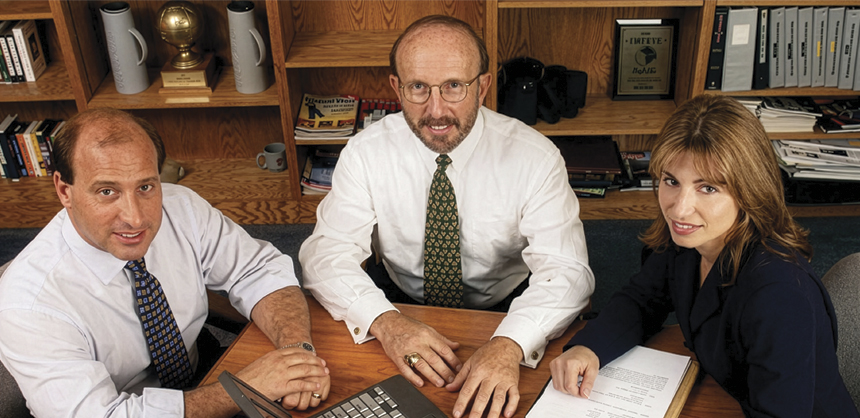
Left to right: Dave Dittman, Jim Dittman, chairman of Next Level Performance, & Vivian Dittman
In 1976, I walked away from a management career in positions at NYSE-listed corporations to start a marketing communications agency that morphed into an incentive marketing company. And 50 years later, I still can’t believe my good fortune to find this industry. Every day, we give people reasons to exceed themselves, to build loyal relationships with colleagues and customers, to underscore the message of “Yes, you can,” and for them to build a bank of extraordinary travel experience memories or individual rewards for themselves and loved ones.
A Look Back and Ahead
Fifty is a nice round number, but it’s really a point on the time continuum. I’ll try to give you a sense of where the industry has been because many of you weren’t even born in 1976. And I think you’ll find some of the challenges we’ve faced to be amusing, others frightening, and hopefully, all interesting and informative. Most importantly, we’ll offer up the lessons we learned. I hope you find them of value.
Surprise, Surprise
Anyone with a brain who starts a business knows that the first few years will be tough. You’ll work long hours. You’ll have to go years without a vacation (in my case, five) or a raise in pay. And there will be a few times when you wonder if it’s all worth it.
But we hit the five-year mark with great optimism. We’d just moved into expanded offices, borrowed money to outfit them smartly and hired three more people.
Within months, the worst recession since the Great Depression hit (and lasted 16 months). Overnight, everything dried up. So, what do you do? Well, you work 16-hour days and sleep on the pull-out sofa in your office. You get rid of the cleaning service and do it yourself. You skip paychecks so you can make payroll. And you search for any assignment you can to bring in revenue.
And so, we focused our efforts on selling short-term incentive programs to companies that used distributors and dealers to get products to market — programs that produced results before costs, three and six-month programs that dealt with immediate needs. It not only helped us get through the recession, but it sharpened our business planning and led us to where we are today. Before long, we changed our company name to reflect our primary value. We became Dittman Incentive Marketing Corporation, which is still our legal name today.
We survived the first crisis in the company’s existence without any layoffs and repaid the loan (and never borrowed again). It was a painful, but most valuable experience.
The first lesson: Expect the unexpected and continually assess your risks.
A Problem and an Opportunity
From the very beginning, we used the two primary rewards in our programs … world-class incentive travel and custom merchandise selections. But communications in the early days were rudimentary. Travel promotion materials were done in black and white because color printing was too expensive. Ditto for merchandise. But it was a time when people read without distraction, so copy that painted a dreamy picture of the travel experience or the excitement of new items for the home or family was important. And we crafted them with care.
In probably the greatest challenge we were ever handed, copy carried the day. The CEO of a client company visited Israel and was so taken by the country and its people that he insisted it be the destination of his next incentive program. We were faced with the task of selling Israel at a time of turmoil in the Middle East. Here’s how we introduced it: “The Journey … through 4,000 years of laughter and tears to the place where it all began. Hills that still echo the Sermon on the Mount. A Dead Sea that’s alive. A Red Sea that’s Blue.” The ensuing copy gave people an opportunity to see what they wanted. A travel experience back to the roots of Judaism, or the sacred sights of Christianity, or experience the modernity of a vibrant people and place.
Did it work? The client exceeded their goals in sales and number of qualifiers, and 96% of the guests rated the travel experience as excellent.
On Being Different
One lesson we learned early on was to always look at things differently. Turn disadvantages into advantages. On the merchandise side of the business, we didn’t have the money or the critical mass to produce the kinds of catalogs our competitors had with hundreds of pages and thousands of items. So, we created stylish brochures that could be printed in separate collections of tiered merchandise, much like we do digitally today in our Great Rewards program. Additionally, they were easily customizable for a client in a way that didn’t look like someone had just slapped their logo on a mass-produced catalog.
Imagination
Sometimes, brilliant ideas just come to you. Sometimes, they take time. But either way, they are the difference between success and failure, between getting a new client or not, keeping an existing client or losing them, earning a glittering reputation for creativity or just being part of the pack.
It has always amazed me how little effort people put into themes, especially on travel programs. The theme should reflect the amount of imagination and effort you put into the program. It should say, “This is important; this is going to be great.” It should take advantage of the client name, when possible, or their reputation. One thing it should not be is ordinary.
For one of our clients, Mita copiers, the first program we did was to Hong Kong and it included a “travel experience” (no, we never call them trips) for the larger dealers and a custom selection of merchandise for those who couldn’t qualify for the experience.
The first event we had in Rio was a huge success with many once-in-a-lifetime moments. We capitalized on it by focusing on the fact that this was not just Rio de Janeiro, this was Rio as only Mita could do it. And since the destination was Brazil, where the samba is the heartbeat of the country’s existence, we themed it as “The Beat Goes On.”
A trip to Italy reinforced the message that, while others do trips, Mita does travel experiences. So, it’s not just “off to Rome,” it’s an adventure, specifically only one that Mita could pull off. Fortunately, we could communicate that in a four-word theme that spelled out the client name — Mita’s Italian Touring Adventure.
The next journey was trickier to theme because it involved two destinations in two different countries: Paris and Brussels. Brussels is often referred to as the Main Street of Europe. As such, it is also the very heart of Europe (even more so these days). And if it is truly the Heart of Europe, then, surely, Paris is the Soul. It gave us a perfect platform from which to launch Napoleon Bonaparte as the human thread that weaves the countries together — emperor of France, who met his Waterloo in Belgium.
Music was the theme here again, although a far different beat than Rio … Vienna and Salzburg (with Mozart) and a daytime visit to Budapest, which, at the time, was still behind the Iron Curtain. It was thrilling for the guests to be stopped by communist soldiers for passport inspection. They knew they were safe; they were with Mita.
By the time we took a program to Japan, everyone knew that Mita was famous for its style and ambitious travel experiences. So, now we just needed to combine a very desirable destination with reference to the “Mita Manner.”
Theme is important. It is subtle. It sets the table for what comes next. But, “what comes next” is critical. The theme hints at a promise that is then firmly made in the subsequent communications.
Creative Ideas
“What’s the one idea you’ve always wanted to try, but never found a client with the budget or the courage to take the risk?”
That is the first question we need to ask any potential partner when we’re building an incentive travel program or event. If we don’t, we’re only going to get the same standard menu of ideas as everyone else, which makes us no different than everyone else — a depressing thought indeed.
Does that mean that we have to rely on other people for creative ideas? Absolutely not. We can and should be generating our own ideas. But, remember the first of our core values — collaboration. Make it clear to our suppliers that we won’t settle for ordinary. Engage them in an enthusiastic partnership to generate original, imaginative ideas.
Dittspeak
It has long been my conviction that the words we use both affect and reflect how we feel about what we do, how we do it and who we do it for. And in some ways, they also subtly express how we feel about our place in the world.
Whenever lawyers and professional HR people don’t force us to use a different word, we try to use the term “teammate” when referring to each other rather than “employee” because the former more accurately reflects the fact that we have relationships with each other, not simply to the company. It also reflects that we’re in this together. We help each other. We’re a team.
Further, it’s always good to examine how many times you use the word “I” versus “we.” For the most part, nobody does everything without some collaboration. It is not only right but smart to spread credit around when discussing what was accomplished.
When it comes to suppliers, we prefer to use the word “partner” rather than “vendor” because that is the kind of company we are looking to do business with, and the way we want them to see their relationship with us. A vendor is a supplicant; a partner is a collaborator. Similarly, we want to earn the right to be called a partner by every one of our clients.
With respect to the words that the travel industry uses, the choice is even more important in that it becomes part of our differentiator with clients. We want prospects to know that we do things differently. We do things better … and it starts with the words we use. For example:
- We don’t use “buses” to take people on “tours.” We use “deluxe, air-conditioned motor coaches with multilingual guides,” coaches for short. And they’re not tours; they are “excursions.” We don’t take winners halfway around the world to do a bus tour. We customize excursions whenever we can.
- We don’t use or let suppliers use the word “pax,” which is the airline shorthand word for passenger. It is a cold word, devoid of any meaning beyond a butt in a seat. We don’t have pax on a trip; we entertain “guests” on a travel experience. How you view it determines how well you do it.
- We don’t do “groups.” We transport, entertain and recognize “VIPs” who all happen to be in the same place. When suppliers talk to us about our “group,” it’s the same as referring to a gathering of pax. No, we talk about our client program and our guests or winners.
- Our competitors do “Dine-a-Rounds” where they break their group into smaller groups, put them on buses to different restaurants, and then have them eat from a limited choice menu. We do “Great Restaurants Evening.” Is this just fancy words for the same thing? Oh, not at all, not in the least. And if the difference has never been described to you, just ask me. It would simply take too much space here to describe.
I believe in the power of words. They can diminish the importance of things or they can be uplifting, even exhilarating. The ones you choose reveal a great deal about you, and when speaking about our company, a great deal about us. Please think about that in your daily conversations and writings.
Then and Now
1976 to 2026 — a lot can happen in 50 years. In the beginning … The worldwide web referred to the USSR’s spy network. Not a single address in the U.S. ended in .com. In ’76, you actually carried your suitcase through the airport — no wheels. The closest thing to instant communication was the Telex machine, later to be replaced by the fax machine. And when using the early fax machines, you had to make sure that your transmission speed was matched with the speed of the receiving fax. We used typewriters and white-out, not computers. Word processors were coming into usage, which among other things, made it easier for you to fix your typos. Plane tickets were written by hand on carbonless carbon paper, and changes were also made by hand on tiny little stickies. You had to have a ticket in hand at the airport, but you didn’t have to have any ID to prove you were that person. All airlines charged the same fare for flights from one city to another (and paid companies like ours a 15% commission). All materials that we produced in support of any program took weeks from start to finish if we were doing them in color (assuming the client had the budget for color, which was so expensive at the time).
On a very basic level, think of 1976 this way. How would you be conducting your business and personal lives today if you had no cell phone? If you had no email? If you had no streaming service and, instead, got all your news from five TV channels or from a daily newspaper? If there were no television stations in English when you were on a program anywhere outside the U.S.?
The pluses: Life would be simpler, the pace slower.
The minuses: You wouldn’t have the knowledge you have now, the awareness of the world, the solutions you use every day, the ability to solve problems quickly and so much more.
But, it matters not. The world is always going to change — better in some ways, not so much in others. What does matter is that we continue to adapt and change with it to move ourselves forward.
The most experienced airline pilot still goes through pre-flight checklists even if he or she has done it thousands of times before. Why? Because mistakes can cost you.
I brought with me from corporate life a process and checklist mentality. It’s a discipline that can save you time and money. Success or failure will be directly influenced by following the process. Quite simply, there are questions that need answering before you can build an incentive program, a travel experience itinerary or a software solution. We used checklists to gather audience demographics, travel history, data requirements and more. We used checklists to ensure that our proposals and presentations told a complete and compelling story. Follow the process. Don’t skip steps.
But if there’s a failure, recognize why it happened, learn from it, take responsibility and move on.
Through the Eyes of the Buyer
From the day we opened the doors of our business, we had an advantage.
In my corporate life, I was the buyer of the services we were now selling. I knew what I needed and why I needed it. I knew how to get it sold to senior management internally. I knew what set one potential supplier apart from the others. In short, I knew what problems needed to be solved and what incentives could do to solve them.
The key was always purpose — what needs to be accomplished by which audience, when, why and by how much. We need to have the answers to these questions before we attempt to offer a solution. If we don’t, then we are simply somebody trying to sell something … in other words, a hammer in search of a nail. While very few of you have had the advantage of working on the other side of the desk, I urge you to always ask questions before tackling a task, starting with, “What does the client want?”
The Second Generation
From 1976 till 1988, I was the only Dittman in the company. But, in the middle of ’88, three significant things happened a few weeks apart. We moved the company from New York to New Jersey, Dave Dittman joined the company and Vivian Dittman joined the company from a career in broadcasting. With that, our headcount “soared” from eight to 10.
It gives me a warm feeling to think about all the jobs we’ve created and opportunities provided. But, we would not have made it to this place without Dave and Vivian.
Values and Beliefs
When I started the business, I wanted to build a company that I’d want to work for. That meant having a strong set of values that everyone would understand and live by. We set out our core values at the beginning, and I think they are why we keep earning the Best Places to Work designation year after year after year.
Collaboration – Work enthusiastically with teammates and clients.
Accountability – Take ownership of your work.
Respect – Treat clients, teammates and supplier partners with respect and kindness.
Ethical Behavior – Do the right thing the first time, every time.
Service – Provide genuine service your clients, your teammates, and our community.
After several years in corporate life, I concluded that there are five things that need be present for people to be happy in their jobs and loyal to their company:
- They want to do interesting, challenging work.
- They want to work with people they like and respect.
- They want to work for a company that does something of value
- They want to work for a company that has values
- And they want to know that management/ownership recognizes and appreciates their contribution.
C&IT