










The New Anatomy of Event Well-BeingNovember 2, 2026
Rebuilding Events Around Attendee Health By Zach ChouteauThe New Anatomy of Event Well-Being
Rebuilding Events Around Attendee Health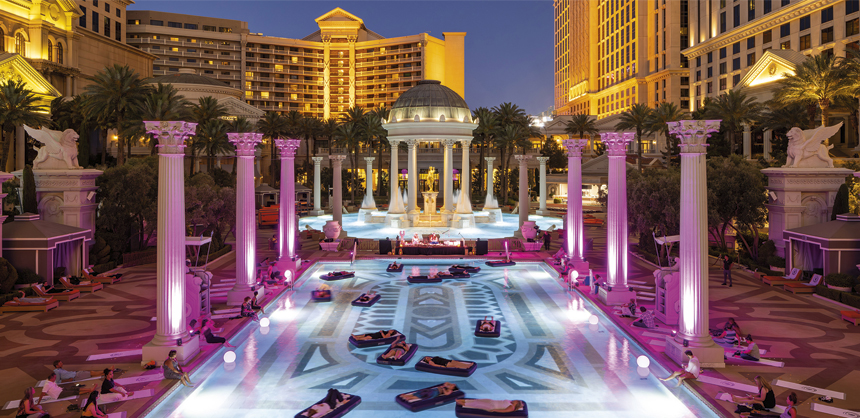
The Caesars Entertainment Wellness Summit showcased options such as this sound bath at Caesars Palace.
Health and wellness are no longer decorative add-ons at association events; they’ve become foundational design principles shaping how attendees move, eat, connect, recover and learn. What’s changed most in recent years, however, isn’t the presence of well-being elements, but the intentionality behind them.
Today’s planners are rethinking pacing, sensory load, nourishment, movement and mental reset with a level of care that treats attendees as whole human beings rather than passive participants. And while experts differ on whether wellness is best delivered through curated activations or simplified agendas, they do agree on one crucial point: meaningful well-being requires a holistic approach.
From Amenity to Expectation
Across the industry, planners are seeing a dramatic shift in how attendees define wellness — and how deeply they expect it to be woven into the event experience. Jeannie Weber, CMP, event director at 360 Live, believes the change is unmistakable. But she also emphasized that wellness is not monolithic. “It means different things to different people, so I think it’s important to provide a variety of opportunities and let attendees decide what wellness means to them while onsite.”
David T. Stevens, PMED, WITT-AP, co-founder of Olympian Meeting, agrees, saying that wellness is subjective. “For one attendee it’s movement; for another, it’s sleep, food, recovery, quiet or meaningful connection.”
This evolution has pushed planners to move beyond the idea of wellness as a single activation or a handful of healthy snacks. Instead, wellness is becoming a lens through which the entire event is designed. Stevens put it bluntly: “Hospitality is ultimately about caring for people, so wellness shouldn’t be a box we check with a yoga class or fruit station.”
The shift is also driven by broader cultural forces. Attendees today are navigating higher levels of burnout, digital fatigue and sensory overload than ever before. Many arrive at events already feeling depleted, making the need for thoughtful wellness design even more urgent. Planners are responding by reimagining what an event should feel like — not just what it should deliver.
Wellness as a Holistic Experience
If wellness is now an expectation, the question becomes how to provide it in a manner that feels meaningful rather than superficial. “It starts with looking at the full attendee journey and considering how wellness can be integrated throughout the experience,” says Weber. That includes movement, nourishment, rest, comfort and fun.
Weber’s approach is grounded in giving attendees agency. “Rather than dictating what wellness should look like, create options and give attendees the freedom to decide what they need in that moment,” she urges. That might mean a networking walk, a quiet room, a craft station or simply the permission to return to their room for a break.
Lisa Meller, CMP, CITP, CED, founder of Meller Performance Events Group, takes the holistic concept even further, urging planners to think systemically about how the body, mind and spirit coordinate responses. “The physical and emotional senses need to be considered,” she says. “The food, air and water that we consume must be high quality. Timing, agenda load and biorhythms need to be considered to optimize connection and learning — a clear distinction from just ‘avoiding burnout.’”
Meller’s perspective highlights that wellness is not a single element but a constellation of interdependent factors. If one is neglected, the entire experience suffers. “Too often I see events, resorts, venues and planners do well in some areas and completely forget about others — and the program misses hitting its full potential,” she remarks.
She offered a vivid example: “If a program is overloaded with speakers, breakouts are across town from one another, and the day goes on far too long without breaks, it will not matter that a healthy trail mix bar was offered at break. And that chair massage or wellness lounge station will never be used, or people will be too frazzled and fried to even decompress in there.”
Holistic wellness, in other words, is not additive — it’s architectural, requiring planners to think about the entire ecosystem of an event, from the moment attendees register to the moment they depart.
Agenda Pacing & the Power of Whitespace
One of the most consistent themes across all expert conversations is the importance of whitespace — intentional pauses that allow attendees to reset, process, move or simply breathe.
Stevens is particularly outspoken on this point. “The missed opportunity is the acknowledgement of the fact that it’s most likely the planner who is to blame for an overstimulated participant because they treated every open minute on an agenda as unused real estate,” he says. His critique is sharp but accurate: many agendas are built with the assumption that more programming equals more value. But the opposite is often true.
“People need whitespace to process, move, get outside, sit quietly or simply not have someone talking at them for 15 minutes,” Stevens emphasizes. He also warned planners to consider sensory load. “Noise, lighting, screens, crowds and constant stimulation all add up. If you market your event as having a ‘jam packed agenda,’ I’m not even going to register.”
Weber agrees, noting that intentional breaks are essential. “I like to build intentional break times into the agenda where attendees are given permission to do what is best for them,” she says. These breaks can be used for rest, quiet rooms, wellness activations or simply stepping outside for fresh air.
She also suggests entertaining micro-breaks during long general sessions. “A short magic act, musician or other unexpected entertainment can give attendees a quick mental reset without taking them completely out of the flow of the event,” she says.
Meller frames whitespace as part of a broader trend toward “recovery as part of the agenda.” She says planners are increasingly designing breaks that are “curated and intentional,” incorporating movement, outdoor access, unstructured time, quiet spaces and opportunities to step away without FOMO.
Whitespace also supports accessibility and neurodiversity — two areas increasingly recognized as part of wellness. Attendees who process information differently or who are sensitive to sensory overload benefit enormously from pacing that respects cognitive rhythms. In this way, whitespace becomes not just a wellness tool but an inclusion strategy.
Designing for the Senses
Another major trend is the rise of sensory-aware event design. Meller described it as “design for the nervous system,” a phrase that captures the growing recognition that attendees’ cognitive and emotional experience is shaped by environmental factors.
“Planners are paying more attention to the cumulative sensory and cognitive experience of an event — lighting, production, ambient sounds, crowd management, transition time, access to nature and quiet spaces,” she explains. The goal is not to make events quiet or passive, but to create environments that allow attendees to regulate, focus and engage.
Weber also underscored the importance of physical environment. “I think the physical environment itself is part of wellness,” she says. “Things like natural light, sound, comfortable seating, crowd flow, access to outdoor space can all impact how attendees feel throughout the day.”
This sensory awareness is part of a broader shift toward intentional experiential design — a move away from “wellness activations” and toward experiences that support the whole human being.
Food as Fuel, not Function
Food and beverage have long been central to event planning, but the wellness movement has transformed how planners think about nourishment. The experts agree: food is not just a meal but a wellness tool.
Weber focuses on “light, healthy, protein-rich options that are satisfying and provide sustained energy without leaving attendees feeling sluggish.” She also stresses the importance of choice. “Not every option needs to be traditionally ‘healthy.’ It’s about giving people choices that support how they want to feel throughout a long event day.”
Meller takes a science-driven approach, emphasizing nutrient density, ingredient sourcing and toxin-free preparation. “Think nourishment, not just catering,” she says. She adds that her team selects “quality proteins — plant, animal and fish-based — without antibiotics or additives wherever possible,” and aims for menus that are “as organic and toxin-free as possible, right down to the oils used in food preparation.”
Hydration is also a priority. “Hydration is important, with filtered or distilled water stations and bubblers readily available,” she says. Her team uses glass or stainless-steel bottles and offers organic teas and acid-free coffee.
Taste and presentation remain essential. “Dining is experiential, and food and beverage consistently rank among the top issues in attendee feedback,” she shares.
Cori Dossett, CMP-Fellow, CEM, CITP, president of Conferences Designed, encourages planners to collaborate directly with chefs. “They know their team, local availability and have seen so much more than we have and that can create a cool experience onsite.”
She also stresses the importance of adequate break time. “Something else that is still a struggle with agenda planners is ample break time, or any break time! We can do better!” she says.
Across all perspectives, the message is clear: food is not just a function — it’s a wellness strategy.
Keeping Bodies & Minds Engaged
Movement is one of the most accessible wellness tools, but planners are increasingly finding creative ways to integrate it without making attendees feel obligated or self-conscious.
Weber champions low-pressure networking walks. “One idea I like is offering small, eight- to 10-person group walks that attendees can sign up for,” she says. “They get some fresh air, move their bodies and have a natural opportunity to connect through conversation without the pressure of traditional networking.”
She also uses hands-on activities like craft stations or cooking classes. “We recently held a guacamole-making class,” she says. “It gave attendees a fun mental break, allowed them to use their hands and created an easy way to connect with the people at their table.”
Meller integrates movement directly into programming. “A simple opportunity to stretch or stand during a session can feel great,” she says. “Upbeat music can shift energy, and creative session formats can get people moving without feeling like a formal “movement break.”
Dossett shares a particularly successful example: a 10-minute mid-afternoon exercise break added to a five-day medical training program. “The first day, about half the class participated. By day five, I had 90% participation,” she says. The break included breathwork, sitting tips, standing tips, trivia and small prizes. “They are still doing it to this day,” she says.
Movement also supports mental clarity. Even small physical resets can improve focus, reduce fatigue and help attendees retain information more effectively. As planners increasingly recognize the cognitive benefits of movement, they’re finding new ways to integrate it seamlessly into programming.
The Human Element at the Heart of Wellness
While movement, nourishment and sensory design are essential, Stevens argues that the most meaningful wellness trend is human connection. “People are asking whether traveling to an event was actually worth their time and energy,” he says. “If they leave with relationships and conversations they couldn’t have gotten on Zoom, that’s real value.”
This perspective reframes wellness not as a set of activities but as a pathway to deeper engagement. Connection is not just a social benefit — it’s a wellness outcome.
Dossett uses conversation cards to spark meaningful interactions. Weber uses small-group activities. Meller designs spaces that encourage natural conversation rather than forced networking.
Across all approaches, the goal is the same: create environments where people can connect authentically and leave feeling enriched.
Connection also reinforces learning. When attendees feel psychologically safe and socially supported, they’re more likely to participate, ask questions, collaborate and retain information. In this way, connection becomes both a wellness strategy and a performance strategy.
Proving Wellness Matters
As wellness investments grow, planners increasingly need to demonstrate their impact. Meller recommends measuring the experience itself rather than counting participation in specific activities. “Wellness shouldn’t be evaluated simply by counting how many people attended a yoga class or used a wellness lounge,” she emphasizes.
Her team looks at broader questions:
- Did people feel supported?
- Was the pace manageable?
- Did they have enough opportunity to process what they were learning?
- Could they easily navigate the event?
- Did they feel nourished and energized?
- Did they have meaningful opportunities to connect?
- Did they leave feeling more confident and equipped to apply what they learned?
These qualitative measures are paired with traditional metrics like engagement, repeat attendance and sponsor satisfaction.
Dossett emphasizes the importance of smart survey design. “Specifically ask about it on the surveys,” she says. “Clear concise questions — write smart questions and you will get better data.”
The consensus is that wellness can be measured — but only if planners ask the right questions. And when they do, the data often reveals that wellness investments improve not just attendee satisfaction but learning outcomes, networking quality and overall event ROI.
Serving the Whole Human Being
Across all expert perspectives, one theme stands out: wellness is not a trend, it’s a recalibration of what events are meant to do.
Meller summarized it best: “Ultimately, the trends are toward serving the whole human being from end to end rather than designing an event and then trying to cram ‘wellness’ into it.”
Stevens echoed the sentiment, urging planners to focus on intentionality rather than trend-chasing. “What participants need are we actually solving?” he asks.
The planners’ insights paint a picture of an industry undergoing a profound shift — one that recognizes that attendees are not just learners, networkers or consumers, but whole human beings with physical, emotional and cognitive needs. Events that respect and heed those needs will not only feel better for attendees, but they’ll perform better as well. | AC&F |