







Taking the Mystery Out of AISeptember 2, 2026
By Matt SwensonTaking the Mystery Out of AI

The next time Meredith Ellison, executive director of the Association for the Advancement of Artificial Intelligence (AAAI), fills out another banquet event order (BEO), it will be too soon for her liking.
BEOs are among the loathsome, time-consuming tasks her team of six event planners can ill-afford to devote hours to when organizing an eight day conference for 6,500 attendees. Yet, as irksome as they are, the orders need to be completed.
The solution to the bane of Ellison’s existence can be found in the name of her association. AAAI is among the most progressive when it comes to allowing artificial intelligence to do its proverbial dirty work.
“If I can plug a data set into a large language model and have it spit out an answer in two to three minutes — something that would have taken me hours — that’s great,” Ellison says.
The sentiment is why technology companies across various industries are promoting the use of the divisive AI. Early adopters of AI, like Ellison, have found that it can be a tremendous time saver.
Moreover, those minutes or hours that would otherwise be dedicated to a staff member can be applied to developing and enacting strategies that drive increased interest and revenue. In the association world, that spills over into higher membership and renewal rates, and the ability to greater demonstrate the value of the organization and, by extension, the annual conference.
That said, associations are bound by boards of directors and regulations not eager to change previous methods of doing business.
By now, almost all event technology companies rely on AI to support their clients. Some, like Conference AI, even put it in their name. Others, including RainFocus, an event management software firm, and Cvent, the ubiquitous event tech platform, continue to find new ways for AI to improve their products. They are driven by the principle of what’s good for their software will benefit planners.
“AI for events is about reducing manual workloads so the humans behind events can focus on more strategic endeavors, like actually engaging with attendees,” says Marius Milcher, vice president of platform strategy and AI, at RainFocus.

Today, AI is implemented in everything from registration to post-event analysis.
Where to Start
“AI is kind of a thing everyone knows is important, but they don’t know where to start,” says McNeel Keenan, senior vice president of product management at Cvent, the event industry’s largest event registration and technology provider.
There are myriad explanations for the initial paralysis. Discussions about AI are so broad that it can be intimidating to take the first step. There are also others who are adverse to trying new tools. And, as Amazon and other large tech companies conduct layoffs to streamline services, there is a fear AI will take jobs away from humans in all business sectors, including meetings and events.
According to a Reuters/Ipsos poll released last year, 71% of Americans fear AI is causing permanent job loss. This has, in part, led to hesitancy to embrace the technology’s ability to ease the event planning experience.
“The AI Impact on Workforce Dynamics in Business Events” report from Soundings, a staffing and recruitment agency for the events industry, found that 59% of the 200 event professionals surveyed are currently using AI. Most of these early adopters are using AI assistants for content and marketing purposes, but have not taken the next step of fully integrating gen AI tools into their planning workflows.
In a blog, “AI and its potential role in the events industry,” IMEX, the influential trade show producer for event professionals, takes a similar position. “Events professionals will not be replaced by AI, but they will need to learn new skills and technologies in order to thrive in an increasingly AI-driven workplace,” the post says.
Indeed, it’s hard to find an event technology product or program that is not in some way using AI. Beyond content development, AI can assist in predicting attendee preferences for meetings, networking and education sessions, and who to connect with onsite during an event.
Keenan says associations should look beyond ChatGPT and other general tools. For one, they don’t provide the type of security that associations are seeking with their proprietary information. Secondly, many of the platforms that are already part of their event tech stack use AI.
Associations get the biggest lift from AI embedded in their event platforms, where all session, attendee, exhibitor and engagement data already reside, says Keenan.
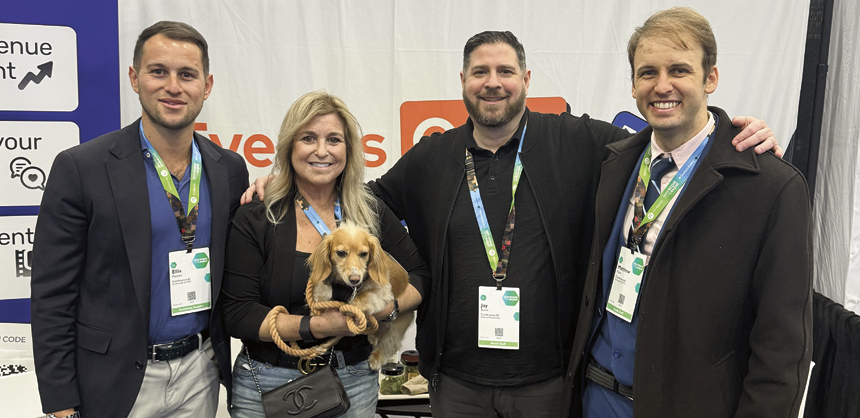
Conference AI participated in IAEE Expo! Expo!
Muting the Background Noise
As members’ attention spans diminish and their desire increases to see tangible ROI out of their dues and event attendance, planners are under more pressure than ever. However, time and resources are not likely to increase to accommodate the demands.
A team of six planners, as Ellison has, would be a luxury for some associations. Yet AAAI’s event and tech-savvy base means the organization’s event organizers are more knowledgeable about new software than the average planner.
“I’m not sure that most associations have somebody who’s adept at writing Python code,” says Ellison.
For those who don’t know, Python is a programming language that lets you work quickly and integrate systems more effectively.
Event technology companies say it’s not necessary, nor is it practical, for planners to get so in the weeds with back-end coding. They note there are tools available that take into account many of their objectives if associations further embed technology into their workflow.
“AI is about reducing the background noise and finding effective, automated and data-backed strategies that assist in freeing up the human mind to focus on creativity and strategy,” says Milcher. “This results in more intentional events that are focused on connection.”
Emotion and intuition are vital to how we, as humans, make decisions. But when trying to maximize profit and remain valuable to members, associations should rely on the very information they are already collecting to identify the smartest path forward, Keenan says.
“Events have no shortage of data, but people are short on time and resources to analyze it and generate insights,” he says.
Rather than poring over post-event survey results, planners can use AI-based programs that in minutes can decipher the numbers and identify patterns.
Ellis Messian, co-founder of Conference AI, an event content platform, says planners may be surprised with how powerful the results are, adding, “Data-driven insights inform planners on how to reshape agendas, sometimes dramatically, based on proven attendee behavior rather than assumptions.”

Full Circle
While associations are reconsidering traditional mindsets, one area to explore is segmenting the attendee journey into different steps.
Pre-event scheduling, including agenda building, registration recruitment and sales are shaped in large part by results from the previous meeting or conference. Post-event analysis and engagement is built upon the experience during a show. And the convention itself, responsible for up to half of an association’s annual revenue, will suffer if either or both the pre-event and post-event operations fall behind.
Messian says there’s no excuse at this point to harvest content from an association event to create year-round engagement.
Given the sheer size of annual conventions, it’s virtually impossible for attendees to participate onsite in all of the education sessions they are interested in. Organizations can quickly repurpose the sessions as virtual video learning opportunities, white papers, and tips and trends pieces members can use in their daily jobs.
Maintaining content online allows attendees to concentrate on maintaining and making connections with peers at the conference.
Of note, the 2026 Freeman Trends Report found that attendees consider building vendor relationships (41%) and making connections (19%) to be key moments at conferences.
Education sessions lend themselves to digital formats more so than in-person discussions. By giving access to presentations after the fact, members can have the best of all worlds.
Once the content is live, associations can distribute it at timely intervals to reignite interest in a topic in the news. Promotion on social media and e-newsletters also demonstrates that associations understand what their members care most about. The results may not be instantaneous, but patience can pay off, notes Messian.
“We’ve actually seen that people don’t engage as much at the event … but weeks and months after the event, people are coming back, and that’s huge,” Messian says.
Cvent’s tool, Session Snapshot, means planners can act on maximizing content as a presenter speaks to the audience. Keenan describes the process as AI capturing audio directly from the soundboard connected to the session and then auto-generating transcripts, summaries and key takeaways for every session. “Attendees can follow along or catch up later,” says Keenan.
Putting Data Into Action
Creating engagement is a goal of any event because attendees’ interest demonstrates value. The board of directors certainly appreciates this, sponsors are especially keen on getting their brand in front of captivated audiences.
AI dashboards offer planners a centralized view of session performance, attendee interests and long-term engagement patterns, notes Messian. Additionally, some AI-powered technology can judge the ups and downs of a presentation through facial analysis. Planners can quickly identify trending topics and others that cause concerns that need to be addressed. In some case, an impromptu Q&A may be called for, but often, the information is valuable toward planning for a future convention.
“By analyzing behavioral and demographic data from past audiences, AI tools can predict which speaking sessions are most likely to be registered for and which topics or formats will drive the highest engagement,” says Milcher.
Through these steps, associations can ensure sponsors get the most on their investment while also providing attendees with content that data demonstrates is a good fit. Predictive analysis can entice sponsors to sign up for an individual session or attach themselves to an entire track.
Associations can also identify potential new event sponsors based on the same data, adds Milcher. “For example, planners can provide AI with a list of the event’s top five session topics and the demographics of the typical attendee (job title, industry, etc.), and prompt AI with the following: ‘Based on these topics and attendee profiles, suggest 10 tangential industries or non-obvious companies that would find this audience valuable and explain the relevance for each,’” Milcher suggests.
Personalization of Events
The irony is that despite the fear that AI will replace humans, it is still the most powerful tool for personalizing events.
During a standard association event, attendees may be split into groups by their job titles and duties. But, in an age when audiences want to be spoken to directly, lumping participants together can be ill-advised.
Keenan says planners can create “segments of one,” meaning each attendee will receive personalized recommendations regarding agenda items, one-on-one meetings and trade show booths to visit.
Exhibitors can also use AI to search out top prospects and then prepare to make a good impression. “AI can help exhibitors personalize booth conversations, generate follow-up summaries and ensure attendees remember key interactions,” says Keenan.
Adding badge scanners that collect attendee data at trade show booths and sessions monitors the movements of attendees, which helps planners understand how participants experienced the most recent event and make alterations for future conferences, Messian says.
AI can then breakdown data on engagement by the types of attendees interacting with show elements. Going a step further, associations can look for patterns such as tracing membership renewal to attending a specific session, and conversely, seek a correlation to non-renewals and event moments that fell flat.
Milcher connects the dots in terms of that data’s importance: “AI can reveal that members who attended sessions within the ‘Leadership Development’ track had a 15% higher renewal rate than the overall average. This insight provides irrefutable evidence that leadership development should be the marquee track and receive the largest investment in speakers and marketing for the next event.”
Corporate-Minded
If there is one piece of advice Ellison has for associations, it’s to think more like corporations, which are faster to adopt new strategies and technologies to enhance events.
Associations can borrow innovations from the corporate sector that are easily adapted to member-based events.
Natter, an app that analyzes surveys, interviews and focus groups, was originally built for corporate America to sell goods. However, those same AI-powered curated networking and real-time conversation analytics could greatly benefit associations, Ellison says, adding, “You’re really only limited by your imagination … there are so many tools out there.”
And with everyday tools using AI to improve efficiencies, associations don’t want to be caught flat-footed by fear and regulations. “AI is baked into so many things already anyway,” she says, adding AI can empower associations in a data-driven society. “Associations are in a unique position in that we are actually the keepers of a lot of knowledge that isn’t in the public domain. So how do we take advantage of and leverage that?”
AI isn’t here to replace the people behind events — it’s here to help them work smarter. By putting their data to work, automating time-consuming tasks and personalizing the attendee experience, associations can spend less time on the busywork and more time creating events that deliver real value. | AC&F |