







Site SelectionSeptember 2, 2026
More Than a Meeting Space By Maura KellerSite Selection
More Than a Meeting Space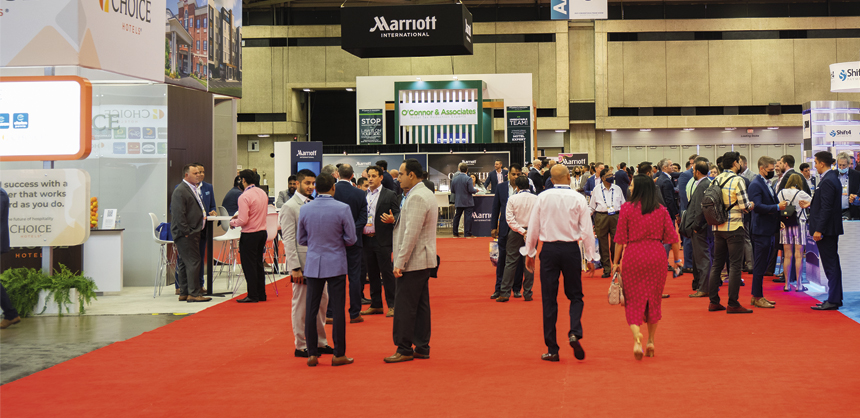
Choosing the right venue is paramount. Pictured: AAHOA event
Selecting a venue for an association meeting or convention has become far more complex than comparing room rates and meeting space. Today’s planners are balancing attendee experience, accessibility, technology, destination appeal, sustainability and budget while also satisfying exhibitors, sponsors, speakers, board members and attendees. With large convention centers booking years in advance and expectations continuing to rise, venue selection has evolved from a logistical exercise into a strategic decision that can shape the success of an event long before the first attendee arrives.
“The venue is one of the biggest decisions you’ll make because it influences nearly every aspect of the attendee experience,” says Alyson Corey, vice president of conventions for the Asian American Hotel Owners Association (AAHOA) in Atlanta, GA. “The earlier you identify what’s truly non-negotiable for your organization, the stronger your event will be.”
That philosophy reflects a broader shift taking place across the meetings and conventions industry. While meeting space, guestrooms and cost remain important, planners increasingly begin the site-selection process by asking how a venue will help accomplish the organization’s goals.
Elaine Howard, CMP, vice president, conferences and meetings, external relations, for the Mortgage Bankers Association (MBA) in Washington, D.C., says her team starts every evaluation with that question. “Cost matters, but it’s no longer the lead factor,” Howard says. “Today, we focus on the full attendee experience – ease of travel, the right hotel package, walkability, networking opportunities and whether the destination adds value beyond the program itself.” Only a few years ago, she says, venue selection centered primarily on space, hotel inventory and pricing. Those fundamentals remain important, but flexibility, attendee engagement and destinations that create memorable experiences have become equally influential.
Defining Today’s Priorities
Every association approaches site selection differently, yet planners consistently agree that understanding the organization’s specific needs comes before evaluating amenities or aesthetics. For Melanie Howe, meetings manager for the Florida League of Cities in Tallahassee, FL, that process begins with making sure the venue is right for the event.
“The most important factor for me is whether the event will fit comfortably in the venue, in a way where most events are located contiguously with each other to minimize inconvenience for our attendees,” Howe says. “If the event won’t fit, there’s no point in considering anything else about the property.”
Keeping educational sessions, exhibits and networking opportunities close together minimizes attendee fatigue while encouraging participation throughout the conference. Howard says attendee flow deserves just as much attention as the meeting space itself because it influences everything from networking to exhibit hall traffic. “One of the biggest lessons I’ve learned is not to underestimate the importance of attendee flow,” Howard says. “How people move through the venue – from registration to education sessions to the exhibit hall and networking events – has a huge impact on the success of the meeting.” A well-designed layout naturally encourages interaction, while confusing floor plans or excessive walking distances can discourage participation and reduce engagement.
Lee Gimpel, founder of Better Meetings in Washington, D.C., reaches the same conclusion from an attendee engagement perspective. Rather than evaluating meeting rooms independently, he encourages planners to consider how the entire event functions.
“I value a sense of exclusivity and compactness,” Gimpel says. “Convention centers may have half a dozen events happening at the same time, and it can become overwhelming and confusing. The event feels much more cohesive and valuable when education, exhibitors and networking are close together.”
That emphasis on thoughtful design extends beyond floor plans. Wide pre-function areas, intuitive wayfinding and inviting gathering spaces make it easier for attendees to connect throughout the conference, reinforcing the idea that successful meetings and conventions depend as much on the overall attendee journey as they do on individual meeting rooms.
Customization is Key
As associations become more diverse, planners increasingly expect venues to accommodate the unique needs of their membership rather than offering standardized meeting packages.
For AAHOA, food has become one of the defining factors in venue selection. Because AAHOA’s membership is predominantly Indian American, authentic cuisine is an essential part of the convention experience. Corey routinely negotiates buyouts of convention centers’ exclusive catering agreements so the association can bring in dedicated Indian caterers for key meals.
“Five years ago, I’d have said the typical rate, room block and walkability were what mattered most,” Corey says. “Today, authentic food access has moved from ‘nice to have’ to a hard requirement from the first RFP. For our community, it’s core to the experience and not negotiable.”
Corey’s experience reflects a larger trend across the industry. Whether accommodating cultural traditions, dietary restrictions or specialized programming, planners increasingly expect venues to demonstrate flexibility during the proposal process rather than after contracts are signed.
Howard says attendee expectations have similarly expanded beyond educational programming alone.
“The biggest shift is increasing the full experience for the members,” Howard says. “We want attendees to leave feeling they gained value, built relationships and had a meaningful time away from the office.”
That expectation has elevated accessibility, walkability and destination amenities to the same level as meeting space and hotel inventory. Today’s attendees expect conferences to provide meaningful networking opportunities alongside memorable experiences that justify the investment of both time and travel.
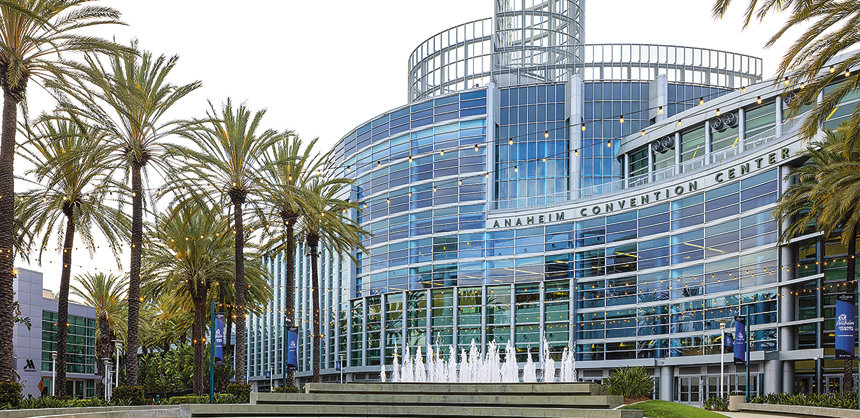
Anaheim Convention Center
The Destination Matters
As associations compete for attendance, destinations themselves have become an important part of the overall value proposition. Accessibility remains one of the strongest predictors of participation, but planners are also looking for locations that give attendees reasons to extend their stay, explore the community and continue networking outside formal sessions.
Howard says direct flights, convenient airport access and walkable convention districts significantly influence attendance. Her organization selected Chicago for this year’s MBA Annual Convention because it combines accessibility with a vibrant downtown environment.
“Chicago is highly accessible for all our members around the country and has a walkable environment around our venue and lots of culture and restaurants for our members’ business needs,” Howard says. “It also offered a strong thematic tie-in with our ‘Come Together’ theme celebrating the American Dream.”
AAHOA evaluates destinations through a similar lens while also recognizing that many attendees travel with family members.
“Turnout is tied to whether the trip feels worth it for the whole family, not just business,” Corey says.
That consideration influenced the association’s decision to hold its 2027 convention in Anaheim. Beyond the appeal of Disneyland, Corey says the close proximity of the convention center to headquarters hotels allows attendees to move easily between convention meetings and events, and family activities, while off-site events create experiences for both attendees and accompanying guests.
Howe also values destinations that offer recreational opportunities and diverse dining options for families. Those amenities enhance the attendee experience while creating natural settings for networking conversations that continue well beyond scheduled programming.
Ultimately, Howard says destination selection comes down to reducing friction while maximizing value.
“We look at accessibility, cost, past performance and member sentiment,” Howard says. “But, the biggest driver is whether the destination and venue provide an environment for all of our stakeholders to have a successful show with the least amount of friction.”
Increasingly, planners are selecting destinations that blend convenience with memorable experiences, recognizing that attendees are investing not only registration dollars but also valuable time away from their organizations. The venues and cities that make those investments worthwhile are the ones most likely to earn repeat business and long-term partnerships.
Designing Spaces for Connection
While logistics remain essential, planners are paying closer attention to how a venue’s physical environment influences attendee engagement. The most effective meeting spaces are designed not only to accommodate people but also to encourage conversation, collaboration and relationship building.
For Gimpel, one of the most overlooked design elements is natural light. “It can be incredibly draining to have people inside windowless rooms for days on end,” he says.
He also believes traditional banquet setups often work against meaningful interaction. Large tables may maximize seating capacity, but they can make conversation difficult during educational sessions and networking events.
“I’m a big believer that small tables often outperform big tables,” Gimpel says. “Venues often default to tables that seat eight or 10 people because they’re convenient. The problem is that those tables make it almost impossible for people to have good conversations.”
Instead, Gimpel favors smaller tables, café seating, standing cocktail tables and flexible furniture arrangements that can easily adapt to different learning environments. Outdoor gathering areas also provide attendees with opportunities to recharge while continuing informal conversations throughout the conference.
Howard agrees that the best meetings and conventions aren’t created by chasing the latest trends but by designing experiences that help the organization reach its goals. “Every decision should support your objectives and your members’ needs,” Howard says.
The most successful meetings and conventions, she adds, “aren’t the ones with the newest ideas – they’re the ones where every detail works together to create value for attendees, exhibitors, sponsors and the organization as a whole.”
Technology as a Competitive Advantage
Technology has evolved from a support service into a critical component of venue selection. Reliable Wi-Fi is now considered a baseline expectation, while planners increasingly evaluate venues based on audiovisual capabilities, digital communications and their ability to support personalized event experiences.
For Corey, digital signage has become indispensable. “I now treat it as essential, not a nice-to-have,” Corey says. “It’s far more creative and interactive than static banners, and it creates sellable, rotating sponsor and exhibitor placements that static signage can’t.”
Digital infrastructure has become more than a convenience. Interactive signage improves attendee navigation, communicates schedule changes in real time and creates additional sponsorship opportunities that generate revenue for associations.
Howard says technology now ranks among her organization’s highest priorities when evaluating venues. She also expects artificial intelligence to become increasingly influential in the industry. AI-powered event platforms are already delivering personalized agendas, networking recommendations and deeper insights into attendee behavior, and Howard believes venues capable of supporting those technologies will have a competitive advantage.
“Technology and keeping the physical space fresh and exciting will continue to grow in importance, along with more flexible, adaptable meeting spaces,” Howard says.
Balancing Diverse Stakeholder Needs
Selecting a venue requires planners to balance the priorities of multiple stakeholder groups, each with its own definition of a successful meeting. Attendees value convenience, education and networking opportunities. Exhibitors focus on exhibit hall traffic, loading access and logistics. Sponsors seek branding opportunities and return on investment, while speakers need dependable technology and functional meeting rooms. Board members, meanwhile, are evaluating budgets, financial risk and member satisfaction.
Howard says success comes from alignment rather than compromise. “Each group defines success differently,” Howard says. “The best venues are flexible enough to support all of these needs without forcing a one-size-fits-all approach.”
Corey similarly believes the key is identifying priorities early, before negotiations are finalized.
“Balancing can be the most challenging act,” Corey says. “At the end of each day, it comes down to making sure each group’s non-negotiables get identified early, before we’re locked into a contract.”
That collaborative planning process helps associations avoid costly changes later while ensuring every stakeholder group has confidence in the final venue selection.
Sustainability, Wellness & Inclusivity
Environmental responsibility and attendee well-being continue to influence venue evaluations, even if they are not always the primary decision drivers. Many hotels and convention centers have expanded sustainability initiatives while offering planners more flexible food and beverage options that accommodate a wider range of dietary preferences.
Wellness has also become an increasingly important consideration. Gimpel believes access to natural light, outdoor gathering spaces and flexible environments helps attendees stay energized during multi-day conferences. Those design elements encourage informal networking while creating convention experiences that distinguish in-person meetings and events from virtual alternatives.
Partnership Over Property
No matter how carefully a meeting is planned, unexpected challenges inevitably arise. Attendance fluctuates, weather affects outdoor functions and program changes often require quick adjustments. As a result, planners increasingly judge venues by the quality of the partnership they provide rather than simply the quality of their facilities.
Howard believes that distinction has become one of the most important aspects of venue selection.
“It’s everything,” Howard says. “The best venues function as an extension of our team – proactive, communicative, solution-oriented and creative. Repeat partnerships come from trust and shared commitment to delivering a strong attendee experience, not just providing space.”
She encourages planners to spend as much time evaluating the people behind the property as they do the building itself. “A beautiful venue can only take you so far,” Howard says. “What really makes the difference is having a team that’s responsive, transparent and willing to work through challenges together.”
Corey agrees, noting that collaborative venues consistently distinguish themselves when unexpected situations arise.
“They say, ‘Let’s figure this out,’ instead of pointing to a clause,” Corey says. “Success should be shared, not one-sided.”
Conversely, she believes a venue’s responsiveness during the RFP process often predicts how it will perform once the event begins. Organizations that communicate openly and approach challenges as partners are far more likely to earn repeat business than those that rely strictly on contract language.
A Strong Outlook
Although attendee expectations continue to grow, financial realities remain central to every venue decision. Rising hotel rates, food and beverage costs, labor expenses and ancillary fees are forcing planners to scrutinize total event costs more closely than ever.
“I’m waiting for price to become a bigger factor in site selection,” Howe says. “With the price of everything increasing, do we reach a point where hotel rates outstrip the average attendee’s ability to pay?”
At the same time, planners must contend with shrinking availability at many of the country’s largest convention centers. Corey says AAHOA’s convention has outgrown many destinations, leaving relatively few venues capable of accommodating the event and prompting the association to secure host cities years in advance.
Howard believes those pressures will continue driving stronger partnerships between associations and venues. Flexible meeting spaces, advanced technology, accessible destinations and collaborative venue teams will increasingly separate successful properties from their competitors.
“Ultimately, destinations that create a compelling reason to gather in person will win,” Howard says. “Information is everywhere, but relationships, experiences and meaningful connections still require being there in person.” | AC&F |