








Projecting SuccessJuly 1, 2026
AV Innovations Engage Attendees By Zach ChouteauProjecting Success
AV Innovations Engage Attendees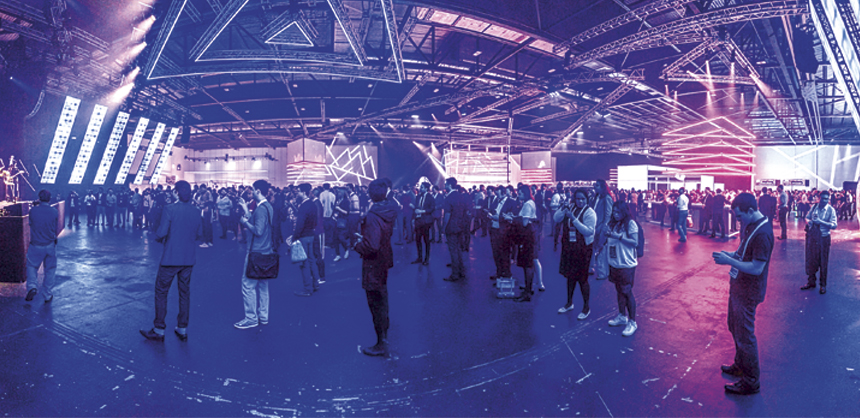
AV not only can help to supply content, but also can drive engagement. Photo courtesy of Encore Global
Content may still reign as king, but when it comes to grabbing attendees’ attention at a conference or other large event, a bit of razzle-dazzle never hurts. Association events aren’t just evolving — they’re accelerating. What once counted as cutting-edge audiovisual is now table stakes and attendee expectations are rising just as quickly.
Hybrid fluency, immersive environments and intelligent automation have gone from “nice extras” to “core infrastructure.” As associations strive to stay relevant, the question isn’t whether or not to innovate, but how fast they can adapt.
But for all the talk about technology, the real story in association events is still human connection. What’s changed is how those connections are made. From AI-driven personalization to immersive LED environments that turn general sessions into shared emotional experiences, modern AV is quietly reshaping the way attendees learn, network and engage. Behind the scenes, a new generation of AV experts is redefining what’s possible.
We plugged in to a trio of top experts in the field, who projected their thoughts clearly on the innovations driving today’s event AV.
Evolving Attendee Expectations in a Tech-Driven Era
Attendee expectations have transformed dramatically in just a few short years. Today’s participants — whether in person or remote — expect experiences that feel as seamless, intuitive and personalized as the technology they turn to every day.
Matt Johnsen, vice president of product management at Encore Global, Schiller, IL, captures this shift clearly. “Today’s attendees expect events to be personalized, interactive and accessible. They no longer want to simply sit through presentations,” he says. “Instead, they want experiences that help them get more value from their time and connect with the presenters and each other.”
This expectation of personalization and interactivity is shared by Denis Shapovalenko, managing director of DEKOM USA in Los Angeles, CA, who notes that “Attendees today expect experiences that feel as smooth and engaging as their everyday tech — like streaming services or video calls. AI-powered cameras that automatically follow speakers, spatial audio that makes sound feel natural and directional, real-time translation and interactive elements have raised the bar.”
The rise of hybrid events has only accelerated these expectations. Remote attendees no longer accept being passive observers. As Shapovalenko explains, “People no longer accept basic video feeds or static presentations. They want seamless hybrid participation where remote attendees feel fully included, plus immersive visuals like large LED walls or XR effects that make sessions more dynamic.”
Johnsen adds that personalization is becoming a baseline expectation, saying, “We’re also seeing increased demand for personalized event journeys. AI-powered recommendations can guide attendees to the most relevant sessions, networking opportunities and content based on their interests.”
Together, these insights paint a clear picture: attendees expect events to meet them where they are — technologically, cognitively and emotionally. And AV is the engine making that possible.
Underused AV Capabilities: Untapped Potential
While AV technology has advanced rapidly, many associations still underuse tools that could dramatically elevate their events, often without any major extra costs or substantial effort.
Johnsen points to a major missed opportunity: extending engagement beyond the live session. “One of the most underutilized opportunities is technology that extends engagement beyond the live session itself,” he explains. “Many planners focus heavily on production logistics but miss opportunities to personalize the attendee experience through accessibility tools, interactive engagement platforms and post-event content delivery.”
He also highlights scenic and lighting elements as often overlooked storytelling tools. “Lighting and scenic technologies are also frequently underused,” Johnsen remarks.
From an audio perspective, he notes that flown speaker systems and fold-back monitors remain underutilized despite their ability to improve sound quality and presenter confidence.
Shapovalenko sees similar gaps. “Many associations rely on standard videoconferencing, but they miss out on powerful tools that could make their events far more effective,” he says. “Key underused capabilities include AI analytics that track real-time engagement, automated session recordings with searchable transcripts, and advanced hybrid streaming with live captioning and translation.”
He adds that interactive features such as live polling, wireless presentation systems and smart room automation are often overlooked — even though they can transform a one-time event into an ongoing resource.
The message from both these experts is clear: associations don’t need more technology — they need to better leverage the technology they already have.
Enhancing Learning, Retention & Engagement
AV innovations are reshaping how attendees absorb and retain information. The shift from passive listening to active engagement is central to this transformation.
Johnsen explains, “AV technology has evolved far beyond microphones and projection screens. Today’s innovations help create more collaborative, inclusive and engaging learning environments that improve both comprehension and retention.”
He adds, “Accessibility tools, such as real-time captioning and translation, help attendees better understand complex content while reducing language barriers.”
Shapovalenko says that “AV innovations make learning more active and memorable by moving beyond one-way presentations. Interactive displays and real-time polling encourage participation, while AI tools deliver instant transcripts, summaries and even personalized follow-up content.”
“Immersive elements — like high-quality LED walls or spatial audio — help information stick by creating a more engaging environment,” he adds.
Both experts emphasize that AV is no longer just about delivering content — it’s about shaping how that content is experienced, processed and remembered.
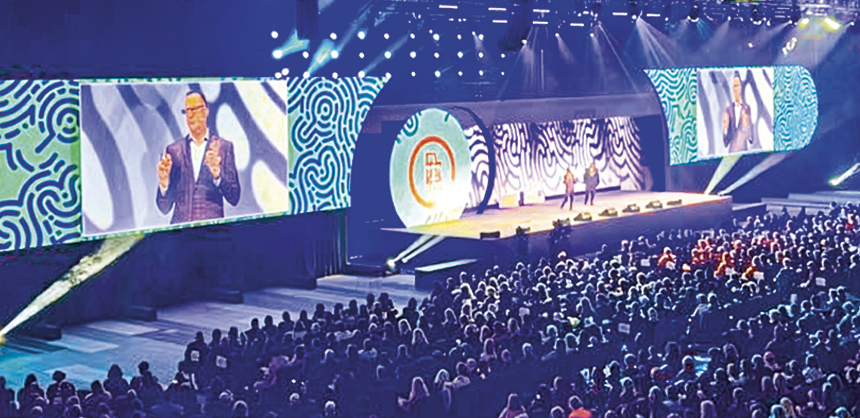
An LED wall can dramatically change the tone of an event. Photo Courtesy of Encore Global
The Rise of Immersive & Intelligent AV
Some of the most exciting developments in AV are those that blend immersion, automation and intelligence.
Johnsen highlights AI as a major driver of innovation, saying, “Artificial intelligence is leading much of this transformation. AI-generated event intelligence can automatically create session summaries, action items and searchable knowledge repositories from presentations.”
He also points to advances in lighting, scenic design and battery technologies that allow for more flexible and creative environments.
Shapovalenko sees AI-driven avatars, modular LED walls, spatial audio and advanced AI cameras as game-changers. “AI agentic avatars act like intelligent assistants — handling Q&A, summarizing discussions and personalizing experiences in real time. Modular LED video walls create dynamic, high-impact visuals with excellent clarity,” he says.
These technologies are not just boosting events — they’re redefining what the event experience can be.
Balancing Innovation With Reliability
Innovation is intriguing, but reliability remains non-negotiable — especially during mission-critical moments.
Patrick Crosson, CMP, DES, chief experience owner at PC Events & Experiences in Chicago, IL, stresses that reliability comes down to preparation. He says, “The only way to truly ensure reliability is with the two T’s — time and testing,” he states. “Too many times we have seen clients try to cut corners on load-in schedules or venue rental hours/days.”
He shares a cautionary tale: “Once we had a client squeeze our load-in time for their rebrand launch event. In doing so, we were not prepared for their C-Suite rehearsals and we actually spent twice the amount of labor having to recalibrate the screens post-rehearsals than we would have needed to if we’d just had the additional two hours originally requested on the front end.”
The lesson is simple: innovation without preparation is a recipe for stress — and unnecessary cost.
Budget-Friendly Wow Factor
Associations often assume that impressive AV requires a massive budget. But, according to the experts, creativity and strategy matter far more than dollars.
Johnsen notes, “In many cases, the greatest impact comes from thoughtful design, personalization and audience engagement.” Personalized welcome messages, tailored content recommendations and interactive elements can elevate the experience without inflating costs.
Crosson emphasizes that LED has become dramatically more affordable, saying, “The significant decrease in LED costs has made the technology much more approachable for smaller-scale events or cost-conscious clients.” He also adds that LED allows for immersive environments without expensive fabrication.
Johnsen additionally highlights modular scenic solutions, decorative drapery and compact audio systems as cost-effective ways to create high-impact experiences.
The takeaway? The wow factor is no longer reserved for big-budget productions.
Designing Experiences Without Distracting From the Message
AV should enhance content, not overshadow it. Crosson explains the delicate balance: “There is a very delicate balance between overdoing content and creating too flashy of a general session. You do not need to constantly shift content or have animations happening the entire hour and a half. Instead, focus on gradual movements.”
He shares an example of subtlety done right: “Once we had a speaker on stage with a full 45-minute monologue. In the background we presented a collage of images relevant to the client’s brand. Every minute a different photo changes. The attendees recognized what was happening in the background without distracting from the speaker’s message.”
But he also notes that dramatic shifts can be powerful when used intentionally. “At another event, we used the entire LED wall and pillar build during the general session for an evening event,” Crosson comments. “The dramatic shift in content being displayed from slides to Mayan animations and jungle was such an intense shift that attendees walked in and couldn’t believe they were looking at the same screens from four hours prior.”
The Future of Association Event AV?
Taken together, the insights from Johnsen, Shapovalenko and Crosson reveal a future where AV is not just a support function — it’s a strategic driver of engagement, learning and connection. Attendees will expect:
- Personalized journeys
- Seamless hybrid participation
- Immersive environments
- Intelligent automation
- Accessibility at every touchpoint
And associations that embrace these expectations will be the ones that thrive.
In the end, the most powerful AV innovations go beyond spectacle and are about creating meaningful, memorable experiences that bring people together in new and impactful ways.
The technology is ready. The expectations are set. The future of association events is being projected right now.
Expanding the Horizon
As the landscape of association events continues to evolve, several emerging trends and innovations are poised to further transform the attendee experience.
Advanced Data Analytics & AI-Driven Insights
Beyond real-time engagement tracking, advanced data analytics are enabling event organizers to gain deeper insights into attendee behavior and preferences. These insights allow for hyper-personalized experiences and more effective content curation.
Johnsen notes, “Data-driven decision making is becoming essential. By analyzing attendee interactions, session popularity and networking patterns, organizers can tailor future events to better meet attendee needs.”
AI-driven insights also help in optimizing event layouts, session scheduling and resource allocation, ensuring smoother event flow and enhanced attendee satisfaction.
Virtual & Augmented Reality Experiences
Virtual reality (VR) and augmented reality (AR) technologies are increasingly being integrated into events to create immersive and interactive experiences that transcend physical limitations.
These technologies also support hybrid events by providing remote attendees with immersive participation options, bridging the gap between physical and virtual presence.
Sustainable & Eco-Friendly AV Solutions
Sustainability is becoming a priority in event planning and AV technology is adapting accordingly. Energy-efficient LED displays, reusable scenic elements and low-power audio equipment contribute to greener events.
Crosson highlights, “Sustainable AV solutions not only reduce environmental impact, but also resonate with increasingly eco-conscious attendees, enhancing brand reputation.”
Incorporating sustainability into AV design can also lead to cost savings through reduced energy consumption and material reuse.
Enhanced Networking & Social Interaction Tools
Innovative AV solutions are facilitating deeper networking and social interactions among attendees. AI-powered matchmaking, virtual networking lounges and interactive social walls encourage meaningful connections.
Johnsen shares, “Technology that fosters genuine connections is key. Tools that recommend relevant contacts and enable spontaneous interactions help attendees build valuable relationships.”
These features are especially important in hybrid settings, where remote attendees often struggle to engage fully.
Real-Time Feedback & Adaptive Content
Real-time feedback mechanisms, such as live polls and sentiment analysis, allow presenters to adjust content dynamically based on audience reactions.
Shapovalenko notes, “Adaptive content delivery keeps sessions relevant and engaging, ensuring attendees remain attentive and involved.”
This responsiveness enhances the overall event experience and maximizes the value attendees derive.
Integration With Mobile Apps & Wearables
Mobile apps and wearable devices are becoming central hubs for event engagement, providing personalized schedules, interactive maps and instant notifications.
Crosson explains, “Integration with wearables allows for seamless check-ins, health monitoring and personalized content delivery, creating a more connected and convenient experience.”
These technologies also enable gamification elements, encouraging participation through rewards and challenges.
The Stage is Set
The future of association events is bright and dynamic, driven by a blend of innovative AV technologies and a deep understanding of attendee needs. By embracing these advancements, associations can create experiences that are not only memorable but also meaningful, fostering stronger connections and lasting impact.
As the industry continues to innovate, the key to success will be balancing cutting-edge technology with thoughtful design and human-centered experiences. The journey is ongoing, and the possibilities are limitless.
The stage is set, the spotlight is on, and the future of association events is being shaped by the smart and strategic use of AV innovations that truly engage attendees. | AC&F |