









New OrleansNovember 2, 2026
Made for Meetings By Zach ChouteauNew Orleans
Made for Meetings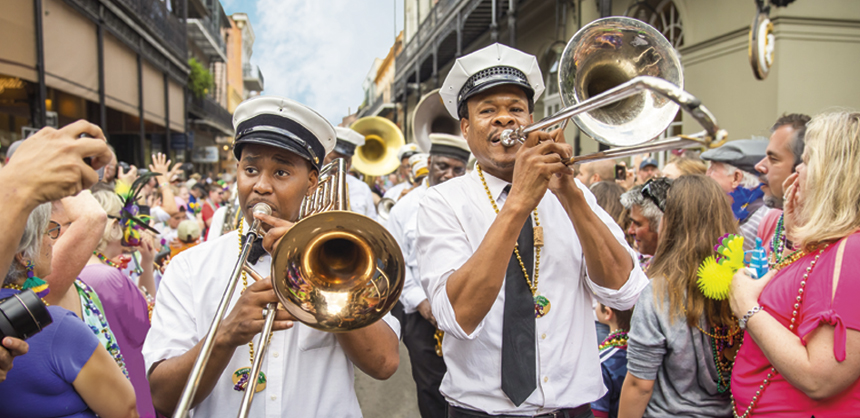
Association planners on the hunt for a meeting destination with a true sense of place will find the Bayou State — and its shining star, New Orleans — perfectly positioned for their next big event.
Across Louisiana, state-of-the-art convention facilities, authentic culinary heritage, walkable event districts and legendary Southern hospitality come together to offer attendees an experience they simply cannot find anywhere else. While New Orleans anchors the state’s world-class convention infrastructure, regional hubs like Baton Rouge and Shreveport-Bossier offer distinct capital-city prestige and rich North Louisiana culture, providing associations with a versatile, high-value menu of host cities.
New Orleans: Built To Host
Even the totally uninitiated know about Bourbon Street — the most famed party promenade on the continent — and the surrounding French Quarter. But what many association leaders might not be aware of is the city’s endless offerings elsewhere. Beyond the storied balconies of the Quarter lies a sprawling ecosystem of vibrant sectors, world-renowned dining, unique attractions and rich cultural offerings that elevate association gatherings from standard group assemblies to immersive cultural journeys.
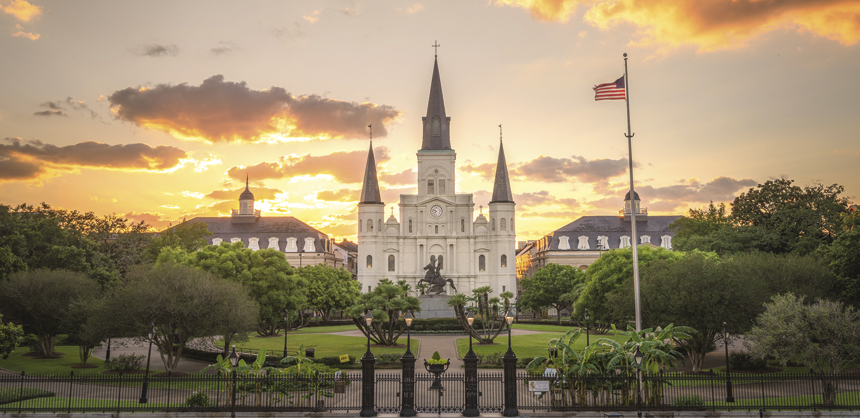
St. Louis Cathedral overlooks Jackson Square in the French Quarter.
Deep Expertise & Turnkey Partnerships
At the core of New Orleans’ appeal is an industry-wide experience level that few cities in North America can match. The destination has spent decades catering to the nuanced meetings of association executives, board members and event managers.
“I think one of the biggest things is New Orleans has been a hub for association meetings, from small gatherings to major annual meetings — like all of the medical conventions we’re hosting this year — for decades,” explains Stephanie Turner, senior vice president of convention sales & strategies at New Orleans & Company. “The association market in itself, covering all of its specialties from educational through medical and all other sectors, is something New Orleans understands very well. We also understand that these meetings are an important part of how these associations run and are funded, and attendance is a vital component of that success.”
Turner notes that New Orleans’ long-standing track record directly impacts an association’s bottom line by consistently driving high registration numbers. “We’ve enjoyed being a great partner to association customers for decades, and we are very proud of the strong attendance that our city draws, both from an attendee and an exhibitor standpoint,” she shares. “A lot of that comes down to the sheer ease of doing business in New Orleans.”
Indeed, the tagline “Built to Host” is more than a marketing slogan — it is an operational philosophy shared by the local hospitality community.
“The professionals here in New Orleans have worked with many association customers for decades,” Turner says. “Those built-in relationships bring a deep understanding of what groups need to be successful. That long-term experience positions New Orleans exceptionally well. Furthermore, when you look at the proximity of everything — even when you’re hosting a single-hotel meeting rather than utilizing the convention center — all 26,000 downtown hotel rooms are located within two and a half miles of major attractions, award-winning restaurants and off-site venues. That close proximity fosters a natural sense of community within a conference that is so important for networking.”
Versatile Hotel Inventory & Unforgettable Logistics
New Orleans’ hotel landscape caters to every size and scope of gathering, from intimate C-suite executive retreats to massive multi-building citywides.
“Half of what our team brings to New Orleans is single-hotel meetings and half are citywide conventions,” says Turner. “Association meetings often have critical small board meetings that serve as drivers for where the larger group ultimately decides to go. Whether you have a meeting of 50, 100 or several hundred, having 26,000 incredibly diverse hotel rooms — ranging from luxury upper-upscale properties to massive convention hotels — makes the destination remarkably versatile.”
When it comes to moving attendees between host hotels, meeting spaces and off-site receptions, New Orleans offers a transportive experience that transforms routine logistics into an event highlight: the second line parade.
“There are endless off-site venues where groups can host unforgettable events,” Turner notes. “What is so fun is that you can move people through New Orleans using a mode of transportation you won’t find anywhere else. The second line is a traditional brass-band parade celebration deeply rooted in our culture. If you are staying at a hotel on the edge of the French Quarter or downtown, instead of loading attendees onto motorcoaches, you can parade them down the street behind a live brass band to off-site venues, neighborhood restaurants or Mardi Gras World. It’s not only environmentally friendly and cost-effective — it immediately immerses guests in the joy of the city.”
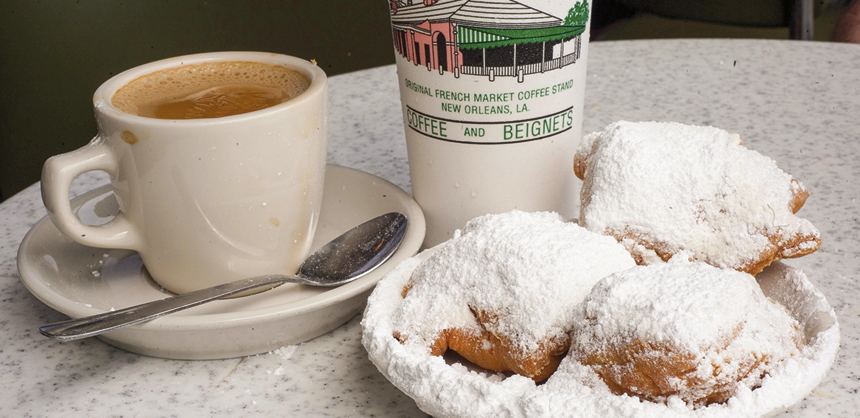
Beignets from the famous Cafe Du Monde.
Neighborhood Immersion & Private Dining
Gatherings in New Orleans offer attendees an unparalleled array of neighborhood experiences. Planners can design itineraries that stretch far beyond the night-life scene to embrace history, outdoor recreation, fine art and wellness.
“We love showcasing our authentic neighborhood experiences,” says Turner. “Within the French Quarter, there is immense history, hidden courtyards, boutique museums and cultural hubs like The Historic New Orleans Collection. Just adjacent to the convention center area is the Arts/Warehouse District, featuring a vibrant contemporary art scene, the Contemporary Arts Center, world-class institutions like The National WWII Museum and the Museum of Southern Jewish Experience, plus dozens of commercial art galleries.”
Other distinct districts include:
- Central Business & Sports Districts: Home to the Caesar’s Superdome and the Smoothie King Center, giving delegates the opportunity to catch NFL or NBA games during their stay.
- Historic Tremé: Settled in 1783, Tremé is considered to be America’s oldest African American neighborhood and the birthplace of foundational brass band traditions.
- Uptown & Garden District: Accessible via the city’s iconic streetcar lines, featuring oak-draped avenues, historic mansions and premier dining.
- Mid-City & City Park: A sprawling urban green space larger than New York’s Central Park, ideal for outdoor enthusiasts.
- Governor Nicholls Street Wharf & Riverfront: A 2.25-mile riverfront linear park space perfect for outdoor wellness activities, morning fun runs, live music and open-air receptions right along the Mississippi River.
New Orleans’ legendary culinary landscape also provides unmatched flexibility for group dining. While classic Creole and Cajun cuisines remain fan favorites, the city’s dining scene has evolved into a global culinary crossroads.
“People know us for Creole and Cajun, which is incredible, but we also have fantastic fusions of different food cultures,” Turner adds. “Crucially for planners, a vast number of our restaurants feature multiple private dining rooms that can comfortably seat anywhere from 20 to 50 to several hundred guests. Whether you want private dining uptown at iconic establishments like Commander’s Palace, in the French Quarter at historic dining rooms like Arnaud’s, Broussard’s, Brennan’s or Antoine’s, or in modern spaces across the Central Business District, the options allow planners to tailor experiences perfectly to their budget and style.”
Transformative Upgrades at the Convention Center Campus
At the heart of the city’s large-scale meeting capability is the New Orleans Ernest N. Morial Convention Center (ENMCC). Already recognized as one of the largest and most flexible convention facilities in the nation, the venue is currently undergoing a sweeping physical and technological evolution.
“The New Orleans Ernest N. Morial Convention Center is in the midst of a transformative $763 million Capital Improvement Plan that is enhancing nearly every aspect of the attendee experience while allowing the facility to remain fully operational,” says Elaine Williams, chief commercial officer at ENMCC. “Renovations include 140 modernized meeting rooms, upgraded lobbies and pre-function spaces, new public art installations by Louisiana artists, custom interior finishes with New Orleans influences, and significant sustainability investments, including a 40-acre energy-efficient cool roof, LED lighting, and water-saving fixtures.”
Williams emphasizes that the vision extends well beyond the walls of the main exhibit building to encompass an integrated convention campus.
“Beyond the facility itself, planners should be very excited about the Convention Center campus as a whole,” Williams explains. “The future Omni New Orleans Convention Center Headquarters Hotel and the adjacent River District neighborhood will create a vibrant, walkable destination featuring new hotels, dining, retail, entertainment and public green spaces. This will make it even easier for attendees to stay, meet and experience New Orleans without ever leaving the campus footprint.”
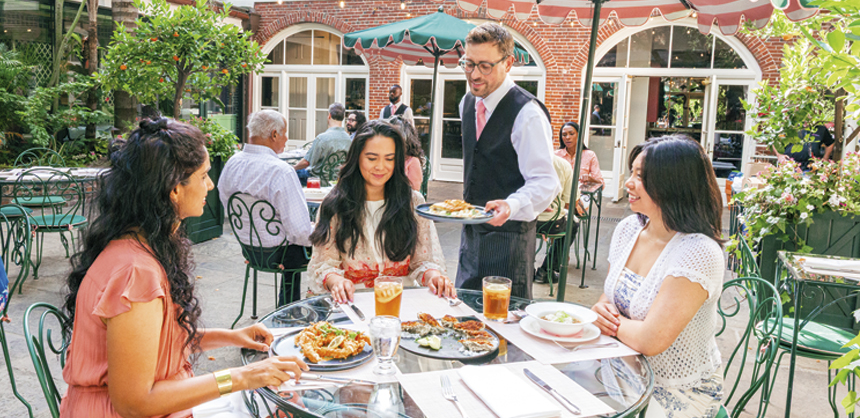
Fine dining at Brennan’s in the French Quarter.
Adapting to Modern Association Trends
The ongoing capital improvements align directly with how association planner requirements are shifting in a post-pandemic event landscape.
“We are seeing associations place greater emphasis on creating holistic experiences rather than simply hosting meetings,” Williams shares. “Flexible meeting rooms, inviting pre-function spaces and thoughtfully designed gathering areas are becoming just as important as exhibit halls. They give attendees more opportunities to network, collaborate and connect spontaneously throughout an event. Our ongoing renovations are designed with these evolving expectations in mind, creating spaces that are both highly functional and reflective of New Orleans’ unique culture.”
Environmental stewardship is another major factor driving modern association venue selection. “We are seeing increased interest in sustainable meeting destinations,” Williams notes. “Organizations actively look for venues that align with their corporate social responsibility and environmental goals. Our heavy investments in energy efficiency, waste diversion and sustainable operations help planners meet those key objectives while delivering an exceptional experience.”
The facility’s geographic orientation remains one of its greatest operational assets. “The campus sits right within the vibrant Arts/Warehouse District and is within easy walking distance of the historic French Quarter, award-winning restaurants, museums, live music and riverfront attractions,” Williams adds. “As our Capital Improvement Plan continues alongside the development of the Omni headquarters hotel and the River District, planners will benefit from an even more connected, pedestrian-friendly environment.”
Planner Perspective
To understand the real-world impact of hosting an event in New Orleans, one needs to look no further than the Association of periOperative Registered Nurses (AORN). AORN hosts the premier perioperative conference in the United States, gathering perioperative nurses at every career stage for evidence-based education, professional networking and hands-on engagement with surgical technology.
“AORN is proud to partner with New Orleans in producing our annual conference every four years,” remarks Emily O’Connell, meetings director at AORN. “The teams at New Orleans & Company and the Ernest N. Morial Convention Center are top-notch. They provide AORN Expo attendees, exhibitors, show management and our production partners with an excellent experience every single time we host our conference in the city. ”
AORN’s return to New Orleans in 2026 proved to be a milestone event for the organization. “We achieved our highest post-pandemic attendance at the AORN Expo 2026 in New Orleans and received extremely positive Net Promoter Scores and satisfaction ratings from both attendees and exhibitors,” O’Connell reports.
During the 2026 gathering, AORN introduced innovative floor programming, including the new Educator Hub — a dedicated destination for perioperative educators offering evidence-based teaching strategies, training approaches and practical tools to support staff onboarding and competency development.
Off-site, the group took full advantage of the city’s entertainment inventory. The AORN Foundation held its annual “Bayou & Beyond Party” at Republic NOLA, bringing together nearly 1,000 conference participants for an evening of live music, dancing and fundraising. Meanwhile, AORN leadership and staff enjoyed private group dining across the city at spots like Mr. B’s Bistro, King Brasserie + Bar, and Commander’s Palace, complemented by local ghost tours and nightly jazz performances.
O’Connell’s advice to fellow association planners evaluating the destination is simple and exuberant: “Enjoy! Every partner in New Orleans is deeply committed to your success and will treat your event participants to generous, authentic hospitality — whether you are at the Convention Center, in a hotel, at a restaurant or visiting a local attraction.” | AC&F |