







Long-Lasting LessonsSeptember 2, 2026
Delivering Learning That Sticks at Meetings & Events By Zach ChouteauLong-Lasting Lessons
Delivering Learning That Sticks at Meetings & Events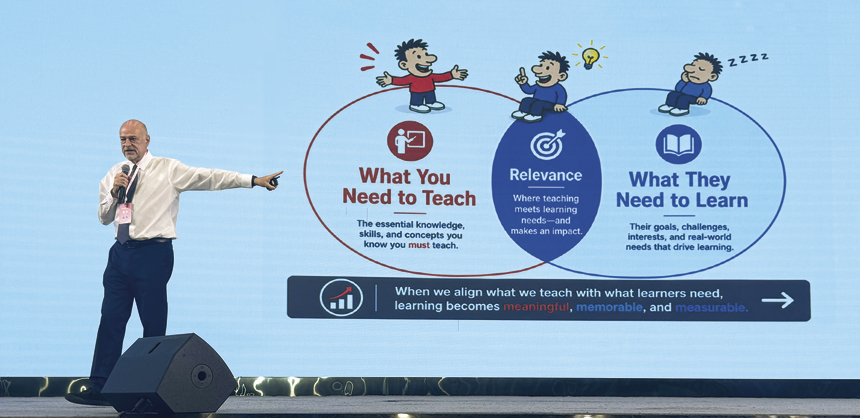
The most powerful learning happens where what we teach meets what learners need. Photo courtesy of Meducate Global, LLC
In an era defined by information overload, shrinking attention spans and attendees who expect instant engagement the moment they walk into a room, meeting planners face a formidable challenge: how to deliver educational experiences that not only resonate in the moment but endure long after the event concludes.
The most successful learning experiences at today’s conferences are not the ones that attendees leave behind at the convention center door. They are the ones that follow them home — informing decisions, shaping behaviors and influencing professional practice long after the final session ends.
To understand how planners can create learning that truly sticks, we spoke with a range of educators, facilitators and event experts who specialize in teaching adult audiences. Their insights reveal a clear shift in how learning must be designed, delivered and reinforced in order to meet the expectations of modern attendees. What emerges is a portrait of an industry moving away from passive information delivery and toward immersive, participatory, emotionally resonant experiences.
Information Everywhere, Retention Nowhere
The challenge for today’s meeting planners is not a lack of content. If anything, it’s the opposite. Attendees are inundated with information from the moment they wake up. Every keynote can be summarized by AI. Every slide deck can be downloaded. Every concept can be Googled in seconds.
As Ira Rosen, MA, CFEE, CED, Founder of Ira L Rosen, LLC festival & event consulting and adjunct associate professor of event and entertainment management at Temple University in Philadelphia, PA, explains, “We’re living in an age of information overload. Every presentation can be downloaded, every slide deck can be shared, and AI can summarize an hour-long session in seconds. That means the old model of conference education simply isn’t enough anymore.”
Rosen notes that the challenge for planners has shifted dramatically. “For association meeting planners, the challenge is no longer delivering information — it’s creating experiences that help attendees connect with, remember and apply that information,” he says. “In a convention environment packed with competing sessions, networking opportunities, exhibit halls and endless digital distractions, valuable content can easily get lost in the noise.”
The implication is clear: information alone is no longer the value proposition. What matters is the experience around it — the context, the engagement, the emotional resonance and the practical application. Without those elements, even the most carefully crafted content risks becoming just another forgettable data point in an already crowded mental landscape.
The Shift Toward Active Learning
One theme echoed by every expert we spoke with is the industry-wide shift away from passive learning. The traditional model — speaker at the front, audience in rows, lights dimmed, slides advancing — simply doesn’t cut it anymore.
Rosen is blunt about this shift. “The days of the passive, one-hour keynote featuring a speaker talking at an audience are fading fast,” he states. “Sitting in a dark room listening to a generic lecture rarely creates lasting value. Today’s attendees want to be involved, not just informed.”
This shift is reinforced by Nikita Khandheria, founder and CEO of ERIA in Sausalito, CA, who brings a fresh, experience-driven perspective to the conversation. She challenges one of the most persistent misconceptions in event education: that content alone determines retention.
“One of the biggest misconceptions I see is that people think learning sticks because of the content,” she explains. “In reality, learning sticks because of the experience.”
Khandheria has seen this dynamic play out repeatedly. “I’ve led plenty of events with incredible speakers where attendees couldn’t remember half of what was said a week later,” she says. “At the same time, I’ve seen sessions with relatively simple content become the most talked-about part of an event simply because people were actively involved in it.”
For her, the formula is straightforward but powerful: “Delivering learning that sticks comes down to two things: having a genuinely engaging speaker and creating opportunities for participation,” she comments. “The traditional format of putting someone on stage for an hour while everyone passively listens is becoming less effective, especially as attention spans shorten and audiences become accustomed to more interactive forms of content.”
Her insights reinforce a growing consensus: participation is no longer optional — it’s essential.
Understanding How Adults Learn
To design learning that sticks, planners must understand how adults actually learn. And that means moving beyond the outdated assumption that all learning is the same.
Lawrence Sherman, FACEHP, FRSM, CHCP, global health professions educator and President of Meducate Global, LLC in Delran, NJ, stresses grounding session design in learning science. “There are so many principles, and they are really based on what you are trying to achieve. Is it a change in knowledge, competence, confidence, performance or something else,” he explains. “It is also based on the needs of the actual participants in the room.”
Sherman emphasizes that adult learning is fundamentally different from childhood learning. “So many people use the word pedagogy, but use it incorrectly. Pedagogy is how we teach children, in a teacher-centric model with no autonomy. At conferences and events, we are working with adults, who learn very differently. They are driven to seek information and education to solve real-world problems that arise at work or even in life.”
He explains that adult learning exists on a continuum. “Some people will change immediately, while others need to be exposed to additional information and education before making a change, and this could take up to a year or more,” he says,
Shannon Gregg, PhD, MBA, president of Cloud Adoption Solutions in Pittsburgh, PA, echoes this emphasis on adult learning theory. “When I’m designing sessions, the process is anchored in andragogy, Adult Learner Theory,” she remarks.
Gregg also highlights the importance of addressing the “why.” “I know that adults learn best when the ‘why’ is addressed, and the old principle is ‘tell them what you’re going to tell them, tell them, tell them what you’ve told them.’”
This structured reinforcement helps ensure that key messages are not only heard but internalized.
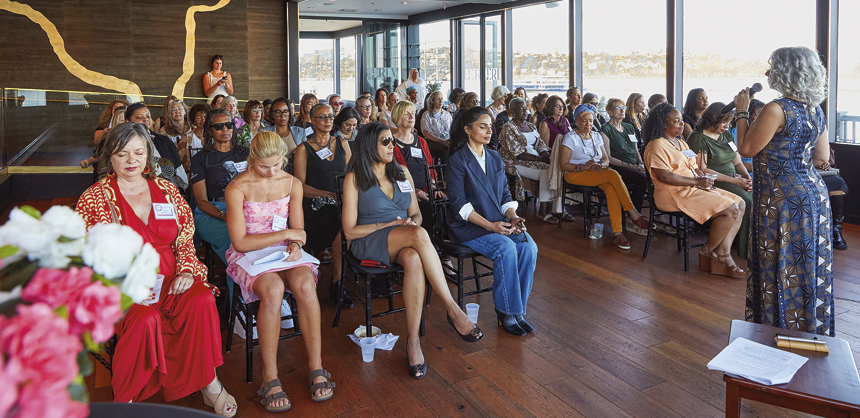
Speaker events, such as this one at ERIA Sausalito, should be supplemented with other types of learning to better engage attendees.
Designing for Engagement
If passive listening is out, then what’s in? Our experts offered a wide range of engagement strategies that consistently work for adult learners in conference settings.
Real-Time Needs Assessment: Sherman begins every session by assessing the room. She says, “I always prepare to address the middle of the spectrum, but I perform a real-time needs assessment of the room when I start my presentation. Why are they there? What do they hope to leave with to help them in the job?”
Interactive Tools (Used Wisely): Sherman acknowledges the value of polls and tech-based engagement — with certain reservations. “These are good with two caveats: the presenters need to be trained how to respond to the results… and they should be used to support the discussion, placed appropriately and not overused. There is such a thing as in-session question fatigue.”
Storytelling & Case-Based Scenarios: Gregg leverages narrative to keep audiences engaged. “Adult learners have a low tolerance for passive listening. I use storytelling techniques, case-based scenarios, gamification, frameworks and ask the audience to participate in various ways,” she says.
Experience Over Presentation: Khandheria expands the conversation by emphasizing the power of experiential formats. “The sessions that perform best are the ones that feel less like presentations and more like experiences,” she says. She recalls a recent example: “We brought in an AI specialist to speak at one of our events. Instead of preparing a traditional keynote presentation, we introduced him to the group and turned the entire session into a conversation. Attendees asked questions, challenged ideas, shared their own experiences and the speaker responded in real time.” The result? “People left feeling energized, engaged and genuinely excited about what they had learned. The reality is that you can watch a presentation on YouTube. What you can’t replicate is the experience of having a live conversation with someone,” she says.
Crowd Work & Participation: For Khandheria, this is where the magic happens. “Crowd work is one of the most powerful educational tools available. Whether it’s live demonstrations, audience participation, simulations, workshops, games or using real audience examples to illustrate a point, people retain information when they become part of the learning process rather than simply observing it,” she says.
Peer-to-Peer Learning: Rosen notes that interactive formats often outperform lectures: “Peer-to-peer problem solving, workshops, facilitated discussions and live audience Q&A often create far more value than traditional lectures,” he says.
Improvisation & Flow: Sherman draws on his background in standup comedy. “Some of my engagement techniques,” he explains, “are really based on the flow of the session and are based on improv.”
The common thread across all these approaches is active involvement. When attendees participate rather than just listen, they remember.
The Power of Practical Application
One of the main themes across all expert insights is the importance of practical, actionable takeaways.
Rosen puts it plainly: “Most professionals don’t attend association meetings looking for abstract theories. They come seeking solutions to real-world challenges they face every day.”
He argues that planners must design with the end result in mind. “Instead of asking, ‘What does the speaker want to talk about?’ planners should ask, ‘What will attendees be able to do differently when they get back to work?’”
Eric Sachs, head instructor and owner of RawHyde Moto Adventures in Castaic, CA, brings a unique perspective from the world of adventure motorcycle training. His approach is built entirely around application. “My best practice is to build education as a progression, not a standalone talk. At Rawhyde, we don’t throw riders straight into advanced terrain; we use stepping stones.”
Sachs believes association events should follow the same model: “Beginner-friendly entry point, deeper breakout, then a practical application session tied to an actual challenge members face.”
Khandheria’s philosophy aligns closely with this. For her, memorable learning is inseparable from meaningful action. “If attendees are having fun, interacting with the content and emotionally connecting with the experience, they’re far more likely to remember what they learned,” she explains. “The goal shouldn’t be to deliver information. The goal should be to create memorable moments that happen to contain information.”
Designing for Diverse Needs
Today’s conference audiences are more diverse than ever — professionally, generationally, culturally and cognitively. Designing education that resonates across this spectrum isn’t an easy task.
Sherman believes the key lies in delivery, not dilution. “The slides are the supportive tools, and the presenter and oral presentation are the actual meat of what is provided. The presenter needs to be comfortable to adapt to the level of participants.”
He also encourages leveraging the expertise in the room. “Some things that can be done include using more experienced attendees who would otherwise be disinterested as extended faculty by asking for comments or a show of hands regarding the topic,” says Sherman.
Gregg takes a multimodal approach. “It’s critical to take an inventory of exactly who will be in the room, so that the content matches their industry, level and interests,” she shares. “I use a multi-modal delivery method, knowing that learners may be auditory, visual or kinesthetic.”
Khandheria adds that emotional connection is a universal equalizer. Regardless of background or learning style, people learn more effectively when they feel involved, valued and engaged.
Measuring What Matters
One of the most difficult challenges in event education is measuring whether learning actually sticks once attendees return to their daily routines. Sherman calls this “the secret sauce.” “You can use a commitment to change, with specifics, as a surrogate measure of actual change but it isn’t an exact science,” he says.
Gregg focuses on behavioral evidence. She says, “The true measure is whether behavior has actually shifted in response to what the audience has learned.”
She also uses follow-up communication to reinforce and track learning. “If I’ve used a QR code, they’ll enter a journey where I will send tips, tricks and ways to apply the learning across time.”
Khandheria emphasizes emotional resonance as a predictor of retention. “People rarely remember every slide they saw, but they almost always remember how an experience made them feel,” she says.
That emotional anchor becomes the bridge to long-term application.
The Follow-Through Factor
Learning doesn’t end when the session does. In fact, for many attendees, the real learning begins once they return to work and attempt to apply what they’ve learned.
Gregg uses a combination of digital follow-up and personal commitment. “I also ask the audience to commit to one change they’ll implement as soon as they return to work,” she says, “and have them write it down, as we know that makes it stick more.”
Sherman encourages post-session discussions for those who need additional support. Sachs builds follow-through into the structure itself, using progressive stages that reinforce one another.
Khandheria’s approach extends beyond the session: “If attendees are emotionally connected to the experience, they’re far more likely to follow through on what they learned.”
The Planner’s Role
Across all expert insights, one truth emerges: the role of the meeting planner has evolved dramatically. Planners are no longer simply schedulers or logistics managers. They are learning architects.
Rosen captures this shift perfectly, saying, “The conventions that stand out today are the ones that stop treating education as another item on the agenda and start treating it as an experience.”
Gregg underscores the importance of intentional design. Sachs warns against overpacking agendas. And Khandheria adds a crucial reminder: planners aren’t just curating content — they’re curating experiences.
Creating Learning That Lasts
In a world where information is abundant but attention is scarce, the true value of meetings and events lies not in the volume of content delivered, but in the quality of learning experienced.
The experts agree on several core principles:
- Engagement beats passive listening
- Adults learn best when content is relevant, practical and participatory
- Learning is a continuum, not a moment
- Diverse audiences require diverse delivery methods
- Follow-through is essential for real-world application
- Planners must design experiences, not just sessions
As Rosen puts it, “At the end of the day, content alone isn’t enough. Without audience engagement, even the best information can become just more noise.” | AC&F |