







Exhibition ExcellenceSeptember 2, 2026
What You Need to Know About Booth & Expo Management By Zach ChouteauExhibition Excellence
What You Need to Know About Booth & Expo Management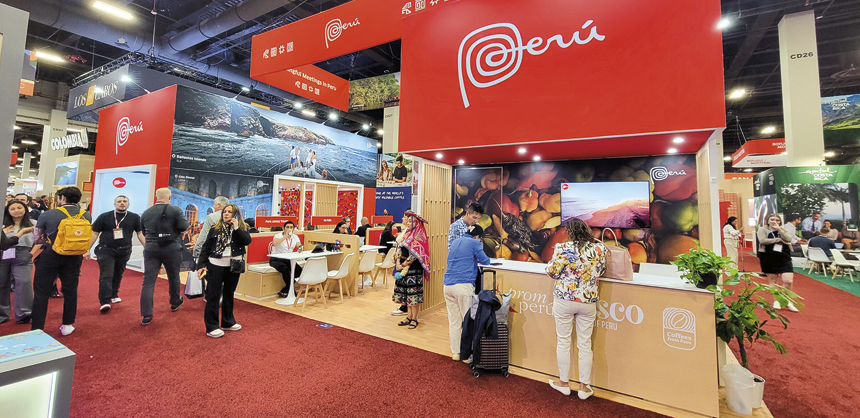
Association exhibitions in 2026 are no longer quiet aisles filled with passive displays and leisurely attendees. Today’s expo environment is fast, competitive and aiming to immerse and engage. Attendees want interactivity, clarity and value. Exhibitors want measurable outcomes, not just foot traffic. Leadership wants financial performance and attendee satisfaction. And planners are expected to orchestrate all of it — whether their focus is booth-level execution or full-floor strategy — with precision and creativity.
To understand what association planners need to know right now, we gathered insights from four seasoned experts: Elaine Williams, CMP, CEM-AP, CVE, chief commercial officer of the New Orleans Ernest N. Morial Convention Center; Kimberly Allen, managing partner and chief experience officer of Something Fabulous in Lake Orion, MI; Syeda Sultana, COO of Vetted in San Francisco, CA; and Diana Maldonado, CEM, director of business development – expos & media with the International Facility Management Association (IFMA) in Houston, TX. Their combined experience spans venue operations, general contracting, exhibitor strategy, data-driven ROI and association-side exhibition management. And together, they paint a clear picture of what it takes to elevate exhibitions today: integration, communication, measurement and a willingness to rethink what an exhibit hall is supposed to be.
The Exhibit Hall as Part of the Attendee Journey
One of the strongest themes across all four experts is that the exhibit hall can no longer be treated as a separate, siloed component of the event. It must be woven into the attendee experience from the moment they arrive until the moment they leave. Exhibitions that feel disconnected from the rest of the program simply don’t attract the traffic or engagement exhibitors expect.
Williams emphasizes this shift when she notes that “the most successful associations treat the exhibit hall as a strategic part of the attendee experience rather than simply a revenue source,” adding that this perspective is equally clear to her when she serves as an exhibitor herself. Maldonado echoes the same sentiment from the association side, explaining that “the strongest conferences connect education, networking and the expo experience,” because when attendees see value in spending time with exhibitors, “engagement becomes more natural and beneficial for everyone involved.”
This alignment — venue leadership and association leadership saying the same thing — reflects a broader change in attendee behavior. Attendees no longer wander the floor without purpose. They move intentionally, and if the exhibit hall feels like an optional add-on, they simply won’t even go. Including learning, attendee mixing and interactivity directly into the hall helps shift that perception.
Thoughtful scheduling also plays a major role. Maldonado points out that “limiting competing activities and creating opportunities for meaningful interaction often have a greater impact than simply driving traffic through the aisles.” Exhibitors don’t just want bodies, they want conversations, decision-makers and engagement. When the exhibit hall is positioned as a core part of the attendee journey, not a competing destination, those interactions become far more likely.
Designing a Floor Plan That Works
A well-designed floor plan is not about maximizing booth count. It’s about maximizing attendee comfort, flow and engagement. Overcrowding is one of the biggest mistakes planners make, and it can undermine the entire exhibitor experience.
Williams cautioned that planners should avoid “overcrowding the floor with booths at the expense of attendee comfort and circulation,” noting that natural gathering points and intuitive pathways are essential. “Design the show floor with attendee flow in mind,” she says, “creating natural gathering points and reasons for attendees to spend time in the hall.”
This is where planners often underestimate the power of micro-spaces: lounges, learning pods, demo zones and even strategically placed food stations. As Williams puts it, “if you feed them, they will come,” a reminder that food and beverage can be a powerful tool for drawing attendees deeper into the hall.
Equally important is avoiding the separation of key activities from the exhibit floor. Williams notes that when CEU sessions or major networking events are held far from the hall, “it is hard for the exhibitors to compete,” because attendees naturally gravitate toward the programming that feels most essential. Integrating those activities into or adjacent to the hall helps maintain steady traffic and reinforces the idea that the expo is part of the event’s core value.
The takeaway is simple: floor design is attendee design, and attendee design is exhibitor value. When the space feels comfortable, intuitive and worth exploring, exhibitors benefit — and so does the event as a whole.
Booth Level Engagement:
What Works in 2026
While exhibition management is a macro-level responsibility, booth-level engagement remains the micro-level engine that drives exhibitor satisfaction. And in 2026, passive booths simply don’t work. Attendees expect interaction, not observation.
Williams has seen this shift firsthand, explaining that “one trend that has become increasingly effective is creating experiences rather than simply displaying products or services.” She offers a range of examples, including “interactive demonstrations that allow attendees to participate rather than observe,” as well as micro-learning sessions, gamification elements like scavenger hunts or passport programs, hands-on technology demonstrations and social media activations that encourage attendees to share content from the exhibit hall.
What separates the most successful booths, she says, is that they “focus on creating a memorable experience and meaningful conversation rather than relying solely on giveaways.” This is a critical insight for planners, because exhibitors often need guidance not on what to bring, but on how to engage.
Providing exhibitors with attendee demographic data, examples of successful booth activations and templates for micro-learning sessions can help them design experiences that resonate. Encouraging exhibitors to think beyond static displays and toward participatory engagement can transform the energy of the entire hall.
Communication, Coordination & Exhibitor Relations
If there is one universal truth across all four experts, it is this: communication makes or breaks an exhibition. Exhibitors cannot succeed if they do not know what to expect, what is required or how to prepare.
Maldonado emphasizes that “communication matters,” explaining that exhibition management “starts long before move-in day.” Clear communication about deadlines, logistics, attendee demographics and event expectations helps exhibitors prepare, measure success, and maximize their investment.
Allen expands this idea into a full operational philosophy, noting that “candid communication is good communication,” because it involves telling people “what they need to know, not what they want to hear.” Transparency, she says, is essential — and it must be consistent.
Allen also highlights a common but often overlooked challenge: the person who purchases a booth or sponsorship is rarely the same person who coordinates the details, and that person is often different from the one who shows up onsite. “Pay attention to capturing contact information early in your planning and share that information,” she says, because while it’s exciting to celebrate sales numbers, “delivering on those sales involves logistics management,” and logistics require the right people to receive the right information at the right time.
Williams reinforces the importance of feedback loops, noting that planners should “solicit exhibitor feedback before and after the event,” because pre- and post-event surveys can reveal insights that reports alone cannot. Walking the show floor during the event, she adds, is one of the most valuable ways to understand attendee behavior and identify opportunities for improvement.
Communication is not a task — it is an infrastructure. And when that infrastructure is strong, exhibitors feel supported, attendees feel informed, and planners can anticipate challenges before they become problems.
Budgeting, Contracting & Venue Realities
This is where Allen’s expertise becomes invaluable. Her experience moving a long-running association expo from a community college venue to a major downtown convention center is a masterclass in budgeting, contracting and expectation management.
Allen explains that the new venue was “an estimated four times the usual cost of producing this project, and in the end, it was closer to five times more costly.” While many people assume that union labor or exclusive contractors are the primary reason for the increase, she cautions that this is “a gross misrepresentation.” Specialized labor exists for a reason, she says, adding memorably, “If you wouldn’t ask your engineering department to cater your next marketing launch, why would you ask your carpenter to manage your loading dock?”
Her point is clear: misunderstanding venue requirements can cost associations “a lot of money!” And the only way to avoid those surprises is through early, accurate information. “Know your venue and its requirements well in advance of signing contracts,” she says, explaining that she relies on decades of industry relationships to gather the information she needs.
Transparency with clients is equally important. Allen notes that her company believes in partnership, which meant being “brutally honest with my client about my costs and how that would impact the association and its exhibitors.” She warns planners not to rely on favors or assumptions, because “straight time rates are during straight time,” and no amount of negotiation will change the fact that “Sunday in some venues is premium a.k.a. overtime.”
Allen’s broader message is that success is not defined by a single event. “Success isn’t measured by a one hit wonderful expo,” she says. It is defined differently for association management, sponsors, exhibitors, co-marketing partners and event management teams. “Relationships matter. Transparency matters,” she adds, because everyone’s success contributes to the longevity and scalability of the show.
Staffing, Workflow & Operational Readiness
If there is one area where exhibitors consistently underestimate the work required, it’s staffing and workflow. And according to Sultana, this is where ROI is won or lost. She explains that “most exhibitors show up with a budget and no baseline,” adding that before her team commits to any expo floor presence, they define exactly what success looks like in numbers — cost per qualified conversation, pipeline value generated per day and follow-up conversion rate within 30 days. Without those numbers, she says, “your ROI calculation after the event is guesswork dressed up as analysis.”
Sultana also emphasizes that operational preparedness — not booth design — is what separates high-performing exhibitors from everyone else. “Association conventions reward operational preparedness more than creative booth design,” she says, noting that the exhibitors who consistently win “have their lead capture workflow mapped before they land.” Her team cut their post-event follow-up lag from 11 days to under 48 hours by treating the convention floor like a live operational intake process, and that single shift, she says, “moved our contact-to-conversation rate by 34%.”
Allen reinforces this from the event management side, pointing out that exhibitions involve multiple departments with different objectives and communication needs. “An exhibition is composed of multiple departments with various objectives that require different types of communication that affects the whole,” she says. Having the right people in the right roles is essential, because booth and sponsorship sales generate revenue, but delivering on those sales requires logistics management — and those are entirely different skill sets. “Leadership matters,” she adds, because without it, even the best-designed show can falter.
For planners, the lesson is clear: exhibitors often need guidance not on what their booth looks like, but on how their team operates. Encouraging exhibitors to define success metrics, offering templates for staffing schedules and reminding them that follow-up speed is a major driver of ROI can dramatically improve outcomes. A booth is only as strong as the team running it, and planners who help exhibitors prepare operationally elevate the entire show.
Measurement, ROI & Post-Show Follow-Through
ROI is no longer a vague concept. Exhibitors expect and need measurable outcomes, and planners who help them achieve that will retain exhibitors year after year. Sultana was unequivocal about this, noting that “the biggest cost at any large event isn’t the booth. It’s the absence of a prebuilt measurement system.” Without clear benchmarks, she says, exhibitors are left with “guesswork dressed up as analysis,” and that undermines their ability to justify returning.
Williams reinforces the importance of measuring the right things, explaining that exhibitors should focus on quality over quantity. “You can present 10,000 attendees,” she says, “but if none of them are decision makers, your exhibitors will not be successful.” She also notes the rise of new technologies that help exhibitors understand engagement, including lead retrieval systems, smart badge technology and beacon-based tracking solutions that measure booth traffic, dwell time and attendee movement patterns. Some tools even attempt to track attendee facial reactions — a step she admits “was a little much,” but one that illustrates how quickly the landscape is evolving.
For planners, supporting ROI means providing exhibitors with the information they need to set realistic goals. Sharing attendee demographic profiles, offering recommended KPIs and providing post-show analytics can help exhibitors evaluate their performance more accurately. When exhibitors feel they can measure their success, they are far more likely to return — and to invest more deeply in sponsorships, activations and booth enhancements.
Multi-Generational Engagement & the Future of Expo Experience
One of the most insightful contributions came from Allen, who highlights the multigenerational nature of today’s exhibition teams and why that matters. “In 2026, the word engagement is a requirement in our work,” she says, noting that we live in a noisy, hyper-multifaceted world where teams and audiences often span multiple generations. These groups bring different ideas about how things should be done, different levels of comfort with technology and very different frames of reference for what engagement looks like.
Allen describes a recent project where 20-somethings just beginning their careers worked alongside legacy members with 50 years of experience. “Everyone has something to offer and something to gain if we take the time to be open,” she says, emphasizing that no app, tool or hack can replace the value of experience — whether new or seasoned. She encourages planners to foster a culture of respect and curiosity, to train teams to listen to learn rather than to respond, and to share discoveries openly so the entire organization benefits. And she adds a simple but powerful reminder: always say please and thank you with sincerity.
This perspective underscores a broader truth about exhibitions: they are not just logistical operations, but human ecosystems. The future of exhibitions is not only digital or experiential — it is interpersonal. Planners who embrace multigenerational collaboration, encourage knowledge sharing and create environments where all voices are valued will build stronger, more resilient events.
Final Takeaways:
What Association Planners Need to Know Now
Across all four experts, several themes emerge that define successful exhibition management, and together they form a cohesive roadmap for planners. The exhibit hall must be integrated into the attendee journey, not treated as a separate or secondary component. Floor design should prioritize comfort, flow and intuitive movement, because attendee experience directly shapes exhibitor value. Booth-level engagement must be interactive and memorable, moving beyond static displays to create meaningful conversations. Communication — early, clear and consistent — is the backbone of exhibition success, ensuring that exhibitors, contractors and internal teams all have the information they need.
Budgeting and contracting require realism and transparency, especially when navigating venue requirements, labor rules and cost structures that can vary dramatically from one location to another. Staffing and workflow matter just as much as booth design, because operational preparedness drives ROI more effectively than aesthetics. Measurement must be intentional and built into the process from the start, giving exhibitors the tools they need to evaluate their performance. And finally, engagement is multigenerational and deeply human, requiring planners to cultivate environments where experience, curiosity and collaboration thrive.
Together, these insights reveal that exhibition excellence is not achieved through any single tactic, but through a holistic approach that blends strategy, communication, creativity and partnership. When planners embrace that approach, they elevate not just the show floor, but the entire event experience.
Exhibition management today is both more complex and more opportunity-rich than ever. Attendees expect engagement. Exhibitors expect measurable value. Leadership expects financial performance. And planners are expected to orchestrate all of it with clarity and confidence. As our experts emphasize, excellence comes from integrating the exhibit hall into the broader event experience, designing spaces that invite interaction, communicating transparently and building teams that respect and learn from one another. | AC&F |