







An Environmental ShiftMay 1, 2026
The New Blueprint for Healthy Convention Centers By Maura KellerAn Environmental Shift
The New Blueprint for Healthy Convention Centers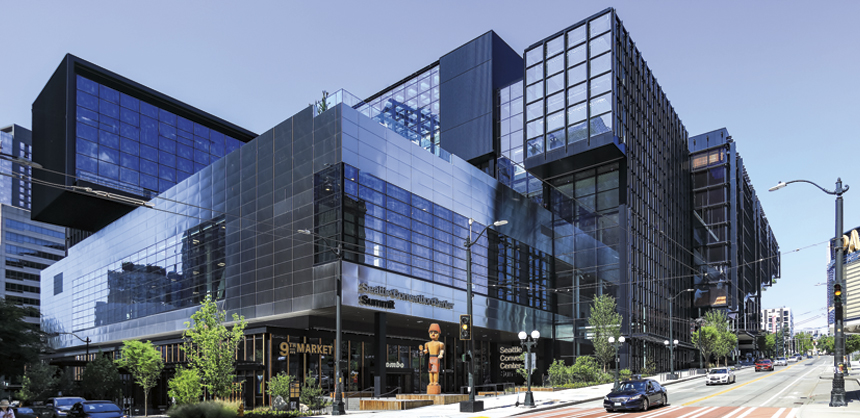
At the Seattle Convention Center, they have a holistic, people-centered approach to well-being. Photo courtesy of Tim Rice Architectural Photography
Walk into any major convention center today and you’ll notice something different — something subtle, but unmistakable. It’s not just the soaring exhibit halls or the high-tech screens, but the way the entire space feels from the moment you arrive. The air seems fresher. The layout makes more sense. Movement feels intuitive and natural rather than forced. There’s a quiet sense of confidence — an understanding that the environment has been intentionally designed with attendee well-being in mind.
For meeting planners, that shift is far more than aesthetic. It signals a change in how venues are evaluated and selected. Health, safety and sustainability are no longer background considerations; they have become central to the attendee experience. In a post-pandemic landscape, attendees are more aware of the environments they enter, and planners are under increasing pressure to deliver spaces that not only function efficiently but also feel safe, comfortable and thoughtfully designed.
From Checklists to Culture
Not long ago, health and safety initiatives in convention centers were largely about compliance — meeting codes, following protocols and ensuring operations ran smoothly behind the scenes. Those elements still matter, of course, but they are no longer enough on their own.
“At First Financial Center, we believe a healthy facility isn’t just a list of checkboxes; it’s a culture we’ve embedded into every facet of our operations,” says Rodney Faulk, general manager of the Cincinnati, OH, based venue. That culture shows up in ways both visible and behind the scenes — from building systems to partnerships that shape how attendees move through the city. A collaboration with Red Bike, for example, gives attendees access to a low-cost, emissions-free transportation option. “By offering a green, low-cost transportation option, we are directly eliminating tailpipe emissions and changing how people move through a more sustainable network,” Faulk explains.
That idea — that wellness extends beyond the walls of the building — is gaining traction across the industry. It reflects a broader understanding that the attendee experience doesn’t begin at the registration desk or end when the event closes. It starts the moment someone arrives in the destination and continues through every interaction they have with the environment.
Seattle Convention Center in Washington state takes a similarly expansive view. “We are redefining what it means to be a ‘healthy facility’ by moving beyond a traditional focus on safety and sanitation and toward a more holistic, people-centered approach to well-being — one that supports attendees, clients and our team members throughout the full event experience,” says Jennifer LeMaster, president & CEO. Her inclusion of team members in that equation is particularly telling. “A healthy venue also depends on the health, engagement and resilience of the people who operate it,” she adds, underscoring a growing recognition that staff well-being directly impacts the attendee experience.
At the New Orleans Ernest N. Morial Convention Center in Louisiana, that philosophy is framed in similarly holistic terms. “We define a healthy facility through a holistic focus on the safety and well-being of guests, employees and the community,” says Elaine Williams, CMP, CEM-AP, CVE, chief commercial officer. The inclusion of the broader community highlights another shift: convention centers are increasingly viewing themselves not just as event venues, but as civic assets with a responsibility to the cities they serve.
And at the Miami Beach Convention Center in Florida, that interconnected thinking is distilled into a simple but powerful idea. “We view health, safety and sustainability as interconnected pillars — not separate initiatives,” says general manager Freddie Peterson. “A healthy facility prioritizes the well-being of people just as much as the performance of the building and campus itself.”
Redefining Clean
If culture is the foundation of the healthy facility movement, cleanliness is where many planners first see it in action. But even here, expectations have evolved. It’s no longer enough for a space to simply look clean. Attendees want to know how that cleanliness is achieved — and what it means for their health.
That shift has pushed convention centers to rethink their approach, moving toward more advanced and environmentally responsible cleaning technologies. At First Financial Center, the PathoSans Cleaning System replaces traditional chemical-heavy methods with solutions generated onsite using salt, water and electrochemical activation. “This technology produces non-toxic, highly effective solutions that are safe for a wide range of surfaces,” Faulk says.
The move toward non-toxic solutions reflects a broader trend: cleaning is no longer just about eliminating risk; it’s about supporting overall wellness. Harsh chemicals may deliver short-term results, but they can also introduce new concerns around air quality and exposure. By contrast, newer systems aim to strike a balance between effectiveness and safety.
The Orange County Convention Center (OCCC) in Orlando, FL, has taken a similar approach. “We incorporate ultraviolet disinfection and ozonated water cleaning systems that provide chemical-free sanitization,” says executive director Mark Tester. These technologies not only enhance sanitation but also reinforce a commitment to sustainability — something planners are increasingly factoring into their decision-making.
Seattle Convention Center builds on that foundation with rigorous adherence to standards, combined with visible measures that reassure attendees. More than 100 hand sanitizing stations are placed throughout the venue, and deep cleaning protocols are implemented between events. It’s a combination of behind-the-scenes rigor and front-of-house transparency — both of which contribute to a sense of trust.
And at the Miami Beach Convention Center, the conversation goes a step further. “While enhanced cleaning remains important, we’ve moved far beyond that baseline,” Peterson says. “Our strategy focuses on proactive wellness.” That includes not only green cleaning products, but also design choices such as maximizing natural daylight and offering healthier food and beverage options. In other words, cleanliness becomes part of a larger ecosystem rather than a standalone function.
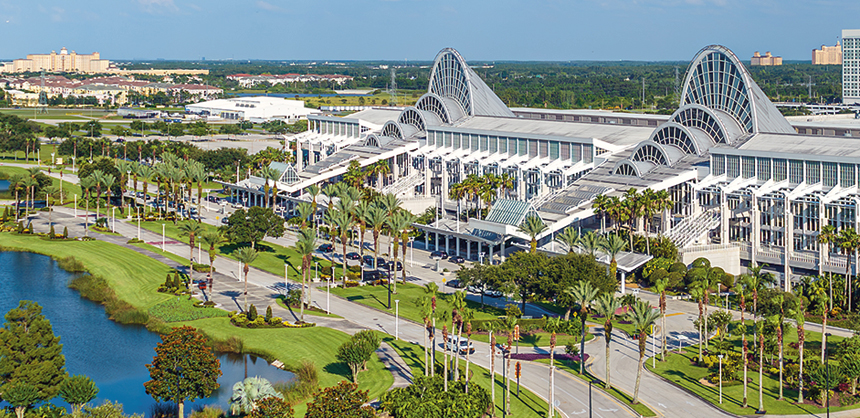
From its F&B to sanitation, Orange County Convention Center, Orlando, FL, focuses on sustainability & wellness.
The Invisible Differentiator
If cleanliness is what attendees see, air quality is what they feel — often without realizing it. And yet, it has become one of the most important differentiators in the modern convention center.
“Air quality is a silent but critical component of the attendee experience,” Faulk says. When ventilation and filtration systems are working well, attendees may not notice them directly, but they experience the benefits through improved comfort, better focus and reduced fatigue.
That connection between environment and performance is driving significant investment in HVAC systems and air filtration technologies. At First Financial Center, UV-C germicidal systems help prevent the growth of bacteria and viruses within HVAC infrastructure, while real-time CO2 monitoring ensures ventilation levels remain optimal.
Seattle Convention Center has also prioritized air quality, deploying advanced filtration systems designed to maximize efficiency and performance. Meanwhile, the New Orleans Ernest N. Morial Convention Center is investing in a large-scale renovation that includes Dedicated Outside Air Systems (DOAS) and UV filtration. “By upgrading to these systems, we are able to deliver cleaner, healthier and better-quality air,” Williams says.
For planners, this is where the conversation becomes especially relevant. Air quality is not just a technical specification; it’s a performance factor. In multi-day events, where attendee energy and engagement can fluctuate, the quality of the environment plays a critical role in shaping outcomes.
“The goal is not just to meet standards, but to enhance the overall experience,” Peterson says. “For attendees, the impact is subtle but meaningful — they experience a space that feels fresh, comfortable and conducive to focus and engagement.”
Designing for Movement, Flow and Comfort
Of course, even the best air quality can’t compensate for a poorly designed space. That’s why convention centers are increasingly focusing on how physical design influences movement, comfort, and overall experience.
At First Financial Center, recent renovations have expanded meeting rooms, widened concourses and added gathering spaces to reduce congestion during peak periods. It’s a practical response to a common challenge — and one that reflects a deeper understanding of how crowd flow impacts attendee satisfaction.
OCCC leverages its scale and flexibility to give planners more control over layout and density, allowing spaces to be tailored to specific event needs. That flexibility is becoming increasingly valuable as planners seek to create more personalized and adaptable experiences.
Approaching facility design with wellness in mind, incorporating natural light, views of surrounding park spaces and art features that enrich the environment is at the core of the Seattle Convention Center. “Daylight-filled environments, sightlines to park settings to reduce stress, and art features to enrich the experience are all part of the strategy,” LeMaster says. Just as importantly, the venue works closely with planners to optimize crowd flow through thoughtful layouts, entry and exit points and wayfinding.
In New Orleans, wide concourses, high ceilings and modular spaces at the convention center support efficient movement while maintaining a sense of openness. The riverfront setting adds another dimension, providing light-filled gathering areas that allow attendees to step away from the intensity of the event.
In Miami, the concept of flow extends beyond the Miami Beach Convention Center building itself. Outdoor spaces like Pride Park, Collins Canal Park and the nearby Miami Beach Botanical Garden offer opportunities for attendees to relax and recharge. “We offer expansive exhibit halls and wide concourses that naturally support better traffic distribution,” Peterson says, but it’s the integration of indoor and outdoor environments that truly sets the experience apart.
Integrating Sustainability & Well-Being
As planners evaluate these features, one theme continues to surface: the growing alignment between sustainability and well-being at convention centers. What was once seen as a separate priority is now understood as an essential component of a healthy environment.
“Sustainability and safety are never trade-offs,” Faulk says. Instead, they are often mutually reinforcing. Reducing chemical use improves indoor air quality. Efficient waste management creates cleaner, safer spaces. Energy-efficient systems contribute to more consistent and comfortable environments.
Moscone Center in San Francisco, CA, offers a compelling example of how these elements can come together. Its LEED Platinum certification, rooftop solar array and use of 100% greenhouse gas-free electricity demonstrate a comprehensive approach to sustainability. But those efforts are not just about environmental impact; they also contribute to a healthier experience for attendees.
In New Orleans, sustainability initiatives at the convention center like the “Know Where to Throw” and “Pack in, Pack out” programs improve both environmental outcomes and operational safety. “Each fiscal year, program objectives are reviewed, and funding is allocated to support continued progress,” Williams says, emphasizing the importance of ongoing commitment.
Likewise, the Seattle Convention Center integrates sustainability and health as a single operational standard, while Miami Beach Convention Center reinforces that connection through environmentally friendly cleaning products and robust recycling and composting programs. For planners, the takeaway is clear: sustainability is no longer a bonus — it’s a baseline expectation that directly impacts attendee well-being.
The Orange County Convention Center has its own Center-to-Table Gardens, including 81 indoor aeroponic grow towers consist of 44 planting spots per tower producing more than 50,000 lettuces and herbs annually. They can utilize their produce at events, but they also work with Sodexo Live! to donate any unused or surplus food items to local organizations like Second Harvest Food Bank of Central Florida and Orlando Union Rescue Mission. They also have a waste hauler that takes any organic waste to be composted, and they partner with Brownie’s Septic and Plumbing to pick up and recycle our cooking oil and grease turning it into biodiesel.
Expanding the Definition of Well-Being
As the concept of a healthy facility continues to evolve, it is expanding beyond physical health to include emotional and sensory well-being. This shift reflects a growing awareness that attendee experience is shaped by more than just the physical environment.
According to Peterson, at the Miami Beach Convention Center, designation as a Certified Autism Center ensures that staff are trained to support sensory-sensitive individuals. “This certification underscores our commitment to inclusivity and accessibility,” Peterson says. It’s an example of how venues are broadening their definition of wellness to include a wider range of needs.
Seattle Convention Center’s focus on workforce well-being reinforces the same idea from a different angle. A positive attendee experience depends on a supported and engaged staff, creating a ripple effect that influences every interaction.
Of course, even the most thoughtful initiatives need to be communicated effectively. As expectations rise, transparency has become a key factor in building trust with planners and attendees.
“Trust is built through visibility,” Faulk says. Convention centers are responding by providing more detailed information about their operations, certifications and sustainability efforts.
“At Miami Beach Convention Center, we actively share our sustainability initiatives, certifications and operational practices and work closely with clients to align their event goals with our capabilities,” Peterson says.
The Seattle Convention Center supports its efforts with data and credentials, while in New Orleans, the convention center provides planners with tools like an Event Organizer Portal and post-event Environmental Impact Summaries.
For planners, this level of transparency is invaluable. It not only builds confidence, but also provides the data needed to communicate the value of these efforts to stakeholders.
The Road Ahead
Convention centers are no longer just places where events happen. They are environments that shape experiences, influence outcomes and reflect values. And as they continue to evolve, they are setting a new benchmark — one that places people at the center of the experience and redefines what it means to gather.
As the meetings industry continues to evolve, the definition of a healthy convention center will continue to expand. New technologies, shifting expectations and ongoing innovation will all play a role in shaping what comes next.
“Sustainability remains a key focus, with ongoing efforts in energy efficiency, water management and waste reduction,” Williams says. “For planners, this means confidence in a venue that is proactive, collaborative and committed to delivering safe, seamless and environmentally responsible events without compromising the overall experience.” | AC&F |