









Texas ReimaginedNovember 2, 2026
Major Convention Hubs Bring the Destination Directly into the Program By Maura KellerTexas Reimagined
Major Convention Hubs Bring the Destination Directly into the Program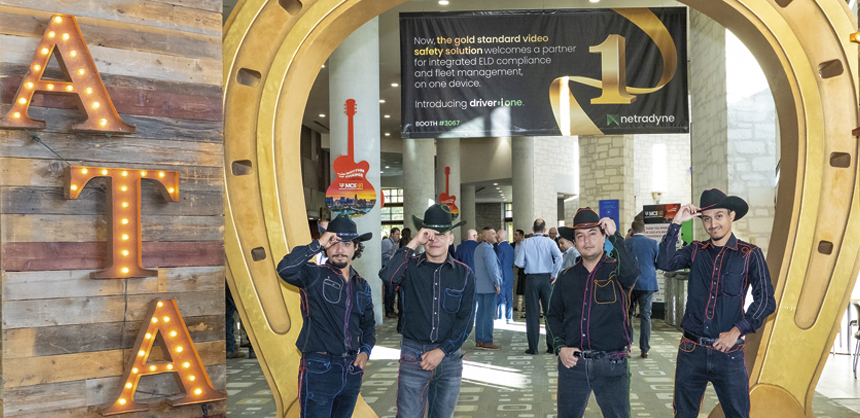
Welcoming attendees at an American Trucking Associations event.
For association planners, Texas is less a single meeting destination than a collection of possibilities. An event can be built around a walkable downtown, a convention center large enough to handle thousands of attendees, a historic theater that becomes part of the meeting footprint or a destination where restaurants, culture and entertainment are steps from the hotel. From major convention hubs to cities where planners can bring the destination directly into the program, Texas offers associations room to rethink not only where they meet, but how attendees experience the meeting once they arrive.
Monica Benavides, MPA, interim administrative director for the Texas Municipal Clerks Association (TMCA), recently put those considerations into practice when her organization brought a 12-hour records management seminar to Plano. The program drew 252 municipal clerks and other local government professionals from across Texas.
“Because our members are Texas municipal clerks, all of our events are held within the state,” she says. “We rotate locations to make our educational opportunities accessible to members in different regions.”
That rotation means the association continually evaluates destinations on more than their meeting facilities. “When selecting a destination, we consider ease of travel, safety, hotel and meeting-space accommodations, affordability and nearby amenities that attendees can enjoy outside seminar hours,” Benavides says. And for the TMCA and other associations, Texas delivers.
Plano
Within the Dallas/ Fort Worth metroplex, Plano has more than 450,000 sf of meeting space, approximately 60 hotels and 7,555 hotel rooms. The Plano Event Center provides 86,400 sf of event space, including a 21,600-sf column-free exhibit hall, breakout rooms, catering and AV capabilities, along with free parking for 900 vehicles. Full-service conference hotels that dot the region and are popular choices for meeting planners include Renaissance Dallas at Plano Legacy West, Dallas/Plano Marriott at Legacy Town Center and Hilton Dallas/Plano Granite Park.
With the more than 1,000 restaurants in the area, Legacy West, The Boardwalk at Granite Park and the Downtown Plano Arts District give associations options for dine-arounds, receptions and informal networking.
Specifically, Plano provided TMCA with a combination that Benavides says worked particularly well for an educational program: accessible meeting facilities paired with restaurants and activities attendees could reach without extensive transportation.
“Plano was an excellent fit for this event,” she says. “Our members especially appreciated the walkability of the Boardwalk area adjacent to the hotel, which gave them convenient access to restaurants and opportunities to connect with colleagues after the day’s sessions.”
For Benavides, those practical considerations should be evaluated alongside the meeting space. “My recommendation is to contact area hotels early to compare room rates, meeting-space costs, food and beverage pricing and available concessions,” she says. “It is also important to consider the overall attendee experience, not only the meeting facilities, but also parking, accessibility, safety and access to nearby restaurants and activities.”
Grapevine
Not far away is Grapevine, which gives association planners the convenience of a major airport destination while offering an event experience with considerably more personality than a typical airport-area meeting. With DFW International Airport within the city limits, more than 20 hotels, approximately 6,000 rooms and more than 1 million sf of meeting space, the city can accommodate groups ranging from smaller association gatherings to large conventions. The 1,814-room Gaylord Texan Resort & Convention Center anchors the meetings landscape with nearly 500,000 sf of meeting space, while the Hilton DFW Lakes Executive Conference Center adds another 63,000 sf.
Recent renovations at existing hotels are giving planners additional options without sacrificing the established infrastructure.
For associations looking to give attendees something to do beyond the meeting room, Grapevine provides plenty of ways to build the destination into the program. Attendees can explore Meow Wolf Grapevine, gather at Chicken N Pickle or take a ride on the Grapevine Vintage Railroad. Historic Main Street, the Urban Wine Trail, Lake Grapevine and local golf courses offer additional opportunities for informal networking and downtime. The result is a destination where planners can combine the scale and accessibility needed for a major meeting with experiences that make time outside the conference schedule part of the event itself.
Irving
Irving, also located in the Dallas/ Fort Worth area, is home to the Irving Convention Center at Las Colinas, which has more than 100,000 sf of meeting and event space. It also offers a 50,000 sf column-free exhibit hall, a 20,000 sf ballroom with 10,000 sf pre-function space, as well as 20,000 sf in breakout space and outdoor space.
This area also boasts the Toyota Music Factory, a 250,000 sf dining and entertainment complex. It offers 87,742 sf of meeting and event space. The Plaza is a 50,000 sf outdoor dining and events space there, and The Pavilion is a convertible state-of-the-art amphitheater, which can be be altered to accommodate 2,500 up to 8,000 attendees depending on how it is modified. There are more than 20 restaurants and plenty of entertainment here, including a comedy club, honkey tonk, cinema and more. The Raleigh Underground offers an immersive dining environment with capacity for 850.
Dallas
Dallas is a hub and provides the scale and connectivity expected of a major convention destination, with DFW International Airport and Dallas Love Field serving domestic and international markets. The city has more than 35,000 hotel rooms, including more than 10,000 in the downtown core. The 2.1 million sf rebuilt Kay Bailey Hutchison Convention Center is slated to open in 2030 and will offer about 750,000 sf of exhibit space.
Beyond the convention center, downtown’s Arts District, Design District and other neighborhoods provide settings for receptions and off-site gatherings, with museums, performing arts, restaurants, shopping and sports adding options for attendees.
Fort Worth
Nearby, Fort Worth is investing heavily in its convention infrastructure, with a $700 million expansion and renovation of the Fort Worth Convention Center expected to double its capacity by 2030. Phase 1, completed at the end of 2025, added updated food and beverage facilities and increased loading docks, while Commerce Street was straightened to make way for a new convention hotel.
The north end of the building will be demolished and replaced with flexible meeting space and an additional ballroom over the next four years. The phased approach allows the convention center to remain open during construction.
The convention center is located only five minutes from rail connections to Dallas Fort Worth Airport, where more improvements are taking place, such as additional gates and a new terminal.
It also is a short drive to the historic stockyards, where they have a cattle drive twice a day. There is plenty to do in Fort Worth. It is considered to be the museum capital with five world-class museums. It also has the number two zoo in the country, as well as a botanical garden, plenty of restaurants, live music, art and more.
This is the perfect location to create a one-of-a-kind cultural experience for attendees. They can absorb a bit of the cowboy culture by eating some barbecue, doing the two-step at the Billy Bob Texas Honkey Tonk, seeing a rodeo at the Cowtown Coliseum, going horseback riding, or buying their own cowboy hat and boots to take home.
If their boots are made for walking, then they might want to hit the Trinity Trails, which more than 100 miles for exploration of parks and natural areas. They can also take a kayak down the Trinity River.
A great spot for gathering after an event is Mule Alley, an 180,000 sf mixed-use district filled with restaurants, bars, shopping and public art anchored by the 200-room Hotel Drover.
For those seeking a larger hotel, a popular option is The Omni Fort Worth, which boasts 618 rooms plus 65,000 sf of meeting and event space, including 29 meeting rooms and a 18,315 sf ballroom, as well as outdoor spaces. But there are plenty of options, as the city boasts more than 12,000 hotel rooms in the area.
El Paso
El Paso, which borders Mexico, offers associations an opportunity to reach members in western Texas while creating a conference that feels distinct from a traditional convention-center event. The El Paso Convention Center provides substantial meeting and exhibit space, while nearby hotels, including properties within the downtown district, allow planners to create a compact meeting footprint that can reduce the need for extensive transportation.
Beyond traditional meeting facilities, venues such as the historic Plaza Theatre, Abraham Chavez Theatre and Arts Festival Plaza provide opportunities for receptions, entertainment and special events, while the city’s Mexican-American heritage, restaurants, museums and Franklin Mountains offer ways to incorporate the destination into the attendee experience.
Missy Floyd-Seward, CMP, senior director of strategic partnerships for the Texas Architectural Foundation, experienced that when the organization brought its annual conference and design expo to the city.
“It was a great opportunity for us to take our conference to a part of Texas where we hadn’t previously been able to serve our members as directly,” she says.
The organization created what Floyd-Seward calls a “campus” experience, using the convention center, nearby hotels and the historic Plaza Theatre.
“It gave us the flexibility to use the city itself as part of the conference rather than having everything happen under one roof,” she says.
Austin
Another large hub is Austin, whose expanding convention infrastructure gives associations another reason to look at the state capital for future meetings. The American Trucking Associations (ATA) is scheduled to bring its annual Management Conference & Exhibition to the new Austin Convention Center in October 2030, with approximately 3,000 motor carriers and suppliers expected.
Matthew Wales, CAE, CMP, vice president, event services for ATA, says, “ With its unique mix of dining, live music and hotel options, as well as its compact footprint, Austin has always been one of the favorite destinations of ATA’s membership and attendees.”
Wales adds, “The intentional addition of more outdoor space around the Austin Convention Center, as well as a new Flex Hall concept, allow us to build our event footprint outside of a traditional meeting space and create more opportunities for our attendees to network and engage with each other, which is what they really want.”
The Austin Convention Center has been undergoing an extensive $1.6 billion expansion. The redevelopment project is slated to be open by 2029. This transformation will create a larger and much improved facility with more than double the space for meetings and events. Planners will find over 620,000 sf of rentable space available. For those preferring to have events in plein air, there will be 75,000 sf of outdoor space.
Sustainability is very important here. This will be the world’s first Zero Carbon Certified convention center. It will be a USGBC LEED® Gold EB certified venue running on 100% renewable energy from Austin Energy’s Green Choice Program. The team there has also diverted 50% of all waste generated from landfills with an extensive recycling, reuse, composting program.
While waiting for the convention center to be completed, planners can book meetings and events at the Palmer Events Center, a sister facility.
Austin is a lively place for meetings. Known as the music capital of the world, there is plenty to experience for those who love live music, but the culture does not stop there. There are art and history museums to see, distinct neighborhoods to explore, beautiful outdoor spaces to traverse, and a vibrant nightlife and culinary hotspots to enjoy.
Finding a place to stay while attending an event is simple as there are more than 15,000 hotel rooms not far from the convention center to choose from. Of course, the closest spot to stay would be at the Hilton Austin, which is actually attached to the convention center. It also offers 112,183 sf of meeting and event space on property. The hotel offers two restaurants, a TopGolf Swing Suite for those who want to improve their game, and a F45 Training Studio and rooftop pool for those who want to get their exercise in.
San Antonio
San Antonio demonstrates how an established meetings destination can continue adding capacity without losing the qualities that make the city distinctive. For example, the Henry B. González Convention Center anchors a walkable downtown concentration of hotels, restaurants and attractions, while new properties and venues continue to expand planners’ options.
Sara Harr, annual meeting manager for the Association of American Medical Colleges (AAMC), brought Learn Serve Lead: The AAMC Annual Meeting to San Antonio last November. The event brought together thousands of medical school faculty, deans, teaching hospital executives and learners.
“San Antonio specifically brings a unique blend of top-tier service and hospitality, cultural charm and an attractive and highly walkable hotel package that eliminated our need for costly shuttle buses,” Harr says.
That walkability also mattered to the Oncology Nursing Society (ONS), which held its 2026 Annual National Congress at the Henry B. González Convention Center. Heather Smith, CMP, meetings manager for ONS, says the destination’s hospitality and proximity of hotels and attractions were important advantages.
“Everyone is so gracious and welcoming. They also have great weather and a fun Riverwalk within a short walking distance from the center and hotels,” Smith says.
For the Texas Society of Association Executives (TSAE), the city itself became part of the event design. TSAE brought its New Ideas Annual Conference to San Antonio last year, attracting association professionals and industry partners. Programming included Lotería, a Visit San Antonio scavenger hunt and live recordings of its Better by Association podcast.
San Antonio’s ability to handle large events is demonstrated by the Texas Restaurant Association, which held its 2026 Texas Restaurant Show at the Henry B. González Convention Center. The event drew more than 7,000 attendees and more than 600 exhibitors.
“San Antonio understands hospitality at every level,” says Tony Abruscato, chief marketing officer, Texas Restaurant Association. “The downtown convention district is walkable, the convention center is highly functional, and attendees have immediate access to hotels, restaurants, culture and entertainment.”
Harr recommends associations involve Visit San Antonio early, particularly for citywide meetings. “They are true partners who understand how to maximize the city’s features to fit your event,” Harr says.
She also found that walkability could affect the event budget. “Because there was so much to do just steps away from the convention center, we were able to reallocate funds that would normally be spent on things like transportation, or providing heftier food options for receptions, and instead reinvest that budget directly into elevating the attendee experience in other ways during the meeting,” she says.
The Texas Computer Education Association (TCEA) likewise valued the city’s accessibility. Its 2026 convention brought nearly 3,800 attendees and 400 exhibiting companies to San Antonio.
“San Antonio is a great destination for our attendees because it’s a walkable city with restaurants and entertainment right outside the convention center; it offers numerous housing options at price points within our attendees’ budgets, and it’s easily accessible for those traveling to the event,” says Ben Starr, CAE, the interim executive director.
Laredo
To the South, Laredo gives planners another border-region option. The city has more than 4,000 hotel rooms, and Sames Auto Arena, a 178,000-sf facility, offers 32,000 sf of continuous open floor space and six meeting rooms. In addition, La Posada Hotel & Suites in historic downtown offers more than 15,000 sf of meeting space across 14 meeting and banquet rooms.
The city’s historic downtown can also be incorporated into the event footprint, with San Agustin Plaza, the Republic of the Rio Grande Museum, Casa Ortiz and the Laredo Center for the Arts providing settings for tours and gatherings. For organizations involved in international trade, transportation, manufacturing and cross-border business, Laredo’s economic identity can also become part of the meeting content.
Planning Beyond the Meeting Room
Association meeting planners recognize that meeting space is only the starting point. Benavides found that the ability to walk to restaurants and connect with colleagues outside scheduled sessions contributed directly to her Plano event.
“The convenient and walkable surroundings were a major benefit for our attendees and contributed to the event’s success,” she says.
Floyd-Seward took a different approach in El Paso, using hotels and historic venues to create a conference “campus,” while Wales sees Austin’s expanded convention facilities as a way to create more opportunities for networking. In San Antonio, planners repeatedly cited the ability to put attendees close to hotels, restaurants and attractions.
Those differences are part of what makes Texas useful to associations with very different meeting requirements. The question is not simply how much meeting space a destination has, but how its infrastructure, geography, transportation and local character can support the way an organization wants attendees to learn, connect and spend time together. | AC&F |