









The Arizona ExperienceNovember 2, 2026
Matching the Destination to the Group By Kathy MonteThe Arizona Experience
Matching the Destination to the Group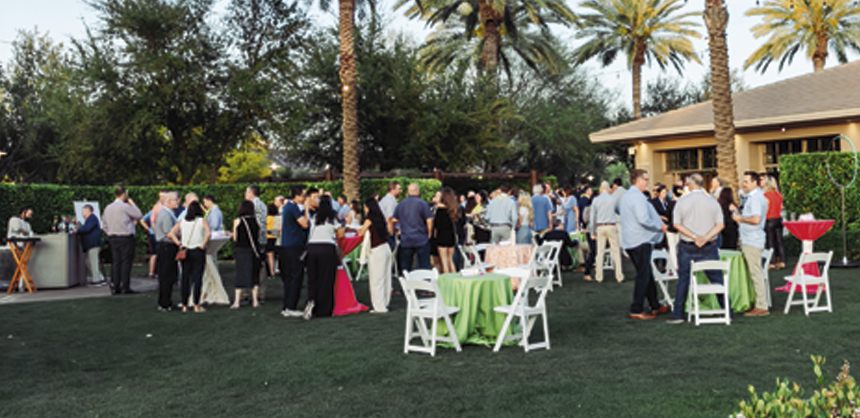
National Institute of Oilseed Products Welcome Party at The Westin Kierland Resort & Spa in Scottsdale.
Arizona has never had much trouble selling the scenery.
Desert landscapes, reliably sunny weather and sprawling resorts have long made the state a natural fit for meetings, particularly during the winter months when much of the country is contending with snow and freezing temperatures.
But association planners increasingly have reasons to look beyond the forecast. New and renovated hotels, convention infrastructure, air access and a growing collection of destination experiences are broadening Arizona’s meetings proposition.
Phoenix and Scottsdale remain the state’s association-meeting powerhouses, while Tucson, Tempe, Mesa and Sedona give organizations distinctly different options depending on their size, budget and program objectives.
Just as important, associations are finding ways to connect their meetings to Arizona itself — its industries, institutions, architecture, food and outdoor experiences.
Phoenix Builds on its Convention Base
The Arizona Biltmore is among the Phoenix properties continuing to invest in its meetings product, with a refresh underway. The property includes a total of more than 700 types of accommodations, including 251 guestrooms.
The nearly century-old property offers more than 200,000 sf of indoor and outdoor meeting and event space, including ballrooms, conference facilities, gardens and lawns. The 11,174-sf Arizona Biltmore Ballroom can accommodate up to 1,000 attendees theater-style or 1,100 for a reception.
Associations continue to make use of that scale. The Children’s Hospital Association selected the Arizona Biltmore for its 2026 Annual Leadership Conference, with educational sessions, networking events and other conference activities taking place at the resort. Demand was strong enough that the Biltmore guestroom block sold out and organizers directed additional attendees to nearby hotels.
An even bigger endorsement of Phoenix’s meetings business came from the semiconductor industry.
SEMI announced that SEMICON West will make Phoenix its long-term home beginning next year, ending the event’s decades-long association with San Francisco.
The decision followed SEMICON West’s first Phoenix event last year, which attracted more than 20,000 attendees and utilized approximately 30 hotels across the Valley. SEMI initially planned to alternate the conference between Phoenix and San Francisco but changed course after its Arizona debut. Meetings are already confirmed at the Phoenix Convention Center through 2029.
The move highlights something increasingly valuable to associations: the opportunity to connect conference programming with an industry cluster in the host destination. Arizona has emerged as a major semiconductor manufacturing center, giving SEMICON West proximity to companies, talent and industry activity beyond the convention center.
Phoenix Convention Center itself has been receiving upgrades, including refreshed interiors and furniture, new carpeting in key areas, audiovisual improvements and LED display walls.
Hotel inventory is evolving, too. A 340-room JW Marriott is planned for downtown Phoenix with an anticipated 2029 opening. The adaptive-reuse project will transform a 19-story office building at Arizona Center, less than half a block from the convention center, and include approximately 15,000 sf of meeting and event space.
Denū Hotel & Spa added another option when it opened downtown in September.
Longer term, Phoenix Sky Harbor International Airport is preparing for substantially more traffic. Its Destination PHX 2050 development program includes a new West Terminal and is designed to prepare the airport to handle an anticipated 90 million passengers annually.
For meeting attendees, one of Sky Harbor’s existing advantages is more immediate: its proximity to downtown allows groups to reach the convention district without lengthy ground transfers.
Scottsdale Makes the Destination Part of the Program
If downtown Phoenix offers Arizona’s traditional convention experience, Scottsdale makes a different pitch. Here, the resort and destination can become integral parts of the meeting.
The National Institute of Oilseed Products (NIOP) is returning to Scottsdale for its 2027 Annual Convention at The Westin Kierland Resort & Spa.
The convention is expected to bring approximately 550 attendees to the resort, according to Jana Marie Dippold, account executive for NIOP.
The resort format allows NIOP to keep attendees together in one property for several days of association business, industry discussions and networking.
The Frank Lloyd Wright Building Conservancy holds its annual conference in a different city each year, prioritizing destinations with concentrations of Wright-designed buildings and other architecturally significant sites.
This year, the approximately 250-person conference will return to Arizona for the first time since 2014.
“So much is in this area.” says Barbara Gordon, executive director of the Frank Lloyd Wright Building Conservancy. It is “high time to come back.”
The Conservancy met in Pittsburgh last year and Detroit the year before. Its 37th Annual Conference will be based at the DoubleTree Resort by Hilton Paradise Valley–Scottsdale.
The program combines educational sessions at the hotel with afternoons spent touring architecturally significant buildings. That gives Gordon some unusual requirements when evaluating hotels. In addition to lecture and dinner space, the property must be able to accommodate four motor coaches arriving and departing for architectural tours.
In Scottsdale, attendees can experience the subject matter they are discussing in the meeting room.
Scottsdale’s Resort Product Evolves
Scottsdale’s meeting product is also receiving a substantial investment.
A transformation is underway at The Westin Kierland Resort & Spa, including modernization of its three ballrooms and 45 meeting rooms as well as changes to the lobby, pool area, Scotch Library and other public spaces.
In nearby Paradise Valley, Kimpton Miralina Resort & Villas is completing a $70 million transformation encompassing 260 reimagined guestrooms, 134 renovated villas and more than 50,000 sf of refreshed meeting space.
Sanctuary Camelback Mountain Resort & Spa has completed a $7 million renovation of approximately 8,000 sf of indoor and outdoor meeting and event space.
The project includes the 3,851-sf Views Ballroom, where visual obstructions along the north side were removed to improve sightlines to Camelback Mountain and strengthen the connection between the indoor venue and its terrace.
More changes are coming. Beginning in summer 2027, all 110 guestrooms and casitas are scheduled for comprehensive interior renovations, with a second phase planned for 2028 focusing on food and beverage venues and Sanctuary Spa.
For association groups, these properties demonstrate one of Scottsdale’s distinguishing characteristics: meeting space is frequently intertwined with the resort experience and surrounding desert landscape.
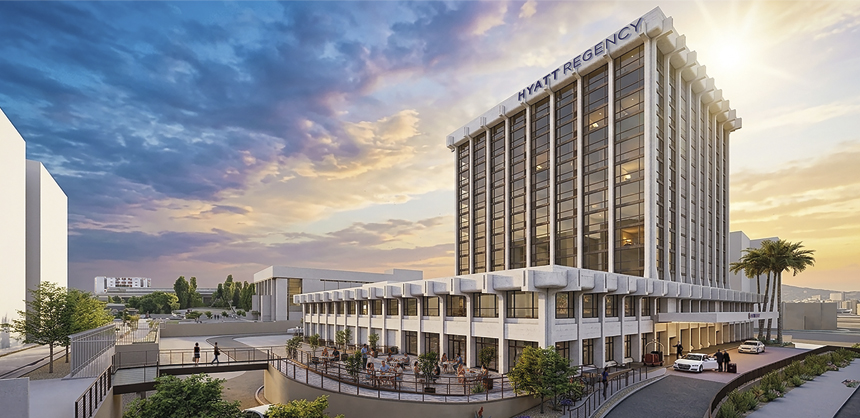
Hyatt Regency Tucson Convention Center is expected to debut in late 2027.
Tucson Makes a Case for Year-Round Meetings
July might seem like an unlikely month to bring 600 association attendees to Tucson. The Arizona Association of School Business Officials (AASBO) does it anyway.
It held its Summer Conference & Exposition this year at JW Marriott Tucson Starr Pass Resort & Spa.
“It’s a beautiful state,” says Ana Sanchez, director of business and membership services for AASBO.
Even during July, Sanchez says, the association can incorporate outdoor activities and receptions into its program during the evenings.
“A lot has to do with the program,” she says. “There are so many things they can do.”
Attendees can also extend their stay to explore the destination before or after the conference.
JW Marriott Tucson Starr Pass recently unveiled 524 redesigned guestrooms and 51 updated suites as part of a larger renovation that includes refreshed meeting and event spaces.
Hyatt Regency Tucson Convention Center is expected to debut in late 2027 following a multimillion-dollar transformation. The 291-room hotel will sit steps from the Tucson Convention Center and offer approximately 22,000 sf of flexible meeting and event space, including a ballroom and multiple breakout rooms.
Associations continue to book in Tucson, which is investing in its ability to attract more association business. The National Council of Firefighter Credit Unions recently held its 25th Anniversary Educational Conference at Loews Ventana Canyon.
Tucson also provides ready-made offsite programming through Saguaro National Park, the Arizona-Sonora Desert Museum, hiking and a distinctive food culture.
Tucson was also designated as the first “Creative City of Gastronomy by UNESCO for its preservation of tradition and culture.
Considering Other Locale Options
Other Arizona destinations give associations alternatives to the state’s largest meetings hubs.
Tempe combines proximity to Phoenix Sky Harbor International Airport with Arizona State University, making it particularly relevant for educational, scientific and academic organizations.
The Rocky Mountain APPA 2026 Annual Conference, held recently at Omni Tempe Hotel at ASU, demonstrated that connection. The organization represents facilities professionals from colleges, universities and K-12 institutions. Arizona State University Facilities Development and Management hosted the conference.
Programming included an ASU campus tour and participation by university facilities leaders, allowing the host institution to become part of the educational experience. The Omni Tempe Hotel is approximately six miles from Sky Harbor and is also accessible by Valley Metro light rail.
Downtown Mesa is evolving as well. Mesa’s appeal for associations extends beyond new hotel inventory. Downtown groups can build programs around the Mesa Arts Center and Arizona Museum of Natural History, while the city also provides access to outdoor experiences along the Salt River and in the nearby Superstition Mountains. Valley Metro light rail connects downtown Mesa with Tempe and Phoenix, giving attendees access to the broader metro area without requiring a car.
The Arizona Association of Counties will hold its 2026 Annual Conference in Mesa, bringing elected county officials and staff together for education, networking and development of the association’s legislative agenda.
Sedona offers an entirely different Arizona experience. Its red-rock landscape and resort inventory are particularly suited to board meetings, executive gatherings and programs built around concentrated networking and outdoor experiences.
The Arizona Optometric Association will provide an example when it holds its 2026 Fall Congress soon at Hilton Sedona Resort & Spa.
Matching the Destination to the Group
For association planners, Arizona is not a one-size-fits-all destination. The state’s range of meeting environments means site selection often starts with deciding what kind of experience the organization wants to create.
Groups requiring large exhibit halls, extensive breakout space and broad hotel inventory are naturally drawn to downtown Phoenix. Scottsdale’s resort concentration lends itself to meetings where networking, recreation and keeping attendees together are priorities. Tucson offers a strong sense of place and access to outdoor and cultural experiences, while Tempe can connect organizations to Arizona State University and its academic resources.
Transportation is another consideration. Phoenix Sky Harbor provides relatively quick access to Phoenix, Scottsdale and Tempe, while groups considering Tucson or Sedona need to factor additional travel time into the attendee experience.
The Seasonality Equation
Perhaps no factor affects an Arizona meeting more than the calendar.
Fall through spring brings the weather that helped establish the state as a meetings destination. It can also bring stronger group demand and higher hotel rates.
Summer presents a different equation. Triple-digit daytime temperatures can limit outdoor programming, but associations willing to meet during warmer periods may find resort opportunities and pricing that are harder to secure during peak season.
AASBO’s 600-person gathering in Tucson demonstrates that summer does not necessarily eliminate outdoor programming. Sanchez says evening activities and receptions remain possible, allowing the association to take advantage of the destination while working around daytime temperatures.
The Rocky Mountain APPA meeting leaned even more directly into Arizona’s climate. Its fall conference in Tempe was themed “Thriving in the Heat,” with programming focused on sustainability, resilience and managing facilities in challenging environments.
For planners, the calculation isn’t simply whether Arizona is hot. It is how much of the program depends on daytime outdoor activity, what attendees expect from the destination and whether an off-peak meeting can deliver sufficient value to offset the limitations imposed by the weather.
Bringing Arizona Into the Meeting
Perhaps Arizona’s greatest meetings advantage is one that can’t be measured in ballroom square footage.
A reception against a desert backdrop, an architectural tour tied directly to an association’s mission, dinner in a neighborhood attendees might otherwise never experience or an outdoor program incorporated into a resort stay can create experiences attendees associate specifically with that meeting.
That matters as associations compete for members’ time and travel budgets and look for reasons to make an in-person gathering worth the trip.
Arizona gives them multiple ways to do it. A large organization can build a citywide convention around downtown Phoenix. An association can create a contained resort program in Scottsdale. Tucson can combine education with a strong sense of place, while Tempe, Mesa and Sedona offer alternatives for different types of gatherings.
Sunshine may get Arizona onto a planner’s site-selection list. Increasingly, what associations can do once they arrive is helping keep it there. | AC&F |