






Making Site Visits More MeaningfulJuly 1, 2026
By Maura KellerMaking Site Visits More Meaningful
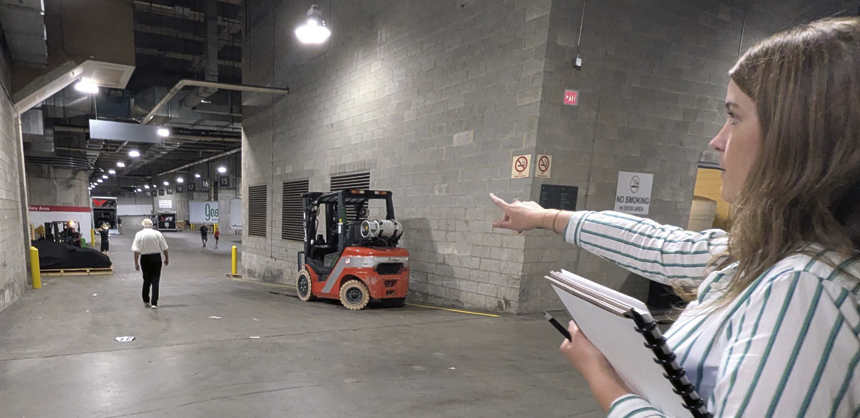
Planners need to experience a venue firsthand before an event to determine logistics and become acquainted with the onsite team. Photo courtesy of Sarah Korbel
For association meeting planners, site visits have evolved far beyond a simple walkthrough of guestrooms and ballrooms. Today’s inspections are increasingly strategic, helping planners assess not only whether a venue can execute an event operationally, but also whether a destination can support the organization’s broader goals, attendee expectations and long-term experience strategy.
As attendee demands continue shifting toward immersive, experience-driven events, planners are using site visits to evaluate everything from local partnerships and food experiences to logistical transparency and cultural fit. Industry professionals say the most successful site visits happen when planners approach them as collaborative working sessions rather than transactional property tours.
For Sarah Korbel, events and operations manager at the Marine Retailers Association of the Americas, meaningful site visits are rooted in operational transparency and relationship-building.“I really value real time to discuss with vendor partners, seeing the venues from both an attendee and exhibitor perspective,” she says. “I like to get to know the people I’m going to have to work with – electrical leads, rigging teams, the chef, the CSM.”
Planners gain valuable insight when they experience the venue the same way as attendees will. “Executing the visit in a way that mimics an attendee” is critical, she explains. “Attendees for my event aren’t likely going to drive place to place. How will they navigate the walk from the hotel to the convention center?”
That attendee-first perspective is becoming increasingly important as associations seek to deliver events that feel seamless, intuitive and memorable from arrival through departure.
Alyson Corey, vice president of conventions at the Asian American Hotel Owners Association, agrees that meaningful site visits require planners to move beyond simply evaluating physical space. “What separates a meaningful site visit from a routine property tour is moving beyond what the space looks like to understanding how the event will actually work there,” she says.
One of the most important aspects of a site inspection is evaluating the operational team behind the venue. “I also spend time getting to know the operations team because, ultimately, they become an extension of your event team,” she says. “Are they flexible and solutions-oriented or rigid and process-driven?”
Asking venue teams about unusual or highly customized past events can reveal a great deal about how adaptable and experienced they truly are. “I love asking about past events and what the wildest or most unique implementation they’ve ever executed was,” she adds. “It tells you a lot about how experienced they really are.”
Moving Beyond the Standard Site Inspection
According to Sarah Keil, event coordinator for the California Mortgage Bankers Association in Sacramento, CA, meaningful site visits begin with strong communication and preparation before the planner ever steps onsite. “Honestly, I have found that most venues ask a lot of questions and are really prepared to help show me how their venue meets my needs,” she says. “But, sometimes, when they really listen and share with me ways I didn’t even think about that could make their venue the best match, that is what stands out for me.”
The difference between a routine inspection and a valuable one often comes down to relationship-building and collaboration. “If you can spend some time connecting with your coordinator and really sharing your vision for your event it seems to always make a big difference,” she adds.
Mary O’Connor, president of Mary O’Connor & Company in Minneapolis, MN, agrees that the most productive site visits evaluate the entire attendee journey rather than simply checking operational boxes, saying, “Planners are increasingly evaluating destinations holistically beyond simply whether the meeting fits operationally, but how the overall destination experience aligns with attendee expectations and event goals.”
She adds, “I also pay attention to whether the destination and partners seem genuinely invested in the business or whether the site visit feels more like a routine process.”
Korbel says her own approach to site inspections has evolved significantly in recent years as attendee expectations have become increasingly experience-driven, saying, “I want more and different details now. It’s not a matter of will it fit, but how does it fit. What are the challenges operationally, but opportunities experientially?”
Rather than focusing solely on square footage and room counts, Korbel now prioritizes understanding how a destination’s infrastructure and venue design will shape attendee engagement and traffic flow. “What’s unique to this city, convention center or hotel?” she asks, adding, “I’m more focused on the convention center experiences than the hotels and nearby dining because that’s where my attendees spend the majority of their time.”
Corey adds, “My approach to site visits has evolved from simply asking ‘Can this venue hold our event?’ to ‘Will this venue help create the experience we want attendees and exhibitors to have?’ I spend more time evaluating the attendee journey from how the space flows, where attendees gather, how much walking is involved and whether there are opportunities to create memorable moments through networking, fun activations, unique venues and local experiences.”
The Growing Role of DMOs and Local Partners
Many planners are finding that destination marketing organizations and convention and visitors bureaus are becoming increasingly valuable contributors during the site inspection process.
Keil recently participated in her first site visit that included both the venue and the destination marketing organization, an experience she described as especially beneficial. “The DMO offered a totally different view/opinion of the venue and really complimented how other groups had used the space,” she says. “Anytime you can get recommendations that have already been vetted and help your attendees have a better experience is so important.”
Collaborative partnerships between hotels, CVBs, destination management companies, transportation providers, audiovisual teams and vendors are critical indicators of how well an event may ultimately perform onsite. “Strong site visits demonstrate engaged, collaborative partnerships across hotels, CVBs, DMCs, AV providers, transportation companies and vendors, with teams that are prepared, solutions-oriented, transparent and invested in the group’s success,” says O’Connor.
The importance of local partnerships, particularly relationships with convention and visitors bureaus, is also paramount. “I would be lost without them,” Korbel says. “Partnering with a good CVB is critical for me. They’re an advocate for my program.”
“They help you bring the vision to life and paint the picture of what the event could become, not just what exists as you are standing in it,” Corey adds.
Local expertise can also help planners solve highly customized event requests and logistical challenges more efficiently. “Whether it’s sourcing something simple, like a custom cake or something a little more unexpected, like a hot air balloon, those local relationships make all the difference,” she adds.
Planners say these partnerships often extend far beyond the initial inspection. Strong destination relationships can help planners solve operational challenges, negotiate services, identify local experiences and troubleshoot unexpected issues throughout the planning process and onsite execution.
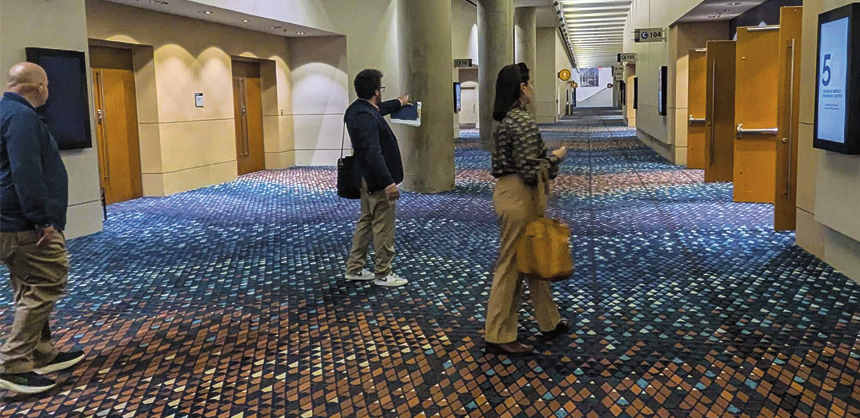
Determine attendee flow ahead of time to eliminate bottlenecks and maximize space usage. Photo courtesy of Alyson Corey
Asking Better Questions
Experienced association meeting planners say one of the biggest mistakes during site visits is focusing too narrowly on guestrooms and meeting space while overlooking operational realities that can later create challenges.
O’Connor recommends planners ask detailed questions, including: “Are there any planned renovations, construction projects, citywide events or operational issues that could negatively impact the attendee experience?” Is there full transparency around fees, surcharges, operational limitations and other potential costs?
“I think planners often spend too much time asking what the venue has and not enough time asking how the venue works,” Corey says, recommending planners ask, “How flexible is the team when plans change? What restrictions typically create challenges? What’s the most creative or complex event you’ve hosted, and how did you make it work?”
She also focuses heavily on operational realities that may not appear on a floorplan, including whether planners can bring in outside vendors or catering, where bottlenecks occur and if there are any underutilized spaces that should be considered.
One of her favorite questions reveals how venues respond under pressure: “What’s the craziest request a client has ever asked for, and did you make it happen?”
“You learn very quickly whether the team responds with excitement and solutions or with limitations and rules,” she says.
Korbel believes planners also need to dig much deeper into labor and logistics conversations that are frequently overlooked during inspections and how would they describe the labor union skill sets and pool of applicants. She likes to ask, “What other events are happening that I’ll be competing with for skilled labor?”
For large conventions and trade shows, move-in and move-out logistics can dramatically affect costs, timelines and exhibitor satisfaction. “Tell me about the marshaling yard, the distance, move in and move out access – sharp turns,” Korbel says.
She also recommends asking venues how other organizations have creatively utilized the space, asking, “How can we make this feel different or better? From the shows you’ve seen – how have others best utilized the space?”
Evaluating the Full Attendee Experience
As associations place greater emphasis on attendee engagement and personalization, planners are increasingly examining destinations through the lens of experience design. Food and beverage offerings have also become more influential in destination selection. In fact, culinary experiences, both during group events and independent attendee exploration, have become a much larger part of destination evaluation.
Keil values resources that help attendees explore destinations independently, adding, “I then share that with our attendees for them as a resource for when they had some free time in the evenings.”
Attendee comfort, navigation and venue flow are among Corey’s highest priorities during site inspections. “My goal is to keep attendee pathways as short and intuitive as possible and design the event footprint so key functions stay connected and easy to navigate,” she says, noting that reducing unnecessary walking and congestion can significantly improve the attendee experience. “Less zig-zagging across a convention center means reduced congestion, smoother movement, better wayfinding, and ultimately, a more enjoyable experience because feet that hurt less make for happier attendees.”
She also closely evaluates security logistics, back-of-house operations and branding opportunities throughout the venue, saying, “Great branding should feel integrated into the experience. If we can turn a high-traffic corner into sponsor value, attendee engagement and a little extra revenue generation for the event … even better.”
Planners should look for unconventional or underutilized spaces that can create more memorable attendee experiences. Hidden rooftops, courtyards, terraces, unique venues and unexpected spaces can create memorable moments, and bring personality and ambiance into the attendee experience.
It is important to spend more time evaluating the spaces attendees will actually use rather than focusing disproportionately on guestrooms, says Korbel.
Maximizing Time Onsite
With planners often balancing multiple destinations and compressed timelines, being as efficient as possible during site visits is critical, as is developing highly customized itineraries before arriving onsite. Maximizing a site visit requires detailed advance planning, including clear objectives, customized itineraries, and scheduled meetings with key operational and destination partners.
“The most productive site visits start well before arrival,” Corey says. “Review floor plans, understand your event specs, know your historical data and identify your non-negotiables.”
She encourages planners to ask difficult operational questions early in the process rather than making assumptions about venue capabilities, adding, “If outside catering matters, ask. If your event includes unique activations, cultural elements, sponsor-heavy experiences, late-night functions or unusual space requirements, confirm the venue can actually support them.”
Rather than rushing from property to property, planners are increasingly using site visits to develop deeper operational understanding and stronger working relationships with the teams responsible for execution.
Planners should look beyond polished presentations and evaluate how willing venue teams are to collaborate and problem-solve, says Corey. “Don’t just show up to be toured around. Evaluate operational flexibility, service flow, branding opportunities and how willing the team is to problem-solve and partner.”
Virtual Inspections and Evolving Planning Strategies
While virtual site inspections became more common during the pandemic era, many association planners say actually seeing the site remains irreplaceable for evaluating operational flow and attendee experience. Online tools may still be helpful for narrowing options, but not for making final decisions. “Virtual and hybrid site inspections have absolutely changed the process, but in my opinion, they haven’t replaced the value of being onsite in person,” she adds.
Planners ultimately need to experience venues firsthand to fully understand how attendees will interact with the space. “Walk the paths your attendees will walk, feel the distances between events, observe traffic flow and experience the venue as your audience would,” she says. “There are things a camera simply cannot capture, such as energy, scale, neighborhood feel, operational flow and how the venue team shows up as a partner.”
Today, many planners are balancing both approaches by using virtual inspections early in the process and reserving in-person visits for final validation. “I think planners are balancing both approaches by using virtual inspections to qualify options and in-person visits to validate the final decision,” she adds.
Building Stronger Long-Term Partnerships
Ultimately, planners say the most valuable site visits create stronger long-term partnerships that extend well beyond contract signing. That’s why Keil encourages planners to use the experience to build genuine rapport with venue teams and partners. “They are really your best advocate in creating the experience you desire and that starts with getting to know them personally and not just professionally,” she says.
Planners also should approach site visits as the beginning of a collaborative relationship rather than simply an inspection process. “My biggest recommendation is to treat a site visit less like an inspection and more like the start of a relationship,” Corey says. “Venues and destination partners become an extension of your team, not just a place to host an event. Come prepared, know your goals and ask the hard questions early. Successful site visits don’t just confirm a venue works, they confirm the partnership will too.”
Korbel similarly emphasizes the importance of slowing down and documenting the process thoroughly, adding, “Don’t rush if you can help it. Document all you can. Photos will help you in more ways than you would think.”
Tapping into the broader events industry for operational advice and peer recommendations is crucial. They are a wealth of knowledge. “Asking your events community is invaluable,” she says. “Pro tips can take your events to the next level.” | AC&F|