







Rising RisksMay 1, 2026
Planning for the Unexpected & Keeping Attendees Safe By Matt SwensonRising Risks
Planning for the Unexpected & Keeping Attendees Safe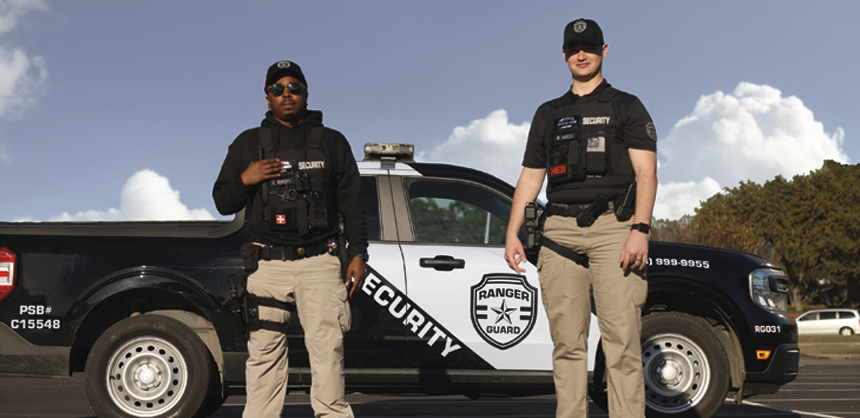
Effective preparation for an event includes extensive security planning.
As meetings and conventions face growing risks — from violent incidents and cybersecurity threats to severe weather and illness outbreaks — planners must be prepared for disruptions that can quickly impact attendees and programming. Effective preparation includes clear emergency plans, strong coordination with venues and local authorities, reliable communication systems and attention to safety beyond the main event venue, all while maintaining a welcoming environment for attendees.
The recent White House Correspondents Dinner underscores the challenges. A would-be assassin was able to circumvent security at the Washington Hilton in D.C. before being apprehended prior to inflicting serious injury on attendees. The event was delayed, but the chaos and fear should be a warning to event planners. If a gunman can get that close at a gathering guarded by secret service and featuring global leaders on the guest list, a far worse outcome is possible. Luckily, the secret service and law enforcement in attendance took quick action.
Organizers of the Risk Management Society (RIMS) also learned firsthand lessons about how to deal with a crisis. The day after a presentation about best practices in case of an active shooter situation, a gunman opened fire in Midtown Atlanta on the last day of the RIMS’ largest annual conference, Riskworld. The shooting, which left one dead and three others injured, occurred 2.5 miles from the Georgia World Congress Center — far enough away that none of the 12,000 attendees were in immediate danger but close enough to disrupt the conference.
The incident led staff to spring into action. Local authorities informed Stuart Ruff-Lyons, chief commercial officer (events, marketing & sales), for RIMS, which is headquartered in New York, of the incident at 12:47 p.m. Over the next 90 minutes, the organization’s leadership, including CEO Gary A. LaBranche, FASAE, CAE, maintained close contact and delivered regular messaging to conference-goers. Attendees were asked to shelter-in-place. “The Congress Center was the safest place in Atlanta,” recalls LaBranche.
At 2:15 p.m., RIMS made the call to cancel the event’s closing session, which was to include a keynote from race car driver Danica Patrick. Amid conflicting information and the suspect still at large, the closing party was ultimately canceled. A little after 8 p.m., the gunman was in custody and no one involved with Riskworld was injured. In that regard, the results were a best-case scenario.
But the cancellation of even a day’s worth of activities at a conference can limit the event’s impact on a company or organization. After all, years of planning can go into gatherings to inspire and educate attendees, positioning them to achieve or exceed goals for the coming year.
Amid geopolitical unrest abroad and at home, as well as greater climate unpredictability and other factors, meeting planners can ill afford to simply hope for the best. In extreme cases, the lives of attendees are at stake. On a higher level, the very future of the events industry could be at stake, as scenarios planners couldn’t imagine years ago are increasingly common concerns.
“My fear is that there will be an incident at an association or business or industry event that is not prepared, and then there’ll be another, and then there’ll be another, and then pretty soon we start to see people less interested in coming to events,” LaBranche says.
Types of Disruption
Disruption of an event can take many forms. Here are a few that planners might encounter:
- Climate change/weather — Increasingly extreme storms can alter an event’s trajectory. Tropical Storm Helene devastated Asheville, NC, for months after the storm, severely limiting the destination’s ability to host groups.
- Cybersecurity — This is an increasing concern and something RIMS has to deal with on an ongoing basis. Since it is an organization dedicated to limiting risk, it is a popular target for hackers. They actually had someone hack into the servers at one of their conferences and hold all the education sessions for ransom. The organization’s Chief Information Officer fought off that attack, and now works to protect RIMS’ conferences as soon as staff plug in computers at host venues.
- Illness — Diseases, such as a norovirus or COVID outbreak, can force an event to go virtual or be canceled.
- Unpredictable Financing — When grants are eliminated, it can lead to events being canceled. The International Association of Cognitive Behavioral Therapy canceled its conference in Nashville last year, its first U.S. meeting in 40 years. The National Institutes of Health also canceled many meetings. Approximately 700 scientific research projects funded by the National Science Foundation were halted. These are just a few examples. It seems to happen particularly among government and medical meetings.
“It does not take much to seriously disrupt an event,” says John Whitney IV, CEO of Emergency Concierge International (ECI), a security consultancy firm based in the Phoenix, AZ, area.
Force Majeure, an insurance clause for “acts of God,” can protect an organization’s financial investment in a large gathering in some of the above scenarios. But it can’t turn back time for the event to take place, which makes it impossible to achieve short-term goals and lay the groundwork for future growth.
Troubling Events
Recent events have placed the gravest concern for event planners in the headlines, including everything from conservative activist Charlie Kirk being assassinated during an outdoor event at Utah Valley University to Brian Thompson, the CEO of UnitedHealthcare, being fatally shot outside of the New York City hotel where the insurance company was meeting.
In addition, there have been several high-profile near misses recently, including the aforementioned shooter at the White House Correspondent Dinner, as well as the assassination attempt on Donald Trump in Pennsylvania two years ago and an incident last fall at Wiki World’s Fair, a conference for Wikipedia editors, where two attendees prevented a gunman who made it on stage from killing himself.
Attacks on the Centers for Disease Control and Prevention in Atlanta and the NFL headquarters in New York last year, while not directly tied to meetings, have added to anxiety. “It happens everywhere and no one’s immune,” says Whitney.
Having events indoors helps to contain any issues that may arise. Outdoor events and festivals are inherently more open to incidents because there is more ground to cover and generally larger attendance than indoor business conferences.
The memory of the shooting outside Mandalay Bay Resort and Casino in Las Vegas still sits heavy. The incident led to 59 deaths and 527 other concert attendees being wounded. It was the worst mass shooting in modern American history.
The incident led to the formation of ECI. Whitney and his wife, Desi, an accomplished event organizer at HPN Global in Scottsdale, AZ, recognized the need for event planners to be better prepared for worst-case scenarios.
Today, security certainly continues to be a factor in meeting planning but is not necessarily always top-of-mind.
The American Express Global Business Travel Meetings and Events Forecast this year highlights the competing priorities planners face for site selection alone. When asked for the key factors in selecting a meeting venue, event organizers polled placed “destination is safe and secure for all attendees” as the fourth priority. The top three, in order, were cost, ease of travel and transportation and ability to host a hybrid meeting.
On the other hand, safety and security was the top component (36%) to be explicitly included in an organization’s meetings and events policy in the forecast.
“We know that meeting professionals are often doing the right things but not always embedding those actions in policy,” says Rich Atkinson-Toal, global vice president of the Experience Studio, American Express Global Business Travel meetings & events. “Our strong recommendation will always be to make use of the meeting policy to establish your program and allow you to think and act strategically. There is a great opportunity for meeting leaders to collaborate proactively with their risk management stakeholders and leadership to ensure that meetings are part of broader company risk and security readiness.”
Striking a Balance
However, rising F&B and AV costs have organizations evaluating all aspects of the budget, which, in most cases, has not risen to match the higher expenses.
Whitney empathizes with planners. “They’re so swamped with other things,” he notes.
Confusion appears to be atop the challenges. Planners may incorrectly assume venue security covers their event and attendees. Guards employed by the venue are not responsible for tending to conference-goers, just as the Secret Service’s lone goal is to protect the VIP they are charged with.
ECI is among the firms that offer structure to crisis response, says Whitney. Pre-event training, virtual and onsite safety inspections and coordination are key components of its risk management services.
In many ways, security firms hired by events are paid to think about scenarios planners can’t envision. Preparedness naturally includes knowing where to shelter-in-place, but also having the proper communication system to reach everyone associated with the event, as well as taking measures like stockpiling items like blankets and jackets should attendees be forced outside in the bitter cold, in Chicago for example.
Another commonly overlooked misstep Whitney notes is safeguarding off-site venues and not just the convention center or hotel where the bulk of the meeting takes place.
Even with all the concerns, Whitney says planners are correct to focus on the attendee experience as much as possible. Hiring 50 armed security guards at $50 an hour is cost-prohibitive and can spook attendees.
“The safest meeting is the meeting that doesn’t take place, but that’s not what the industry is built around,” he says. “You want your attendees to have fun and feel well taken care of. It’s about striking a balance.”
Updated Security Measures
Mark Walls, chief marketing officer at Safety National in St. Louis, MO, is a regular speaker at conferences regarding security. He says insurance companies have significantly increased safety measures, particularly at events where VIPs and CEOs are in attendance, since the killing of the UnitedHealthcare CEO.
Walls described the recent American Property Casualty Insurance Association annual convention in Orlando as a prime example of what all events should be doing to protect attendees.
“Everybody’s eyes were wide open,” he says. “You couldn’t get into the event without proper credentials, and there was armed, uniformed law enforcement throughout the event.”
But, at another conference Walls attended this year, which he preferred not to criticize publicly, he described the security as “window dressing,” adding, “It’s meant to create the illusion of security, but it isn’t security at all.”
LaBranche says that there is a benefit to publicly drawing attention to some event security measures to assure attendees organizers are considering all scenarios.
RIMS has not shrunk from its scare in Atlanta. Instead, the Risk Management Society is trying to live up to its name by making the aforementioned incident a case study for all planners to learn from.
Security has always been top-of-mind at the organization, but LaBranche and Ruff-Lyons quickly admit learning lessons from living out an active shooter scenario. The company changed several elements:
- RIMS had a 72-page emergency preparedness plan, which was perhaps too thorough when key decisions had to be made on the spot. It has since been streamlined.
- Relying on an app that organizers can’t guarantee attendees will download to their phones is not the best way to secure information. RIMS used to rely on the phone tree system. Now, it collects mobile phone numbers for anyone who will be onsite to distribute information via text message.
- Another outdated measure RIMS employed was maintaining the security plan on a thumb drive, which individuals facing a response would be unlikely to access in the moment. The organization now sets up a security command post near its host venue.
“We realized that our plan was too focused on the venue,” says Ruff-Lyons. “It didn’t really take into account what happened in a hotel or somewhere else in the city.”
As an example, two of Riskworld’s eight shuttle routes were shut down as police sought the Atlanta attacker and RIMS did not receive communication from any of its 32 partnering hotels on that fateful day.
RIMS, which held Riskworld at McCormick Place in Chicago, IL, last year, now also implements the Gabriel (named after the angel) security system throughout venues to facilitate real-time response to a crisis.
One element that LaBranche says will always be situational is the decision to go on with a conference in the event of an incident or scare. Canceling the last day of a show is easier than calling off the event during the first day or two, he acknowledges. LaBranche is confident RIMS was correct in ending the event early. “It was the right thing to do out of respect to the people that were shot and the person that was killed,” he says. “The city was traumatized.”
New Concerns
As event planners look ahead to safeguarding their events, it’s important to take stock of the current political and societal atmosphere. “It’s crazy, the world we live in,” says Walls. “Anyone can be a target.” He adds the response to shootings is as troubling as the attacks themselves. “The assassination of the UnitedHealthcare CEO was shocking, but what was more shocking is the number of people polled who said it was somewhat justified,” he says. “That’s insane.”
Whitney advises planners to be aware of political activity.
Patrick Crosson, CMP, DES, chief experience owner of the Chicago-based PC Events + Experiences, had to take into account new developments in the Windy City when organizing an event for a nonprofit based in California. Their conference attendees included a large contingent of people of color and foreign delegates. “We had to create plans in case of an ICE (United States Immigration and Customs Enforcement) raid,” he says. “We never thought we’d have to do that. It’s mind-blowing.”
As troubling as the scenarios may seem, Ruff-Lyons calls on planners to be vigilant. “We have a responsibility to do what’s right for security,” he says.
Yet, as LaBranche says: “You can’t live in fear.” | AC&F |