








Shifting Net ZeroMarch 1, 2026
Evolving Eco-Friendly Events By Maura KellerShifting Net Zero
Evolving Eco-Friendly Events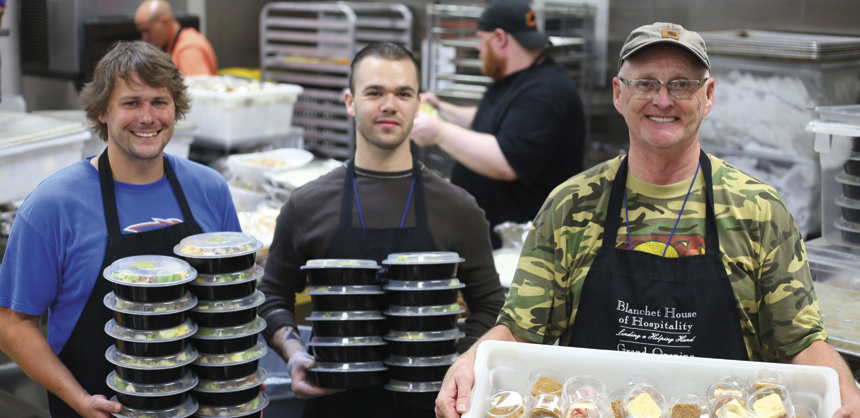
Audit leftovers to reduce waste at your next event — and donate any unused food. Photo courtesy of Alyson Schill
A few years ago, being “eco-friendly” or “net-zero” at an event usually meant swapping plastic straws for paper ones or using recycled paper. Now, it’s so much more intentional. The conversation has evolved from “what can we do to look green?” to “how can we actually reduce the footprint of this event from the very beginning?”
“We’re seeing a real mindset shift,” says Kastina Morrison, event planner and owner of Kastina & Co, in Minneapolis, MN, who works with associations in planning events of all types and sizes. “It’s less about performative gestures and more about building sustainability into every layer of planning. For example, it involves local vendor sourcing, menu design, transportation and even how we reuse materials from one event to the next.”
For Morrison, the most exciting change is that sustainability isn’t treated like an add-on anymore. It’s part of the overall strategy, just like attendee experience or design.
“In the association world, sustainability has become much more thoughtful and practical,” Morrison says. “We’re seeing fewer ‘green buzzwords’ and more small, intentional decisions that genuinely reduce waste without compromising the attendee experience.”
One big shift has been around swag and branded items. As Kastina explains, associations still love giving attendees something to take home, but now the focus is on quality and longevity — items people will actually reuse instead of throw away. Things like glass water bottles, sturdy canvas totes or even digital perks are replacing disposable giveaways.
Catering has also made major strides. “Here in Minnesota, the best catering partners have moved almost entirely away from plastic utensils and single-use serveware,” Morrison says. Bamboo, compostable materials and reusable dishware are the norm now. Many association event planning teams also design menus that minimize waste — using every part of an ingredient, donating surplus food, or working directly with local growers to reduce packaging and transport.
“Even the design side of events has evolved: florals and décor are being repurposed throughout multi-day conferences or used again at future association gatherings,” Morrison says.
Morrison utilizes a wealth of eco-friendly and net-zero practices within the events her team produces for associations and nonprofits. For her, sustainability starts with the vendor list.
“I’m a big believer in hiring hyper-local teams: florists, caterers and rental companies who are based near the venue,” Morrison says. “It’s an easy way to reduce travel emissions, but it also builds reliability. If something unexpected happens, a local vendor can pivot quickly, problem-solve onsite and already knows the logistics of the area.”
Morrison also sets expectations early around materials and waste. She almost never recommends a caterer that can’t or won’t provide eco-friendly disposables or compostable serveware.
“And I make a point to ask bartending companies how they handle recycling — it says a lot about how seriously they take sustainability behind the scenes,” Morrison says. “Associations and nonprofits are especially mindful of waste because they’re accountable to their members and their mission. So, we look closely at what’s actually needed — from signage to barware to décor — to avoid overspending or unnecessary waste. Every choice is intentional. For associations, sustainable planning is both environmental and ethical. You’re not just reducing waste; you’re stewarding the organization’s resources responsibly.”
Eco-Friendly Waste Efforts
Meeting Professionals International (MPI) is the largest association for the meeting and event planning industry, connecting meeting professionals and providing them with education, networking and business opportunities.
Jessie States, CMP, CMM, vice president of MPI Consulting at Meeting Professionals International, says that MPI not only educates meeting planners about establishing and implementing eco-friendly initiatives in events, but they put their own recommendations to use when planning the association’s events. In addition, they make a continuous effort to employ innovative sustainability strategies to help catapult their eco-friendly and net-zero initiatives. For example, recently MPI’s World Economic Congress was one of five charter events to conduct food audits last summer as part of an initiative led by the World Wildlife Fund and the US Food Waste Pact.
“Most industry professionals — both organizers and venues — excel at waste management, including diversions from landfill such as composting and donations. Our renewed commitment is to waste reduction and prevention by stopping food waste before it is created,” States says. “Outputs from this and other work will be available next year, including all-new industry food waste prevention guidelines known as DREAM (divert, recover, educate/empower, adjust and measure).”
As an association, MPI utilizes a food waste preparation starter list throughout events. Some helpful tips MPI uses and recommends planners incorporate into their planning initiatives include:
- Create an organization food philosophy and include it in your RFPs
- Conduct audits (take photos) of what is left over after your meals to reduce your ordering of items that often go to waste. This can lead you to make changes to catering orders and requests (e.g., smaller dessert and protein portions, fewer breads, less pre-cut fruits)
- Host a “precon” with the catering team (including the chef and banquet captains, if possible) to share your expectations for waste prevention – and whether or not some items should be allowed to “run out.”
- Request smaller vessels for condiments and dressings, smaller plates and phase down buffets at regular intervals.
- Create “conscious consumption” signs that invite your participants to join you on your food waste prevention journey. The World Wildlife Fund has signs planners can use such as “Take Care by Wasting Less. Try what you want, but don’t take more than you can eat. You’re always welcome to come back for more.”
- Remember that volume shouldn’t equal value. If your partners need to meet minimums, have the conversation with them about higher quality ingredients versus increasing the volume or servings offered.
For trade shows and conferences, it is also important for event planners to focus on incorporating eco-friendly logistics from start to finish. This means coordinating with venues and other service companies involved in the planning and execution of the event. For example, event planners should work with venues and other contractors to ensure proper recycling and disposal processes are in place. Transportation, namely ensuring the trade show elements are efficiently consolidated into shipments that reduce the carbon footprint, is vital.
Oftentimes, the end of an event, such as at a trade show, is overlooked in terms of ensuring the proper disposal of trade show elements and ensuring local recycling regulations are met in order to eliminate the waste produced from displays and booths. Event planners should have a clear understanding of the proper disposal and recycling protocols that are in place so that elements don’t end up inappropriately in the dumpster. Building a waste and recycling strategy into the initial planning will help keep things sustainable and environmentally focused.

Locally sourced food, recyclable containers and reusable bottles are all still part of building sustainability into event planning. Photo courtesy of Alliance
Continuous Evolution
Nikki Yep, meeting planner and COO of Event Solutions, in Santa Monica, CA, works with associations to establish eco-friendly and net zero events of all sizes.
Yep says the concept of eco-friendly and net-zero events has significantly evolved within the meetings and events space.
“It has moved from small, visible actions to a complete plan,” Yep says. “We started with simple steps, like recycling and using less plastic. Now, the goal is net-zero. This means associations calculate the event’s entire carbon footprint, which includes travel, and then try to offset all of it,” Yep says. “The newest idea is regenerative events. These events aim to leave a positive mark on the local community and environment, instead of just trying to cause less harm. This looks like events that include planting trees, eating locally grown and processed foods, reusable decor and composting food waste among other things. It’s really exciting to see.”
As associations incorporate eco-friendly and net zero initiatives into events, the focus is strongly on two main areas: accurate measurement and food.
As Yep explains, along with their event budgets, associations are setting a “carbon budget.” They are not guessing or taking baby steps toward being green but actually measuring and accurately offsetting their footprint.
Second, food and beverage is a huge priority as it always has been, but now planners want greener menus. Yep says this means they choose more plant-based options and source food that is very local.
“Food is a big source of waste and emissions. They also use event technology to predict attendance precisely,” Yep says. “This helps to dramatically minimize food waste and overall costs of the event. Action stations where guests can make their own or customize their dish serve two needs in an event. First, it is personalizing their food to exactly what they want — which reduces cost and waste — and it is an engaging and entertaining way to serve food.”
There are a variety of food waste handling options to choose from. Alyson Schill, CEO and co-founder of Careit, in Chattanooga, TN, a food donation and rescue organization, says planners should partner with reputable vendors that connect the association directly to local social service agencies with no middleman, which gives nonprofits the ability to select donations that match their needs and capacity and is compliant with U.S. food waste policies.
“For prepared event food, you can maximize recovery by pre-planning food donation logistics and not waiting until the actual day of the event,” Schill says. “Partner in advance with a green tech food waste provider, local food relief organizations and social service agencies to have a plan in place for proper storage, handling and immediate, timely pickup of safely stored, unserved, surplus food to maximize donations.”
Unfortunately, some event food waste is unavoidable, so focusing on diverting nutritious food from landfills is vital. Schill says an opportunity that meeting planners may overlook is donating food that isn’t edible for human consumption to farms and organizations that can compost it and/or use it for animal feed. In certain regions in the U.S., there are partnership opportunities with local farms to redirect food scraps for use as animal feed, which is a high-value alternative to composting.
Yep also suggests meeting planners look for unique, history-rich venues. It saves building materials and gives the event a great, authentic feel.
At a recent eco-conscious event that Yep planned, the food plan incorporated action stations that served local foods. All the dishes and cutlery were made from things like recycled paper and bamboo. And they even used real succulents for décor instead of cut flowers.
“This really cuts down on the carbon footprint and landfill waste,” Yep says. “My favorite part is how they cut down on giveaway waste. Instead of guessing sizes and ordering too many shirts, they had a personalized station. Attendees watched their shirt being made. This guarantees people get what they want. Plus, everyone got a branded reusable stainless steel cup.”
A Sustainable Future
Morrison believes the event planning space is entering a phase where sustainability isn’t a special feature; it’s just the baseline for well-run events. Planners already expect their vendors to be eco-conscious, so it’s less about making a big “green” statement and more about quietly doing things the right way.
“We’ll keep seeing more built-in sustainability: rentals instead of single-use materials, compostable serveware, local partnerships and thoughtful ordering that minimizes waste,” Morrison says. “But what’s really changing is how we choose our vendor teams. Planners and organizations are starting to prioritize value alignment — working with caterers, florists and rental companies who care about sustainability in their own operations. It’s about partnering with people who think the same way you do.”
The definition of sustainability will also continue to broaden. “It’s not just about waste and materials anymore; it’s also about supporting small, local businesses, fair labor and responsible sourcing,” Morrison says. “Sustainability isn’t just about what we use; it’s about who we choose to work with. The most responsible events are built by teams that share the same values.”
Yep sees the meeting space moving toward regenerative events. That means creating a net-positive impact.
Also, she expects the meeting planning industry will be required to show more proof. “This means the numbers must be consistent and checked by others,” Yep says. “Finally, I see that AI will be used more to optimize and reduce waste. This includes energy use in the room and ensuring perfect catering orders. AI will help eliminate waste before it can even happen all while delivering an event that is enhanced by its sustainability. Going green at events can be a talking point, a focal element and part of the overall design. When it is done right, it adds value to the entire event, rather than just reducing waste.” | AC&F |