CIT-2023-09-feat-las-vegas-147

Las Vegas

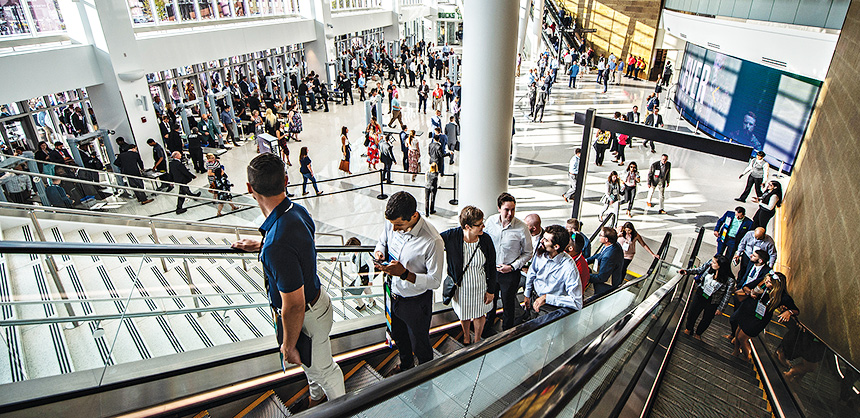
The Forbes Travel Guide 2023 Summit was hosted by Neil Patrick Harris and held at Resorts World Las Vegas. Resorts World provides 250,000 sf of meeting and banquet space. Photo by Darren Hardy

The Forbes Travel Guide 2023 Summit was hosted by Neil Patrick Harris and held at Resorts World Las Vegas. Resorts World provides 250,000 sf of meeting and banquet space. Photo by Darren Hardy

When Melissa Vilders and her staff began helping software firm SAP, headquartered in Walldorf, Baden-Württemberg, Germany, to plan a recent event, they had no problem deciding on Las Vegas as the host city.

“Las Vegas is a top destination for corporate events for several reasons,” Vilders, the head of global events strategy and experience for the company, based in Newton Square, PA, said. “First, it offers the convenience of having everything in one place, making it easy to coordinate and manage events. Additionally, the city is easily accessible from many major destinations, making it a convenient meeting point for attendees. Lastly, Las Vegas is known for its exceptional service, ensuring that corporate events are executed flawlessly.”

The choice of venue was also no problem, as SAP has held several meetings and events at the Venetian Resort Las Vegas and The Palazzo at The Venetian. The meeting took place over the summer at the property’s Venetian Expo Convention Center. Vilders said that the convention center provided exactly what her group required. Venetian Meetings  offers more than 2.25 million sf of meeting and event space.

SAP held the meeting for its customers, and brought a small team of employees to help build relationships with them. More than 98% of the 2,300 attendees stayed on the property.

The meeting included two keynote addresses and more than 140 breakout sessions. Attendees also participated in receptions, dine-arounds and a celebration night at Tao Asian Bistro & Nightclub, which features Japanese, Chinese and Thai fare as well as world-class performers and DJs.

Destinations Reinvented With Renovations

Attendees also enjoyed spending time at the reinvented Tao Beach Dayclub, an Asian-inspired tropical oasis that now features lush scenery, private cabanas, a state-of-the-art sound and lighting system and plunge pools.

“Tao Beach at the Venetian now offers an even better experience after the recent renovation,” Vilders said. “It was a magical place to celebrate our attendees.”

Vilders was also impressed with the sustainability efforts  at the resorts, which included energy-efficient lighting, heating and cooling systems, and water-saving fixtures and appliances. She also commented on their recycling of waste and donation of excess food to local charities. In addition, she said, they are committed to using eco-friendly cleaning solutions and reducing their carbon footprint through alternative transportation options.

Lisa Ross Faust, owner and chief experience officer for Creative Experience Group — a full-service event management group in Atlanta, GA — was similarly impressed by the sustainability practices at Resorts World Las Vegas, where she planned “The Summit” for 800 Forbes Travel Guide employees on earlier this year.

“We did our best to incorporate sustainability to The Summit, and it helped that Resorts World is a LEED Gold-certified property,” Ross Faust said. “This means that Resorts World already adopted eco-friendly practices, like sending food waste to local farms to be used as animal feed. Forbes Travel Guide partnered with KOPU Water to use the company’s recyclable aluminum bottles instead of plastic ones throughout the event. The company also employed the hotel’s largest LED screens to reduce the need for printed items.”

The Summit was held some two weeks after Forbes Travel Guide unveiled its 2023 Star Awards, which is the company’s annual list of the world’s most spectacular hotels, restaurants, spas and ocean cruises. Most of the attendees were general managers and C-suite executives from these and other companies and the majority stayed at Resorts World’s hotels, which included the Las Vegas Hilton, the Conrad Las Vegas and the Crockfords Las Vegas.

Recent Openings Offer More Meeting Space

“Resorts World provides ample meeting space and cutting-edge technology,” Ross Faust said. “Plus, it’s one of the newest properties on The Strip and a hot spot.”

The Forbes group gathered in the Rose Ballroom, on the rooftop, in 15 meeting rooms and in several of the restaurants.

“Foyer spaces became networking, Braindate lounges, which provided a platform for attendees to collaborate throughout the event,” Ross Faust said. An onsite concierge coordinated meetings that attendees booked online, based on topics of interest.

The property boasts more than 50 food and beverage options, offering everything from traditional American fare to Southeast Asian street foods.

“Resorts World featured all of its restaurants at the opening All-Star Party for a true taste of the city,” Ross Faust said. “It was exceptional: The various culinary stations served everything from caviar to steak tartare.”

F&B will also be a highlight of another new property, the Fontainebleau Las Vegas, set to open at the end of the year. It will include more than 36 first-to-market food and beverage concepts spanning more than 188,000 sf throughout multiple locations at the resort.

“We’re working with a number of globally renowned chef and restaurateur partners that appeal to every taste, from fine dining to casual and we’ll take full advantage of our unique design,” Kurt Wuebbenhorst, senior vice president of sales, catering and events for Fontainebleau Las Vegas, said. “That includes everything from concepts with rooftop views to the poolside café, to vibrant and intimate bars and lounges.”

He said that his team will also offer menus that are customizable to meet the needs of attendees at meetings and events, which will be a focus at the property. It will feature 550,000 sf of customizable indoor and outdoor meeting space, divided among five levels. Spaces will include a 105,000 sf pillarless ballroom, three other ballrooms, 57 breakout rooms, a 90,000 sf multifunctional theater and a 25,900 sf outdoor hospitality garden, ideal for team building activities.

“It will also provide a seamless connection to our city’s natural beauty, and the space can be used for a number of events, both internally and for our convention attendees,” Wuebbenhorst said.

The complex is adjacent to the Las Vegas Convention Center West Hall, which will be expanding by 1.4 million sf, thereby offering more possibilities for groups staying and meeting at the Fontainebleau.

Wuebbenhorst said that sales for meetings and events have been brisk.

“We are currently in pre-opening sales at Fontainebleau Las Vegas, actively selling for the first quarter of next year and beyond,’’ he said. “We are seeing incredible short-term demand for the first part of next year, with significantly larger groups of 700 to 1,200 guests on peak nights.”

Caesars Remains Successful Longtime Provider

One of the most successful longtime providers for large meetings in Las Vegas, Caesars Entertainment, has nine hotels in the city, including the iconic Caesars Palace Las Vegas.

Joe Murphy, president of Continental Buying Group, which buys and sells jewelry in wholesale and retail markets, helped to organize a meeting for 800 attendees at Caesars Palace this summer. Continental Buying Group has held the annual meeting at the property for the past 20 years.

“We always precede the Jewelers Circular Keystone (JCK) Show, the largest and most renowned jewelry trade event in the world, held at the Venetian Expo Center, for the convenience of our retailers and suppliers,” he said.

Murphy said that since Continental Buying Group, based in Bay Harbor, FL, is a repeat customer, Caesars Palace staff is well aware of their needs.

“We always have a pre-con meeting with their staff the day before the event starts,” he said.

Most of Continental Buying Group’s attendees stayed at Caesars Palace, which has 300,000 sf of meeting space. This includes the 51,000 sf Octavius and Forum pillarless ballrooms, 28,592 sf Palace Ballroom, 4,100-seat Colosseum entertainment venue and the 4.5-acre Garden of the Gods Pool Oasis.

The newest Las Vegas addition to the Caesars Entertainment family, Caesars Forum, which includes 550,000 sf of meeting space and the two largest pillarless ballrooms in the world. The Forum and the Summit, both have 110,000 sf of meeting space, as well as Alliance and Academy ballrooms, each with 40,000 sf LEED Silver-certified, Caesars Forum features plenty of natural light, a biophilic design, video walls and a large culinary facility.

After a $200 million upgrade, Harrah’s Las Vegas, another Caesars property, features redesigned guest rooms; a remodeled lobby and casino floor, as well as new restaurants, including Ramsay’s Kitchen, highlighting the signature dishes of celebrity chef Gordon Ramsay.

Paris Las Vegas, a Caesars property with 140,000 sf of meeting space, has become widely known for its celebrity chef restaurants.

MGM’s Impressive Upgrades

MGM Resorts, the other major provider for large meetings and events along the Las Vegas Strip, has many properties, including MGM Grand Las Vegas. The property also has more than 850,000 sf of meeting space, including a 350,000 sf conference center, 90,000 sf Marquee Ballroom, 10,000 sf Studio Ballroom and 17,000-seat Grand Garden Arena. Some of the rooms have been remodeled and a new restaurant concept called Luchini is opening this fall.

MGM Grand is one of six hotels in North America to receive five Green Keys for its green meetings. This distinction is awarded to hotels that exemplify the highest standards of environmental and social responsibility for their meeting and convention facilities. MGM Grand features Stay Well Meetings, held in a health environment that helps increase the energy focus and productivity of attendees, as well as Stay Well guest rooms, which are designed to renew, recharge and refresh guests with aromatherapy, air purifiers, shower infusers and more.

Meanwhile, MGM’s New York-New York hotel and casino launched a $63 million project last year that will remodel its guest rooms.

Another MGM property, Mandalay Bay Resort & Casino has undergone a $100 million upgrade of its convention center, which has included installing new Ethernet cabling, adding 11 new dynamic digital walls and providing radio frequency identification (RFID) locks on all meeting room doors.

Inspired by the villages of Europe, MGM’s ultra-luxurious Bellagio Hotel & Casino has 200,000 sf of meeting space, including the 45,000 sf Grand Ballroom, 30,000 sf Tower Ballroom, 22,000 sf Bellagio Ballroom, 9,570 sf Monet Ballroom and the 6,082 sf Grand Patio, an outdoor space with captivating views of the resort’s pools and courtyards.

Large And Luxurious Favorites

Also well known for its luxury, the Wynn and Encore Las Vegas complex offers 560,000 sf of meeting and convention space.

Cindy Black, the president and owner of Five Star Productions, an event management company based in Edina, MN, produced a yearly conference for about 2,000 attendees at Wynn Las Vegas during the spring.

“The full group was also housed at the property,” Black said. “Their recently redesigned guest rooms are fantastic. They provided the attendees all the luxury they would expect when staying at the Wynn.”

“Our event was hosted in Wynn Las Vegas’ beautiful new event space,” Black said. “The South Convention Center was the ideal place for the conference. The Cristal Ballroom features 28-foot ceilings and 84,000 sf, making it easy to install a large-scale production.”

She said the highlight of the event was a celebration at XS Nightclub, a lavish, gold-accented dance club in Encore, featuring a dance floor, headliner DJs and a poolside patio.

“The atmosphere was stunning, the service was impeccable and the music was expertly curated,” Black said. “It was the single highest-rated experience of the conference.”

A high-energy social gathering was also a highlight of the meeting that Women’s Veteran Alliance, a business serving female military veterans in Lincoln, CA. It was held at Tropicana Las Vegas and more than 160 people attended the meeting and most stayed on-site.

“Our group participated in various activities, including a themed mix and mingle event held in the Havana Room,” Melissa A. Washington, CEO and founder of the group, said. “The unique ambiance of this space resonated with our attendees, and it was such a success that we have chosen a ‘Night in Havana’ theme for this year’s event.”

The 12,000 sf Havana Room, the newest and most elegant of Tropicana’s reception venues, has a magnificent crystal chandelier suspended over the dance floor and is surrounded by custom-built seating areas and multiple full-service bars.

Washington and her team chose Tropicana Las Vegas for their meeting for several reasons.

“The proximity to the airport was a significant advantage as it minimized transportation costs and made it convenient for our attendees,” she said. “Additionally, the separation of the conference center from the casino area eliminated the strong smell of cigarettes that can be prevalent in many casinos on The Strip. The layout allowed our attendees to easily access the conference center without having to navigate through a busy casino floor. Our room block was also conveniently located in the same tower as the conference center.”

The hotel provides 100,000 sf of meeting space, including the 25,000 sf Cohiba Ballroom, and the more than 24,000 sf Trinidad Pavilion.

Washington said that Women’s Veterans Alliance will return to Tropicana Las Vegas to meet this fall.

Lisa Messina, chief sales officer for the Las Vegas Convention and Visitors Authority, is buoyed by the revived successes of most hotels and resorts.

“Las Vegas has seen such a successful recovery, due to a unique combination of constant evolution and the destination’s unwavering commitment to hospitality and visitor experience,” she said. “In a time when much of the world slowed down, we were able to open three all-new resorts, a state-of-the-art stadium, and countless restaurants and shows. Each offer new and exciting reasons to book Las Vegas.”

“Las Vegas is currently experiencing a boost in development, with more than $15 billion in new investment expected over the next several years,” Messina said. “Some of the most exciting projects include the opening of the Sphere, the most technologically advanced venue in the world.”

The futuristic Sphere, which will offer events, shows and concerts, will feature 17,500 seats, and an exosphere with 580,000 sf of programmable lighting. C&IT

CIT-2023-09-feat-executive-147

Planning Executive Retreats

Executive Retreats are also great for networking. Pictured: (L) Jamie Hess, co-founder of NYCfitfam and (R) Nikki Sharp, transformational coach, best-selling author & wellness expert, who was a guest speaker at the event. Photo by DT Creative

Executive Retreats are also great for networking. Pictured: (L) Jamie Hess, co-founder of NYCfitfam and (R) Nikki Sharp, transformational coach, best-selling author & wellness expert, who was a guest speaker at the event. Photo by DT Creative

Corporate executives face a tremendous amount of pressure and stress in their roles as the company’s top decision makers. That’s why many corporations utilize executive retreats to allow executives to relax, recharge and refocus. While executive retreats can be extremely effective for helping executives renew themselves, creating retreats that are effective and not seen as a waste of an executive’s time, is paramount.

How have executive retreats evolved over the years and what are today’s executives asking for in retreats? Beth Surmont, CMP, vice president of event strategy and design at 360 Live Media in Washington, D.C., said that the biggest change she has seen is that executives are valuing their time much more, which can affect the form and duration of the retreat.

“They have higher expectations for what a retreat can and should accomplish,” Surmont said. “Also, how long a retreat should take, is of importance, even if it should be done in-person. I have more corporate clients who are opting for remote meetings now, where they would have done an in-person meeting without a thought before.”

If people do go in-person to retreats, they want the experience to be worthwhile. Some of the important aspects of executive retreats include a venue that is easy to get to, good food and a program that feels like it is moving things forward, not just a lot of talk. It must also have meaningful team building, not something generic or mundane, but something that allows people to really get to know each other better.

As Surmont explained, the entire point of an executive retreat is dedicated time for discussion and strategy, so there should be time and space set aside for this. The expectations for accomplishment need to be laid out at the start, and the group should continually check-in on them to ensure they are on track.

“Another key element is the opportunity for people to get to know each other on a different level,” Surmont said. “This can take many forms from icebreakers, to table topics at lunch, to the opportunity for casual conversation during an activity, golf, or a tour.”

During her corporate event planning career, Surmont has planned many executive retreats. She has found that success in executive retreats comes from the balance of deep work, reflection and bonding time. It all begins with the advance planning for what the group wants to accomplish.

“The retreat leader, oftentimes the CEO or sometimes a professional facilitator, needs to clearly lay out what the expectations are before attendees even arrive at the retreat,” Surmont said. “Having some prompts for people to think about prior to arrival can help to prime the conversation. Ground rules are important. Attendees should agree on how they want to be together, laptops open or closed, and the opportunity to speak freely.”

Surmont has been a part of sessions where a token has been used such as a talking stick or toy animal to help people feel as if they have permission to speak freely.

The schedule also should include downtime so that attendees can check in on things back at the office. This allows them to be fully present during the working sessions.

“There should be quiet time at the end of the day, before evening activities, so that attendees can recharge and reset,” Surmont said. “And there should be group dining, to allow for the casual conversation and bonding, but it should not go too late into the evening.”

Venues For Executive Retreats

The location for an executive retreat depends on a company’s budget, attendees’ tastes, the duration of the retreat, number of attendees and where they may be traveling from. During the planning phase, check in with the executives to see their preference for the location of the event. Does a resort with golfing opportunities fit the bill? Or are they looking for a secluded spa resort that will allow them to truly relax and unwind?

When it comes to finding the ideal venue for an executive retreat, there are some key things you need to consider. From a logistics perspective, a retreat space should have a room where everyone can see and hear each other, ideally around one table. In addition, flipcharts or whiteboards are a must, to capture the real-time ideas.

“It is nice when a retreat is set in a space where attendees can take time to think and reflect, so avoid the downtown or airport hotels and look for something that has aspects of nature around,” Surmont said. “Don’t underestimate the importance of some good dinners; this is often where the magic happens with the team bonding. Local restaurants nearby, ideally with private dining spaces, are important.”

Jack Feichtner, director at BlueStar, a solutions-based distribution for auto ID, point-of-sale, mobility and RFID products in Hebron, KY, has planned several board meetings and executive summits at Casa Marina, Key West, Curio Collection by Hilton in Key West, FL.

“I have been doing this for over 50 years,” he said. “I suggest choosing an eclectic venue that will give all executive retreat attendees something to remember. Key West is known for the best place to visit any time of year, making it a fantastic location for an executive retreat. The weather is almost always perfect and there are many things to do on-site and off-site. The ambience and fluidity of a majestic historic venue to impress the most discerning attendee is not easily found. Casa Marina is just the place. The food is very creative and tasteful and the meeting spaces are very functional, which both help lead to a successful event.”

Executive retreats held in locations with a wealth of outdoor beauty like this allows attendees to participate in year-round activities.

Other corporate meeting planners turn their attention to such idyllic places as Colorado and the natural beauty of the Rocky Mountains.

Tracy Orpin, senior meetings and events planner at The National Association of Insurance Commissioners in Kansas City, MO, has organized high-end executive gatherings at the Broadmoor in Colorado Springs, CO. Hosting executive retreats at a high-end resort, with beautiful surroundings, incredible food and beverage is one of the biggest attractions for many busy executives.

“At the Cheyenne Lodge on the Broadmoor’s property, which is a five-minute shuttle ride from the main hotel, it makes you feel like you are far up in the mountains. The views are spectacular and it is a quick, easy ride. No one wanted to leave the dinner,” Orpin said. “We had a wonderful guitarist that played, the food was spectacular and the location and surroundings were gorgeous. It was like living in a fairy tale.”

At another event during the week, a wine pairing dinner was a huge success as hired sommeliers spoke to the executives about the wines and why they paired so well, she mentioned.

“The budget I had to work with was decent so I had that luxury, which makes planning this type of event easier,” Orpin said. “And when it comes to planning executive retreats in general, I advise other planners to consider doing something different. Select a different menu, make it a spouse event, do something that is completely different and gives that ‘wow’ effect. And make sure you select an interactive, engaging location with great food.”

Mistakes To Avoid

Executive retreats are a unique niche within the meeting planner arena. As such, corporate meeting planners are bound to make some mistakes due to the unique aspects.

The first mistake to avoid is not understanding what the retreat is meant to accomplish. A planner should ask what success means for the retreat, so that it can be incorporated into the logistics.

“If success is a more bonded team, then the meeting planner would look for more activity-based venues,” Orpin said. “If success is a focused plan, then the planner should look for quiet meeting space that is isolated from other groups.”

The meeting planner should also focus on developing an agenda that combines the purpose of the executive retreat, like focusing on business goals while also allowing the leadership team to come together outside of their comfort zone. A pre-retreat survey can help pinpoint what each member of the leadership team is looking for from the executive retreat, which will help the meeting planner create a solid balance of business activities and retreat experiences.

“Another mistake is having to go to many different places to accomplish things,” Surmont said. “If your retreat is activity-heavy, you don’t want to waste too much time on transportation. Ideally, you should be able to find a single location that offers everything you need.”

A final mistake is not ensuring the logistics are tight. Just like any meeting, you want to ensure that everything runs seamlessly. You don’t want your executives wasting time and getting frustrated because a projector isn’t working, or the markers have run dry. Pay extra attention to the small details to ensure a productive experience.

For many years, Jamie Hess, event planner and co-founder of NYCfitfam in New York City, planned small and large-scale experiential retreats and events for executives. Recently, she planned an executive retreat for her own company, with an exclusive group of 30 executives, influencers and practitioners at Lake Nona Wave Hotel in Orlando, FL.

Called the “Reset Retreat,” the thoughtfully curated program featured diverse activities like invigorating workouts, soul-nurturing meditations, inspiring keynotes, hyper-personalized clinical work, life coaching, brain-mapping and fine dining at the hotel’s two destination restaurants.

“The hotel’s serene environment and modern amenities served as the perfect backdrop for major moments that fostered an atmosphere of relaxation and rejuvenation,” Hess said. “The seamless integration of the hotel’s offerings ensured the utmost comfort and convenience, creating an unforgettable and transformative retreat experience.”

As Hess explained, all executive retreats should leave the participants feeling like their lives have been changed forever. The retreat should be jam-packed with memorable, transformative experiences.

“To achieve this, it’s essential to put together engaging and diverse programs that cater to personal and professional growth,” Hess said. “Think inspiring keynote speeches, interactive workshops, physical workouts, mindfulness moments, team-building activities and moments for networking and reflection. Choosing venues with a relaxing and conducive atmosphere, top-notch amenities and excellent service is key.”

Also, keeping things well-coordinated, paying attention to the little details and fostering a sense of community among attendees all contribute to a successful and unforgettable executive retreat.

“The little details, things that are unexpected and surprise-and-delight moments are what attendees will remember forever,” Hess said. “Go into the experience with a servant’s heart. This means an attitude of gratitude instead of a tornado of anxiety, which, believe me, I know can be challenging! The key to being able to do this is being completely buttoned-up before the event kicks off, which means being a detail junky, and also delegating when needed.”

Continuous Evolution

Today’s executive retreats are mere shadows of their former selves. In the past, when executives would head out of town, they would end up in hotel boardrooms, getting down to the same level and intensity of business that they left back at the corporate headquarters. These days, wellness, nature and plenty of rejuvenation experiences are mandatory.

As executive retreats continue to evolve, Surmont believes that there will always be a need for leaders to come together with dedicated time to plan for the future of their organizations. Going forward, she thinks that these retreats will be shorter, 1.5 to two days, instead of three.

“I think that people will be cost-conscious and consider the perception of the location,” Surmont said. “I also think that organizations will do more work between retreats, with regular executive deep dives that work to move things forward, instead of saving everything for a once a year meeting.” C&IT

CIT-2023-09-feat-partner-147

Working Together

Communication is the key to strong partnering no matter the industry. Pictured: Ace Hardware retailers discuss the remodel of a store. Courtesy of Clinton Harris

Communication is the key to strong partnering no matter the industry. Pictured: Ace Hardware retailers discuss the remodel of a store. Courtesy of Clinton Harris

If there’s one thing we’ve heard in a multitude of interviews about the work of planning and executing meetings, it’s that the job is made easier and better when planners have solid relationships and partnerships to rely on. But it’s not just true for planners. CVBs, DMCs, hotels and other venues also benefit from partnerships.

“Strong partnerships are essential to ensuring the successful outcomes we seek,” Clinton Harris, national conventions, meetings & travel manager with Ace Hardware, in Sandwich, IL, said. “We rely on the partnerships we build as an extension of our team to deliver the quality programs we create. For us, it starts with the CVBs but doesn’t end there. Our CVB partners are our first stop on the journey for our conventions. They’re the gateway to convention centers and hotel partners, as well as DMCs.”

It’s through his relationship with CVBs that Harris is able to forge new and lasting relationships, particularly with headquarter hotels and hotel brand partners.

“On the meetings side of our company, our national hotel brand partnerships are instrumental in exploring new and exciting properties for future events, and they act on our behalf when we encounter challenges,” he said. “It’s through those relationships that we develop additional ones with the DMC community.”

It All Begins With Communication

“Communication is an overused word but sometimes underutilized as well,” Harris said. “Whether you’re casting a wide net as in citywide events or more narrow specific locations, it all starts with reaching out and beginning a dialogue with the people you’re interested in. Most will be happy to set up meetings, lunches and dinners to understand your needs and where they may be able to fit into those needs. Once you establish that initial communication, you can then decide what course the relationship takes from there. Sometimes, you have to kiss a lot of frogs to get to the prince or princess but putting in the time will pay dividends down the road.”

Harris notes that follow-up is equally important.

“I think it’s important for your reputation, and respectful, to follow up accordingly,” he said. “If a venue or property is not a good fit, display courtesy in letting them know. It frees them up to pursue other opportunities, and it’s the right thing to do.”

In addition to communication, Harris said the way to develop and keep partnerships is to be yourself and to be honest. “Don’t window-dress the opportunity to make it seem more than it is. The other side of the coin is to not try and shoehorn an event into a space unless you absolutely have no other options. Hotels love loyalty. Don’t we all? That loyalty, however, doesn’t mean you shouldn’t try and get the best deal for your company. That’s what we’re all paid for. Often that loyalty pays dividends other than financial. Dividends, such as access, moving other groups around to accommodate yours or sneak peaks into what is coming next, should not be discounted. It’s not always about the dollars, although the dollars help too!”

Carolynne Broomhead, CEO of the Toplandi Group, in Gaithersburg, MD, works closely with many hotels and venues across the world but said that it doesn’t mean she has a close relationship with all of them.

“I don’t have a close relationship with every hotel in every city and salespeople in hotels tend to have high turnover in each city,” she said.

But, she added, the value of the relationships she does have begins with speedy response times.

“My clients are very busy. I always say that they’ll have a response from me within an hour and responses from hotels within 24 hours,” she said. “My clients like to make quick decisions and start the planning portion of the event. You can’t put a price on that, so definitely the speed to market has created a strong partnership with certain CVBs and hotels. There are certain hotels that I avoid completely because I know they will never respond. There are certain hotels and CVBs that I will recommend to clients and end up booking there.”

She has found the CVB in Arlington, VA to be very helpful and gets a response back within 24 hours.

She recommended Long Beach to a client because “it is a thriving, up-and-coming city,” and also because she likes working with someone she developed a relationship with that works at their CVB. She has known the woman for 20 years, working with her in various cities and, she said, when she moved to Long Beach, she knew that she would take care of her group during the site visit and gather hotel responses quickly and efficiently.

CVBs and hotels benefit from strong relationships as well.

“The upside for vendors to develop strong partnerships with planners is the number of meetings we can provide and the direct link to the client,” Broomhead said. “Sometimes, it’s hard to get your foot in the door with some clients; however, third-party planners have very strong relationships with their clients. I have around 20 clients and am not a large company. I love all of my clients and have personal relationships with each and every one. They trust me with their meetings and when I suggest a certain hotel or city, they’ll take my word and go with it first.

They know that I’ve been in the industry forever and a day and have developed strong partnerships with hotels and CVBs and wouldn’t steer them wrong. Second, I’m personally invested in my clients and their events, so they know, if I make a recommendation, there are a million great reasons why.”

In addition to CVBs and hotels, Broomhead said it’s also important to develop strong relationships with outside AV companies.

“In-house AV is pretty expensive, and we can typically get an outside vendor fee waived,” she said. “It’s good to get a quote from an outside vendor to either have the hotel match the bid or go with an outside company to save on costs. National representatives at each hotel brand are also a great partnership to establish.”

Broomhead suggests industry organizations as a great place to start developing partnerships.

“There are so many wonderful trade shows throughout the year, but I make sure not to miss IMEX in Vegas,” she said. “I’ve booked so many events through meeting people at IMEX. You make appointments over a three-day period with hotels, CVBs, national reps, venues and attractions. Through these meetings, I’ve met so many new people. Just being on the show floor is exciting because you run into people from all over the world that you’ve never met before, or you know them but they’ve moved on from their previous position. We chat about how we can partner again in the future. This is a regular occurrence during the show.”

Broomhead mentioned that once you have developed partnerships, you have to maintain them. Like Harris, she emphasizes communication.

“I think the best and most productive way to leverage strong partnerships is to schedule a temperature check every few months either via email or a phone call,” she said. “We’re all busy doing a million things but just to check in now and then to get updates on events and clients is so important. Keeping the line of communication open is key and I treat my partnerships with CVBs/hotels/vendors just like I do with my clients. I try to respond to all emails I receive before the end of the day because these partnerships are a two-way street.”

Partnerships, she added, always matter, even in times when hotels hold most of the cards.

“It helps to have conversations about what works and what doesn’t and what we can do to make it work,” she said. “Responsiveness is the most important part of my business and if a hotel or partner CVB said that they can’t make something work, I want to know why. Having a strong relationship is key to those types of conversations. If my group doesn’t fit, what can we do together to make it work and have it be a win-win for both the hotel, CVB and the client? There have been times when I’ve been turned down and I want to know why. The partner would say something along the lines of ‘we can’t make a three-day event work, but we could if you reduce it to a 2.5-day event or arrive on a Wednesday instead of a Tuesday.’ In times of high demand and limited availability, it’s vital to have these partnerships so I can go back to my client with a tangible solution.”

There are also times when a good relationship can sour. For Broomhead, one of those times can happen if a hotel or CVB goes behind her back to try to build a relationship directly with her client.

“I’m open to sharing my client’s information and will even share the best way to communicate,” Broomhead said. “If my client is busy and doesn’t want the fuss of a hotel or CVB calling and prefers everything done through me, then I share that as well to avoid an awkward situation. I recently had a call with one of my clients and a hotelier. Unfortunately, this GM must have been new to the business. His sales team hadn’t responded to my leads for over a year, and I was so fed up that I scheduled a call with the hotel and my client, who had repeatedly requested this hotel for her meetings. I told her I’ve tried everything but maybe if they had her on the phone, they would change their tune and agree to start bidding on our programs. The General Manager (GM) came on the phone and said that I was the one who was difficult to work with and they’d prefer to work with my client directly. I was absolutely shocked. Little did they know how close I am with my client. She was disgusted by the behavior of the GM and promised to not work with that hotel. I reached out to my national sales rep and told her what happened. She was also shocked. I’ve asked to not work with that hotel until there’s a new sales team and general manager.”

Broomhead offers three tips on developing strong partnerships.

  • Be responsive. Planners who want to develop strong partnerships need to remember that their clients are important, but to build a good reputation in the industry, you also need to respond to your partners on the hotel/CVB side.
  • Be upfront about how you run your business and when partners should expect decisions from your groups. Some clients make decisions within days, while others take months of follow up. If you’re open with your partners about the decision timeline, that will strengthen the partnership.
  • Attend in-person events. There are so many local events and it’s vital to ‘break bread’ with your partners in the industry. There is something so important to meeting in person and having a conversation versus an email or phone conversation. Everyone is busy but we do need to set aside a few hours every month to attend in-person networking/happy hour events to get some face time with potential partners.

Sabrina Osheroff, director, account management at Unbridled, a corporate event planning company in Denver, CO, calls partnerships “everything” to meeting planners.

“Strong partnerships are the framework upon which meeting planners build successful event experiences, and we rely on our local experts for the best recommendations and local connections,” Osheroff said. “A planner is essentially a general contractor, and we rely on strong partnerships with CVBs, DMCs and hotels to help us deliver an exceptional final product for our clients. Unbridled recently partnered with the team from Banff & Lake Louise Tourism in Alberta, Canada,  on behalf of SITE for a very successful Incentive Summit Americas (ISA). She said that the team “provided destination expertise and connections, and the Unbridled team provided the historical and logistical knowledge of the ISA program. Together, we created one of the best ISA experiences since the program’s inception.”

One example of the program was the Banff Member Showcase at the Banff Centre for Arts and Creativity.

The Banff & Lake Louise Tourism team did an exceptional job of “highlighting the local cuisine and culture for our attendees, ending the event with an impressive indigenous fashion show featuring the work of Stephanie Eagletail Designs,” she said. “It was such a unique and memorable evening that would not have been possible without our partners at Banff & Lake Louise Tourism.”

Banff & Lake Louise was an ideal destination for many, but especially those who like to support sustainability and CSR initiatives.

“Throughout the ISA planning process, Banff & Lake Louise Tourism taught our team so much about what the local area has to offer and programs they have in place to support the local community,” Osheroff said. “I was especially impressed by their Community Impact Program, which is a great selling point for clients who might not have previously had Banff or Lake Louise on their radar for meetings or incentive trips. As a third-party planner, this kind of insight is so important. It empowers us to consult with our clients and keep bringing groups back to destinations that we know will serve their objectives.”

Osheroff said that DMCs are also extremely important and are their ‘boots on the ground’ partners in each destination they visit with their groups.

“We rely on DMCs for local expertise on activities, transportation, entertainment, décor and so much more,” she said. “When planning in a new destination, it’s so important to have a trusted partner with reliable, vetted suppliers to bring our programs to fruition.”

For Osheroff, SITE is a fantastic organization in terms of connecting planners with suppliers around the world.

“There’s a great supplier-to-buyer ratio, so planners don’t have to worry about getting lost in a sea of suppliers,” she said. “SITE events in particular are where I’ve made some of the most important connections of my career.”

She added that other industry events, trade shows and FAM trips all present opportunities to connect with suppliers “and build your knowledge base of what destinations have to offer.”

“When you get down to it, this business is about people and relationships,” she said. “Ultimately, people want to do business with good people, so focus on building relationships with your key supplier contacts. That means creating a space for collaboration and honesty throughout the planning process, which lays the foundation of mutual trust and respect necessary for successful execution.”

Sometimes, though, relationships face problems. For Osheroff, the solution is honesty.

“Over promising and under delivering is the easiest way to sour a strong partnership,” she said. “It’s so important for suppliers to be honest about their capabilities and for planners to have realistic expectations. It’s OK to push the limits to some extent, but if you push too far there are inevitably consequences.”

Like others, she said that the way to develop strong partnerships is by spending time face-to-face.

“This can be done at industry events, in-office supplier presentations, informal breakfasts, lunches, dinners, happy hours and on FAM trips,” she said. “Nothing beats the face-to-face connection. Time is our most valuable asset, and it is so important to make the time to develop these relationships.”

Her tips to planners are to attend industry events and consider joining a professional association such as SITE or MPI, to connect with people on a human level, and to be open and honest about goals and objectives, which sets the tone for productive collaboration.

Angela Baer, CMP, CMM,  corporate event coordinator at Caterpillar, Inc, in Peoria, IL, said that strong partnerships are a value for planners in multiple ways.

“In contract negotiation, you know what the venue’s points of contention are and they know yours,” Baer said. “They know what’s important to you and to your business. They understand requests that might not be ‘industry standard.’ For example, a lot of our meetings require space before an event, for setup. Without a good partner, that could cost $25,000 per day. With a good partner, they waive that fee. Another example is legal. With a good partner, they already are aware and have agreed to any legal terms and conditions we would consider deal breakers.”

Baer said, in terms of DMCs and CVBs, that’s also crucial. A good DMC can save you time and money as they have strong partnerships with their vendors. A CVB can give you a heads up about upcoming acquisitions or construction at venues that may not be published yet.

Additionally, Baer believes that sourcing partners are highly underrated.

“My colleagues and I have access to Cvent and can source ourselves and do all the things a sourcing partner can, but why?” she asked. “It saves us so much time letting a sourcing partner do that. Plus, if you have a good one with industry experience, they can pre-negotiate and vet venues before any information comes to you. Again, they know the sticking points and can alleviate all that stuff before anything is sent to us.”

As a planner for a team that does numerous meetings each year, Baer said what she also offers venues is exposure to others inside the company.

“Our company does hundreds of meetings a year,” she said. “Our team alone will do over 100 meetings a year, so there’s a good chance that venues will get repeat business.”

As far as meetings today, Baer acknowledges it’s been harder to negotiate with hotels, but partnerships still make a difference. “I recently had a situation where the hotel refused to budge on an attrition issue even though it wasn’t our fault. Because I had a good relationship with our national rep, we were able to get that hotel to credit us the money. That would likely not happen with a one-off property.”

Her tips for planners:

  • Get to know hotel national sales reps.
  • Be fair. Everyone is running a business so nothing is free, but there are issues that can be negotiated.
  • Work with people who have industry experience. Ask if employees have worked at hotels or a CVB, etc. Businesses can hire anyone and teach them to use software, but experience matters.

Bottom line, no matter the meeting, destination, economic climate or type of event, partnerships matter. C&IT

CIT-2023-09-Issue-Cover-147x197

IMEX America 2023 Preview

IMEX America, the largest meetings industry trade show in the U.S., will be held October 17-19 at Mandalay Bay. If you are a meetings and events professional, you will find all the suppliers you need for your events — from new venues in major cities worldwide, to the latest event tech providers.

Featured this year is Education at IMEX, which is a free professional education program that allows you to explore the latest topics and trends, hone your professional skills and find answers to pressing industry questions. There will be over 150 education sessions across six tracks and it will all be kicked off on Smart Monday, powered by MPI.

Begin the week on the golf course as the MPI IMEX golf tournament benefitting the MPI Foundation will tee off at 8:30 a.m. Play will be at the Bali Hai Golf Club, one one of the top courses in Nevada.

Join the people and planet pledge as sustainablility is a main focus this year. When you join the pledge, your name will be added to the IMEX-EIC People and Planet Village list of exhibitors who have taken action — for all to see. You’ll receive a green booth number and can collect green badges for your team to wear.

The IMEX talking point this year is “Human Nature” — an understanding and celebration of all that’s good about being human. They will discuss designing events for the best human experience. See Corporate & Incentive Travel magazine’s preview in our interactive digital edition.

Police car chasing a car at night with fog background. 911 Emergency response police car speeding to scene of crime. Selective focus

Proceeding with Caution

DepositPhotos.com

DepositPhotos.com

Open any newspaper, visit any news site or read through social media feeds and you will see an ongoing ominous concern being covered.

The surging crime that has taken over many major cities across the U.S. seems to be out of control and the headlines of shootings are reminiscent of the days when daily casualty counts were reported from foreign wars.

For the last few years, increasing crime has become an issue in many cities, especially where event centers are located. Just ask Sacha Walton, event and business strategist who helps people grow sustainable businesses with strategic events, marketing and other activities. With over 20 years of event production experience, Walton who serves as CEO of SWI Management Group, in Hampton, VA, has seen, firsthand, the impact crime can have on events.

“With the rise in event spaces opening up everywhere, there is the concern with whether the community is truly being surveyed and the crime levels are being analyzed,” Walton said. “Meeting and event planners who are hired to curate an event are facing challenges with violent crimes in the surrounding area, property crime, panhandlers, drug dealing and loitering, which will leave attendees feeling unsafe. The overall event experience starts when attendees arrive and what takes place outside of the venue can weigh heavily when it comes to feedback and reviews.”

Recently, there was a nonprofit event that Walton planned and the location was in a crime-ridden area. She devised a safety plan to mitigate the risk involved with having an event in that area.

“The attendees’ safety was a high priority for us, as well as our client’s investment with the event,” Walton said. “A security team was hired to conduct periodic walks around the building, monitored the parking lot, and remained visible as attendees were arriving and leaving the premises. They also were able to keep the homeless population from hanging around the building as well. The presence of off-duty police or a security team can deter individuals from committing property or violent crimes.”

Walton points out that, according to the FBI, violent crime rates have decreased overall by 1% between 2020 and 2021; however, there certainly are cities with increasing rates in violent crimes.

“In general, the crime issue affects meetings and events in a way where the planners must become more vigilant with their safety measures in comparison to several years ago,” Walton said. “It is a risk having an event in a high crime area and the negative impacts are reflected in low attendance and safety concerns expressed by all event stakeholders.”

As a result of surging crime nationally and globally, security costs for events may be higher as organizers may need to hire additional security personnel or take other precautions to ensure the safety of attendees. Additionally, crime issues negatively affect the perception of certain locales as a safe destination and can have long-term implications for the industry due to a lack of confidence in planning events there.

Travel Precautions

Frank Harrison, regional security director, Americas, at World Travel Protection, in Toronto, Canada, said that crime is a persistent problem that has been around for a long time.

“Violence and crime in certain locales have been ongoing issues for years,” Harrison said. “This has been impacting the tourism industry. Meeting and event planners face safety concerns, infrastructure limitations and communication barriers. Surging crime can have a range of negative impacts on the world of meetings and events — from safety concerns and increased costs to logistical challenges and reputational damage. Event organizers must take appropriate measures to mitigate these risks and ensure their events are safe and secure for all attendees.”

Harrison primarily sees in certain areas, concerns for safety, increased costs, event and planning disruptions and the current state of negative destination reputations.

“Safety concerns are likely the biggest obstacle to marketing go-to destinations and assuring potential attendees that their safety will be protected, especially in areas where crime rates are high,” Harrison said. “Pre-Covid, many travelers to certain destinations accepted the risk; however, with the very visible violence in many destinations broadcast across social media and news outlets, there has been a marked decrease in attendance or reluctance to book events in the first place.”

Infrastructure limitations may also pose a challenge in some parts of both the U.S. and abroad due to the ongoing impacts, labor shortages and significant shortages in hospitality-focused services.

Wise Strategy

It is important for event planners to gain a sense of how safe a location is by surveying the area and reviewing the crime rate statistics. Walton points out that the local municipalities and/or police departments will have the area demographics, which includes the crime rates.

“When this extra step is included in the planning process, the event planner can better advise their clients in finding more adequate venues to accommodate the safety of their attendees,” Walton said. “Event planners will be better equipped to develop a robust safety plan based on the local area of the event. Driving around the neighborhood in the day and at night will also give the planner a better vantage point regarding the area surrounding the event space. Having knowledge of the area is necessary in the proper planning for the event.”

Glen Bhimani, owner and CEO at BPS Security, in San Antonio, TX, agrees that the first step planners should take is to assess exactly what risks could be posed at the event and which ones are most likely to occur. From there, a plan of action can be designed to prevent and handle those different issues.

“My best recommendation would be to get a security expert to consult on your individual situation because each one is different and the threats that different event planners are going to face is going to change based on the area and kind of event being planned,” Bhimani said. “Many security experts will provide these kinds of consultations for free, so you shouldn’t be out any money to get a risk assessment and mitigation recommendation. At that point, you can start to truly plan for security and safety at the event.”

In general, the most versatile kind of security plan to pay for at your event is a physical security guard present to deter potential criminals. You also may want to include a bag check to prevent weapons being brought into the event.

Bhimani said that while cameras can be helpful if you have someone monitoring the feed in order to shorten response times, they are typically only helpful in the aftermath of an incident when investigating a crime; as opposed to preventing a crime or protecting people during a violent situation.

“If you can’t get private security guards, finding ways to make the event look impenetrable or like a costly target for the crime is another avenue you can pursue since preventative security is the best kind of security,” Bhimani said.

There are several additional precautions to take when orchestrating a meeting or an event in a locale with surging crime. Walton suggests hiring a police officer from the community to assist with developing a safety plan. A local law enforcement officer knows the community well and can advise on what to look for and how to control the event. It will also better reinforce to law enforcement the fact that an event is taking place. Placing it on their radar is never a bad thing.

“If the organizer happens to own the venue, they should install security cameras and proper outside lighting around the building and the parking lots,” Walton said. “A safety plan should also include a paramedic team on-site or know where the nearest fire station is in case a violent crime happens. It is good to communicate with the local fire department, the community task force and build relationships with local business owners. Fostering community partnerships is a good way to create an effective plan.”

Harrison adds that there are some additional steps meeting planners can take to get a sense of how secure a location is. These include:

Review media coverage: Planners can review media coverage of the area to get a sense of any recent incidents or trends in crime. Review social media posts and online forums for a destination to understand expat, tourist and local attitudes toward safety.

Review crime statistics: Planners can review official up-to-date crime statistics from the government. Government statistics provide information on crime rates, types of crime and trends over time.

Conduct site visits: Planners can conduct site visits to assess the safety of specific locations. A site visit allows the planner to identify infrastructure and features that promote safety and perimeter security and access controls. Things to look for are well-lit streets, ample lighting in stairwells and limited access from the outside, clear sight-lines and active use of public spaces. They can also identify potential safety hazards, such as areas with high levels of graffiti or poorly maintained infrastructure. A seasoned planner can book a location and not reveal their intent to get an agnostic POV.

Consult with local law enforcement: As part of a site visit, planners should consult with local law enforcement officials to get their perspectives on crime and safety in the area. Law enforcement officials can provide insight into specific types of crime, areas of concern and strategies for improving safety. Many destinations have municipal tourist police who understand local issues and safety recommendations.

Consult with residents: Planners can consult with residents to get their perspectives on safety and crime in the area, including hotels and resort staff, taxi drivers and service industry employees. Community members can provide valuable information on areas to avoid, specific safety concerns and strategies for improving safety.

Conduct a risk assessment: Conduct a thorough risk assessment to identify potential hazards and vulnerabilities and to develop a mitigation plan..

Establishing communication protocols: Establish clear communication protocols with the local authorities, security personnel and attendees to ensure everyone is informed and can respond quickly to incidents.

Implementing access control measures: Implement access control measures with the security provider and site owner to prevent unauthorized entry into the event venue, including bag checks, metal detectors and ID checks.

Providing safety instructions: Provide safety instructions to attendees, including emergency procedures, evacuation routes and other safety precautions.

Staying informed: Stay informed of any changes in the security situation and adjust plans as needed.

Involving Attendees

Although meeting and event planners need to do their due diligence when identifying, selecting and preparing a meeting or event location, they also need to clearly communicate any safety and security issues with the attendees themselves. This should be intended as a way to inform rather than scare attendees. This communication is vital to ensure attendees play a role in their own safety and security in an insecure area.

Jason Porter, vice president for Pinkerton, in Dallas, TX, suggests meeting planners have a transportation plan in place in areas of surge crime and discuss ahead of time how attendees are getting to and from the venue or conference, or to and from the airport.

“Create a travel plan and restrict attendees, if you can, from taking their own transportation,” Porter said. “Companies should consider chartering buses or other forms of transportation from the airport to the actual location.”

Also create a travel safety and best practices guide for attendees, and compile a list of common scams and schemes that attendees should be aware of in case they may be a target.

“It’s important for both planners and attendees to know where the closest hospital, fire and rescue, and police stations are located,” Porter said. “It is prudent to have a medical plan in place, determine the arrival time of first responders and know how to handle a security breach, or if someone is causing problems at an event, and what security measures need to be taken.”

Evolving Landscape

Whether crime issues are surging or decreasing, Walton believes those things should always be addressed.

“The responsibility of an event organizer is to decrease any liability involved with a meeting,” Walton said. “The need for safety and contingency plans is always necessary because you never know what can happen. Being prepared is better than not having a plan at all.”

Harrison said meeting planners will need to continually consider the crime issue when selecting a location for their events and take steps to ensure the safety and security of their attendees. There are many items to consider including working with reputable hotels and transportation providers, conducting thorough risk assessments, as well as providing education and resources to attendees about staying safe while in a certain location.  C&IT

CIT-2023-08-dest-new-orleans-147

New Orleans Destination Update

The Accent New Orleans team expanded their event theme to reflect New Orleans, which included participating in a parade. Courtesy of Diane Lyons

The Accent New Orleans team expanded their event theme to reflect New Orleans, which included participating in a parade. Courtesy of Diane Lyons

New Orleans is a vibrant city with lively jazz music, authentic Cajun food and a vibrant nightlife.

This atmosphere, coupled with the increase in bleisure travel, where conference and meeting-goers add on vacation days to their work travel plans, means event planners are also looking at cities like NOLA for their corporate events.

“Meeting planners should consider New Orleans for a corporate meeting/event because the city offers a unique and vibrant atmosphere that is sure to leave a lasting impression on attendees,” Diane Lyons, CMP, president of Accent New Orleans Inc., said. “With its rich history, diverse culture and world-renowned cuisine, New Orleans provides a one-of-a-kind experience that cannot be found anywhere else. Additionally, the city boasts a variety of meeting venues and 29,000 hotel rooms within a very walkable city. The New Orleans Ernest N. Morial Convention Center is an award-winning LEED-certified building with over 1.1 million sf of continuous space under one roof.”

The new airport, she added, has won many accolades, as it is located less than 20 minutes from the center of the city.

Indeed, New Orleans is “Built to Host” with a strong hospitality industry that is experienced in hosting small and large-scale events and ensuring that attendees have a memorable and enjoyable experience.

“Visitors can explore the city’s rich French and Spanish colonial past through its architecture, food and music,” Lyons said. “New Orleans is also home to numerous festivals throughout the year, including Mardi Gras, Jazz Fest and the French Quarter Festival. In addition, the city offers a vibrant nightlife with numerous bars, restaurants and music venues. For those who enjoy the outdoors, the nearby swamps and bayous provide opportunities for fishing, boating and wildlife viewing. Overall, New Orleans has something to offer for everyone.”

Recently Lyons worked with a corporate client whose event theme was “Together, We Are Unstoppable.” The Accent New Orleans team was able to expand the theme to include the cultural vibe of New Orleans. From a companywide talent show to an authentic New Orleans Brass Band and Grand Marshal leading attendees through the streets with a police escort complete with sirens, this corporate event was memorable for all involved.

“The parade brought us to The Fillmore, an off-site venue,” Lyons said. “We kicked off the evening there with a jazz ensemble, but once again we surprised and delighted attendees with way more than swinging beats,” Lyons said. “Attendees were spoiled, allowing them to have a choice with the entertainment offered, between a karaoke lounge, a masterful DJ bopping away in the bar, a roaming magician, an interactive photo booth and even tarot card readers secreted away in quieter corners for private readings.”

Without a doubt, these entertainment elements were key to making this meeting a tremendous success. As Lyons explained, they kept attendees rivoted and the energy high – two primary goals of their client.

“Using cultural elements of the city to engage their employees and creating an event that engaged the team made for a once in a lifetime experience,” Lyons said. “Only in New Orleans can you take over the streets and block traffic with your very own police escort.”

Amber Soletti-Cabrera, founder of Intellectual Blonde Events, has also planned various events in New Orleans.

“A couple of fun events stand out in particular,” Soletti-Cabrera said. “We’ve planned and hosted some corporate events at Jamnola, which is perfect for clients looking to showcase New Orleans culture, art and give attendees the opportunity to take amazing and fun photos. They have larger-than-life crawfish, a ‘bling’ bayou with a golden alligator, babydoll umbrellas, interactive wall mural art where you can pose in a second line parade with a giant po-boy and so much more.”

The majority of attendees at this event had never been to New Orleans before so this was a perfect space to give them all a dose of all of the amazing gems the city has to offer.

“It was definitely a hit,” Soletti-Cabrera said. “Another super fun event we helped coordinate was Jamfest at Press Street Station. For this particular event, we booked several NOLA food, drink and art vendors to give attendees a literal taste of NOLA festival food. It included snow balls, kingcakes, crawfish bread, pasta, po-boys, bread pudding, cajun tacos and more. With live music performances and entertainment, this delivered an authentic food and music experience that only NOLA can offer.”

Angele duPassage, CMP, partner and owner of Cypress Planning Group, plans corporate events in cities all over the world, but New Orleans is often on the top of their clients’ lists when considering a host city.

“New Orleans is that city that you’ve never been to but always wanted to go, or you’ve been to, but you want to go back,” duPassage said. It’s a first-tier meetings destination that has not only multiple hotel products from luxury to limited service to hosting successful meetings, but is also a walkable city that attracts attendees because of its food, culture, music, museums and the hospitable nature of its community.”

The city is an easy destination to fly into and to do business in. Du Passage finds that when meetings are hosted in New Orleans, attendees arrive early and stay later to enjoy the destination, thus impacting overall registration, guest room pickup and attendee enjoyment.

“It’s an unbeatable city for any meeting or event,” she said.

As a full-service meeting planning company, duPassage sourced and planned a variety of meetings at the Virgin Hotel in New Orleans. The hotel is in a location that New Orleans calls the South Market District, which is in a revitalized up-and-coming area, so it is centered around a lot of restaurants and bars as well as near the streetcar line and the French Quarter. The Virgin Hotel has over 5,000 sf of flexible meeting and event space, the majority of which offers sweeping views of the city.

In addition to the Virgin Hotel, many new, renovated and soon-to-be completed New Orleans’ venues are sure to please today’s corporate planners. For instance, Nobu Hotel New Orleans is scheduled to open next year within the newly created Caesars New Orleans. Caesars Entertainment is investing $325 million in renovating and rebranding Harrah’s New Orleans. The new Four Seasons Hotel New Orleans features 29,000 sf of meeting space, a cultural museum, and a roof-top pool and bar area. Another new addition to New Orleans’ portfolio of meeting and event spaces is the Kimpton Hotel Fontenot, which is celebrated for its close proximity to the convention center and Caesars Superdome.

New Orleans also was one of Cvent’s Top 20 Destinations in this year’s ranking, which can be credited to the city making new investments to make it an attractive meeting and events destination, including gradually freshening up and expanding its hospitality offerings.

“Hotels are a major area being targeted for upgrades,” Rachel Andrews, senior director, Global Meetings & Events Cvent, said, adding, “The New Orleans Ernest N. Morial Convention Center is the sixth largest convention facility in the nation and consistently ranks in the country’s top 10 of facilities that hold the most conventions and tradeshows annually.”

Intellectual Blonde Events planned an event at Jamnola, which offers 17 exhibits that reflect New Orleans culture. Courtesy of Amber Soletti

Intellectual Blonde Events planned an event at Jamnola, which offers 17 exhibits that reflect New Orleans culture. Courtesy of Amber Soletti

Making It A Success

When planning an event in New Orleans, it is important for meeting planners to remember that the city is a very popular destination with numerous festivals and events which can impact availability, as well as cost for accommodations and transportation.

Soletti-Cabrera said that considerations that need to be made should include what time of year the event is taking place. If it’s in the hot summer months, planners definitely need to book a venue with air-conditioning that is working well.

You also need to consider how large the group is, whether you want to have a catered event and the location of where your attendees are staying, versus the venue and budget.

“So many factors come into play when planning an event, but the good news is, New Orleans offers a wide range of venues for events and activities that can be booked for an unforgettable, authentic and cultural NOLA experience,” Soletti-Cabrera said. “Large, intimate, in-between, modern or historic, the Crescent City has so much to offer!”

Also remember that inclement weather, especially during the hotter months and hurricane season, can definitely provide challenges, so make sure to plan accordingly.

“Make sure you’re hosting your event at a place that has a backup generator in case power goes out,” Soletti-Cabrera said. “Weather scenarios can be a nightmare for event planners, so make sure to do your research and take proper precautions to make sure your event is a hit come rain or shine.”

DuPassage always encourages their team of planners to experience New Orleans at the same general time of year the meeting will be hosted. For New Orleans, this is particularly important as the energy is indicative of the season. The feel, the temperature, the festivals, special events and the overall vibe changes in New Orleans depending on the season.

“I always say, ‘seeing is believing,’” duPassage said. “You can watch videos and look at photo after photo of a destination, but to fully understand a city, especially one like New Orleans, you need to come and experience it for yourself. Eat the food, enjoy the music, speak to the hospitality community, stay in the hotels you are considering and walk the meeting space.”

The New Orleans Convention Center Theatre is a versatile conference auditorium that has a seating capacity of over 4,000. Courtesy of Angele duPassage

The New Orleans Convention Center Theatre is a versatile conference auditorium that has a seating capacity of over 4,000. Courtesy of Angele duPassage

With any major city, there can be any number of things going on at any given time and New Orleans is no different. As duPassage explained, New Orleans is known for hosting a bevy of festivals year-round, but beyond this, because it is a host city, many citywide conferences and conventions can often be found in New Orleans, in addition to special events, including special sporting events, concerts and more.

“Anything from Mardi Gras, to the Jazz and Heritage Festival, to the Essence Festival, as well as countless sporting events, can put pressure on the city, which may impact factors such as hotel occupancy, room rate, restaurant availability, flights and more,” duPassage said. “We encourage our clients to be flexible with their dates, since that might be the difference of having availability or not in New Orleans.”

DuPassage also recommended New Orleans & Company as a great resource for corporate planners exploring the idea of hosting a meeting or incentive event in New Orleans.

“Their team is geared toward helping planners understand more about the city of New Orleans and what is available to successfully host your event,” duPassage said. “They provide resources from meeting planning guides to helping connect planners to the best of the best in the city. They are devoted to helping you better market your meeting, which can include stock photos, videos, marketing tools and so much more. Many of our clients continue to keep coming back to New Orleans, and there’s a reason for it. It’s not just us, but it’s the attraction of the city.”

When planning events in New Orleans, Cvent suggests planners highlight for attendees all the great attractions that make it easy to hop from business and networking meetings to fun activities, like trying iconic NOLA dishes or doing some shopping.

“In today’s meetings and events landscape, planners and marketers are experiencing difficulties driving on-site attendance due to rising costs, supply chain issues and other factors,” Andrews said. “To entice attendees, the reputation of a host city is also important to consider, and New Orleans makes it easy with its record of treating visitors to world-class food, shopping and entertainment.”

Andrews said there are many ways to infuse some of New Orleans’s culture into a meeting or event, including:

  • Incorporating the local cuisine into an event and working within the constraints of your budget. Planners can work with local vendors, which can introduce local favorites to your attendees, like gumbo or jambalaya, or including beignets for dessert.
  • Carving out time in your agenda for attendees to explore the city. Between meetings, give attendees some breathing room to check out some of the local attractions, like the French Quarter or the Garden District. C&IT
CIT-2023-08-dest-orlando-147

Orlando Destination Update

The Caribe Royale Orlando features more than 220,000 sf of meeting space with 58 breakout rooms. Courtesy Photo

The Caribe Royale Orlando features more than 220,000 sf of meeting space with 58 breakout rooms. Courtesy Photo

When Vince Slack, CMP and his team from Do it Best, located in Fort Wayne, Indiana, were searching for a destination to hold a large conference for their company, Orlando soared to the top of their list.

“Orlando offers beautiful, warm weather and the family-friendly destination we were looking for, not to mention an unlimited number of dining and entertainment options,” Slack, who is a meeting and market planning manager for his company, said, “Our attendees and our team are used to going to the same convention center in the same city. We wanted a change of pace and Orlando was the perfect destination.”

He said the biggest factor in his selection of hotels was the proximity to Orange County Convention Center (OCCC).

“Next, we considered the convenience to International Drive for dining, shopping, theme parks and entertainment venues,” Slack said. “We also always strive to offer our attendees options ranging from high-end to more affordable. The amenities offered, such as outdoor pools, on-property dining and shopping outlets were also important.”

Do it Best hosted its own team building and networking events nightly at local restaurants and entertainment venues, and Visit Orlando was able to assist.

“The team at Visit Orlando was instrumental in assisting us and making us feel welcome in Orlando,” Slack said. “They were a huge asset in connecting us with all the key contacts in the area, ranging from the convention center to bus companies, security companies, theme parks, dining and entertainment venues. They contributed to our successful event.”

Many of the 6,000 attendees extended their stay to spend extra time exploring and enjoying the many amenities Orlando offers.

SAP, a multinational software company headquartered in Walldorf, Germany, chose to use many of the same venues when it hosted its recent SAP Sapphire & ASUG Annual Conference for more than 10,000 attendees. The company, which has hosted the event in Orlando for more than 20 years, provided marketing services for business management and supply chain management software.

“The partnerships in place within the Orlando I-Drive District, which includes Visit Orlando, Orange County Convention Center, the robust hotel community and so many other in-destination resources and in-service providers, form a stable base for SAP to optimize our brand and achieve event marketing-driven business goals in an exceptionally unique and successful way,” Stefanie S. Goffredo, the firm’s category manager for events and sponsorships in North America, said.

The Hyatt Regency Orlando, one of the hotels that both Do it Best and SAP booked for their attendees, also hosted a gathering offered by Meeting Alliance, an event management company in Robbinsville, New Jersey.

Mary Jo Kouch, the  director of sourcing for the company, was impressed by the hotel’s attentiveness and receptivity to her group’s needs.

“We know the hotel executes large programs like ours routinely, but they recognized how important this program was to us, and made us feel like it was important to them,” she said. “They listened attentively to our requests, big and small, and worked to deliver a near-flawless program. We hope to have another opportunity to bring a program back to Orlando and the Hyatt Regency.”

Attendees made special arrangements to participate in wellness classes each morning at the hotel fitness center and enjoyed dinners at Pointe Orlando, a vibrant, outdoor dining and entertainment complex across from the convention center.

Descend 21, a social and entertainment lounge that opened at the Hyatt Regency Orlando earlier this year, highlights an elevated lounge for events, as well as games and a menu with items meant for sharing.

The Walt Disney World Swan Reserve has 15,711 sf of meeting space, including two ballrooms and 12 meeting rooms plus an additional 13,835 sf of outdoor space. Courtesy of Walt Disney World Swan & Dolphin

The Walt Disney World Swan Reserve has 15,711 sf of meeting space, including two ballrooms and 12 meeting rooms plus an additional 13,835 sf of outdoor space. Courtesy of Walt Disney World Swan & Dolphin

Exceptional Meeting Venues

Dave Wagner, partner and president of GoGather, in Escondido, California, hosted a group of 700 attendees recently at another Orlando meetings magnet, Omni Orlando Resort at ChampionsGate. Situated on 15 sprawling acres, the AAA Four Diamond resort offers more than 248,111 sf of meeting space, divided among 73 rooms.

“This event hadn’t been hosted in nearly three years, which meant the attendees were eager to connect, so we focused on giving them ample time to bond and network,” Wagner said.

“The layout of the hotel made it especially effective for hosting a conference, with the ballrooms and meeting spaces near each other,” Wagner said. “This meant that there was less confusion about where to go and attendees didn’t have to walk as far to get to their breakout sessions.”

When meetings wrapped up, attendees participated in several enjoyable group activities on-site, including an evening networking event with competitive games.

Wagner mentioned that the biggest highlight of the event was the staff.

“They were helpful across the board,” he said. “They were quick to help with securing overflow villas and rooms when the attendance headcount increased. While we were planning, they helped provide recommendations on layouts and breakout sessions. On-site, they were responsible and flexible, helping us with any last-minute changes or needs.”

Hanna Mantel, vice president of Tangerine Meetings & Events, a corporate and incentive travel company in Northfield, Illinois, planned an event for a client’s 3,000 attendees at Walt Disney World Swan and Dolphin earlier this year. Just as last year, the client’s attendees stayed at the Swan and Dolphin as well as at Walt Disney World Swan Reserve.

“This was a pretty busy meeting in and of itself, with breakouts, a trade show and evening receptions that were held on the property,” Mantel said.

Located in the heart of Walt Disney World Resort and adjacent to Disney’s BoardWalk, the Swan and Dolphin properties offer a combined 333,000 sf of meeting space, including 87 meeting rooms, two executive boardrooms, four ballroom options, 110,500 sf of contiguous convention and exhibit space, outdoor function areas and two business centers.

“The meeting space exceeded expectations and is always a top choice for a group of this size,” Mantel said. “We’re able to host everyone in one property and they have an overwhelming amount of flexible meeting space that could suit any meeting.”

She said that, at first glance, the large size of the properties can seem a bit daunting, with a combined 2,270 hotel rooms on 87 acres of lakefront property.

“It may seem large and overwhelming at first, but the team there is always prepared to ‘welcome you home’ every time you walked through the door,” Mantel said.

The Swan Reserve resort is in close proximity to its two sister properties.

Booking Other Favorites

Disney has several other top meeting properties for large meetings in Orlando with plenty of meeting space, such as Disney’s Coronado Springs Resort (more than 220,000 sf), Disney’s Contemporary Resort (115,000 sf) and Disney’s Yacht Club Resort (73,000 sf).

Another popular property for large meetings, the Orlando World Center Marriott, provides more than 500,000 sf of conference and ballroom space, nearly all on one level, including and 104 breakout rooms.

Magnolia, a 30,000 sf event space with floor-to-ceiling windows, features eight 3,600 sf meeting rooms that can be broken down to create 24 rooms. Magnolia also features expansive foyer space with natural light and an outdoor lawn and patio space. The Event Technology Department at Orlando World Center Marriott provides the latest in presentation equipment and custom-designed services.

At Caribe Royale Orlando, staff members and attendees are eagerly awaiting the fall opening of The Grove, a 19,000 sf event lawn for receptions, banquets and team building. Options to tent the space will be available. It will join the existing 220,000+ sf of meeting space, which includes the 50,000 sf Palms Ballroom, 40,000 sf Grand Sierra Ballroom, 26,000 sf Caribbean Ballroom, 58 breakout rooms, two boardrooms and 20,000 sf of outdoor space.

The property’s Boca meeting rooms, Boca foyer and Boca Pavilion provide nearly 20,000 sf of combined indoor and outdoor event space. Groups can convene in any of the Boca rooms, enjoy breaks in the sun-filled Boca Foyer and then head outside to the pavilion for a cocktail reception under the palms.

Located next to Grand Sierra Ballroom and encompassing 20 spaces that can be combined or separated, Caribe Royale Orlando’s Antigua, Bonaire and Curacao breakout rooms can be combined to offer 4,000 sf and include designed dedicated workspaces.

The 6,400 sf Reception Building, with four breakout rooms, is set between two of the main suite towers, and is ideal for cocktail receptions, dinner parties and networking events.

Loews Hotels and Resorts offers several excellent meeting venues at Universal Orlando Resort. The Caribbean-themed Loews Sapphire Falls Resort, at Universal Orlando Resort, features 115,000 sf of flexible meeting space. The Loews Royal Pacific Resort has more than 130,000 sf of meeting space.

Loews Royal Pacific Resort’s meeting space includes 41,503 sf Pacific Ballroom and 35,991 sf Oceana Ballroom, both divisible into 12 sections. The 25,000 sf of outdoor space at the 1,051 room property includes the 6,356 sf Wantilan Luau Pavilion, surrounded by exotic foliage and bamboo and including a lava-rock fire pit, tiki torches and track lighting.

Italian-accented Loews Portofino Bay Hotel is located bayside at Universal Orlando Resort and is set amid cobblestone streets and towering Italian cypress trees just like those in the seaside town of Portofino, Italy. The more than 42,000 sf of meeting space includes the 15,040 sf Tuscan Ballroom with its soaring 27 foot ceilings and eight meeting rooms. The 47,464 sf of outdoor meeting space includes 16,150 sf Harbor Piazza for a stylish outdoor event on the bay.

Resort Renovations

Several Orlando meeting resorts have been undergoing significant renovations. JW Marriott Orlando Bonnet Creek Resort & Spa, featuring 50,000 sf of meeting space, now offers illume, a rooftop lounge with an open-air terrace. The Waldorf Astoria Orlando has 60,000 sf of meeting space, including the new Central Park Ballroom, with more than 8,000 sf. It is undergoing a comprehensive, multiphase reimagination to be complete at the end of the year, which will encompass the guest rooms, lobby spaces, spa and 18-hole golf course.

Signia by Hilton Orlando Bonnet Creek is undergoing an expansion that will create an additional 103,000 sf of multifunctional meeting space, including a 35,098 sf ballroom, divisible in 12 sections; an 8,132 sf screened veranda, with views of the golf course, a 2,700 sf outdoor event patio and a 35,185 sf event lawn.

Also, the Conrad Orlando is scheduled to open at the end of the year with 65,000 sf of indoor event space, a spa and several dining options, including a signature rooftop experience. It sits on the 1,100-acre campus of Evermore Resort Orlando, which plans to begin booking attendees early next year. It will include a lagoon, 150,000 sf of meeting and event space and two Jack Nicklaus golf courses.

Orlando’s Vibrant Growth Continues

Casandra Matej, president and CEO of Visit Orlando, is encouraged by the ongoing new activity.

Matej is hopeful that Orlando will be able to lure even more meetings now with the recent opening of the South Terminal Complex at Orlando International Airport (MCO). The facility added 15 gates and includes a seamless, low-touch environment with a technologically advanced radio baggage system as well as several shops, restaurants and lounges.

“The partnership provides specifically for event planners customizable health solutions for their conference and attendees through the new Orlando Health Virtual Care Center, now open at the Orange County Convention Center,” Matej said. “Located in the west concourse, on the first floor, near the Visit Orlando Welcome Center, medical providers will be able to evaluate medical conditions of attendees during large conventions.”

Virtual-visit physicians are able to evaluate many medical conditions, including allergies, cold and flu symptoms, diarrhea, pink eye, insect bites, respiratory infections, skin rashes, sore throat and sprains. They are also able to write prescriptions that can be sent to local pharmacies. C&IT

Concept of technical support.

Tool Time

DepositPhotos.com

DepositPhotos.com

Today we live in a rapidly changing digital and technically-enhanced environment.

As such, the corporate meetings industry is constantly afflux with evolving tools that make the corporate meeting event planning and attendance experience streamlined for corporate meeting planners and attendees alike.

If orchestrated effectively, these insider “tools” are being used as a “Swiss Army” knife, allowing corporate meeting planners to effectively design, organize and deliver exceptional corporate event experiences that result in solid attendee engagement throughout an entire event.

Marcia White, senior manager of association events for MCI USA, a global marketing and engagement agency in Washington D.C., said that technology has undoubtedly impacted the corporate meetings and events industry in recent years, helping planners in their day-to-day activities.

“Technology has become more of a staple in the event industry,” White said. “There are many project management tools available now to work with internal staff and external clients. All groups can be working off the same plans to ensure that all projects are being completed in a timely manner and are able to collaborate easier. There are also video calls now that are easier to hop into and work through the project plans.”

As White pointed out, technology has also allowed for more virtual and hybrid events, which has allowed corporate event planners such as herself to operate in any type of environment. It also allows for the ability to host the sessions post event in an on-demand manner.

So what are some of the “go-to insider tools” that White turns to in her job as a corporate meeting planner?

“I really do use Excel and Word a lot which keeps me well organized,” White said. “I use Excel to do staffing calendars and organize attendees and any volunteers I have helping on-site. Microsoft Word is great to use for hotel and/or convention food and beverage and AV orders. It is an easy tool to put all the information in one place.”

White has also used tools such as Asana, Smartsheet, Google Drive and One Drive to keep all the tasks itemized and organized. During her corporate career as a meeting planner, she’s also learned that a tool that you’ve used for one event might not always work for the next

“It all depends on the size and goals of the event,” White said. “Some are learning events, some are networking and experience events. Determining the objectives will help you choose the right tools for a successful event.”

According to Jennifer Ruthig, CMP, senior meeting manager at Cigna, a global health company in Bloomfield, Connecticut, technology has allowed the world to become smaller in some ways. She said that corporate planners no longer have massive paper trails and games of playing phone tag. Now, planners can send items via email, text, “instant message” their questions and they can almost always get answers within a day or so, or at least an acknowledgement of receipt that that one is working on the task.

“Yes, we still keep our types of written communication as backup, but no longer are we cutting down a forest to do that,” Ruthig said. “Everything goes into the online files and then they are saved to the cloud. I also appreciate looking into past files from previous years as benchmarks. The downside is that we too are almost always ‘on call’ to answer questions and react to situations.”

Ruthig’s career as a corporate meeting planner has been expansive, having recently included being the global channel events manager at Danfoss Power Solutions in Plymouth, Minnesota, as well as an event planner at Eaton in Eden Prairie, Minnesota. Through this experience, there are key “insider tools” that Ruthig has used to streamline the corporate meeting and event planning process.

“So what works well for me?” Ruthig asked. “I love One Drive Suite. I save all my files and necessary emails I want to keep in my files so that I can access at any time. It is even better if your company allows you to have One Drive on your cellphone. Then you really have everything at your fingertips.”

During the planning process, Ruthig keeps all of her notes in One Note. She has learned to do separate columns in her One Note versus one long train of content.

“For example, one section is for the planning team meetings, the next section is with the hotel, the next section is with production,” Ruthig said. “If someone is sharing their screen during a meeting, I usually screen shot it and then save it to my One Note to reference back to.”

When the corporate meeting or event is actually taking place, Ruthig prefers to not use a three-ring binder with all the details enclosed. Rather, she prints off her last round of meeting specs and carries those around, along with her banquet event orders (BEOs).

“Then, I create an ‘electronic binder’ for on-site in One Drive and share it with my on-site staff,” Ruthig said. “In that e-binder for on-site I have folders for each of my important documents to reference, like rooming lists, diagrams, production and décor.”

Of course, “insider tools” used by corporate meeting planners extend on-site to the event itself. As such, Ruthig is a huge fan of on-site badge printing, like Cvent OnArrival.

“I appreciate that an attendee can edit their name, location, etc.,” Ruthig said. “For some of my past programs, we would print the attendee’s breakout session or departure notice on the back of the badge. When that badge printed, we knew it had the latest and greatest information. It wasn’t days old.”

The other benefit that she pointed to is that her team also has the OnArrival app on their phones.

“I was able to answer questions instantly about how many people were checked-in or if a specific person had checked-in with us at the conference,” Ruthig said. “Lastly, for a large incentive trip, I was able to determine right away if I had general hotel guests trying to crash my event. One time I asked a person his name since he didn’t have a name badge. As soon as he saw me looking up the list on my phone, he knew I busted him at my event and off he went.”

Learning From Experience

Through her career, White has learned that meeting planning tools simply won’t account for all last-minute changes and edits.

“As a planner, you always have to think of contingency plans that may come up throughout the planning process,” White said. “There are also outside factors that need to be thought about, such as shipping needs and/or any delays that may occur.”

While a corporate meeting planner can build some of these items into their planning and timelines, there are always items that pop up that the planner won’t have in their project plans. There may not be a specific tool to address these issues.

There are also things that corporate planners should consider when identifying the tools they will need for each specific meeting or event they are planning. For example, White advises other corporate planners that they should consider the overall goals of the event when identifying the tools needed.

“Educational-only events will use a different tool than one that has some education and networking,” White said. “To have a successful event requires knowing the right tools for the job.”

Sometimes, she added, a pen and paper is still the best implement to accomplish your goals.

“I still use a handwritten planner and sometimes use my own documents to draw out where tables and easels will go at an event,” White said. “It makes it easier to visualize what you are laying out when you are planning an event.”

Other planners are turning to creating their own apps to not only streamline the planning process, but to also provide attendees with everything they need to know about a meeting/event at their fingertips. When app building, it is vital that meeting planners think about what types of information attendees would want from the meeting, including networking opportunities, polling, surveys, way finding, notes/brochure downloads and more. The most important consideration is creating an intuitive user experience with the app for both the planner and attendee alike.

In addition to using such elements as customized event apps that corporate meeting attendees have come to love, a lot of events have shifted to using QR codes to download apps for their online agendas and program guides.

“It is easier to make changes quickly if an agenda needs to be changed or shifted. The apps also help send out notifications to remind attendees of speakers or sessions or networking events,” White said. “Events are leaning toward replacing paper programs with these mobile apps and check-in kiosks. Attendees can even chat within apps to meet up during or post event and make those important connections.”

Ruthig is also a big proponent of “less is more.”

As she explains, corporate meeting planners don’t need “crazy, expensive tools.” For example, planners should always check into the registration software they are using for the corporate meeting or event to see if they have an app available, then see if it fits your needs, before potentially creating a custom app for the event.

If executed and designed correctly, an event app can dramatically impact the effectiveness, communications flow, engagement and success of a corporate meeting or event program, leaving a lasting impression for both the meeting planner and event attendees.

“Figure out one that works best for you and your group and stick to that,” Ruthig said. “Don’t add so many items of technology that you are having to constantly jump between systems.”

In the end, planners and companies need to identify what  the “problems” are that they are trying to solve with the meeting planner tools available.

“Define what solving them would look like,” Ruthig said. “Know that going into a discussion on technology versus being ‘wooed’ by technology and then having a “secret” tool sounds silly, but in this day and age, sometimes a simple phone call can solve a lot of issues.”

A small group of attendees learn about PPC techniques in one of the breakout sessions that took place at Hero Conf London. Courtesy of Marcia White

A small group of attendees learn about PPC techniques in one of the breakout sessions that took place at Hero Conf London. Courtesy of Marcia White

Full-Speed Ahead

With each new day, technology brings corporate meeting planners exciting opportunities for growth and success. As technology evolves, planners encounter tough decisions regarding how to best use the technology available.

Planners agree that as technological advancements continue and tools that we can use in the palm of our hands (i.e., a smartphone) become more streamlined, it is important that corporate meeting planners recognize the vital role that these tools play in their day-to-day activities within the corporate meeting industry.

“Technology has already helped the industry evolve,” White said. “Covid made us shift faster to the virtual and hybrid options. However, there is still the joy of meeting in person and networking.”

Of course, regardless of the type of tech tools that corporate meeting planners use, security also needs to be an ongoing concern for small and large corporate meeting planning departments. Companies need to be aware of the repercussions of sharing files and information online regarding meeting and events.

Corporate planners need to ask themselves, “who has access to this information?” and determine what precautions they need to take. If you’re just exchanging emails back and forth, that should be fine, but once a planner starts exchanging mission-critical data, you want to determine the security options available.

To protect information assets pertaining to meetings and events, determine what type of information you are protecting and assess your security risk. Also educate yourself about the different types of security available. Also be sure to seek help from security experts to implement firewalls, etc.

Security issues aside, Ruthig believes that technology will continue to have a major impact on how attendees experience events, not just how planners do the management behind the scenes. One of her biggest concerns is not staying abreast of what is out there and things that are being overlooked.

“I see the days of a simple general session and breakouts are evolving into unique stage sets, using apps to interact and network with fellow attendees,” Ruthig said. “I haven’t looked into it a great deal yet, but it is on my to-do list, such as the ways that AI will and can impact meetings.”   C&IT

CIT-2023-08-feat-historic-venues-147

Historic Rendezvous

With nearly half a million sf overall, the Field Museum in Chicago, Illinois, can fit your meeting needs. Courtesy Photo

With nearly half a million sf overall, the Field Museum in Chicago, Illinois, can fit your meeting needs. Courtesy Photo

Glistening chandeliers, stunning architectural elements, exposed brick walls and awe-inspiring murals are just some of the facets of historic venues that both corporate event planners and attendees are drawn to.

For Andria Marcus, membership engagement manager and events planner at California Independent School Business Officers Association (Cal-ISBOA), historic venues are excellent options for meetings and events given their unique ambiance, cultural and historical value, and memorable setting.

“The distinctive charm, architectural details and cultural significance of these venues create an atmosphere that leaves a lasting impression on attendees,” Marcus said. “Hosting an event at a historic venue allows participants to immerse themselves in the rich history and heritage associated with the location, adding a sense of prestige and cultural significance.”

The unique surroundings of a historic venue also serve as conversation starters and icebreakers among attendees, fostering networking and creating a more engaging environment. With versatile spaces and iconic photo opportunities, historic venues provide a memorable and impactful backdrop for a wide range of meetings and events.

For Kastina Morrison, event planner and owner of Kastina & Co., historic venues give something special to an event, such as extra character and ambiance you could not have created on your own.

Attendees always seem to be intrigued by the story and history they are walking into, according to Morrison, who said, “It keeps that history alive and supports a structure that may have been torn down if not saved, preserved and used today.”

One of Morrison’s favorite historic places to host corporate events was ARIA in Minneapolis. Before it sold last year, is was one of the best historic venues in the nation. As Morrison explains, ARIA was the country’s first “self-storage facility” with four stories. The large part of the warehouse eventually became a theater in the 1980s; the theater had catwalks for lighting and balcony seating created by blowing out three levels and creating a big open space.

“There’s been nothing like it since,” Morrison said. “To be able to hang floral installations and rig lighting from a fourth-story catwalk inside an old warehouse was magic. Our clients would select this venue because of the historic charm, the uniqueness of the space, the exposed brick, the cool old gears left, and the stories to them. Unlike some historic buildings, you couldn’t damage this space since it was made out of concrete and brick.”

Marcus went on to say that planners gravitate toward historic venues because they offer a unique and captivating setting that can elevate the overall experience for attendees.

“The charm, character and architectural details of these venues create an atmosphere that is distinct from traditional spaces, making the event more memorable and special,” Marcus said. “Historic venues often have cultural and historical significance, providing an opportunity to immerse participants in the heritage and story of the location.”

As Marcus pointrf out, this adds a layer of distinction and interest to the event, making it more engaging and enriching. Hosting an event at a historic venue can enhance event promotion, attendee participation and social media visibility.

“The blend of charm, cultural value and memorable ambiance makes historic venues an enticing choice for planners looking to create a truly remarkable event experience,” Marcus said.

Castle Green, a nationally registered historical monument in Los Angeles, has a 6,400 sf ballroom and an outdoor garden that seats 500. Photo by Gina & Ryan Photography

Castle Green, a nationally registered historical monument in Los Angeles, has a 6,400 sf ballroom and an outdoor garden that seats 500. Photo by Gina & Ryan Photography

Recently, Cal-ISBOA hosted its annual conference and meeting at Beacon Grand in San Francisco. As a state organization, Cal-ISBOA strives to accommodate members located throughout California, hosting the annual conference in one of the main hubs, and when possible, San Francisco or Los Angeles.

“This year, we had record-breaking attendance, in part because of the beautiful location we selected and the accessibility of the area for so many of our members,” Marcus said. Their event usually begins, he said, “with a board meeting, followed by the pre-conference human resources workshop, the celebratory kick-off dinner, and ends with the annual conference and meeting.”

After visiting other modern venues, it was clear to Marcus that conference attendees prefer participating in a unique experience.

“Many of our members attend conferences on a regular basis, so providing them with a memorable experience was paramount,” Marcus said. “Several of the board members shared fond memories of visiting San Francisco as children and staying at this very hotel.”

For Christy Gandy, vice president of operations, Florida Ports Council, hosting an event at a historical location with rich history means that the event doesn’t just have a venue, but the venue itself creates an experience for attendees.

“This gives me, as the planner, the opportunity to create an environment that boosts the excitement of my attendees before, during, and after the event,” Gandy said.

The Florida Ports Council hosts its annual board of directors’ meeting every year in a port city. They had not hosted a meeting in Key West, Florida, since 2004 and decided it was time to go back.

“I selected the Casa Marina because of its historical charm,” Gandy said. “I knew this venue would encourage inspiration as it provides an environment where people can listen and engage with both the discussion subjects and the history of the location,” Gandy said.

Listed in the National Register for Historic Places, Casa Marina is a century-old historic landmark exuding Key West elegance and in proximity to the vibrant Duval Street and rich history of Old Town.

“When considering a historic venue as the location for your event, remember, although it may be embedded with history and the past, it doesn’t mean that it isn’t modern and technologically functional,” Gandy said. “Most historic venues have features that can enhance and celebrate the historic nature of the locaion.”

Debbie Schroder, director of meetings and events at Copart, also believes historical venues leave a lasting impression on the attendees.

“It’s always fun to hear stories of the past and see the places where they unfolded,”  Shroder said.

She held a customer advisory board meeting at historic Casa Marina where they hosted key customers and their spouses. They chose the venue because it’s iconic in Key West and has such historical significance. Other factors included its location on the water and being within walking distance of so many popular spots in Key West.

Casa Marina, which is currently undergoing renovations, has more than 11,000 sf of indoor meeting space, plus plenty of outdoor terraces and beach options. They plan to reopen in the fall.

The Beacon Grand is a San Francisco luxury hotel that boasts 17,000 sf of event space in downtown Union Square. Courtesy Photo

The Beacon Grand is a San Francisco luxury hotel that boasts 17,000 sf of event space in downtown Union Square. Courtesy Photo

Plenty of Options

The U.S. is teeming with historic venues for corporate and incentive travel events. From centuries-old hotels to historic museums, to legendary landmarks, there are simply a wealth of historic venues from which to choose.

In New Orleans, the Hotel Monteleone has been family-owned and operated since 1886. Located in the historic French Quarter, this hotel is an official literary landmark, inspiring some of the country’s best authors, making it an excellent option for small and mid-sized events. It has more than 26,000 sf of meeting space available.

In Pasadena, California, Castle Green is one of the oldest historic landmarks in the Los Angeles area, offering a rich history and impressive architecture with modern amenities. A Nationally Registered Historic Monument, Castle Green was built in 1898. It operates today as a luxurious venue with a 6,400 sf ballroom that can seat up to 200 attendees and an outdoor garden that can accommodate 500 attendees.

A Midwest favorite, The Field Museum in Chicago, established in 1893, is a historic natural history museum sure to impress attendees and accommodate events big and small. Events can be held indoors or outdoors in their terraces, field hall, atrium, theater and elsewhere. The museum provides an attractive backdrop for any event, from their incredible exhibits to their view of the Chicago skyline and Lake Michigan. They have more than 32,000 sf of meeting and event space available.

What better way to celebrate the South than hosting an event in a renovated mill in the heart of Greensboro, North Carolina. Opened in 1898, Revolution Mill was originally the first flannel mill in the South. After it closed in 1984, it sat vacant for the next two decades. Today, it has been completely renovated and offers numerous meeting and event spaces, as well as outdoor performance areas, apartments, offices and a small museum celebrating the historical significance of the mill.

Since 1928, St. Pete Beach, Florida, has been home to The Don CeSar, the iconic “Pink Palace” that is a member of the National Trust’s Historic Hotels of America. This historic beachfront resort has undergone a full-property renovation, completed last spring, and offers more than 38,000 sf of meeting and event space, including terraces, verandas, and outdoor garden spaces.

The Gatherings at Station 10, a historic firehouse in St Paul, Minnesota, offers a perfect venue for small groups with 5,000 sf of event space. Photo by Coppersmith Photography

The Gatherings at Station 10, a historic firehouse in St Paul, Minnesota, offers a perfect venue for small groups with 5,000 sf of event space. Photo by Coppersmith Photography

It’s In the Details

When hosting an event at a historic venue Marcus recommends meeting and event planners need to make sure the staff is on their side. In addition, it is crucial to thoroughly understand the limitations and capabilities of the venue.

“Historic venues often have specific restrictions and guidelines due to their age and preservation needs,” he said. “Being aware of these factors, such as sound limitations or decoration rules, is essential for successful event planning.”

Additionally, it is important to assess the logistics by conducting a site visit. Understanding the layout, available spaces and potential challenges will help in designing the event flow and making necessary arrangements. It is equally important to consider attendees’ needs, ensuring the venue has suitable facilities and addresses factors like accessibility and transportation. Having a contingency plan is crucial to handle unforeseen circumstances and ensure a smooth event execution.

Again, with the venue’s team behind them, planners can leverage the unique charm and historical value of the venue to create a memorable and successful event,” Marcus said.

Morrison added that hosting an event at a historic venue comes with its fair share of challenges. The biggest issues can be the structures heating and cooling systems and whether or not it’s ADA compliant.

“If you think about it, really all the utilities of a historic building can be an issue in keeping up with what we expect now to be available,” Morrison said. “Power can be hard; whether that’s not enough power for the caterer’s equipment or the band pulls too much. Old mansions don’t have the big ballrooms we typically need these days for an event of 150 attendees and more.”

Considering ADA-compliant issues, there often isn’t an elevator in historic spaces. If there an elevator, it’s a very tiny one with not enough room for attendees or servers with large trays of food to get up. Ramps that help a space be wheelchair accessible aren’t built-in like they are today. And hosting events at historic homes can be the trickiest considering ADA accessibility, as they don’t necessarily have to be up to current commercial code as private residences.

That’s why Morrison recommends planners who are considering historic venues check the utilities and understand the accessibility needs of the attendees. Planners should consider the following questions:

  • Does the historic venue have the power you need for your event, especially for catering and entertainment vendors?
  • Does it have heating and cooling that will be sufficient in keeping the attendees comfortable?
  • Can those on the attendee list access the building?
  • Do you have anyone in a wheelchair that would need accommodations?

Challenges aside, Jessica Barrett, founder at Bigger Picture Solutions, an event venue consulting firm, agrees that historic venues can add an element of interest and surprise to your event just simply from the storytelling aspect.

“Attendees love to hear about what a building was used for in the past, who owned it or how it’s changed over the years, Barrett said. “It gives them something interesting to talk about amongst each other and to take back with them as a part of the overall experience.”

However, Barrett added,  the important things to think of when hosting at a historic venue might be a few more limitations than you’d find at a newer building. As she explains, the load in for vendors can be more challenging, doorways may not be as generous, and they may be more valuable with what can be done from a decor perspective in order to preserve the space.

“In historic spaces, there are often elements that simply cannot be replaced and are a huge part of the appeal, but keeping them fresh requires some additional vigilance or rules,” Barrett said. “Ask for the venue’s assistance in creating any floor plans to make sure whatever you are dreaming of can be accomplished in real life, and always double check measurements to make sure they are all correct to scale and will fit.” This includes making sure elements, from AV equipment to F&B ware, will fit through doorways and staircases if necessary.

Also, make sure to ask about power; not just that there’s an outlet to plug into but how many are on each circuit.

“Blowing a fuse mid event is never fun,” Barrett said. “Ask the venue operators about interesting details of the space beforehand to see if there are ways you can incorporate that into the event’s overall theme or branding.” C&IT