CIT-2023-10-feat-budget-147x147

A Well-Executed Budget

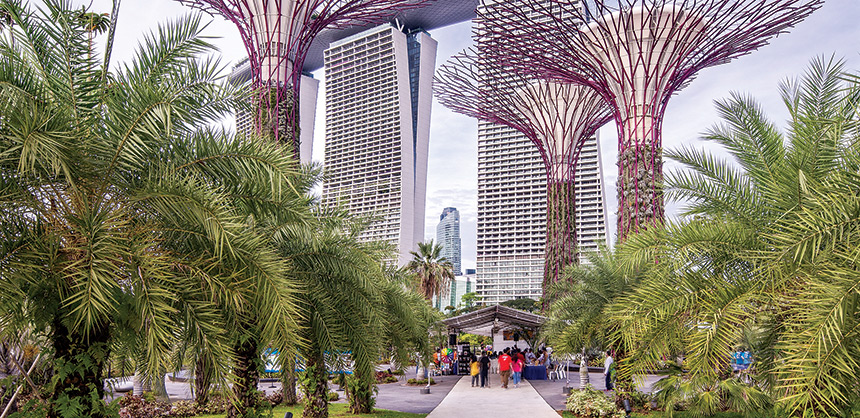
A well-selected venue can make an event unforgettable, boost attendance, and generate positive feedback from attendees. Deciding where to save and where to spend is often one of the least favorite parts of the planning process, but the most critical.  Courtesy of Mary Muldoon

A well-selected venue can make an event unforgettable, boost attendance, and generate positive feedback from attendees. Deciding where to save and where to spend is often one of the least favorite parts of the planning process, but the most critical. Courtesy of Mary Muldoon

Arranging a corporate event is a massive task. An event planner’s main role is to look for ways to not only provide memorable meetings and events, but to stay within budget.

Whether there is an in-house planner, third-party event planning company or a combination of the two, a well-executed budget plan must be in place. This includes budgeting tactics — controlling costs on hotel rooms, meeting rooms, food and beverage, concessions and travel — and in many cases, using technology to create engaging communications that offer a digital conference platform.

Selecting the perfect venue which suits your event is arguably one of the most important things in event planning. A destination sets the theme for the event. Therefore, it is recommended to choose a destination or venue that fits with your event, ads value to your brand and allows you to stick to your event budgeting to prevent overspending. As planners know, event expenses can add up fast. It’s easy to miss your financial goal by spending too much on unplanned or unneeded items.

The planning team at Brightspot Incentives & Events in Irving, TX, works with clients directly or with the client’s meeting planners. Every incentive trip or corporate event is different. And whether the client has a budget or a number in mind for their event, Brightspot Incentives & Events’ job is to point them in the right direction. “If they want to go to Mexico in peak season, we show them the rates and steer them on what would work within their budget,” said Mary Muldoon, sourcing manager at Brightspot.

Despite the uncertainty regarding the state of today’s economy, Muldoon does not see corporations downsizing their meeting and event budgets. “The budgets are pretty much the same, but financial departments are starting to backpedal on making commitments,” he said.

Erica Maurer, partner of EMRG Media, and owner and producer of The Event Planner Expo, the premier conference for top-tier executives, business owners, marketing experts and event professionals, is also finding that some companies are choosing the two sides of the spectrum: scaling back or going all in. “It depends on which client you’re working with at that moment,” explained Maurer.

Launched in 2012, the Event Planner Expo is a three-day annual trade show in New York City, which brings people together. The expo creates an environment staged to communicate company strategy, motivate, train or reward staff or influence external customers toward the brand.

According to Maurer, company events can often be the first item chopped from the budget in an effort to save money, but this action can affect company morale. “Some companies are doing more at their events because if they make their employees feel special, their employees work better. I’ve also seen it where people cut back but when you do that, the employees get nervous, and then that usually affects your team,” said Maurer.

For Tech companies such as Google in Mountain View, CA, the conversation is not about event budget cutbacks but about cost-effectiveness as it relates to in-person versus hybrid work.

“It’s very challenging for us to make business cases for people to come together, especially being at Google, because we make the technology that makes it possible for everybody else to adopt hybrid and remote working practices,” said Amy Badersnider, Head of UX Workspace Design at Google in New York, NY.

Badersnider works on Google’s summits and sprints. The sprint is a five-day process for answering critical business questions through design, prototyping and testing ideas with customers. During the sprints, there are portions dedicated to speed rounds of talks for participants, which will typically have a hybrid element that costs Google nothing.

Like many companies around the globe, Google has implemented the hybrid and remote working practices. It has also elevated the networking experience. Networking has grown into many modes: face-to-face, interface-to-interface, etc. This is not only a tactic to keep costs down, but as an effective way to provide better work experiences and bring people together.

“In general, we’re leaning into our technology as much as possible, trying to reduce our footprint and overall costs, including our traveling expenses,” said Badersnider. “But to bring people together — from Japan to the Bay area — it costs us a ton.”

Budget Workarounds

To cut costs, some corporations have eliminated their in-house meeting planner positions. Maurer said they worked with a company recently that handed over the reins to Event Expo to organize the entire event. “They can eliminate a salary and raise their event budget because now they’re paying one less person and can still get the same job done. We just did an event in Orlando where we flew down there and handled everything — soup to nuts.”

Choosing a budget-friendly destination is another avenue companies are using to cut costs. Meeting planners review the city taxes, resort fees, parking and ground transportation, which all play a major role in overall budget consideration.

“If I had a client that said, ‘Hey, I need it to be around x dollars per person,’ I might not put them in Hawaii. If they have a lower budget, I might say why don’t you go to Pennsylvania or Arizona? There are certain areas that you’re going to get better pricing statewide,” said Maurer. “You don’t have to go to the most expensive location. You could do something in Massachusetts — the Berkshires or somewhere else — and it will still be an amazing team-building experience.”

According to Maurer, it’s important to look at the market and ask yourself these questions: How much will it cost to travel to this or that location? And once you get there, does the city have local transportation or will you have to rely on Uber? The answers to these questions will determine your budget and how much money you need to allocate for frivolous spending.

When working with vendors, it is important to get multiple quotes. This will ensure you get the best rates and services.  Courtesy of Mary Muldoon

When working with vendors, it is important to get multiple quotes. This will ensure you get the best rates and services. Courtesy of Mary Muldoon

Minimizing Food & Beverage Costs

One of the biggest line items on an event budget is food and beverage. So, when the budget needs to be cut, meeting planners focus on this first. Without sacrificing the flavor, they trim the fat off the food and beverage budget. The idea is to be creative with the selection of meals but not sacrifice quality or quantity. “We can piggyback on another group that’s already in house and maybe they happen to work with a caterer,” Muldoon suggested. “Or we won’t focus on higher-end menu items like seafood. Post-pandemic, there are still a lot of hotels offering set menus and you can get in on those, too.”

Maurer’s options on F&B cutbacks include bar expenses. “If someone says I need to be more mindful of the budget, I would suggest opting for a mid-level bar versus an ultra-premium or premium bar. Many people don’t even realize it is mostly the same bar package with maybe two different liquors in it.”

Aside from the bar choices, it is also common to have a large selection of hors d’ oeuvres passed around or set up at an event. However, if you really want to cut some extra costs, you should consider limiting the amount of appetizers, perhaps scale it to four or five and turn your focus to the main meal.

At the end of the day, there’s so many servers that you can get on the floor. That means there is only going to be so much quantity of food being served. So, that is a great way of cutting costs per person without skimping on the hors d’ oeuvres.

According to Maurer, the food package costs are determined by how low-key or upscale the company wants to be. “That’s an easy way of looking like you’re doing a good party, and it’s still being plentiful. You could get different food stations, such as a burger bar, and that might be equivalent to a carving station. It all depends on your budget,” said Maurer.

For Google’s summits, Badersnider likes to think outside the box to keep F&B within budget. For her team, she does a little bit of a round robin for dinner, in that one person will head a particular restaurant and everybody else will sign up for that. It makes it really crowdsourced and everybody gets what they like.

It also means that the person who is organizing it can take a look at their menu and ensure the budget is constrained. “Pre-pandemic, we might have done things a little bit more ad hoc, and it might have been a little bit more over the top,” she said. “But now, we host a lot of smaller dinners to make sure we can monitor the budget more easily. It’s also better experientially for smaller groups.”

Local Vendors

Other cost-saving options include using vendors that source locally. The question is, how do you find them? Using referrals from other vendors and meeting planners is the best way to find local event vendors. Another way is to visit the vendor and see their work before you hire them. Keep in mind that local vendors, because they know the area well are not just outsourced services but part of your team. In the end, local vendors can help you streamline your budget and significantly boost the chances of the event’s success.

Travel Costs

Inflation has increased airfare costs across the board, therefore, companies require more restrictions on travel costs. On a recent summit, Google brought people together from Sydney and the Bay Area, with everyone gathering in New York, but they had to compress the event into three days.

“Everybody traveled on Monday and Friday due to a lot of the company’s newer guidelines and restrictions,” explained Badersnider. “We did some pre work that was sent out for people to digest, then there were meetings that were set up for people afterwards. And there were copious amounts of breaks in between just trying to deal with the cognitive overload for people. Three days was a way to keep costs down, and also to meet people where they are at cognitively right now.”

Because budgets have come under more scrutiny in relation to hotels booking policies, Google provided a comprehensive list of travel maximums, defined by location, to his employees so they could book what they wanted. However, this created another set of challenges.

“In previous years, people would vote whatever they wanted to,” said Badersnider. “Now with larger summits, we’re making a much more concerted effort into getting everybody a standardized rate at a specific set of hotels, which has been challenging because there are just so many people. Also, now what’s challenging is everybody’s moved away in some capacity. Even if it’s not another country, they’ve moved to another state. And so really, there are far more people traveling than ever before.”

Learning the Industry

To have an effective event budget, meeting planners and show organizers must know the costs in the industry, about what’s reasonable and unreasonable. Sometimes the biggest challenge is not the budget itself but lack of knowledge. If you have an event in New York City for 200 people and your budget is $20,000, chances are that’s not going to happen. In that case, planners should choose another destination and decide where to spend and where to save.

While the industry is constantly changing, your event budget strategy can convey a huge amount of information about your event to many people. It can also serve as a helpful learning tool for future events. The way you plan today can save you lots of time and money tomorrow.   C&IT

Dilenschneider-Robert-Columnist-147x147

Is It Time to Reinvent Yourself? Four Ways to Know You’re Ready for a Career Pivot

Dilenschneider-Robert-Columnist-110x140Robert L. Dilenschneider, author of The Ultimate Guide to Power & Influence: Everything You Need to Know, formed The Dilenschneider Group in October 1991. Headquartered in New York, Miami, and Chicago, the firm provides strategic advice and counsel to Fortune 500 companies and leading families and individuals around the world, with experience in fields ranging from mergers, acquisitions and crisis communications to marketing, government affairs and international media.

A few short years ago, the pandemic set off a wave of soul-searching about the role work plays in our lives. Some lost their job and had to re-skill, some retired early and some left for better opportunities. In general, there’s been a collective realization that life is too short to stay in an unfulfilling job. Hopefully, the worst of COVID-19 is behind us — but here in 2023, many of us are still feeling a nagging sense of discontent.

We absolutely need to heed that quiet voice whispering that it’s time for a change. Work is meant to be meaningful. We’re not supposed to endure a boring or unfulfilling career until it’s time to retire. Sometimes we need to pivot, and that’s a scary prospect. A life-altering career move can be controversial. It’s so much easier to stay snugly in your comfort zone. But when you take that leap, you’ll feel better about yourself and you actually might do some good along the way.

When faced with these heavy choices, it’s always helpful to take inspiration from others’ success stories. Below are some accounts and advice from other entrepreneurs who took a chance — and succeeded.

Here’s how to know when to make a move: You’re bored. Have you ever dreaded going back to work the next day? Does the thought of your daily tasks in the office make you long for something — anything — else? Perhaps you have a talent or skill that you’re not getting to employ. Are you searching for a way out? James Patterson did too. Before the author became a household name, he was a copywriter working in J. Walter Thompson, a Manhattan-based advertising agency. Even while leading the creative team, he garnered little satisfaction from the simple ads he was writing for green beans and playing cards, and he knew he had to quit. Patterson hasn’t stopped writing books. His career change was good for him — he’s sold more than 400 million copies — and for his legions of loyal readers.

Is your conscience nagging at you? This was the case when I worked for Hill+Knowlton as a fresh graduate. I adored my work and quickly rose through the ranks, eventually becoming president and CEO. That is, until I was asked to do something I considered unethical by upper management. Without any safety net to fall into, I quit my job.

This was September 1991, and newspapers wrote about my departure. I refused to say why I’d suddenly left, and this is the first time I’ve talked publicly about the reason. Personal integrity is important to me. Eventually, with some advice from trusted partners, I started my own hugely successful public relations agency. Today, The Dilenschneider Group is going strong, with top companies and individuals as clients for more than three decades.

You see an opportunity to make a difference. Rosalind “Roz” Brewer, former COO of Starbucks, had a satisfying career before 2020. But as she watched communities being slammed by the effects of the virus, she knew she had to step in.

In 2021, she left her stable job and became CEO of Walgreens Boots Alliance, which helped to administer the COVID-19 vaccine to communities. With this single move, Brewer became the highest-ranking Black CEO on the Fortune 500 list of top executives in the country, where she is now using her position to bring attention to multiple concerns and crises concerning women.

One day you realize your career no longer “fits.” Maybe you can feel your priorities changing. Maybe you’re getting older and want to make meaningful, lasting relationships with coworkers. Or perhaps you want to become an advocate for a community.

Kim Malek, weary from her weekly trips between Seattle and New York for her corporate job, was longing for something closer to home. She wanted to know her employees, coworkers, and neighbors, and wanted to be able to walk her dogs.

She didn’t let the risk of failing stop her. With a cousin, she cofounded Salt & Straw, an ice-cream shop with specialty flavors that quickly became a hit. That was 2011. By 2022, she had over 30 locations and annual revenues reaching the millions.

If you’re thinking about making a career pivot, here’s some advice: Don’t worry about going backward. When you shift gears while driving, there’s always going to be a second or two of lag, but ultimately, you get where you are trying to go. The same can be said for careers. Sheryl Sandberg, who early in her career went from a team of tens of thousands at the U.S. Department of the Treasury to a team of just four at Google, on the fear of moving backward:

“There are so many times I’ve seen people not make that jump because they’re afraid they’ll ‘move backward,’” she said in the When to Jump podcast in 2017. “If you can financially afford it, and you’re gonna work the next, I don’t know, 30 years, who cares about ‘going down?’”

It’s fine to try something completely different. Ina Garten, the host of the Food Network’s Barefoot Contessa, is an example of what can happen when you’re willing to follow your gut and make a move that’s completely unexpected. Fans of her many cookbooks might be surprised to learn that in her 20s she was a staff member of the White House’s Office of Management and Budget. “There’s got to be something more fun than this,” she recalled in a 2016 TIME story.

“And then I saw an ad for a specialty-food store for sale in the New York Times, and it was in a place I’d never been before: West Hampton. So my husband, Jeffrey, said, ‘Let’s go look at it.’ To say that I knew nothing about what I was getting myself into was an understatement. I’d never run a business before, never even had employees working for me. But, when I saw the store, I thought, ‘This is what I want to do.’” Being willing to take a risk, and listening to that inner voice, led to an astonishing career for one of America’s most prolific cookbook authors.

Come up with a pivot plan. Start by simply focusing on what you enjoy doing. Why do you enjoy it? Will it require further education? Before you enroll in an expensive program, do your research to determine whether that degree is necessary. If it is, can you pursue it after joining a company that contributes to its employees’ education? Is there other training that will position you to get into a new field? Find a mentor who can advise you on what you need.

You’re going to feel fear, and for good reason. Push through it and make the leap anyway. I recall my “terrified” state of mind when I left Hill+Knowlton. My main concerns were my wife and children. What was I going to do? How was I going to tell my wife, Jan, that I had walked away from a powerful and lucrative position? We had two young sons to raise.

As it turned out, my (seemingly very valid) worries turned out to be unfounded. By the time I got home after lunch with a couple of trusted colleagues, I had received calls from Chase, W.R. Grace, Dun & Bradstreet, and Ford Motor Company — they all wanted to do business.

Sometimes when you decide to take control of your own fate, the universe opens up for you. It’s funny how that works. Even if it doesn’t all come together immediately, if you’re doing what makes you happy rather than what others expect of you, you won’t regret the hard work. There may be moments of fear and doubt and even despair that come with the exhilaration. That’s life. But the brand of growth and resilience that come from reinventing yourself and building a career that means something can’t be earned any other way. C&IT

Preston,Jo-Anne-Author-147x147

Eight Words and Phrases Leaders Use That Turn People Off

Preston,Jo-Anne-Author-110x140Jo Anne Preston is the workforce and organizational development senior manager at the Rural Wisconsin Health Cooperative. She brings over four decades of her healthcare leadership experience to designing and delivering leadership and employee education for rural healthcare throughout Wisconsin and the U.S. Her aim is to offer to leaders straightforward tools and to inspire the courage to use them. She has a master’s degree in educational psychology/community counseling from Eastern Illinois University, and is the author of “Lead the Way in Five Minutes a Day: Sparking High Performance in Yourself and Your Team,” and writes a monthly leadership blog.

Is there an underlying tension when you speak to employees? Do you get the feeling coworkers don’t take you seriously as a leader? Can you recall a conversation in which your employee seemed to shut down and glaze over? It doesn’t mean you’re an incompetent leader. In fact, more often than you’d probably guess, it’s that you’re using the wrong words.

Most of us underestimate the power of words. I believe in order to help people feel respected, dignified, and successful, leaders need to pay close attention, not just to what we say but also how we say it.

Some words set us up to be misunderstood. Others shut people down, make them feel excluded, and even make them dislike us.

The idea is to think intentionally about whether our words work for or against our employees’ needs. A small shift in your speaking habits can make a big difference.

Communication is just one of the topics covered in my new book. Described as a “fully stocked leadership toolbox,” “Lead the Way in Five Minutes a Day” skips the complex theories and jargon and gets right to practical solutions. Each chapter begins with a self-assessment guide so you can identify relevant strengths to develop and address opportunities for growth.

When managing a variety of people, it can be difficult to consider your every word, but being intentional about prioritizing openness and understanding can make you a well-respected leader. That said, here are a few words leaders should avoid, or at least minimize:

Subordinate. This word can be a quick and easy way to distinguish between those in a managerial role and those who answer to them, but, more commonly, it can make employees feel degraded, less important, and inferior. Consider instead: “my team,” “direct reports” and “frontline employees” to increase unity in the workplace.

LDI, HRSA, HIT (really, any acronym). We’ve all used them at some point without a second thought, but it is not safe to assume that every employee is familiar with their meanings. Employees may feel foolish if they have to ask, and when questions go unasked, we don’t speed up at all.

I recommend to simply say it how you write it — with the spelled-out version followed by the acronym, at least the first time.

Manager. (Say “leader” instead.) What’s the difference? Many of us use these terms interchangeably, but I remember my own experience with this discrepancy. An employee who was not a manager asked me if I thought non-managers could be leaders in their role, and of course, I said yes. The words I was using made him feel that he couldn’t be a leader if he was not a manager.

The solution? Simply name the person you are referring to. If not everyone is a manager, then say “leaders.”

I’m a perfectionist. Everyone has either said it themselves or heard it, but what employees hear is that you expect them to be perfect too. Rather, strive for excellence, not perfection. Employees should be able to openly discuss their mistakes without fear of ridicule or too-high expectations.

I/me. When you are invested and passionate about your work, it is too easy to slip into using “I”/“me.” I suggest simply changing it to the plural, more inclusive “we”/“us” instead, once again increasing unity in the workplace.

The girls. Referring to a department made up of all women as “the girls” will be offensive to most grown women. Managers may not always intend for it to be belittling, but it often feels that way. There are better options. Consider “the team.”

You guys. Another phrase, often uttered without a second thought, that refers to only about half the population. Like “the girls,” it may be hard to see why this matters if you are not the one feeling left out or having to adapt to a description that doesn’t include you. More inclusive language like “everyone,” “folks,” or “y’all” are better options to get a group’s attention.

Blah, blah, blah. Okay, this one isn’t a word, per se, but rather how you come across when you use buzzwords, jargon or language you think makes you sound smart. It’s easy to lose people when you do this. Watch your language to make sure you are not overdoing it, and watch your listener for any glazed-over looks or signs of distraction.

Of course, this is far from an exhaustive list. But I hope this sampling of words shows how easy it is for leaders to get in their own way. Choosing inclusive phrases and using words that lift people up rather than subtly diminishing them goes a long way toward making people like, respect and listen to you.

Most people agree that actions speak louder than words — but that does not mean words don’t have an influence. They do. Pay attention to how you come across and be sensitive to the feelings of others. You may find that this impacts people’s outlook and their work ethic to a surprising degree. C&IT

Harpst-Gary-LeadFirst-147x147

Do Constraints Cripple Your Team… Or Ignite Their Creativity?

Harpst-Gary-LeadFirst-110x140Gary Harpst is the author of “Built to Beat Chaos: Biblical Wisdom for Leading Yourself and Others.” He is the founder and CEO of LeadFirst. He is a keynote speaker, writer and teacher whose areas of focus include leadership, business and the integration of faith at work. He has been recognized as one of the Top 100 of the nation’s top thought-leaders in management and leadership by Leadership Excellence magazine. To learn more, visit leadfirst.ai.

In business, as in all areas of life, it’s so easy to think, I don’t have enough! Whether we’re trying to launch a new product, move into a new market, or just meet the next quarter’s revenue goal, it’s so easy to feel helplessly crippled by a shortage of resources — time, talent, expertise, customers, and, of course, money. When we come from a place of scarcity, there’s always a reason we can’t do it. Not only does this mindset hold us back from what could be a huge victory, it creates a company full of victim thinkers.

Instead of being motivated by challenges, employees get in the habit of giving up way too soon. They get fixated on what they lack, not what they have, and it paralyzes them. They start blaming circumstances for their failures. This attitude compounds over time, and the whole culture gets bogged down in negativity and defeatism. That’s when the spark of innovation flickers and dies.

It doesn’t have to be this way. In fact, constraints can energize you and unlock your creativity when approached with the right mindset. Ironically (or perhaps not), one of my greatest business victories happened early in my career when my team was faced with what seemed an impossible task: build a next-generation Windows product in a shockingly short amount of time.

We had a tiny team of six people and very few resources. Really, we needed at least 30 people to do this job. Other teams of more than 100 people were working toward the same objective. But the fact that we faced such “ridiculous” constraints forced us to get super-creative. We focused on finding existing components and assembled a system out of pre-built pieces. Ultimately, we launched our new product two years ahead of almost all our competitors.

The lesson? When we respond to constraints by getting super-engaged and focused, it unleashes incredible innovative power and allows us to beat almost insurmountable odds. How can you get your team into this mindset? Here are a few tips for creating a culture of overcoming constraints:

Get out of the victim mentality yourself by changing your language. Our first instinct is often to see ourselves as victims of circumstance. Do you ever find yourself saying: “We don’t have _________. Of course we can’t do that!” OR “Look at what they have! No wonder they were so successful!”? That’s your victim mentality keeping you from finding creative ways to make it work. Here’s the problem: Your mindset bleeds down into the rest of the team.

You can’t always change your circumstances, but you can always change your mindset. Stop making victim statements. Instead of saying, “We can’t,” start asking, “What can we do with what we have?” Also, when team members make these kinds of statements, remind them that there is always a solution.

Build momentum by focusing on what you can do first. There will always be a million things you can’t do. Instead of hand-wringing over the constraints, find three or four things that you can do right now and execute on them. These quick wins will generate some early momentum. This is critical to getting employees engaged and excited about the goal and helping them see that success is possible.

When you hit a roadblock, regroup and rethink. The “obvious” solution might not be possible for you. If we had all the time and money in the world, we’d all just do the first thing we thought of. Constraints force us to really get creative and problem solve. Realize that just because there is no immediately clear solution doesn’t mean that there’s NO solution at all. Call a brainstorming session and get people focused on creative problem-solving.

We had a client who served the construction market who decided to face a recession in a very different way. Rather than cut staff and expenses, they analyzed their business and realized a large percent of their profits came from a few of their products. They narrowed their product offering and allocated more cash and resources to high-value activity. As a result, over the next three years, they increased sales by 50%. By facing the constraints of a recession, they figured out a better way to do business that may not have occurred to them otherwise.

Break down the problem and look at it from all angles. Banish all assumptions and start with a beginner’s mindset. Are there new (cheaper, faster, more effective) ways to do it? Are there alternative programs, materials, vendors, processes, etc. that you’ve never considered? Have things changed and you’ve gotten too complacent to move with the times? What unspoken rules are you following? Are you letting personal biases rule out possible solutions? Is there something you’re doing now that you could stop doing to free up time, capital, or resources? Is there someone in your company whose gifts are not being leveraged — someone who might have the insight and expertise to break the problem wide open?

This can be a real exercise in humility. It’s not easy to assume you don’t know, and it’s certainly not easy to step out of your comfort zone. But when you get rid of all assumptions and start fresh, you can have amazing breakthroughs.

Build resiliency into your team. There’s often a “one step forward, two steps back” rhythm to innovation, which means your team is going to need some staying power. Here’s the thing: Resiliency doesn’t “just happen”; it is cultivated. Make sure people feel safe enough to speak up without fear. Keep them connected to the larger mission. And instill a sense of optimism by celebrating small wins and reminding them, “We’ve overcome constraints before, and we can do it again.” Most of all, show them you love and care for them.

Strange as it may sound, great leaders truly love their employees. Great teammates love each other. I always say love is the bonding force that holds teams together. It’s also what allows teams to get knocked down and get back up again.

Bottom line: There will always be constraints. If there weren’t, we’d never know what we’re capable of doing.

We’ve all heard the adage that necessity is the mother of invention. It’s true. If we always had an easy solution at hand, we’d never push boundaries and take leaps of faith and leave comfort zones behind. Constraints are the gifts that force us to grow. C&IT

Col3-Steinberg,Scott-147x147

How to Use AI to Design Better Meetings

ACF-2020-05-Col1-Steinberg,Scott-Columnist-110x140Hailed as the world’s leading business strategist, award-winning expert witness, strategic consultant and professional speaker Scott Steinberg is among today’s best-known trends experts and futurists, and the bestselling author of “Think Like a Futurist;” “Make Change Work for You: 10 Ways to Future-Proof Yourself, Fearlessly Innovate, and Succeed Despite Uncertainty;” and “Fast >> Forward: How to Turbo-Charge Business, Sales, and Career Growth.” The president and CEO of BIZDEV: The International Association for Business Development and Strategic Partnerships, his website is FuturistsSpeakers.com.

Ever get the sense that new technologies like artificial intelligence (AI) and machine learning (ML) are everywhere these days? Join the club: From Open AI’s ChatGPT to Google’s Bard, Microsoft’s Bing and Amazon’s various solutions, it’s clear that a new wave of high-tech disruption is on the horizon in the form of AI-powered and autonomous offerings. Soon, meeting and event planners (not to mention attendees) won’t just be able to leverage smart and self-aware technology assistants to aid with tasks such as conference planning/organization, program design, and content development. They’ll also be able to use autonomous AI “agents” like AutoGPT – capable of self-directing themselves to perform multiple steps in sequences and complete complex tasks without much human prompting – to aid with every facet of MICE industry operations.

In effect, if you think the pace of change is rapid and rate of disruption is growing now, just wait until you see what the next few months will bring. After all, it’s no coincidence that each passing week seems to bring new AI-powered advancements, as we move toward the inevitable future: A world where you’ll soon be able to turn to an AI-based service for just about any professional need, activate and turn these solutions on or off with the flick of a switch as-needed, and one where AI routines are powerful enough to create their own new AI routines themselves.

But let’s not get ahead of ourselves just yet. With demand for AI set to top $90 billion by 2025 alone, per UBS Wealth Management, keep in mind: As a meetings and events pro, it’s important to consider what artificial intelligence can and cannot do for the moment. And, for that matter, in practical terms, how you might go about leveraging AI-powered tools to help boost accessibility, interest and attendance, not to mention put a growing number of current and future AI tools – which will only become increasingly available in more user-friendly, cost-efficient and pay-as-you-go format going forward – to work in more productive fashion. After all, as we explain in new training and education game The Future is Yours, the next 10 years will bring more change than the prior 10,000, and the best time to start preparing for this growing tidal wave of disruption is now.


A Quick Primer on Artificial Intelligence and Machine Learning

Think of artificial intelligence tools as a form of smart technology that can be utilized for a variety of purposes. For example, Analyzing online visits to your event’s website to see which topics and speakers most resonate with your target audience or parsing ticket purchases to see which offers or pricing plans are most popular. Alternately, you might use these tools to monitor your tradeshow’s mobile app and see which sessions and tracks are getting the most interest, or track social media activity to determine which topics are currently trending in your industry. Machine learning, on the other hand, describes the ability of software programs to learn over time and get smarter with every interaction.

In any event, we’re currently experiencing a boom in the space for two reasons: (1) Many AI solutions can now hold conversations and spit out accurate answers to questions on-command like a human would and (2) Generative AI solutions (which can be used to generate original text and – in the case of tools like DALL-E and Midjourney – images, animations or video are now reaching a critical tipping point in terms of performance. To wit: As things stand, you can currently ask many AI programs questions on a range of topics and get helpful responses in a matter of seconds. But, on top of this, because AI has also become way smarter in recent years, you can suddenly ask it to perform research, write articles and design creative assets so convincing that they could’ve been produced by actual working professionals as well. In fact, artificial intelligence tools have become so brainy that you can even ask them to spit out software code just by asking them questions, allowing you to design your own websites and applications, even if you’re not a computer programmer.

Want to know what subjects event attendees are currently buzzing about or that they most prioritize lately? Curious what the best destinations are to hold a medical symposium or all-hands meeting at during the first weeks of fall or winter? Need write-ups for a series of talks, panels, or guest keynotes, or original illustrations and marketing copy to go with a brochure you’re designing? Suddenly, all you have to do is grab an AI tool and ask. And we’re not talking about having to restrict yourself to simple queries either: You can literally ask these programs for help designing your marketing plans and budgets, or finding local catering or transportation options, and get useful answers in seconds.

Just one catch: Most of these tools need to be trained on millions of data points and interactions, so that they have a frame of reference to draw upon – a process which takes considerable time. And some, like ChatGPT, are based on information that may be several years old at this point. However, as technology continues to grow and advance, and data sets expand, you can see where the trend is eventually headed – a world where every exchange is more informed and contextualized, and one of growingly customized and tailored attendee experiences.


Ways to Use AI and ML to Build Your Business

But enough with background and theory: You’re doubtlessly wondering – how can all these futuristic advancements help you grow your profits, operate more cost-efficiently, and improve event experience and attendance? As it turns out, opportunities here are as manifold as they are mind-blowing. For example, just off the cuff, you might use the power of AI and machine learning to:

  • Aid with event planning and research, including vendor and destination selection
  • Keep up with changing rules, regulations, and compliance protocols
  • Brainstorm new topics, ideas, and formats for meeting and event sessions
  • Determine unique sales points and how to best differentiate and message your event’s benefits and upsides
  • Craft advertising, marketing and promotions plans
  • Create mobile, online, social media and marketing copy or content
  • Identify guest speakers, virtual presenters and thought leaders to work with
  • Get a better handle on potential event costs, revenues and budgets
  • Analyze and identify key insights based on data and information that you’re collecting from attendees
  • Design presentations, write speeches and summarize event learnings and takeaways

For instance: Need a helping hand generating content to fill all your online marketing channels, publications and social media feeds? You can ask AI tools to create articles, blog posts, website copy and product brochures, or summarize longer pieces of content into social-media friendly write-ups. Looking for a cost-efficient way to answer attendees’ questions or field customer service queries? You can have smart software personalities (aka “chatbots”) that are intelligent enough to pass as human handle them. Who knows? Going forward, planning a meeting or event may be as easy as asking one simple question; and, thanks to the magic of AI and machine learning, everyone in your organization may soon be a potential meeting planner. C&IT

Harpst-Gary-LeadFirst-147x147

Young Employees Want Leaders Who Care About Them, But What Does That Really Mean?

Harpst-Gary-LeadFirst-110x140Gary Harpst is the author of “Built to Beat Chaos: Biblical Wisdom for Leading Yourself and Others.” He is the founder and CEO of LeadFirst. He is a keynote speaker, writer and teacher whose areas of focus include leadership, business and the integration of faith at work. He has been recognized as one of the Top 100 of the nation’s top thought-leaders in management and leadership by Leadership Excellence magazine. To learn more, visit leadfirst.ai.

More than anything else, Millennials and Gen Z workers want employers to care about their well-being. Sure, they need a paycheck, but they also want leaders who are invested in their mental, physical and emotional health, and committed to helping them live up to their potential. Frankly, it’s not just a generational thing. Humans of all ages crave this style of leadership. But what does it really mean to care about your employees?

It boils down to showing them unconditional love — also called agape — and that it’s a lot tougher than you might think.

Agape love is about relating to someone with their best interests in mind, regardless of their response. This is far from easy, because, as we all know, employees don’t always behave the way we’d like them to.

You might be thinking love, especially a form with Christian connotations, doesn’t belong in business. But, regardless of your belief system, there’s a very good reason to love your employees: It’s the only way to get them to subsume their individual desires and pull together to work toward your mission. Without love, there’s chaos.

Just as there must be a form of energy holding together the trillions of atoms that make up a single cell in the body, there must also be a force uniting team members and holding them together. In the network of human relationships that make up a great organization, love is that bonding force. Learning to practice it is the number-one job of a leader. It is a huge part of bringing order out of chaos.

So, how do you practice unconditional love at work? Here are a few insights:

First, do a gut check about your attitude toward other people. Do you care for people as a manipulation technique or as something worthwhile in itself? If you are being kind and loving only as a way to get what you want, people will eventually recognize that you are being insincere. It’s not enough to go through the motions — your caring must come from within.

Spend one-on-one time with your people. When I spend one-on-one time with my grandchildren, the conversations differ greatly from those held in the chaos of all of them together. These conversations are more focused and less influenced by what others around them may think or say, and they value receiving my undivided attention. Adults are no different. We all need meaningful one-on-one reaction, and it contributes to our self-worth and identity.

The first comment of some leaders, when asked about how much time they spend one-on-one with their workers, especially those with 30 direct reports, is, “I don’t have time.” What they are saying is, “I have time for turnover, retraining, increased error rates and all the other firefighting activities.”

Take an interest in their life outside of work. Employees won’t believe you love them if you don’t know them. Devote some of that one-on-one time to stay up to date on their family, interests, concerns and joys. Ask honest questions that show interest. (Questions are powerful because they penetrate more deeply than statements, since the brain has to do enough processing to provide an answer.) However, be aware that you might need to go first by demonstrating openness.

Share some of your own interests and let people see who you are. You can do this without getting into inappropriate personal information. The point is to allow yourself to be vulnerable. This can be incredibly difficult for some leaders, but real relationships cannot happen in the absence of vulnerability.

Treat people right even if they don’t reciprocate. The idea of “treating you right regardless of how you treat me” may not sound fun or even practical. But unconditional caring or love means giving 100%, regardless of how the other person treats you. The alternative is to go through life in reaction mode (this is a sure recipe for chaos). But love is centered in what you believe and not in reacting to what others do. I admit this is really hard for me.

I want to treat people based on their behavior. After reflecting on this for years, I realize what I really want is for others to treat me right, regardless of how I treat them—in other words, “Do as I say, not as I do.” Yet, as leaders, we need to keep working at this, even though we know we won’t always succeed. Over time, employees will look back and see that we’ve done the best we can by them despite their imperfect behavior.

Don’t be a doormat. An agape approach toward relationships can lead to tough love interactions. Don’t back down from these hard conversations. As long as you are coming from a place of care and concern, and not from a place of anger, your message will be received. But do remember, being firm is not the same as being cruel. You can say anything you need to say as long as you say it with sensitivity, kindness, and above all, care.

Give what’s in your hand. You may not always be able to give an employee a huge cash bonus or a promotion, but you always have something you can give that will be meaningful and valuable. Always ask yourself, ‘What can I offer this person?’ and you will never come up short. This is true even in worst-case scenarios. Here’s an example of an interaction I had with a former employee, David, who could not get along with others and was being terminated.

As CEO, I did not know David personally, but I felt I should do something for David. I had no motive as he was leaving the company. But, there appeared from nowhere within me an agape-like interest in this person. I met with him and slowly and carefully related the feedback that others had provided me on how he interacted with them, his belligerence, uncooperativeness and unwillingness to take input. I told him I had no motive other than to help him see himself as others see him.

David broke down in tears. He said he didn’t realize he came across this way and that no one had told him that before. I gently pointed out that was not true. Many people had tried, but he could not “hear” them. By the end of the conversation, David understood how he came across. He sincerely thanked me for helping him. He said it would change his approach in his next job. He seemed relieved and refreshed in his outlook by the end.

Get familiar with two key words: apologize and forgive. Apologize when you screw up. Do it quickly and mean it. The best way to establish a high standard of behavior is to declare the standard and admit when you don’t meet it. No one is perfect. Don’t pretend you are. Likewise, forgive others when they screw up. It’s a two-way street.

When we invest in our relationships with people, we are more likely to tolerate and forgive each other as needed. It really is a two-way street. Caring for people makes for a more resilient organization where our inevitable failures don’t derail the teamwork.

If all of this sounds like a lot of work, that’s because it is. But the payoff is well worth it.

Care and love are both verbs — they require intentional action. Keep this in mind as you consider how to show your employees their well-being matters to you. Your good intentions count only when you back them up with consistent action. When your behaviors come from your heart, you will reach your employees’ hearts too, and that kind of connection leads to greatness. C&IT

CIT-2023-09-feat-DEI-147

The Importance of DEI

Having to walk around or fill out information on printed paper can be challenging to some with disabilities, said Adam Campfield, senior accessibility manager with a Fortune 50 company in Denver, CO.  Photo by Jhane Hoang

Having to walk around or fill out information on printed paper can be challenging to some with disabilities, said Adam Campfield, senior accessibility manager with a Fortune 50 company in Denver, CO. Photo by Jhane Hoang

“… It stands to reason that if an organization desires a more inclusive culture — and leaders want to model inclusion — then meetings are the place to start.”
— Harvard Business Review article 

DEI, DEAI, EDI. You may see these letters arranged in a variety of ways, but they always mean the same thing: Diversity, Equity, Inclusion and Accessibility. When applied to meetings, they represent the goal of creating events and environments in which everyone feels welcomed – every race, ethnicity, gender, pronoun and ability or disability.

It’s a tall order. So where to start? Elaiza Shepherd, founder & lead planner at Elevate in Minneapolis, MN, and chair of MPI’s EDI Committee, pointed out that DEI is always evolving so there will always be new things to learn and understand.

“A good way for planners to start is to keep an open mind and ask questions,” she said. “Get to know your audience by asking questions. Beyond that, planners should introduce DEI into the planning process not just through content, but as a whole.”

For one thing, planners can choose vendors and other partners from organizations that are themselves inclusive.

“It can be as simple as asking them for their EDI statement,” Shepherd said. “Becoming attuned to DEI is a big-picture project, especially when it comes to accessibility. Don’t just think about what you see and the physical aspect. Include physical and non-physical aspects of accessibility.”

One resource she highly recommends is Google’s most recent launch of the Neu Project Focus, the stated goal of which is, “to make the world more welcoming and productive for neurodivergent communities” and “to amplify existing methods while encouraging new practical approaches to inclusion.” Specifically related to meetings, it includes “An Event Professional’s Guide to NeuroInclusion.”

Adam Campfield is a senior accessibility manager with a Fortune 50 company in Denver, CO. Visually impaired since childhood and working in a company with many meetings each year, Campfield has a clear understanding of how meeting planners can best meet the needs of ability-challenged attendees. Echoing Shepherd, he said that it’s crucial for planners to know their audience.

“The first step, more like step zero, is identifying the type of meeting, as that will shape everything else that needs to be considered for accessibility,” he said. “There are many more online meetings, and the accommodations for those are different from in person meeting, which in turn has different requirements than a one-off conference auditorium-style event. Only after this comes the next, equally critical piece, which is knowing the audience. What one might prepare for a small group of close teammates may differ from preparing for a large group composed of multiple teams.”

Campfield said there are a host of resources for different types of events and audiences, as well as general considerations, depending on the audience and event. If there are presentation materials, for example, such as documents or slides, these should be provided in an accessible format to participants in advance of the event. Microsoft and Google, among others, provide information on creating accessible slide presentations and documents.

“The significance of providing these materials is due to the fact that reading and also listening, unless the words are one to one, creates increased cognitive load, meaning participants will absorb neither as well as when the two are separate,” he said. “In fact, some people cannot process written text while there is audio stimulation or vice versa. People who use screen readers can find it trying to follow along with a presentation live, and even more challenging as they then have a computer talking and a presenter speaking at the same time.”

Bring Yourself To Light

He said that it may also be helpful for speakers and presenters to describe themselves.

“This point is still somewhat controversial, but having speakers give a physical description of themselves can be helpful for people who are visually impaired,” Campfield said. “If planners choose to have this as an option, Campfield recommends that descriptions be short and objective. Some people will describe what’s in their video background or the clothes they’re wearing. Unless that information is relevant to the presentation, or someone is wearing a humorous T-shirt, the extra info is probably not helpful. It’s better to use more permanent descriptors, such as, ‘I am a Caucasian male with sandy hair and hazel eyes,’ or ‘I am a short female with dark hair, light brown skin and sparkly purple glasses.’”

Beyond that, he also has these recommendations:

  • Ensure there are captions for people who are deaf or hard of hearing.
  • Preferably, especially for presentations, ensure there is a qualified sign language interpreter.
  • Ensure speakers describe presented images so people who cannot see the image can follow along. This includes adding an alternative description in any distributed materials.
  • If there is prerecorded video, it should have closed captions and audio description. As a fallback, presenters should describe the relevant video content themselves.
  • Consider electronic copies of materials as they allow users to adapt those materials to their own needs with their preferred assistive technology.
  • Provide any physical handouts in braille and large print. To save on printing, some vendors can print large print and braille on the same page or use the large print for all attendees.

Campfield said it’s also important for planners to carefully inspect hotels and venues personally.

“There can be a lot of variances in knowledge and preparedness,” he said. “At the least, the planner should speak to someone at the venue and ask pointed questions such as these below. If no one can answer them, that’s a red flag.”

Questions dealing with DEI special access:

  • If someone is arriving by public transport or by car service, how close would the drop-off be to the entrance of the venue? Someone who is visually impaired may have a challenging time if they can’t be dropped off close to the entrance, for example locating an unfamiliar building on a campus.
  • Are there braille or tactile signs for rooms?
  • Are there staff present who can assist those who may need guidance to locate specific areas?
  • Are there wayfinding solutions, such as indoor GPS mapping available for visitors?
  • Are there wheelchair-accessible doors and/or elevators?

When it comes to contracting with hotels, convention centers and other venues with DEI in mind, Campfield said the biggest issue is simply lack of knowledge.

“I find many people are willing to be helpful but don’t possess the knowhow to implement accessibility,” Campfield said. “Quite often, physical spaces will be accessible for wheelchairs or other mobility device users, at least in theory, because of legal regulations. Less often are venues constructed in a way to be easily navigated by someone who is unable to see signage. Providing accessible materials or a sign language interpreter helps, however, typically these services have to be contracted separately for the event.”

Looking back at his own experiences, he gives examples of the challenges he has faced, such as difficulty finding the meeting location, which is on the top of the list.

“If one can’t see signs, only knowing a building or even the floor of a building can still mean a great deal of extra time trying to locate an unfamiliar place,” he said. “Add to that the presenters who refer to visual content without describing said content, such as ‘As you can see here…’”

Live drawing or whiteboarding style activities are a challenge for visually impaired attendees.

“Not only for lack of description,” Campfield noted, “but the medium is very visual, making participation for someone who is blind awkward to impossible. “Activities requiring filling out information on printed paper and activities that require getting up, moving around or finding groups are additional challenges.”

DEI Tips For Planners

Anyone who has ever attended a meeting can relate to these normal conference activities and situations, but few think about them in the context of a fellow attendee with visual impairment. Perhaps as DEI becomes more of a standard focus, everyone will start to look differently at even the smallest, seemingly inconsequential things.

Campfield offers a few final tips for planners as they work on their next meeting.

Practice inclusion by including description information, accessible materials and captions as often as possible. This will help make it habit and help others realize that, perhaps, they should do the same.

Never assume ability. If you conduct yourself without assuming everyone can see, hear, walk, stand, move their arms or speak, you will be most likely to include the majority of people.

Ensure participants in any event are aware in advance of a mechanism to request accommodations, such as accessible materials, to help navigate a location or interpretation.

“If there is insufficient time or resources to make every other best practice happen, at least make participants aware of how to let the organizer know they need something so it can be provided on an individual level,” he said. “That will go a long way.”

In addition to DEI-specific resources and materials, planners have a resource they most likely already know about that can provide a great deal of help: The CVB in the destination where they are meeting. CVB staff know their local communities and know venues and vendors who meet and/or are aligned with diversity and inclusion goals.

Gregg Caren understands the value of diversity and inclusion as President & CEO of the Philadelphia Convention & Visitors Bureau (PHLCVB), which has been focused on diversity for years.

“We recognize and celebrate the differences that make us unique,” Caren said. Each member of our team comes to the table with a different background, race, sexual identity and orientation. Each brings their unique perspective to the PHLCVB to help create an inclusive environment. When staff members feel accepted and included in company culture, they can be more successful and flourish.”

Caren is also co-chair of the upcoming Tourism & Diversity Matters DEI Conference called The Collective Experience.

Integrated DEI

The importance of DEI, Caren said, extends to conventions and meetings, too.

“We believe DEI can and should be integrated into all facets of a meeting or convention,” he continued. “We work to support the diversity, equity and inclusion of meetings and events through our business division, PHL Diversity. PHL Diversity connects event organizers with resources, businesses, suppliers and community leaders to support their DEI objectives in Philadelphia. From providing local experts who can serve as keynote speakers to nonprofit groups for community engagement opportunities, and diverse vendors and businesses who can supply anything a group needs, the PHLCVB works to help foster these connections that benefit our events and local stakeholders equally.”

Caren believes CVBs are a good resource for planners, as well as attendees, with a variety of ability challenges because they know the businesses in the area that have what those attendees need.

“In Philly, for example,” Caren said, “the PHLCVB team works closely with our partners at the Pennsylvania Convention Center, area hotels and venues to ensure attendees with a disability have everything they need to have a wonderful, world-class experience. This may mean identifying and matching them with hotels that provide visual alarms; doorbells and phones for the hearing impaired; roll-in showers; easily moveable furniture; lower appliances and sinks; parking for wheelchair accessibility and transportation services; electric scooters; ASL interpretation and close captioning vendors for conventions and meetings.”

Like Shepherd, he said that, while some disabilities are seen, many are not. That’s where asking questions comes in.

“We strive to go further and ask more specifically about ability-challenged attendees’ needs to create inclusive environments,” Caren said. “When event attendees feel they belong, they can focus on conducting business, networking and learning.”

As DEI has become more front and center and the concept of supporting local, entrepreneurial businesses has become the norm, CVBs can help connect planners with those kinds of businesses.

“During their time in Philadelphia, meeting attendees are often looking to support local venues and restaurants owned by underrepresented groups,” Caren said. “The city has a thriving food scene, and the diversity of Philadelphia is represented by the culinary options available. For example, we are connecting planners with many of Philadelphia’s Black- and Brown-owned restaurants and venues for offsite group dining. One popular example is South, a restaurant, jazz club and special event venue not far from the Pennsylvania Convention Center. Another great option for groups is Booker’s Restaurant in West Philadelphia, which serves up elevated Southern comfort food.”

Caren also pointed to the historic Reading Terminal Market, which houses a diversity of vendors.

“The more than 80 independent merchants that feature regional and global cuisine are all locally owned and operated at the Reading Terminal Market,” Caren said. “It is an attendee favorite for lunch and sits conveniently in between our primary headquarters hotel and convention center.”

While Caren is justifiably proud of Philadelphia’s diversity and welcoming spirit, he’s not the only one.

“Simply put, the ‘City of Brotherly Love’ is not merely a slogan,” Caren said. “It is the literal translation of the word Philadelphia, and we Philadelphians live it every day — so much so that Philadelphia has earned a Certified Welcoming city by Welcoming America, the largest city in the nation to receive this designation. We think that said it all!”

Houston’s Diversity

Houston is another very diverse city with a CVB committed to diversity and inclusion.

“As a company, Houston First Corporation (HFC) recognizes the importance of cultivating an environment that nurtures talent, is equitable and values different perspectives, and most importantly, is respectful of everyone,” Natalie Young, CMP, founding co-chair of the DEI Business Resource Group at HFC and the associate director of client services at Visit Houston, said.  “Several years ago, we engaged a workforce research group to conduct an employee survey to determine what we were doing well and where we needed improvement. We were pleased that the organization scored very well based on employee perceptions, but it also illuminated for us a few areas that needed improvement.”

“Houston First launched a DEI Council and separate Business Resource Group (BRG),” Young said. “The Council, which is made up of diverse members of the executive team, is responsible for setting organizational goals and ensuring implementation of programs and policies that foster a diverse and equitable environment. The BRG, comprised of team members at all levels of the organization, provides recommendations to the council that addresses issues, supports our corporate culture and helps move HFC forward. The BRG has spearheaded new initiatives including an apprenticeship program, DEI trainings and educational activities for staff and the public around heritage months.”

With that in-depth understanding in its own organization, HFC is well positioned to help planners and groups meet their DEI goals and needs. It has been so successful that the National Federation of the Blind held this year’s annual convention there.

“Houston hosts a wide spectrum of events, and many organizations hold something important to them that they want to learn about while in Houston,” she said. “It might be learning about our city’s unique African American history, or securing a presentation from a community leader here in Houston who is doing important work in DEI. We can help be that bridge to connect the meeting with something that is uniquely Houston.”

Meeting the goals of DEI is a collective effort; all must have a role in helping to make meetings diverse, equitable, inclusive and accessible. The result of those efforts will be better meetings, better communities and increased productivity. What’s not to love about that? C&IT

Celebrity Summit Bermuda

Cruising Renaissance

Celebrity Summit is a resort at sea. Courtesy Photo

Celebrity Summit is a resort at sea. Courtesy Photo

Much like the surge of programs that have returned to European destinations and popular domestic beach resorts, cruising has also seen a comeback.

Cruise ships are regularly sailing at full capacity again, and shipyard order books are once again locked in years ahead. With a total of 38,500 new berths coming online this year, ranging from intimate 100-passenger luxury ships to bells-and-whistles expedition vessels, to 5,600-passenger mega-ships packed with amenities, the cruise industry appears to be experiencing a new renaissance.

What has been somewhat slower to come back has been the MICE sector. That’s due, in part, to the long lead time meeting planners usually require for successful events. But also, international travel hurdles and health restrictions have only recently receded into the background. The one thing planners cite over and over as the chief advantage of meetings and incentive programs at sea is the value.

If you have not taken a cruise previously, consider this as an opportunity.

“The pricing includes your food, entertainment, meeting space and more, depending on the cruise line,” Diana Bloss, director of operations of Worldwide Cruise Associates, in Plantation, FL, said. “For your events onboard, you don’t pay fees for the event room, as you do at a hotel. On a ship, the AV gear is also free. At a hotel, you pay extra for it. Your entertainment is included and you don’t have to worry about arranging transportation to a venue for dinner or a show, which would add another cost. At the end of the day, not only does it take less staff on the planner’s side, but it is cheaper and you know all your costs upfront. There are no surprises.”

Cruise Costs Appeal To The Budget

Graysen Ledbetter, marketing specialist — promotions with Kimball Midwest, in Columbus, OH, concurred, following his experience using a Celebrity Cruises ship for a 28-person incentive trip.

“The difference in cost between a cruise event and a resort are drastic,” Ledbetter said.  “When researching different options we had available for our incentive trips, resort events were nearly double the cost of a cruise event. This is an important factor for corporate incentive trips, as maintaining the budget set beforehand is crucial.”

As he researched options for an Alaskan incentive program, Ledbetter chose Celebrity Cruises because he said the line stood out for its luxury trimmings.

Although Ledbetter found that Celebrity was not the least expensive option, he said, “I could tell that the quality of entertainment, dining and overall experience would be above and beyond. Everything exceeded our expectations.”

Kimball Midwest selected the Celebrity Solstice, which can accommodates up to 2,852 passengers. It is a ship that operates seven-day Alaskan cruises out of Seattle.

“I knew the Solstice would provide a great experience for attendees,” Ledbetter said. “This was important, as we wanted to ensure all felt at ease and comfortable with the different amenities and overall experience onboard. We knew we wanted to do an Alaskan cruise, but departing from Seattle was a major factor. This allowed all to fly into Seattle fairly easily and we didn’t have to worry about passport restrictions. We wanted to ensure that all were in Seattle a day before departure, as one flight delay can mean the difference between having the experience of a lifetime or missing out on boarding the ship.”

Ledbetter said that sharing the ship with paying passengers did not affect his group’s program in any way.

“All had an incredible experience,” Ledbetter added. “The only accommodations we requested was for our groups to be seated next to each other in the dining room and a Welcome Aboard Happy Hour. It was a great way to celebrate our sales’ teams success and kicked off their memorable trip.  We wanted our group to escape work, as they were the ones who earned their spot on this incentive trip, so we did not plan for many group functions or events. However, I worked directly with Celebrity to book at least one excursion for each guest.”

According to Ledbetter, it was overall an easy process and something that made planning a lot easier.

“From the dining room, casino, theater, and even the basketball court, there was not an inch of the ship that was not explored,” Ledbetter said. “The size of the Celebrity Solstice was truly remarkable and the different amenities it had to offer were incredible. With a cruise incentive program, you visit different ports, places you may have never been to before or even thought to visit and you then have a chance to go on some of the most memorable excursions you can imagine.”

For Stacey Edwards, vice president of talent and marketing for MedPro Healthcare Staffing, in Sunrise, FL, Celebrity Cruises is the top pick for a five-day incentive program planned for the end of this year.

“We have used other cruise lines in the past, but Celebrity was far and away a step above what we experienced previously,” Edwards said. “It was obvious from my initial call with our sales representative that this was going to be a different experience.”

A Variety Of Sailing Options

With more than 60 different cruise ships embarking from South Florida in winter months, Edwards had a variety of options at all price points to consider for a tropical itinerary. Earlier in the year, while Celebrity Silhouette was docked in Miami, she took her team aboard for a site visit.

“We were impressed by the facilities, staterooms, dining experience and overall service,” Edwards said. “The past few years, our company has done this trip on land.  Based on the price and what we had done for those trips, this was exceptional value. We are sharing the cruise with the public. Our group is around 400 people, so we’ll be less than 15% of the overall cruise passengers. With that said, we have private event space for our evening events and team building planned that the ship was able to accommodate.”

In order to book this event, the cruise line needed to provide Edwards with a meeting room large enough for the whole group, and they ended up securing the main theatre with its built-in AV.

Edwards also arranged for everyone to be seated together in the main dining room each night and she is discussing internally whether to plan additional events. She said that she was pleased with the service they received onboard.

“During my site visit, I was blown away that Celebrity’s senior vice president of sales happened to be on board and came over to spend some time with me and my team,” Edwards said. “She was so genuine and gracious and made me feel at home.”

Edwards summed up the experience of producing an incentive program at sea in three words: “It is easy,” she explained. “It is just so much more cost effective, and you really are able to stick to a budget. The costs are transparent and you know from the beginning what you’re getting into.  In addition, the ancillary items, such as AV and amenities, are much less expensive than what you see at a hotel or resort.”

“Just try it,” Edwards concluded. “Attendees will love it and your life will be extremely simple, and your CFO will be happy.”

All Inclusive

Deep in planning for a room block for 500 attendees aboard a Princess Cruises ship, Cherie Graves, director of events for Avoya Travel, in San Marcos, CA, noted how a cruise program involves fewer points of contact compared to what is typically needed for a land-based program.

“The multiple venues and vendors you typically need to source for a land-based program, from hotels, DMCs, décor, entertainment, catering, is all built-in on a cruise ship,” Graves said.  “Hotel AV costs can be extremely high, but utilizing existing AV and stages on a cruise ship can save you thousands of dollars. A cruise makes putting together a budget and sticking with it a lot easier.”

For the upcoming Avoya Travel Annual Conference, Graves booked her group onto an existing itinerary aboard Discovery Princess, the newest ship in the Princess Cruises fleet. Debuting last year, the 3,660-passenger ship has all of Princess’ hallmark features, including the Princess Medallion.

The Princess Medallion is a quarter-sized wearable that enables faster boarding, locating fellow travelers and enhanced service wherever an attendee may be situated, on the ship, poolside or in their cabin.

“Princess has been a great partner for us,” Graves said.  “We haven’t done this particular itinerary before, so it’s a great experience for attendees, who are all travel agents.”

Sailing To Scenic Alaska

The upcoming seven-day sail out of Seattle this year will port at Alaska’s top destinations: Ketchikan, Juneau and Skagway.

“We are planning on hosting our general sessions in the theater, which is great because they already have a built-in stage, screens and existing AV, so we are able to save a lot of money not bringing that in from another vendor,” she said.

One challenge Graves noted on the technology front is that WiFi can be inconsistent when sailing.  She recommended that any audio or visual content to be presented should be pre-recorded.

Graves also observed that, on some ships, the lack of traditional breakout or meeting space can be a challenge if an event includes a lot of meetings or breakouts. Still, planners with flexible requirements will find many venues on most ships, including restaurants, bars and theaters, that can be adapted.

“When we’re sharing a publicly-available cruise, we need to be flexible with space and times and exclusivity expectations,” Graves said. “This includes times when we can have the theater for sessions or other areas for private receptions.”

Shared spaces were not a problem for Bloss when she chartered with Seabourn Cruise Line for a seven-day Mediterranean cruise recently. There are, however, important considerations when choosing a full-ship charter, and size options have never been more diversified, ranging from sailing ships that can accommodate 148 passengers to mega-ships catering to 2,000 or more.

“Matching a client with the right ship and itinerary is crucial,” Bloss said. “When choosing a ship for a full charter, obviously size is the first factor one has to determine.  You are buying the entire vessel, even if you don’t fill it 100%.”

Ships tend to stay in one region for a season before moving to another destination, and cruise schedules are released 18 months or more in advance. Therefore, if a specific ship is desired, some destination flexibility may be required.

“Another important factor is where the company has been before,” Bloss stated. “What is their bucket list? What is new and different? What destination has the magic touch? And then, of course, you have the budget.”

Luxury At Sea

“We chose Seabourn Cruise Line for a particular client because they wanted luxury and needed a certain number of top suites,” she continued. “They also wanted a creative itinerary that was different from the standard itineraries. Dining was another important factor. Seabourn is a five-star-plus luxury cruise line, with outstanding service and multiple restaurant options. Compared to a land program, the organization that is needed for a cruise program is definitely more streamlined.”

The client planned for a high-scale meeting presentation and the size of the theater and the quality of the AV equipment were top priorities, so events and special needs were organized in advance by the ship staff, Bloss noted. The company also did a couple of customized shoreside events.

Another advantage that comes with a full-ship charter is that corporations can fully capitalize on branding possibilities.

“These stay in place for the entire cruise and the options are truly endless,” Bloss said. “You can also customize the daily order of events, select from a choice of entertainment, adjust dining times to suit meetings or excursions, provide input with menus and much more.”

For a broadcast company, Bloss recently planned a 100-person incentive cruise aboard Holland America Line’s Eurodam. The client wanted an Alaskan cruise and Bloss noted that Holland America is the founder of cruises through the Inside Passage and they get the better port position, so people have a shorter walk into town.

“In fact, most are docked right downtown,” Bloss said. “Holland America also owns most of the shore excursion companies, so they have priority on numbers and you have the peace of mind knowing that, for excursions you book, the tour company and equipment are all top-notch.”

Bloss pointed out that Holland America Line is known for providing live music, and on the newest ships, you’ll find a variety of venues like the Rolling Stone Rock Room, the Lincoln Center Stage for classical performances, a B.B. King Blues Club and the World Stage, which features a wraparound, panoramic screen.

In addition to the traditional main dining room and Lido Market buffet, the 2,104-passenger Eurodam also features the Pinnacle Grill steakhouse, Tamarind for Southeast Asian cuisine and Canaletto for Italian.

“Holland America is regarded as a premium brand and the service and food are extremely good,” Bloss said. “The price point compared to their competitors is also very attractive. For this particular group, we had several cocktail parties, special dining requests, group shore excursions, room gift deliveries and group transfers, all of which can be handled by a ship of this size and layout, hence why we choose the Eurodam.”

Norwegian Cruise Line just launched its all new Norwegian Viva. This is the second ship of the Prime Class. The ship mirrors the design of the award-winning sister ship Norwegian Prima. The 965 ft. ship offers space for 3,100 attendees and ports at many European destinations. The initial voyage started at Venice, Italy and sailed to Lisbon, Portugal. The ship will also port in the Greek Isles and take many Mediterranean voyages through November, before homeporting in San Juan, Puerto Rico at the end of the year for a season in the Caribbean.

Attendees will find interesting onboard experiences, including a three-level racetrack, a food hall with 11 unique eateries, “the fastest slides at sea” and an industry-exclusive sustainable cocktail bar, the Metropolitan Bar. There is also an expansive array of art on board and a sculpture garden. In addition, the ship features a world-class entertainment lineup.

David J. Herrera, president of Norwegian Cruise Line, said that the ship has “well-appointed spacious design, elevated experiences, expansive culinary offerings and signature Norwegian Cruise Line hospitality.”

Carving Out a Niche

Although the largest cruise lines try to appeal to the broadest swath of the marketplace, most cruise lines strive to carve out an identity that resonates for a particular audience segment. Chief among them is the Disney Cruise Line, which this year celebrates the 25th anniversary of its first ship launch, the Disney Magic. Since then, the line has grown to five ships, with a sixth, the 2,500-passenger Disney Treasure, due to come on line late next year. The line continues to innovate while catering to distinct areas for different age groups, including sophisticated adults-only dining options and an adults-only pool area. A tropical retreat developed by Disney arrives next summer when Lighthouse Point on the Bahamian island of Eleuthera is set to debut.

Virgin Voyages started sailing a few years ago and now has four 2,770+-passenger ships. They specifically market to the 18-and-up crowd. Onboard is a surprisingly diverse group, with the average age from late 40s to early 50s. The entertainment is skewed toward adults and isn’t far afield from what one encounters in Las Vegas.

Carnival Cruise Line continues to hone it’s offering for a broad audience, with a focus on sailing year-round from more U.S. ports than any other line. Although Carnival recently retired its six oldest ships two years ago, the company launched its Excel Class featuring Carnival’s largest ships ever, starting with the 6,630-passenger Mardi Gras.  The Carnival Celebration followed last year, and the Carnival Jubilee starts sailing from Galveston, TX, at the end of this year.

Cruising Industry Gems

At the market’s upper end, Silversea has continued its rapid expansion following Royal Caribbean’s acquisition of the line three years ago. Since then, Silversea has converted two of its smallest ships to expedition class, acquired Crystal Cruises’ expedition vessel The Endeavour and added a new, 100-passenger expedition ship dedicated to the Galapagos, the Silver Origin. Silversea also launched two new-build, 596-passenger luxury ships, the Silver Moon and the Silver Dawn, both featuring the groundbreaking S.A.L.T. culinary program and recently the line debuted the Silver Nova, which accommodates 728 attendees and is touted as the most environmentally advanced cruise ship sailing today.

Crystal Cruises, which went bankrupt last year, has been acquired by the A&K Travel Group, including its two classic ships, the Crystal Symphony and the Crystal Serenity.  Prior to their re-launch this summer, the vessels received a total $150 million overhaul and many cabins were enlarged, meaning capacity was reduced for both ships by about one-quarter. The crew size remains about the same, ensuring a 1:1 staff-to-guest level. Going forward, the line is now called simply Crystal, and recently, they announced plans for four new ships in the coming years.

Launching next year is Cunard’s Queen Anne. This is the fourth ship in the line, which includes the Queen Mary 2, Queen Elizabeth and Queen Victoria. Offering world class comfort and Art Deco style, the ship can accommodate almost 3000 attendees. The ship sails to global destinations, including Mediterranean cities, Northern Europe, Norway’s Fjords and more. Voyages can last for three nights up to three months. C&IT

CIT-2023-09-feat-recovery-147

The Pulse Of Recovery

NeuGroup’s return to in-person meetings a year ago culminated with their Tech Summit at the Ritz-Carlton Half Moon Bay.  With many events back to full strength, attendees are excited to meet again and get together with their peers at beautiful locations. Courtesy of Alyssa McArdle

NeuGroup’s return to in-person meetings a year ago culminated with their Tech Summit at the Ritz-Carlton Half Moon Bay. With many events back to full strength, attendees are excited to meet again and get together with their peers at beautiful locations. Courtesy of Alyssa McArdle

The topic of the long-term effect of the Covid-19 pandemic on industries has been bandied about in all sectors of the world. The meetings and events industry is no exception. From safety and health protocols, innovative hybrid approaches to meetings, and a resurgence of in-person meetings, companies of all sizes are paying attention the post-pandemic recovery trajectory of events.

“The meetings environment and the live events industry, both significantly impacted by the pandemic, are moving ahead full-throttle,” Jacqueline Beaulieu, HMCC, director of strategic marketing & client engagement, at Poretta & Orr | Exhibits & Events, in Doylestown, PA, said.

Beaulieu has worked across all sectors of the trade show, events and association industry, including as a board of directors for Meeting Planners International Medical Meeting Planner Advisory Board, Georgia Chapter of Meeting Planners International, and the Exhibition and Events Workforce Development Federation.

Beaulieu said that it is now no secret that face-to-face meetings, events, conventions and tradeshows are seeing some large numbers with many breaking attendance records. But not all.

“Some meetings and events are realizing some adjustment to their attendance numbers,” Beaulieu said. “What we are learning in many cases is that smaller attendance numbers do not mean less opportunity. It means the right people and decision makers are now likely to attend meetings and events.”

While the recovery of the live events industry may take some time, Beaulieu said that it’s clear that event organizers are adapting to the new normal by adopting innovative event formats, implementing health and safety protocols and leveraging technology when necessary.

“Experiential, out-of-the-box, interactive and memorable events are now almost being  demanded by attendees,” Beaulieu said. “Attendees want to feel like they have traveled for a good reason, so make it memorable. We have learned that face-to-face engagement cannot be replaced or replicated.”

Alyssa McArdle, director of events at NeuGroup, in New York, saw last year as a time to rebuild NeuGroup’s in-person audience.

“We ran all of our events, with few exceptions, as concurrent hybrids because it was hard to anticipate whether we would reach critical mass in person,” McArdle said. “We are pushing hard for in-person attendance. We are still offering virtual options to those unable to travel, but we are doing so in a separate environment.”

McArdle believes attendees will continue to expect virtual attendance options. In addition, there is an expectation for on-demand content.

“Many have returned to their offices, even if in a hybrid arrangement, and do not have the ability to set aside large chunks of time to join a virtual conference in real time like they did when everyone was stuck at home,” McArdle said.

David VanderSloot is the director of conference planning and hospitality services, at Grand Valley State University and agrees that meetings and gatherings are steadily coming back, both in-person and hybrid.

“We have experienced a strong increase in meeting and events since early last year and it’s only gaining momentum,” VanderSloot said. “Our market saw a 12.7% increase in the number of meeting attendees to the area in the past year, and other areas of the country are seeing a similar rebound.”

With many events back to full strength, attendees are excited to meet again and to get together with peers for the first time since the pandemic. For others, especially those that include a hybrid option, in-person numbers are down.

“This is sometimes by design for cost savings or convenience,” VanderSloot said. “As we move forward, Covid is less and less a factor in the reduced size and scope of meetings and events.  Instead, the industry has adapted to the use of technology and remote options. With this available, planners are reevaluating the cost and necessity of in-person events.”

One way to evaluate the recovery of the meeting and events environment is by taking the proverbial pulse of the meeting and events environment in such expansive destinations as New York. Trudy Singh, New York City Tourism + Conventions vice president, mentioned that there is still a significant amount of pent-up demand.

“Also, we continue to see meetings and events break attendance records in New York City,” she said. “On average, events in New York see up to 20% higher attendance levels. Having the largest active pipeline in the country excites attendees to come back and experience something new. Many attendees face staffing challenges and lean on us as a trusted resource to provide recommendations, sourcing, site inspection arrangements and other services more than ever.”

An Evolution

In light of attendees’ eagerness to reconnect with others in new and profound ways, experiential components to events are also being demanded. As Beaulieu explained, event planners need to think about implementing and adapting elements throughout the corporate meeting, event or trade show that makes the attendee stop and take notice.

“Another trend we are seeing is healthy food items and non-alcoholic options being offered much more often. It is really catering to all the different demographics,” Beaulieu said.

Covid also has made it necessary to focus on the health and safety of those attending corporate events. Each meeting can be quite different in its requirements to attend, so attendees need to be informed by the planners what is required for the particular meeting they are attending.

While the pandemic may have halted in-person meetings and events for several months in the early phases, the technology needed for current meetings continued full-speed ahead both then and now.

As Beaulieu explains, technology is an ever-changing and very fluid aspect of meetings, as well as crucial component of any meeting or event.

“Organizations will continue to adopt new technologies and should continue to study and learn about emerging technologies that enhance the attendee experience,” Beaulieu said. “This could include tools for virtual networking, interactive presentations and augmented reality. Before the pandemic, I think many knew that meetings needed a bit of an overhaul, but the pandemic really forced many organizations to rethink the traditional format of events. As a result, there is a more creative and innovative approach being adapted regarding event format and education, such as shorter, more focused sessions, more interactive formats and more diverse speaker lineups.”

McArdle also points out that meeting planners have had to create truly compelling in-person events in order to combat the reasons potential attendees might opt to stay home. Between travel costs, time away from their work and pandemic-born inertia, there are a lot of barriers to fight against.

“Once attendees are back in person, they seem to remember how valuable and irreplicable that experience is,” McArdle said. “The meeting planner’s imperative is to create programming, both hard and soft that cannot be replicated online and feels unmissable to its audience. Driving meaningful connections has always been a key piece of what meeting planners do although it is not our most critical task.”

She is also seeing meeting planners remaining cautious on contract commitments and guarantees.  As McArdle explains, planners are looking for terms that protect their organization.

“Many events are occurring for the first time since the pandemic and planners can’t rely as heavily on the group’s history,” McArdle said. “Some events are limiting in-person attendance and using hybrid and on-demand technologies to reach other attendees. For those in-person gatherings, planners are requesting more space for continued social distancing.”

Nicole Roames, CMP, CGMP, DES and senior manager of meetings and events at the National Council of Architectural Registration Boards in Washington D.C., admits that she’s never been this busy.

“Meetings have returned with a vengeance and attendees are engaged and looking for high-quality events,” Roames said. “I am seeing a lot more engagement instead of lecture sessions. Crowdsourcing information, panel discussions, small groups at tables are all being represented more than they have in the past.”

While event planners have always been flexible, that word itself has changed to include more responsibility.

“We have to expand cancellation policies and handle hotel demands as they recover and deal with a hybrid environment that wasn’t there before,” Roames said.

Embracing Challenge

While it has been three years since the pandemic took hold of the world, the meetings and events industry has faced and embraced a wealth of challenges.

“I think raising costs is a big one,” Beaulieu said. “Often times, this doesn’t go hand in hand with an increase in budget. Therefore, thinking of creative and cost-saving solutions is vital.

Another can be time. More time is needed to plan an event. Venues are booked far in advance and it can be almost impossible to find a venue last minute. Plan well in advance to ensure all your goals and objectives can be achieved.”

McArdle adds that the virtual options proliferated during the height of the pandemic made it very easy for audiences to get conference content on their own terms. The key that drives in-person attendance is messaging, programming and experiences onsite that are memorable and irreplicable.

Attendance numbers are still challenging most meeting planners.

“Depending on the program and content, such as relationship-based objectives, in-person learning may be the best option,” VanderSloot said. “Planners who offer a hybrid option must determine the impact this will have on the event.”

Does the presenter have the skill necessary to keep remote participants engaged, and is the right supporting technology available?

“It’s important to provide the best possible experience for all attendees,” VanderSloot said. “That’s why planners are now more creative with spaces and functions with regard to distancing.

Program design, safety measures and attendee protocols can all be developed to maximize attendee comfort.

“As the meeting and events industry recovers, planners are finding supplier costs have increased, adding yet another challenge to the return to in-person learning,” VanderSloot said.

Staffing also remains a significant challenge for hotels and venues. Singh and the team at New York City Tourism + Conventions often step in to serve as the client’s resource and connection point.

“Availability remains an issue for companies who require a substantial amount of meeting space, Singh said. “In response, we encourage clients to expand their booking windows and check availability further out.”

Pressing On

Beaulieu said meetings will continue to evolve, as they should and always have. New technologies, new demands from attendees and new industry sectors will force continued change, which is a good thing.

“I believe technology will continue to play an elevated role in meetings and live events, and in ways, I probably couldn’t even imagine,” Beaulieu said.

Roames doesn’t think that the demand for hybrid meetings will go away although it will take on a different face; the demand for virtual access of some sort will remain.

“I think the pace of meetings will level out because we are still playing ‘catch-up’ with meetings that should have happened during the early years of the pandemic,” Roames said.

McArdle stresses that corporate meeting planners will continue their need to evolve to make sure meetings are inclusive and accessible to all audiences, regardless of budget, location and travel capabilities.

“My hope is that virtual programming will be seen as a supplement to in-person meetings rather than a substitute,” she said.

Clients often tell Singh that nothing will ever truly replace in-person meetings, however, many acknowledge that virtual and hybrid will be a complementary part of their program in the future.

“The ability to offer a remote option for attendees remains a big draw and value,” Singh said. “And, because our hotels and meeting venues can provide world-class technology services and amenities, New York City continues to be well positioned as a destination of choice.”

Overall, meeting and event professionals agree that the industry will continue to be important and meaningful. As VanderSloot explained, the pandemic propelled the industry toward new technologies, and in doing so, expanded the reach of meeting and events.

“Regardless of format, the goal remains to ensure meetings and events are memorable, that they build connections and provide an effective learning environment,” VanderSloot said. “The use of virtual technologies will increasingly be a part of future meetings and events. As new technologies evolve, we can expect better meeting experiences for remote learners.  Whether in-person, hybrid or fully remote, the attendee experience is what determines an event’s success.”   C&IT

CIT-2023-09-feat-arizona-147

Arizona

Attendees networked on the links at the JW Marriott Tucson Starr Pass Resort & Spa during the Furniture Today Bedding Conference. Photos by Ariel Perez

Attendees networked on the links at the JW Marriott Tucson Starr Pass Resort & Spa during the Furniture Today Bedding Conference. Photos by Ariel Perez

Arizona, the Spanish interpretation of an Aztec Indian word that means “silver-bearing,” has a splendor and peacefulness all its own. For many corporate meeting and event professionals, executing a memorable gathering, small or large, simple or elaborate can depend on the venue and locale. Luckily, Arizona offers a plethora of splendid options, complete with wonderful accouterments that surprise and delight corporate meeting attendees at every turn.

Easy Air Lift & Accessibility

For corporate meeting attendees heading to Scottsdale, AZ for an event, it all starts with accessibility. Scottsdale is just a 15-minute commute from the nearest international airport (Phoenix Sky Harbor) and offers all the services and amenities expected of a premier meeting destination.

A global food & beverage company based in Purchase, NY, recently held a corporate meeting at the Scottsdale Plaza Resort & Villas. According to Lisa Swartz, CMP, conmeeting services consultant for Meeting Services Outsource Specialists, in Rye Brook, NY, the corporate gathering was a human resources meeting with 350 attendees. The previous year, they held a similar meeting, but broke it up into three different regions over three different dates in three different hotels.

“We selected Scottsdale for several reasons,” Swartz said. “First, it was easy to get to. There was a lot of lift going into the Phoenix airport, and not a long trip from the airport to the destination. The second reason was we were invited for a site inspection to look at several off-site venues for our second night, and Scottsdale had great facilities. All three that we looked at were varied and there were plenty of choices. Lastly, the reason we chose Scottsdale was because The Scottsdale Plaza Resort itself was a great fit for our meeting space needs.”

Experience Scottsdale set up the site inspections for the  food and beverage company and they were made aware of an incentive they offered — to bring a meeting to Scottsdale in the form of a credit to the corporation’s master bill based on the number of attendees that actually stayed.

“So that was also a very big plus,” Swartz said. “We also held our meeting in June, which most would say is not a good time to go to Arizona because of the heat. However, if the CVB works with you and the venue you select, the supplier uses all within their power to make things seamless and comfortable, and the temperature is not a concern. We moved people with buses. We had people walking outside of the property to get to the meeting space, back to the rooms, and in fact, we utilized a tent space that normally would not be used at that time of year. The hotel promised and delivered to have it air-conditioned in time for our first night’s event. So, remember, almost anything is possible with a stellar partnership. My recommendation is that planners take advantage of all resources available, including the experience of local staff, seasoned sales and convention services staff. These coupled with your own planning skills will come together to have a fantastic experience in Scottsdale.”

Each year, Medtronic also hosts a series of meetings in Scottsdale at various hotels and venues. Katie Fugina, CMP, senior principal strategic meeting planning specialist, professional relations at Medtronic, in Mounds View, MN, said that Medtronic’s meetings range in size from 30 to 200 attendees.

“The last meeting we held was at the Omni Scottsdale Resort & Spa at Montelucia. We have a great relationship with this hotel and are always impressed by the on-site experience,” Fugina said.

So why do Medtronic’s meeting planners repeatedly select Scottsdale for corporate events? Quite simply, Scottsdale is a draw for attendees. As Fugina explained, the weather and beauty of the Sonoran Desert is impressive. The Phoenix Sky Harbor Airport has excellent air lift, so it is an easy, direct flight for most attendees. Once they land, most venues are a quick 20-minute drive.

“For planners, the quality and quantity of hotel options with large meeting spaces, outdoor dining options and great air lift, makes Scottsdale an ideal destination,” Fugina said. “Most times of year, you don’t have to worry about flights being canceled or delayed due to the weather.”

Scottsdale has proven to be a top destination for meetings, being centrally located with many flight options across the country, making it an easy flight for attendees.

“For medical meetings, many hotels offer pharma menus and group rates that will keep your meeting compliant,” Fugina said. “For other meetings, there are so many activities to keep your guests busy, such as golf, spa, hiking, shopping and dining. Regardless of your meeting type, Scottsdale delivers.”

Madison Breuer, event planner and junior account executive at Serendipit Consulting in Phoenix, AZ, had the privilege of planning an event in Scottsdale for their client DermaCrush Medical Aesthetics based there and its president and medical director Marie Baker FNP-C, last fall to celebrate the company’s three-year anniversary.

“We had around 100 attendees, and I worked closely with the DermaCrush team to execute this event,” Breuer said. “The event entailed various product and treatment discounts, a Waffle Crush food truck, drinks, charcuterie, live music, a raffle, a step and repeat with a balloon arch and photo booth props, gift bags, a custom-designed cake by Nicoleta Lesan, and industry partner tables featuring SkinMedica, Solta Medical, Alastin, SkinCeuticals, Galderma and Upneeq.”

The corporate event team was fortunate enough to be able to use the spacious parking lot of the DermaCrush facility, allowing for an outdoor event that is ideal for an expansive event of this kind.

“Arizona was a natural choice for our event since DermaCrush Medical Aesthetics is located in the state,” Breuer said. “Arizona presents a host of advantages for corporate meeting planners and attendees alike. The state’s winter weather, such as during the time of our event, provides a welcoming backdrop for events. With many people also escaping colder climates during the winter, Arizona offers a larger audience eager to participate in events.”

Talking Stick Resort features more than 100,000 sf of flexible meeting space, including both indoor and outdoor event venues. The resort can accommodate everything from trade shows to intimate gatherings. D2 Productions

Talking Stick Resort features more than 100,000 sf of flexible meeting space, including both indoor and outdoor event venues. The resort can accommodate everything from trade shows to intimate gatherings. D2 Productions

For planners considering hosting an event in Arizona, Breuer said that it’s essential to have a comprehensive understanding of the state’s laws and regulations. Depending on the nature of the event, planners may need to secure liability insurance, obtain liquor licenses and ensure that any staff serving alcohol has their Arizona Title 4 Alcohol Certification. Additionally, compliance with fire code requirements is critical for ensuring the safety of attendees.

Another popular location in Scottsdale is the AAA Four-Diamond rated Talking Stick Resort. Not only does it offer the excitement of gaming and live entertainment that attendees crave but it is also home to more than 100,000 sf of flexible meeting space.

Added Value

Corporate meeting planners can make the most of attendees’ time by taking advantage of all the activities Scottsdale has to offer. Attendees can enjoy guided kayak excursions to the Lower Salt River or customized dinner-in-the-desert experiences for groups large and small with a full gourmet meal, craft cocktails, live music and unforgettable Sonoran Desert settings, like the base of the Superstition Mountains.

Old Town Scottsdale offers seven Arizona wine tasting rooms featuring wines produced in the Willcox, Verde Valley and Sonoita wine regions of the state. Attendees can get a taste of award-winning local wines using the Scottsdale Wine Trail map.

New And Renovated Venues

Scottsdale also continually reinvents itself with new venues ideal for corporate meetings and events. Privado Villas at Fairmont Scottsdale Princess is a new boutique hotel within a hotel. Consisting of residential-style luxury suites set apart from the 65-acre main property, Privado Villas offer a private entrance and reception area. The Fairmont Scottsdale Princess has more than 316,000 sf of overall meeting space.

Another new choice is Hilton North Scottsdale at Cavasson, which opened last year.

This full-service hotel is ideal for corporate meeting attendees thanks in part to its expansive event center, as well as indoor and outdoor meeting spaces.

For corporate meeting planners looking for private event venues in Scottsdale, two event spaces include Mick’s Place of Scottsdale, a large unobstructed space, and Elevate Hangar, which features two side-by-side hangars with plenty of interior and exterior spaces.

Omni Scottsdale Resort & Spa at Montelucia will be completing expansive renovations later this summer to all of its meeting spaces.

The Scottsdale Resort at McCormick Ranch has undergone a comprehensive multimillion-dollar enhancement, which is the largest in the property’s 50-year history.

Opening later this year, the Ritz-Carlton Paradise Valley, The Palmeraie will feature hotel rooms with private entrances, detached casitas, bungalows and oversized suites spread across 20 acres, with plenty of stunning views of Camelback Mountain. The new resort will include two large ballrooms and several meeting rooms, many of which will feature natural light and floor-to-ceiling windows.

Looking ahead, Caesars Republic Scottsdale will open its first non-gaming hotel in the U.S. early next year and will feature a unique interior meeting space with sliding glass door opening to an expansive event lawn.

Also, corporate meeting planners can watch for the opening of the rebranding of the Hyatt Regency Scottsdale Resort & Spa at Gainey Ranch to Grand Hyatt Scottsdale Resort & Spa next year. This rebranding will include extension renovations to the resort’s indoor and outdoor meeting and event spaces.

Additionally, Experience Scottsdale offers a variety of FAM opportunities each year, along with our Site See & Fly Free promotion, which allows associations to pick up airfare expense for qualified planners. This program encourages them to experience a customized site inspection and see firsthand what makes Scottsdale a top meetings destination. They work closely with their clientele to understand the individual needs and match them with the right businesses and resources in the destination to meet those specific needs.

Tucson Offers Hospitality & Flexibility

Tucson is a unique destination with great food, approximately 325 days of sunshine and great opportunities to connect with nature, local culture and people. As a UNESCO City of Gastronomy, home to James Beard Award winners and celebrity chefs, the options for delicious dining are endless.

Attendees can connect with colleagues during a desert hike among the thousands of Saguaro cacti in Saguaro National Park or over a tasting tour in Tucson. Attendees can experience the indigenous and Mexican influence on local culture firsthand by visiting attractions like Mission Garden and Mission San Xavier del Bac, a historic Spanish Catholic mission on the Tohono O’odham Nation reservation.

In addition, with 233,000 sf of meeting space and three performance venues, Tucson Convention Center has the size and flexibility to accommodate your event needs. Plus, with the wide range of meeting spaces available on-site at various Tucson hotels and wide-open outdoor spaces at every turn, the meeting opportunities in Tucson plentiful.

Attendees networked on the links at the JW Marriott Tucson Starr Pass Resort & Spa during the Furniture Today Bedding Conference. Photo by Ariel Perez

Attendees networked on the links at the JW Marriott Tucson Starr Pass Resort & Spa during the Furniture Today Bedding Conference. Photo by Ariel Perez

Jessica Byerly, director of events for the home furnishings division and the Carolinas at Bridge Tower Media in Minneapolis, MN, recently orchestrated the company’s annual Furniture Today Bedding Conference at the JW Marriott Tucson Starr Pass Resort & Spa. They hosted 300 people from around the world.

“Our event rotates from the West Coast to the East Coast, and this year, we selected Tucson,” Byerly said. “The region was beautiful, with limited chances of rain, and provided the ability to host our attendees in a unique environment that offers so much beauty, warmth and hospitality. The JW Marriott Starr Pass Resort & Spa is a great property and the team at Visit Tucson was absolutely a planners dream to work with. The hotel was roomy and offered the space and footprint for a large group without it feeling like a large group. Defiantly watch for the rainy season. We were fortunate to not be in that season, just a little warm.”

Byerly highly recommends fellow corporate meeting planners conduct a site visit at their chosen venue and think about ways of incorporating airport shuttles.

“Work with Visit Tucson on excursions,” Bylerly said. “Our group did not do them, but had so many requests to include them in the future. There is really so much to offer in the area.”

For planners looking for a renovated space, Omni Tucson National Resort recently completed a multimillion-dollar transformation. The resort offers more than 25,000 sf of meeting space.

Much To Offer In Phoenix

Looking for a big city to hold your event? Phoenix offers plenty of the resources that planners need, including luxury resorts, lush golf courses, easy airlift, a thriving arts & culture district and plenty of options for restaurants and other entertainment.

When planning an event for the Scottsdale-based Hospitality Performance Network Global (HPN), Brynn Mehrkens, vice president of global accounts at HPN Global, often turns her attention to Phoenix.

“I have held many events in Phoenix, ranging from 10 people all the way up to 2,500 people,” Mehrkens said. “The smaller events were held at various hotels in Phoenix and Scottsdale, while the larger events were held at the Phoenix Convention Center, with room blocks at neighboring hotels. Some of the events were corporate events, others were association and nonprofit events. I have held a few government and educational events in Phoenix as well.”

The Phoenix Convention Center offers nearly 1 million sf of meeting space, perfect for a large event.

Mehrkens emphasized that Phoenix is such a great destination for meetings and she always recommends Phoenix as a destination when planners are looking for city ideas.

“The city has so much to offer, and there is such a wide range of hotel options in multiple price points,” Mehrkens said. “Downtown has such a vibrant restaurant and nightlife scene. It’s very accessible, has great airlift and is a safe city for meetings as well. It has a great convention center package, with several hotels within walking distance of the convention center. The center is very manageable too, unlike some large convention centers that can be overwhelming for groups that are just transitioning to a convention center as the in-house options are limited.  The service at the hotels is superior to other cities. I can always count on my meetings going well in Phoenix.”

For other corporate planners considering Phoenix, Mehrkens would recommend doing site visits.

“Engage the CVB because they are the best in the business and will help you experience the city firsthand to see all they have to offer,” Mehrkens said. “They can help you navigate options and find the best possible fit for your meeting.”

Tempe Sets Itself Apart

Tempe is unique in the corporate meetings space for several reasons. The city offers the conveniences planners and attendees are looking for when it comes to seamless airport access which is about 4-miles away. Additionally, the region offers a wide variety of hotels, ranging from four-star properties to business value accommodations.

Tempe’s compact and walkable downtown makes navigating a Tempe itinerary a breeze. Inviting streets are lined with a wide variety of dining options.

This year, Tempe welcomed Omni Tempe Hotel at ASU to the city’s portfolio of hotels, which has 36,000 sf of meeting space. Mark Phillips, chief operating officer at LamontCo in Miami, FL, recently held a corporate customer event at the Omni Tempe, which included 175 attendees.

“I selected Tempe because I had successfully completed a 1,200-person event two years ago,” Phillips said. “Tempe Tourism makes it so simple to plan a meeting from small to large and it actually feels like the city personally welcomes each group.”

Phillips advises planners to think outside the box, and work with hotels and Tempe Tourism to develop your program.

“Your attendees will love all the options the city offers from places like Culinary Dropout to the ASU stadium,” Phillips said. “The city truly appreciates the business. You will not be forgotten. Every event we have had there has felt like the event was the most important event they have ever had.”

Mesa: An Artistic Oasis

In addition to being conveniently located near two major airports, Mesa offers an after-hours walkable downtown district that corporate meeting attendees have come to love. Historic Downtown Mesa is a unique hub made up of artists showcasing their talents, an eclectic array of vintage shopping and award-winning dining. In the heart of Downtown Mesa sits The Mesa Arts Center, the largest arts center in the Southwest. This venue holds ample space to host any performance, arts class or cocktail hour for your event.

Julie Haushalter, CEO of White Oak Lavender Farm & The Purple WOLF Vineyard in Harrisonburg, VA, and vice president for the United States Lavender Growers Association, when looking for a destination for the association’s conference, found Mesa to be an ideal location.

“Our organization was seeking a site for our national members conference,” Haushalter said. “The lovely team at Visit Mesa made it an easy choice for our planning committee by offering online orientation materials, an on-site tour and education about conference venues, lodging and the many activities this region has to offer attendees. Our attendees loved the area, found it accessible to the airport, appreciated the high-quality lodging, great food and the numerous activities readily available in the area.”

For those outdoor aficionados in the corporate group, Mesa sits close to the Tonto National Forest and Superstition Mountains with plenty of outdoor recreation available. Corporate meeting planners can take the fun outside of the conference room and into the Sonoran Desert. C&IT