CIT-2024-10-feat-authenticity-147

Keeping It Real

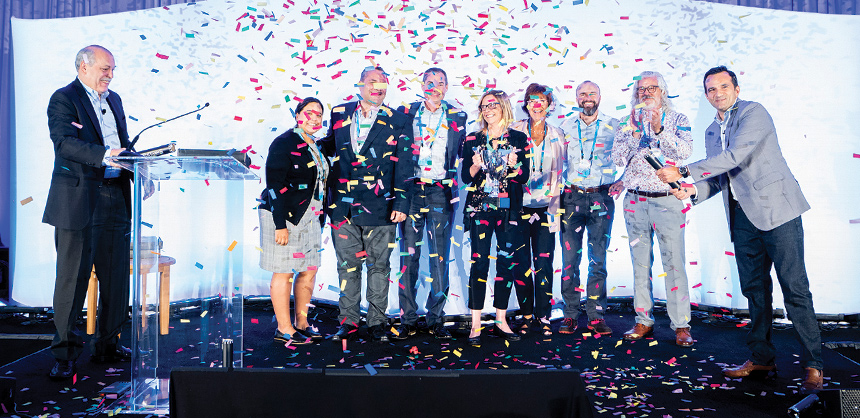
At Ryan Companies, they view meeting together as an opportunity to enhance the company’s culture and live their values authentically. Courtesy of Colleen Kucera

At Ryan Companies, they view meeting together as an opportunity to enhance the company’s culture and live their values authentically. Courtesy of Colleen Kucera

To be successful in the industry, event planners and marketers need a very large toolbox, a diverse set of skills with which to employ those tools and the ability to switch gears quickly. That’s nothing new, but lately an additional standard has been added to the checklist —  authenticity — and planners and marketers seem to be talking and writing about it often these days.

Some in the industry theorize that the recent emphasis on authenticity is the result of living through the pandemic. Having lost something people took for granted, they emerged craving connection, but not just getting together … meaningful connection. Others theorize it is a generational shift, with political and social turmoil acting as a catalyst for young people to increasingly demand more accountability and transparency from those around them in all areas of their lives.

Regardless of the impetus, what does authenticity mean in its application for planning, creating and marketing events?

For David Fast and his team of event salespeople and event planners at Prairie Meadows Racetrack and Casino, it is the driving force from start to finish for every event.

Located in Altoona, IA, Prairie Meadows is unique in the universe of casinos because it is a nonprofit corporation; there is only one other in the United States. After salaries and expenses, the money it makes is funneled back to the residents of Iowa through community betterment programs — $2.2 billion over the course of the last 15 years — thereby lessening the financial burden to taxpayers and government alike.

Because Prairie Meadows isn’t answerable to stockholders, Fast and his team have more latitude to make sure that every event they stage meets or exceeds expectations.

“It’s very rewarding for those of us who work here, especially our event sales and marketing team.” Fast says. “Our values are respect, integrity, teamwork and excellence, and our mission is to be the best entertainment experience in the Midwest. That’s where our authenticity comes in, and we stay true to it.”

An event at Prairie Meadows begins with Fast and his sales team, then it’s handed off to an event coordinator who will collaborate with the client on the details, and then it proceeds to the event service team.

Fast has worked at other places where salespeople promise one level of performance, but with the pressure of rising costs combined with the need to deliver profits to shareholders, the client ended up getting a different, less satisfactory experience.

“A salesperson promises something, event coordinators lower those goals, and then when the client shows up for the event, they think, ‘This isn’t what I was led to believe I was getting.’  We don’t do that here. I don’t tolerate it. Neither does my food and beverage director, and neither do my conference operations directors. We’re very particular about making sure that the communication is consistent from one department to the next.”

Prairie Meadows is a corporate partner of Catch Des Moines and receives event sales leads from them. Originally established more than 100 years ago as the Greater Des Moines Convention & Visitors Bureau, it and the Des Moines Area Sports & Tourism Commission combined and rebranded in 2012 as Catch Des Moines.

Its purpose is to bring visitors to the region through event and leisure travel marketing, and as an accredited Destinations International organization, Greg Edwards, Catch Des Moines’ CEO, says authenticity is front and center. “We are the heart, the soul and the energy of our destination.”

Its overarching mission is to drive economic success and enhance the quality of life for Des Moines and 13 smaller surrounding municipalities by marketing the region as a visitor destination. It’s working. In 2022 -2023, the conventions and events Catch Des Moines’ bookings resulted in $2.8 billion in revenue for the area.

Since Catch Des Moines is primarily funded by a percentage of the local hotel/motel tax, those businesses are a primary constituency, but Edwards says that he tells anyone who asks, “Our constituents are essentially everyone.”

He believes his best salespeople are the people who live there, experiencing it day to day and can brag about Des Moines. Of course, Edwards also has a professional sales and marketing team who maintain a database of thousands of organizations that convene meetings, conventions, sporting and other events.

More often than not the groups are not familiar with Des Moines, he says, especially if they’re from either the East Coast or the West Coast. “Sometimes, they’re not even sure where Iowa is.”

“Once we get somebody who might be interested in talking about Des Moines as an event destination, we offer to fly them in, show them the community and the facilities. When they get here, they find out for themselves how real the people are. That’s just Midwest hospitality, but I think we have some of the best of that here in Des Moines.”

Investing in Your Employees

Ryan Companies, a national commercial construction, architecture, engineering and real estate management company, has established values of safety, integrity, respect, stewardship, family, excellence and fun. Colleen Kucera, senior vice-president, national marketing leader for Ryan Companies, is about to put those values into action. She is currently planning The Great Ryan Get Together for this coming October.

Roughly every five years Ryan Companies brings everyone in from all over the country, and although headquartered in Minneapolis, the company has chosen Dallas, the location of one of its 12 corporate offices, as the destination.

“We wanted to travel to one of our other regions, and finding a space where you can have 1400 to 1800 people stay in the same place where you’re going to have your meetings narrows down the pool of options pretty quickly,” Watson explains.

Travel costs for that many people from across the country plus accommodations is a huge expense, but Kucera says, “We really look at it as an investment in our employees. It’s an opportunity for us to offer some large-scale learning and development where we’re all together in the same place, but it’s also an opportunity to enhance our culture and live our values in a truly authentic way together.”

In addition to Ryan Companies’ very large meeting in October, Kucera also plans and executes their St. Patrick’s Day celebration held in Minneapolis every year. Some companies send cards to customers at Christmas and New Year’s, but her company sends out St. Patrick’s Day cards.

“St. Patrick’s Day is really our thing. It’s just such a great cultural event and it’s so much fun for everyone,” says Kucera, who, together with her team, also helps stage at least 50 or more ground breaking and ribbon-cutting ceremonies a year for the projects her company builds wherever construction is taking place.

Aligning With a Company’s Values

On the subject of authenticity and event planning, Greg Bogue, chief brand and experience officer of Maritz, the international events, sales and marketing company headquartered in St. Louis, MO, says, “When we consider authenticity, we think about the event experience and how it aligns with the organization and brand that’s putting on the event. We’re trying to create a connection between what they are as an authentic organization and the experiences they want created and staged.”

If anyone has had a chance to road test authenticity as a guiding principle, Bogue has. With more than 2,400 employees, an international supplier partner program and a global meetings network, last year Bogue’s worldwide team staged 6,113 events.

“It’s really about understanding the richness of the organization we’re working with and then ensuring that the experiences we design and stage are in alignment with their values and purpose,” Bogues says.

Every experience either reinforces or dilutes a client’s brand, he says, and he and his team seek to ensure that the experiences they plan and execute enrich the position of that brand. “We don’t want people leaving an event thinking, ‘Wow, that was weird.’”

The Maritz team walks clients through a series of exercises when necessary to help build consensus around the essence of what the event is about at its core and how it represents and connects to the client’s brand. Once an organizing principle and concept are established, Bogue says, “We use it as a North Star for their event. We follow the exact same process for our own events so that we don’t shortcut.”

From experience, he knows that organizations and event and meeting planners are under pressure to perform. “It’s a pressure-filled job, and it would be very easy for a planner to just say, ‘Oh, that’s a shiny object, I’ll do that.’ At Maritz we probably think a little bit more richly about all the elements and consider what kind of connections our clients want to make.”

Establishing Pillars to Abide by

Big Buzz Idea Group, a management, marketing, event and consulting service company for nonprofits and associations, has also been laser-focused on authenticity since Melissa Lagowski founded it.

Located in Chicago, Big Buzz is an outgrowth of her personal experience. After suffering burnout working for a small nonprofit where, as a staff of one, she was putting on 24 events, publishing 12 newsletters and overseeing eight committees a year, she took a break.

After she left, the nonprofit hired a professional event company to put on its annual fundraiser, and although the gross revenue from the event tripled, the amount the nonprofit netted was half of what it had received when Lagowski was running it.

Lagowski thought there had to be a better way. In response, she formed Big Buzz with a mission of “being an honest and transparent partner for nonprofits,” she explains, and the nonprofit she previously worked for was the first to sign on.

To make sure her company’s compass remains true, she established five pillars as the cornerstone: integrity, growth, gratitude, teamwork and profitability. “Those are the things we want for our clients, our staff members and for our company as a whole,” she says.

Lagowski adds that the five pillars she established have been beneficial not only for her clients but also for her company. She and her staff are able to vet prospective clients using the pillars to see if they align with Big Buzz as an organization to make sure it’s a good fit.

One of the entities Big Buzz works with is The Rotary Club of Chicago, part of Rotary International, a nonprofit corporation composed of local Rotary Clubs. Its purposes are to provide humanitarian service, encourage high ethical standards in all vocations and help build world peace and good will.

With more than 46,000 Rotary Clubs around the world, putting on Rotary’s annual convention is a daunting task. Rotary International’s Director of Meetings and Events, Shannon Watson, is the person to whom that responsibility falls.

“As a global service organization that brings 1.4 million people from all continents and cultures together to take action to create positive, lasting change in communities around the world, authenticity is at the heart of our meetings and events, including our annual international convention,” Watson says.

In May of this year, more than 14,000 attendees experienced five days of friendship, excitement and cultural connection during Rotary’s annual International Convention in Singapore. Watson and her staff will be taking the 2025 Convention to Calgary, Canada.

“Since Rotary’s first convention in 1910, Rotary’s conventions continue to be fueled by a spirit of collaboration, the desire to exchange knowledge and best practices as well as friendship,” she says, “all of which are in line with our core values.”

Rotary’s motto is Service Above Self, and members recite the “The Four-Way Test” at every meeting: “Is it the truth? Is it fair to all concerned? Will it build goodwill and better friendships? Will it be beneficial to all concerned?”

It doesn’t get more authentic than that. C&IT

CIT-2024-10-feat-first-time-event-147

From Concept to Completion

Participants in the annual Elevate Conference joined in the conversation with coaching and event consulting available during this two-day hybrid event designed to help nonprofits uplevel their fundraising events.  Courtesy of Samantha Swaim

Participants in the annual Elevate Conference joined in the conversation with coaching and event consulting available during this two-day hybrid event designed to help nonprofits uplevel their fundraising events. Courtesy of Samantha Swaim

Planning an event of any kind can be an overwhelming, intense and ultimately a satisfying undertaking. Staging functions that offer valuable content and opportunities for meaningful connections are two of the most rewarding aspects of the job.

There are several steps — both large and small — necessary to take an event from conception through conclusion. It’s the event planner’s job to oversee the execution of them all. Doing it all flawlessly can be daunting, especially when planning that first big event. It’s easy to get mired down in the long list of details. Another way for new planners to approach executing an event successfully and staying focused is to go in the opposite direction. Start by going broader and getting clear on the big picture.

Create a Blueprint

“The first thing you want to do is set a goal — what are you trying to achieve with the event?” says Erin Scholes, CMP, CSEP, CMM, DES, founder and CEO of SD Meetings and Events in San Diego, CA.

“Are you looking to educate, celebrate or motivate? Determine the actual purpose of the meeting or gathering before you determine a date, time, location or budget.” Scholes also suggests identifying your key stakeholders. “No event is planned by one person or entity. Identify the stakeholders and ancillary people you bring in for an event. You want to have partnerships where you can have honesty and trust — if you trust them and they trust you, it will go much smoother,” she says. Think like-minded organizations who may be open to sponsorships, trusted vendors, and other entities who can leverage their strengths and resources to bring an event to life.

Samantha Swaim, fundraising event consultant at Swaim Strategies in Portland, OR, says it’s important to ask some key questions: “Who are the guests? What is our purpose? Why does gathering a community together have impact? What will we achieve by gathering these people together?”

“For instance, a corporation may want to sell a product. A nonprofit might want people to feel deeply connected to their mission, and the impact is the direct mission. Be thematic. Focus on the stories, the people and their experiences,” says Swaim.

The next step is developing a roadmap and benchmarks to measure success. Setting a clear goal also means setting a clear way of measuring success unique to the client and event. Whatever your benchmark, develop a system to track the event’s effectiveness.

“If your goal is to increase engagement, how will you measure that? Are you measuring how many ‘likes’ you get on Facebook, or how many follow up appointments you schedule with your stakeholders?” asks Aurice Guyton, owner and lead planner for Aurice Guyton Events in San Francisco, CA. She stresses being clear on the client’s intention to make tracking the results that much easier. For instance, if the event ties in with a new product launch, have samples available. Set up well-lit stations around the space and invite attendees to interact with the product — give them the sensory experience of looking, hearing, tasting or touching it, and the chance to pick it up and/or try out its various elements.

All About Location

With the budget, goals and benchmarking set, start looking for a venue. This is key for a great attendee experience. Set timelines and stick to them. “Venue and date booking is very competitive,” Swaim says. “In the event world, a lot of vendors who were doing catering or production really thinned out and many haven’t come back. It’s important to make some decisions about venues, food and AV, as they are key elements you want to book early because they’re competitive and thinner on the resource side.”

Large events like conferences, trade shows or annual meetings are typically scheduled one year in advance; galas, fundraisers and dinners, about six months out. “Conferences have a lot of moving pieces,” Guyton says. “Printing, signage, time to schedule speakers, figuring out what type of sessions, how many days … there can be a lot of back and forth, so leave enough time for that.”

Event timelines are built “a little from the front and a little from the back,” says Scholes. “Look at key deliverables and milestones, and the timeline is built from that. Think about building a house. “Start with the foundation and a blueprint of what you want to have at the end. Then there are the other elements — walls, roof, exterior, paint and the final touches you see.”

Clear communication at every step is critical. “You have to talk to the company and make sure you’re on the same page with executing their vision. I heard from a client another planner went off and did what they wanted to do. Even if a client’s vision doesn’t make sense to you, at the end of the day, it’s their event,” Guyton says.

Review all elements of the event and go over each budget line item. Sometimes, companies have unrealistic expectations about pricing. “Be clear when you order and confirm with your client you have exactly what they want,” Guyton says. “Make sure everything is approved. Go over the budget because clients don’t always know what things will cost. Make sure you are communicating every step of the way so there are no surprises when the bill comes.”

Keeping Track of it All

“Organization” is a two-fold concept when planning an event. There is the organization — the company holding the event — and the actual organization, keeping track of it all. Both are critical.

“The organization perspective starts when a revenue and expense path is set, and developing a theme and story. Once we have those two elements identified, the rest of the pieces are easier,” says Swaim. “The food aligns. Every decision starts to coalesce around the bigger picture.”

Then there is getting organized — the meticulous tracking of each and every detail included in the event. “One hundred percent of event planning is organization,” says Guyton. “There are so many details, and if you drop the ball on one little thing, it’s like dominoes falling.”

Event planners truly have to think of everything. For instance, the electric capabilities in the venue you’re using. You not only have to know where the outlets are and how much electricity you’ll need, but if the venue’s power grid can support the amount of power you’ll be using.

“If you have a lot to plug in, or your program is very AV heavy, you may need to bring in a good AV team that can handle it. So, if you’re bringing in a lot of lighting, tech equipment, screens, you may need another power source. If you don’t look into that, or have a vendor who can read a power grid, you’re going to have a lot of issues,” Guyton says. Review everything on your client’s behalf. Even one small thing that might seem insignificant could mean the difference between a good event and a great one.

When working in a “new-to-you” venue, or if staging your first event, reach out to the venue’s staff or other planners who have used the space and ask for their candid insight. “Ask them what you need to be aware of,” Guyton says. “Asking other planners who have done events in that space helps you determine what can go wrong so you can take some preventive measures. Gather resources for details to assist your own planning.”

Using whatever method works best for you, track those resources and every element of the event. “You should put a system in place to execute the event properly,” Guyton says. “To organize the event, you want to make sure you have a system to keep track of the tasks.” Guyton uses Google Docs, which she divides into various tabs. “One is a task list, another is rentals, another has vendor information. Google Suite is great because you can share it.”

Setting the Agenda

While working on the event program, one lesson Swaim has learned over the years is to not schedule every minute of each day. Instead, give attendees some breaks to recharge and network informally.

“Something that’s really important now is that social connection time. Some people over-program their events. Those with more social time have gone much better,” she says. Plan shorter, more impactful breakout sessions and presenters. “Our attention spans are less. Have great content delivered in a shorter time. Sitting in a room and listening to someone speak for hours doesn’t work anymore.” Schedule speakers for no more than 60 minutes, and of course, include plenty of breaks between sessions.

The Final Countdown

There can never be enough notes, according to Alana Andersen, head of private events at Soho House in Miami, FL. She says, “There’s never a too-detailed run-of-show. Some people do things right down to the minute, and really, there can never be enough details. It’s helpful for your team to follow this. The more time you have to set up, the less stressed you’ll be.”

Tracking and staying organized is important, but as Swaim says, “Event planning often goes into the land of spreadsheets and checklists and away from what we want to achieve. Make those lists have meaning.” Stay focused on the big picture and the goal of the event — make the checklists part of the roadmap to reaching that goal.

When plans have been finalized, tracking systems are in place and the pieces come together — marketing, registration and little details — it’s time to focus on the days leading up to the event and then the day itself. Stay in touch with the kitchen staff to ensure they have an accurate meal count and can accommodate any dietary needs.

“For any event that requires food and beverage, you want to have all selections to the kitchen about 10 days in advance,” says Andersen. “The kitchen doesn’t always have everything readily available, so this will give them enough time to order what they need. Make sure you have enough staff — again, the 10-day mark is usually good for that, too. Some places schedule their bartenders and servers one week out, so it depends on the venue.”

As the event draws closer, give yourself enough time for load-in and set up. Larger events require more load-in time, so communicate with equipment vendors, the venue and client about how much time is needed. Many planners prefer to be on-site when possible to ensure the load-in goes smoothly. Walk through the space, make sure it is properly cleaned and set up according to the banquet event order [BEO].

“The layout setup is the first order of business,” Andersen says. “Have someone who can make things happen for you. Identify the players, such as the maintenance team, in case there is an issue. Give one last run of the BEO; give your staff the rundown of how the day will go.” Be sure everyone is clear on their roles and answer any lingering questions from the event staff.

Load-out and Close Out

So much work goes into planning and executing the event, the post-event tasks are often moved further down the priority list. Don’t let this happen. This is the time to determine the event’s impact and whether or not those benchmarks were met.

“That’s another part of the timeline — what happens after the event?” says Scholes. “Yes, you pack up the boxes, etc. But you should have time to review the attendee surveys, reconcile the financials and gauge what the attendees gained from it. If you’re in the incentive business, did the event provide continuous high-gain results?”

Reviewing the event to discuss its strengths and weaknesses — whether internally with the event team or in conjunction with the client — is also a standard practice. It also helps to prepare attendees ahead of time, Swaim says.

“Having a lot of ‘setting the stage’ in advance is helpful, such as helping attendees understand what the event is, how to dress, where to park — the more information they have in advance so they know how to participate, the participation will go up,” Swaim says.

Never underestimate the importance of a meaningful, well-run event and the difference it can make to the client and the attendees. “What we do drives business,” Scholes says. “No one saw it like we did during COVID. We see the value in not only a business’ bottom line, but employee motivation and overall happiness. We’re happy when we gather. It’s a big business [meeting and event planning] and a leading industry to make the world go ‘round.”

Planning that first event can be daunting, but with enough preparation, clear expectations on all sides and a roadmap to meet those expectations, it can be a rousing success. C&IT

CIT-2024-10-feat-small-event-147

Think Big by Going Small

Chris Weinberg Events created a sense of community during a white party that featured a live cuban band and fireworks while sailing on a boat in Biscayne Bay in Miami, FL. The event brought in people from all over the world. Courtesy of Chris Weinberg

Chris Weinberg Events created a sense of community during a white party that featured a live cuban band and fireworks while sailing on a boat in Biscayne Bay in Miami, FL. The event brought in people from all over the world. Courtesy of Chris Weinberg

Dotting the country’s meeting and events landscape you will find many larger meetings and event destinations teeming with insightful speakers, memorable experiences, venues and amenities that amaze thousands of attendees. But what about smaller events? How can planning professionals orchestrate smaller events that leave an impression on attendees so that they keep coming back for more?

Small events can be great, but often in ways that would be different compared to big events. According to Lee Gimpel, an expert on strategic meeting design and the founder of Better Meetings in Washington, D.C., it’s similar to going to a stadium concert as opposed to hearing a musician in an intimate space — or attending a big university with a great football team compared to going to a small school where you know everyone and feel a real sense of community.

“A small event gives you many more touchpoints with the same people and you really feel like you’re part of something,” Gimpel says.

For Gimpel, the advantage of going small mostly comes down to being able to foster a sense of community and connection. With clients, he often finds himself talking about Dunbar’s number, which basically suggests that humans do well in tribe-sized groups, and that number is usually 150 or less.

“When we do bigger events, we usually lose a sense of connection, even if those bigger events may have more glitz and glamour because of their economies of scale,” Gimpel says. “Similarly, I think about what we might consider the student-teacher ratio where every attendee of a smaller event can really spend quality time with the event’s host, a VIP speaker or the like. If you are the president of a company hosting a meeting with 25 people, you can and should get real, personal face time with all of them, but that certainly won’t happen at a large event.”

Smaller events also open up more possibilities in terms of interesting venues or experiences. If you’re doing an event with 50 people, there are almost unlimited places you can do it. But if you’re doing it with 5,000 participants, you’re probably going to be in a conference center. “Such a same-old setting misses out on the surprise and delight of being somewhere new or unexpected. Similarly, you can include experiences or field trips with smaller groups where doing that with a big event would be very challenging,” Gimpel says.

Smaller events allow for a more customized, curated, and highly valuable attendee experience, and they provide the ability to better interact with both the content and other attendees. “They tend to foster a sense of community and belonging that is often lost in larger gatherings. The intimacy of small events allows for deeper, more meaningful interactions between attendees, speakers, and organizers,” says Chris Weinberg, founder and event planner at Chris Weinberg Events. “This environment often allows attendees to engage directly with speakers and industry experts, and a smaller group setting experience allows for a deeper dive into topics and discussions rather than overviewing them.”

Logistically, for both attendees and organizers, small events often yield a higher return on investment in terms of time, money and effort. With fewer attendees, registration, seating and movement between sessions, attendees can enjoy a more streamlined and calmer experience.

Delivering the “Wow” With Small Events

A small event will probably not deliver the same “wow” factor that a big event will. However, a small event can certainly deliver moments and an overall experience that amazes attendees. Gimpel says the first thing that he would encourage planners to think about at the start is to not try to recreate the same big experience at a small event, but to instead lean into the opportunities afforded by intimacy.

“To that end,” he says, “the big metaphoric sign that I would hang over my workspace when creating a small event would remind me to, ‘Look for moments to inject connection and personalization!’”

So, for example, if a large audience might require doing an event in a very typical space, think about where you could do the event with a small group that would be really memorable and that would be in service to the larger purpose of the event. Instead of a hotel ballroom, could you rent out a boat or do it at a winery? Could you actually do it onsite where the venue is intimately connected to the work you are doing? (So, for example, if the event is about agriculture, maybe you do it on a working farm; if it’s about fashion, maybe you do it at a design space or retailer).

“As another example, if you’re having a great meal as part of the event, could you offer attendees a chance to have a special interaction with the head chef? With a few dozen people, that feels like a noteworthy, personal experience, but it would be hard to offer the same thing with a group of a thousand people,” Gimpel says.

“Smaller events allow participants to feel seen and not lost in a sea of faces,” says Liz Lathan, CMP, meeting planner and co-founder of The Community Factory. “They are a safer space for introverts and extroverts to feel comfortable engaging in a more authentic and meaningful way to build relationships that transcend business.”

Smaller events take just as much thought and care as larger events, but they allow you take more risks and have more fun. Lathan suggests that what if, instead of a standard field sales dinner, you hosted an animal encounter experience at a local aquarium to meet some dolphins? What if you took 10 guests to a glass-blowing class so you have final products in hand for a reason to follow up with them? Events that are workshop format or highly engaging are helpful because people want help networking.

“We find that people want to be given permission and direction. Permission to connect and feel directed on how to connect,” Lathan says.

Similarly, if you bring in a renowned speaker, Gimpel suggests asking that person to stay and join the group for a meal or to do something like a master class for the attendees where they get to spend quality time and may get powerful one-on-one insights from that expert. Again, that is something that you just couldn’t offer at a large-scale event.

“Where a big event may require you to herd people through hallways to get them to the next session, really take advantage of the time where you will have everyone together over and over in the same space,” Gimpel says. For example, after a presentation, people don’t need to disperse to 10 other rooms like they would at a big event, but a planner could instead have a really rich, intimate discussion within the same consistent group at round tables.

Finally, small groups afford an opportunity for people to actually work together and collaborate, whereas that can be difficult at grand events.

“Getting people to talk, share and produce something together gives an event a sense of purpose and bonds a group,” Gimpel says. “Maybe it’s the group collaborating on strategy, solving a persistent issue, or identifying best practices. Whatever it is, doing something together produces a sense of camaraderie that is hard to find at big events.”

One “wow” factor that Gimpel did at a small event was pretty simple, but it really stuck with people and drove home that they were part of something different and special. Gimpel was helping with a corporate summit in Washington, D.C., at the Hay-Adams hotel right across from the White House. The space was lovely, the food was excellent, the staff was very attentive and the views were great.

“But, I was really proud that we took the 40 participants outside the hotel and had them walk and talk about the issues at hand in the park right in front of the White House. It was unique, special and gave them real quality time with each other in a very memorable setting,” Gimpel says. “Could we have done something similar with a thousand people? Yes, but it probably would not have been as feasible or as memorable.”

Weinberg adds that by focusing on creating memorable, high-quality experiences, planners can deliver the same “wow” factors as larger events. To start, ensure the content is highly relevant and valuable to the attendees. Then, personalize the invites and the welcome messages to make attendees feel special and valued.

“Use creative and thematic décor to transform the venue and create an immersive atmosphere. Incorporate interactive elements like live demonstrations, workshops or experiential zones that encourage attendees to engage hands-on,” Weinberg says. “Finally, create a surprise element, such as guest speakers, entertainment acts, gifting activations or pop-up experiences.”

For a small corporate incentive group traveling to Miami, Weinberg curated a Wynwood Arts Experience. This included an interactive map tour of Miami’s Wynwood Arts District, brewery stops throughout the tour and lunch at a local food hall.

“We included a team-building activity — learning the art of graffiti and its history, with attendees participating in creating a custom graffiti wall in Wynwood,” Weinberg says.

From a field event standpoint, Lathan loves to run customer think-tank dinners where they greet attendees and immediately introduce them to each other while asking what challenges are top of mind for them. It starts a great conversation and they’re able to use those challenges in the discussion. They’ve run these kinds of programs for several companies who need help crafting the experience, setting up the logistics and facilitating the conversation. They just have to manage the invitations.

“It’s like a release valve for the marketing or sales teams that are overwhelmed with run-the-business tasks but being told they need to ramp up micro events within their engagement portfolio,” Lathan says.

As a longer-form experiential event, Lathan and her team also love to create behind-the-scenes experiences that get people out of their day-to-day. Last year, they partnered with MGM Resorts to create a 1.5-day micro event for their Club Ichi community where they ran a creativity workshop in the MGM Prop and Decor warehouse, then ate lunch in the Aria employee cafeteria and got to see their uniform control center where they get 9,000 uniforms laundered and pressed each day for their team members.

Then, they went into the pump room of the Bellagio fountains where they learned all about how the fountains work from the rescue-trained divers who fix the nozzles. And to top it off, they put attendees on a small barge onto the Bellagio lake and ran a show just for them while they were on the water.

“The trick is to think about what that city is known for and what you can do there that your attendees have probably never done before,” Lathan says. “It’s way harder to get people to events these days, so if they’re going to drive 45 minutes to go to an event on the other side of their city, you have to make it worth it for them.”

Embracing Challenges

Perhaps the biggest challenge in doing smaller scale events is the budget. As planning professionals know, doing an event for 50 as opposed to 500 still requires an awful lot of the same effort and costs. It can be hard to try to justify doing smaller events when the per capita expense is so high compared to bigger events that can spread the cost and effort over reaching many more people.

It can also be hard to get the right attendees there and end up with a number that is neither too big nor too small.

“If you wanted to do a high-end meeting for 25 CEOs, you need to work hard with each attendee — including personal invitations rather than a blanket ad campaign — and figure out what happens if a number of them can’t make it,” Gimpel says.

“That’s very different than securing a huge conference center and inviting thousands of people where you’re trying to fill the space and have a much wider window in terms of workable final numbers.”

Gimpel always advocates for planners to start with a robust process of working with the client to be very clear about why they’re doing the event and what would really constitute success. It’s always easy to fall into a trap of thinking that it’s a certain kind of meeting and we’ve seen and done it before so we’re just going to re-run the machine.

Weinberg adds that other additional challenges to consider when planning smaller events include:

  • A potentially tighter budget, so balance the budget to ensure that all necessary elements are covered without compromising the quality of the event.
  • Curating relevant content for a smaller group, which is always more difficult and requires a more focused knowledge of the content the attendees are looking for.
  • Finding a venue selection that fits the size and budget of the event while still providing a professional and comfortable environment.

“I also feel like people have invitation fatigue,” Lathan says. “So many brands are leaning into micro events that many people with the ‘right’ title are getting invited to something multiple times a week. So, the event had better be really interesting to get them out of their house.”

And because smaller events let you be more flexible and personalized, Gimpel would be especially conscious of being clear about what the event is trying to do and plan around that.

“If a driving reason to hold the event is bringing together buyers and sellers, for example, then I would be very intentional about creating a program that truly makes that happen, as opposed to having people sit and watch a bunch of speakers and hope that the right connections are magically made on the sidelines,” Weinberg says.

Some additional strategies that planners can use to overcome the challenges of producing smaller events include focusing on a niche, emphasizing the unique value proposition and specialized focus on the event to attract the right audience.

“Use technology to enhance engagement and streamline planning processes,” she adds. “And finally, partner with local businesses, industry associates and other industry professionals to enhance offerings.” C&IT

CIT-2024-10-feat-career-setbacks-147

Moving Forward

Writer and executive coach Blair Glaser advises leaning on others and dealing with your feelings when facing having to start over in your career. Courtesy of Blair Glaser

Writer and executive coach Blair Glaser advises leaning on others and dealing with your feelings when facing having to start over in your career. Courtesy of Blair Glaser

Even the most seasoned professional has experienced a career setback. Whether it’s large and potentially life-altering, like a job loss or global pandemic, or small, like an event that didn’t quite hit the projected attendance figures or a new event feature that fell flat, professionals have faced setbacks of all kinds. They can shake the confidence of the most seasoned pro, but viewing them with the right perspective can help you stage your comeback much quicker.

Rather than be devastated by the episode, many professionals — including meeting and event planners — see setbacks as opportunities. What some might view as a loss is seen by others as a step toward charting a new professional course, giving a new event offering another chance and generally learning from the situation.

There’s no “one size fits all” response to a setback. Fear, sadness and anger are common emotions initially, but dwelling too long on that emotion can prevent you from moving forward. Depending on the type and scale of the setback, a period of recovery may be necessary. For instance, a planner looking to save face after an event plagued by technical issues will likely have a quicker recovery time than one trying to find a new event planning role or launching their own business.

Reflect and Regroup

Moving on from a setback like a job loss can take time. Planners should give themselves permission to take that time and use it wisely. Chelsey Coslett-Traver gave herself a few weeks to regroup following the double setback of a divorce and job loss. She is the manager of marketing and stakeholder engagement for Northeast Pennsylvania Industrial Resource Center (NEPIRC), a not-for-profit technical assistance firm that provides world-class assessment, performance evaluation, training and consultative services to small and mid-sized manufacturers throughout northeastern, the northern tier, and parts of central Pennsylvania.

“I personally think there’s always that first inclination for self pity and to wallow in the negative,” she says. “I think because we’re human, that’s our first inclination, but I also feel the longer we hinder our ability to move forward — it’ll just be longer until we can actually do something about the setback.”

Coslett-Traver is a believer in taking some time to regroup and reflect, but taking too much time makes it easier to put off making a fresh start. In her case, she tried to be objective. The day after she lost her job, she received a text from her aunt inviting her to purchase a one-way ticket to visit her in Florida. “I’m very Type A, so just to get a one-way ticket was very unlike me,” Coslett-Traver says. “I stayed for about two weeks, and even thought about moving to Florida. Obviously, I didn’t, and then COVID-19 hit, but after taking those two weeks, I was ready to figure out what I wanted to do to move forward.”

In her role at NEPIRC, Coslett-Traver oversees the planning and execution of Manufacturing Day, just one of the organization’s signature events normally held each fall. While not exactly a setback, she says, “In 2020, our Manufacturing Day was virtual. Fall of 2021 would be our first in-person event, and the first time I planned an event of that magnitude with several sponsors and exhibitors.”

However, the shadow of COVID-19 was still lingering over events. NEPIRC’s Manufacturing Day was scheduled for October 6, 2021. At the end of September, the COVID numbers were going up again, and there was talk of other local events being postponed.

A week before the event, Coslett-Traver’s boss made the difficult decision to postpone it until spring 2022. “I had to call all 50-plus sponsors and explain the situation. We actually didn’t lose a single sponsor, and it turned out to be positive because, in the additional months, we were able to secure 20 more. It was just a letdown because sometimes the motivation to keep you going with a big event is the light at the end of the tunnel, and then for me, it was moved.”

Starting over can be overwhelming, so begin where you are. “It’s important to deal with your feelings and your grief in a way that works for you. Maybe you lean on your family or therapy. Some don’t have the luxury of doing that,” says Blair Glaser, writer and executive coach from Los Angeles, CA. “It’s really about finding the balance that’s right for you and your circumstance.”

While reflecting on events leading up to the setback, try to identify the main contributing factor. Then, formulate a plan for moving on. “Focus on how you’re going to take the lesson learned and grow from it,” says Dawn Rasmussen, chief resume designer and owner of Pathfinder Writing and Career Services in Portland, OR. This is more productive than dwelling on the setback — the “could’ves” and “should’ves” — or being too hard on yourself. Though Rasmussen focuses on helping others chart their next course, as a former event planner, she’s had plenty of “teachable moments” in her own career. One is particularly memorable. She says, “When I was a young pup, I planned a tourism trade show for our local convention and visitors’ bureau. I planned it out, filled all the booths, and it was all set to go. I did some marketing, but not enough. Turnout was low. The vendors weren’t very happy. It turned out the event fell on the same day as the finale of the show “Cheers.” More people stayed home to watch that rather than come to a trade show.”

She learned it’s important to stay current with trends and be aware of any potential scheduling conflicts — even unlikely ones like a landmark moment in pop culture. “Be cognizant of any competing events that could affect the turnout of your event. It was embarrassing. I wasn’t aware of the conflict. My boss wasn’t happy and wasn’t aware of the night’s significance either,” she says.

Rather than place blame, Rasmussen advises people to own their mistake. “If you turn around and face things, the more you can own things or use them to help others, the more you become a role model and inspire others,” she says. “We’re in a society where we’re expected to be perfect. Some of our best life lessons come from our mistakes. You’re not running away; you’re owning up to your part in it.”

Job-Related Setbacks

Feedback can be difficult to hear, but it’s a critical component of recovering from a setback. Kim Noel, marketing and special events manager for Avenues of PA (formerly United Cerebral Palsy), says she uses the feedback she receives from the planning committees she works with to make the three annual events she oversees better each year. “When a setback does happen, I take feedback from the team and I try not to take any criticism personally,” she says, adding, “With our three annual events, they’re pretty much the same every year. If you’re trying something new, that first year will be a growth year. Maybe something that sounded good in the planning didn’t work out the way you envisioned. I try to go back and focus on learning from it.”

Setting goals is another way to handle setbacks.  Colleen Reardon is the member services manager for the American Wine Society, America’s largest community of wine explorers —consumers, beginning and experienced winemakers, journalists, chefs, restauranteurs and foodies. As such, Reardon is the primary organizer of the association’s annual conference. She says it’s great to constantly set new goals. “Nobody wants to be stagnant,” she says. “The challenges are what make life exciting.”

She is in the thick of planning what she says is currently the biggest event she has ever done. “I have to make sure everything is in order for that to be obtained. So long as I have support and a defined mission, [reaching the goal] is very important. The problem is when goals are unrealistic,” she says.

Reardon relies on her trusted circle — friends, her boss and colleagues — to help her weather setbacks. “I try not to dwell on a setback for longer than a day. Most things can be fixed, especially in my world. My association has a lot of good people in it, so that helps,” she says. “A little wine helps, too,” she adds with a laugh.

Remember the SMART mnemonic device to stay on track for reaching goals — Strategic, Measurable, Achievable, Realistic and Time-based. “Goal setting is what gets you back on the path. It’s a mental commitment to make something happen. Be clear on what you want and how you can reach them will move you forward to reach those steps,” Rasmussen says.

Reinventing Yourself

A setback changed the trajectory of Beth Lawrence’s career. Now the owner and Chief Inspiration Officer of Beth Lawrence Meetings and Events in Philadelphia, PA, and a CMP, she used a job loss as motivation to launch her own business. “I was laid off from what had been my dream job,” she says. “It had never happened to me before. I was stunned. I was shocked. My layoff was effective the next day. I took three or four days to just cry, then, upon telling people I was laid off, I was telling people what I was going to do next. Then, I signed my first two clients. I took about two weeks just to meet with people, every day from 9 to 5. Just meeting with them got me the connections I needed to start my business.”

Lawrence was no stranger to blazing her own trail. She graduated from college in 2009 with an event planning degree at the height of the Great Recession and subsequent housing crisis. She wasn’t finding many “event planner” jobs at the time; rather, positions with event planning duties typically fell under a marketing or administrative umbrella. Instead, Lawrence worked at a series of part-time jobs but never lost sight of her goal. “Essentially, I had to piecemeal out my career path. I couldn’t take a year off to volunteer and gain experience. I sent out at least 40 resumes a day for six months, but it helped me build my network,” she says.

She viewed each job as an opportunity to build different skill sets. She worked for a Philadelphia-based radio station in the promotions department and learned about marketing and promotions. Her job at a coffee house taught her about customer service and how to run a business.

Eventually, she landed a full-time, contracted role that lasted six months. “I knew what I wanted to do, and it wasn’t that. I worked my 40-hour week and went to networking events at least three nights a week. Through my network, I was intentionally building my brand. I wanted people to know who Beth Lawrence was.” Her best advice for professionals in transition? “Build and sustain your network, and then lean on them to propel you forward,” she says.

Set Yourself Up for Success

Candice Batts became an event planner almost by accident after a combination of personal and professional setbacks. She previously worked in wealth management and held different events to draw in clients. “I was doing the event piece and thought, ‘I like doing things like this’, but I didn’t know event management was actually a career,” she says. “I had a friend who ran a marketing and advertising agency, and he asked me to plan his events.”

Batts paused her career to become a full-time caregiver for her father, who had Parkinson’s disease, after her mother passed away. She started taking small event jobs to gain experience in the field. As her father stabilized, she started working at medical meetings and events that were closer to home. A brief stint with an event production company exposed her to the AV side of events.

After her last layoff, she relocated to Charlotte, NC, and launched her business, SC Events, LLC.  “I’m in a new city, connecting with MPI, meeting with a lot of planners, and getting into the right circles,” she says. “I’m trying to figure out which way I’m going to go. It helps to stay connected with local chapters of organizations like MPI.”

For now, Batts is concentrating on her event business and studying for her CMP. She also is working as an independent sales representative for the Deonado Company, Home of the Nook Pods. She remains open to what the future might hold. “This is a time in my life where I can completely focus on my career and where I want to go. When I was a caregiver, I would just take jobs as they came along because I had to pay the bills. Now it’s a different strategy where I’m being more intentional about the roles I’m applying for and what I want to accept,” she says.

Cultivating a Vision

Lawrence says reflecting on previous roles or key setbacks is critical to move forward, but reflection has two sides. “At some point, you have to have tunnel vision for your goal, and you have to focus on your strengths. Six and a half years into my business, I realized there were things in my previous role where I could have gone the extra mile in some areas,” she said. “You look back and see where you could’ve done things differently or weren’t your best self. They might manifest themselves next time. I think lessons catch up to you whether you’re a person who reflects on them or not.”

It’s also okay to still have fun. “Give yourself time to do something you really love, such as a hobby. Or it can just be something fun. That’s really important,” Glaser says.

Rasmussen relies on self-care to “refill the tank,” as she says. For her, hiking does the trick. “Sometimes, when I’m at the end of a really long hike, I’m tired and maybe not paying attention, so mistakes can happen.” Much like life, when we’re tired, we’re not operating at our best, so things can happen. When feeling overwhelmed or burned out, it’s time to step back and recharge for our own sake, as well as our livelihood.

Above all, trust your instincts to intuit a possible setback and be proactive, Rasmussen says. “Pay attention to signals. As a resume writer, I meet with a lot of people who say, ‘I think something’s up with my company. I have a weird feeling,’ so they get their resume updated. They’re usually dead on. Trust your gut. It could be an indicator of something coming.” Further, keep your credentials updated and continue to follow industry news. “Know your value, so if something does happen, you’re doing your networking, you have your resume updated and you have a pulse on what’s going on,” she says.

Saving face after a career setback takes time, perseverance and leaning on others. Even the worst setback is only temporary, and you’ll likely emerge better because of facing something difficult. Don’t expect positive change without taking action, however.

“Setbacks mold you into the person you’re meant to be,” Coslett-Traver says. “While something can seem really negative as soon as it happens, have faith that it will work out for the good. But you can’t just sit and be complacent — you have to put in the hard work, too.” C&IT

CIT-2024-10-feat-face-to-face-147

A Personal Touch

The benefit of attending events in person is the organic conversations that arise and networking that takes place among attendees. Courtesy of Courtesy of Jumi Aluko

The benefit of attending events in person is the organic conversations that arise and networking that takes place among attendees. Courtesy of Courtesy of Jumi Aluko

With tightened budgets, it’s harder than ever for potential meeting and event attendees to get approval from their employers to travel to an in-person event. It takes more to convince potential attendees to make the decision to attend, even if their expenses will be covered by their employer.

So, how can corporate meeting planners frame and communicate the value for having in-person events, especially when they can be virtual?

If we consider content as the biggest value of an event, it’s true that it can be delivered digitally. But, as Jumi Aluko, founder & CEO and lead event planner at Jumi Aluko Consulting, points out, what can’t be replicated is the organic conversation and beneficial engagement that stems from presentations that take place in-person. “When it comes to digital-only and hybrid events, I’ve heard that attendees joining remotely feel left out of some of the dynamic discussions taking place onsite – despite an organizer’s best efforts to keep them engaged,” Aluko says.

This highlights a major benefit of attending in person – the opportunity to actively engage with the content in real-time and contribute meaningfully to the conversation, which ultimately helps to enhance the learning experience. In-person attendance provides attendees with opportunities to engage face-to-face with speakers, groups, and other attendees.

“I do believe, however, it’s time we rethink the primary value proposition of events. We should move away from thinking the singular focus is on content, and acknowledge that content and connection/community are key,” Aluko says.

While content can certainly be distributed virtually, nothing beats experiencing events in person, adds Shaun Kessler, founder and COO at OFFSITE in New York City. In the last few years since the COVID pandemic, OFFSITE has played host to many companies’ first in-person meetings since the pandemic caused the meeting and events industry to shut down.

“Today, attendees are more engrossed during live events as they offer less room for casual interruption, as well as more options to interact with their attendees throughout the event. Whether breakout groups or meals or just the way you can turn to another attendee and easily say, ‘Hello,’ not everything translates digitally,” Kessler says.

Most importantly, with digital events, attendees lose the ability to interact with other attendees face to face. And while Zoom can do a lot, there’s simply no technology that can adequately compensate for an in-person, one-on-one connection. “It’s really cool to hear people say, ‘It’s great to finally meet the person I’ve been speaking with virtually for so long,” Kessler says.

Cynthia D’Aoust, senior vice president, global MICE for YES (Your Event Solutions), an ALTOUR company, says that although the meetings industry has evolved and digital content delivery has become increasingly prevalent, in-person events still hold a unique value proposition that cannot be replicated virtually.

“When it comes to highlighting the benefits of in-person events, it’s important to stress the invaluable networking opportunities that in-person events offer to attendees,” D’Aoust says. Face-to-face interactions allow attendees to make meaningful connections, exchange ideas and build relationships that digital platforms simply cannot.

D’Aoust explains that in-person events also emphasize the potential for serendipitous encounters and the ability to forge genuine connections with industry peers, potential clients and thought leaders.

In addition, when individuals attend events, they are looking for more than just knowledge exchange; they look for the opportunity to network, mingle and form meaningful relationships. As Aluko explains, these connections serve as the foundation for potential collaborations, partnerships and shared ventures – all things that, despite how hard we try, cannot be fostered through a digital event.

“As event and meeting planners, this is the messaging we have to convey when encouraging and promoting in-person events,” Aluko says. It’s about the genuine rapport you establish with others based on those unspoken nuances you may share – an invaluable aspect that can’t be replaced by digital events. This fact alone could lay the foundation for successful business endeavors, benefiting both individuals and their respective organizations long after the event concludes.

By framing in-person events as a “value add” and highlighting the unique benefits they offer, meeting/event planners can effectively communicate why attending in person is essential for maximizing the overall event experience and achieving tangible outcomes.

Strategies To Implement

To entice an attendee to see the potential benefit of in-person events, should a planner incorporate a holistic approach and consider incorporating local experiences, allowing attendees to connect with the culture and environment of an event’s location?

Absolutely, says Aluko. Often, events are held in the same cities year after year or rotated among popular cities attendees are all familiar with.

“I personally always advocate – when I can work with clients from the venue sourcing stage – for them to choose venues that allow attendees to explore new locations,” Aluko says. “One aspect I particularly appreciate about one of the annual events I organize is the deliberate selection of locations.”

As she explains, the venues are prioritized based on the cultural richness and historical significance of the city, enabling attendees to immerse themselves in its unique heritage. This is important because it not only enriches the event experience, but also provides event and meeting planners with fresh material for event promotion.

“When we are able to highlight the importance of the chosen city and its attractions, we can generate excitement and anticipation among potential attendees – especially for those traveling from cities or countries far away,” Aluko says. “It also allows for the creation of a more dynamic program agenda filled with location-specific activities and experiences attendees may not otherwise encounter.”

Meeting planners also can communicate the value of in-person events in terms of distractions. When attending an event online, we can easily find ourselves pulled away by various interruptions, such as picking up a phone call, answering the doorbell, or reading and responding to an email that leads us down an entirely new rabbit hole of distractions.

But as Aluko explains, with an in-person event, there’s a different level of engagement and immersion in the event. Being physically present means your focus is more undivided as you’re committed to each session and ultimately taking away knowledge that you may miss if you’re watching remotely. This higher level of engagement both enhances the overall experience and facilitates critical knowledge-sharing opportunities.

“One of the most recent experiences that made an event worth attending in-person was a special evening networking reception featuring a book signing,” Aluko says. “The CEO of the organization had recently published a book, and this event marked its first public event where the book would be featured. Those attending in person were treated to this exclusive evening event – while the main event concluded at 4 p.m. for online participants.”

For in-person attendees, it was a unique opportunity to purchase the book, engage in a reading session led by the author and personally receive a signed copy onsite. This was particularly meaningful for attendees from countries where the book wasn’t yet available online.

“They were among the first in their respective regions to obtain a copy, adding an extra layer of significance to their in-person attendance,” Aluko says.

Providing Unique In-Person Experiences

Kessler says that including other interesting elements to events – whether it’s participating in nearby local activities or incorporating fun workshops like team building or workplace yoga – can definitely add to the event’s appeal. However, a meeting planner should be sure they are primarily highlighting the event’s main topics enough so that the attendees feel like they gain a good grasp on the content being delivered.

“It’s never good to offer too much extra if it takes away from the meeting’s predominant goals,” says Kessler, who finds that when planners offer fuller “in-person packages” to potential attendees – maybe including coupons for transportation, meals or hotel expenditures – it does have an impact on attracting in-person attendance. Also, while having a virtual option is always a bonus, simply not offering this service for specific events makes the in-person sessions more exclusive and desired.

As a private meeting and event space in New York, the OFFSITE team has planned and hosted literally thousands of corporate events over the past 12 years. They pride themselves on offering an exceptional guest experience and always encourage clients to host events live, as virtual attendees never seem to get the full effect.

“We planned and hosted many memorable in-person events,” Kessler says. For example, for a Nexxus experience, they created mini hair salons and offered the VIP attendees beauty tips and services. They’ve hosted a well-known liquor brand, who brought in a facilitator group that incorporates aspects of live music, instruments and singing into their sessions.

“Hearing the group of 40 people sing Tina Turner’s “Simply the Best” to start their day is one of the better ways we’ve begun a Monday here at OFFSITE,” Kessler says. But really, it’s the small things that make the biggest impact – the ability to shake a colleague’s hand for the first time; to walk around and catch up with new and familiar faces; to enjoy some delicious catering and make small talk with your seat neighbor; to really connect with the presenters and content.

“The one thing people missed most during COVID was human interaction – in-person meetings and events offer attendees the ability to regain that important piece we all need to thrive,” Kessler says.

Meeting planners can also position in-person events as immersive experiences that engage all the senses. By doing so, attendees can fully immerse themselves in the event and enjoy keynote presentations, hands-on workshops and interactive exhibits.

“The ambiance, energy and excitement of being physically present contributes to a richer and more memorable experience,” D’Aoust says.

No Such Thing as Virtual Networking

Melanie Warner is the founder of Defining Moments Press, Inc. In addition to being a meeting planner for their company for the last 30 years, she is a keynote speaker, TV show producer, international best-selling author and a business writer for Forbes. She hosts and speaks at virtual and in-person events weekly and has an audience base of 100 million annually.

Warner says the approach a meeting planner takes as it relates to taking a more holistic approach to enticing attendees to be in-person, depends on the event and energy that the attendee will need to invest. If there are long days of training with much information to process, then sometimes the attendees need down time and do not want to add additional activities.

“Other times, we have offered optional days. For example, when we hosted Speaker’s Camp near Yosemite, we created an optional extra day to go into Yosemite National Park with a private guide the day before our training started. We curated local events and purveyors and added an additional cost for those who attended,” Warner says.

She advises planners to stress the value of human connection, networking, an immersive experience and a more committed audience when touting in-person event options.

“Never underestimate the value of real human connection – especially in this digital age where some people think emojis are real emotions,” Warner says.

D’Aoust agrees when she stresses that meeting planners should highlight the invaluable networking opportunities that in-person events offer. “Emphasize the potential for serendipitous encounters and the ability to forge genuine connections with industry peers, potential clients and thought leaders,” she says.

To further entice attendees to be in-person, Warner offers VIP upgrades, special dinners with the founders or celebrities, opportunities to meet the speakers and authors, and things that could not be done virtually.

“Incorporating local experiences into event planning not only enriches the attendee experience but also contributes to the overall success and impact of the event,” D’Aoust says. “By embracing the culture and environment of the event’s location, planners can create memorable experiences that resonate with attendees and leave a lasting impression.”

And by framing in-person events as a “value add” and highlighting the unique benefits they offer, meeting and event planners can effectively communicate why attending in person is essential for maximizing the overall event experience and achieving tangible outcomes.

“Hosting exclusive networking events, receptions and social gatherings in unique venues or iconic locations is key,” D’Aoust says. “These intimate gatherings provide attendees with opportunities to connect with industry peers, thought leaders and influencers in a relaxed and informal setting, fostering genuine relationships and facilitating knowledge exchange in ways that are not possible in a virtual environment.”

Planners should also consider incorporating wellness and mindfulness activities, such as yoga sessions, meditation workshops and outdoor retreats that promote attendee well-being and balance – all elements that are truly in-person and can’t be replicated in a virtual space.

“These activities provide opportunities for attendees to recharge, rejuvenate and reconnect with themselves and nature,” D’Aoust says. “This can enhance their overall sense of fulfillment and satisfaction with the event experience.” C&IT

Print

Dissecting Your Event Data With AI

DepositPhotos.com

DepositPhotos.com

Authentic attendee feedback is one of the best kinds of data an event planner can collect. But it can also be the most difficult to capture. When it comes to event data and analytics, AI is proving to be vital.

StreamAlive CEO Lux Narayan remembers sitting in a string of Zoom, YouTube and Facebook live webinars during the pandemic. He thought about the limited nature of the interactions between presenters and attendees. Long story short, he says, is that there was a lot of lip service to people’s answers when they were asked a question. That became the genesis of StreamAlive, a generative AI presentation creator: to give the audience a voice and make virtual live sessions a lot more engaging by collectively visualizing the audience’s responses to various prompts that the presenter gives.

Event Data

Event data is the information planners capture that tells the overall success story of meetings and events. This information, or data, is then analyzed to provide valuable insights to help planners plan accordingly for future events. The kinds of data event planners look for include:

  • Registration information, such as attendee preferences and demographics
  • User behaviors that show how attendees interacted with content, breakout sessions, speakers and other activities
  • Feedback gathered from attendees through surveys and other post-event assessments that can be used to guide future event planning
  • Information on which sessions or activities drew the most attendees

Planners also measure speaker performance, networking interactions, technology usage, sales, revenue and even on-site movement.

Event Analytics

Event analytics is essentially a guide that planners use to organize the data they collect. It’s important because planners can use this organized data to track trends, patterns and behaviors during events so they know what aspects of the event were successful and which ones need improvement, as well as how to allocate budgets for future events.

Using AI for event analytics can help planners by automating tasks, analyzing large datasets, identifying patterns and trends and providing insights for decision-making. It can be used for every step of the process, from data collection and analysis to preparation and interpretation. While there are a variety of software tools that are capable of doing all of these tasks, AI makes the data analytics process much faster and more efficient.

Capturing Interactions

StreamAlive uses generative AI to quickly generate polls and open-ended questions the presenter can use as conversation starters to encourage participation. Then that audience interaction is captured and applied through the platform’s suite of visual tools, such as Wonder Words for word clouds as well as Talking Tiles, which can record up to 80 seconds of speech from participants. These features are integrated with the chat functions of Zoom, Google Meet, Microsoft Teams, YouTube Live and Twitch.

“We use the comments per minute as a surrogate for engagement,” says Narayan. “If you ran an interaction that elicited a huge amount of commentary in terms of people responding, answering the prompt that you asked, that’s a good surrogate for the fact that people were engaged and participating and giving their opinion, as opposed to not doing so.”

StreamAlive also allows for planners to see the visual richness of the interactions, says Narayan. At the end of the event, the platform gives a summary of what attendees said and when there was a spike in terms of engagement.

Another platform using AI to analyze analytics is OneSystem Plus, which constructs narratives to guide marketing and pre-event strategies. For post-event analytics, AI is used to scan attendee feedback so planners can generate agendas and presentations for future events.

While new event planning platforms are being integrated with AI and current software such as SurveyMonkey is being upgraded in a race to keep up, how are event planners using these tools to analyze their data?

“Humans have a tendency to see patterns, even when patterns are not there,” says David Ramirez, senior marketing manager of events & partnerships at Tint, a San Antonio-based company.

“We’re great at pattern recognition, but sometimes if you are doing the qualitative piece where there’s not a number output or something that you can just run through Excel, you may start to see things that you may not realize or may not see. Even things like micro-trends, you miss them because you can’t see the forest through all the trees, right?”

Ramirez uses AI to take results from open-ended questions from attendees, vendors and stakeholders, aggregate them into categories, demographics and psychographics, and then tag the outcomes back to specific audiences or stakeholders that he’s trying to improve or enhance his event for. Aside from his role at Tint, Ramirez is a seasoned festival and event consultant and is on the board of the Texas Event Management Institute, among other titles. He refers to himself as “an event nerd,” so AI comes in handy for him, especially when handling large amounts of data. Some of his go-to tools are ChatGPT, Akkio and even his company’s CRM.

“Being able to think specifically about the sub-audiences within your event, a lot of event planners do a little bit of pre-work, designing their ideal customer profile, their ICP, and a lot of that is based on those aggregate research stats and anecdotal information,” he says. “But now, we can actually track back and say, ‘Oh, these are the actual job titles of the people that attended my meeting or conference. These are the actual industries and verticals and company headcounts of the people that attended.”

These insights can be tracked down to an individual level, Ramirez says, which can be used to bring in better speakers and content providers to better match vendors in exhibitor spaces and to the attendees themselves. They can even be used to help source missing sponsors that could be relevant to a strongly represented but smaller audience that might have been overlooked in the planning process.

One of his personal favorites, however, is Apollo, which planners can use to upload lists of organizations to get the ideal contacts needed for invites, sponsorships and collaborations. What used to take months now takes minutes. Then, Ramirez takes that data and puts it into ChatGPT to recruit those contacts for his events, outlines goals and then designs a multi-touch sequence that he can then distribute to other conference committee members as part of the touch cadence to send out postcards and emails.

“Instead of me, as a marketing technology person, sitting here trying to map out what the ideal frequency for that is, especially for this large of a campaign, just having a little bit of assistance so I can focus on the creative piece and not have to spend my brain power focusing on kind of the minutiae and the more administrative stuff is helpful,” says Ramirez.

Sekeno Aldred is the director of learning programs and events at Goodwill Industries International in Rockville, MD. She’s another planner who uses AI to help her analyze event and meeting data. She’s been using it for about eight or nine months, she says. Her department uses Smartsheet to create evaluations and capture the qualitative data she needs, such as the themes and priorities that need to be addressed.

“The qualitative data, that usually is the hardest to capture, right? In the past, we would need to, and actually we still do, collect the themes we are hearing to be able to report back out to the planning committee or the planning teams, and so that would take forever,” says Aldred. “I actually would procrastinate on doing it because of the time it would take … It’s kind of like playing Tetris, right? You’re throwing them into columns and you potentially could miss some information.”

Now, Aldred simply inputs the data into AI and gives it a command to provide her the themes and the priorities, for instance, and AI gives her the information she needs in seconds.

Aldred also uses AI in many other ways, such as note-taking during meetings, doing speaker research, marketing and brainstorming ideas. “I have fully embraced it because I see how much time it saves me and streamlines it better than me,” she says.

Time to Embrace AI?

Jessica Rife manages all of the conferences and events at ESource, a research, consulting and data science services firm that helps companies in the utilities sector reduce operational costs through decarbonization, electrification and technology strategies. While Rife only uses AI for marketing copy, she envisions a time in the future when she may use AI for other aspects of her work. Currently, she uses Marketo, Salesforce and Tableau to analyze her event data, which all have AI functionality. While she hasn’t utilized those tools yet in her event planning work, she can see a time in the future when these options could prove to be viable.

“We have such a unique situation,” says Rife. “Most of our prospects are our current clients, so there is some manual work involved, too. At some point, it may make sense to explore how AI can help with this [data analysis], but for now, we are only using it for marketing copy purposes.”

While AI is only in its infancy, what it can do to help planners analyze data is nothing short of amazing. And its potential is huge. That means that planners who haven’t embraced it yet should think about doing it.

“Time is the biggest denominator,” says Aldred. “We’re moving so fast. So, in terms of competition, you’re behind if you’re not embracing it, because other people are using it to their advantage.” C&IT

Travel poster, banner template, vector illustration in paper art style

Meeting Planners As Travel Agents

DepositPhotos.com

DepositPhotos.com

The demand for meeting planners with solid travel management skills is increasing as the industry continues to gain momentum. Business travel is expected to reach pre-pandemic levels this year as more and more companies resume in-person meetings and events. According to the Global Business Travel Association’s Business Travel Index Outlook report, business travel spending will reach $1.4 trillion in 2024 and nearly $1.8 trillion by 2027.

With the meetings and events industry in high gear, there is even more need for corporate event planners to be organized and pay attention to detail to ensure everything runs smoothly. The job of juggling all the requirements, from booking venues to managing budgets, can be a daunting one, but there are ways to mitigate those challenges.

Event planners are rethinking travel management, viewing it as an integrated part of the entire event experience, not just a logistical hurdle, according to Heather Wilson, owner and managing director of the Brand Strategy Tank. “This shift acknowledges that following registration, the attendee journey begins, not just upon arrival at the venue,” she says. “Planners are also leveraging travel data analytics to make more sustainable choices, considering factors like venue location, ground transportation options and streamlined arrival processes.”

Wilson says that planners are also exploring ways to enhance the welcome experience for attendees from the moment they arrive at the airport with clear welcome signage, dedicated lounges and the possibility of picking up badges and hotel keys directly at the airport. “These strategies allow a more positive travel experience for attendees, thus starting them out on the right foot for the event while also prioritizing sustainability – something we’re seeing a lot more emphasis on.”

Your Time is Valuable

Travel management can be overwhelming and time-consuming, according to Tim Jones, Cvent director of corporate travel. Challenges range from juggling numerous requests and a disparate workforce, to aligning budgets and controlling costs. “This is why it’s critical that planners work collaboratively with their travel management counterparts and leverage a technology platform that not only makes it easy for employees to book and manage their own travel and do it in a compliant way, but also helps planners streamline processes and monitor spend, which is especially important as tight budgets are commonplace,” Jones says.

It’s also helpful to have a formal corporate travel program in place, according to Jones. “It sounds basic, but having a formalized program saves time and resources by having pertinent information like spending limits, preferred vendors and support information in an accessible place.”

One of the biggest challenges for planners when it comes to travel management is time, says Wilson. “Their expertise lies in crafting the overall event experience, not necessarily the intricacies of flight schedules, shuttles and hotel bookings. Dedicating the necessary time to manage these logistics can take away from their core strengths and that can be deflating.”

Options for planners include partnering with a third-party travel management company to free up their time to deal with the logistics of the meeting, according to Wilson. “The best partner or resource for travel management depends on your event’s specific needs and goals. For experience-driven events, consider partnering with experiential agencies that understand travel as part of the journey.  They can blend logistics with a focus on creating a memorable experience. Companies like UK-based WorkTripp for internal retreats or U.S.-based Retreat for events like sales kickoffs, retreats and incentives, are excellent options in this area.”

Stay on Top of the Trends

The latest industry trends are also keeping planners on their toes, including shorter booking windows, which require them to leverage real-time data and dynamic pricing tools to secure the best deals. “With greater remote work options, attendees have more flexible travel needs, requiring planners to work with airlines and hotels on flexible booking policies,” Wilson explains.

Many travel providers, such as air, rail and hotels, have moved to very sophisticated dynamic pricing, Jones says. “This allows these vendors to tailor the fares/rates based on up-to-the-second supply and demand, as well as the specific traveler’s known preferences, status level in a frequent flyer/guest program and other factors.  It no longer is just a factor of when a booking is being made in combination with a static set of parameters.”

Attendees are also taking more bleisure trips. Jones notes that bleisure travel is leading guests to book rooms for longer than their meetings or events will last. “Event planners can tap into this trend by choosing destinations with plenty of attractions and activities for attendees to explore once their meetings are over, boosting employee satisfaction,” Jones says.

One resource in the planning process includes working with a trusted partner like the local CVB, says Yvette Campbell, meeting broker – global hotel & venue sourcing at Meetings Made Easy. “They are the experts in the area and can be extremely helpful with managing important logistics for larger city-wide events.”

Campbell also sees more personalized need for travel experiences. “Travel arrangements need to truly meet and exceed each individual’s personal needs. During travel, individuals must feel important. We can do so by asking them for their dietary requirements, preferred travel arrangements, giving individuals choices for activities and excursions, and giving individuals time to have ‘alone time.’”

Prioritizing sustainability and diversity during the sourcing process is also an important step. “A corporate travel policy can contribute to meeting sustainability goals by providing employees with pre-approved and environmentally-friendly travel options,” Jones says.

Wilson adds that evolving attendee preferences are a crucial component to consider in venue selection, with a growing emphasis on the social and ethical values the event location reflects. “Implementing diversity and inclusion into a program goes beyond the words in a policy. It should be woven into the thread of the program,” she says. “Now more than ever, planners should really think about and assess if a location aligns with both the company’s and program’s values, avoiding polarization for attendees. Although this may narrow options, prioritizing a welcoming and inclusive environment for all should be a top priority for any program.”

How to Work Within Your Budget

Staying within budget is a continuous challenge for corporate and incentive planners, according to Campbell. “With prices increasing both for air and F&B, planners have to constantly reassess pricing and needs with selected airlines and properties.”

Doing site tours to the destination is always recommended, she says, noting that it offers planners the opportunity to explore local attractions, transportation within the area, location and facilities under consideration. “I find clients are now considering second-tier cities to meet budget needs.  Larger cities have compression in the market for short-term bookings; hotels are mostly sold out.”

Wilson concurs that companies that want to reduce costs are exploring less expensive destinations. “New locations with strong accessibility, infrastructure and group accommodation options are important, but striking the balance can be challenging.”

The rise of virtual and hybrid events also adds a layer of complexity, requiring collaboration with the physical event venue and coordination with technology providers to ensure a great experience for both in-person and remote attendees, she adds.

Campbell’s advice to planners is to take a proactive approach, setting clear travel policies and ensuring contracts benefit both the organization and attendees. She suggests that, with inevitable flight changes, planners should consider negotiating to waive change fees for significant business commitments. She also says planners should evaluate attrition clauses in hotel contracts and ensure stakeholders grasp the scope of force majeure clauses, not allowing for ambiguity.

“Lessons we take from COVID highlight the importance of clarity; many planners and their legal teams clashed with venues over interpreting force majeure clauses during the pandemic. Strive to be reasonable and realistic – it’s sometimes hard to strike a balance, but clearly walk through scenarios to ensure that you are covered and your expectations align with the reality of what is spelled out in contracts. It is worth the extra time in the beginning to ensure all parties are aligned throughout the planning process,” Wilson says.

Keep Safety Top of Mind

Safety is another responsibility that planners need to address, according to Jones — maintaining employee safety while traveling — also known as duty of care. A strong corporate travel policy should include safety protocols and emergency contact information to mitigate any risks.

Wilson says that duty of care apps are becoming integral to travel risk management plans. “These highlight employers’ heightened focus on ensuring employees’ well-being during business travel, integrating this responsibility into comprehensive travel risk management programs,” she notes. They offer support by delivering real-time security updates, emergency assistance and translation services, enhancing attendee safety and peace of mind throughout their journeys. “Following the first peak of COVID, we see their use on the rise. TravelPerk is a great app that offers this service,” Wilson says.

Technology is Your Friend

There are other apps and tech-based programs that can help planners with their travel management tasks. Wilson says platforms like Navan offer a great solution for streamlined reporting. “They are known for their ease of use and trusted security and even offer a sustainability suite that helps with carbon offsetting options for sustainable travel.”

At Cvent, the planning process includes leveraging its Corporate Travel Management Software to source bids from hotels, negotiate contracts, and benchmark and audit its travel program. For managing costs, apps like Expensify or Concur can help track expenses and streamline expense reports creation/approval, according to Jones.

AI is playing more of a role in travel management. Jones says that while it’s still in its infancy, the effects of AI technology on corporate travel management are just starting to materialize. “For example, duty of care and report queries can now be processed by an AI-powered chatbot or virtual assistant. Similarly, the booking process is taking advantage of these technologies, assisting with presenting travel options to customers and even assisting with reservation creation, modification or cancellation,” Jones says.

Jones adds that many of the basic travel management functions are likely to soon be available only through AI-powered tools as vendors look to streamline these functions and take advantage of the gains in efficiency by potentially redeploying talent to other areas.

According to Wilson, AI is revolutionizing how planners utilize historical attendee data, opening exciting new possibilities. “The algorithms delve into past travel records to craft intelligent itineraries tailored to individual preferences, integrating real-time weather updates and anticipating flight disturbances,” she notes. “The result is streamlined travel plans that optimize both time and budget.”

Wilson says that with predictive analytics fueled by AI, planners can foresee potential issues such as flight delays or cancellations and proactively mitigate them, ensuring minimal disruptions for attendees. “I’ve also seen more programs using AI-driven chatbots, offering round-the-clock support that can address travel inquiries, suggest local attractions and dining options and even help with lost luggage concerns.”

Alongside the use of new technologies, planners can maximize their travel management efforts by using basic strategies of setting specific objectives for the event, providing clear communications for attendees on travel itineraries and details, planning for contingencies and offering support during travel. After the event, collecting feedback will help identify areas for improvement to make adjustments for future events. C&IT

IMEX-147

Get Ready for IMEX America 2024

Courtesy of IMEX

Courtesy of IMEX

Read about this year’s event and plan your schedule with Corporate & Incentive Travel magazine’s “IMEX America 2024 Preview” section in our September digital edition.

IMEX America, the largest meetings industry trade show in the U.S., will be held October 8-10 at the Mandalay Bay in Las Vegas. If you plan meetings and events, there’s no better place to network with other planners, meet with global suppliers and destinations, and learn how to make your meetings more impactful.

The annual talking point at this year’s show is Impact, with the mission of bringing the global events community together to do business, learn and drive positive change.

Whether you are new to planning or a seasoned pro, IMEX America’s free education program has you covered. There are more than 150 education sessions across seven tracks for you to choose from, including experience design, business practices, wellbeing, event marketing and more.

On Smart Monday, MPI Academy will debut three new experiences where planners can earn certificates, including opportunities for medical meeting professionals and those new to the industry.

Throughout the show, take advantage of wellbeing activities while competing for prizes during the IMEX Wellbeing Challenge. Work your way up the leaderboard for a chance to win prizes like tickets for the FLYLINQ Zip Line, a wellness stay at Caesars Palace, a two-night retreat at Harrah’s Lake Tahoe and more.

The IMEX Wellbeing Challenge starts at 12:01 a.m. PDT on Tuesday, October 8 and ends Thursday, October 10 at noon. The competition is open to both individuals and teams. For more information, visit hekahealth.com/imexamerica24.

On the tech side, Google Xi is bringing its CoLaboratory back to IMEX America 2024 with experimental workshops and activations to encourage conversation and meaningful connection. And after more than two years of development, the Google Xi team will launch their Belonging Playbook, which teaches planners how to foster a sense of belonging in and out of the workplace to reap bottom-line benefits.

Read more about this year’s event and plan your schedule with Corporate & Incentive Travel magazine’s “IMEX America 2024 Preview” section in our September digital edition.

IMEX-2024-more-147

IMEX America 2024: What’s New This Year

Courtesy of IMEX Group

Courtesy of IMEX Group

Read about this year’s event and plan your schedule with Corporate & Incentive Travel magazine’s “IMEX America 2024 Preview” section in our September digital edition.

With rising costs, resource limitations and a fast-changing geopolitical landscape, the team behind IMEX America has revealed how the 2024 show will respond to shifts in the business events sector.

IMEX America is seeing particular growth across the Caribbean (12%) and North America (13%), compared to the same period last year. As a result, Detroit, Dominican Republic, Philadelphia, Miami and Vancouver are among the destinations increasing their presence at the show; China, Guatemala and Saint Lucia are some of the new names to look out for.

The incentive sector has also significantly increased its representation, in line with current industry research. Incentive suppliers at the show have increased by 30% so far compared to same time last year, an uptick predicted by a recent SITE report.

“We know people invest time and resources to attend our events, so each year we take a fresh look at the show experience to ensure it continues to deliver maximum value,” says IMEX CEO Carina Bauer. “This means looking at global market shifts and responding accordingly.”

Personalized tech coaching

To better serve event professionals’ tech needs, this year’s show is introducing a new Tech Zone. It’s where suppliers will deliver a series of “show and tells,” explaining recent examples of their technology in use, alongside one-to-one tech coaching clinics from industry experts.

“We know that face-to-face events are where some of the most significant and valuable business conversations take place, so we carefully craft IMEX America to facilitate that,” Bauer continues.

With the popularity of event apps, live streaming and AV growing among event professionals, it’s essential to understand the distinct uses of event technologies. Technology is one of seven learning tracks at the show with sessions dedicated to AI, data and future innovations.

Other tracks include business practices, trends and research, well-being, event marketing and more.   C&IT

IMEX-snapsight-147

IMEX Meets AI

Courtesy of Gevme

Courtesy of Gevme

IMEX America is focused on attendees making the most out of their time at the show, now more than ever.

They’ve teamed up with event management company Gevme to provide education session summaries via Snapsight, an AI-powered tool that provides real-time summaries and ‘idea clouds’ for each session.

The highlights will allow attendees to put aside their notebooks and be fully present and focused during the sessions. Summaries will be available online and via the IMEX Events app.

“We’re leaning into the reality of how people want to access learning,” says IMEX Head of Programming Tahira Endean. “Whether it’s using AI to capture insight from the show floor or using a ‘pick and mix’ of formats with an understanding that we all digest information in different ways. We’ve designed content that’s bold, unexpected and prompts people to think about themselves, their roles and their skills differently — if they come away with three to five learnings they can immediately apply, then we’ve done our job!”

At IMEX Frankfurt 2024, Snapsight not only provided takeaways from education sessions, but also identified emerging trends and strategies for event professionals to implement in their own organizations.

IMEX America 2024 takes place October 8-10 at the Mandalay Bay in Las Vegas.   C&IT