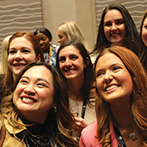
Photo Credit: Erik Kabik Photography/ erikkabik.com

Savoring Sin City

The highly acclaimed show “Absinthe” is a mix of acrobatics, cabaret and adult humor. Courtesy Photo

The highly acclaimed show “Absinthe” is a mix of acrobatics, cabaret and adult humor. Courtesy Photo

Dining and entertainment are part of every meeting in one form or another. It might be as simple as providing necessary food and beverage for attendees, or as complex as a strategy to meet goals and increase ROI. Whatever planners’ goals are related to dining and entertainment at their meetings, few destinations can provide such an immense range of options as Las Vegas.

The city is widely known as the entertainment capital of the world, and few would dispute the title. From the very beginning, Las Vegas shed its ranching and railroad roots to embrace the entertainment value of its casinos and the Hollywood stars that flocked to perform in them. The city hasn’t looked back since, evolving into the entertainment and dining powerhouse it is today.

Las Vegas has more than 2,000 restaurants. Some hotels have as many as 40 dining and beverage outlets. There are multiple shows day and night, including residencies, comedians, magic shows, dinner shows, concerts and, of course, the acrobatics of Cirque du Soleil. Then, there’s Sphere, an extravaganza of technology, artistry and design created out of a head-spinning concoction of scientific and math principles, laws, theorems and equations that most of us have never heard of. The result is a one-of-a-kind venue. At just a year old, Sphere will undoubtedly hold its place at the top of the “must see” list for years to come.

The choices can be overwhelming, especially for planners and groups that don’t know Las Vegas well. So, how do planners leverage the endless opportunities the city offers and what will that mean to their meetings? Kim Becker, CMP, DES, SEPC, MBA, president of Louisville, KY-based Emerald Meeting & Event Planning, says the answer almost always depends on the specific meeting and who is organizing it. “I would say that dining and entertainment are important for any organization meeting that’s bringing together attendees and vendors. While the hosting organization may not utilize options outside of the hotel, many of the vendors will.”

Becker says dining and entertainment can serve all kinds of important functions in a meeting. Depending on how it’s used, and in what venue and part of the meeting, dining and entertainment can wow attendees and clients in the host hotel or provide an opportunity to experience a venue beyond the hotel. They can give small groups within the conference a special experience or provide a networking opportunity for certain attendees apart from the main conference.

Bonding can also be a benefit of wisely used dining and entertainment elements, depending on the size of the event. Becker says, “I was at a small group dinner of eight people hosted by an exhibitor recently and we discovered that three of us have outside interests in common, which definitely expanded my knowledge and contacts in that area.”

As to the question of how dining and entertainment can contribute to the ROI of a meeting, Becker goes back to vendors hosting their own events within a meeting. “I think that definitely contributes to the vendors’ ROI for the meeting,” she says. “And in turn, that contributes to the ROI for the meeting organizer. For instance, if there is very positive feedback from vendors about all the great dining and entertainment options in Vegas, then they are more likely to renew their relationship (in whatever way — exhibits, sponsorship, etc.) when the organization returns to Vegas the next time and be excited about it.”

Becker says that in many ways the various dining and entertainment elements of a meeting can almost function as their own meetings within a meeting. “I’ve worked for clients who were hosting advisory groups, so the first-night meal at a local restaurant was almost like its own meeting where it had its own site visit and tasting and was a vital kickoff to the rest of the week. And then, I’ve worked for groups that want to provide appropriate food and beverage as allocated by the registration fee, but nothing exceptional. I’ve had several groups who have used dining to build a rapport with the C-suite teams, staff or board.”

Dining and entertainment, she points out, can provide far more than a good time. “I worked for a Fortune 25 that really wanted to go all out for its sales group,” Becker says. “There was a specific desire to have menus they wouldn’t forget and musical entertainment they couldn’t see anywhere else.”

Providing a good time in conjunction with the serious business of a meeting can, in fact, be good business. Adding avenues for networking and bonding in a fun way can be very productive. “You want to make sure everyone enjoys the specialness because, even though it’s not downtime, it’s also not meeting time. It’s often the opportunity for attendees to have a little more relaxed conversation with a beverage,” says Becker.

Some entertainment serves a dual purpose in a conference. Speakers can elicit laughs and/or awe, but they can also weave in messages that align with a company’s goals and values. “I’ve had some clients that use comedians and magicians for the meeting portion of the event,” Becker notes. “And others that simply want tickets to a Cirque show.”

She says one of her favorite restaurants is Hugo’s Cellar in The Queens. “It’s old Vegas and it’s not for everybody. That’s the thing about Las Vegas; if you can’t find what you’re looking for, you’re not looking hard enough.”

Becker also points out that COVID did change a lot about group dining and the residuals of that still impact planners. “We have to think about dining differently than we once did in terms of logistics.”

To planners considering Las Vegas for a meeting, Becker says one way to work effectively with entertainment and dining is to treat these functions like their own separate meeting. “I do believe you need to make sure that you’re not deviating from the mission or values of the overall meeting; however, if you’re looking to have a wow dinner or entertainment, you need to think about it like it’s its own entity and what that looks like from the first planning step to the minute the event is over.”

Marissa Kilkenny, event producer and owner of MarKeting Manners LLC and co producer for Up Your Aly Events, says that dining and entertainment are integral to her business in terms of drawing clients and creating a successful event. “It is always situational to me,” she says, “but a large part of my business is over-the-top experiences and wowing clients and their attendees. That brings people together; they can all look back on the event or moment as special because it’s not something that everyone has access to. I think the more you wow guests and attendees, the more they keep coming back to your meetings and events.”

That said, she adds, “As humans, we’re constantly overstimulated, so I think it is also important to balance an event’s dining and entertainment with relaxation moments as well.”

Planners have many considerations in terms of ways to productively use dining and entertainment within a meeting. There are basic meal functions, of course, and the obvious wow factor that can serve to drive attendance among other things. But these functions can also work to entertain VIPs and to bring together a company’s executives on their own or with important clients. Organizers can use a special event during the main meeting to reward top employees, or the planning team might use an offsite lunch or dinner to connect and strategize during an event. “I think it is a combination of all of the above,” Kilkenny says. “We have to eat and dine at these meetings, but a reception with great entertainment is a fun way to start or end a program — or both! These events can seal the program and keep everyone engaged.”

Additionally, she says, “I think the more serious and intense the meeting, the more dining and entertainment need to be top level. Work hard, play hard — and there’s no better city to do that in than Las Vegas!”

Moss Adams LLC held its One Firm Week conference in Las Vegas in June with 1,400 in attendance. Stacy Weber, CMP, the company’s meeting, travel & procurement senior manager, says Las Vegas is an ideal meeting destination for many reasons, noting that it also offers a number of resources, including LVCVA, the city’s CVB, for planners who want to incorporate dining and entertainment into their meetings.

“We needed to find 15 restaurants that could accommodate 75-600 guests for dinner and the LVCVA was able to provide suggestions and contact information, which significantly decreased our workload. And both Caesars and MGM have group dining teams that help you with availability and options and connect you with the individual sales managers at the properties or venues you’re interested in. This centralized approach makes the whole process so much easier. Outside of those venues, Brooklyn Bowl, a Caesars Entertainment venue on the LINQ Promenade, was a pleasure to work with and very much enjoyed by our attendees.”

Once the group settled on Las Vegas as the meeting destination, Weber says the next order of business was to find a hotel that met their requirements. “We needed a hotel that could fit the size of our group (rooms and space), had the dates available and that we knew could provide the experience and service our attendees expected. Bellagio fit the bill from the beginning, and by the end had exceeded our expectations.”

However, with a group of 1,400, Weber still needed to book functions at a variety of venues. Fortunately, there’s no shortage of those in Las Vegas and planners can count on the quality for their groups that expect high-level dining and entertainment. “We hosted 13 dinners at hotel dining outlets across Bellagio, Caesars Palace, Cosmopolitan, Aria and Paris. All of them stood out because they each offered a different experience. The teams worked with us to create off-the-menu experiences, including a standing reception the first night and a buffet dinner the second night.”

Underscoring the city’s ability to continually reinvent and renew itself, Weber notes that 10 of the 13 dinners were at places that were new to the group. That alone makes Las Vegas a top choice for planners whose groups require not only top-level entertainment and dining but also an ever-changing selection of new options. And that begs the question, do you go with old favorites at times or always with what’s new and trending?

Weber says both. “We definitely repeat if it went well because why reinvent the wheel? But there’s always something new popping up in Las Vegas and we’re always excited to try those new options,” she says.

The bottom line, Weber states, is that there is no other place like Las Vegas, and there are endless opportunities to incorporate all kinds of dining and entertainment into meetings. “Every city has tremendous dining, entertainment and culture,” she says. “However, Las Vegas does it best. Whether you’re on or off the Strip, anything you can imagine is available to you. Las Vegas understands and appreciates groups and meetings, and the venues are always willing to step out of the box to partner with you to make sure you’re getting the event you want.”

Some entertainment offerings in Las Vegas go beyond the imagination. That includes not only creative shows and A-list entertainers, but also only-in-Las-Vegas venues such as Sphere, which is attached to The Venetian. Sphere is amazing to see from the outside — and it can be seen from many points in the city — but for that truly “bucket list” experience planners want to give their attendees and executives, you have to be inside.

For those who have never experienced Sphere, prepare to be in awe by the five Aura robots in the Grand Atrium who are there to greet guests and answer any questions you see fit. The best introduction to the technology that makes Sphere special is “Postcard From Earth,” a 50-minute commissioned film by Darren Aronfsky that provides a perspective on planet Earth that will immerse all of the senses. For groups that have already done that part of Sphere, there are a variety of shows and other experiences, including a version of U2s Sphere concert that will make attendees feel they are at the original live show. It also makes a great place for a presentation or event.

Kilkenny calls Sphere a phenomenon. “What a great way to dine and then experience the Sphere with colleagues. It’s unique to Vegas and such an amazing location for any type of event,” she says.

With so many choices, it’s hard to pick favorites, but there are a few options for planners and groups that stand out for Kilkenny. “Absinthe is a very fun show,” she says, “and O by Cirque du Soleil is still everyone’s favorite. As for culinary experiences, she says groups will do well at “any of the amazing restaurants along the fountains, and PRIME, one of the most well-known steakhouses in town (and beyond), is a true classic staple. For those who want to combine dinner and a show,” Kilkenny says, “Mayfair Supper Club provides clients with a true dinner and show experience.”

To planners wanting to know how best to incorporate dining and entertainment into a meeting, Kilkenny says, “Nothing is too big, and no detail is too small. I love adding special touches all over the dining experience — menu cards, logos on desserts, staff in company colors, specialty cocktails and so on. That allows for a fun and captivating experience and clients feel very special.”

However you want to incorporate dining and entertainment into your meeting, whatever the size and makeup of your group, whatever meeting goals you have, Las Vegas will deliver — and then some. C&IT


CIT-2024-09-Issue-cover-147x197

The Rise of the Event Business Owner

Eric Rozenberg

Eric Rozenberg

Eric Rozenberg, CMM, CMP, HOEM, FONSAT, president & CEO of Event Business Formulais an entrepreneur, podcaster and author. He has helped thousands of entrepreneurs grow and manage their event business better. His purpose is to inspire people, help them take action, get results, and develop their event business and their lives. He is the host of The Business of Meetings podcast and a former Chair of MPI International Board. Connect with him on LinkedIn: linkedin.com/in/ericrozenberg.

More than 99% of U.S. firms are small businesses, defined as companies with 1 to 499 employees, and most have fewer than 20 employees. The Meetings & Events Industry is no exception, contributing over $1 trillion to the economy and supporting thousands of small businesses that generate millions of jobs. Post-pandemic, many people have either left the industry or started their own businesses, driven by the surge in outsourcing from organizations that no longer have the in-house skills.

However, many small event business owners face significant challenges in growing their businesses, creating more time for themselves, and increasing their revenue.

Corporate & Incentive Travel had the opportunity to sit down with Eric Rozenberg, founder of Event Business Formula, the first platform dedicated to helping Event Business Owners grow and manage their businesses more effectively. Eric brings a wealth of experience in our industry, having successfully grown small businesses and teams, as well as coaching numerous entrepreneurs. He shared valuable insights into the unique challenges that entrepreneurs in our industry face.

CIT: Tell us about your background.

Eric Rozenberg: I studied International Business Management in Belgium and launched my first business at the age of 28. Since then, I’ve grown, launched and exited several small businesses, including a corporate events agency, a consultancy, a SaaS company, and I have also been a coach for Entrepreneurs’ Organization (EO) Accelerator Program for several years. In addition, I’ve authored two books and host The Business of Meetings podcast, which has over 230 episodes.

CIT: It sounds like you’ve had a clear career path. How do you know when it’s time to move on to something new?

ER: Absolutely not! My career has been a mix of serendipity, gut instincts and luck. I landed my first job at a barbecue and entered the Meetings & Events Industry after a conversation during a ski holiday. I wish I could say it was all meticulously planned, but that’s far from the truth. Starting and running a business is like riding a roller coaster for the first time — you never know when you’re going up or down, and even though the excitement and rapid changes are thrilling, they often make you scream. I’ve faced numerous setbacks, but the key is to get back up one more time than you fall and keep fighting.

Over the years, I’ve realized that three elements are crucial in my decision-making process: Do I enjoy the people I’m working with? Are we making a difference with the business? Am I fairly compensated? If one of these elements is missing, I struggle. If two are missing for too long, it’s time for a change.

CIT: What can an Event Business Owner learn from your success with your Corporate Events Agency?

ER: We served clients across Europe, and although we were a small business, we secured recurring business with major Fortune 100 companies. Success didn’t happen overnight, but I’ve distilled it down to five key elements:

  • Two Years of Hustling: The first two years were incredibly intense. During the day, I met with prospects, gave presentations and networked. At night, I prepared proposals. In between, I managed the projects. It wasn’t until I grew the team and began delegating that things started to stabilize.
  • Risk Analysis from the Start: I always put myself in my clients’ shoes. C-level executives hired me, and my job was to help advance their careers by supporting them behind the scenes when they were “on stage” in front of their company or customers. I even planned for worst-case scenarios, ensuring a contingency plan was in place to keep the program running smoothly, even if something happened to me.
  • Positioning Yourself as a Strategic Partner: I researched my prospects and clients thoroughly —their industry, company challenges and strategy. I always started meetings with questions focused on their business, not logistics. There’s a significant difference in perception when you ask, “Why are you investing in this sales meeting, and what impact do you want it to have on your sales?” instead of, “Do you want a welcome cocktail and a farewell dinner?”
  • Exceptional Service: I always aimed to “beat size with exceptional service.” Quick responses, creativity, availability and managing the unexpected were key to outshining larger competitors. For example, when the Eyjafjallajökull volcano erupted in Iceland and closed European airspace, we rescheduled a major incentive program for a client within three days — at no additional cost. This solidified our business relationship.
  • Creating Truly Unique Experiences: Imagine returning from an incentive trip and finding your clients have purchased the back cover of an industry magazine to thank you for an extraordinary and unforgettable program. That happened to one of our clients because we followed a consistent recipe: participants couldn’t put a price on their experiences, they encountered contrasts between activities, and they were unable to replicate the program if they returned to the same destination with family or friends.

CIT: How do you handle the unexpected, and what has been your greatest challenge?

ER: Like most event planners, I thrived on the unexpected! It was always an adrenaline rush, and I immediately switched into “solution finder” mode. In 20 years of running hundreds of projects across more than 50 countries, I’ve never had a project executed 100% as planned. I faced many challenges — from airline strikes and hurricanes, to saving lives and being near a terrorist attack — but I always tried to remain calm, assess the situation with local partners, brainstorm solutions, be transparent with clients and take decisive action.

One of the greatest challenges I faced was moving my family from Belgium to America and restarting everything from scratch. We never regretted it for a second and are now proud American citizens. However, leaving a comfortable life for the unknown is not easy, even when you know it’s the best decision for your kids. I’m good at connecting the dots and believe that when you reach a conclusion, you need to act on it. I also realize that many people choose misery over uncertainty, finding reasons to stay in a place where they are unhappy.

CIT: Growing a small business is not for the faint of heart, especially an Event Business, with its many facets requiring different skills. What should entrepreneurs in our industry focus on?

ER: That’s an excellent question. Whether you’re a solopreneur or run a large agency, you’re an entrepreneur. Chances are, you didn’t get much formal “business management education” in the past. It’s time to invest in yourself, and I suggest focusing on three key areas: clarifying your vision, increasing sales and mastering delegation.

Getting Clarity on Your Vision:

Alice in Wonderland: “Which road do I take?”

Cat: “Where do you want to go?”

Alice in Wonderland: “I don’t know.”

Cat: “Then, it doesn’t matter.”

Whether you started your business because you didn’t want a boss, got fired from a previous job or saw a market gap, there’s a reason behind it. How can you make decisions, hire or fire people, target a specific niche, or invest in sales and marketing without clarity on what you want your business to look like in the future? Spending time clarifying and defining your vision, and how you plan to get there, helps you make decisions, reduce stress and share your business vision with every stakeholder.

Increasing Sales: No sales, no customers. No customers, no business.

Whether you like it or not, every company needs a “face,” and chances are, that face is you. What’s your value proposition? What’s your pitch? What’s your sales playbook? How do you ensure that everyone in your company speaks with the same voice? How do you handle objections? How do you differentiate your services? What kind of customers do you want?

Are sales really your primary focus? If so, does your calendar reflect that? If I were to look at your calendar today, would I see hours dedicated to sales activities?

What metrics are you tracking? What are your lagging and leading indicators? What are your revenue and profit goals? What’s on your dashboard? How often do you review the data to make informed decisions?

Finding answers to these questions will significantly improve your business. You can make the change in a few months, but you need to start now.

Mastering Delegation: During the first two years of my business, I hustled like crazy, running fast on the hamster wheel: I had a project, great! No one could do it better than me, it was my client, and it was my brand, so I managed everything myself. As the end of the program approached, I stressed about getting more business. When I did, I went back to running everything myself. Sound familiar?

This is NOT sustainable, and the best outcome I could have hoped for was burnout. Eventually, I stopped the insanity and hired more people. Luck had it that I had two projects on the same weekend, and I was at home, biting my nails, until nothing went wrong. That experience allowed me to start working more ON my business, changing its trajectory.

What I needed was a change in mindset and process. I wish I knew then what I know now, so here’s an effective way to determine quickly what you can delegate.

Create a document with four columns: Tasks, Do, Delegate, Stop. Over the next two weeks, write down every task you’re busy with and the time you’re spending on it in the first column. After two weeks, review your document, look at the patterns, and for each task, mark an X in the respective column: Do (continue to do it yourself), Delegate (to someone else), or Stop doing it altogether. Then, review the Delegate column and consider the time you’ll save by automating tasks and/or delegating them.

As simple, and at times overwhelming, as this process may seem, it will help you grow your business and positively impact your mental health by creating more time for you to focus on what you do best and on what/who you want to spend your time on/with.

CIT: How can Event Business Owners use technology, especially A.I.?

This is an incredible time for small business owners! I remember when I started my first business, email was barely a thing, and a fax machine was essential for receiving offers. I would spend every night unrolling each page, stapling them together and preparing offers. It sounds absurd now, but that was the reality.

Today, most repetitive (and often tedious) processes can be automated. You no longer need to carry around a heavy binder when you’re on-site, and the sheer volume of information available about your clients, events and business is astounding.

From managing events (registration, engagement, networking, etc.) to optimizing your sales and marketing processes, the technology available today allows you to be far more productive. It also enables you to run your business with more data and accurate insights.

However, the large volume of information can be overwhelming, with a new A.I. tool seemingly launched every week, if not every day. The key is to stay focused on your clients’ needs and your business’s objectives. We must work our way up to finding the right tech tools that serve those needs — not the other way around. Otherwise, we risk getting lost in every new “cool tool” that comes along.

CIT: Do you think A.I. will eliminate the need for event planners?

Absolutely not. A.I. will not put you out of business — but your competitors using A.I. might. The fundamentals remain unchanged: understanding your customers’ needs and delivering competitive solutions is crucial for any Event Business. A face-to-face meeting cannot be automated, nor can the serendipity of authentic conversations that occur at conferences.

CIT: Any final thoughts for Event Business Owners?

Yes! Focus on what will not change.

I love an interview with Jeff Bezos from Amazon where a journalist asks him how he anticipates future changes to guide his company. Bezos’s response is brilliant: “I focus on what will not change. People will always want products delivered faster and at a competitive price. No one will tell me: Jeff, you’re delivering my order too quickly, and it’s too cheap.”

I believe the same holds true for our industry: people prefer to buy from people, especially for high-value face-to-face meetings that impact an organization’s strategy. That will not change. In fact, the more we use technology, the greater the need to come together in person.

Loneliness is one of the main afflictions of our time, and Event Business Owners are no exception. We often feel alone and overwhelmed.

Connecting with other like-minded individuals and belonging to a community of entrepreneurs is essential. There’s no better place for that than face-to-face meetings. That, too, will not change.

This is a fantastic time to own and grow your Event Business. C&IT

CIT-2024-09-feat-local-147x147

Living Like a Local

A CADENCE incentive trip in Thailand included a visit to an elephant sanctuary where attendees could help bathe elephants while dressed as elephant trainers. Courtesy of Chardell Robinson

A CADENCE incentive trip in Thailand included a visit to an elephant sanctuary where attendees could help bathe elephants while dressed as elephant trainers. Courtesy of Chardell Robinson

It’s no longer in vogue to book venues close to airports or at unwalkable, remote places. What attendees want is to be in the middle of the action, seeing, tasting and experiencing their host city’s cultural vibes.

Knowing that feeling like a “Local” has become such a draw for attendees, meeting planners are regularly incorporating these elements into their event designs. From excursions to iconic landmarks and local attractions to savoring signature cuisine and unique experiences, they are bringing a fun and energetic vibe to every event. Mike Underwood, president of Underwood Events, a DMC and event planning firm in Milwaukee, WI, says, “Now everyone feels like if you’re going to a place, it’s incumbent upon the groups who are hosting to do what they can for the guests while they’re there. CVBs want to show off their city — their job is to let people know what makes their destination unique. When planners take that information and use it to promote their destination, attendees are more interested in that kind of thing.”

Planners are also using offsite excursions and unique local experiences to entice in-person attendance. With more meetings and events shifting away from hybrid options and prohibiting streaming to encourage in-person attendance, planners are working with clients and local partners to feature creative add-ons that boost registration. These experiences add a sense of exclusivity to groups, not to mention networking and team building opportunities not found in a conference center or hotel.

“It starts by getting companies to come to a specific place, and planners highlight whatever makes that place unique. When attendees get there, they don’t just want to be in meetings all day long. A lot of people expect that when they get to a place, they want to learn about it, so there is an educational component. You’re going to have some fun time and hospitality baked into that. Attendees want something they haven’t experienced before,” Underwood says.

Gianna Gaudini, an corporate event strategist who has worked with some of the biggest companies in the country, most recently for Amazon Web Services, is the author of “The Art of Event Planning” and principal of Gianna Gaudini LLC. She suggests planners use every opportunity to give attendees local flavor.

“That’s bringing in local vendors for F&B, getting off property, working with your venue to see if they can bring in local vendors (i.e., food trucks for a snack break). If you can get people offsite for activities or a break, the change of scenery not only gives people a break but is a great networking opportunity that gives people an energy boost,” she says.

Moving offsite and exploring the area is a win-win for everyone. Experienced professionals appreciate the opportunity to expand their horizons outside of the traditional breakout session-type setting; millennials and younger professionals basically expect opportunities that blend business with experiential opportunities.

Chardell Robinson, VP of corporate sales & account management with CADENCE, says, “Millennials look for the ‘wow’ factor moments — something that will be Instagrammable, so something that blends a photo op with local food. Food itself always pulls an experience and place together.” These groups also help support the local economy, whether it’s purchasing souvenirs or food and beverage that struck an appealing chord during a tasting.

Leveraging the Power of Local Partnerships

Planners who don’t already have a working relationship with CVBs or DMCs in major cities are well served to start making those connections. These organizations offer a rich breadth of knowledge about local people, places and experiences. A likely draw for out-of-towners, offsite events also give local attendees the opportunity to explore places literally within walking or driving distance they may have never visited or experienced before.

“A unique experience is really what attendees are looking for, whatever group you’re with, whether incentive or corporate. How does the city play into your plan?” says Susie Townsend, senior vice president and chief destination officer of Visit Indy in Indianapolis, IN. As an example, Indianapolis hosts the country’s largest single-day sporting event each May, and a stop at the Indianapolis 500 track is a popular stop for out-of-town visitors.

There are countless ways to elevate a simple visit or tour of a local iconic or historic landmark. Townsend and her team use local partners — tourist attractions, restaurants, hotels and others —to customize the offsite experiences for visiting groups. Another welcome challenge for partners is to switch things up for repeat visitors.

“Groups that come every year want something different every time. Biking is big in our city right now, so we have biking programs, as well as customized biking programs. We’re always trying to create new experiences so there is surprise and delight each time,” she says.

Stephen Leddy is the director of conference services at East Stroudsburg University in East Stroudsburg, PA — the heart of the scenic Pocono Mountains. Leddy oversees the planning and execution of all internal events, as well as working with outside groups holding events on campus.

Because East Stroudsburg is both a college and mountain town, outdoor activities and excursions to local attractions abound for groups.

“It used to be, ‘What do the spouses do all day while the attendees are at meetings?’ Since the pandemic, groups don’t want to sit in a room all day. For actual activities and outings, it’s built into the content more than it used to be,” Leddy says.

Leddy works with many groups who are looking for short day trips or local outings to break up the monotony of an event schedule. “We get a lot of groups looking for tickets to the Sherman Theater [a downtown performing arts venue] or recommendations for outdoor activities they may not have in their area, such as go-karts. We have a planetarium on campus if a group wants something quick but different in between sessions. The Poconos have a lot of options if you don’t want to be inside all day.”

The area also boasts a wide range of restaurants and a Pocono Craft Brewery Tour featuring local independent breweries.

Leddy has this advice for planners looking to add local experiences or activities: “You need to know your customer. How adventurous do you want to be? Some of the activities in our area are pretty rigorous. For instance, hiking Bushkill Falls [known as “the Niagara of Pennsylvania,” a unique series of eight waterfalls and a hiking trail] is not the easiest for an older group. Planners know their groups better than we do, so they have to give us some guidance so we recommend the right activities.”

Similarly, Miguel Diaz, director of sales and marketing at Wyndham Grand Clearwater Beach in Clearwater, FL, frequently advises planners on customized local experiences to make an event truly special. He explains going offsite gives attendees the opportunity to network and brainstorm in a different setting.

“Groups can connect in a relaxed manner — it gets them ‘out of the box,’” he says, noting incentive groups have taken advantage of the hotel’s location, with outings like sunset sailings on the Gulf of Mexico and behind-the-scenes tours of the Clearwater Aquarium. “It creates a sense of luxury and exclusivity. We’ve gotten really positive feedback,” he says.

The hotel has been part of several creative events featuring local establishments. “We did a five-course dinner featuring local delicacies. The chef came out to do pairings with beverages and explained each course. “We’re right across from the marina, so we feature a lot of locally-sourced fish. We bring in some of the freshest seafood in the area. We’ve worked with craft breweries who can provide us with locally-crafted beers. Groups can come onsite and do tastings or go offsite to the breweries and do immersive tastings.” Like most venues, the team at Wyndham Grand Clearwater Beach is always open to new ideas. “We’re always trying to find things that are unique. When we can make them exclusive to us, that attendees can’t find anywhere else, that makes it really special,” Diaz says.

Adding Local Flair

“Local” is a common thread sewn into every aspect of the annual World Education Conference (WEC) event staged by Meeting Professionals International (MPI), the largest worldwide meeting and event planner industry association. This year’s event, held in Louisville, KY, touched on the most well-known aspects of the city and surrounding area. Everything from the theme of “Craft Your Experience” as a nod to Louisville’s craft cocktail/history scene to holding exclusive offsite events for WEC attendees recognizing Louisville as a destination reflected the best of what the city has to offer.

Showcasing what makes each city special, and highlighting its unique local flair, is what the WEC event is all about. “We try to showcase each destination to the best of our ability, as attendees are primarily future customers of the destination,” says Melinda L. Burdette, MPI’s senior director of events.

“It can be a daunting task, but that’s really how we approach every event,” she adds. “We ask ourselves and the destination what makes it special? What are the ‘can’t miss’ opportunities? What is new? We then curate the attendee experience with the answers in mind. MPI and the destination are true partners in the curation and execution of the event.”

Burdette also offers these suggestions for planners who want to incorporate “local” elements:

  • Ask a sample of your target audience, “What are the top three things that come to mind when you say a destination?” This can help you figure out what are the “can’t miss” opportunities.
  • Ask the destination about their current marketing campaigns. Are there any alignments to your program theme? This could assist in figuring out “what’s new.”
  • Do your homework and be transparent about your goals.

 A Taste of Local Food and Beverages

F&B is a relatively easy way to incorporate a “taste” of the host city and surrounding areas. Planners have found myriad ways of working with local F&B establishments, and for those working with smaller budgets, inviting local F&B vendors to man tables with their menu items is a great way to incorporate them right into the event.

And what better way to tell the story of a region than with food? Phoenix Porcelli, CMP, head of sales for Convene, a global lifestyle hospitality company that designs and manages premium meetings, events and flexible workspaces, says “There’s tremendous interest in localized cuisine with localized experiences. Groups want a locally-inspired experience, whether it’s a local food or beverage for a cocktail or happy hour, or curated food and beverage selections for an event.” Food and beverage experiences are diverse enough to range from basic tours of local establishments to curated, exclusive dinners and tastings.

Further, Porcelli says, groups now prefer to stay in smaller, boutique hotels rather than large chains. “Now, it’s equally important to have a venue that’s locally inspired, as well as experiences that provide more than just eating and drinking,” she says.

Once again, Porcelli recommends relying on CVBs, DMCs and local partners to curate itineraries. She says leveraging the resources of their partners will help planners develop “amazing hotel partners, experiences and agendas.”

Cultivating One-of-a-Kind Experiences

Underwood teams up with a city’s CVB to tailor itineraries for some groups. Their first step is to consider a menu of ideas the CVB has in place, then simply elevate their choice. A craft beer tour of local breweries might be customized or served in personalized glasses. “People respond to that. They like the idea of coming to a city but having an overlay of their own company and branding. So, we’ll take an existing idea but personalize it by having company branding at the brewery. People like to feel seen and special — small things like that make a richer experience for everyone,” Underwood says.

Food and beverage take a starring role in many of the experiences Robinson and her team at CADENCE have curated for incentive travel groups. “We work really closely with our clients when they’re doing these destinations,” she says. “We’re always really trying to pull in something unique and special, especially if it’s an international group. Otherwise, they’d just go to a conference.”

Robinson and her team have pulled together truly memorable offsite experiences for clients in both national and international destinations, including a private dinner and medieval entertainment in a castle in Prague, Hungary; a private day at a polo ranch in Mendoza, Argentina, with authentic Argentine BBQ, polo and horse demonstrations, and local wine; and another group had a private dinner in the Australian forest with an Aboriginal presentation, dramatic lighting and dancing.

“For incentive trips especially, people are always looking for the ‘wow,’ but also something that’s special — something they wouldn’t do on their own, especially for repeat clients,” Robinson says. “There is a generational shift for sure — millennials want ‘photo moments.’ The market is driving it, but we always look for experiences that we can make unique.”

Keeping It Local

There are other small but meaningful ways to incorporate local flair. “Local gifts are always a nice touch,” Robinson says. “It saves a lot on shipping and logistics, and it does help give back to the community, especially if you’re working with a small business. Anytime you can contribute to the local economy is great from a tourism perspective.”

Alexia Reed, director of corporate communications and events for online payment platform Blackhawk Network (BHN), suggests incorporating a company-branded perk to enhance the experience. For example, BHN provides “Best of Local” gift cards, which are city-specific and feature a mix of local merchants, giving attendees the flexibility to choose where they do some surprise shopping while supporting small businesses. “It adds a nice, personalized touch to the whole event experience and leaves attendees with the freedom and ability to spoil themselves a bit,” she says.

Gaudini brought local vendors on-site to an event in India and created a bazaar so attendees could buy something for themselves or loved ones from a local merchant without leaving the property. “It was safe, contained, no one had to leave, we curated a nice selection of items, and it was just more efficient for the attendees. We also allocated some money for them to spend so they could purchase their own swag. This is just one way a planner can support a local community.”

By knowing the audience, leveraging local partnerships, and bringing some creativity to the mix, planners can bring local flair to virtually any event. C&IT


CIT-2024-09-feat-engagement-147

Elevating the Experience

Great entertainment can spice up any event, such as this performance held at Allegiant Stadium in Las Vegas. Photo by Josh Line

Great entertainment can spice up any event, such as this performance held at Allegiant Stadium in Las Vegas. Photo by Josh Line

The meetings and events landscape has changed over the last five years. The post-COVID attendance surge has subsided. Event planners now face new challenges — namely, bringing attendance levels back to post-pandemic numbers. This task requires out-of-the-box strategies for event execution.

Alexia Reed, director of corporate communications and events for global payment company Blackhawk Network (BHN), says it’s more crucial than ever for event planners to evolve their engagement strategies to align with the shifts in the industry to ensure a positive ROI on everything from their amount of spend to reaching their end goals.

“Focusing on strategies that enhance the attendee experience and foster meaningful connections is crucial, as encouraging audience interactions adds value to everyone’s experience,” she says.

Attendees want something new. “Turnkey meetings, events and keynotes get mundane if there is no new programming,” says Nicole Francis, senior director, corporate events at Allegiant Stadium in Las Vegas, NV. And attendees are not shy about sharing their feedback. Traditional conferences, annual meetings and similar events heavy on one-way communication are no longer the norm.

Great content and valuable networking opportunities are still crucial elements of meetings and events; however, most of today’s attendees want more. Just showing up and taking notes is out; engaging and interacting is in.

Experiential learning opportunities and offsite experiences are just a few of the initiatives now regularly supplementing the traditional breakout sessions and networking receptions. But it hasn’t stopped there.

“In 2021-22, people were very excited to get back to events — there was record attendance,” says Liz Caruso, CEO at Techsytalk. “Now, the numbers have dropped a bit and people are re-evaluating attendance. We’re seeing our clients take big steps toward changing their agenda to attract that audience back.”

Be Seen, Heard and Appreciated

COVID unquestionably changed the events industry in every way. Now, four years after the peak of the pandemic, attendees are more intentional about the events they attend. This means their expectations are higher.

The very first interactions set the tone for the entire event experience, says Jordan Aspen, Texas regional director for the Business Leaders Network and owner of FindBusinessCommunity, whose expertise lies in boosting engagement for virtual events.

“Prepping attendees ahead of time is an effective way to get them involved right from the start and make them feel seen, heard and comfortable,” Aspen says. “By focusing on certain things before the event begins [i.e., dress codes for theme nights, itineraries or options for offsite excursions], planners can increase the show up rates and engagement rates. It comes down to setting expectations and taking the mental load off attendees so they know how to plan.”

Boosting event engagement is also challenging because of an ever-shifting workplace culture. Yet within the challenge lies opportunity. Keely Brazil, supervisor, events department at Benco Dental, a dental distributor offering curated products and dental office design consultations, says for her, in-person events are chances to build community among remote workers.

“We’re seeing a lot more companies with remote or hybrid employees or a combination of both, and it’s hard to create a company culture when people aren’t together in the office every day,” she says, pointing out sometimes the first time some Benco Dental employees see each other in person are at annual sales meetings or other events. “I think events are more important now than ever.”

Because her company’s workforce is so diverse and in so many different areas of the country, Brazil says their district meetings have been tremendously valuable.

“We’ve been getting such good feedback from our sales reps. They love the dine-around where they go out with the reps from their district and get to know each other,” she says. “I wouldn’t necessarily recommend more meetings, but I think restructuring them and adding more one on one time where they can do peer-to-peer learning is helpful.”

Brazil starts engaging with attendees early, particularly for large events. She uses a mobile app and poses a question to generate excitement, maybe something like ‘What are you most excited for [at the event]?’ and invite responses.

“I’ll post communication up to the events, so things like the themes to help them plan. We keep communication going so the attendees know what to expect,” she says.

Benco holds different events throughout the year. Some have fun mixed with learning. “We always have a theme for our annual sales meeting. There’s a large overarching theme, and then at the event itself, we’ll have a theme night. For instance, one year the broad theme was ‘Better Together’. Then we tied in the host city of Houston, home of the Johnson Space Center, and chose ‘space’ for the theme night. So, employees dressed up as aliens, Star Trek and Star Wars characters, the guys from Men in Black. They really got into it and it was a lot of fun,” Brazil says.

As more companies are rethinking and restructuring their swag and gifting options, small tokens of appreciation go over well. Reed has seen amazing results when using gift cards in executing events for BHN. They also can be event-branded and highly personalized, and they’re versatile.

“They’re flexible incentives in that they can be handed out in person at events or digitally before, during or after an event to generate ongoing engagement,” Reed says. She’s found attendees to be more engaged and willing to sit through demos and other presentations when a gift card reward is offered.

BHN hosts several high-profile events every year. “Something as seemingly minor as event giveaways can have a major impact on attendees’ experiences, and by offering attendees the types of rewards they want most, your event is very likely to stand out — as is your brand,” she says.

Play-Based Learning

Play-based learning, rather than the traditional lecture method, is another growing trend. “We’re seeing more of our clients doing activities, engagement and offering entertainment interspersed between the sessions,” Caruso says. “Or, for instance, if it’s a two-day conference, the second day might have an excursion woven into the program.”

One of her clients did a conference in the spring with an agenda that included a healthy dose of team-building and activities focused around the event theme of ‘Expect the Unexpected’. “The feedback we received was overwhelmingly ‘I had way too much fun. I think I wanted to learn more,’” she says. “I think they wanted more of the typical conference where they’ve taken extensive notes balanced with entertainment and fun.”

Sharon Fisher, CEO of Play With a Purpose in Orlando, FL, and her team travel the country leading ice breakers, team building, role-playing games and activities to get attendees out of their seats, engaging with each other and collaborating on new ideas.

“Play is the best way to create engagement. It’s all about being hands on and involved,” she says. But it’s not all fun and games — call it purposeful play. “First, there has to be an understanding around why people are there and what they expect to get out of it,” Fisher says. “It’s not just an activity or game for the sake of doing it — we do it with a purpose. We have to understand the goals and objectives of the group.”

Play not only helps attendees engage with each other and the event’s content in new ways, but it encourages critical thinking, teamwork, creative problem solving and working with different personality types.

“We all play differently, so we incorporate the different styles that appeal to every kind of personality or play style. If I know I’m going to get what I want out of it, and it’s satisfying and fun, it’s easier for me to get involved. Play can fit into a conference anywhere — maybe a general session or to kick things off,” Fisher says.

Incorporating “play” and more interactive elements without excluding attendees who want something more traditional is a big challenge for planners, according to Caruso. “Not everything is fun to everyone,” she notes, adding she recommends planners give attendees options for each session.

Clients are also looking for events with more family-friendly elements, Caruso says. “The schedule might not be the entire day, for example, or the sessions are shorter, or it’s not as many days, or you can bring your family along. People are really trying to tie the business and leisure together.”

Caruso’s role as meeting planner has changed slightly to meet her clients’ shifting needs and requests. She’s had to take a more active role in helping clients be more intentional with planning their program.

“A lot of it is helping the client think about their goal [for the event]. A lot of clients just come up with a list of speakers or who they’d like to have, but our role as the planner lately is to step back and be more strategic — for instance, tell the client, ‘This person might not work for this conference.’ We’re saying the person is great, but they might not fit as a speaker — maybe as a host or emcee.”

Lean Into Uniqueness

Planners are also seeking out unique venues instead of a standard hotel or convention center to offer one-of-a-kind experiences. There is also a demand for traditional venues with a twist.

For one example, the Hotel Bethlehem in Bethlehem, PA, built in 1922, was ranked as the nation’s Best Historic Hotel by USA Today. Its history combined with a prestigious poll ranking gives planners plenty to draw from.

Dan Withrow, director of food and beverage, sales and operations at Hotel Bethlehem, first speaks with the meeting planner to get a clear idea of their goals for the event. Customization is always an option. One of their most popular public events, a Roaring 20s ball, can be scaled down for corporate clients. It’s a great way to get attendees engaged and networking in a different environment than the standard conference room setting.

“We try to put people into atmospheres where they can get to know each other but share something special and unique they’ll remember when they go back to work,” Withrow says, adding, “We can do extravagant, but sometimes it’s the little things. We tailor the experience to what the meeting planner wants to get done and give people opportunities to bond.”

The hotel’s history and unique features sets it apart from other venues, Withrow says. The building once had a speakeasy, and the dark, intimate atmosphere of the space was recently recreated in one of the hotel’s restaurants. Attendees were admitted by using a secret password. Period cocktails and dishes were served, and musicians played ragtime jazz. A dance instructor was brought in to teach attendees to dance the Charleston.

“People look for these unique experiences,” Withrow says. Rumors of the hotel being haunted haven’t affected event attendance; in fact, a staff member gives Haunted Tours — another potential event add-on. “Being the number one historic hotel in the nation means people have high expectations, and we try to exceed their expectations,” Withrow says. “When people have an event here, they expect a higher level of engagement and bonding — that’s why they ask for these opportunities.”

The draw for a venue like Allegiant Stadium is its sheer size and versatility. The venue can accommodate groups of 15 up to its full capacity of 65,000 and is fluid enough to meet a wide range of client needs.

“We offer different add-ons if the client really wants to lean in to the sports experience,” Francis says. “If a meeting planner is looking for something truly out of the box that they can lean into that they don’t have to put something additional towards, such as décor or dress, we provide that so there’s an all-in-one experience.”

Allegiant Stadium has a total of 22 unique event spaces and 144 suites. “We push the norm of a ballroom or conference center in the world of meetings and events. We have a built-in theme of sports and entertainment, and our building lends itself to that. Our aesthetic is basic — black, white, and silver — so we can be turnkey for a sports or entertainment theme, or we can be a clean slate,” Francis says.

Benefits of Boosting Engagement

Offsite excursions and other add-ons that elicit a sense of exclusivity are another popular trend, says Antonia Hinge, president of Junapr, a public relations, crisis management, event management, and corporate communications firm. “Planners are adding more offsite events to conferences and trade shows to boost engagement,” she says. “The more you add, the more they resonate with guests. Attendees are going to these amazing places for meetings and events, but are they ever really leaving the property?”

Moving attendees offsite or into experiences that take them out of their comfort zones can yield surprisingly positive results — namely, more bonding.

“Not only do the attendees engage more, but there’s more networking with a lot of people, mainly because it’s in a different setting than a traditional ‘end of day’ happy hour or mixer,” Hinge says. “We like to include local excursions that highlight the history or showcase the area.” For one trip, Hinge’s team planned and executed a trip to Spain and discovered a small local shop producing and selling a brand of olive oil only available in that region.

“We had an olive oil tasting in this small local store. People were asking questions and engaging with each other. It really got them out of their ‘brain space;’ it was fun to see it happening,” Hinge says.

Different ways of boosting event engagement translate directly into better collaboration and innovation when attendees get back to work. “Gone are the days of just lecturing and listening. Attendees want more networking and collaboration. They want networking dinners at local hot spots, not just the typical happy or cocktail hour. There are so many ways to marry business learning with adventure,” Hinge says.

The shift to more attendee interaction and participation shows no signs of slowing down. “Our clients are coming to us and they want offsite experiences,” Hinge says. “One of the values we provide is explaining to them the benefit of moving offsite.”

Offering something different elevates the whole experience. Instead of a group dinner at a chain steakhouse, bring in a private chef or add exclusive elements. “You can achieve your meeting goals but make it a more memorable event,” Hinge advises. C&IT


CIT-2024-09-feat-wellness-147

Mindful Meetings

Physical activities like a morning jog can add energy and teambuilding to events. Photos courtesy of Nth Degree Events

Physical activities like a morning jog can add energy and teambuilding to events. Photos courtesy of Nth Degree Events

“Health & wellness” is more than an expression for the meetings and events industry — it’s become a driving force. Today, attendees can expect to find a wide range of offerings on event itineraries, from early morning hikes to meditation and yoga breaks, to locally-sourced food and beverage items, to nurture mind, body and spirit.

Health and wellness look different for everyone, which means planners must be flexible when planning program agendas. Food and beverage, spatial considerations and scheduling are all more intentional than ever before.

The planning is purposeful for one simple reason: “We need to make sure every attendee has the best seat in the house and experiences the information in a way that meets them, not challenges them,” says Kimberly Lewis Inkumsah, executive vice president of equity, engagement and events for the International WELL Building Institute (IWBI), an evidence-based roadmap for applying the WELL Building Standard to support the health and well-being of people and organizations.

To do this, she says, event planners have to think holistically about space and place. Health and wellness initiatives align with sustainability, so discussing solutions for one commonly leads to the other.

“Health and wellness are literally part of the journey when we talk about sustainability,” Lewis Inkumsah says. “How do you bring people together in a responsible way? How do you work collaboratively? We started to see some of the trends in health and wellness pop up in our sustainability call to action.”

A Fresh Selection of F&B Options

Health and wellness have always been on a planners’ radar, but COVID and attendees’ lingering reluctance to fully return to more in-person events has put it firmly top of mind. Food and beverage is one primary focus area that has seen some big changes.

John Coval is the executive director of auxiliary services at Marywood University in Scranton, PA. In this role, he oversees all aspects of conference and event planning for both internal and external events, as well as the campus’ dining services department. He says COVID stressed the importance of the mind/body connection and holistic well-being like never before.

“It became very apparent the health of the individual was paramount to everything we do,” he says. “The shift in health and wellness went toward food and menu selections and the overall surroundings.”

Planners are taking greater care when planning menus, Coval notes. “For conference attendees, we find there are greater dietary needs, and the requests are getting more specific. We’re doing a lot of made-to-order. Even our own students are more focused on the specifics — they are entitled, and have a right to ask for what they get. They used to just eat around something — now they know they can request specific things. That’s really becoming paramount.”

Because the dining services team is now accustomed to meeting students’ different dietary requirements, it’s carried over to their conference attendees, Coval says.

“For planners, my advice would be to be more cognizant of your attendees’ needs than ever before. They have to start shifting their attention, as we have, so they have a better understanding of their various dietary needs or physical limitations,” he says, noting that planners who are more sensitive to ADA and other guidelines will ultimately be more successful when executing events.

From a dietary perspective, the snacks available for attendees to get a little energy boost or curb hunger pangs between sessions have also undergone a transformation. Gone are the days of sugary, carbohydrate-laden options like cookies, popcorn or candy. They’ve been replaced with protein-rich snacks like nuts and granola.

Planners want foods that can supply a steady stream of fuel for attendees to get through busy days rather than the temporary rush they get from sugary treats. Nicole LaPointe, founder & CEO of GatherPointe, a full-service event agency in Lincoln Park, MI, even featured a kale shake station at a recent conference in New York.

Mocktails are another popular option. LaPointe is seeing more attendees choose alternatives to alcohol — so much, in fact, that mocktails have quickly become a fixture on event menus. “You have to have a mocktail option. People are asking for them. It’s really become a big trend in the last year,” she says.

“People are just getting away from alcohol more. I don’t know if it’s because they want to avoid it to stay sharper during the sessions or if there are other reasons. Some mocktails are rather sugary so they may not necessarily be the healthier option, but people are really staying away from alcohol.”

Adding health and wellness elements helps attendees balance a jam-packed agenda with opportunities to unwind and recharge. Some remote workers and naturally shy people take longer to feel comfortable in a group, and planners are more sensitive to their needs, as well.

“We didn’t really know how people would react when they came back for events. There was a lot more focus to uplevel the experience and make sure people were as comfortable as possible. At the end of the day, that’s why we put events together,” says Robert Lowe, president of Nth Degree Events, an event planning firm in Duluth, GA.

Paying attention to attendees’ well-being also makes good business sense — when people feel good, they function better. They have more energy and drive. It’s easier to focus. “People are more engaged — you’re able to absorb more information,” Lowe says. “We’ve learned so much from the science, and it just makes sense. It’s kind of silly that it took as long as it did [to pay attention to attendees’ health and wellness].”

He points out the shift to working from home or working a hybrid schedule makes it difficult to sit for long periods. “[At home] they could take a break when they needed to or get up and get a drink when they needed to,” says Lowe. “Now, attending a conference and sticking to a schedule — it’s incredibly exhausting.”

LaPointe says the focus on health and wellness at events has ramped up since COVID. “I think people are a little more health-conscious, and when we were in the pandemic, the thing to do was walk in the morning, or go for a bike ride, do yoga in the backyard, or go for a hike without people. People still want that physical activity, but now they want to do the activities they did during COVID with a group of people. There are a lot of small things we’re incorporating that people seem to enjoy,” she says. “I’m finding the trend to be a group will go and participate in an activity. It’s really great networking.”

Get Up and Get Outside

After food and beverage, physical activity is another big shift for event itineraries. A host city’s “walkability” is a big consideration for planners. “The meetings and events industry learned very quickly that walkable cities matter,” Lewis Inkumsah says. “When we think about carbon footprint, that’s something that rose to the top.”

She cites Boston as one example of a city that liked the idea of becoming more walkable. “In the tiered cities … so many of our metro cities had to redefine how they bring people together. Boston had their convention center on the water but most of their hotels were in Back Bay. City officials did a lot to make their city more walkable and accessible to draw meetings where people were not just locked in their room but could go out and experience culture, place, people and the event itself.”

Indianapolis is another metro area showing what it’s got to offer in the wellness space. “The trend is definitely to get people out and about,” says Deanna Hrycak, general manager for Sodexo Live! at Indiana Convention Center. Sodexo Live! is the event management side of Sodexo, the food and facilities management company.

“Indy has a bike share program where people can rent bikes and ride them to attractions. Attendees can feel better mentally and physically before they even get to the event.” Hrycak suggests planners call on the CVBs and other partners in the host city to recommend activities, or even provide sample itineraries.

“A lot of us have lived, or were born and raised in these areas and have great suggestions that might not cost a lot of money. Our sales team is frequently asked these questions,” she says, noting the convention center has a minor league baseball field right across the street, a nearby state park that offers different outdoor activities, and a nearby canal with walkable areas. “It just starts with talking to your connection in the city you’re going to. We all have plenty of suggestions that are reasonably priced.”

When attendees are ready to completely unplug and get out into the fresh air, venues have plenty of ways to get outdoors before, after and even during events.

Heather Ritt, director of sales at Temecula Creek Inn in Temecula, CA, says more planners are asking for activities to help get people out of their rooms. The staff at TCI can set up yoga sessions for a meeting or event at any time rather than limiting participation to their regularly-scheduled, free Saturday morning class. The venue’s incredible grounds also invite attendees to take a break and get outside.

“Offering a balance of enjoyment and a healthy lifestyle comes naturally to us at Temecula Creek Inn,” says Ritt. “We’re set amid 300 acres of lush, natural surroundings. Our guests love to explore the butterfly and chef’s gardens, play a round or two of golf, enjoy fresh fare in our onsite restaurant, take in yoga classes or just hang out and relax with colleagues amongst the scenery. It’s ingrained in our Southern California culture to offer a healthy side to meetings and events. Group planners tell us they appreciate the benefits fresh food and availability of outdoor activities affords to their attendees. They come away more engaged and with renewed ideas. What organizations wouldn’t want that?”

The herbs in the chef garden are also used in some of the bath and body products sold in the spa — another draw for attendees, who appreciate the opportunity to use items with natural ingredients.

Similarly, Sutisa Spellman, director of sales and catering at Pechanga Resort Casino in Temecula, CA, says many planners request activities like golfing or spa days for event attendees or incentive groups.

“We can customize outings. Some groups will offer golf lessons as an add-on or incorporate them as part of the meeting. That all ties into the wellness,” she says. “Everybody is looking to be healthy. If you have something to offer that makes you different, it works well. If you tie that into a meeting or event, it’s something different for the attendees.”

Likewise, event attendees at Marywood campus regularly get outside to discover the campus’ ample green space. More planners are taking advantage of the grounds and holding events outside. “Because we’re so open, organizations can have meetings outdoors. We’re not confined by physical space. They can go to more unusual spaces they may not have done before,” Coval says.

Attendees aren’t the only ones who benefit from a well-nourished mind, body and spirit. Ensuring the presenters are comfortable, hydrated and prepared is essential to running a high-energy, inspiring event. Not all speakers have years of experience in front of a group, so calming any jitters is important.

“Guest speakers are typically the most stressed,” says Lowe. “What we can do is give them a quiet room and place to go [to focus and prepare mentally]. Other ways we’ve helped speakers — we’ve provided speaker coaches who can help them feel comfortable with delivering the speech.”

From a budget perspective, healthier options aren’t always more expensive. “There’s always the question of needs versus budget,” Lowe says, “but one of the beauties with this is it’s not usually an added cost. It typically doesn’t cost more to offer green tea over an energy drink — that’s a big benefit of this.”

Other Trends

Other trends are gaining momentum. Quiet rooms are near the top of the list. “It gets crowded and can be overwhelming for some people, so we now make sure we have a quiet room at all of our events,” LaPointe says. “It’s a place where people can go and work on their own or just have a few moments of peace and get away from it all.”

Karlee Vincent, author and sponsorship engagement manager with a global event management agency, applauds the efforts she’s seen to accommodate the needs of nursing moms. “When I was a nursing mom, I came back to work and was doing a lot of traveling, but it was difficult for me to find a space to pump when I was at conferences and events,” she says. “We’ve seen huge growth around that, which is a huge win for women. It makes them feel like they are part of the community without having to go too far out of their way. Just that simple level of care can go a long, long way.”

Virtual reality (VR) and artifical intelligence (AI) are two trends popping up at more events. Planners are just starting to explore their many capabilities. Vincent is seeing a growing interest in blending both of these worlds. “Depending on the client and their sponsorship base, sometimes they will combine the VR and AI technology,” she says. “For instance, I’ve seen VR wellness stations, where an attendee can put on a VR headset for a fully immersive experience. Or it provides a soothing auditory listening experience to help with the hustle and bustle and gives them a chance to calm themselves.”

Vincent sees huge opportunities for health and wellness using some of the emerging technology. “If event organizers take it a step further to add in VR experiences for nursing moms, who sometimes have a hard time relaxing, there could be a blended opportunity,” she says.

Planners continue to not only identify needs in the health and wellness space but develop innovative solutions to meet attendees where they are on a fully holistic level. C&IT


Close-up Portrait of Genderless AI Face with Red Glowing Eyes, B

The Dark Side of AI

Adobe Stock

Adobe Stock

Artificial Intelligence (AI) is rapidly gaining popularity in the event planning space. From marketing to data analysis, AI-powered event planning tools such as Lasso, Swapcard, Canva’s Magic Design and ChatGPT can help planners in a wide range of ways, such as:

  • Analyzing large sets of attendee data to allow planners to tailor future events
  • Creating marketing materials and presentations
  • Personalizing experiences with targeted event itineraries, content and networking suggestions
  • Automating customer service tasks
  • Streamlining operational management

While AI is making a splash in the event planning industry, many planners and companies are reluctant to use it. Their reasoning revolves around trust and security. The concept of AI has been around for years, thanks to science fiction books and movies. And so has the way people have been taught to fear it. While the concept of AI may not resemble humanoid robots taking over the world, companies and planners still have concerns about how AI can be used in not-so-positive ways. The simple truth is, they are right.

The Security Issues of AI

AI presents many legitimate security concerns. Once planners collect attendee data, what do they do with it? And how do they protect it? How do they use it? Being upfront with how planners use attendee data is incredibly important. Clarifying how data is used should be a priority for corporate event planners.

Elyse Dawson is the senior manager of corporate events & conference centers at Invesco Ltd. in Atlanta, Georgia. Her team is responsible for executing meetings and events in the Invesco offices across North America. Wanting to have a true data point to share with her direct managers and stakeholders, she began using Microsoft Copilot to help her aggregate and analyze data for key trends and insights to help her plan future events. Because of the security concerns that come with the product’s AI functions, her firm is strategically onboarding the product’s beta version to ensure data safety within the organization.

“Our data digital security team and cyber security team is very much involved in that process and making sure we’re vetting the information,” she says. “So anything utilized in Copilot it is inside our Invesco universe. So it’s not necessarily pulling information from other sources unless I’m using it online with Bing.”

Dawson emphasizes that it takes a certain kind of skilled planner to know what information to feed Copilot or any kind of AI software used in the corporate setting to avoid data leaks online.

“Whatever that agreed-upon AI tool is for your organization that has been vetted by your cybersecurity team, that is the one to use,” she says. Even when it comes to using the incredibly popular ChatGPT for more creative purposes, such as helping with marketing copy and graphics, she suggests using it very generically, without using any info from your organization.

The Ethical Issues of AI

AI has no doubt helped planners make their jobs easier. But with faster and more efficient tools also comes a variety of ethical concerns. For example, AI bias stems from algorithms inheriting biases from training data that could lead to discriminatory practices or unequal treatment of certain groups of people. There are also concerns about the lack of consent when gathering information from attendees and speakers.

But planners can sidestep these ethical concerns by using these best practices:

  • Partner with the company’s Information Technology (IT) department to develop and communicate clear AI policies
  • Provide training for all teams working with AI in event management, focusing on privacy concerns and responsible AI use
  • Educate users on how algorithms function, how data is processed and how decisions are made
  • Clearly explain the purpose of data collection using AI and how it enhances the event experience
  • Implement bias mitigation strategies to identify potential AI algorithm biases
  • Perform regular audits for compliance
  • Balancing Innovation with Privacy

Southwest Business is a corporate travel platform created by Southwest Airlines to help B2B customers, corporate event planners and travel agents manage flights and other aspects of travel quickly and efficiently. It also customizes offers for users based on the markets and volume in which they fly.

Last year, the company introduced a new AI tool to the platform that allows users to request customized proposals, easily switch travelers, access past meetings, request future meetings and gain incentive opportunities all within the Southwest Business portal.

Julian Azzam leads the company’s sales operations and products division, and oversees Southwest Business’s internal and external processes, products and tools. Azzam is also the data privacy champion for his department. Before the company introduced Southwest Business’ AI capability, it already had a rigorous process data security process. With its newest AI product, Southwest is taking the same precautions.

“We take cybersecurity and data privacy very, very seriously,” says Azzam. “That’s why when it comes to everybody’s favorite term, AI, we’re also doing the same thing. We have an internal department called Data Transformation Artificial Intelligence, and they are basically in the process of defining what AI looks like for Southwest Airlines, making sure that we have correct processes and data integrity.”

The data Southwest is putting into the Large Language Model (LLM) is of the utmost integrity and quality, he says. because AI is only as good as the data put into it. If the information that goes into it is unreliable, then the results are going to be unreliable. So Southwest is putting a focus on how its LLM is set up internally to leverage AI for the different use cases in the market. To do this, however, is a slow, meticulous process.

“What we’ve been successful with is taking it one step at a time and taking it slow,” Azzam says. “The two things that I would focus on is making sure that you feel good about your data foundation, data quality and data integrity. And then don’t go big all at once. Start with small chunks to test the waters and make sure that what you’re setting up is going towork the way you want it to work.”

Azzam also suggests having a feedback group. For Southwest, this consists of the company’s top customers and lets the company know if something is working correctly and if it’s meeting the demand from a travel perspective. While Southwest hasn’t yet utilized the feedback group for its AI features, Azzam foresees that they will once the technology becomes more prominent in the airline industry.

Don’t Fear the Future

Corporate event planner Katrina Stroganoff sees AI tools being implemented in various departments at the national financial advisory firm she works for in Philadelphia. She herself uses ChatGPT for crafting email blasts and web pages and also for activity suggestions for executives traveling to other cities for conferences and meetings. Like Dawson, she never uses exact locations, the company’s name or real dates for events to ensure safety and privacy. To help with event planning, she uses Cvent and its AI tools for event registration, messaging and guest management, which has its own built-in security features.

Stroganoff says that her company also hosts informational sessions about AI and how it’s being used in the financial industry. “It is at the top of people’s minds and it is one of our most attended sessions that we host,” she says.

For planners who are interested in implementing AI tools into their companies, Stroganoff says, “Don’t use any information that would tie it back to you or your events, or your company. Just throw generalized terms in there that you could then later fill in, and obviously make sure that you’re on your company’s VPN. And if it is allowed to go through, then absolutely. But if it is not, then I would stay away. The future is scary, but that doesn’t mean be afraid of it.”

AI and the Role of Event Planners

When introducing AI software into the corporate environment, planners have a responsibility to ensure that all ethical and privacy aspects are addressed prior before using it for events. Collaboration with IT is essential, and most likely already company policy. Planners should:

  • Maintain transparency about how AI us used and ensure accountability
  • Conduct regular risk assessments
  • Make sure attendee data is used responsibly and privacy and rights are upheld
  • Adapt to changing regulations

AI is the future of event planning. Planners must embrace its evolving place in the industry and balance the innovative potential with safeguarding attendee and company privacy. C&IT

CIT-2024-09-feat-sustain-147x147

Sustainability

DepositPhotos.com

DepositPhotos.com

It used to be that companies appeared to pay only lip service to sustainability. That has changed. Today, many companies want to serve not just their shareholders but also their communities. For them, it is not simply a corporate buzzword, as they have programs and measures in place and are looking for technologies, expertise and knowledge to accomplish those goals and ensure that everyone up and down the corporate chain of command is committed to the cause.

In the meetings industry, for professional corporate planners, the concept of sustainability within meetings includes efforts that lessen the impact of a gathering on the environment; for others, it means enhancing a meeting program’s digital footprint.

In her role as founder and meeting strategist for Strategic Meetings International and special events and meeting planner for Seafood Nutrition Partnership, a Virginia-based company that builds awareness of the nutritional benefits of seafood, Sandy Yi-Davis, MBA, CMP, DES, focuses on the sustainability aspect of the corporate meetings and events she plans for the organization.

As Yi-Davis explains, in today’s meetings and events landscape, a prominent focus lies on waste reduction and carbon offset initiatives. Event organizers are increasingly adopting comprehensive strategies to minimize waste generation throughout the event lifecycle, from sourcing sustainable materials to implementing recycling and composting programs, and digitizing event materials.

“Carbon offset programs have gained traction to counteract the carbon emissions associated with events to encompassing travel, food and beverage choices, and the use of reusable signage,” Yi-Davis says. “By prioritizing waste reduction and carbon offsetting, meetings and events are not only minimizing their environmental impact but also actively contributing to a more sustainable and eco-conscious future.”

Indeed, companies and organizations like the Seafood Nutrition Partnership are recognizing that social responsibilities are driving them to prioritize sustainability. As Yi-Davis points out, it is their duty to minimize environmental impacts and promote ethical practices.

“There is keen awareness of the profound influence sustainability has on an organization’s brand reputation, as environmentally conscious consumers and stakeholders increasingly seek to align themselves with entities that uphold responsible values,” Yi-Davis says. “Additionally, cost savings emerge as a practical incentive, as sustainable practices often lead to reduced expenditures on energy, waste management and other resources.” Simultaneously, the industry acknowledges the growing expectations of stakeholders who now place sustainability at the forefront of their event experiences, making it not only a matter of responsibility but also a strategic necessity.

Seafood Nutrition Partnership events offers sustainably sourced seafood as a staple in every meal. These events serve as a platform to demonstrate innovative ways of incorporating seafood into various meal periods during meetings and gatherings.

“Recognized as one of the most environmentally responsible protein choices, seafood not only enriches event menus but also plays a pivotal role in offsetting the carbon footprint,” Yi-Davis says. “The incorporation of seafood into every meal can contribute significantly to reducing the environmental impact, with the potential to offset a notable portion of the carbon footprint, creating a more sustainable and responsible experience for attendees.”

When seafood meals are served at least twice a day at a meeting, Yi-Davis says the benefits extend beyond just reducing the carbon footprint. Seafood is known for its nutritional value, being rich in essential omega-3 fatty acids and nourishing the brain.

“As a result, attendees not only are participating in sustainability but also experience personal health benefits,” Yi-Davis says. “The consumption of seafood can leave participants feeling healthier, more energetic, and better focused throughout the event, enhancing their overall experience while aligning with sustainable dining practices.”

Rachel Andrews, global head of events, helps plan Cvent’s internal annual convention for the company. Called Cvent Connect, this annual conference is teaming with sustainability initiatives.

“There are a number of protocols we have implemented to minimize our carbon footprint and reduce waste. In particular, we leverage our own technology to plan the event, manage our resources and communicate with our attendees more efficiently and effectively,” Andrews says.

Some specific sustainability efforts that Cvent has embraced at the annual convention include:

  • Delivering a robust hybrid event — which empowers attendees to experience CONNECT in the way that’s best for them and their business, and reduces the need to travel that’s required for an in-person only event.
  • Sharing digital invitations and reminders through the Cvent platform and hosting an online registration platform.
  • Leveraging comprehensive pre-event registration surveys to better plan meal attendance and allergy preferences to minimize waste.
  • Utilizing Cvent tools to check in attendees and using recyclable badges for real-time badge printing (no excess waste with pre-printed badges)
  • Using Cvent’s Attendee Hub and Mobile App to give attendees direct access to all event resources in a digital format — removing any paper materials.
  • Providing branded swag for attendees with sustainability in mind — such as reusable water bottles, digital gifting options, etc.
  • Working closely with venue partners to minimize food waste.

Collaborating with charitable organizations to offer unique and impactful corporate social responsibility (CSR) experiences, like making beds for shelter animals, to help give back to the community in which the event is hosted.

“Sustainability is increasingly becoming a core part of the event planning process — from venue sourcing to the onsite experience. Whether or not a venue has sustainability programs or policies in place is no longer an afterthought,” Andrews says. “In fact, it’s even determining where events are being held.”

A recent Cvent report found that 31% of event planners surveyed reported that sustainability would predominately shape their event planning priorities. When it comes to the onsite experience, things like reusable (and branded) water bottles, recyclable badges, group transportation vouchers, limiting individually wrapped items, collaborating with local charities and working with the venue to minimize and manage food waste all make a difference.

“Offering a hybrid event — with both a virtual and in-person experience — is also a great way to reduce the number of attendees that need to travel, while enabling greater reach and accessibility for your event,” Andrews says.

Andrews also emphasizes that socially responsible, sustainable events can even help you attract more attendees — since environmental impact is top of mind for both these individuals and the businesses that are sending them. Not to mention, environmentally friendly events often lead to reduced costs, less waste and greater efficiencies. This makes sustainability a win-win-win situation: for planners, attendees and the environment.

“The industry is getting serious about sustainability as many organizations have publicly committed to specific goals, and they now need to cascade these sustainability goals to their meeting programs,” Andrews says. “Sustainability is particularly important when thinking about business travel. While the aviation industry is the third largest contributor of transportation greenhouse emissions, airlines and airports have already committed to net-zero emissions by 2050. Although it seems far removed, this should have a trickle-down positive impact in reducing business travel’s overall carbon footprint.”

Beyond business travel, the onsite event experience is also a contributing environmental factor. For instance, according to the Green Business Bureau, a typical event attendee generates about 4.17 lbs. of waste per day, and 85% of that waste ends up in landfills. This isn’t surprising when you consider all that goes into a live event, including the transportation to and from the event, the energy consumed on-site in the form of water and electricity usage, the food waste that’s produced, etc.

“The good news is that there are many ways to reduce the overall event impact,” Andrews says.

Sharing Your Sustainability Focus

Incorporating sustainability initiatives within corporate meetings and events takes a considerable amount of strategy and effort on the part of meeting planners. That’s why it is not only important to take the required time to effectively orchestrate these initiatives, but it also can build an organization’s brand by communicating these efforts to those in attendance.

“At all our events, we strive to showcase a diverse array of both farm-raised and wild-caught seafood through meticulously designed menus. This approach hinges on three key pillars. Firstly, visual appeal is paramount; each dish must be pleasing to the eye. Secondly, taste takes precedence; the seafood must not only look good but also deliver an exceptional culinary experience. Finally, we believe in showcasing the essence of sustainable seafood through interactive stations and unique experiences,” Yi-Davis says.

“Engaging attendees with live demos or hands-on activities not only educates but also fosters a deep appreciation for sustainable dining practices, making it a memorable and impactful part of our events.”

When planning Cvent CONNECT, Andrews recognizes the importance of amplifying the company’s sustainability efforts pre-, during and post-event because it not only helps to illustrate the company’s commitment to enabling a more sustainable meetings and events industry, but it can also help inspire others to do the same.

Here are some ways that Andrews recommends planners can promote their (and the attendees’) sustainability journey:

Leverage social media: Planners should amplify their sustainability efforts via social posts that include tangible advice for attendees — like packing their own water bottles, as well as highlighting specific sustainability efforts being incorporated into the event.

Capitalize on the event’s marketing efforts: Planners should make sure that sustainability efforts are strategically incorporated into their event marketing strategy. Registration pages, digital marketing assets or email reminders are all high-visibility tactics that can be leveraged to maximize awareness.

Ask for feedback: Gathering attendee feedback is incredibly valuable after an event has concluded. These feedback forms can also include questions that assess how attendees felt about various sustainability initiatives. For instance, how did attendees feel about compost/recycling options after meals? In what ways could directions/reminders be clearer and more actionable? What creative sustainability ideas have they used, or seen, at other events?

Lessons Learned

Sustainability means different things to different people. Which is why it is so important that corporate meeting planners pay close attention to how, where and when their sustainability efforts are being implemented within the realm of meetings and events.

Andrews says the top mistake corporate meeting planners make is thinking you can’t make a difference. Small changes, when taken together, can lead to big impact — so every change or improvement planners can make to ensure a more sustainable industry is worthwhile.

“As planners, it starts with us — and while daunting, it’s also exciting. It’s our ship to steer,” Andrews says.

Another typical mistake meeting planners make regarding sustainability is not consistently using measurement tools to track their goals. The good thing is that there are free resources available that can help planners continuously improve in their quest for eco-friendly events.

For example, Andrews points to SAM, a free event sustainability carbon measurement tool — covering everything from food to accommodations to travel — that can be fully integrated with other technology platforms already in use. Other platforms that similarly calculate carbon footprints and offer guidance on how to be more sustainable include TRACE and Proseed.

“Corporate planners should thoroughly vet their vendors, venues and partners to ensure they share the same views and commitments surrounding sustainability,” Andrews says. “This extra step can go a long way in helping planners meaningfully advance their sustainability goals. One way to do this is by using a sourcing platform that helps to filter venues based on sustainability information provided in their profiles. Event planners should also feel empowered to ask specific questions about how exactly venues are tackling sustainability.”

And if an event planner is just starting to think of sustainability as a core component of their event planning process, that’s a step in the right direction.

“The first step can be as simple as removing all single-use plastics or switching to locally sourced food,” Andrews says. “I’ll reiterate … sustainability has become so much more than a buzzword. Socially conscious corporate events are simply better events because they lead to reduced costs and greater efficiency. Wherever an event planner is in their sustainability journey, they shouldn’t be afraid to dig in and start finding ways to execute more environmentally friendly events.” C&IT


CIT-2024-09-feat-florida-147

Florida

Lake Eola in Downtown Orlando. There are more than 480 hotels across the city.  Courtesy of Visit Orlando

Lake Eola in Downtown Orlando. There are more than 480 hotels across the city. Courtesy of Visit Orlando

When Ponce de Leon “discovered” Florida in the 1500s, chances are he never dreamed that 500 years later the Sunshine State would be carpeted in high-rise hotels, beachside bars and over-the-top theme parks. Yet, more than 500 years later, those are some of the reasons planners from all over the country flock to Florida to hold their corporate events and incentive trips, and why attendees request return trips year-after-year.

From east-to-west, north-to-south, the state boasts such a wealth of options for business travelers it’s not surprising the Incentive Research Foundation identified Florida as one of the top incentive destinations in the U.S.

No doubt part of that appeal lies in its versatility. From the luxurious and bustling atmosphere of Miami to the serene coastal charm of Fort Myers, each Floridian city offers a unique flavor. Add to that the state’s consistently warm climate, extensive event facilities, and diverse cultural offerings, and it’s no wonder Florida is a top choice for planners.

Fort Lauderdale

Often referred to as the “Venice of America,” Fort Lauderdale is famous for its picturesque canals, vibrant nightlife and high-end shopping — making it ideal for luxury, waterfront events, such as corporate retreats. With a wealth of upscale venues and resort properties, and its proximity to Miami, the city is often selected for exclusive events that can easily cater to fly-in attendees.

The highly anticipated 801-room Omni Fort Lauderdale Hotel is part of the master plan for a $1.3 billion expansion of the Greater Fort Lauderdale/Broward County Convention Center. The property will connect with the convention center and feature multiple restaurants, rooftop bar, spa, pool, and fitness center, as well as 120,000 sf of indoor and outdoor meeting and event spaces, including the grand ballroom and pre-function meeting spaces with waterfront views. Slated to open in 2025, the property is currently accepting booking requests for 2026 and beyond.

Meanwhile, Pier 66 is set to debut its upgrades in late 2024. Reinvigorating the property’s luxurious waterfront setting, the reimagined resort will include a long entranceway that wraps around the storied banyan tree, a new 10-story hotel, two-tiered pool (with separate adults-only pool), rooftop lawn and ballroom spaces.

For planners seeking a cutting-edge vibe, the Seminole Hard Rock Hotel & Casino, located in Hollywood, is worth considering. (The flagship-integrated resort is owned by the Seminole Tribe of Florida.) A few years ago, the property underwent a $1.5 billion expansion that included three hotel towers, 1,271 guest rooms, a 42,000-sf spa, an 18-acre recreational water experience, more than 20 food and beverage outlets, and 120,000 sf of meeting and convention space.

On the dining front, planners might consider Nubè: a rooftop bar on the 26th floor of the Hilton Fort Lauderdale Beach Resort, or the diverse offerings at 40 Food Hall in downtown Hollywood, which houses unique food and beverage concepts alongside a brew bar, game area and entertainment venue.

Lee County

Located on Florida’s Gulf Coast, Lee County is where you’ll find Fort Myers, an area known for its relaxed atmosphere, beautiful beaches and historic charm.

Beloved musician (and Florida resident) Jimmy Buffet created a unique vision of a laid-back lifestyle with his quintessential song “Margaritaville,” which led to a franchise that includes properties like the Margaritaville Beach Resort at Fort Myers Beach. With 5,000+ sf of indoor space and another 15,000+ sf of outdoor meeting space (including the Sunset Terrace, overlooking the Gulf of Mexico), attendees can expect unforgettable beachside experiences amidst a tropical vibe.

Another Lee County city of note is Bonita Springs, home to the Hyatt Regency Coconut Point Resort & Spa, where Jodi Collen, director of meetings and events for Great Clips, chose to hold the company’s annual Grow Your Organization in February of this year. The event welcomed 220 attendees to the resort, where they had previously held the annual conference.

“We have a long history of using a variety of properties in the Naples/Fort Myers area,” says Collen, who chose the Coconut Point Hyatt because of the overall quality of the hotel, level of service, location and balance of indoor/outdoor spaces. Located on 26 acres, the resort features 82,500 sf of meeting space and 462 rooms.

“Our attendees can see the inside of a ballroom anywhere, but the hotel does an amazing job of integrating the indoor areas with the ambiance of the surrounding outdoor space. The beach is right outside, where our attendees could take advantage of going out on a catamaran, on a nature tour, or playing golf. It was also a good option for February, when it’s still accessible weather-wise.”

Because it’s Florida, there’s always the possibility of an impact from a seasonal hurricane, so Collen was aware of that as a consideration. “We were contracted pre-Hurricane Idalia, and we spoke to the hotel’s team right afterwards to determine if the event could go forward as planned. Fortunately, the hotel didn’t experience any damage, so we were okay.

“We had discussions about going elsewhere on the eastern seaboard, but our attendees want to continue going there. The temperature, the climate and the tourism infrastructure is already in place in Florida, which makes it an ideal destination for us.”

Miami Beach

Miami’s eclectic neighborhoods are evolving with new event spaces and artistic installations, adding to the city’s vibrant cultural scene. Some examples are Wynwood Walls, an outdoor museum made up of giant wall murals covering six buildings, and Little Havana, with its authentic Cuban experience centered around Calle Ocho. Latin-inspired restaurants, cigar shops, rum bars, art galleries and venues such as the Cubaocho Museum & Performing Arts Center provide an opportunity for planners to immerse their attendees in a dynamic cultural setting.

With development already underway, the Miami Beach Convention Center (MBCC) will soon offer the convenience of the new Grand Hyatt Miami Beach Hotel. Connected by a climate-controlled elevated skybridge, the hotel will sport 800 rooms with 52 suites and is located within easy walking distance of the downtown area.

“Many of the corporate planners we work with are looking for experiences for their attendees,” notes Carol Motley, senior vice-president, convention sales and services for the MBCC. “Miami gives you so many options, like Little Havana, where you can arrange to take a salsa lesson, visit a cigar shop, watch a live performance, or take a food and walking tour.

“The cultural diversity of our city can’t be beat. We’re the gateway to the Americas, and we’re beautiful 365-days-a-year.”

That statement is underscored by Annette Gregg, CMM MBA, CEO at the Society for Incentive Travel Excellence (SITE), who helped coordinate the upcoming SITE Classic in Miami, which will include 250 global attendees.

“Miami Beach represents a perfect urban and coastal incentive destination,” says Gregg. “It has award-winning dining and entertainment, and ocean-based activities that attract many incentive-program qualifiers. And the Fontainebleau Miami Beach Resort, where SITE’s event will be held, is a destination unto itself. It’s got an interesting history, incredible service and an updated product. The team at Greater Miami CVB and the resort pulled together an amazing group of supplier partners from the region that will make the conference incredible.”

Upcoming renovations in the Miami area include a $100 million upgrade slated for 2025 at the Ritz-Carlton Key Biscayne, which will undergo changes to enhance its luxury offerings. The beachfront property, located on a five-mile-long barrier island, is set on a 17-acre property and offers 1,000-feet of beachfront access. Another is the $7 billion Capital Improvement Project at the Miami International Airport where airport-wide upgrades will include ticket counters, checkpoints, passenger loading bridges, additional gates and concessions, and the transformation of various concourses.

Orlando

Known as the theme park capital of the world, Orlando is a welcoming city with a focus on entertainment and adventure. Ideal for larger groups and pre- or post-event vacations, the city’s numerous amusement parks and resorts provide unique event spaces and entertainment options that can be tailored to various themes.

Topping the list of companies well-suited to bring your ideas to life is Disney Meetings & Events, which utilizes the Walt Disney World Resort’s five dedicated convention hotels and more than 700,000 sf of ballroom, meeting and event space. The resort also features four theme parks, three championship golf courses, spas, and numerous seasonal festivals that can be tied into an event.

Onsite lodging can easily integrate into an event’s theme, with choices ranging from the reimagined Disney’s Coronado Springs Resort, which celebrates the daring spirit of the great Spanish explorers, artists, writers and architects, to Disney’s Yacht & Beach Club Resort, which welcomes attendees to an 1800’s nautical world, or Disney’s Contemporary Resort, where guests are immersed in a world of modern conveniences including a monorail that glides silently through the atrium lobby. Other properties of note are Disney’s Animal Kingdom Lodge, a lodge-style resort set amidst a 43-acre wildlife preserve, and Disney’s Caribbean Beach Resort, set on 45-acre Barefoot Bay and divided into six unique “villages.”

Located at Universal Studios Florida (another awe-inspiring theme park), the Universal Orlando Resort features nearly 300,000 sf of meeting space and 10,500 guest rooms at various hotel properties, including the Italian-inspired Loews Portofino Bay Hotel, the Caribbean-inspired Universal Cabana Bay Resort, and the sleek, towering Universal Aventura Hotel with its stunning rooftop bar. And opening in 2025 is the Universal Stella Nova Resort, with a design scheme influenced by “the infinite vastness of the unknown universe.”

Meanwhile, the Caribe Royale Orlando is emerging from a $140 million transformation, with 1,217 redesigned one-bedroom suites and 120 two-bedroom private villas, eight restaurants and bars, including the sports-themed Stadium Club, three ballrooms and 58 breakout rooms — all set on one level.

The Rosen Shingle Creek, a AAA Four Diamond property, offers 524,000 sf of meeting and event space, 1,501 guest rooms and suites, 15 onsite dining venues and an Arnold Palmer Design Company golf course, all within about a 10-minute drive from Orlando International.

Another expansion project is taking place at the Orange County Convention Center (OCCC), to the tune of the $605 million, and slated to wrap up by early next year.

Taking advantage of the OCCC’s versatile exhibition space was planner Vince Slack, CMP, meeting and market planning manager for the Do It Best Market. Held in March of this year, the event drew about 6,000 attendees from across the U.S. and around the world.

Many of those in attendance chose to extend their stay and take advantage of all that Orlando has to offer as a vacation destination. Explains Slack, “This was our first time hosting the Do It Best Market in Orlando, but we plan to return often as our group had an amazing experience. The hospitality professionals were easy to work with, and the destination has so much to offer. Orlando is built to host conventions, and they do an incredible job of doing so.

“In addition to the team at Visit Orlando and the OCCC, the hoteliers, shuttle bus company, security and AV teams were also great to work with. It’s obvious they have a wealth of experience in hosting events like ours.”

St. Petersburg

Downtown St. Pete’s is seeing a commitment to revitalization with new public spaces, cultural venues and improved infrastructure, making it an increasingly attractive option for event planners. It’s home to many galleries and museums, including the Dali Museum, the largest collection of the artist’s works outside of Spain, and the Chihuly Collection, located at the Morean Arts Center complex. St. Petersburg is also close to the Tampa Waterway, and many of the area’s beaches have appeared on “top choice” lists including St. Pete Beach, Clearwater Beach, and Treasure Island Beach.

With its sophisticated-yet-relaxed atmosphere, vibrant cultural scene, beautiful coastal views, and 35 miles of sun-soaked Gulf Coast sandy spots, it’s easy to understand why planners like Moira Lowe would want to “Meet in St. Pete.”

Lowe, principal and chief administrative officer at Saybrus Partners, LLC, coordinated her group’s event at The Don CeSar, a historic property located at St. Pete’s Beach and known for its flamingo-pink exterior.

Opened in the heyday of the Gatsby era, the “Pink Palace’ continues to invite travelers to enjoy its sugar-sand beach and radiant sunsets. The property’s meeting spaces are also ideal for corporate groups, with options like the Grand Ballroom, the 5th Level Conference Center, terrace and veranda combos, and large, open, outdoor event spaces available.

“The Don CeSar is a spectacular space,” says Lowe, who’s held the company event at the hotel before. “We keep returning because the staff, the service and the food are incredible. The Pink Palace has a 100-year history, but a very updated feel. And all the onsite restaurants are very good, including the banquet options.

“Our Welcome Night was happening the same night as a popular football game. The banquet chef worked with us to curate an upscale, indoor tailgating theme, with F&B options that reflected the sports theme. The amount and quality of the food was incredible.”

The Saybrus Partners’ event brought in about 150 attendees, many of whom came early or stayed after to enjoy the property and the surrounding area, making the property even more appealing. But what really stood out to those in attendance was the staff. “When we walk into the hotel, there’s a continuity of personnel that I’ve never seen anyplace else,” says Lowe. “They remember us, often by name and by company. As the person responsible for coordinating the event, that’s one of the main reasons we keep going back.”

Tampa

Tampa Bay, including Tampa, Clearwater and the surrounding areas, is known for its diverse attractions, including historic sites and modern entertainment. Its diversity of venues and attractions make it a flexible choice for various events, while the region’s mix of urban excitement and scenic beauty provides a nice counterpoint.

Planners looking for a more bespoke experience for a smaller incentive group might consider the new Palihouse Hyde Park Village, a residential-inspired hotel in Tampa’s historic Hyde Park neighborhood, an area known for its stately homes, 19th-century architecture and tree-lined streets. Featuring 36 oversized guest rooms and an intimate lobby lounge and cocktail bar, this “urban lodge” is situated within a six-block enclave of curated shops, boutiques and restaurants.

Pulling together Westshore and Downtown into an energetic, contemporary neighborhood, the $500 million Midtown Tampa development offers almost 2 million sf of retail, residential, entertainment and hospitality space, including Tampa’s second Aloft property and Element by Westin. The seven-story dual-branded hotel features 226 rooms, a rooftop terrace, pool and lounge. Meanwhile, the Hotel Flor, originally the Floridan Palace Hotel and once the tallest building in Florida, has undergone a $30 million renovation and offers an elegant Roaring Twenties vibe alongside The Dan, a modern take on an old-school speakeasy with a Gulf Coast-inspired menu.

With its ever-evolving landscape for meetings and events reflecting a commitment to innovation, sustainability and exceptional experiences, it’s evident that Florida— with its diverse destinations, cultural offerings, cutting-edge technology, incredible weather, natural beauty and expanded amenities — will remain a top choice for planners looking to create a dynamic and memorable event. C&IT

TS Renovation Jan 2017

Casino Events

Hello Tiffany produced a “Through the Looking Glass” event for Sandia Preparatory School at Sandia Resort and Casino. Photos by Klaus James

Hello Tiffany produced a “Through the Looking Glass” event for Sandia Preparatory School at Sandia Resort and Casino. Photos by Klaus James

Meetings and events drive a significant amount of business at gaming resorts worldwide, and with more and more U.S. states legalizing casino gambling, the country is bound to see even more growth in the sector.

In addition to all the high energy on the gaming floor, casino resorts offer all the “one-stop shop” benefits for meetings and events of every size. From event spaces, state of the art technology, and luxury guest rooms to diverse dining experiences, golf and other outdoor team building experiences, plus world-class entertainment and vibrant nightlife, there are plenty of reasons to mix business with pleasure.

A good number of gaming resorts skew high-end, offering premium experiences not found at many other meeting venues, inviting the opportunity to entertain VIP clients in style. Here are some of the best in the USA:

Caesars Entertainment

Caesars is one of the best-known names in gaming resorts and boasts more than 50 properties coast to coast. The towering Caesars perched on the legendary boardwalk in Atlantic City, New Jersey, offers 28,000-sf of space for meetings and events. Its pièce de résistance, the Palladium Ballroom, spans 17,135-sf and offers the option to be divided into three separate spaces.

Attendees appreciate the newly renovated contemporary design of 1,141 guest rooms and suites — part of a $200 million renovation project completed last year. The oceanfront property is home to more than a dozen eateries and celebrity dining destinations by Chef Ramsay, Chef Nobu and Guy Fieri.

For planners who love perks, those who book meetings or events here are granted automatic Diamond status. Meeting Diamonds, and any of their VIPs and staff designates, are entitled to benefits, including VIP check-in and guaranteed priority services, plus coveted access to exclusive Diamond Lounges where available, in addition to other benefits.

Sandia Resort and Casino

Event venues at Albuquerque’s Sandia Resort & Casino include the impressive 27,084-sf Sandia Ballroom, in addition to the 2,262-sf Eagle Room, the 1,856-sf Hummingbird Room, the 1,508-sf Roadrunner Room and an 18,000-sf foyer that seamlessly blends into the tranquil patio and waterfall garden.

There are plentiful outdoor spaces where Mother Nature takes center stage, capitalizing on the property’s panoramic views of the breathtaking Sandia Mountains.

New Mexico-based Tiffany Gravelle, a CMP Fellow, and owner & CEO of Hello Tiffany, says Sandia Resort and Casino is an ideal spot for the organization’s fundraising galas, meetings and conferences.

“First is their capacity. It lends itself from very small, intimate meetings with beautiful surroundings that aren’t like a typical hotel banquet room, because they have these stunning views and windows and just really nice settings from small to large,” she says. “And so regardless of the size of my client’s event specs, 99 percent of the time, I’m able to easily find a space to book.”

Gravelle adds that a luxury spa, golf course, music and entertainment, the casino floors, concerts, and fine dining including on the rooftop, enhance the attendee experience. “When we have events there, people typically book their stay with amenities and services.”

Red Rock Resort Casino & Spa

“Red Rock Casino Resort was the perfect venue for the 2023 Certified Angus Beef Annual Conference,” says Nikkie Allen, senior director, brand experience & education for Certified Angus Beef.

“Located all on one level, the meeting space fit our 700-people program like a glove, allowing us a ballroom for our general session along with multiple breakout options and still allowed us a dedicated meal space.” Allen says that while most meeting planners prioritize a venue’s food and beverage program, for her brand, it’s absolutely critical.

“When conducting research on a host venue for our conferences, I’m looking for a venue that has an executive chef who will come alongside me and my culinary team as our partners. A resort that employs an executive chef with a big ego and no desire to work with me or my team will be an immediate red flag for me,” she explains.

In her planning process, hotel banquet menus go right out the window, and instead, Allen looks for a hotel culinary team that is “willing to get creative, think outside the box, look ahead at food trends and is capable enough to execute those ideas to the number of people in my audience.” She found that bespoke, top-grade hospitality at Red Rock.

“The chef spent time with us to understand our brand, experiment with different products and created menus alongside chefs on my team to help us deliver incredible and unique dining experiences for our conference.”

With 100,000-sf of meeting and event space with a designated conference center, five ballrooms, and 15 breakout rooms across both indoor and outdoor spaces overlooking Red Rock Canyon, Red Rock Resort Casino & Spa welcomes groups up to 1,500. Its location off the Las Vegas Strip allows attendees to be close to all the action.

MGM Resorts

MGM Resorts is one of the best-known names in casino resorts and entertainment, and arguably one of the company’s most unique properties is MGM National Harbor, a $1.4 billion entertainment hub built eight years ago. Just a few minutes from Washington DC in Oxon Hill, MD, the property spans on 23 acres and offers 234 contemporary guest rooms and 74 suites.

The Grand Ballroom offers floor-to-ceiling windows with impressive views of the Potomac River while the bright, sun-filled foyers at the Conference Center also make the most of the stately surroundings. A state-of-the-art 3,000-seat theater can serve as a multi-use venue for meetings of all industries, and there’s no shortage of celebrity chef restaurants and unique eateries. Attendees can regroup and refresh on one of the many outdoor terraces or try their luck on the hopping 160,000+ sf casino floor.

Seminole Hard Rock Hotel & Casino Hollywood

It’s hard to miss this hotel in Hollywood, FL, as it’s marked by an iconic engineering masterpiece: the 450 sf tall guitar-shaped hotel with brightly lit “strings” illuminating the night sky.

The guitar tower was added in 2019 as part of the property’s $1.5 billion expansion. Located on 87 acres and just 10 minutes from Fort Lauderdale, the hotel offers more than 1,200 luxury guest rooms and suites. Flexible meeting space, 120,000-sf total, can be reconfigured into 32 different rooms to accommodate groups as large as 5,000 attendees, but don’t let the size overwhelm you, as the Hard Rock Hotel & Casino Hollywood is well versed in hosting smaller meetings and board retreats as well. With a substantial exhibition hall and a 7,000-sf poolside function area, the property is ideally suited for tradeshows and for mixers with a relaxed vibe.

Encore Boston Harbor

Encore Boston Harbor is a luxury lover’s dream boasting the largest standard size hotel rooms in New England with sleek, chic, contemporary décor and stunning views of the Boston skyline through floor-to-ceiling windows.

The astounding 3-million-sf gaming resort includes a 27-story towering lodging property. No doubt, meeting attendees will experience an unforgettable first impression when they walk into the colorful garden lobby and see the flower-covered Ferris wheel.

Offering 50,000-sf of state-of-the-art meeting and event space, Encore has a 37,000-sf divisible grand ballroom, 10 customizable meeting spaces, and a diverse range of dining options across 15 restaurants and lounges.

“And then there’s our 20,000-sf main event lawn with our new addition of the outdoor tent, which is 9,400-sf outside space,” says Jeff Caldwell, Encore’s vice president of hotel operations. “So now we can do outside events. We can do receptions for up to 750 and plated dinners for 500 under the tent outside.” Perched on 33 acres on historic Boston Harbor and about five miles from Logan International Airport, guests can easily connect to downtown and all of Boston’s legendary historic attractions via Encore’s fleet of luxury motor yachts. Dining on site is second to none. Attendees with a hankering for classic New England dishes will want to make a reservation at Seamark (don’t miss the swanky hidden speakeasy), while steakhouse aficionados won’t want to miss Rare, offering the most uniquely curated steak program in the region. Despite its young age, all of Encore’s guest rooms are getting a refresh now through the end of the year.

Esther Fleischhacker, a CEO at EFfortless Events Inc., has planned multiple events at Encore Boston Harbor for both corporate and association clients.

“The venue stands out for its flexible meeting space that still offers natural light and high ceilings making intricate production sets easy. While maintaining an intimate feel, with a wonderful and attentive staff, it offers the luxury experience of its sister property in Las Vegas,” says Fleischhacker.

“The dining options, quality of sleeping rooms, still at an affordable price point, the offsite options given access to the pier for cruises, and outstanding spa, makes this property a dream for both attendees and planners alike.”

Atlantis Paradise Island

Perhaps one of the world’s most recognizable properties, Atlantis Paradise Island, a 200-acre luxury resort located on Paradise Island, a small island part of Nassau, Bahamas, lures meetings big and small. Marking its 25th anniversary last year, the property unveiled a multimillion-dollar renovation of its 1,200 rooms and suites in the Royal Towers. The Coral pool and swim-up bar also got a facelift, while cabanas offer privacy for those looking to take some time off the grid. On the horizon is the eagerly anticipated opening of Somewhere Else, a new resort done in partnership with David Grutman of Groot Hospitality and recording artist/producer/designer Pharrell Williams.

Taking advantage of the idyllic Caribbean breeze are 21 outdoor function spaces, which can accommodate meetings and conventions. Inside, ballrooms offer up to 50,000-sf of indoor meeting space for groups of up to 4,000, plus five executive boardrooms with views meant to impress and inspire.

“They checked all the boxes,” says Lynn Craven, program manager for Trane Technologies. “They had great meeting space inside and out. They had the golf onsite and we did a golf tournament. They had multiple restaurants onsite, and we did a ‘dine around’ at the meeting.”

Craven says the resort’s location near the Paradise Island Straw Market, featuring 60 vendors selling authentic Bahamian handicrafts and more, was the perfect place to host a spouse event. “And attendees got to bring their family [to the meeting] because Atlantis is a beach resort as opposed to what they had in the past, so it worked out great.”

Turning Stone Resort Casino

Located in Central New York about four hours north of Manhattan, Turning Stone Resort Casino’s 3,400 acres is a bucolic respite from the big city’s frenetic pace. With PGA-level golf, a luxury spa and elevated accommodations, it’s no surprise this is New York State’s most-awarded conference resort.

Planners can craft an event of their choosing across the 125,000-sf of flexible meeting space, which includes an Event Center with 30,000-sf that can host everything from conventions to exhibitions to vendor events, while the newly renovated Conference Center offers 22,500-sf – think: keynotes, exhibits, seminars and more.

The Cypress Ballroom can be divided into as many as five breakout spaces, while the Showroom, which offers theater seating, boasts state-of-the-art lighting and sound for customizable entertainment with a bar to boot.

Talking Stick Resort

Talking Stick Resort in Scottsdale, AZ, offers more than 100,000-sf of flexible indoor and outdoor meeting space, 496 guest rooms, and two championship golf courses.

Talking Stick Golf Club just celebrated the grand opening of their new clubhouse and an extraordinary expansion project. When it’s time to get down to business, the Salt River Grand Ballroom accommodates 2,000 and offers flexible configurations for conferences, dinners, cocktail receptions, exhibitions and more.

But to make a culinary impression, Orange Sky offers an unparalleled dining experience rivaled only by the jaw-dropping views from its perch atop the 15th floor. Attendees can unwind at Talking Stick’s state-of-the-art open-air spa, or they can book a casita along the West Pool with unmatched views of the Sonoran Desert. Another perk? The property is a convenient, quick ride from Phoenix Sky Harbor International Airport (and Scottsdale Municipal Airport).

Resorts World Las Vegas

For meeting attendees looking for the latest and greatest, Resorts World Las Vegas is the first integrated resort built on the Strip in more than a decade. Encompassing an impressive 88-acre complex, the property includes more than 3,500 rooms across its trio of Hilton-affiliated hotels in the 59-story tower located where the famed Stardust once stood.

Ideally suited to large events, there is more than 250,000-sf of flexible event space right next to the Las Vegas Convention Center Expansion. With six ballrooms, a 5,000-seat theater, and more than 50 meeting rooms, there’s space for any meeting, convention, conference or trade show and many spaces are energized by views of the Strip.

Free time will allow attendees to explore seven pools, 70,000-sf of shopping, a 117,000-sf casino and more than 50 dining options and bars that offer everything from fast-casual to fine dining.

If looking to impress your attendees, be sure to book Aqua Seafood & Caviar Restaurant by Michelin-star rated chef Shaun Hergatt.

Grand Sierra Resort

There’s no surprise why meeting planners gravitate toward Grand Sierra Resort. Events here are relegated to a dedicated separate wing of the resort that’s tucked away from the lobby and casino area and conveniently accessible directly from guest room elevators.

Located in the heart of the Truckee Meadows at the base of the Sierra Nevada, the resort offers more than 200,000-sf of both indoor and outdoor event space and welcomes groups up to 4,000. Multiple ballrooms in addition to a whopping 45 meeting rooms able to be configured as needed, and a Grand Theater, ideal for keynotes, accommodates up to 300. In the past two years, the casino resort completed $55 million in resort upgrades and enhancements, and late last year, the resort announced a $1 billion investment for an entertainment district to be completed over 10 years that includes a sports stadium and concert venue. The new venture will also include a 800-room hotel tower and golf facility, adding to its allure as an outstanding meeting destination.

Borgata Hotel Casino and Spa

Located in Atlantic City’s Marina District, Borgata Hotel Casino & Spa unveiled its $55 million redesigned and rebranded MGM Tower last year to mark its 20th anniversary. The Borgata property offers 24 venues with a 30,000-sf ballroom event space, a bi-level 18,000-sf Central Conference Center and a 1,000-seat theater called The Music Box. In sum, the property can accommodate meetings up to 3,500. Attendees will appreciate the 2,000 modern guest rooms and work gatherings at the hip Gypsy Bar, which stocks more than 100 tequilas.

Casino Del Sol Resort, Spa and Conference Center

An oasis in the high Sonoran Desert, Casino Del Sol is unlike any other casino resort in Tucson. Original artwork can be found throughout the property telling the story of the Pascua Yaqui Tribe’s history.

Planners love the convenience of this tranquil escape as it’s just five miles from Tucson International Airport, while the 18,000-sf Grand Ballroom can accommodate up to 1,900 guests. All told, here you’ll find more than 100,000 sf of meeting space that’s a combination of indoor and outdoor gathering areas to take advantage of the Arizona landscape. Earlier this year, the casino announced plans for a new 65,000-sf gaming facility with a sportsbook, high limit room and more gaming with multiple dining options as well.

Mohegan Sun

Mohegan Sun is a behemoth with over 5.5 million-sf of total indoor space and 275,000-sf of indoor meeting space. Its southeastern Connecticut location between New York City and Boston makes it easily accessible by car and train (New London’s train station, servicing Amtrak and Metro-North direct from New York City, is just 20 minutes away).

Entertaining is at a planner’s fingertips here as the 10,000-seat Mohegan Sun Arena hosts major national acts, world championship boxing and is home to the wildly popular WNBA Connecticut Sun. Plus, there always seems to be exciting food and wine events here. The Earth Expo Center offers 120,000-sf of exhibition space and offers ample natural light, which attendees appreciate. Two years ago, Mohegan Sun began $15 million in renovations including the new Sun Patio, a covered open-air area and outdoor bar that now features firepits, cozy Adirondack chairs, and grassy turf offering nearly 45,000-sf of meeting space in addition to live music on the regular.

Pechanga Resort Casino

Pechanga Resort Casino is the largest casino in the Western United States. Located in Temecula, just one hour north of San Diego, it offers more than 200,000 sf of meeting space with the Summit Ballroom boasting more than 40,000-sf of additional gathering space for breakout sessions, smaller meetings, executive retreats and more.

Pechanga is positioned to welcome meetings of any size and offers first class amenities amongst its 1,100 world-class guest rooms with mountain, valley or golf course views. For foodies, the resort just unveiled the reinvention of its signature restaurant, the Great Oak Steakhouse, following a lengthy seven-month remodel including a chef’s table private dining experience and chic new lounge bar and a total 235-seat capacity. Outside you’ll find — The Cove — a 4.5-acre pool complex equal in size to five American football fields. Guests can enjoy four pools, two spas, two twisty water slides, 27 cabanas, six oversized daybeds that skim the main pool, and a swim up bar with 18 submerged seats.

Wynn Las Vegas

Wynn Las Vegas is a Forbes Five Star luxury hotel and casino on the Las Vegas Strip, where celebrities, top athletes and global influencers are spotted at this impressive property on the regular.

With 300,000-sf of customizable event venues, including outdoor areas like the striking pavilion and garden event grounds, the Wynn is known for grand scale events but is also ideal for executive retreats and intimate gatherings that offer a posh exclusivity factor. The full-scale in-house production department can accommodate everything from small meetings to large general sessions and concerts, and for presentations that make an impression, there’s Wynn’s renowned 72-foot video wall.

The hotel recently completed a $70 million transformation of its VIP villas, peppered with pieces from Hermes, Baccarat and more for attendees seeking an ultra-lush experience. The hotel offers a total of 2,716 luxurious hotel rooms and suites.

Inn of the Mountain of the Gods Casino

Located on the Mescalero Apache reservation in the picturesque mountains of Mescalero, New Mexico, the Inn of the Mountain of the Gods Casino offers a scenic and serene location for meeting and events.

With more than 45,000-sf of event and meeting facilities and 15 individual meeting rooms configurable to accommodate groups of any size, the Inn, the only AAA four diamond rated resort in southern New Mexico, has multiple spaces to choose from whether your event is massive or miniscule.

The hotel, surrounded by the tall pines of the Sacramento Mountains, boasts 273 luxury rooms and multiple dining options including Wendell’s Steak and Seafood, the property’s signature restaurant offering upscale dinner service with indoor or outdoor seating options. Attendees can enjoy team building on the recently upgraded Championship Golf Course, at the luxurious spa and other resort amenities.

These resorts offer a unique blend of business and pleasure, making them ideal venues for gathering in style and solidifying their place as premier destinations for meetings and events. C&IT


CIT-2024-08-feat-energy-147

Lighting the Way

Bring in dynamic speakers to keep attendees engaged. Pictured: Carla Harris speaks at GBTA 2024 in Atlanta. Courtesy of GBTA

Bring in dynamic speakers to keep attendees engaged. Pictured: Carla Harris speaks at GBTA 2024 in Atlanta. Courtesy of GBTA

Nearly every meeting planner has been at an event when there’s a palpable energy shift. Perhaps the carb-heavy lunch options are to blame, or the speaker who ran well over their time, but when the “vibe check” is off, a meeting planner knows it’s time to pivot. The goal, of course, is to create an engagement blueprint from the start to not just navigate the energy throughout the meeting, but elevate it, because when it comes to meeting planning, the devil — and the delight — lies in the details.

Crafting an unforgettable experience requires more than just expertly coordinated logistics; it demands a strategic approach that inspires attendee engagement. By creating inviting environments, building thoughtful agendas, being good listeners and understanding the goals of the meeting and its audience, planners can craft experiences that resonate deeply and leave a lasting impression that will earn the event, and its organizer, an enviable reputation.

Starting Off on the Right Foot

Lisa Block, EVP, Conference Strategy and Design at Velvet Chainsaw Consulting, who is based in Washington, D.C., says planners should let go of the idea of “control” and instead, think of themselves as “facilitators” when it comes to orchestrating a meeting.

“It’s really difficult to control anything,” she points out. “Creating a mood and a vibe that can make attendees feel engaged over a period of time is definitely a skill set,” says Block. It starts with strategy, she explains, and thoughtfully considering what you are trying to accomplish, then setting the expectations for attendees.

Ice breakers are one of the tried and true meeting engagement tools leveraged to foster engagement, help build connection and turn up the energy in the room through attendee interaction. Block says even the simplest ice breakers can break down communication barriers and build bonds.

“I always like an exercise that gets everybody talking about something that has some common interest,” Block says. “Sometimes, we’ll do ‘what was your first concert?’ or other things that people find easy to share.” Starting with easy conversation starters creates connectivity early, paving a path for more serious or complicated discussions later in the day.

“Communicating WiFi information and providing the agenda with the scheduled break times also lays the groundwork for the day,” says Jen McMahan, a corporate event planner for Embrace Home Loans in Middletown, Rhode Island. “It lets attendees know what’s next and sets expectations.” Having the room temperature set comfortably and the audiovisual teed up and ready to roll, she adds, ensures the meeting will be off to a smooth start.

For Paul Broughton, president and CEO of Broughton Special Events Company, Incorporated (BSPEC, Inc.) in Durham, NC, upbeat walk-in music throughout the space can set the tone for meeting motivation.

“Especially in the mornings in rooms that don’t have windows, and especially when you’ve got Europeans coming in, who have a five to six-hour time difference. You don’t want them falling asleep,” he says. Ideally, banquet space and break rooms should have natural light to boost energy, but if they don’t, bright light that’s not too harsh is the next best thing.

Depending on the needs of the meeting, the room set-up can play a critical role in how attendees engage, whether it’s in small groups that inspire discussion and collaboration or board-room style to encourage face-to-face dialogue.

“I personally like setting up long rectangular tables in a ‘U’ shape so that attendees can all see each other as opposed to classroom or theater-style seating, where you are just looking at the back of someone’s head all day,” says McMahan.

In her experience, when attendees have a clear view of the presenter or are comfortably able to interact with colleagues, they are better prepared to participate fully. Block agrees, explaining that a re-configured space keeps attendees on their toes, whether it’s changing a room set halfway through the day, during breaks, or from one day to another, to prevent the monotony of sitting in the same place for hours on end. New seating arrangements also encourage attendees to network with new faces.

Timing is Everything

If the agenda serves as the roadmap for the meeting, then pacing is the driver. Planners typically capitalize on when energy levels are highest in the room — in the morning — to give key messaging the attention and focus it deserves.

It’s the middle of the meeting that can be the most challenging to sustain focus. “Designing events that keep up energy, momentum and positivity is always a challenge,” concedes McMahan. “Sometimes the content that presenters are delivering can be down-right daunting and you can easily lose the attention of your teams.”

She says she’s found great success with keeping attendees engaged by planning interactive lunch breaks. “Caterers provide a ‘make-your-own’ meal. For example, making your own taco, a fajita buffet bar, or a make-your-own salad bar have all been well received,” McMahan says. “Attendees like that they can customize what they have for lunch and it gets them up and moving.”

Broughton agrees that planners should work closely with menu planning to offer food choices during breaks that won’t lead to an afternoon sugar crash that will decimate energy levels. “I like to provide fresh, wholesome fruit, maybe some granola bars, and some things that just don’t create sluggishness,” Broughton says.

Planners may also consider kicking off the second half of the day, or starting day two, with a dynamic audience-focused speaker. An interactive presentation with polls, “shout-out” questions and answers, direct and meaningful interactions, and quippy exchanges will transform passive listeners into active contributors.

Staying on Track

The quickest way to lose your audience is to lose their trust, and one way to do that is by abandoning the agenda. Fatigue from travel, mixers that run late into the night, indulgent food and drink, and lack of exercise are all common disruptors for attendees.

Planners are often tasked with being mindful of starting and finishing times, ensuring sessions begin promptly and end punctually. When there’s scheduled break time, stick to it. Attendees likely have a full inbox of emails waiting to be answered and personal demands that need tending to as well.

Block recommends having an experienced facilitator spearhead the event who can monitor the vibe or the energy level in the room. “Not necessarily a content expert, but sort of that ‘people expert,’ so they can pay attention to see if, for example, everybody’s looking at their phones,” she says. “We really like having a facilitator who can handle introductions and transitions, keep track of time, and make sure that people are getting breaks when they were promised.”

Create Off-Sites that Lean Into the Destination

A meeting’s destination can have an exponential impact in registrations. Research by the Experience Institute has shown that as many as 78 percent of attendees indicate destination is a top driver in the decision to attend.

Planning off-site events throughout a destination, whether for workshops, team-building or social engagement, is a proven method to maintain momentum and refresh the energy of a multi-day event.

Broughton recently planned a meeting for a group of more than 100 attendees in Newport, RI, considered the sailing capital of the world, and brought in a world-renowned sailor and TV commentator as a keynote speaker. Later, attendees participated in a regatta where they raced on Narragansett Bay, fostering a sense of camaraderie.

“Sometimes, attendees don’t even have time to explore the destination their meeting takes place in. By creating team-building or social events that highlight the best of the city, attendees are making both valuable business connections and exciting memories at the same time,” Broughton says.

McMahan has found merging team-building with local philanthropy resonates with attendees. “A recent success that energized our sales team during a break was a Build-a-Bike team building activity,” she says. Meeting attendees entered a large room with hype music playing to find 10 build-a-bike stations set up, and groups worked together to build a bicycle.

“The first team to ride their bike through the finish line won a coveted prize for their team. It was madness, and we had 10 bikes built in under 15-minutes all while teams were high fiving each other in excitement. We then took the bikes and donated them to a local social services provider that works with children and families.”

The Grand Finale

Attendee retention can be a challenge as the meeting winds down and nears its end. While some delegates have no other choice due to travel parameters, others might just be losing steam. There are a few tactics to lightening the room — keeping the energy flowing and productivity high.

First, ensure speakers and facilitators remind attendees that the meeting’s “grand finale” is worth waiting for throughout the meeting, and hype the final component on meeting materials —the app, printed agenda, table tents, signage at the meeting venue, etc.

Consider what is most valued by the industry that’s meeting — it might be sales leads, a recap of key insights delivered by a highly sought-after speaker, a giveaway of an unforgettable experience, or even a live show. “We try to create the agenda to end on a high note, be it a presentation from a department the attendees really want to learn or hear from, or a panel of their peers,” says McMahan. “Peer panels have brought great engagement as our sales team likes to rally around their own, share best practices.”

High quality content like this will anchor the meeting and send attendees off feeling inspired, motivated and eager to return. C&IT