








Eco-Conscious Planners Reshape Today’s EventsFebruary 1, 2026
Making a Difference with Green Giveaways, Sustainable Servings & More By Zach ChouteauEco-Conscious Planners Reshape Today’s Events
Making a Difference with Green Giveaways, Sustainable Servings & More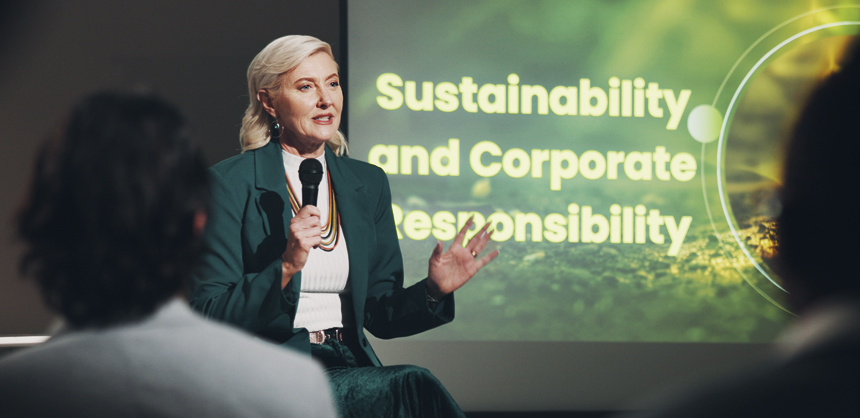
Today, all aspects of event planning are re-examined through an eco-conscious lens, from meeting locations to F&B, to swag and beyond. Photo courtesy of KayExam/peopleimages.com
Remember when a ‘sustainable event’ meant putting out some recycling bins at your cocktail reception and having hotel cleaning staff only launder towels upon request? The times certainly have changed, and though it might not seem quite so easy being green these days, the possibilities – and the payoffs – are endless.
We checked in with a trio of top planners on their keys to eco-friendly success, particularly in the areas of attendee swag and sustainable dining options, and uncovered a verdant harvest of actionable ideas.
Prioritizing Sustainability
In an industry centered on logistics, hospitality and experiences, meeting planners are increasingly embracing a fresh imperative: sustainability. From venue selection to swag decisions and dining choices, every aspect of event planning is being reexamined through an eco-conscious lens. And few voices are leading this charge more clearly than Nancy Zavada, president of MeetGreen, and a recognized pioneer in sustainable event management.
For Zavada, the journey toward greener meetings begins long before the first attendee arrives. It starts with the venue. “The first thing we ask for is a copy of their sustainability policy and any certifications the venue may hold,” she explains. “Next, we send a survey along with the RFP to get more detail of what they are currently doing and what they may be willing to do during our stay. We measure those against the organization’s goals.”
This proactive mindset ensures that sustainability isn’t just a buzzword, it’s a measurable commitment. More and more frequently, planners are seeking out venues that offer composting, energy-efficient lighting, conscientious water conservation practices and partnerships with local farms and nonprofits. The goal here is aligning the event’s footprint with the values of the organization and its attendees.
One spot where those values are especially visible is in the realm of swag. Branded giveaways, once a staple of conferences and trade shows, are now being reevaluated for their environmental impact.
“Swag should be considered carefully,” Zavada advises. “Rethink if you actually need it and if your attendees appreciate it. The cost economically/environmentally should include the shipping, storage, handling onsite and donation of leftover product. Generally, the trend is to find swag which will be valued and used by attendees. Gone are the days of plastic products, which often end up left in hotel rooms. One of our clients gives a donation to a local charity instead of swag, letting the attendees determine which one during registration, with excellent reviews.”
This new approach illustrates a broader trend toward meaningful, experience-driven engagement. Attendees are reacting positively to gifts that are not only thoughtful and practical but aligned with their values.
“The response has been good to considerate gifts which are usable at home or in the office,” Zavada notes. “Another canvas grocery bag probably isn’t the answer.”
Instead of defaulting to generic items, she encourages planners to dig deeper. “Know your audience, know your organization’s mission, and do the research,” she says.
That same intentionality also applies to food and beverage. Dining choices can have a significant environmental impact, and planners are finding creative ways to reduce waste and carbon emissions while still delivering memorable culinary experiences.
“Use local products and purchase within the community,” Zavada recommends. “Note the farms where the food is sourced. Select menu items which have a low carbon impact such as chicken vs. beef. Today’s attendees are eating less, so reduce the plate size and selection on buffets so they are easier to refresh with less waste. Food waste is a hot topic and if you educate guests about your policy to reduce this waste, you will be applauded.”
Transparency and education are key. When attendees understand the reasoning behind sustainable choices, they’re more likely to support and even celebrate them. Whether it’s compostable packaging, smaller plates or locally sourced ingredients, these decisions show a dedication to both environmental responsibility and the attendee experience.
And while some may worry that sustainability comes at a premium, Zavada is quick to dispel that myth. “These choices shouldn’t necessarily be more expensive,” she explains. “When looking at the full event budget, eco-conscious choices should be cost neutral or even result in savings. Clients expect memorable experiences, and those are possible with forethought in the planning and by educating attendees that the organization is being a good corporate citizen.”
In other words, sustainability isn’t just good for the planet — it’s good business. With careful planning and clear communication, meeting professionals can create events that are impactful, responsible and unforgettable.
As the industry continues to evolve, planners like Nancy Zavada are showing that eco-conscious planning isn’t a trend but a transformation. It starts with asking the right questions, making intentional choices and recognizing the ability of a well-planned event to drive change.

Choosing local food sources, reducing portion sizes and using recycled items goes a long way toward reducing your carbon footprint.
Embedding Sustainability
Sustainability in event planning is no longer some kind of fad — it’s becoming a foundational strategy. As organizations set ambitious aims for emissions reduction and social impact, events are being reimagined not just as group experiences, but as outstanding centerpieces of corporate responsibility. Shawna McKinley, principal at Clear Current Consulting, sees this new reality as a defining one for the industry.
“I’d actually argue that trends aren’t the real story anymore,” McKinley explains. “What we’re seeing is sustainability becoming a strategic framework. Organizations are setting broad goals for emissions reduction and social impact, and events have to align with those. For example, financial firms are using event carbon calculators because they must now report emissions from travel and meetings. Medical associations are integrating climate and health topics into their agendas because members demand it. This is a shift from green optics to measurable, meaningful outcomes.”
This evolution means planners are no longer just choosing compostable cups or LED lighting but aligning every decision with broader eco-focused organizational goals. Sustainability is becoming embedded in the planning process, from venue selection to programming and post-event reporting.
But the solid integration of sustainability doesn’t come without its hurdles. Budget constraints, client expectations and attendee habits can all create an uphill climb of sorts. McKinley stresses that change is incremental, not overnight, and requires continued persistence.
“It’s about steady progress, one meeting, one practice at a time,” she says. “Yes, some sustainable choices still come at a premium and audiences may resist at first, but the baseline shifts when we consistently offer and request them. Change takes persistence. At the start, you may hear more ‘no’ than ‘yes.’ But research shows it takes less than 25% of people to flip a social norm, and I’ve seen that play out. Practices once considered hard, like circular exhibit and sign materials or sustainable coffee breaks, are now widely offered and cost-neutral. Social expectations have shifted too. Wasteful practices face more scrutiny, and sustainable choices reduce PR risk while building goodwill.”
That change is particularly visible in catering and swag — two areas where sustainability can have an instant impact. Traditional giveaways, welcome gifts and high-impact foods are being replaced with conscientious options that reduce emissions while also improving the attendee experience.
“Many events I work with have quietly eliminated high-impact foods like beef and lamb without fanfare or pushback,” McKinley shares. “The result is significantly lower food-related emissions and often better cost control. Attendees also respond well to local, seasonal, plant-based menus at receptions and breaks. These not only reduce impact but also create memorable experiences and sponsorship opportunities.”
Food selections are but one piece of the larger puzzle. Local sourcing is another powerful way for planners to reduce environmental impact while supporting community businesses. “Local sourcing is one of the simplest wins,” explains McKinley. “It cuts shipping costs and emissions while creating fresh, memorable experiences. While you can look for certifications and sustainability labels, I don’t rely on them exclusively. Many small or minority-owned businesses that clients want to support can’t afford formal certification, even though they’re often deeply committed to sustainable practices. So, we balance verification with inclusivity.”
This balancing act — between rigor and flexibility, impact and experience — is critical for successful sustainable event blueprints. And it’s increasingly applauded by attendees themselves. As public awareness has grown about climate change and other environmental issues, so does the eagerness for eco-friendly functions.
“Absolutely, and it mirrors broader social attitudes,” McKinley confirms. “Today, 63% of Americans worry about global warming, 68% expect corporations to do more, and 61% see climate action as a shared responsibility. In practice, I’ve found that attendees are receptive as long as they’re informed and prepared. When the ‘why’ is clear, eco-friendly menus, formats or gifts are not only accepted, but often appreciated.”
Well-informed attendees, strategic frameworks and conscientious planners are clearly reshaping the future of ‘green’ events. Sustainability is no longer a sidebar for many events — it’s one of the features. And with tuned-in professionals like McKinley guiding this effort, the industry is proving that meaningful change is not only possible but inevitable.
Creating Attendee-Centered Events
In the ever-evolving arena of event planning, sustainability is no longer a niche concern — it’s a core expectation. For Angela York, co-founder of Event Advisors, the move toward eco-conscious practices is rooted in a simple but powerful philosophy: listen to what attendees truly value.
“Our philosophy is simple: events succeed when they honor what the attendees value most,” York remarks. “Over the past decade, we’ve seen an increase in a desire for sustainable practices, so ‘successful’ events need to align with their values. For them, sustainability isn’t an extra, it’s a requirement.”
This attendee-first approach has guided York’s evolution as a planner and her approach to eco-conscious affairs, elevating sustainability from a checklist item into an established principle. It’s not just about reducing waste, but forging meaningful, memorable experiences that reflect the priorities of today’s attendees.
One of the most noticeable shifts, as mentioned, has been in the realm of swag. Established branded giveaways of the past are being reimagined, not solely for their environmental impact, but for their relevance and resonance with attendees.
“For example, we remind our clients: your attendees don’t want more ‘stuff,’ they want more meaning,” York comments. “So, we discourage branded swag that will most likely end up in someone’s donation bag. We recognize that there may be trade-offs in cost, but framing sustainability as an investment in attendee connection often quickly shifts the conversation. If sustainability is important to their client, then we encourage our client to respect that.”
This new viewpoint has spurred imaginative alternatives that provide impact without excess. Charitable donations, reusable materials and digital tools are taking the place of physical items, with attendees responding positively.
“Instead of swag, we encourage our clients to make a charitable donation to an organization that connects with the event’s theme — a women’s shelter for a Women’s Financial Summit or a youth program for a legacy conversation,” shares York. “Designing generic (yet branded) signage, magnetic name tags that can be recycled at the end of the event and leaning into QR codes for post event surveys are all ways we cut waste and appeal to today’s audiences.”
These choices likely also reflect a broader cultural shift taking place nationally and throughout much of the world. Attendees are increasingly pleased with eco-friendly formats, especially when they’re intertwined with local flavor and authenticity.
“Absolutely!” York affirms. “Not just through eco-friendly and digitally based formats, but by embracing locally sourced food, products created by local artisans, and locally based speakers and entertainers, we instill a strong sense of place and local pride.”
York is enthused too about innovations that go beyond one-off solutions and reflect systemic change. Circular design and experience-based gifting are two approaches she sees gaining traction and delivering real value.
“Circular event design — building systems where signage and materials are intentionally designed for reuse — and experience-based gifting — shifting away from items altogether and offering memories like skill-based workshops, charitable donation opportunities and supporting local artisans — are our favorites,” she says. “In the end, sustainability in events isn’t about sacrifice; it’s about aligning your planning with what attendees truly want: authenticity, responsibility and experiences that matter. That’s where ROM — Return on the Moment — really shines.”
ROM, the philosophy of Event Advisors, isn’t just a clever acronym. It’s a mindset that challenges planners to think beyond ROI and consider the emotional and ethical impact of their meeting designs. By prioritizing connection over consumption, York and her team are playing their part in redefining what success looks like in the events industry, including this healthy emphasis on green events.
And in a world where guests expect more than just entertainment, sustainability offers a path to deeper engagement. The approach and commitment of pros like York, McKinley and Zavada is ample evidence that eco-conscious planning isn’t about compromise, it’s about creating events that matter. I&FMM