







The Rules of All-Ages EngagementSeptember 2, 2026
Building Events That Connect Every Generation By Douglas MeriwetherThe Rules of All-Ages Engagement
Building Events That Connect Every Generation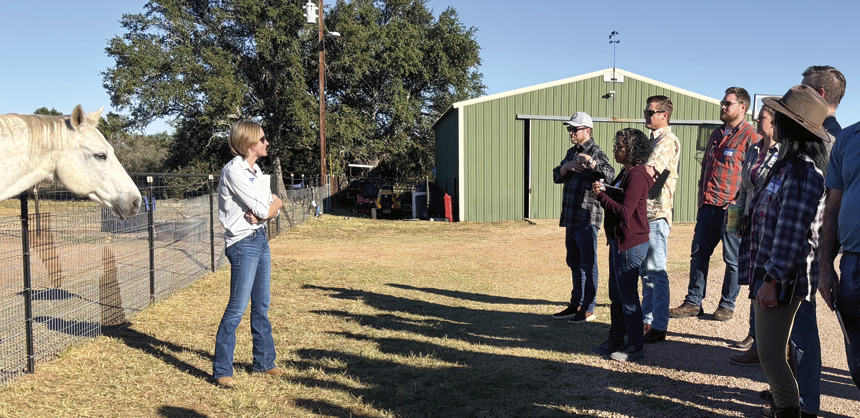
Participatory play connects generations. Pictured: Kristine Palmer gives instruction before a team-building activity at Horse + Bow. Photo courtesy of Kristine Palmer
Creating events that resonate across generations has never been more essential — or more complicated. Today’s conferences and conventions bring together Baby Boomers who built the industries we work in, Gen Xers who keep them running, Millennials who are reshaping them and Gen Z professionals who are redefining how we learn, network and communicate. Each group brings its own expectations, comfort zones and communication styles. And yet, the most successful events are the ones where those differences don’t divide the room; they energize it.
Planners have long mastered the art of designing inclusive experiences across race, gender, background and physical ability. Age, though, introduces a fresh kind of challenge: how do you create a single environment where a 62-year-old CEO, a 45-year-old director, a 32-year-old manager and a 24-year-old first-time attendee all feel equally engaged and included?
To approach that challenge, we spoke with experts who work at the intersection of experience design, learning, logistics and attendee psychology. Their insights reveal that engaging multiple generations isn’t about watering down content or trying to please everyone at once. It’s about designing experiences that feel human, dynamic and participatory — events that invite people to connect not as age groups, but as individuals.
Across their perspectives, several strategies emerged: nostalgia and immersive play, experiential learning, dynamic pacing, goal-based networking, logistical ease and the power of shared tasks. Together, they form a roadmap for planners who want to build events that feel alive for every attendee in the room.
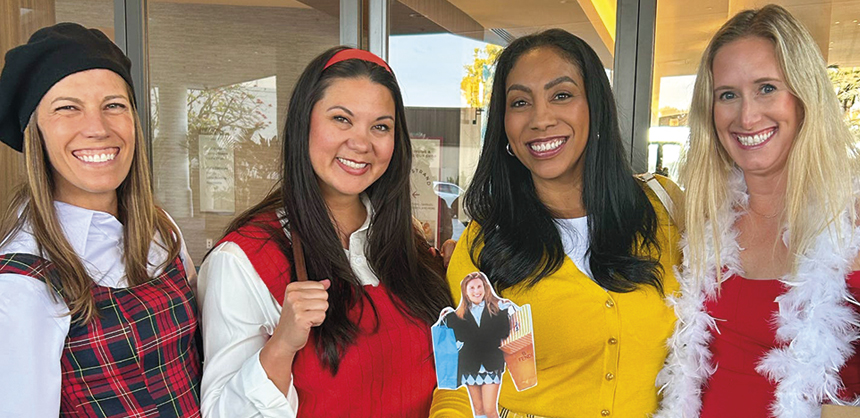
Different generations enjoy a ’90s themed party. Photo courtesy of Ashley Case
Nostalgia, Immersion & Shared Fun
One of the clearest through-lines across expert insights is that play — real, immersive, participatory play — is a universal connector. It transcends age, job titles and comfort zones. And it’s far more sophisticated than simply adding games to a reception.
Ashley Case, CMP, senior director of meetings + incentives operations at Cadence, has seen firsthand how nostalgia can dissolve generational boundaries. “My first thoughts were ‘Nostalgia and Roundtables,’” she says. “Activations such as a Yacht Rock evening, an ’80s or ’90s throwback party, or something more playful like a ‘Disco Cowboy’ concept consistently resonate because they create an instant point of connection.”
Case stresses that the real magic happens when these themes become totally engrossing. “The greatest impact comes when these themes extend beyond décor and become fully immersive,” she says. “Incorporating elements like themed dress, interactive entertainment and audience participation brings the experience to life. Activities such as Rockaroke or lip-sync competitions shift attendees from spectators to participants, which helps break down social barriers, encourages spontaneity and fosters a shared, memorable experience. No conversation starters needed!”
Sharon Fisher, CEO of Play with a Purpose, echoed that sentiment — but broadened the definition of play far beyond games. “Using play as a common design factor turns a passive group of people into a genuine community,” she explains. “But, let’s be careful about how we define play. It is not just games, competition or silly activities. In the meetings world, it means exploration, imagination, conversation, creativity, movement, problem-solving, humor, curiosity and shared experience. And people from all generations fit into all these definitions.”
Fisher offers a simple but powerful example: “One way to do that: invite everyone to share something interesting or meaningful to them.”
It’s low-pressure, personal and universally accessible — and a winning formula for cross-generational connection.
Play also creates a shared emotional baseline. When attendees laugh together, participate together or even dress up together, they enter the rest of the event with a sense of camaraderie that makes deeper engagement easier. Nostalgia, in particular, is a powerful equalizer. Whether someone grew up in the ‘70s, ‘80s, ‘90s, or early 2000s, themed experiences allow them to connect through memories, music and cultural touchpoints that feel familiar and fun.
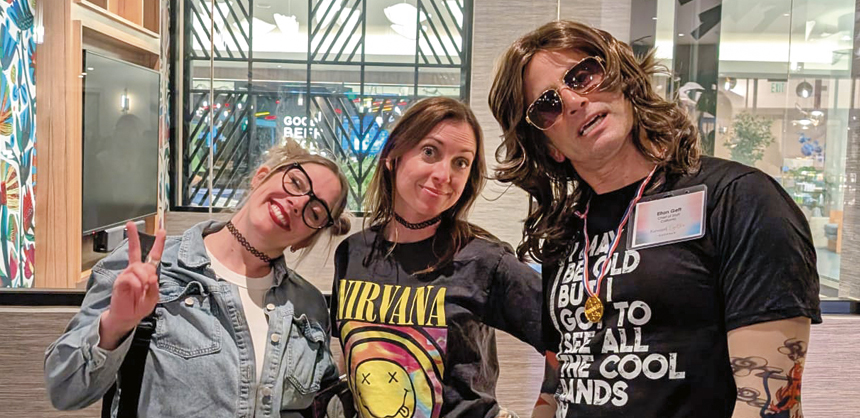
Creating nostalgia is always a great connector at an event. Photo courtesy of Ashley Case
Experiential Learning That Levels the Field
While nostalgia and play create emotional connection, experiential learning creates intellectual connection — and does so in a way that transcends generational learning styles.
Kristine Palmer, founder of Horse + Bow, specializes in equine-assisted learning and mindfulness retreats. Her work is rooted in the idea that people learn best when they’re fully engaged, physically, emotionally and socially.
“I would like to offer that the best way to maintain engagement across generations is to incorporate experiential learning in events and meetings,” she notes. “So many conventions rely on what happens inside the hall but sessions taken outside or into an unfamiliar format have an impact on everyone in a new and different way.”
Palmer explains that experiential learning taps into senses and emotions that traditional sessions rarely reach. “People get to know one another on a deeper level, engage with the information in a new way that helps them see things differently, and that type of experiential learning sticks around longer because it incorporates all of their senses through kinetic learning,” she remarks.
Her leadership timeline activity, used recently at a women’s leadership conference, is a perfect example. “There were entry-level, senior-level and participants of every generation who were able to openly share the best and worst things they had experienced in leadership throughout their careers. This sort of activity had very high engagement and was noted on exit surveys as a highlight of the day.”
Experiential learning democratizes participation. It gives every attendee — regardless of age or seniority — a meaningful role in the conversation. It also creates shared vulnerability, which is one of the strongest drivers of connection. When attendees reveal personal stories, reflect on challenges or collaborate on hands-on tasks, they connect on a human level that transcends demographics.
Palmer notes that experiential learning doesn’t require planners to dilute content. “The depth of conversation is created by those participating but everyone was able to contribute their perspective through stories from their lived experience.”
This approach also helps bridge generational differences in learning preferences. Younger attendees often prefer interactive, fast-paced formats, while older attendees may appreciate structured reflection. Experiential learning blends both, creating a space where everyone can engage meaningfully.
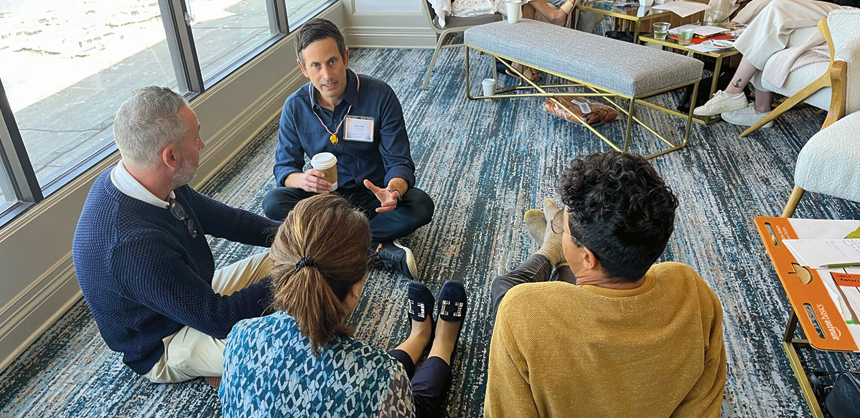
Attendees engage one-on-one at Cadence reunion event. Photo courtesy of Ashley Case
Dynamic Pacing & Format Rotation
If experiential learning is the “what,” pacing is the “how.” And according to some experts, pacing may be the single most overlooked factor in spurring multigenerational engagement.
Heidi Carney, executive vice president of marketing at True Citrus Company, has spent years designing brand events for audiences that span every age group. She’s seen what works, and also what quietly closes out half the room. “Most events lose multigenerational audiences before lunch because the format never changes,” she comments. “A keynote runs long. A panel follows. Maybe a workshop after that. The whole structure assumes everyone processes information the same way. They don’t.”
Carney recalls watching a keynote lose the under-35 audience within 10 minutes. “Not because the content was wrong,” she says. “Because the format asked them to sit passively with no opportunity to interact. Meanwhile the over-50 audience was perfectly comfortable with exactly that structure.”
Her solution: rotate formats every 20 minutes. “Presentation shifts to discussion. Discussion shifts to application,” she says. “No single format runs long enough to lose the audience segment it wasn’t built for.”
The results speak for themselves. “Attendance at the final session went from 60% of registered attendees to over 90% the following year — same content, different structure.”
Carney’s perspective underscores a universal truth: pacing isn’t just about attention spans, it’s about energy. And energy is ageless. When sessions feel dynamic — when movement, interaction and variety are built into the agenda — attendees of all ages stay engaged longer.
Format rotation also helps bridge generational comfort zones. Some attendees thrive in lecture-style learning. Others prefer discussion. Others want hands-on application. By cycling through formats, planners ensure that every attendee gets moments that feel tailored to their learning style.
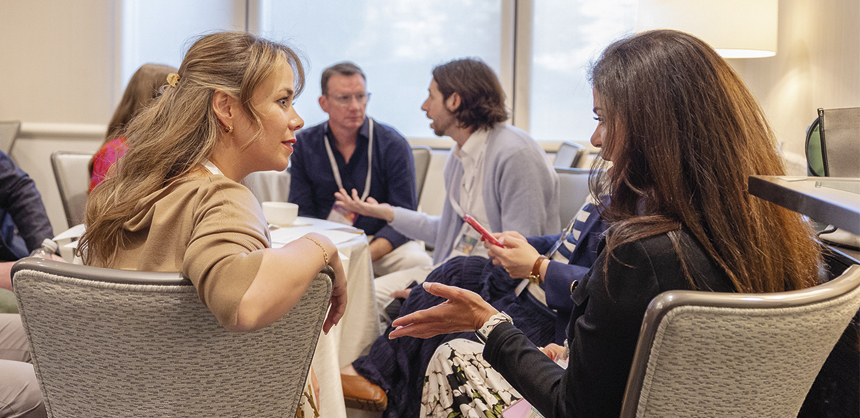
Using round tables helps attendees to more naturally connect. Photo courtesy of Ashley Case
Engagement Begins Early
While most discussions about engagement focus on content and programming, Katherine Healy Brown — founder and director of events for Clover Events + Productions — emphasizes that engagement begins long before attendees enter the ballroom. “Multigenerational engagement starts with designing for behaviors, not birth years,” she says.
Brown’s philosophy centers on the idea that generational engagement is not about dividing audiences by age but about understanding what motivates them. She believes planners should design experiences around human tendencies — curiosity, connection, purpose and belonging — rather than generational stereotypes.
Her perspective on communication strategy is equally crucial. “Different generations consume information differently,” she explains. “Successful association events use a mix of channels — mailers, mobile apps, text alerts, social media, email, video content and live touchpoints, all while keeping messaging clear, concise and human.”
Brown has seen firsthand how communication gaps can create engagement gaps. When attendees feel confused, unsupported or unsure of where to go, they disengage before the event even begins. Conversely, when communication is thoughtful and accessible, attendees arrive confident and ready to participate.
She also stresses the importance of representation — “representation through speakers, leaders and stories.” She emphasizes that each generation wants to feel seen and welcome, saying, “When attendees see themselves reflected in the content, they feel invited into the experience.”
Brown’s insights underscore a powerful reality: engagement is emotional. When attendees feel supported, informed and welcomed from the moment they arrive, they’re far more likely to participate fully once programming begins.
Her emphasis on balancing innovation with accessibility is particularly relevant. “One of the biggest mistakes organizations make is assuming younger attendees only want technology and older attendees only want traditional formats,” she says. “In reality, all generations appreciate meaningful content, authentic networking and opportunities to solve real challenges.”
Brown’s approach reframes engagement as a holistic experience — one that begins with communication, continues through programming and culminates in emotional resonance.
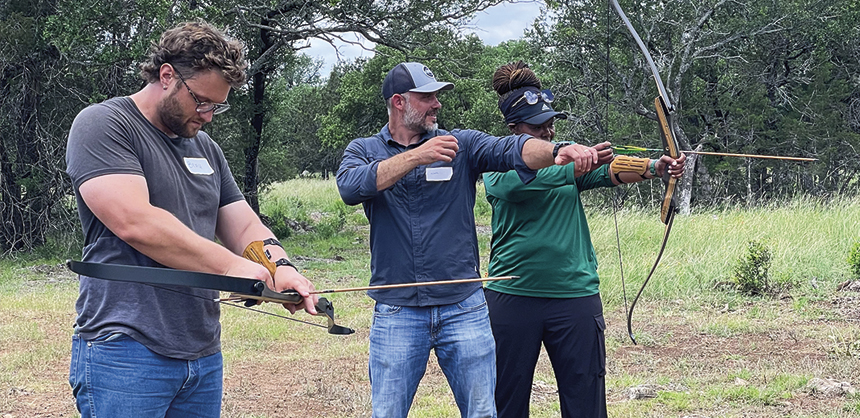
Creating natural environments for networking is better than forcing interaction. Pictured: Attendees learn to use a bow at Horse + Bow. Photo courtesy of Kristine Palmer
Goal-Based Networking Instead of Forced Mingling
Networking is one of the most challenging aspects of multigenerational engagement. Younger attendees often feel intimidated. Older attendees may feel fatigued by surface-level conversations. Introverts dread unstructured mingling.
Fisher emphasizes that shared tasks create natural conversation. “Let’s break up those cliques,” she says. “Play can transform networking from ‘work the room’ into ‘share an experience.’”
She provided a range of ideas: table prompts, themed discussion zones, collaborative challenges, story exchanges, community giving stations and her signature “Walk the Wall” activity. “Instead of simply opening the doors to a reception and hoping connection happens, design playful participation opportunities that make conversation easier,” she explains.
Case also believes roundtables are the answer. “Traditional panels can feel static, whereas curated roundtable discussions tend to resonate more strongly,” she says. “When early career professionals are mixed with seasoned leaders and given guided prompts, the dialogue becomes mutually beneficial.”
Brown agrees that networking should be designed, not assumed. “The most successful events create opportunities for cross-generational connection rather than separating audiences by age,” she comments. Her approach emphasizes shared purpose: when people collaborate on solving real challenges, age becomes irrelevant.
Networking built around goals — rather than open mingling — creates natural bridges between generations. Younger attendees bring fresh perspectives and digital fluency. Older attendees bring institutional knowledge and context. When they collaborate on solving a problem, they connect authentically.
Cross-Generational Knowledge Exchange
One of the most powerful opportunities in multigenerational events is the exchange of knowledge between early-career professionals and seasoned leaders. Case calls this cross-pollination “one of the most underutilized assets at association events.”
Brown adds that representation matters. “When speakers and facilitators reflect a range of ages, attendees feel more comfortable contributing,” she says.
Knowledge exchange is most effective when it’s structured. Roundtables, guided prompts, collaborative challenges and experiential learning activities all create environments where attendees feel comfortable sharing their perspectives.
When attendees are invited to contribute — not just listen — they bring their full experience to the table. And when those experiences span decades, industries and technological eras, the insights become richer.
Technology as a Bridge
Technology can be a powerful engagement tool, but only if it’s used inclusively.
Fisher cautioned against making technology the price of admission. “Technology should support connection — not be the price of admission,” she emphasizes. “If an attendee doesn’t wish to download an app or scan a QR code, create other ways for them to engage.”
Brown echoes this sentiment. “One of the biggest mistakes organizations make is assuming younger attendees only want technology and older attendees only want traditional formats,” she says. “In reality, all generations appreciate meaningful content, authentic networking and opportunities to solve real challenges. The key is balancing innovation with accessibility so no audience feels overlooked.”
Her perspective reframes technology as a tool — not a solution. Technology should enhance engagement, not replace human connection.
Hybrid communication strategies — printed materials, apps, SMS alerts, social media, email and live touchpoints — ensure that every attendee can access information in the way that feels most comfortable.
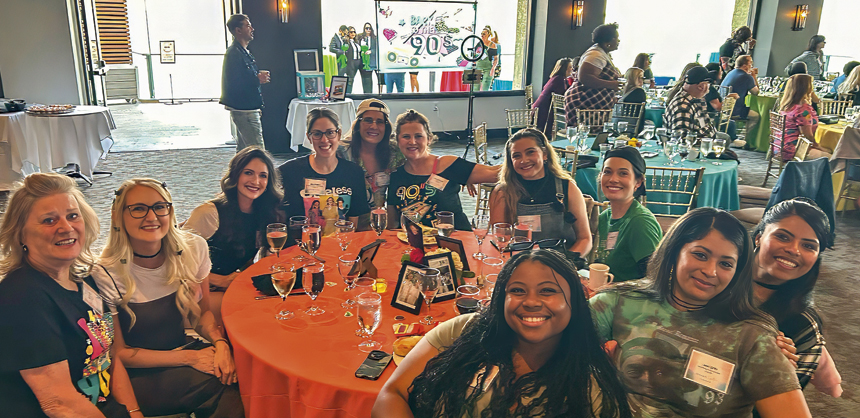
Every attendee wants to feel respected and seen. Pictured: Cadence reunion event. Photo courtesy of Ashley Case
Emotional Connection Over Demographics
Perhaps the most profound insight comes from Brown, who warns against over-focusing on age. “Every audience wants to feel seen, respected and included,” she says. “The most successful events are the ones where every attendee feels involved, entertained and emotionally connected.”
This concept that emotion is the great equalizer runs through every expert’s perspective. Whether via nostalgia, experiential learning, dynamic pacing or shared tasks, the goal is the same: create moments that feel meaningful.
Events that resonate emotionally transcend demographics. They become experiences attendees remember not because of their age, but because of how the event made them feel.
Designing Events That Feel Alive for Everyone
Engaging multiple generations isn’t about crafting four different experiences under one roof. It’s about designing one event that feels alive — dynamic, inclusive, participatory and human.
Our experts offer a recipe for success with a blend of key ingredients:
- Use nostalgia and immersive play to create connection
- Incorporate experiential learning that engages all senses
- Rotate formats to maintain energy and attention
- Begin engagement before attendees enter the ballroom
- Replace forced networking with shared tasks and goal-based conversations
- Facilitate cross-generational knowledge exchange
- Use technology as a tool, not a barrier
- Focus on emotional resonance, not demographic categories
If planners embrace these principles, they’ll not only engage every generation but will also create events that feel timeless. | AC&F |