









Energizing AttendeesNovember 2, 2026
Strategic Meeting Design & Smart Pacing Galvanize Event-Goers By Morgan ZacharyEnergizing Attendees
Strategic Meeting Design & Smart Pacing Galvanize Event-Goers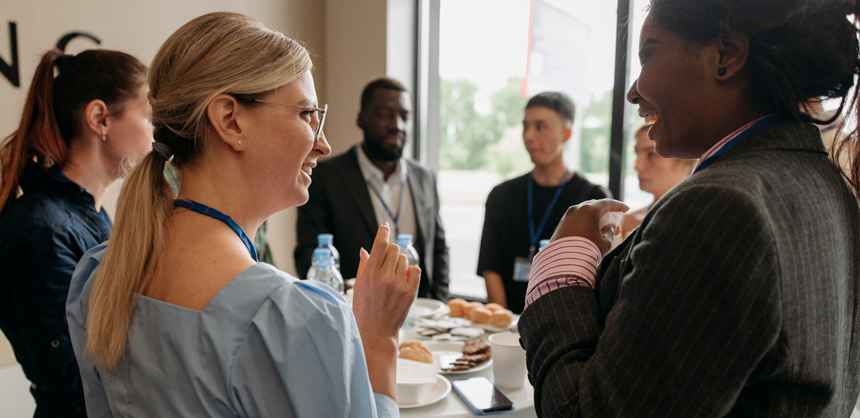
Every meeting planner has witnessed the warning signs. Attendees arrive energized and engaged on day one. They eagerly explore the venue, fill educational sessions and swap business cards. Then, somewhere along the way, the energy begins to fade. By the second afternoon, participants are checking phones, slipping out of breakout sessions early or simply struggling to focus after hours of meetings, travel and information overload.
Keeping attendees energized throughout an event has become one of the meetings industry’s greatest challenges. Today’s participants arrive with increasingly crowded schedules, countless digital distractions and higher expectations than ever before. Simply delivering quality educational content is no longer enough. Attendees want experiences that help them make meaningful connections, spark new ideas and provide value they cannot find through a webinar or virtual session.
At the same time, associations face growing pressure to demonstrate event ROI and justify travel investments. As a result, engagement has evolved from a nice-to-have feature into a central measure of success.
The good news is that planners have more tools than ever to combat conference fatigue. From personalized networking opportunities and wellness-focused programming to thoughtful scheduling and memorable shared experiences, industry leaders are finding innovative ways to sustain attendee energy from opening session to closing reception.
Their collective advice points to one important conclusion: attendee energy doesn’t happen by accident. The most successful events are intentionally designed to create it.
Creating Connection Through Purpose
Many planners equate energy with excitement, but some of the strongest engagement actually stems from something simpler: helping attendees feel connected and understood.
For Heather Nash, CMP, CAE, CEO of the Chicago Dental Society, that starts with recognizing that today’s attendees want experiences tailored to their individual needs.
“One of our key strategies is to recognize that today’s dental professionals are not looking for a one-size-fits-all meeting experience,” Nash says. “We are intentionally designing the Midwinter Meeting around the different communities we serve and the various stages of a dental professional’s career.”
That philosophy drives the Chicago Dental Society’s Midwinter Meeting, one of the world’s largest dental conferences. Rather than creating a single experience for every participant, organizers develop dedicated spaces, networking opportunities and educational resources aimed at specific audiences.
“Our goal is to create smaller, more personalized experiences within the larger Midwinter Meeting,” Nash says. “These places are where attendees can find people with shared interests and access education and resources that are relevant to where they are professionally such as our Early Career and Dental Student Lounges located on the Exhibit Hall.”
That focus on personalization represents a broader shift occurring across the meetings industry. Increasingly, attendees are looking for communities within conferences, not simply conferences themselves.
Mentorship has become a vital component of that effort for the Chicago Dental Society.
“We know that attendees come to the Midwinter Meeting for outstanding education and to discover what is new in dentistry in our premier exhibit hall, but increasingly they are also looking for meaningful professional relationships and a stronger sense of community,” Nash shares.
Through their Mentor Meetups session, attendees at different stages of their careers can connect with one another, creating value that extends well beyond educational offerings.
Jessie States, CMP, CMM, vice president with MPI Consulting, believes understanding attendee motivations is the foundation for all successful engagement.
“Energy comes when you offer attendees a meaningful reason to participate,” States stresses. “So, you have to know who they are first and what skills, content and/or connections they seek.”
When planners understand those motivations, they can create experiences that feel more relevant and rewarding. When they fail to do so, even an agenda packed with content can leave attendees disengaged.
Rethinking Networking
Networking remains one of the primary reasons people attend conferences, yet it is also one of the most frequent sources of attendee anxiety.
The experts agree that effective networking requires much more than simply gathering people in the same room.
“Meaningful networking has to be designed around more than putting people in the same room,” States says. “In-person events have the potential to create intimacy, trust and honest dialogue, but only when the experience helps people identify who they want to meet and gives them something worthwhile to discuss.”
The key, she says, is prompting conversation starters that go deeper than standard introductions.
“’What do you do?’ rarely produces the same energy as asking someone what problem they are trying to solve, what they hope to accomplish at the event (or beyond) or what idea has recently changed their thinking,” States explains. “Give participants a shared question, position or challenge, so the conversation begins with substance rather than biography.”
Heather Sampson, CMP-Fellow, DES, founder and CEO of Aspire Meetings, often uses interactive experiences to help attendees connect naturally. “We are mindful of the fact that many of our conference participants are more introverted and always add interactive elements to our networking events that help break the ice,” Sampson says. “Interactive games and entertainment provide attendees with shared experiences that can help get even the shyest of attendees talking and laughing with one another, opening the door to deeper conversations and connection.”
Among the tactics that have proven successful are caricature artists, celebrity impersonators and mentalists. Sampson has also found creative ways to transform ordinary registration functions into engagement opportunities.
“We purchase a variety of ‘fun’ ribbons that allow participants to show their personality,” she says. Instead of organizing the ribbons neatly, organizers scatter them across a table, encouraging attendees to browse and interact while selecting those that best reflect their interests and identities.
For Nash, helping attendees discover common ground is essential to meaningful networking.
“We use shared interests and experiences to help attendees find common ground that tends to be an area of clinical interest or specialty, where they practice, the dental school they attended, their graduation year or where they are in their career journey,” she says. “Those simple points of connection can quickly turn an introduction into a meaningful conversation.”
Barry Frey, president and CEO of the Digital Place-Based Advertising Association (DPAA Global), takes a somewhat different approach. “I’m somewhat suspicious of anything labeled a ‘networking activity,’” he says. “The moment you tell 150 executives they’re about to network, everyone suddenly remembers an email they need to answer.”
He believes, rather, that planners should strive to forge environments where conversations happen organically, saying, “Put interesting people together. Give them something worth reacting to. Keep the environment intimate enough that people can actually talk. And build enough breathing room into the program where a conversation can go somewhere.”
Turning Passive Attendees into Participants
The educational program itself also plays a crucial role in maintaining attendee energy. Long lectures and static presentations can quickly undermine engagement, regardless of how strong the content may be. Increasingly, planners are looking for ways to transform attendees from listeners into participants.
States recommends introducing engagement almost immediately. “To start, I recommend short, accessible interactions that quickly lower barriers without putting people on the spot, activities like quescussions (exploring topics through asking questions) and short challenges that create engagement early,” States says. “Each interaction needs a purpose, such as helping attendees identify what they wanted to accomplish, expressing an opinion, learning about one another or reflecting on what they will do next.”
The objective is not participation for participation’s sake. Every interaction should support learning, connection or reflection.
“Energy increases when experiences incorporate curiosity, intrigue and surprise,” States adds. “Consider secret puzzles, hidden elements, story slams or simple identifiers that help people find others with common interests.”
Sampson often encourages presenters to utilize technology that creates opportunities for real-time participation. “We always encourage presenters to use audience-response tools such as Slido or Mentimeter throughout their presentations to keep participants engaged through real-time polling and moderated Q&A,” she remarks.
Emerging tech is creating additional possibilities.
“We’re also about to test out a new product that uses AI to capture key takeaways in real-time and displays them as a Word cloud on screen, something that works well for sessions that aren’t particularly data-heavy with slides,” Sampson says.
Still, many of the most effective engagement tools have little to do with technology. Peer-to-peer learning remains one of the most valuable experiences attendees can take home.
“One of my favorite ways to turn passive listeners into active participants is through meaningful learning environments such as ‘brain dates’ and facilitated peer-to-peer roundtable sessions,” Sampson comments.
Facilitated discussions help ensure participants have equal opportunities to contribute while surfacing insights that might otherwise remain hidden.
As Sampson puts it, “No matter how strong the educational programming is, often times, the most valuable conference takeaways come from their peers!”
The Battle Against Fatigue
Even the most engaging content can lose attendees if a conference agenda becomes too demanding. Many planners now view attendee energy as a finite resource that must be managed carefully throughout an event.
“The science of engagement describes engagement as a dimmer switch, not an on-off switch,” States says. “Attention and participation are finite, and every interaction asks participants to spend time and energy.”
Instead of trying to maximize activity at every moment, she advocates varying the type and intensity of engagement throughout the day. “That means designing for recovery as intentionally as we design for activity,” States says. “I often recommend longer breaks, personal time, early evening finish times, small-group activities and a mix of structured and unstructured social opportunities.”
That concept resonates strongly with Emmy Byers, founder and managing director of Poppy Planning, who says, ”The wellness that actually lands isn’t a sunrise yoga class nobody shows up to. It’s giving people permission to move, eat, and breathe like humans across a long conference day, and building that into the agenda rather than tacking it on at the end.”
Byers frequently encounters conference agendas packed from morning until night.
“Most multi-day agendas I inherit are stacked wall to wall, and by mid-afternoon on day two, the room is completely fried,” she states. “As a longtime planner, I build in genuine 20-minute gaps between sessions (not five-minute transitions) so people can walk, take a call or just step outside.”
Those adjustments often yield dramatic improvements in attendee engagement.
“Attention improves, and the evening networking is noticeably warmer for it,” Byers says.
States similarly argues that planners should stop viewing every open slot in the agenda as an opportunity to add programming. “A strong agenda gives people different ways to engage physically, intellectually and emotionally while also giving them permission to step back,” she says. “Escape and open space can be engagement tools, too.”
Byers agrees that pacing matters as much as content itself. “Honestly, in my experience here in events we organize in Dallas and in Austin, I’ve observed that attendees don’t wear out from a long day, they wear out from dead air and some speakers,” she remarks. “I always pace to the energy and not the schedule on paper.”
Food, Wellness & the Energy Equation
Food and beverage decisions may seem secondary to educational programming, but planners increasingly view them as critical components of the attendee experience.
Sampson deliberately steers conferences away from traditional break menus loaded with sugar and refined carbohydrates.
“We always work with our hotel event managers and the chef to design break menus that energize,” she says. “We avoid traditional carb-heavy and sugar-heavy options such as muffins, cookies and brownies and opt for healthier options that sustain our attendees for the long haul.”
Popular alternatives include energy bars, fruit, trail mix, Greek yogurt and protein-rich snacks.
Byers has reached a similar conclusion.
“A few things that actually hold up in practice: put a hydration and real-food station where the coffee usually lives — protein, fruit, nuts, not just pastries and candy,” she says. “Blood sugar drives the afternoon slump more than anyone in the room wants to admit.”
She recalls one event where a modest adjustment produced immediate results.
“One association client kept losing the room after lunch until we swapped the heavy plated meal for lighter shared plates and added a short outdoor walking block,” Byers says. “Same content, completely different energy going into the afternoon.”
Aspire Meetings often extends the wellness concept beyond food. Wellness rooms may feature aromatherapy, massage services, creative activities and healthy refreshments designed to help attendees recharge mentally and physically.
Nash employs a similarly holistic approach, saying, ”At CDS, we think about attendee energy and experience very intentionally. A three-day scientific meeting can be exhausting, so we look for ways to incorporate wellness, fun and connection throughout the Midwinter Meeting.”
Activities include therapy dogs, step challenges, gamification efforts and opportunities to support community-focused initiatives.
Physical space also matters. “I’ve watched a sleepy afternoon session wake right up just by switching to high tables so people stand and talk,” Byers says.
Frey sees dining environments through a similar lens, adding, “Food and drink should facilitate connection, not interrupt it. Make it easy to grab something. Give people places to stand, move and bump into one another.”
Creating Moments Attendees Remember
Perhaps the strongest theme shared by all five experts is the importance of creating experiences attendees cannot get elsewhere.
For Frey, unpredictability is part of the strategy. “Sometimes people look at events and think that more programming creates more energy,” he says. “Our energy comes from constantly changing up the rhythm of the day and delivering the unexpected.”
His annual summit intentionally combines industry discussions with entertainment and cultural experiences.
“This year, the current Broadway cast of ‘The Book of Mormon’ will perform at our DPAA Video Everywhere Global Summit,” Frey says. “I want people leaving being inspired, with great ideas, but I also want them saying, ‘You should have been there.’ That’s a pretty good measure of whether you created energy.”
Sampson believes those memorable experiences are increasingly important in demonstrating the value of association meetings.
“If your event is filled of multiple ‘death by PowerPoint’ presentations and boring panels, why would they continue to invest in attending your event?” she says. “We love to keep participants guessing about what they can expect year to year, and strive to make each event the ‘must-attend’ event for their industry.”
Nash perhaps summarizes the concept best by saying, “When attendees are moving, laughing, giving back, meeting someone new or finding a shared interest with a colleague, they are no longer simply attending the midwinter meeting, they are part of the experience.”
That may be the most important lesson for planners today. Creating energy isn’t about adding more sessions, more speakers or more activities. It’s about intentionally designing experiences that help attendees connect, contribute and remain fully engaged throughout the event journey. When done successfully, participants return home with more than information. They leave feeling energized with new relationships, memories and compelling reasons to come back next year. | AC&F |