









Florida’s Betting Big on the Future of MeetingsNovember 2, 2026
By Chloe LaBelleFlorida’s Betting Big on the Future of Meetings
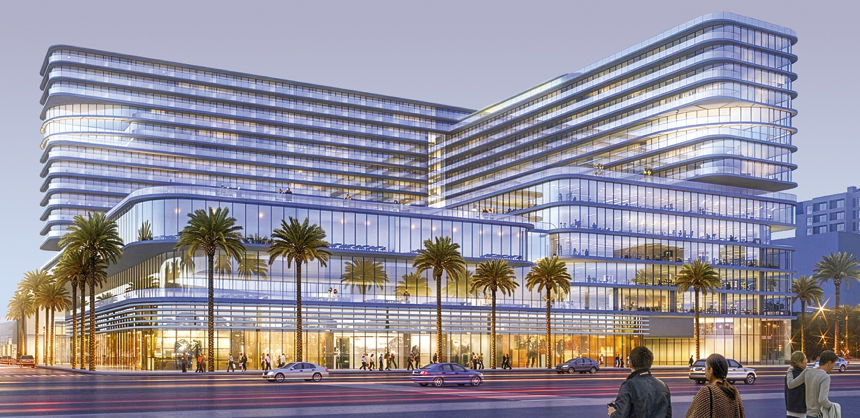
Rendering of the Grand Hyatt Miami Beach opening 2027.
Florida has long had sunshine, beaches and an enormous supply of hotel rooms. Now billions of dollars in convention and hotel investment are changing the equation for associations considering the state.
Across Florida, convention centers are expanding, new headquarters hotels are rising and existing resorts are pouring money into meeting space. From Miami Beach and Fort Lauderdale to Orlando, Tampa and West Palm Beach, destinations are making long-term bets on group business.
But for associations, new ballrooms and hotel rooms are only part of the equation. Value, accessibility, service and the ability to give attendees an experience beyond the meeting room still drive decisions.
Florida Offers More Than One Kind of Meeting
For Tammy Bracewell, president of the Florida Association of Chamber Professionals (FACP), one of the state’s biggest advantages is the range of experiences it can offer groups.
FACP held its 2026 Annual Conference at Art Ovation Hotel in Sarasota.
“It’s such a beautiful property,” Bracewell says. “Having a meeting in Florida is like taking a vacation while you are working. It’s beautiful all year long, and many extend their meetings a day or two to enjoy it.”
That ability to combine business with a destination experience is part of Florida’s appeal, but Bracewell says the state’s advantage goes beyond its beaches and resorts.
“There is a plethora of places to meet in Orlando, Tampa, then up into Marion County with its equestrian center,” she says. “From the coast and its beaches to Central Florida and its lake venues, there is something in every environment depending on the mood you want for your event.”
For budget-conscious associations, Florida’s variety also creates opportunities outside the state’s largest convention markets.
Eric Stern, executive director of SHAPE Florida, points to affordability and location as advantages of St. Augustine. The Society of Health & Physical Educators (SHAPE) Florida annual convention, aptly named “Sunshine State of Mind,” was held recently at the World Golf Village Renaissance St. Augustine Resort.
True to the organization’s mission, the program included plenty of movement, from dance to other physical activities.
Stern says the property is conveniently located for the association’s attendees while remaining affordable.
“Plus, the weather is always beautiful and you are practically guaranteed that it will be warm,” he says.
For SHAPE Florida, those factors make St. Augustine an alternative to the state’s larger convention destinations while still delivering the Florida experience attendees expect.
That range of choices is becoming even greater as destinations throughout the state invest in new hotels, convention facilities and meeting spaces.
Miami Beach Adds the Missing Piece
For years, Miami Beach had a renovated convention center but lacked a hotel physically connected to it. That is about to change.
The Grand Hyatt Miami Beach, scheduled to open in late 2027, will add 800 rooms and 110,000 sf of dedicated meeting and event space adjacent to the Miami Beach Convention Center. A climate-controlled skybridge will connect the 17-story property to the center.
Plans include an 8,000-sf grand lawn on a fifth-floor rooftop, 17,000 sf of retail space, two pools, five F&B outlets, lobby bar and fitness center.
David Whitaker, president and CEO of the Greater Miami Convention & Visitors Bureau, sees the hotel as far more than another lodging option. “This project represents a critical piece of our convention ecosystem, and its continued progress reinforces Greater Miami and Miami Beach’s position as a premier destination for world-class meetings, conventions and events,” Whitaker says.
More significantly, he says the connected hotel is already changing the business Miami Beach can pursue. “The addition of a hotel of this size and its connection to the convention center has opened the door for literally dozens of major conventions and trade shows that have never convened here to now show an interest and a desire,” he says. “That, in itself, is transformative.”
Miami Beach Mayor Steven Meiner called the project a “game changer” for the city and an investment that will help attract larger conventions.
Elsewhere in the destination, existing meeting hotels continue to invest. InterContinental Miami has undertaken a transformation of more than 100,000 sf of its total meeting and event space, which encompasses more than 33 meeting rooms and ballrooms.
The investment in Miami’s meetings infrastructure is arriving as the city continues to strengthen its position as a technology and innovation hub.
For Melissa Medina, CEO and co-founder of eMerge Americas, Miami’s appeal as a gathering place is closely tied to the ecosystem that has developed around it.
Her connection to the city is personal. Medina’s father was born in Cuba and came to Miami at a young age, and she describes the city as a “city of opportunity.”
Today, eMerge Americas serves as a gathering point for the region’s growing technology community, bringing entrepreneurs, investors, business leaders and innovators together in Miami. Medina says the value of hosting the event in Florida increasingly extends beyond the days of the conference itself.
“Florida has become a true technology and innovation hub, which makes it an exciting place to bring people together,” she says. “Those connections don’t end when the conference does.”
For planners, Medina’s experience underscores another piece of Miami’s meetings proposition: New convention infrastructure can provide the space, but the business, cultural and entrepreneurial communities surrounding it can help give attendees a reason to gather there in the first place.
Fort Lauderdale Tests its $1.1 Billion Investment
Greater Fort Lauderdale got a high-profile opportunity to demonstrate its new convention infrastructure when it hosted IPW for the first time during the spring.
“IPW 2026 was an incredible opportunity to showcase the energy, accessibility and continued evolution of Greater Fort Lauderdale to travel professionals and media from around the world,” says Stacy Ritter, president and CEO of Visit Lauderdale.
The event followed a $1.1 billion expansion of the Broward County Convention Center.
The expanded center has more than 1.2 million sf, including a 350,000-sf contiguous exhibit hall and a new 65,000-sf waterfront ballroom. The connected Omni Fort Lauderdale Hotel adds 801 rooms and suites.
Broward County has estimated that the combined convention center and hotel project could generate more than $450 million annually in economic impact.
Investment is extending beyond the convention campus.
The 1,000-room Diplomat Beach Resort in Hollywood entered a new era this year when it became the Signia by Hilton Diplomat Beach Resort. The oceanfront property offers more than 209,000 sf of function space across 60 meeting rooms.
As part of the transformation, the resort introduced The Verandah Social Club, an adults-only oceanfront pool and lounge.
Also not far away is the Seminole Hard Rock Hotel & Casino Hollywood. This hot spot offers 120,000 sf of meeting and event space, along with the excitement of a casino, live entertainment and more than 20 food and beverage outlets. It also provides 1,271 guest rooms. Hard Rock Live is a 7,000 seat venue while DAER Nightclub is a 44,000 sf indoor-outdoor complex with day club. This gives planners a buyout-worthy option that lets attendees stay on property and enjoy all the hotel’s amenities.

Attendees look forward to visiting Walt Disney World.
Getting Attendees Out of the Ballroom
Florida’s appeal to groups isn’t limited to its hotels and convention centers. Increasingly, planners are looking for ways to turn the destination itself into part of the meeting experience.
Donald Contursi, founder and president of Lip Smacking Foodie Tours, has seen that demand firsthand. His company creates VIP dining experiences that take groups to three restaurants in a single outing. He has new Florida experiences in Miami’s Brickell neighborhood, Fort Lauderdale’s Las Olas Boulevard, Naples’ Fifth Avenue and Tampa’s Water Street.
“Instead of inviting your group to one nice restaurant, we let them experience three of the best restaurants in the city,” Contursi says. “For groups with limited time in a city, one of our tours lets them see more of the destination they are visiting.”
The format is deliberately designed to solve another perennial meetings challenge: getting attendees to actually network.
“Going to one restaurant and talking only to the people sitting next to you is not networking,” Contursi says.
Instead, attendees change tables and dining companions as they move among three restaurants, with conversations continuing during the walk from one venue to the next. Each restaurant has its dishes selected in advance, eliminating the time typically spent studying menus and ordering individually.
“We create environments for groups that want to network and build relationships,” Contursi says. “You’re sitting with different people at three restaurants, walking and talking in between.”
For Contursi, getting attendees beyond the hotel is also about giving them a stronger connection to the destination.
“How often do you hear an attendee say, ‘I visited such-and-such city, but the only thing I saw was the meeting room and the one restaurant we went to for dinner?’” he says. “Our experiences give them a taste of the destination.”
For planners, that may be another advantage of Florida’s diversity. The state isn’t simply offering more places to hold a meeting. From Brickell and Las Olas to Fifth Avenue and Water Street, its neighborhoods can become part of the program itself.
Orlando Keeps Building
For Amy Coleman, CMP, events manager for the Florida Association of School Administrators (FASA), the appeal of Orlando comes down to something less tangible than new ballrooms and additional hotel rooms — relationships.
“It’s the people there who make my events so successful,” Coleman says. “They pay attention to all the details.”
FASA has held its annual conference at Omni Orlando Resort at ChampionsGate since 2021, and Coleman has already contracted the resort through 2029.
The association’s most recent conference drew approximately 800 attendees. Coleman says she couldn’t imagine holding the meeting anywhere else, in part because the resort has become a partner in creating an experience that extends beyond the meeting room.
That includes a golf tournament, trivia and a golf simulator, as well as multiple restaurant options that give attendees places to gather outside the formal program. Coleman says the association’s trivia event alone has grown from about 50 participants to approximately 200.
Next year’s conference will be particularly significant: FASA will celebrate its 50th anniversary and plans to mark the milestone with a gala.
Coleman also credits Experience Kissimmee with helping make the destination work financially for the nonprofit association.
FASA’s long-term commitment comes as the broader Orlando meetings market continues to increase its capacity.
The Orange County Convention Center has begun its $560 million Grand Concourse Expansion, with completion scheduled for 2029. The first phase will add a 100,000-sf ballroom and 44,000 sf of meeting space to the North-South Building while improving connectivity within the massive convention campus.
And Orlando is already looking beyond that.
A proposed second phase would add another 200,000 sf of contiguous multipurpose exhibit space and further connect the North and South concourses. If both phases are completed, the North-South Building would offer approximately 1.15 million sf of exhibit space.
Hotel investment is happening alongside the convention center expansion.
The Walt Disney World Swan and Dolphin Resort is completing a $275 million renovation and expansion that includes more than 100,000 sf of additional event space. Once complete, the three-hotel complex will offer more than 450,000 sf of meeting and event space.
Disney’s Grand Floridian Resort & Spa Convention Center has also undergone a refurbishment, while updates to the convention facilities at Disney’s Coronado Springs Resort are part of another round of investment.
Caribe Royale Orlando, meanwhile, is entering its next phase after marking its 30th anniversary. The all-suite property offers 1,337 one-bedroom suites and 120 two-bedroom villas along with 260,000 sf of indoor and outdoor meeting space. New investments include redesigned villas, a reimagining of The Venetian Chop House and an expansion of the resort’s Stadium Club sports-entertainment venue.
Lee County Appeals to Nature Lovers
If you are trying to attract attendees who want to spend time engaging in outdoor activities, a great place for an event within the county is Fort Myers and the surrounding islands, beaches and neighborhoods. Whether it’s shelling at the beach or nature hike, or a fishing or boating expedition, there is sure to be something to draw in nature lovers. The charming towns here provide a more down-home feel, along with historic landmarks. Attendees can also hit the links with ease, as there are more than 50 golf courses in the area. Lee County offers more than 15,000 hotel rooms, as well as 230,000 total sf of meeting and event space. There are plenty of waterfront venues available.
Another advantage is accessibility. Southwest Florida International Airport provides direct flights to dozens of major U.S. cities and sits roughly 20 minutes from many hotels and meeting venues.
West Palm Beach Thinks Bigger
Some of Florida’s most consequential convention development may still be ahead.
Palm Beach County has begun planning for an expansion of the Palm Beach County Convention Center, approving work on programming, conceptual design and a needs assessment.
At the same time, a proposed second convention center hotel is advancing through the development process.
Plans call for an approximately $310 million, 18-story Curio Collection by Hilton with 400 rooms near the convention center. The proposed property would include nearly 21,000 sf of meeting space, a large pool deck and rooftop restaurant.
The West Palm Beach Planning Board approved the proposal recently, while Palm Beach County has been considering additional agreements and land acquisition connected with the project.
County officials have estimated that an expanded convention center could create demand for roughly 600 additional hotel rooms. Plans for the second convention hotel contemplate dedicated room inventory for convention center events, tying hotel development directly to the county’s efforts to attract larger group business.
Jacksonville Refreshes its Hotel Product
Investment is not limited to Florida’s largest convention markets.
The Jacksonville area has more than 18,000 hotel rooms, while the historic Prime F. Osborn III Convention Center offers 275,000 gross sf, including 78,500 sf of contiguous exhibit space.
The destination also welcomed a new luxury hotel product this year with the opening of Dune House Hotel & Spa in Atlantic Beach, a transformation of the former One Ocean Resort & Spa. The 193-room oceanfront property offers more than 10,000 sf of indoor and outdoor event space.
For smaller associations and executive groups that don’t require the scale of Orlando or South Florida’s largest convention facilities, such properties broaden the range of meeting experiences available within the state.
For planners considering Florida, the state’s familiar destination appeal remains. What’s changing is the infrastructure behind it and the scale of the investment being made to capture the meetings of tomorrow.
Yet those working with groups across the state point to factors that have little to do with square footage. Bracewell cites Florida’s variety. Stern points to affordability, accessibility and weather. Coleman emphasizes the relationships and service that have kept her association returning to the same resort. Contursi sees growing demand for experiences that get attendees beyond the ballroom and interacting with one another.
Florida may be spending billions to build for the future of meetings, but for associations deciding where to gather, the fundamentals still matter: value, access, experience and relationships. | AC&F |