








FloridaApril 1, 2026
A Strategic & Engaging Choice For Events By Maura KellerFlorida
A Strategic & Engaging Choice For Events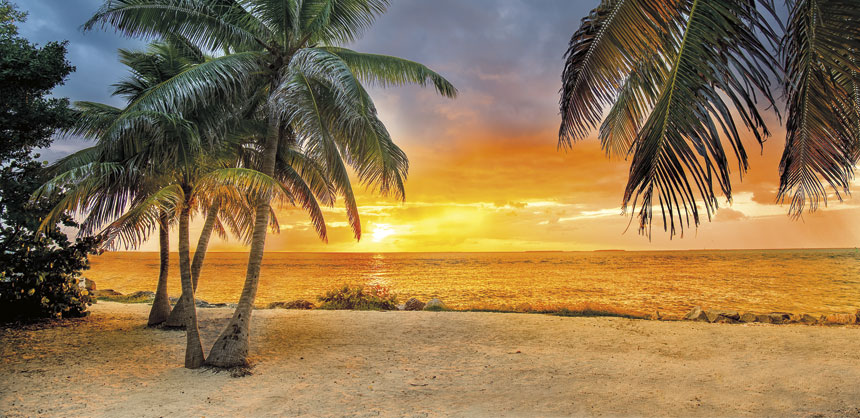
Sunny skies and endless options await in Florida, making it a top choice for meeting planners. Photo courtesy of ©Adobe stock/susanne2688
For Jessica King, CMP, the decision to head south to Florida isn’t just about escaping the winter chill – although that certainly doesn’t hurt. As the associate director of meetings and events at First Command Financial Services, she’s looking for a very specific “click” that happens when a professional environment meets a relaxed atmosphere – exactly the type of environment Florida excels at delivering.
In the world of high-level board meetings, the backdrop is often as vital as the agenda itself. Last December, King brought a group of attendees to the Hyatt Regency Clearwater Beach Resort and Suites. They enjoyed the weather and overall ambiance of the destination. “Since this event takes place in December, the warm temperatures are an especially welcome escape for attendees traveling from colder areas of the country,” King explains. But it’s more than just the thermostat. For her, the “stunning sunsets and beautiful ocean views” aren’t just perks; they are the architectural elements of a memorable program.
King has found that Florida removes the friction that usually plagues large-scale planning. “With Orlando consistently ranked as the number-one destination for meetings – a place we love hosting events in – you’ll find that many Florida hotels and resorts are purpose-built for conferences,” she says. That infrastructure means that if one property is booked, a comparable, high-quality option is usually just around the corner. For King, the strategic advantage is clear: prioritize places with “strong airlift” like Orlando to keep the energy high upon arrival, and let the state’s natural outdoor beauty do the heavy lifting for your décor.
The Power of a Well-Designed Program
King’s perspective highlights a growing trend in the financial and insurance sectors: the shift toward “organic interaction.” It’s a move away from forced networking and toward the kind of connection that happens when people are relaxed, engaged, and – importantly – not staring at a PowerPoint.
This is a big reason why resorts that combine strong meeting infrastructure with golf and leisure experiences continue to rise to the top of the Florida meetings and events space. “There’s a reason Florida continues to perform so well for corporate groups – it removes friction from both a planning and attendee perspective,” says Susan Stafford, president of The Event Architects in Tallahassee, FL. “Accessibility is a major driver, but it’s also the diversity of product and the fact that the environment does a lot of the work for you.”
There’s also a natural rhythm to meetings here. Mornings tend to be focused – general sessions, breakouts, strategy discussions – while afternoons open up, giving attendees space to process, connect and recharge. Evenings bring everyone back together in a way that feels less like an obligation and more like a shared experience. Florida supports that rhythm almost effortlessly, allowing planners to build agendas that feel both structured and fluid.
For the Security Industry and Financial Markets Association, that rhythm isn’t theoretical – it’s operational. As Salvatore Chiarelli, executive vice president and head of conferences and events in New York, NY, explains, “Our Annual Compliance and Legal Seminar, drawing over 1,900 attendees, and our Operations Conference, with more than 900 participants, have both been held at the Grande Lakes Orlando.”
Each program runs about three and a half days, blending general sessions and breakout discussions with “a dynamic exhibition hall and a variety of social events,” including networking receptions and activities.
That mix of structure and flexibility is exactly what Florida’s resort environments are designed to support. Large general sessions coexist with smaller, more focused conversations, while structured networking is balanced by informal interaction that happens naturally when attendees have time and space to engage.
Stafford sees that same dynamic play out repeatedly at Grande Lakes Orlando. “One property I’ve used extensively for both incentive programs and leadership meetings for financial and insurance groups is the Grande Lakes complex in Orlando, which includes the Ritz-Carlton and the JW Marriott,” she says. “What makes it particularly effective is the ability to create distinctly different experiences within a single, well-integrated footprint.”
For incentive programs, she often anchors the main group at the JW Marriott, using its energy as a foundation, then layers in elevated moments at the Ritz-Carlton. “You can create scale and excitement at one property, then shift into more refined, intimate experiences – VIP accommodations, executive dinners – without ever leaving the complex,” she explains. “The range of onsite activities allows you to build a robust program without over-relying on off-site logistics.”
For leadership meetings, that balance shifts. “The Ritz-Carlton provides a more refined, distraction-free environment that supports high-level conversation, while still giving attendees access to the broader amenities,” Stafford says. “It’s a highly flexible setup, which is exactly what these groups require.”
The Orlando Advantage
That flexibility is reinforced by Orlando’s broader infrastructure, which is difficult to replicate. The presence of Walt Disney World Resort, for example, has created an ecosystem that goes far beyond leisure travel. Transportation is streamlined. Event production capabilities are highly sophisticated. Group logistics – from airport arrivals to off-site activations – are handled with precision.
For financial and insurance organizations, that matters. As Stafford explains, a private event inside a Disney park or a customized experience at SeaWorld isn’t just entertainment – it’s a signal. It shows top performers or leadership teams that the organization is willing to invest in experiences that feel thoughtful and differentiated.
At the same time, not every meeting needs that level of spectacle. Many financial meetings are content-heavy, requiring environments that support focus and productivity. Resorts like Walt Disney World Swan & Dolphin Resort strike that balance well, offering strong meeting capabilities within the Disney footprint while maintaining a more business-forward feel.
What planners appreciate most is the flexibility. Attendees can move quickly from structured sessions to informal environments – a networking dinner in EPCOT, a small-group outing that feels spontaneous even if it’s carefully planned. For a time-conscious audience, that seamless transition is a real advantage.
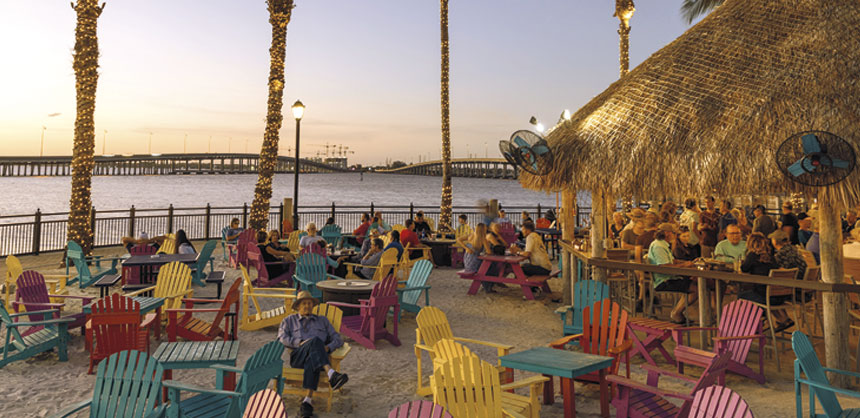
Punta Gorda’s laid-back vibe creates space for meaningful connection.
Golf & Wellness Connections
As meetings extend beyond the ballroom, golf continues to play a central role. In the financial and insurance sectors, it has long been a cornerstone of relationship-building, offering a setting where conversations unfold naturally.
At Omni Orlando Resort at ChampionsGate, golf is fully integrated into the experience rather than treated as an add-on. The courses accommodate everything from casual rounds to organized tournaments, making it easy for planners to incorporate golf without adding logistical complexity.
That kind of cohesion matters. As Chiarelli notes, “We prioritize resort venues with ample meeting space that can accommodate all aspects of our event under one roof.” Accessibility is equally important, and Florida’s strong airlift makes it easier to move large groups efficiently while also simplifying speaker logistics.
At the same time, planners are expanding beyond golf. Wellness programming, culinary experiences and outdoor activities are increasingly part of the mix, creating more inclusive opportunities for connection.
Large-scale properties continue to evolve in response to these needs. Gaylord Palms Resort & Convention Center, for example, is known for its capacity, but its real strength lies in how that space is used. Expansive atriums and themed environments allow planners to create variety within a single venue, shifting the tone of an event without requiring attendees to leave the property.
For national sales meetings or large conferences, that flexibility keeps multi-day programs from feeling repetitive, even when schedules are packed.
At the same time, there’s growing appreciation for more intimate environments. Not every meeting needs scale. For mid-sized gatherings – regional meetings, leadership summits, advisor conferences – the focus often shifts toward deeper connection.
Caribe Royale Orlando is a good example of how design influences that experience. Its all-suite layout encourages attendees to settle in rather than simply pass through, fostering longer conversations and more meaningful interaction. The resort offers 260,000 sf of indoor and outdoor meeting space with four ballrooms, including the 50,000-sf Palms Ballroom and the new 20,000 sf Coral Ballroom, in addition to the 20,000-sf event lawn. Attendees can grab a nice meal, relax at the spa or have fun playing games, watching sports and more at the Stadium Club. Besides all the amenities onsite, planners like its close proximity to Walt Disney World.
Florida’s Coastal Appeal
In Miami, energy becomes part of the program. “I have a group that meets at Loews Coral Gables Hotel every year just because they love Miami and its vibe,” Stafford says. “That sense of place matters – it becomes part of the experience.” For client events or incentive programs, that environment can be a powerful differentiator. Beachfront receptions, curated dining and access to a vibrant cultural scene all contribute to a program that feels distinctive.
Further north, Fort Lauderdale offers a more relaxed version of that coastal appeal. At Pier Sixty-Six Resort, the atmosphere feels polished but approachable, making it well-suited for executive meetings or smaller client gatherings where relationship-building is the priority. They resort offers 43,000 sf flexible indoor and outdoor meetings and events spaces with 16 meeting rooms and three signature ballrooms.
Another popular resort is the new Omni Fort Lauderdale, conveniently placed not far from the Fort Lauderdale-Hollywood International Airport. It offers 120,000 sf of meeting and event space and is connected to the newly renovated Broward County Convention Center, which offers an additional 1.2 million sf of event space.
On the Gulf Coast, the tone shifts again. “For higher-end incentive programs or executive retreats, Florida’s West Coast – particularly Naples and Marco Island – offers a more refined and less crowded alternative,” Stafford notes. “The beaches are exceptional, and the overall pace is more relaxed.”
That slower pace can be a strategic advantage, especially for leadership teams working through complex challenges. Without constant distraction, attendees are better able to focus, engage and think long-term.
Another southwest coast gem is Punta Gorda/ Englewood Beach, which also provides a laid-back lifestyle. From its beaches to shelling, golfing and fishing, this is an outdoor wonderland. Off the beaten path, Punta Gorda and Englewood Beach offer top experiences and amenities without the crowds. For planners looking to design an event or corporate retreat in Southwest Florida with that small-town charm and exclusive resort setting on an island, this destination is a perfect fit. The Charlotte Harbor Event and Conference Center is located on the waterfront in historic Punta Gorda’s downtown district. It offers state-of-the-art facilities and friendly hospitality just steps from nearby hotels, dining options and attractions in the very walkable destination. The area offers a variety of venues, including Sunseeker Resort Charlotte Harbor, where business and luxury seamlessly coexist.
For meeting planners seeking a destination that blends sophistication with ease, The Palm Beaches offer a compelling mix of accessibility, atmosphere and versatility. Last year was the first year Palm Beach County saw more than 10 million visitors visiting the area. Set along 47 miles of Atlantic coastline, the region allows attendees to arrive easily via Palm Beach International Airport. Here, planners will find high-end hotels and resorts, top notch restaurants and shopping, as well as amenities like golf courses, beaches and nearby nature trails. The destination’s distinct communities, from the refined elegance of Palm Beach to the energy of West Palm Beach and the relaxed charm of Delray Beach and Boca Raton, allow planners to tailor experiences. With strong infrastructure, experienced hospitality teams and an environment that encourages organic interaction, The Palm Beaches deliver meetings that are not only efficient, but genuinely engaging. There are several locations that are historic, including The Boca Raton, located in the city with the same name, which recently had a $130 million renovation and now is renovating its golf course, and in West Palm Beach, the historic Breakers, which has a newly renovated $12 million tennis and racquet complex.
Some programs are designed to be high-energy from start to finish. Sales conferences and incentive programs often call for a more celebratory tone. The Seminole Hard Rock Hotel & Casino Hollywood is ideal for that kind of experience, with a built-in sense of excitement that reinforces themes of performance and recognition. It’s a very different environment from a Gulf Coast retreat, but that contrast is exactly what makes Florida so versatile.
Across all of these settings, one theme stands out: alignment. Financial and insurance meetings are inherently content-driven, but the most successful programs recognize that content alone isn’t enough. The environment has to support interaction, encourage conversation and create moments that feel authentic.
Chiarelli emphasizes the importance of blending business with recreation. Incorporating “social and recreational activities like golf, pickleball or fun runs alongside your educational programming can significantly boost networking opportunities and overall attendee satisfaction,” he says. Combined with strong infrastructure, that makes Florida “a strategic and engaging choice for large industry events.”
Striking a Balance
For Stafford, it always comes back to the fundamentals. “Identifying the right resort starts with the objective of the program and the composition of the group – not the property itself,” she says.
Scale is a key consideration. “If a resort is too large relative to the group, it can dilute the experience. The goal is for attendees to feel prioritized.” From there, it’s about matching the environment to the intent. Incentive programs benefit from energy and variety, especially when guests are included. Leadership meetings require focus, privacy and a setting that supports meaningful conversation.
“The ideal resort accommodates a wide spectrum of attendees – from top producers to senior executives – without feeling segmented,” Stafford adds. “It’s not about selecting the ‘best’ resort – it’s about selecting the right environment.”
In the end, what Florida offers isn’t just a destination – it’s a toolkit. Planners can design experiences that align closely with their goals, whether that’s driving performance, strengthening relationships or aligning leadership around a strategy. A large-scale conference in Orlando will look very different from an executive retreat on the Gulf Coast, and that flexibility is exactly the point. Florida continues to deliver on that promise in a way that feels both practical and elevated. It’s not just about sunshine or scenery – though those certainly help. It’s about creating environments where business objectives and human connection intersect naturally.
As King puts it, “you truly can’t go wrong when you combine quality hotels, diverse cuisine and an atmosphere that makes attendees feel like they’ve truly escaped the mundane.” I&FMM