
CIT-2025-10-FEAT-GetConnected-147x147

Get Connected

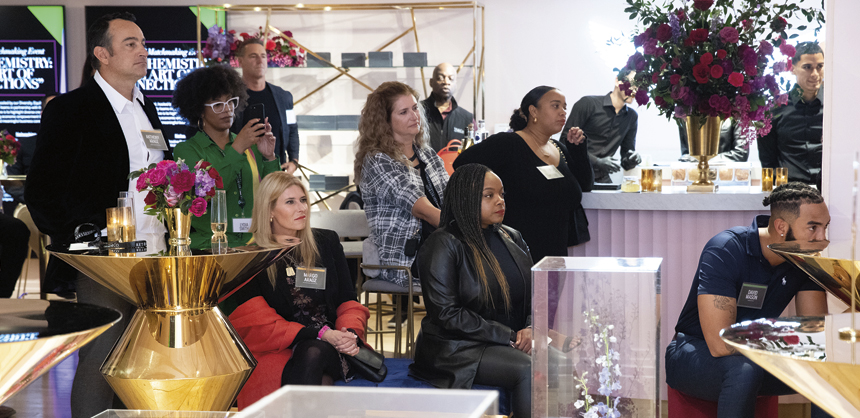
Events such as IMEX are great networking opportunities.

Events such as IMEX are great networking opportunities.

Weinig Holz-Her, an industrial automation company for the woodworking industry, was having an annual sales meeting for 150 in Louisville, KY. The day of the meeting, it was revealed there was a snafu.

“We had signed the contract that had the correct time, the correct date, everything on it, but something glitched in their internal system and they had us booked in the completely wrong year,” says Jocelyn Davis, sales operations and event coordinator, Weinig Holz-Her.

Talk about panic. Davis had 45 minutes to come up with an alternative venue and turned to the invaluable network she has cultivated for help.

“I called all the event pros I knew in the area for help. I was able to connect with the person who managed the hotel directly across the street from where we were to meet. She was able to help. I had the group walk across the street and the meeting continued,” says Davis. “Having that network saved the meeting.”

Davis says that not only is it important for meeting planners to have a constantly evolving network, but there should be curated opportunities for networking at the events they plan.

“Getting everyone into a room together to be able to network and brainstorm and really just talk about what’s going on in the industry is super important to us,” says Davis.

How does she do this? “I always try to include breaks in between sessions, put out some snacks and give people a chance to just grab refreshments and talk to each other. We will also do some icebreaker activities to get people more acquainted, or we send out pre-event surveys to our attendees to figure out what it is that they’re looking for. We also gauge our attendees’ expectations in who they want to talk to and really try to push them together,” says Davis.

She recommends joining industry associations to expand one’s network. Davis is a member of the International Association of Exhibitions & Events (IAEE). In addition, she is a member of Club Ichi, a professional event marketer network that is also a social club.

“Those of us in corporate sometimes forget there is a world outside of our own companies. We’re focused on networking internally, but where does that get us when layoffs hit, or when we want to know what others in similar positions at other companies are doing? This was my experience when I was in corporate, which is why we’ve crafted Club Ichi to be a place where people can ask questions and not feel dumb,” says Liz Lathan, co-founder of Club Ichi.

She says that the club is “a place where they can turn when their boss thinks they already know the answer. Where they can connect with new vendors and agencies and get a pulse on trends and things other companies are doing. Where they can get the kudos they deserve for the work they do which sometimes goes unnoticed inside their own companies,” says Lathan. “We celebrate each other and that makes us feel valued and supported. We also don’t create a sharks and minnows vibe that you often find elsewhere. When suppliers are charged double or sometimes three times the cost of a brand-side person, it puts everyone in a spot where they feel like they have to sell to earn back the money they spent. We eliminate that barrier and treat everyone like the valuable contributor that they are.”

Club Ichi provides events where planners can connect with other planners, vendors and more.

Club Ichi provides events where planners can connect with other planners, vendors and more.

In addition to Club Ichi, Davis is also part of The Vendry Slack group. “I’m always working on building my network with event professionals, especially here in Charlotte, NC. I’ve been working on getting more connections here and hosting a meetup for everyone in Charlotte just so we can stay connected and bounce ideas off of each other. But for me, it doesn’t really matter what city another event professional is in, I always try to network with them because you never know if you’re going to be in a city. And obviously as event professionals, we don’t want any dumpster fires to happen. But, of course, there’s always those weird one-offs every once in a while. So knowing people in pretty much any city that you hold an event is so important because, if you have to sit there and call on a favor with somebody, it’s a lot easier to do that if you have connections in that city versus trying to figure out doing so much research on the spot in a short amount of time.”

She also stays active on LinkedIn, which is another network of experts that meeting professionals can tap into. “It’s all about sharing expertise,” she says. “Everyone has their specialties. For me, it’s dealer and sales conferences and tier-one trade shows. I’m connected to people at exhibit houses and had to call one for help with pricing. It’s having that network to pull from, if you need a second set of eyes or things like that, you’re always going to find other people that know things that you don’t. And it’s super important to just make sure you have a very well-rounded group of people in case you don’t know something.”

This reinforces the fact that connections should not be regulated to just other planners. “Reach out to caterers, entertainers, vendors and related professionals for broader support,” says Davis.

Networking Helps Further Careers

Expanding one’s network not only helps when recommendations and help is needed but also boosts career opportunities, fosters collaboration and helps stay on top of industry trends and best practices.

Networking is career insurance in an industry that is constantly shifting. Many event professionals who found new roles after layoffs credited networking as the most important factor in their job search.

Mentorship is another overlooked benefit. A well-developed network doesn’t just offer leads and resources, it provides advisors who can guide you through tough career decisions, share hard-earned lessons and open doors to new opportunities.

When a planner expands his or her network, they increase their chances of hearing about new job openings, client leads and freelance opportunities that may not be advertised publicly.

According to Bizzabo’s 2025 Event Networking Report, approximately 87% of meeting professionals say networking is important to the success of the events they put on. Attendees agreed saying networking opportunities influence whether they attend an event or not.

As a result of this sentiment, events are built around the connections they can ignite. What this means to meeting professionals is a happy hour in a cavernous room with one bar and a crudité will not do it. This is not a true networking activity anyway. Networking can’t be an afterthought anymore or a few happy hours. It also shouldn’t be a box to check off. It must be integrated into every phase of the event experience, before, during or after.

If you don’t help first-timers meet others, your chances of them coming back lessen. How can you do this? Have them answer questions about their interests and match them with other attendees with similarities. Plan a meeting spot before the opening of the conference for first timers to meet with those who may have attended the conference many times in the past. They can walk into the conference with others they have met instead of going solo, nerve wracking for most.

Technology can also help with networking. Tools like Brella and Grip can help as they use AI-powered algorithms to match attendees based on mutual goals and interests, creating structured opportunities for meaningful conversations. Smart badges enable attendees to exchange information with a tap, track connections made, and even receive suggestions in real-time on who they should meet next. For planners, these technologies are not only enhancing attendee experience but also generating data to measure networking outcomes.

Networking is a great way to stay on top of industry trends and expand your career. Photo credit: Cvent

Networking is a great way to stay on top of industry trends and expand your career. Photo credit: Cvent

People Do Business with Those They Know and Trust

Building professional relationships is like building trust, says Heidi Hiller, CEO, Creative Director of Innovative Party Planners & Event Pros. “Always start by focusing on the other person and their story. Once you’ve made a connection, be sure to follow up promptly on platforms like LinkedIn or via an email to keep the conversation going. The goal is to move from a casual meeting to a genuine connection, because people do business with those they know and trust. Make it a goal to follow up with all the people you meet at a networking event. If that is too overwhelming, follow up with a minimum of two,” says Hiller.

Networking effectively is all about being a consistent, recognizable presence, says Hiller. “When you repeatedly show up, listen and remember the people you meet, you build a reputation as a dedicated professional. This consistency makes a powerful impression, turning a series of chance encounters into meaningful connections.”

She has a specific view of what that looks like. “Effective networking for me means proactively seeking out and engaging in conversations, whether by finding a group to join or by introducing myself to someone standing alone. It’s a skill I’ve learned, and I have gotten bolder and more confident with it over time. It has taught me that the most powerful connections often start with a simple, genuine interaction,” says Hiller.

Meeting planners network successfully by being intentional, diversifying connections, and leveraging both in-person and online opportunities to build lasting and meaningful relationships.

It’s important to set clear goals. Define objectives before attending any networking event, such as finding new clients, collaborators or sourcing specific resources.

Prepare your elevator pitch. Have a concise, compelling introduction that quickly communicates professional value and services.

Do Your Homework

Regularly participate in conferences, workshops and local business groups to meet fellow planners, suppliers and venue staff. Don’t go in cold. Most events have apps where all those attending will be listed. Make a game plan as to who you want to meet and reach out to those people before getting onsite. Industry experts recommend identifying three to five people you want to connect with and research their background.

If you find yourself alone, don’t fret, everyone has had that experience in their career. Look for small group conversations and politely join, instead of hovering alone. Be sure to follow up with those you met. Industry experts recommend following up within 48 hours while the conversation is still fresh.

Professional associations are invaluable places to network. Meeting Professionals International (MPI), the Society of Incentive Travel Executives (SITE) and the International Live Events Association (ILEA) are possibilities.

Get active on social media channels. Use LinkedIn, X (formerly Twitter) and Instagram to connect, share updates, and engage in discussions with peers globally.

LinkedIn is a useful business tool that will help you expand your network, take part in industry-specific discussions and share updates.

Incentive travel programs have long understood the power of networking. Top performers not only enjoy a trip but also the chance to connect with peers across departments or even across global offices. Many incentive planners now design dedicated networking excursions — whether it’s a cooking class in Tuscany or a beach clean-up in Costa Rica — that combine bonding, cultural immersion and corporate values. These shared experiences foster relationships that ripple back into the workplace.

By putting these strategies into practice, meeting planners can efficiently expand and strengthen their professional network, ultimately leading to business growth, resource access and personal development.

In an industry built on connection, networking is not a side activity — it’s the lifeblood of meetings and incentive programs. A well-nurtured network doesn’t just save the day when things go wrong; it fuels creativity, career resilience and long-term growth. For planners, weaving networking into every layer of the attendee journey is no longer optional. It’s the differentiator that turns an event from functional to transformational. C&IT

CIT-2025-10-DEST-Florida-147x147

Florida

Pier Sixty-Six , which reopened at the beginning of the year, features 43,000 sf of event space on the Intracoastal in Fort Lauderdale.

Pier Sixty-Six, which reopened at the beginning of the year, features 43,000 sf of event space on the Intracoastal in Fort Lauderdale.

Gina Zappa, director of business administration of Direct Travel, gladly trades her snow boots for sandals for the company’s annual November meeting in Fort Myers, FL.

“It’s a lovely time to be in Florida,” says Zappa, who lives in Minnesota and plans Direct Travel’s internal meetings and incentives.

The warm weather and other amenities in Lee County are responsible for their event attendance more than doubling from about 30 attendees five years ago to 65 this year.

It’s so lovely that Direct Travel’s U.S. corporate director bought a house in Bonita Springs, walking distance to the Hyatt Regency Coconut Point Resort and Spa, where the meeting now occurs yearly. Northerners like Zappa relish a chance to enjoy the climate that is so conducive to the statewide focus on hospitality.

There are few other destinations in the world, let alone the United States, that can compete with the range of premier destinations and attractions in the Sunshine State. The demand from leisure and business travelers has created a one-of-a-kind ecosystem from the Florida Keys all the way to the boundaries with neighboring Georgia and Alabama.

Only in Florida would planners find serious competition to a place like Walt Disney World. Meanwhile meeting planners have their choice of destinations depending on their budget and preferences on large markets or second-tier cities for the experience they are creating.

Never satisfied, organizations from across the travel and events industries — including at the university level with an array of hospitality-based schools and courses — are continuously looking ahead to new ways to attract visitors.

“Florida is built on tourism, and tourism is built on the people that support it,” says John Paladino, founder of Milestone Meetings. “The talent pool that you will find in Florida far exceeds what you’re going to see in many other states and destinations.”

The SBC Leaders Summit was held this summer at Pier Sixty-Six in Fort Lauderdale, bringing in about 300 C-Suite executives.

The SBC Leaders Summit was held this summer at Pier Sixty-Six in Fort Lauderdale, bringing in about 300 C-Suite executives.

Fort Lauderdale

If there is one destination in Florida poised for a surge in meetings and events over the next few years, it is going to be Fort Lauderdale, predicts Santina Simons, CMP, head of events in the Americas for SBC, an events and media company that connects the gaming industry through world-class events, top-tier media coverage and tailored technology.

Simons recently hosted the company’s leadership conference at Pier Sixty-Six, which reopened and rebranded at the beginning of the year to become one of the region’s premier hotels.

Owned by Tavistock Group and managed by CoralTree Hospitality, the resort has 325 guestrooms and 43,000 sf of event space, plus access to a marina with restaurants and luxury retailers nearby.

“We definitely received service that was outstanding,” says Simons.

SBC returns to Fort Lauderdale next summer for its Summit Americas, which will use the convention center and Pier Sixty-Six to host 10,000 industry professionals and more than 400 exhibitors and sponsors.

Simons adds that about half of SBC’s attendees are from Latin America, making Fort Lauderdale–Hollywood International Airport and nearby Miami International Airport good fits to fly in and out of.

In almost any other destination, a resort like Pier Sixty-Six would be the shiny new object. But anticipation for the new Omni Fort Lauderdale Hotel is palpable. The luxury hotel is the finishing touch on a $1.2 billion expansion project for the Broward County Convention Center campus.

The 801-room property, which is slated to open by the end of the year, is connected to the expanded convention center, which gained 350,000 sf of contiguous exhibit space.

Fort Lauderdale shares many of the same qualities planners gravitate to in other Florida destinations, including beach access, strong airlift and a variety of activities, but has generally been more affordable than Miami and Orlando.

The combination of competitive pricing and new offerings makes the destination appealing to the likes of LaDonna Pettit, an independent meeting professional working with the Stone Fort Group. She is planning the Renewable Fuels Foundation’s 2028 National Ethanol Conference, which is set to take place in Fort Lauderdale.

“Having two new hotels in warm-weather destinations felt like an answer to our prayers,” says Pettit, noting many of the conference’s attendees are coming from cold-weather Midwestern destinations.

The event always occurs in February and also features a golf tournament, making climate a major consideration. San Diego was another tempting option, but Pettit says the new Omni swung the conference to the East Coast.

Due to the construction, Pettit is planning the event at a hotel she has yet to step foot in. Foundation leadership was waiting for the Omni to open for the site visit to get a true feel of the property. She was impressed that the Omni lowered its traditional rates to book the event to help alleviate fears of booking with a hotel sight unseen and the staff’s responsiveness to her team’s questions.

“Ultimately, the combination of warm weather, strong service culture, and a product we know will be exceptional made Omni Fort Lauderdale Hotel the ideal choice,” says Pettit.

A beautiful sunset in Fort Myers.

Fishing during a beautiful sunset in Fort Myers.

Fort Myers

Amrita Nichols, CMP, CMM, HMCC, VEMM, a New England-based vice president of accounts at ConferenceDirect, found that the hotels in Fort Myers tend to be more affordable in January, when her client meets there, than those in larger Florida cities. Also, travel to the region is a smooth experience.

“When you have an easy airport, it takes the stress out of everything,” says Nichols, who is impressed by the variety of hotels available, including Marriott Sanibel Harbour Resort & Spa, the Hyatt Coconut Point and The Westin Cape Coral Resort at Marina Village.

“The value is there and the destination is really nice,” she adds.

Fort Myers offers a laid back and relaxed atmosphere with quaint neighborhoods and plenty of opportunities to get out in nature. Planners will find more than 11,000 guestrooms available and 230,000 sf of meeting and event space overall.

The Grand Hyatt Miami Beach, set to open in 2027, will be directly connected to the Miami Beach Convention Center via skybridge.

The Grand Hyatt Miami Beach, set to open in 2027, will be directly connected to the Miami Beach Convention Center via skybridge.

Miami

Fresh off a record 28 million visitors last year and with the World Cup coming up in 2026, Miami is maintaining its place among many corporate groups’ wish list. Soon, there will be more options for planners.

Groundbreaking for the 800-room Grand Hyatt Miami Beach convention center hotel occurred this spring and the property is scheduled to open in 2027. The Greater Miami CVB says the addition will boost the destination’s ability to attract premier global events, business meetings, trade shows and conventions.

It’s hard to imagine a destination more in-demand. Earlier this year, Greater Miami and Miami Beach hotels ranked first in occupancy in revenue per available room and second in the country in average daily room rates.

To cap off fiscal year 2024, the convention sales team secured 16 new Miami Beach Convention Center bookings that accounted for 65,000 attendees with 107,604 room nights sold. The estimated economic impact of these bookings was more than $131 million.

Look for a significant amount of brand activations surrounding major sporting events next year, including The College Football Playoff National Championship, NHL Winter Classic, World Baseball Classic, FIFA World Cup and NASCAR Championship Race.

The JW Marriott Orlando, Grande Lakes’ features an 18 hole championship golf course, more than 169,000 sf of event space and over 1,000 guestrooms and suites.

The JW Marriott Orlando, Grande Lakes’ features an 18 hole championship golf course, more than 169,000 sf of event space and over 1,000 guestrooms and suites.

Orlando

Named the top meetings destination in the U.S. by Cvent, Orlando has no intention of giving up its premier spot. No less than 20 Orlando convention hotels and resorts were named as a Top Meeting Hotel in North America, with the JW Marriott Orlando, Grande Lakes ranking in the top 10.

Planned expansion of the Orange County Convention Center and a slew of hotel developments should add to what’s been a banner year. Last year, Orlando welcomed more than 75 million visitors, including more than 5.6 million in the group meetings segment incorporating business travelers. It remains the most visited destination in the U.S.

To make room for growth, construction begins next year on the Orange County Convention Center that will add an additional 44,000 sf of meeting space and a 100,000-sf ballroom to the North-South Building. Phase two, featuring an additional 200,000 sf of contiguous multipurpose exhibit space for the building, has been approved.

“Orlando’s continued investment in new and enhanced venues, experiences and services helps ensure our destination remains aligned with our customers’ ever-changing meetings goals,” says Casandra Matej, president and CEO of Visit Orlando. “The destination’s accolades and record-attendance shattering trade shows exemplifies Orlando’s dedication to offer unmatched meeting experiences.”

One of the highlights in the area is the renovation that has been underway at the Walt Disney World Swan and Dolphin Resort. This includes a revamp of 756 guestrooms and suites as part of a broader $275 million renovation and expansion project — the largest in the property’s history. The project includes upgrades to the meeting spaces at both the Swan and Dolphin, as well as a 120,000-sf expansion of the Dolphin’s event space. Also, noted steakhouse chain, Bourbon Steak, has added a new luxury eatery onsite at the hotel.

Meanwhile, Conrad Orlando at Evermore has received the coveted AAA Five Diamond designation and is now the third hotel in Orlando (in addition to Four Seasons Resort Orlando at Walt Disney World Resort and The Ritz-Carlton, Grande Lakes), and 12th in Florida, to receive the distinction.

Just minutes from Orlando’s most sought-after shopping and theme parks, the Caribe Royale Orlando is riding a wave of good feelings from its $140-million renovation. The project, completed last year, adds a fresh and modern new look to this all-suite resort with 1,337 suites.

Despite the many amenities close to the hotel, attendees don’t have to step off the property for a memorable time. There are eight onsite restaurants and 240,000 sf of meeting and events space, including the 50,000-sf Palms Ballrooms and 19,000-sf outdoor event lawn called The Grove. Good luck finding an attendee not eager to try the 75-ft. waterslide. There also is a spa and fitness center, courts for racquet sports, fishing and more.

Caribe Royale Orlando

With stunning new event spaces, Caribe Royale Orlando’s hotel meeting rooms and convention center offer state-of-the-art technology, plus extraordinary indoor and outdoor settings.

Orlando is known for its theme parks. Planners wishing upon a star got their dream come true when Disney Creative Studio opened at Walt Disney World Resort in Lake Buena Vista earlier this year. The studio acts as an all-in-one for managing decor, floral, audiovisual and catering needs. Onsite assistance comes from The Disney Event Architects, which include sales and services managers, event producers, culinary experts and more.

To help planners better maintain updates on new and renovated properties, Visit Orlando has expanded its live virtual site inspection platform that allows for digital visits to more than 1,100 Orlando locations.

South Walton offers 26 miles of sugar-white sand beaches.

South Walton offers 26 miles of sugar-white sand beaches to delight attendees.

South Walton

Few destinations benefit from the increased desire for bleisure experiences than South Walton. There are 26 miles of beach, as well as top-notch golf (four championship golf courses), fine dining (more than 200 restaurants) and boutique shopping.

Ideal for corporate meetings or incentives, South Walton has an array of luxury hotels, including the Hyatt Place Sandestin, Hotel Effie Sandestin, Sandestin Golf and Beach Resort, and Hilton Sandestin Beach Golf Resort & Spa.

There are 200 miles of hiking and biking trails to explore the scenic surroundings or plan a morning group run. Yoga on the beach is another popular health and wellness activity.

There are two main commercial airports nearby — Northwest Florida Beaches International Airport and Destin-Fort Walton Beach Airport, making the destination one of the most accessible in the state.

The Palm Beach County Convention Center, in West Palm Beach, has a total of 350,000 sf of space across from The Square, which has restaurants, shopping and more.

The Palm Beach County Convention Center, in West Palm Beach, has a total of 350,000 sf of space across from The Square, which has restaurants, shopping and more.

The Palm Beaches

Paladino hosts up to 25 events annually in Florida, but he has reason to be biased toward Palm Beach County, and specifically at the resort called The Boca Raton, located in the city by the same name. He got his start in industry working banquets at the property until forming his own company. He now lives in Scottsdale, AZ, but is near his old stomping grounds often for meetings and incentives.

He hosted a tech company at The Boca Raton about two years ago and raves about the Palm Beaches as an overall destination. The resort has since received a $130 million renovation, completed at the end of last year.

“There is a lot of variety there and I think that gets overlooked,” says Paladino, noting the region’s celebrity residents and high-end properties, including Trump International Golf Club West Palm Beach and Mar-a-Lago, President Trump’s home away from The White House.

The historic Breakers Palm Beach — which sports a newly renovated $12 million tennis and racquet complex — and PGA National Resort are other hotels Paladino raves about.

High-speed train access via Brightline adds to accessibility in the region.

It’s little wonder that the destination had a record-breaking 5.72 million visitors in the first half of this year. This growth represents an increase of 531,000 visitors compared to the same time period last year.

While hotel occupancy has decreased across the U.S., The Palm Beaches has defied trends by recording growth in hotel room demand and revenue.

Tampa/St. Petersburg

One of the events industry’s most influential events, MPI’s World Education Congress, has selected Tampa for its 2030 home, a sign of the destination’s appeal. More than 2,500 event professionals will see the latest in an already booming destination.

“Tampa Bay stood out not only for its energy and hospitality, but for its commitment to accessibility,” says Colleen Connor, senior director of events at MPI.

Across the bay, St. Petersburg and Clearwater offer beach destinations aplenty for corporate meetings and incentives. Zappa planned a 30-attendee meeting for Direct Travel in January. While the weather was unusually cool for Florida, attendees had warm thoughts about the gathering.

The group stayed at the Hyatt Regency Clearwater Beach Resort and Spa but explored other hotels during a dine-around, Zappa says.

With warm weather and a prime location that serves as an easy bridge to Latin America, Florida remains one of the industry’s most in-demand states for corporate meetings. With new developments and major events scheduled for 2026, the forecast remains as sunny as ever. C&IT

CIT-2025-10-DEST-Colorado-147x147

Mile High Meetings

Denver, CO skyline.

Denver’s skyline.

Colorado is being celebrated as a “must consider” location by today’s corporate meeting professionals – and for good reason. The region offers an idyllic blend of vibrant cities and natural beauty, as well as top-tier meeting venues in cities like Denver, Colorado Springs and Vail. In addition, from stand-alone convention centers to awe-inspiring outdoor gathering spaces, Colorado offers a diverse array of venues from which to choose.

Robert Kraus, MMP, owner and event producer at Small Conferences, LLC, has orchestrated a number of corporate meetings in Colorado over the years, including smaller board meetings, retreats, mid-size conferences, plus a major convention for almost 2,000 people.

“Colorado, and in particular the Denver area, is always near the very top of the list for attendees based on the surveys I’ve conducted,” Kraus says. “The appeal is rooted in a compelling combination of desirable features that increase attendee interest and participation. Colorado offers state-of-the-art world-class venues capable of accommodating any size group and budget. Plus, beyond the meeting rooms, attendees are eager to ‘stay and play,’ drawn by the scenic backdrop, culture and unparalleled access to the outdoors.”

Kraus points to other additional top reasons corporate meeting planners should consider Colorado. First of all, people want to go to Colorado. This means attendance will be high.

“In addition, like New Orleans, Orlando, Miami and Las Vegas — folks want to ‘stay and play’ after attending a meeting in Colorado,” Kraus says. “This is especially true in Denver, which is known for the scenic backdrop, local breweries and access to outdoor adventures and natural beauty — not to mention the 300 days of annual sunshine.”

Colorado also offers high-end venues for any size and budget: From the expanded Colorado Convention Center and the Gaylord Rockies Resort in the Denver metro area to a mountain resort conference center like Keystone Resort, the state offers diverse, top notch facilities for groups of all sizes. Even the unique Wings Over the Rockies Museum can host groups of up to 3,500.

There are also plenty of cultural and outdoor activities for attendees to enjoy. Attendees can easily enjoy hiking, biking, skiing, rafting and team-building in the mountains, turning a standard business trip into a rewarding adventure.

“Culturally, the attendees enjoy the Denver Art Museum, Colorado Springs Fine Arts Center and especially exploring the Ancestral Puebloan Cliff Dwellers at Mesa Verde National Park. In addition, many attendees love to attend a concert or simply visit the Red Rocks Park & Amphitheatre and I never miss an opportunity to get them to take The Broadmoor Manitou Cog Railway up to Pikes Peak,” Kraus says.

Considered to be the “Napa Valley of Beer,” Denver in particular is well known for being at the epi-center of the national craft beverage revolution. As Kraus points out, many of these breweries offer large event spaces, tap rooms and outdoor spaces that are perfect for large corporate gatherings. Some favorite places include the historic Wynkoop Brewing Company and the Lowry Beer Garden, known for its huge outdoor space and long Oktoberfest-style picnic tables. The boom has also extended to strong farm-to-table movement featuring high-quality local ingredients.

“Colorado’s strong appeal is a result of several key factors that enrich the attendee experience and logistics, which include exceptional accessibility via Denver International Airport, a wide array of cultural and outdoor activities, a culinary and beverage hotspot, and, of course, its natural beauty,” Kraus says. “Colorado makes a powerful case for a rewarding and well-attended business event.”

Denver

As Colorado’s largest city, Denver has proven to be an exceptional destination for today’s conventions and events. The Colorado Convention Center is the ideal spot for expos, conferences and trade shows. Surrounding the convention center are many major hotels, including the much-celebrated Hyatt Regency Denver, that provide convenient accommodations for attendees.

Nearby, in Aurora, CO, the Gaylord Rockies Resort and Convention Center has proven to be a “must consider” venue, especially for large events, thanks to its 500,000 sf of meeting and event space and 1,501 guestrooms. The largest meeting room is 174,518 sf. The facility boasts a rustic Colorado vibe, which adds to the overall “Rocky Mountain” experience for attendees.

The location is only minutes from the Denver International Airport, making it very convenient. Aurora’s light rail system, buses and ride share options make getting around town very simple. There is a thriving art scene and plenty of nature to enjoy with mountain views.

Vail

Beck Building Company, based in Avon, Colorado, had the honor of hosting the National Custom Builders Council (NCBC) – a distinguished group of 40 luxury custom home builders from across the country — for an exclusive corporate event in Vail.

“Vail provided an exceptional setting to showcase the quality and craftsmanship of the custom home building in the Vail Valley. As one of the nation’s most recognized destinations, Vail consistently impresses both first-time and returning visitors with its breathtaking natural beauty, vibrant village atmosphere and world-class hospitality,” says Jill Anderson, director of business development at Beck Building Company.

“From the moment our guests arrived, they experienced the warm welcome and elevated service that define Vail. The community’s commitment to excellence mirrors our own values, making it the perfect environment to connect, collaborate and inspire. A special thanks to the Vail Valley Partnership for their invaluable support in helping us select the ideal accommodations. Their insight and hospitality made it easy to identify and secure a hotel that exceeded our expectations — and our guests were thoroughly delighted. Many have already expressed a desire to return, a true testament to Vail’s enduring appeal.”

Indeed, Vail is the ideal location for corporate retreats, wellness-focused meetings and executive strategy sessions. The region’s robust selection of condos, charming alpine lodges and hotels can accommodate groups of 10 to 2,000 attendees. In addition, hundreds of shops, restaurants and entertainment venues dot Vail’s exquisite landscape, offering attendees ample opportunities to explore this beautiful mountain region. The complementary in-town transportation also makes getting to and from the various venues, shops and attractions streamlined for attendees.

In addition to the various resorts and hotels offering ample meeting and event spaces throughout Vail, the Dobson Ice Arena is currently undergoing a $55.4 million renovation and is slated to reopen by next fall. The renovated facility will offer a variety of meeting and events spaces for groups to enjoy, including conferences and private corporate functions.

The Broadmoor in Colorado Springs is the world’s longest-running consecutive Forbes Five-Star, AAA Five-Diamond resort.

The Broadmoor in Colorado Springs is the world’s longest-running consecutive Forbes Five-Star, AAA Five-Diamond resort.

Colorado Springs

Set against the backdrop of Pikes Peak, Colorado Springs offers a dramatic setting for corporations to consider for meetings. For Ewa Folden, staff executive at Frontgrade Technologies, Hotel Polaris in the heart of Colorado Springs proved to be the ideal locale for the company’s annual Leadership Forum — a gathering that brought together leaders from across the entire organization.

“It was an incredible opportunity for our leadership team to connect, share ideas and align on our vision for the future in an inspiring and collaborative environment,” Folden says.

From the very first planning conversation to the final day of the 2½-day forum, the experience with Hotel Polaris was flawless for the Frontgrade Technologies group. The hotel offers an unmatched experience — world-class facilities, a team that truly cares, and a setting that inspires connection and purpose.

“The property is so thoughtfully designed, with amazing spaces like the rooftop Aviator Lounge and the onsite flight simulator that offer unique, built-in opportunities for team building and fun without ever having to leave the hotel,” Folden says. “The team was amazing – attentive, professional and genuinely kind. The hotel itself is truly state-of-the-art and beautifully designed to honor the nearby U.S. Air Force Academy, where so many of the nation’s greatest leaders have come from.”

The meeting spaces also were perfect for the meeting sessions — comfortable, modern and equipped with top-tier AV technology that made everything seamless.

“Colorado Springs also was the perfect choice because it embodies leadership, excellence and inspiration — values that are at the heart of our organization,” Folden says. “Being so close to the U.S. Air Force Academy added a deep sense of meaning and pride to our event, serving as a reminder of the discipline, service and strength that define great leadership. The natural beauty of Colorado provided the perfect backdrop for reflection, collaboration and connection.”

Situated at the gateway to the Rocky Mountains in Colorado Springs, The historic Broadmoor and its Wilderness Experience properties, The Ranch at Emerald Valley, Cloud Camp and the Orvis-endorsed Fly Fishing Camp is a vast venue offering different types of meeting and event experiences for attendees. Encompassing over 315,000 sf of meetings and event space, and over 5,000 acres to explore, The Broadmoor offers a one-stop-experience for attendees. It is the world’s longest-running consecutive Forbes Five-Star, AAA Five-Diamond resort.

The more than 100 year old resort features two championship golf courses, an award-winning spa and fitness center, a nationally recognized tennis staff and program, retail boutiques, diverse restaurants, cafes and lounges. For groups looking for a more rustic mountain luxury experience, the Broadmoor Wilderness Experience offers attendees the chance to experience three unique, all-inclusive boutique facilities that highlight an authentic Colorado experiences.

The Broadmoor also recently renovated Colorado Hall and International Center, part of its Convention Center, which offers over 200,000 sf of vibrant, modern meeting spaces designed to inspire collaboration and creativity.

In addition, The Broadmoor offers falconry experiences, fly fishing, morning yoga on the lake and while water rafting, to name a few adventures that attendees can enjoy.

Aspen

A meeting planner recently worked with the Aspen Chamber Resort Association to host a corporate event in Aspen. “Aspen offers an unforgettable blend of natural beauty, accessibility and charm,” the planner says. “From the luxury accommodations at hotels like the St. Regis and Hotel Jerome to the world-class dining and vibrant nightlife — Aspen has so much to offer in such a small footprint.”

“Downtown Aspen’s walkable layout makes it easy for attendees to explore its boutique shops, art galleries and renowned restaurants, all set against a stunning mountain backdrop,” the planner adds.

The attendees at this event also enjoyed the various outdoor adventures in Aspen like hiking to see the famous Maroon Bells, golfing at Aspen Golf Club, mountain biking and fly fishing — all of which provided the perfect setting to inspire connection and creativity.

“Whether you’re walking into Aspen Brewing Company for a cold pint or ordering homemade pasta at Casa Tua, the warm and welcoming charm of the Aspen locals creates a genuine sense of community for all those visiting this vibrant city,” the planner says. “I have hosted numerous groups in Aspen and every time the attendees leave feeling inspired, refreshed and wanting to return. Whether traveling in for the warm and welcoming summer months or the snowy and vibrant ski season, Aspen is truly a year-round destination.”

With about 300 days of sunshine a year, Aspen offers the idyllic setting for groups of all sizes. And although the region’s extraordinary beauty is a huge draw for many potential corporate meeting attendees, there also are a wealth of unique venues that leave lasting impressions. From the quintessential Dunbar Ranch, which offers 9,300 sf of event space, to the Aspen Art Museum, which can fit up to 250 people at a reception and includes a rooftop space with panoramic view of Aspen Mountain, there are plenty to truly unique venues that allow attendees to experience everything that Aspen has to offer.

Several hotels in Steamboat Springs have ski in and out access to ski resort.

Several hotels in Steamboat Springs have ski in and out access to the ski resort.

Steamboat Springs

With a stunning mountain backdrop, Steamboat Springs provides an idyllic locale for meetings and events with many venues offering a range of settings from elegant resorts to ranches. The Steamboat Grand has over 17,000 sf of flexible indoor meeting and conference space and a grand ballroom ideal for large groups of up to 500 people. Sheraton Steamboat Resort & Villas, as well as Steamboat Springs Community Center and Colorado Mountain College and are just a few of the possible nearby venues available for groups of different sizes. C&IT

Graziano,Margaret-Columnist-147

Four Unintended Consequences of a Mis-Hire

Graziano,Margaret-Columnist-110x140Margaret Graziano, known as the Evolutionist, is the founder and CEO of KeenAlignment, as well as a Wall Street Journal best-selling author for her book “Ignite Culture.” She has been recognized as one of Silicon Valley’s Top 100 Women Leaders. Her groundbreaking work is driven by her power to uncover and catalyze human potential. For more information, visit keenalignment.com

Businesses are currently facing one of the most severe employee engagement crises in history. Burnout, dissatisfaction, transactional mindsets and a global political climate that leaves people either raging with anger or paralyzed by fear are colliding with a “doom scroll” culture fueled by social media. Add in the lingering effects of Long Covid, a complex generational baton pass and shifting workforce expectations, and the challenge for leaders is clear: business-as-usual thinking no longer works.

Now more than ever, you have to make sure you’re hiring the right people, for the right reasons, for the right role, because opting out of the job and continuing to get paid for that job is easier than ever in remote and hybrid environments.

Most CEOs and managers understand the financial cost of a bad hire. However, the deeper, systemic damage often goes unnoticed until it’s too late. Outdated hiring practices can lead to four costly consequences.

1. Fragmented Customer Service

Great service begins with understanding your product or service and why customers use it. Skills and knowledge can be taught. Caring cannot.

Behavioral and performance research shows that excellent service flows from a set of values, attitudes and beliefs aligned with your service philosophy. When someone takes a customer service role for the wrong reasons, no training will overcome their lack of connection to the work. Customers feel it in the form of apathy, indifference and mechanical responses.

In today’s market, expectations are higher than ever, and a single bad interaction can be broadcast instantly across social channels. When a mis-hire ends up in customer service, your brand reputation, retention and revenue all take a hit.

Hire for the “Service Centralizer” trait — people who genuinely value connection, measure success by the customer’s experience, and recognize that products and services matter only because of the benefits they create. These individuals are loyal, mission-driven, and committed to serving both customers and community.

Interview tip: Early in the process, ask candidates how they measure success, how they know customers are satisfied, and how they handle challenges. Look for solution-oriented, empathetic responses that reflect a service-oriented mindset.

2. Depleted Problem Solving

When you hire purely on resume keywords without screening for values, conceptual thinking and adaptive problem solving, you risk bringing in someone who doesn’t want or know how to solve problems.

Instead of initiative, you get excuses. Instead of collaboration, you get finger pointing. These are the people who see obstacles rather than opportunities, resist change and let deadlines slip because “the system” is at fault.

The truth is, problem-solving competencies are difficult to teach. That’s why you must assess them before hiring. The best problem solvers are proactive rather than reactive. They focus on what they can control, refuse to waste time blaming and look for ways to influence outcomes.

Key competencies to hire for: initiative, self-confidence and practical thinking.

Interview tip: Ask candidates to share a situation where they encountered a major obstacle. Listen for how they took ownership, generated options and followed through, not just what the result was.

3. Eroding Workforce Productivity

Rushed hiring decisions almost always lead to turnover. The wrong fit may take months to reveal itself, but by then the damage is done.

Gallup reports that only 31% of U.S. employees are actively engaged, while 17% are actively disengaged. Hybrid work, shifting generational expectations and the lasting effects of Long Covid are reshaping productivity norms. Some employees are managing chronic health conditions, energy fluctuations and cognitive fatigue, all of which affect output and morale.

Generational differences further complicate the picture. What motivated Boomers may not resonate with Gen Z. Leaders now must navigate a workplace that requires adaptability, empathy and clarity about performance expectations.

Leaders themselves are also under pressure. This year, has seen a spike in C-suite terminations, hostile work environment claims and executive-level turnover. Many leadership missteps aren’t new. They’re simply less tolerated in today’s environment.

In a world full of distractions, leaders need the behaviors that inspire others to engage fully in their roles, and, for non-managers, the skills to direct their own work, avoid distractions and deliver results.

Hire for resilience, initiative and self-direction. Look for candidates who can recover from stress, adapt to shifting demands and stay on track without constant oversight.

Interview tip: Use open-ended questions like, “How much direction do you need to get started?” or “If circumstances changed at the last minute and you needed to work outside normal hours, how would you handle it?”

4. Time and Energy Losses for the Team and Leadership

You’ve heard the saying: 80% of a manager’s time is spent with the bottom 20% of performers. The competition for talent can tempt you to hire the first decent resume that comes across your desk. However, filling a seat quickly can result in empty seats later, or worse: full seats with no payoff.

This is also creating exhaustion for managers. In a survey done at the end of 2024, 53% of managers reported feeling burned out. Many are stuck in roles of correction, babysitting and micromanagement, which stifles creativity, erodes culture and turns leadership into damage control.

This exhaustion often stems from repeated mis-hires, a lack of coherent hiring strategy and a broken feedback loop. Too many leaders delegate “fixing people” to HR or wait too long to address performance issues, allowing disengagement to spread.

Leaders need to act as coaches, not commanders, and organizations that need to be responsive, not reactive. That requires hiring systems rooted in clarity, cultural alignment and conscious decision-making.

Conscious Hiring in a Distracted, Fast-Moving World

Distractions and disruptions aren’t going away. We’ll be navigating generational transitions for at least the next five to six years, and AI and technological advancements will only accelerate the pace of change.

This makes clarity in hiring more critical than ever. You must know exactly who you are hiring, why you are hiring them and what you need from them. That begins with starting with the end in mind.

Ask yourself:

  • If the company could talk, what would it say is the purpose of this role?
  • What return on investment should this role produce?
  • If the role could speak, what competencies, attitudes, beliefs and experiences would it ask for?

The first step in Conscious Hiring is role analysis. From there, design interview questions that reveal how a candidate thinks, acts under pressure and aligns with your mission and values.

If hiring the right people for the right role matters to you (and it should), then you need to hire slowly, hire mindfully and hire with the end in mind. C&IT

PortmanPhilip-147x147

How SMS Automation is Transforming Event Marketing

PortmanPhilip-110×140Philip Portman is the founder and CEO of Textdrip, a business texting platform catering to industries such as Event, Solar, Travel & Tourism, E-Commerce, Insurance, Hotels & Hospitality, Car Dealerships, Real Estate and Healthcare. He has successfully launched several startups, including LandlineRemover.com and ArgosAutomation.com. With expertise in SMS marketing and digital automation, Portman is also an esteemed member of the Forbes Technology Council.

Event marketing has always been about building meaningful connections. Whether it is a trade show, conference or virtual summit, event planners leave no stone unturned to engage attendees before, during and after the event. However, the sad reality is that email inboxes are always crowded and social media algorithms often hide your posts. Therefore, how do you ensure your messages reach the right person at the right time?

Here is where SMS automation can transform an entire event marketing strategy. SMS is direct, personal and quick, and that’s why it is becoming the go-to tool for event professionals who expect higher engagement and better ROI.

Why SMS Over Other Channels?

People read text messages. As per the research, SMS has a 98% open rate and a 45% response rate. At the same time, email has a less than 30% open rate. Therefore, for event marketers, SMS is not just an advantage; it is a revolution. For event organizers, it is essential that their audience sees and responds to a message, and in it, texting is the fastest and most reliable method. However, the real transformation comes when the SMS is paired with automation.

How Powerful is Automation?

It is obvious that sending text messages to thousands of attendees is unrealistic. Here is where SMS automation helps. It allows event organizers to schedule, personalize and trigger messages based on specific actions or timelines.

Let’s Assume:

  • A speaker session is about to start, and attendees receive a reminder text message 15 minutes before.
  • There is a last-minute venue change, and all participants are informed instantly.
  • Once the event ends, post-event surveys are sent automatically.

In short, automation removes manual work, eliminates delays and helps you create a simplified, hassle-free communication flow. It helps planners focus on the experience while technology handles the logistics.

How Automation Helps Drive Attendee Engagement Before, During and After Events?

Engagement does not start when attendees walk through the door, but it begins the moment they register. Automated SMS campaigns can help you nurture that connection from start to finish.

Before the event

Event organizers can set up automated SMS campaigns to send registration confirmations, ticket details and countdown reminders. For example, sending a personalized text like “Hey Erica, your pass for the Tech Leader Summit is confirmed! We can’t wait to see you in Chicago” creates excitement and trust.

During the event

Event organizers can use SMS for real-time updates. They can share venue changes, agenda changes, session highlights and networking opportunities. They can even send location pins to help attendees navigate large venues.

After the event

Keep the conversation going even when the event is over. Event planners can send automated text messages, feedback requests and exclusive post-event content to keep the momentum alive. This continuous engagement builds loyalty and encourages future attendance.

How SMS Automation Can Simplify Event Communication for Teams

Event planning is teamwork. All team members, including coordinators, vendors, speakers and volunteers, need to stay informed. SMS automation makes internal communication as efficient as attendee communication.

Do you need to update your staff about the schedule change? A single automated text message can inform everyone at once. It helps reduce confusion, saves time and ensures your team operates in harmony.

How are Leading Organizations Using SMS Automation to Improve Their Events? Here are some real-world applications and examples:

Corporate Conferences — Event organizers schedule automated reminders for keynote sessions and breakout workshops. Personalized messages encourage attendance and engagement.

Trade Shows — Exhibitors use SMS to invite attendees to their booths, share product launch details and send exclusive offers during the event.

Hybrid Events — If there are virtual attendees, SMS links provide instant access to streaming sessions, ensuring no one misses out because of email delays.

These examples show that SMS automation is not just about convenience, but it is about creating better event experiences.

Getting Started With SMS Automation

It is easy to start with SMS automation. Its setup and SMS CRM integration are quite easy. Choose the SMS platform that supports automation, personalization and integration with your existing CRMs. After that, use the ready-made or create SMS templates for invites, reminders, updates and feedback requests. Set the triggers for sending messages based on time, status or attendee action. Review open rates, confirmations and attendee feedback and adjust for next time.

Modern automated SMS marketing platforms work seamlessly with CRM tools. Therefore, you don’t need to manage multiple databases or worry about syncing contacts.

Let’s Overcome Concerns

Some event planners worry that SMS might feel intrusive. However, studies show that attendees trust SMS more than other channels because it provides timely and relevant information. Besides, opt-in processes ensure SMS compliance as attendees sign up for the text alerts. Organizers also respect privacy and request to opt out.

The Future of SMS in Event Marketing

Technology is constantly evolving, and with that, SMS automation will become more intelligent. Its integration with CRM platforms, AI-driven personalization and two-way texting are already reshaping how event organizers manage events.

Final Thoughts

Event marketing is all about connection, and connection thrives on timely communication. SMS automation bridges the gap between event planners and participants by delivering the right message at the right time.

SMS automation helps event professionals simplify communication, boost engagement and deliver unforgettable experiences. C&IT

CIT-2025-09-IMEX-147x147

Get Ready for IMEX America 2025

Photo courtesy of IMEX America

Photo courtesy of IMEX America

Read about this year’s event and plan your schedule with Corporate & Incentive Travel magazine’s “IMEX America 2025 Preview” section in our September digital edition.

IMEX America 2025, the largest meetings industry trade show in the U.S., will be held October 7 to 9 at the Mandalay Bay Convention Center in Las Vegas. If you plan meetings and events, there’s no better place to network with other planners, meet with global suppliers and destinations, and learn how to make your meetings more impactful.

The annual Talking Point at this year’s show is called Impact 2.0. It comes with a mission of bringing the global events community together to do business, learn and drive positive change.

Whether you are new to planning or a seasoned pro, IMEX America’s free education program has you covered. There are more than 250 education sessions across nine tracks for you to choose from, including event logistics, experiential event design, impact, leadership and culture, technology, innovation and AI and more.

On Smart Monday, on October 6, MPI Academy has plenty of workshops and discussions to participate in, including a wide range of important topics, such as site visits, AV, marketing, room trends, logistics, mental health and more. Planners can also take courses for certification. It is a great kick-off before the exhibition show floor even opens and an opportunity to network.

Throughout the show, take advantage of well-being activities in competition with your peers. Within the 8th Annual IMEX America Challenge, participants have a chance to win amazing prizes for reaching challenge goals and working their way up the leaderboard. Participants can work alone or as part of a team. The challenge starts on Tuesday, October 7 at 12:01 a.m. PT and ends on Thursday, October 9 at noon PT.

Read more about this year’s event and plan your schedule with Corporate & Incentive Travel magazine’s “IMEX America 2025 Preview” section in our September digital edition.

CIT-2025-09-FEAT-Keynote-147x147

When Keynote Speakers Go Rogue

Finding a keynote speaker who stays on topic, keeps the audience engaged and does not go over their time is no easy feat, but is essential. Credit: DepositPhotos.com

Finding a keynote speaker who stays on topic, keeps the audience engaged and does not go over their time is no easy feat, but is essential. Credit: DepositPhotos.com

“What did he just say?” Your speaker has gone off-topic, sprung a surprise theme, sworn or uttered some otherwise offensive term or viewpoint. You can see the shock ripple across the room as attendees exchange glances. The wrong words at the wrong time can derail the energy of even the best-planned meeting.

What do you do? You have two options: let them carry on, or dim the lights and cut them off. Either way, you know your attendees will be buzzing about it, and probably not in a good way. If you have an emcee, you can sometimes make light of what happened later in the program. But prevention is always better than damage control.

Speaker Prep is Non-Negotiable

One way to reduce the risk is by equipping your speaker with data and context. If you supply them with a clear picture of who they’re presenting to, why the audience is attending, and what the event is designed to achieve, you lower the chances they’ll miss the mark. Speaker prep calls, pre-event briefings and rehearsal runs can go a long way.

Many planners also now include behavioral clauses in contracts that spell out expectations and reinforce time limits. Some even provide emcees with a discreet signal, a “red card” system, to intervene if things veer too far off track.

Preparation isn’t just about content. It’s also about aligning tone, technology and timing. A strong pre-event process means fewer surprises and more consistent delivery.

Courtside Instead of on the Stage

Of course, some situations are out of your control. One of the most prominent recent examples was when Jason Sudeikis, known for playing Ted Lasso, canceled his scheduled keynote speech at the Society for Human Resource Management (SHRM) conference in Chicago at the last minute. Instead of taking the stage, he was spotted nearby at a WNBA basketball game. Social media quickly lit up with images, while SHRM staff scrambled to replace him. Al Roker was able to pick up the reins.

But not every planner can book Al Roker last minute. What can you do in a situation like this?

Experienced planners keep a shortlist of alternate speakers who can step up if needed. Professional speaker bureaus can also help as many have last-minute, travel-ready talent on call.

And when all else fails, don’t overlook internal voices. A senior executive, subject-matter expert or even a skilled moderator can anchor the program. If no speaker is available, planners can reframe the time with a fireside chat, an interactive panel, a Q&A session or an extended networking block.

Transparency is Key

Remember, transparency is key. Attendees usually understand when plans change, especially if the replacement is framed as an opportunity.

No-shows aren’t the only headache. Illness, travel delays or technical mishaps can create chaos. Liz Lathan, co-founder of Club Ichi, recalls when former president Bill Clinton arrived an hour late for his keynote.

What was done to keep attendees engaged? “We kept the expo hall open and had people letting our attendees know that there was a schedule change and we would update them as soon as we could. We also sent push notifications out via the app,” says Lathan.

When Speakers Won’t Stop Talking

Then there are the keynote speakers who show up but throw the agenda off track. They just talk and talk without keeping track of time.

Steph Couch, CMP, executive producer and founder of FIN LLC, has learned from experience to expect the unexpected when it comes to keynote speakers. She was running a meeting for 300 in a hotel in Charlotte and was cognizant of the schedule as it was the last day and attendees had to check out of their hotels and get on flights.

Instead of speaking for the allotted 60 minutes, the speaker went for an hour and 45 minutes.

“This caused the entire program to go 60 minutes over which was super embarrassing,” says Couch.

There were internal presentations that must be held after that speaker before the meeting adjourned.

What was Couch to do? She pivoted and had the hotel staff set up the ballroom so lunch could be served during the presentation.

This seemed like the best alternative to fix the issue until she realized the internal presenter had props — stress balls!

“I sat there and watched as stress balls were thrown from the stage landing in water pitchers and ranch dressing bowls,” says Couch. “If this happened during the planned part of the conference, it wouldn’t have been a big deal. But the fact that it took place during lunch and food on the tables was getting hit by the balls changed that.”

Since then, Couch asks all of her presenters if props will be used.

She also stresses the importance of sticking to one’s allotted time. “But that was a hard one to navigate between outside producers plus decision makers for an inside client working for an external agency … If I could do it over again, I would have had a better means to get that keynote speaker to stop.”

Plus the speaker was using a PowerPoint and had lost the audience. “It was death by PowerPoint,” says Couch.

She added that when she needs a giggle she pulls up the video from the “stress ball incident.”

When Keynoters Hurt Relationships

Even when the agenda holds, speakers themselves can create friction.

Evan Babins, manager, event production, Scotiabank, remembers working for an event production company that was producing a sales kick-off for a large tech company in Orlando for 2,500 people.

“Against our best judgement, the company’s CEO informed us the day before show day that he was going to do a keynote for the entire audience. After many back and forth conversations, it was agreed that he would go last on the final day, giving our tech team enough time to get him prepped and ensure his slides were done properly,” says Babins.

Halfway through his presentation, the lighting director tells the event production staff via radio that the lighting board was malfunctioning. “Within 20 seconds, the lights blackout. He reboots the board and gets things back up and running within what was probably 45 seconds, but it felt like a lifetime to our team,” says Babins.

Everything was quickly rectified. “The CEO goes off script and says to the audience, ‘I’d like everyone to turn around and look at the tech guys and give them a round of applause for making me look terrible in front of you all,’” says Babins. “We were all shocked and appalled at what just happened. He continued his remarks, and when he was done, his chief of staff came over to us apologizing profusely for his comments. Needless to say, we didn’t work with that client ever again.”

How to Prevent a Keynote From Crashing and Burning

Keynotes flop when speakers are unprepared, misaligned or unaware of who is sitting in the audience. Too often, talks are generic, self-focused, or overstuffed with content that has little to do with what attendees actually came to hear.

The solution? Preparation, alignment and relentless focus on the audience.

Preparation Is Everything

Encourage storytelling that is tailored to the room, not pulled from a generic playbook. Insist on rehearsals, with slides, props and tech checks, well before the event. Keep visuals clean and minimal. Slides should support the message, not supplant it. If a speaker can’t deliver their talk without slides, they’re not ready for the stage.

Reading a speech verbatim is as disastrous as winging it. The best keynotes are written for the ear, not the page. Have your speakers practice transitions, refine delivery and rehearse with all the tools they’ll actually use on event day — clickers, videos, even backup batteries.

Keep the Audience Front and Center

Above all, remind speakers that keynotes are about the audience’s needs, not personal accomplishments. Establish credibility briefly, but quickly pivot to insights, inspiration or solutions that resonate. A simple test: if “I” and “we” appear more often than “you,” the focus is wrong.

A keynote falls flat fast if the speaker doesn’t understand who’s in the room. Tailor stories, analogies and data to the audience’s context. Jokes that land with one generation or industry may leave another silent and disengaged.

Clear through-lines win every time. Help your keynoter identify one key message to reinforce throughout their talk. Structure and simplicity amplify impact; tangents and content overload dilute it.

Expect the Unexpected

Tech failures are the keynote’s biggest wild card. Always run a full tech check. Test mics, back up decks and rehearse on the actual platform for virtual events (since not all tools behave the same).

But even with perfect prep, things can go wrong. Slides freeze. Stories flop. Nerves hit. That’s okay. Audiences don’t demand perfection, they demand authenticity. Instruct speakers to stay calm, own the moment and keep moving forward. Resilience often leaves a stronger impression than a flawless delivery.

Jay Menashe, senior director at Exhibitus, recalls sitting in the audience for a keynote that did not hold back. The speaker told such a vivid, graphic story that one attendee fainted. That speaker? Aaron Ralston, who survived 127 hours trapped by a boulder in Utah’s Bluejohn Canyon. After five days, he broke his forearm and amputated it with a dull pocket knife to free himself. Talk about creating raw emotion and unforgettable connection.

Cultural Nuances

Global events add complexity. Humor, metaphors or gestures that work in one culture may fall flat in another. Planners must brief international speakers carefully and, when possible, test material with a diverse audience. Again, it’s all about doing the research.

Collaboration Between Speaker and Organizer

Disjointed planning and poor communication can sabotage even the most talented keynote speaker, as well as the entire meeting. Unclear expectations, objectives that don’t align can lead to disaster. Think timing overruns, missed messaging or not sticking to what the audience wants or the event’s goals.

Make Keynotes a priority

Keynotes should not be considered another way to fill the agenda. They can set the tone for the entire event, unify the audience. Oftentimes, they are discussed long after the speaker has stepped off of the stage. A strong one will get attendees talking, purchasing the speaker’s book if there is one, and continue your message for days after they have returned home.

But because keynotes carry so much weight, they’re also high-risk. A flop isn’t just awkward — it undermines the credibility of the entire meeting. That’s why planners must treat keynotes as strategic assets, not simply a box to check.

Virtual vs. In-Person Keynotes

Virtual adds another layer of risk. Speakers must know how to use the platform, engage a camera and interact without live feedback. Rehearsals should include:

  • Checking lighting, framing and sound
  • Practicing interaction tools (polls, chat, Q&A)
  • Preparing backup internet solutions

In-person, meanwhile, requires stage presence: body language, eye contact and spatial awareness. Speakers must rehearse in the room to understand sightlines, acoustics and flow.

Why It Matters

When done poorly, a keynote is wasted time and often remembered for the wrong reasons.

When done right, it becomes the heartbeat of the meeting — sparking energy, setting vision and leaving attendees with a shared sense of purpose.

Careful preparation, smart contingency planning and audience-first thinking transform what could be a risky gamble into the highlight of your event. C&IT

CIT-2025-09-FEAT-Cruise1-147x147

Meetings & Incentives at Sea

Virgin Voyages’ fourth ship,  the Brilliant Lady, made a grand entrance into the United States as it sailed past the Statue of Liberty on September 2, and 2,400 sailors and crew members sang to mark her arrival in New York Harbor. Photo courtesy of Virgin Voyages

Virgin Voyages’ fourth ship, the Brilliant Lady, made a grand entrance into the United States as it sailed past the Statue of Liberty on September 2, and 2,400 sailors and crew members sang to mark her arrival in New York Harbor. Photo courtesy of Virgin Voyages

Oceans and rivers cover almost 71% of the Earth’s surface, giving planners who set their meeting on a ship a nearly infinite number of destinations to choose from. Planning a ship based program starts with other choices, too. Groups can join leisure passengers on a scheduled cruise, choosing from intimate vessels with 100 or fewer guests to mega ships accommodating thousands. Or they can buyout a ship for unrivaled privacy and total control over every aspect of the cruise and meeting. Some cruise lines are definitively upscale with above and beyond services and amenities; others are easier on corporate budgets. Some are more formal while others are intentionally casual, evoking that laid-back island vibe.

Cruises are perfect for incentive trips, as they provide a sense of adventure and are perfect ways to build new relationships onboard. Photo courtesy of Virgin Voyages

Cruises are perfect for incentive trips, as they provide a sense of adventure and are perfect ways to build new relationships onboard. Photo courtesy of Virgin Voyages

CONSIDERING COSTS

Meetings at sea may seem more expensive than programs on land, but that’s not necessarily the case, says Ellie Soucy, CIS, CITP, president of Incentive Meeting Services in Clearwater, Florida. She has had highly customizable programs for groups of 20 to 1,000, although she typically books 200 cabins on a cruise.

“When we evaluate the total program spend, cruising is often comparable to, or even more cost-effective than, land-based options. Once tickets are purchased, there’s little left for attendees to pay out of pocket, which means fewer variables for planners to manage. Cruising isn’t better or worse than a land program, it’s just different. But the value of a cruise ticket is hard to beat. Very few hotels can match the all-inclusive experience cruises provide,” she says.

The timing of costs, however, is typically different, and Soucy says it’s important to assess the total value of the experience and event. She notes, “Cruising is almost always a larger upfront cost than land-based programs, which can be intimidating for clients who have never cruised before. This is particularly true if you’re working with a company that requires the additional purchase of internet for all attendees and/or a beverage package. Yet, many cruise lines offer unique concessions for groups that are not possible at hotels and that add significantly more value to the experience — especially where branding is concerned.”

Different types of concessions can affect value. “First, when you charter a ship, you gain full access to everything onboard, similar to a hotel buyout but with much more flexibility,” Soucy says. “Beyond using the ship’s event spaces and restaurants, you can customize things like evening entertainment, attendee experiences and inclusions, which is especially impactful on smaller ships, such as river cruises, where those personal touches really stand out.”

The second type is a Corporate Amenities Program (CAP), which Soucy notes is offered by larger lines, including her frequent cruise partner Royal Caribbean Cruise Line (RCCL). “This is a contract concession tool where you earn CAP points at signing, which can later be flexibly redeemed as your program evolves for cabin amenities or upgraded stateroom categories. It’s a great way to lock in value early while staying nimble as your event develops through the planning and registration process.”

Soucy points to onboard branding options are another plus. “Regardless of the type of ship you’re on, these can be extensive, from flying your company’s flag to broadcasting custom content in each cabin. Cruise ships are built with this kind of customization in mind, which makes them uniquely equipped for impactful corporate events. One of my favorite examples is how ships come with built-in AV rigs in their event venues. That means if I’m hosting a session at the Aqua Theater, it’s seamless to simulcast the live event to a custom onboard TV channel. In today’s world of flexible meetings, that kind of adaptability is invaluable.”

The goal of any meeting or incentive program, she continues, is to find that perfect blend of value, networking and corporate messaging and still give everyone their perfect ‘Instagram moment.’ Cruise ships easily deliver that.

Soucy has worked successfully with Carnival and Amadeus, among others, but RCCL is her go-to for large incentive programs. “We work with a variety of cruise lines depending on the end-user’s budget and preferences. We value Royal Caribbean as our primary cruising partner because of the variety of experiences and the value the fleet currently offers.”

Picking a port with good airlift that is logistically practical is key. Pictured: Norwegian Viva at PortMiami, which is less than 20 minutes from the Miami International Airport. Photo courtesy of Norwegian Cruise Line

Picking a port with good airlift that is logistically practical is key. Pictured: Norwegian Viva at PortMiami, which is less than 20 minutes from the Miami International Airport. Photo courtesy of Norwegian Cruise Line

ALL THE REST

With a slew of available onboard activities, ships provide built-in opportunities for connections. “Planners don’t have to build these elements from the ground up. There’s ice skating for active groups, wine rooms for foodies and nightclubs for those who want to party,” Soucy says. “Want to have ample networking opportunities throughout your event but afraid your meetups will feel forced? There’s a ship that’s intimate (or large enough) for every level of contact you want with your attendees. Nobody needs to go offsite for any of these experiences; they’re included in your stay. That allows event professionals to focus on the actual event planning and liaising.”

Moreover, she adds, the large, dedicated event staff on ships allows clients to engage with attendees in unexpected ways. “One of my favorite examples of this occurred on a cruise where we had the organic opportunity to laugh and bond at a late-night karaoke event, an experience that, while possible at a hotel, feels second nature on a cruise.”

Another core benefit of cruising is the inherent flexibility. “This is especially evident in attrition policies,” Soucy says, “which are often more favorable than those of hotels. These flexible terms allow clients to dream big during the planning phase without fear of steep penalties.”

Dining is an element that gives groups flexibility to be part of the leisure cruise experience or to create special networking options. “We typically encourage guests to dine on their own in the ship’s main dining rooms during our programs. This approach gives our clients the flexibility to add pop-up dinners throughout the event, creating experiences that feel spontaneous, intimate and thoughtfully curated,” Soucy notes. “For example, a CEO might invite 20 attendees to a steakhouse dinner with people they’ve connected with during the trip, rather than relying on rigid dine-around schedules. One of my industry colleagues swears by the ‘loft ice cream social,’ where he invites attendees to build ice cream sundaes in the biggest cabin on board with the president of the client company. It’s a low-planning, casual gathering that feels organic and personal. And who doesn’t love an ice cream social?”

Of course, cruising can come with challenges, too. “When you rely on organic networking, you’re also working within the ship’s physical limitations,” Soucy says. “It can be tough to find multiple event spaces onboard that accommodate full programs without impacting other guests. Striking the balance between branded, value-driven events and preserving the leisure experience requires close collaboration and clear communication with your cruise director.”

When working on incentive programs, Soucy’s goal is to include as much as possible within the trip package, such as Wi-Fi and beverage packages. “For some clients, we’ve offered room drops for gifting, which were billed to the master; for others we’ve pre-booked VIP spa services, also billed to master. The wide variety of experiences available onboard allow us to be creative with those added extra touches, all with the flexibility of billing these services to the master account. It all goes on one bill for my program managers to approve rather than having two or three different bills to review.”

Not every incentive program includes meetings, but ships can accommodate those that do. “Our 2027 conference, for which we’ve booked 400 cabins, will have a full meeting day, the largest meeting requirement we’ve ever fulfilled onboard,” Soucy says. “While planning this conference with our contacts at Royal Caribbean, we came up with a plan that allows us to utilize the ship’s traditional conference space as well as flexible event space such as the Solarium and Aqua Theatre. Incentive research indicates that attendees are starting to want more integrative meeting spaces and more Instagram-able event venues. Cruising is great because the backdrop of our events is always changing; you can host an event in the same onboard location more than once, yet the venue will seem different.”

As a rule, Soucy suggests clients arrive a day early and fly out the day after disembarkation to avoid problems such as weather and flight delays. “Planning a buffer period before and after the cruise can prevent unnecessary stress on travelers.”

To planners considering a cruise meeting, she says good communication between planner, client and the cruise line sales team is a must to ensure you’re matching all of the ship’s amenities to your client’s needs. Pre-planning for every item you need is also paramount. “There’s no Walmart to stop at if you forget something. Finally,” she says, “there’s so much to see and do on a cruise. They’ve thought of everything — yoga, running track, karaoke, sports bar, casino, escape room and wave pools, just to name a few. So have fun!”

Disney Cruise Line has a whole fleet of ships ready to bring some magic to your next event. Photo courtesy of Disney Cruise Line

Disney Cruise Line has a whole fleet of ships ready to bring some magic to your next event. Photo courtesy of Disney Cruise Line

RELATIONSHIPS MATTER

Claudia Grow, program manager with Ascent Performance Group, is looking at Windstar Cruises for a future incentive program. She’s never booked with Windstar, but has held successful programs at The Broadmoor in Colorado and Sea Island Resort in Georgia. Both are owned by the Anschutz Corporation, which also owns Windstar, a cruise line focused on the same high level of excellence core to the resort properties.

“Some of our most successful programs have taken place at Anschutz properties,” she says. “Both Sea Island and Broadmoor offered warm, welcoming environments and exceptional attention to detail. Their precision in executing behind-the-scenes logistics is what truly elevates the guest experience. Our relationships with Sea Island and The Broadmoor give us a deep foundation of trust. We know we’re working with teams who understand our unique needs, are familiar with our style and share our commitment to creating exceptional experiences. We know what to expect and can count on having partners ready to help when needed. We rely on the shorthand developed over multiple projects to work more efficiently.”

Additionally, Grow says, cruising is a “bucket-list” experience for her client. “Our group has visited many of the most iconic hotels in the U.S. and has a tradition of adding a unique twist to each itinerary. Hosting a program on a ship would open the door to fresh opportunities for creativity while delivering a classic incentive experience in a completely new setting.”

As someone who has never booked a program on a ship, Grow has some concerns, such as the ability of a ship to accommodate the full group in intimate ways. “When a full charter isn’t feasible, it’s essential that the ship still offers gathering spaces that feel both organic and semi-private,” she says.

Grow does believe cruising provides excellent value when compared to similar land programs, but she needs to do more research. “I’ve mostly evaluated only charter options, which change the pricing dynamics quite a bit. This is due to the alignment of ship size with attendee numbers and customizations.”

But she does see one aspect of cruising as particularly valuable. “A cruise naturally keeps the group together. We’re always seeking destinations and properties that entice attendees to engage fully, but equally important is maintaining group cohesiveness to reinforce relationships and build company culture. A ship’s self-contained environment helps achieve both.”

Another advantage, she notes, is the ability to incorporate local special events while remaining offshore. “For example,” she says, “Windstar’s Grand Prix du Monde itinerary offers an incredibly unique experience while avoiding the log istics of land accommodations and/or multiple transfers.”

As with any program, there are always some risks out of a planner’s control. “Without overnight land stays, we risk missed flight connections,” Grow notes. “And while weather is always beyond our control, sea conditions introduce an added layer of consideration. Additionally, the quality of shore excursions can vary significantly by port, sometimes falling short of expectations.”

Grow says several challenges also arise due to the primary focus of leisure travel for ship and itinerary design. “There are limits on large group spaces, full group dining and alternate logistics routes. Common spaces don’t always lend themselves to semi-private gatherings (planned or unplanned.) Embarkation and disembarkation can create friction points, affecting the attendee experience at the beginning and end of the program. Finally, many itineraries are longer than corporate budgets or schedules allow and may begin or end in ports that are difficult to access at scale. While newer, small ports are attractive, corporate programs require start and end points that are logistically practical and well-connected.”

The trust built up by a strong relationship with The Broadmoor and Sea Island Resort is compelling. “This gives us the confidence to venture into something new together,” Grow says. “Our trips involve complex, creative programming, and the Anschutz properties have consistently delivered on that vision. If we can achieve that same level of excellence at sea, with the added novelty of a cruise setting, this could become our most memorable trip yet.”

UniWorld Boutique River Cruises offer an intimate experience traveling to exotic locations and include the all-inclusive amenities of a cruise ship along with the benefit of inland travel options. Photo courtesy of UniWorld Boutique River Cruises

UniWorld Boutique River Cruises offer an intimate experience traveling to exotic locations and include the all-inclusive amenities of a cruise ship along with the benefit of inland travel options. Photo courtesy of UniWorld Boutique River Cruises

FULL-SHIP BUYOUTS

With a total buyout of a ship, the entire vessel becomes your floating venue, says Shonna Nitzel, CMP, HMCC, MSHM, SEPC, MPP, EAS, global meeting planner with Maritz. She points to many reasons for choosing a private cruise.

“You don’t have to worry about security as you’re not competing with other passengers when privacy is required, such as when discussing a new product launch, strategic negotiations or strategy sessions. In the corporate world, this is important,” she says. “You also have control over attendee lists, access points and meeting locations on the ship. You select menus and dining locations and which shore excursions you want on which days, from private tours and team-building challenges to client entertainment at bucket-list destinations.”

Nitzel has run programs on conventional ships, including Disney Cruise Line and RCCL, but private charters are her specialty. She’s had successful buyouts on Silversea and Regent Seven Seas cruises, but Ritz-Carlton Yachts is the line she chose for a medical association group of about 180 last year. The company has several ships to choose from depending on a group’s needs and desired geographical area.

“Super-luxury ships often have dedicated boardrooms, theaters and lounges that can be converted for presentations or breakout sessions,” she says, “and these ships also typically offer state-of-the-art AV systems, satellite internet and hybrid-meeting capabilities already built in. “For the 2024 program, the group had meetings in the ship’s private areas while spouses and attendees enjoyed the many amenities on board.”

With everything located in one venue, Nitzel says there’s no need for shuttles or hotel hopping. “Everyone lives, eats, meets and relaxes in the same place. That’s great for networking and team building, and there are no extra charges because everything is included.”

To avoid weather and flight delays, Nitzel always has attendees overnight in the departure city prior to the cruise. Anyone who wants to extend their stay after the cruise is on their own. As for cost comparisons between ships and land-based gatherings, she says, “The two events compare similarly depending on the level of luxury, the food and beverages chosen and the destination.”

Margaritaville at Sea’s Islander is perfect for incentives, offering fun amenities, everything from a three-story poolside LandShark Bar to a 14-story tropical atrium, Caribbean Amphibian Splash and Slide and more. The ship sails from Port Tampa Bay to Key West, Mexico and the Caribbean. Photo courtesy of Margaritaville at Sea

Margaritaville at Sea’s Islander is perfect for incentives, offering fun amenities, everything from a three-story poolside LandShark Bar to a 14-story tropical atrium, Caribbean Amphibian Splash and Slide and more. The ship sails from Port Tampa Bay to Key West, Mexico and the Caribbean. Photo courtesy of Margaritaville at Sea

MARGARITAVILLE AT SEA & OTHER CRUISE NEWS

Margaritaville is a brand with a foundational legacy of extraordinary business success. Now Margaritaville at Sea is poised to bring success to other businesses via meetings and events onboard its ships. Melding Jimmy Buffet’s relaxed “island state of mind” positivity with a consummately professional approach to corporate gatherings, “Margaritaville at Sea is especially well-suited for corporate incentive groups seeking both value and a distinctive, fun-forward group experience,” says Ron Gulaskey, SVP Sales.“Organizers benefit from flexible support and cost-effective planning, while attendees enjoy a truly memorable escape.” Moreover, he notes, Margaritaville ships offer versatile event venues that can be configured for meetings, conferences, incentive celebrations and private functions, “blending business with the laid-back Margaritaville vibe.”

Whether the goal is building team spirit, rewarding achievement or fostering meaningful connections among attendees, Gulaskey says Margaritaville at Sea has the right elements to help planners meet or exceed those goals. Additionally, he says, “Groups receive access to exclusive discounts, 1:12 tour conductors and perks when booking through the Groups and Events team. This includes the best tailored group rates, making it financially attractive and easy to budget for organizers.” Planners have two ships to choose from: Margaritaville Paradise, sailing out of Palm Beach, and Margaritaville Islander, which sails from Tampa Bay.

Meanwhile, Princess Cruises’ Star Princess is set to debut in October as the second sphere-class ship from the line, and the second in the fleet powered by liquefied natural gas. Star Princess can accommodate 4,300 passengers across 20 decks.

Disney Cruise Line has a shiny new vessel as well. Billed as a “heroes-and-villains” themed ship, Disney Destiny will draw on the legacies of Disney’s larger-than-life heroes and villains to forge a legendary cruise vacation steeped in the lore of illustrious Disney stories. It will depart Fort Lauderdale in November on her maiden voyage. Able to accommodate 4,000 passengers and crew, she’ll feature hundreds of cabins with connecting doors designed for larger families, as well as a brand-new family dining experience exclusive to Disney Destiny.

Virgin Voyages, the award-winning adult-only cruise line, is about to launch its newest ship, For her inaugural season, Brilliant Lady will  cruise out of four ports: New York City, Miami, Los Angeles and Seattle, with itineraries that include Bermuda, Canada, the Caribbean, Mexico and Alaska. In March 2026, she’ll make one epic Panama Canal crossing over 16 nights from Miami to LA. “As the fourth and final ship in our fleet for now, Brilliant Lady will not disappoint,” says Nirmal Saverimuttu, Virgin Voyages CEO. “We’ll always challenge ourselves to keep things fresh and exciting, and that starts with expanding into extraordinary new destinations, while simultaneously inviting new artists, chefs and musicians to enhance that quintessential Virgin vibe.”

Norwegian Cruise Line’s Norwegian Luna is launching next spring with a capacity of 3,571 passengers. It leaves from Miami and sails through the Caribbean. It is part of the Prima Plus Class of ships and a twin sister ship to the Norwegian Aqua.

Choosing the right ship for an event comes down to knowing your audience. No matter which you choose, there is sure to one perfect for your next meeting at sea. C&IT

CIT-2025-09-FEAT-Virtual-147x147

Virtual Events

During the pandemic, Zoom meetings became all the rage.  Today, adding a virtual element to live meetings helps to capture a larger audience. Credit: DepositPhotos.com

During the pandemic, Zoom meetings became all the rage. Today, adding a virtual element to live meetings helps to capture a larger audience. Credit: DepositPhotos.com

As political unrest, federal job layoffs and complex U.S.-Canada relations continue to impact the meetings industry, virtual events remain a critical option for companies looking to maintain connections and advance business goals.

The surge in virtual events during the pandemic showcased their potential. Organizations pivoted to virtual formats to maintain momentum and broaden their reach.

“Virtual is going to see a spike,” says Dahlia El Gazzar, a tech evangelist, idea igniter and founder of DAHLIA+Agency. “Forward-thinking organizations are already planning to augment their in-person meetings with virtual extensions. Cancellation of grants and government participation, hesitancy to travel to the U.S. or abroad, and budget slashing are the current reality, and virtual is the solution to continue to keep their audience informed and engaged.”

Nick Borelli, director of marketing at Zenus, a facial analysis technology company and a virtual tech expert, agrees. “I’m in a number of threads on Linkedin where organizers are talking about their canceled events due to nonprofits being unstable, government organizations pulling out for budget reasons, and international audiences wanting to stay away from the U.S.,” Borelli says.

“The logical pivot would be virtual events. We’ve been training how to shift to them on both the planning and executing side as well as from an attendee point of view,” he adds.

During the pandemic, when in-person gatherings came to a halt, conferences, trade shows and corporate meetings quickly pivoted to virtual formats, ensuring business continuity. This shift also expanded audience reach and diversity.

An example is Salesforce, which had planned its annual flagship Australian event at Sydney’s International Convention Centre, expecting 15,000 attendees. When the pandemic made in-person gatherings impossible, Salesforce transitioned to a virtual model with live speakers and an entirely remote audience — resulting in a staggering 80,000 online participants.

“As someone deeply involved in the intersection of AI, event technology and AV production, I have witnessed firsthand how virtual events can extend the life of content and broaden audience reach when paired with strong content strategy and production value. However, the market has evolved since 2020. Today, attendees expect higher production quality, personalized experiences and more intentional networking opportunities, even in virtual formats. Without these, virtual events risk low engagement and limited ROI,” says Anca Platon Trifan, CMP, WMEP CEO | AI speaker & strategist, Tree-Fan Events Productions LLC, host of events, Demystified Podcast.

Transformational Opportunity Squandered?

Jennifer Glynn, CITP, managing partner of Meeting Encore, has not seen an increase in virtual meetings due to geopolitical issues. “There is still the post pandemic residual virtual meetings like town halls and annual general meetings, but with the cost of travel, visa concerns and currency fluctuations, we could see an increase in virtual. But, as we have learned, nothing compares to face-to-face events for strengthening relationships, increased learning and more,” Glynn says.

Bob Mitchell, principal/founder of Mitchell Partnership Alliances, focuses on the convergence of events, content, technology and community for Fortune 500 companies, associations and nonprofits.

“During Covid, the events industry squandered a transformational opportunity. It looked at virtual events as purely a stop-gap measure or a contingency plan instead of a creative and strategic opportunity,” Mitchell says.

He says the events industry could learn from telehealth. “Prior to Covid, a patient went to the doctor exclusively in person. Now telehealth has grown not only in acceptability but in some cases the norm,” Mitchell adds. “How did the healthcare industry accelerate the significant consumer benefits of virtual through telehealth, and why has the events industry resisted widespread adoption?”

Mitchell asserts that virtual should be used in conjunction with in-person events as part of your engagement mix, saying, “It should not be an either/or proposition.”

He adds that event professionals have learned how powerful it is to offer learning and education sessions and make them digital, whether synchronous or asynchronous. “An event doesn’t have to be four-and-a-half days. It can be a day-and-a-half, and the other sessions can be virtual,” he says. “Events are being eliminated. Let’s be proactive and plan to pivot to virtual. This will be both economical and provide the benefits of increased accessibility of the virtual experience. Virtual events, as mentioned, can certainly be a contingency plan, so get your contingency plan ready. Have a platform ready.”

Meanwhile, the events industry can do a better job of promoting the content and message of an event.

Says Mitchell: “It’s often the one-and-done circus. The show comes to town, the tent goes up. Three days later, the tent comes down, and it’s see you next year. This scenario is not about fostering community, continuing the conversation.”

The Expanding Virtual Events Market

The virtual events market is experiencing rapid growth. Market research firm The Business Research Company projects its value to increase from $193.45 billion in 2024 to $236.69 billion in 2025. By 2029, it is expected to reach $537.18 billion, mainly driven by the rising popularity of hybrid events.

While growth projections are impressive, organizations need to recognize that not all virtual events are created equal. The key differentiator is how technology is used to facilitate authentic human connection. AI, for example, can now assist in matchmaking and personalized content delivery, but it cannot replace thoughtful programming and community-building efforts,” Platon Trifan says.

Remembering that a virtual event platform is a place to interact, share thoughts and send a message to a worldwide audience is essential. They are event management systems that facilitate your hosting of virtual gatherings that include webinars, summits, workshops and online events.

A thorough understanding of your event’s goals and who you are addressing is imperative.

“Hopefully, the lessons from the pandemic era of events don’t need to be rediscovered,” Borelli says. “One of the most valuable virtual event design choices you can make is hiring an emcee to speak directly to the virtual attendees. No one wants to consume an event like a fly on the wall. We want to be engaged and treated like participants no matter where we are.”

He adds that, when designing a virtual event, planners must empathize with virtual attendees and the differences in their experience: “They are more likely to be distracted, need breaks from content, and have a harder time creating a sense of community and belonging. When looking for the right platform, accessibility is incredibly important so you don’t divide your audience based on their level of tech friction. The next most important, for me, is the variety of engagement and interactivity options to break up the prolonged screen time. With polls, Q&A, games and a highly trained emcee, you can engage a virtual audience for a significant amount of time,” Borelli says.

Tess Vismale, CMP, DES, event rescuer and speaker, and founder of iSocialX, always tells her clients to start with the objectives of their event. “I’ve emphasized for years that there’s a thin line between planning and execution, and my team finds this especially true for virtual events. Before we even look at platforms with our clients, we make sure we’re clear on goals: What are we trying to achieve? How will we measure success? What experience do we want the attendees to have?” she says.

This 360-degree view has proved successful for Vismale. “We saw how valuable this was when we worked with the National Coalition of Black Meeting Professionals (NCBMP). Our team executed five virtual events with just four days of lead time instead of the usual eight weeks. By focusing on the mission of uplifting spirits during the pandemic, we reached 1,800 attendees with meaningful content,” she says. “For the NCBMP events, we chose PINE, which wasn’t widely used in the U.S. at the time, because we found it better served our specific needs than more common options. I always tell planners not to be afraid to explore new technologies when they’re the right fit.”

She recommends requesting demos, talking to references who have run similar events and testing the platform’s technical support. “We know from experience that you need a responsive partner when you’re live and hit technical issues. With the NCBMP series, we had to meet everyone where they were, adapting our approach for each venue rather than forcing a one-size-fits-all solution,” Vismale says.

Choosing the Right Platform

Organizations must choose platforms that align with their specific needs to achieve business goals through virtual events.

Be strategic before diving into your virtual event platform comparison. You are looking for the best virtual event platform for you. But what does “best” mean? It should be a solution that ensures you achieve your goals and focuses on your audience, and their needs and preferences.

Make sure to have a user-friendly interface and use a platform that can handle various audience sizes without compromising performance. Features like live Q&A, polls and breakout rooms enhance interaction and replicate in-person experiences. High-quality streaming maintains professionalism and engages audiences. Compatibility with CRM and marketing automation tools simplifies workflows and enhances data tracking. Using real-time data on attendee behavior informs strategy. Branding and interactive elements create a unique and tailored event experience.

El Gazzar says that before vetting platforms from a technical or capability side, it’s essential to consider production. “The priority when choosing a virtual platform is to be sure the production company has your back and knows the platform you are using inside and out,” El Gazzar says. “Your production team must be your strategic partner and one that doesn’t hesitate to share advice on enhancing your program and content.”

Within the production, it’s essential to look at content, engagement strategy and how you will keep attendees engaged. A virtual event to emulate, according to El Gazzar, is Eventastic, billed as the world’s largest virtual event about events.

She also stresses the importance of giving the same time and consideration to your virtual platform as a venue where you are gathering in person.

“Just like you would check the physical space, the lighting, breakout rooms, networking areas, you have to look at the platform you are using for your virtual event,” El Gazzar says. “What are its capabilities? Is there a main room where everyone can talk to each other online? How will the speaker and audience engage? How will the speaker’s content be interactive with attendees? Will there be a whiteboard and slides that can be uploaded so attendees can annotate and get them later?”

How can the content be shared and marketed after the virtual event? For example, El Gazzar mentions RingCentral and how it can take the recording into a content studio where it is edited and highlight reels are created.

Assessing the Cost

It’s important to remember that not only are you paying for the platform, but oftentimes, you also pay a fee for each attendee. “You are paying for production, you are paying for strategy,” El Gazzar says. “You have to be realistic with budgets. Virtual is not an add-on. It should have always been an offer. It is not an afterthought.”

Analyzing the Data

Virtual event platforms provide a wealth of data about who attends the event, their engagement levels when they log in and out and more. Vismale suggests that event planners use virtual event data to measure authentic engagement beyond attendance numbers.

“We identify which sessions held attention — and where interest dropped — to refine future content. With NCBMP, we tracked which segments generated the most engagement, helping us understand what resonated most with the community,” she says. “Analyzing participant journeys helps us develop deeper audience insights, personalize follow-up and tailor future programming. The NCBMP events revealed which content types participants engaged with, which will inform our future programming decisions.”

She recommends that planners demonstrate ROI to stakeholders by using measurable metrics to establish a clear data strategy before an event begins, defining which metrics align with the group’s objectives.

Says Vismale: “For NCBMP, we saw that ROI wasn’t just financial — we measured it in community impact and emotional support, with 1,800 attendees receiving critical connections during isolation. We tied success metrics to the mission of uplifting spirits during isolation, requiring specific attention to engagement and sentiment indicators.”

Making the Best Choice

Successful virtual events require more than just the right platform. They need clear goals, thoughtful content, strong production and an understanding of audience expectations. Be sure to:

  1. Clarify Business and Attendee Goals: Whether it’s education, sales or networking, the event design must align with these.
  2. Prioritize Engagement and Accessibility: Use technology that supports real-time interaction, but also consider on-demand and accessible formats (captions, translations).
  3. Focus on Production Value: High-quality visuals, sound and a run of show that mirrors a professional production will keep attendees engaged longer.
  4. Leverage AI Thoughtfully: AI can support content delivery and matchmaking, but should not replace authentic community-building efforts.
  5. Measure Impact: Use platform analytics, attendee feedback, and post-event engagement to assess success and refine future events.

“Virtual events remain a powerful tool, but they require intentional design and execution to deliver value,” Platon Trifan says. “As companies continue to explore hybrid solutions, the lessons learned from early pandemic-era virtual events should inform a higher standard moving forward — one where technology enhances, rather than replaces, meaningful connection. C&IT

CIT-2025-09-DEST-Arizona2-147x147

Inspired Meetings in Arizona

Phoenix is a top location for planners due to its easy airlift, walkable downtown, world class venues, arts & culture and favorable weather, along with beautiful views. Photo courtesy of Visit Phoenix

Phoenix is a top location for planners due to its easy airlift, walkable downtown, world class venues, arts & culture and favorable weather, along with beautiful views. Photo courtesy of Visit Phoenix

From its awe-inspiring canyons to its sweeping desert landscapes, Arizona’s beauty inspires. The Grand Canyon State serves as a dramatic backdrop for a wide range of meetings and events. Not only is the state a mecca for those seeking outdoor adventures, but it also serves up sophistication with one-of-a-kind venues, fine dining and outstanding entertainment.

SCOTTSDALE

For many, Scottsdale’s combination of luxury resorts and inspiring natural landscapes make it a superb destination for incentive programs. Michelle Dehne, executive sales and event manager with Dura Supreme Cabinetry, LLC & Bertch Cabinetry, LLC, brought a dealer incentive group of more than 80 attendees to Scottsdale last fall. They were based at The Boulders Resort & Spa Scottsdale, part of Hilton’s Curio Collection.

“Scottsdale was highly appealing to us for several reasons,” Dehne says. “The proximity to the airport allowed for quick and easy transfers, the cost was very reasonable and inclusive of numerous amenities for our attendees and the lodging and service were exceptional. The Boulders Resort & Spa Scottsdale checked all the boxes. It offers pools, golf, a spa, hiking and more, making it a one-of-a-kind, extremely enjoyable destination for our program.”

Dehne calls the resort’s golf a standout feature. “It allows for unique events like the ‘Dine and Dash,’” she says. “This event takes place on the golf course, with multiple food stations and music set up at different locations. Attendees navigate the course in golf carts, making it a fun competition to get to the next hole quickly. This is a rare and over-the-top experience for attendees.”

Another reason why the group chose the property was that they were looking for something different. “We were seeking a change from our typical five-star resort experiences. We found the unique landscape and layout of the resort to be a refreshing departure. And Hilton Curio Collection was an easy sell to my managers.”

Beyond all that, Dehne says, “The function spaces are decorated in beautiful desert earth tones and are all updated, and there are so many amenities — from the bellman, shuttles and spa to the restaurants, room service, pools, fitness center, Wi-Fi and wheelchair accessibility.”

Experience Scottsdale, the city’s CVB, was instrumental in assisting Dehne. “I attended a site-visit tour of resorts in the area organized by Experience Scottsdale in the spring. Not only did they show me the amenities and offerings of each resort, but they also arranged for me to tour The Boulders Resort & Spa separately with a guide, allowing me to confirm my interest and choice in that location. Experience Scottsdale’s exceptional service and the valuable networking opportunities with the group made this an awesome experience.”

She found the wait staff to be very accommodating, from the catering/sales manager, who she says was “incredible to work with,” to the spa supervisor, who she says was “helpful and kind.”

The person she worked with from the AV department, she adds, was involved from the beginning and helped them throughout, ensuring that one of the team members was always on-hand. “The resort’s chefs and bartending staff,” she adds, “were attentive, professional and helpful, and attendees noted that guestroom housekeeping staff provided amazing service.”

Dehne also worked with a local DMC. “MC&A is a preferred vendor, and I’ve had the pleasure of working with them and their various regional branches over the years. They provide unparalleled service and upfront costs to help groups manage their budget.” From start to finish, she says, “This trip allowed us to give an out-of-the-box type experience for our attendees. And in spite of the 112-degree heat each day, it was one of our best trips to this point.”

Her primary recommendation for planners considering The Boulders Resort & Spa Scottsdale is to get a site visit for a firsthand feel for the experience. “Once onsite, the venue will sell itself. Be sure to utilize the resort’s preferred vendors to help manage costs, and maintain close relationships with all department heads during your event planning,” she says. “I also highly suggest hosting an offsite visit or event at Frank Lloyd Wright’s Taliesin West; our attendees were blown away by the location and views during our dinner event there. It was an absolutely topnotch and amazing experience.”

Dehne reiterates that local resources in Scottsdale are excellent. “Experience Scottsdale and local DMCs are well-equipped to guide your planning options and decisions. As residents of the area, they possess in-depth knowledge of the local landscape, including the positive and negative aspects of hosting events. You can rely on them to leverage their expertise and resources to help make your event an incredible experience.”

Another premier venue chosen by many planners in the area is Talking Stick Resort in Scottsdale. Besides offering a convenient location, the resort features plenty of amenities onsite, including fine dining, live entertainment, two championship golf courses and a world-class spa, fitness center and two luxurious pools. Of course, one of their biggest draws is their 300,000 sf casino with everything from slots and table games to sportsbook. Planners can create everything from an intimate gathering to a large-scale event here with breathtaking mountain views and state-of-the-art AV capabilities. The resort can accommodate groups up to 2,000 attendees. They have 22 rooms available boasting more than 100,000 sf of flexible meeting space overall. Their 25,000 sf Grand Ballroom can be divided into eight separate rooms.

From gaming and golf to arts and entertainment, Talking Stick Resort & Casino in Scottsdale has amazing options to delight meeting and conference attendees. Photo courtesy of Talking Stick Resort & Casino

From gaming and golf to arts and entertainment, Talking Stick Resort & Casino in Scottsdale has amazing options to delight meeting and conference attendees. Photo courtesy of Talking Stick Resort & Casino

PHOENIX

KeHE, national distributor of natural, organic and specialty foods, held its 2025 Summer Show in Phoenix. Sheraton Downtown Phoenix served as headquarters hotel, though many hotels were used to accommodate the group of 5,000. Ari Goldsmith, vice president of marketing, digital media and communications, says Phoenix is a prime location with easy access, adding, “Phoenix is a major hub in the Southwest, making it a convenient destination. Phoenix Sky Harbor International Airport offers extensive airlift with nonstop flights, ensuring seamless travel for exhibitors and attendees.”

She says the destination has a lot more going for it as well, including the fact that it’s cost effective, offers high-quality lodging and world-class venues and has favorable weather and year-round appeal. “Compared to other major destinations, Phoenix provides a strong value proposition. Many hotels are within walking distance of the convention center,” she notes, “reducing the need for additional transportation.”

Goldsmith says Phoenix can also boost attendance. “With its central location, affordable travel options and desirable weather, especially in fall and winter, Phoenix tends to draw higher attendance. And attendees are more likely to extend their stay, combining business with leisure, further enhancing engagement and exhibitor ROI.”

All of that comes with an excellent CVB, Goldsmith says. “The partnership determination and might of the CVB and hotel partners were second to none. They made us feel like we were their only client, and they were really aligned to our company’s strategic plan. Visit Phoenix was an incredible partner. They helped us with planning expertise, hotel and venue coordination, marketing support, transportation assistance and cost savings, and they facilitated community connections.”

Goldsmith has high regard for the Sheraton Downtown Phoenix. “Our sales representative was fantastic and easy to work with,” she says. “He was invested in the success of the event and ensured that we had the opportunity to easily navigate through the hotel. We are already booked again for 2027.”

For anyone considering Phoenix for an event, Goldsmith advises connecting with Visit Phoenix from the start. “They’ll guide you to achieve your goals and satisfy even the most difficult attendees. By choosing Phoenix, your event will benefit from outstanding accessibility, affordability, world-class venues and an environment that encourages both business and leisure. It’s a destination that delivers value, engagement and increased attendance,” she says.

A Meritage Collection hotel recently broke ground downtown and is slated to open in late 2026, and the Arizona Grand Resort & Spa completed its renovation. In Glendale, VAI Resort is set to become the largest resort in Arizona and is slated to open this year.

TUCSON

While Phoenix and Scottsdale are always popular, Cindy Rosbrook, president and owner of Conference Solutions, LLC, in Anthem, AZ, says many of her groups prefer Tucson, explaining, “They like the excellent, reasonably priced four-star and four-diamond luxury resorts that are unique and provide memorable experiences. Tucson is also substantially more affordable than Scottsdale and Phoenix, especially in peak season.”

Rosbrook has booked multiple corporate groups in Tucson over many years, with conference size ranging from 55 to 200 attendees. Her primary go-to hotels are The Westin La Paloma Resort & Spa and Loews Ventana Canyon Resort. Not surprising, she says most Tucson meetings take place in Q1, Q2 and Q4.

For Rosbrook, Tucson is truly magical. “With mountains, golf courses, pools and even a natural waterfall, Tucson resorts provide stunning views along with amazing service. The culinary experiences onsite are among the absolute best in the country for corporate conferences. Most of all,” she adds, “I’m absolutely enamored with Tucson because you’re not a number there, as you often are in big-box or big-chain hotels. In Tucson, you’re treated like family.”

She calls the teams at Tucson resorts “amazing,” and says they welcome corporate groups with open arms. “This is when you absolutely know that your clients and attendees will be well taken care of. It’s not just the exceptional hotel ambiance, views, service and memorable locations, it’s every detail from food and beverage to guestroom cleanliness. In most cases, these are newly renovated guestrooms that are among the best in the industry. There’s also the front-desk staff, meeting space set-up crew, AV staff — even the gift shops and coffee shops onsite offer exceptional experiences.” These, she says, “are the golden nuggets that you often do not find in a big city or other destinations. This is why I return to Tucson time and time again for my group meetings.”

Rosbrook found Visit Tucson to be an invaluable partner, adding that the national sales manager was the best CVB staff member she has ever worked with in 26 years. “She makes wonderful suggestions, schedules the site visits and itineraries and provides airport pick-up for our attendees. She accompanies us on all site visits and ensures that we are her attendees for dinner, which gives us ideas for offsite dining options,” says Rosbrook.

She adds, “There’s also the hotel/resort sales and convention services team, whose goal appears to be ensuring that your group has such an amazing experience that they can’t wait to return. They all do such a good job; I never wish anything were different.”

Rosbrook also partners with Tucson DMCs, including working with the managing director of Destination & Conference Services for DMC needs, such as transportation, décor, parties, etc. “He’s truly one of the best DMCs in the industry,” she says.

Tucson already has many options, but it is not resting on its laurels. Rosbrook is excited by what is coming next and some of the renovations that have been made. “We’re all very excited about the new guestroom products and other major renovations at Loews Ventana Canyon Resort and The Westin La Paloma Resort & Spa, as well as the upcoming completion of the JW Marriott Tucson Starr Pass Resort & Spa. Westward Look Wyndham Grand Resort & Spa also has gorgeous large guestrooms, as does Omni Tucson National Resort & Spa,” she says.

To planners considering Tucson, Rosbrook says it’s essential to conduct an in-person site visit. “Visit Tucson often has promotions such as ‘You Fly, We Buy,’ where they’ll reimburse your company up to a certain dollar amount for your site visit. It’s also important to plan ahead, not just for your meeting but also for your site visit because Tucson fills fast, especially during peak season. I would also suggest that for onsite visits you’re accompanied by your Visit Tucson representative, as well as a site-selection agency, so you’re certain you’re viewing the best resorts to fit your needs at the lowest available pricing and maximum available concessions.”

Additionally, she says, “Be aware that rebates to your master account are sometimes available from Visit Tucson.”

Between the Tucson resorts and Visit Tucson, Rosbrook says, “The city will provide an amazing corporate meeting or incentive experience. As one VP told me during the awards dinner at their national sales meeting, “Best national sales meeting — ever!”

MESA

When companies are hosting a meeting with attendees from many different places, they sometimes choose to set the meeting close to home and headquarters. That was the case last spring when an aerospace and defense supplier held its supplier conference in Mesa for 125 attendees, with most meals, meetings and functions at the Delta Marriott Mesa. The certified purchasing manager for the company says Mesa has a lot going for it.

“We planned this event in April to avoid the spring training baseball. This is an ideal time of the year for visitors from around the country to visit Mesa. The weather is quite nice and there’s a lot going on in the surrounding cities before the heat arrives. We had one reception outdoors and it was warm, but not unbearable. Once the sun went down, it was perfect.”

With company headquarters close by, he says, “It was easy for our employees to facilitate the meeting and have other representatives there.”

The CVB was able to help with the RFQ process, as well as finding the right venue for the event. The Delta Marriott Mesa worked well. He says, “We liked the proximity to our office, and we liked the room rate for our out-of-town attendees. We also liked the fact that the hotel had a refresh recently. The feedback was good. The ballroom and catering were a good fit.”

The group used the hotel’s Wi-Fi and AV, and décor was provided by the hotel as well. The location was a plus not just because the hotel is close to company headquarters, but also because it kept the group close to the light rail and to Mesa’s downtown restaurants.

As to why planners and groups should choose Mesa for their meetings, there are several reasons. Mesa is lower priced than other Phoenix suburbs, but there are still options for a resort-style experience. Key benefits are also proximity to the airport and the fact that Mesa hotels are quieter.

TEMPE

Tempe is another great destination for hosting meetings thanks to its accessibility, not far from Phoenix Sky Harbor Airport, and its range of modern venues. The city offers a variety of spaces, from the sleek meeting rooms at the Tempe Mission Palms Hotel, which offers 30,000 sf of space, to the expansive, high-tech facilities at ASU’s SkySong Innovation Center, which has more than 14 conference rooms and two outdoor areas to choose from. Attendees can enjoy a unique blend of urban amenities and desert charm, with plenty of dining and entertainment options nearby.

The Grand Canyon State has many cities for planners and groups to choose from, each with its own personality, conveniences and amenities. There’s sure to be (at least) one that works for your group. C&IT