Meetings Strategy 3.0

Wendel,Kari-CarlsonWagonlitTravel-110x140Kari Wendel drives CWT Meetings & Events’ Strategic Meetings Management (SMM) practice in the Americas region, where she is responsible for leading a team of program management professionals who identify and implement strategies for ongoing improvement of clients’ M&E programs. www.cwt-meetings-events.com

Meeting planning has come a long way over the past couple of decades, having evolved from an organic practice to a managed profession that now integrates with procurement and other areas of the business. Transformations have taken place and best practices have been established, which is leading to another pivot point in the industry that I refer to as Meetings Strategy 3.0.

Meetings were designed to bring people together for a specific purpose or business reason. Historically, planners have had to deal with a perception in the corporate world that meetings were simply excuses to throw big, lavish parties without a defined purpose. As we know, this perception brought a heightened focus on meetings spend in the late 1990s and early 2000s due in part to the shift of procurement’s focus from primarily tangible goods to include services such as meetings. The Strategic Meetings Management (SMM) practice was born during this time, with the original focus being primarily on spend control. Then the recession hit and not only did spend controls tighten, but planners were expected to defend the true value of their meetings and quantify the return on investment for their organizations.

Thus, the pivot point is defined. Meetings are now being elevated as a vehicle for business success to attain specific objectives. SMM is no longer only about spend management, but can be used as a strategy to drive business and functional objectives forward. While travel and procurement have in some part been utilizing meetings to drive their functional objectives already, their counterparts in marketing, sales and finance are beginning to see the benefits that meetings can have within their functions. This is great news for planners and the meetings function as a whole, as it speaks volumes to the value that meetings provide to any organization.

Marketing is responsible for communicating the value of a company’s products and/or services to its customers, while also driving brand awareness and managing corporate reputation. In order to achieve these objectives, marketing needs the ability to shift and influence corporate messaging both with internal and external stakeholders. Meetings provide that platform, allowing access to select colleagues, such as those in sales or other client-facing roles, who will serve as the embodiment of the brand to customers and ultimately be responsible for influencing purchasing behavior. On the other hand, if a company is launching a new consumer-facing product, the marketing team likely will be held responsible for communicating the value to external influencers such as analysts, bloggers and journalists, who have the ability to impact the company’s success in the marketplace.

Meetings provide the touch points that marketing professionals need to drive their business objectives and can provide a measurable return on investment, which can be communicated up to the C-suite. In fact, a recent survey conducted by the Exhibit & Event Marketers Association in partnership with the CMO Council found that 89 percent of marketers say events still hold some level of importance and value for their organizations, and 31 percent consider them essential. Events within the marketing function are primarily viewed as revenue-driving opportunities, as they allow for intimate face-to-face conversations with customers, prospects and influencers.

On a related note, sales meetings also provide key face-to-face opportunities to drive results, and with the advent of technology, clients and prospects can now opt in to future opportunities on the spot, in real time. For example, pharmaceutical reps have the ability to sign up doctors for upcoming education sessions via a live registration link that they can access during their meeting instead of asking the doctor to visit a website at a later date to register. Integrating this functionality with current meeting activity greatly increases the value of the one-on-one meetings and oftentimes leads to higher attendance at larger educational and sales conferences, which in turn may drive revenue for the company.
While procurement professionals focus on sourcing, cost containment and savings, finance professionals are often looking at the bigger picture: debt payment terms and back-end rebates on payment vehicles. So, while they may not be using meetings to drive sales of a particular product or service, they have a vested interest from a dollars and cents perspective. Meetings offer one of the largest savings opportunities in the corporate world today, ranging from 10 to 25 percent. This may be one of the last savings opportunities of this size, so it’s no wonder it’s become a focus area in recent years. Buying in a prescriptive fashion and driving high volume to preferred suppliers allows procurement professionals to realize discounts for the organization while finance looks at holding on to that cash for other investments and to pay down existing debt.

Finally, let’s take a look at how the travel function can use meetings to meet their business objectives. Travel is travel no matter how you slice it, meaning that people travel the same whether they are on the road for a business meeting, industry conference or personal client connection. The process feels the same regardless of the purpose of the trip, so travel managers can look to leverage meeting travel in their safety and security programs, hotel program development and deployment, and card programs to drive efficiency and savings, contributing to the bottom line.
Additionally, traveler tools, including on-the-ground services and mobile apps, can be leveraged across functions to enhance the travel experience overall.

Meetings have become more than a way to bring people together; they drive business results across multiple functions of the organization, providing exceptional value for the company. Some companies are beginning to put meetings management practices into place, while others haven’t yet begun to think about them. Beyond these specific functional areas, companies also can look at utilizing meetings to fulfill other corporate goals around company culture, employee on-boarding and corporate social responsibility, to name a few. Just think about how this could showcase the value of the meeting planning function to the C-suite! C&IT

Second-Tier Cities

A highlight of the Minneapolis Sculpture Garden is the monumental fountain-sculpture Spoonbridge and Cherry by Claes Oldenburg and Coosje van Bruggen. Credit: Meet Minneapolis

A highlight of the Minneapolis Sculpture Garden is the monumental fountain-sculpture Spoonbridge and Cherry by Claes Oldenburg and Coosje van Bruggen. Credit: Meet Minneapolis

Top-tier cities such as New York, Chicago, Los Angeles, Las Vegas and Orlando command a lot of attention in the meetings world, and deservedly so. But that doesn’t mean that the so-called second-tier cities should be your second choice. In fact, these mid-sized cities often offer great values and unique venues that are well worth a closer look.

In a recent blog post, Christine Shimasaki, CDME, CMP, and managing director of empowerMINT.com for Destination Marketing Association International, described the distinctions between top-tier and second-tier cities. She notes that second-tier cities are “often characterized by smaller population, smaller convention facilities and less direct airlift.” Last, but certainly not least, she says that second-tier cities have an “opportunity for better value.”

Andrea Brennan, CMP, senior meeting architect for Kinsley Meetings in Littleton, CO, agrees that there are better values to be found in second-tier cities. “I’ve also found service levels to be really great,” she notes. “I don’t know what to attribute that to, but I feel like they’re not in that rush of a big city. People are a little bit more laidback. Things are done easily. You ask for something and it’s done, and you don’t have to fight for it.”

Life’s a Beach

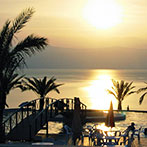
The beach on the private peninsula at Sandals Emerald Bay Resort in Great Exuma, Bahamas is an ideal setting for group gatherings day and night. Credit: Sandals Resorts The beach on the private peninsula at Sandals Emerald Bay Resort in Great Exuma, Bahamas is an ideal setting for group gatherings day and night. Credit: Sandals Resorts

After several years of hand-wringing and speculation about whether the meeting industry would ever fully recover from its unprecedented downturn, many companies are putting the fun back into their meetings and events. And there is no better way to do that than with meeting at a beach resort.

Sharon Brown, owner of Sharon Brown Events in Noblesville, IN, is a longtime proponent of beach meetings. She has done them in Hilton Head, SC, as well as Florida and California.

“One of the reasons we use beach properties is that in many cases we are looking for a destination where attendees can get away from the office, get to know folks, network and relax and think outside the box a little bit,” says Brown, who has hosted multiple meetings at The Westin Hilton Head Island Resort & Spa.

Orlando

The Autobot duo in Universal Studios Florida introducing Transformers: The Ride – 3D, the action-packed experience that opened this summer at Universal Orlando Resort. Credit: Universal Orlando Resort

When it comes to well-oiled meeting machinery — from hefty airlift to broad, diverse hotel inventory and world-class entertainment and activities — few destinations can match Orlando. Its unique formula for success has propelled it to the top tier of the meeting and convention market and kept it there for a decade.

More than 55 million visitors flocked to Orlando in the past year, including 3 million meeting and convention attendees, and 2013 is looking as strong or stronger. Major meeting and incentive industry conferences also are flocking to Orlando: For example, this December, Site’s Global Conference will be held for the first time in Orlando at Loews Portofino Bay at Universal Orlando; the Destination Marketing Association International’s Annual Convention was July 15–17 at The Peabody Orlando. AIBTM, the Americas Incentive, Business Travel & Meetings Exhibition, announced that it will rotate to Orlando every other year beginning in 2014. The Event Service Professionals Association and Professional Convention Management Association held their annual meetings in Orlando in January.

“Orlando is widely recognized as the most visited destination in the nation,” says George Aguel, president and CEO of Visit Orlando, “however, it’s important to us that planners are kept up-to-date on the growing appeal of Orlando. By hosting a series of important industry shows in Orlando, we have had the opportunity to showcase the breadth and scope of what our destination has to offer for incentive programs, as well as meetings, conferences and trade shows.”

Medical Meetings

426_2984807

Medical meetings may have survived the economic downturn, but 2013 brings additional challenges to pharma meetings in the name of the Affordable Care Act. The most sweeping federal health care legislation since Medicare in the 1960s, this controversial law has dominated political debates ever since its 2009 passage. Because most provisions of the law go into full effect in 2014, for medical meeting planners, the challenge of the Affordable Care Act (ACA) is now.

On one hand, the legislation opens up an opportunity for planners to educate meeting attendees about this array of new regulations. However, a provision in the law called the National Physician Payment Transparency Program imposes strict guidelines regarding the reporting of company payments and transfers of value made to physicians — which of course includes spend data related to physician-attended meetings. “I see it — and have heard meeting professionals and the industry overall see it — as a burden, i.e., understanding requirements, building processes and systems, monitoring data,” says Lisa Keilty, CMP, vice president of PMC2, a health care consultancy firm specializing in planning meetings and other events for health care providers. “But I also see it as a positive in understanding how the health care industry needs the expertise and innovation of physicians and other health care professionals to continue improving and investing in medical breakthroughs.”

The Future of Meetings: The Unconference

IMG_1237-LgEr-860x418

Using the Open Space Technology concept, Misha Glouberman staged this unconference for people working in the performing arts. Credit: Jacob Zimmer

As far as conference designer and facilitator Adrian Segar is concerned, everything having to do with traditional meetings has changed over the last decade or so.

For example, potential meeting attendees don’t need to fly across the country to listen to someone speak — they can watch that speaker online. Add in the fact that conferences have never been very good at encouraging or supporting networking, Segar says, and the question becomes, “Why go at all?”

But, what conference attendees are interested in, he says, is talking to and learning from their peers. And that’s the value of an unconference, also known as a participant-driven event, which is designed to take advantage of the collective expertise of the attendees to create meeting content in order to encourage discussion and collaboration.

Segar, founder of Conferences That Work, based in Marlboro, VT, actually has a problem with the term unconference — or at least the way it’s used now. According to Segar, the problem with the term is that it’s come to mean “any kind of conference that’s not a traditional conference.”

Lisa Heft, a consultant, facilitator and educator for her Berkeley, CA-based company Opening Space, specializing in open space meetings, agrees that the term “unconference” has been corrupted over the years.
“Unconference is a word used by a lot of different people, and it means a lot of different things,” says Heft. “It can mean something as simple as deciding not to use PowerPoint. So you get planners who are walking away from (what they think is an unconference), and they’re upset that it’s not very productive.”

Segar prefers the term, “participant-driven event,” which simply means that the meeting becomes what attendees want and need it to be. The process he uses involves setting up a peer-driven event in which the attendees essentially create the content and then decide what sessions they’d like to participate in.

Whatever term is used, it’s one that meeting planners should be aware of, says Misha Glouberman, an unconference designer from Toronto, Ontario who presented a session on “Unconferences and Open Spaces: Designing Participatory Events to Create Real Connections” at last summer’s Meeting Professionals In­ternational World Education Conference in St. Louis.
“It was a micro version of what I do when we run conferences,” he says. “And it was very popular.” So popular, in fact, that he repeated the same session a day later.

But, what he found rather surprising was the degree to which those planners attending the session were unfamiliar with the concept of unconferences or participatory events. “The people obviously know about meetings,” he says. “So you would think they’d be familiar with this, because it’s really been going on for a while.”

The concept of Open Space Technology was developed in the mid-1980s by an organizational consultant named Harrison Owen. And, according to Glouberman, unconferences started to become popular around the turn of the millennium, particularly in the technology sector.

“People see them and say it’s exactly what they need,” he says. “Yet, it hasn’t spread like wildfire.” He speculates that, like most people, meeting planners are creatures of habit.

“People usually have a certain way of doing things,” he says. “So, if you run a big annual conference and lots of people are involved in running it, many people attend it, so making any kind of change is going to be difficult even if it’s one that 98 percent of the people think is a change for the better.”

Glouberman also believes that if planners really thought about why their events were being held in the first place, there would be more interest in participant-driven events. “A lot of times people run conferences simply because they’ve run them year after year,” he says. “But you can’t really get them to articulate why they’re holding the conference. That’s what I try to do — get them to articulate what their conference is really about, and usually they end up telling me that the reason for the conference is to get people to meet and learn from each other.”

Innovative and Cutting Edge

Attending technology conferences was how Steve Radick, formerly a lead associate with the strategy and technology consulting firm Booz Allen Hamilton, was first exposed to the idea of unconferences. Radick, who is now vice president at Cramer-Krasselt, an advertising agency headquartered in Chicago, says that what most impressed him about the format, “was how involved everyone got. It wasn’t a meeting where everyone went, sat in a room and listened to a speaker,” he says. “Everyone had some kind of a role. And they were contributing ideas and leading discussions, and they were able to go from session to session, and leave a session after 10 minutes if it just didn’t suit them, and there was nothing wrong with that — it was just the way (the event) worked. So, I wondered why we couldn’t do something like this at Booz Allen.”

After deciding this kind of format was something that could work at Booz Allen Hamilton, Radick began engaging in some internal education to explain to his team colleagues and leaders what an unconference is all about. He started by posting some blog posts on his company’s intranet and “generated some groundswell around the idea.”

Since Booz Allen Hamilton is a consulting company, some PowerPoint presentations to the leadership team were necessary to explain the rationale behind the idea, as well as its benefits. Radick pitched the idea to his leadership team as a low-cost, low-resource opportunity to network with, learn from and collaborate with other members of the team.
“The question I asked was, ‘Why shouldn’t we do this?’ ” he says. “We were always saying we’re innovative and cutting edge, and we used these words in proposals and new business development, but were we living it? This was a chance to demonstrate it.”

For the location Radick and his colleagues chose a pub because it was big enough for the 100 or so attendees, had space for breakouts, had free Wi-Fi and was informal enough to express the idea that this was not the normal Booz Allen Hamilton hands-on meeting.

The results of a post-event survey indicated that attendees liked the informal nature of the unconference, and the leadership team liked the ideas and discussion that resulted from the event and agreed that the format should be used again. An unconference was the perfect kind of format for this event, Radick says, because it was “all about innovation and things that we could be doing better.” But, he added, a typical all-hands meeting in which employees are called in to hear the latest quarterly updates, “probably won’t work as well.”

Who Should Use It?

Segar says the format should work anywhere, including a corporate setting, even though he doesn’t count too many corporations among his clients.
“It depends on the company culture,” he says. “But it certainly can work, and it has worked when I’ve done them — people loved them.”

One problem, he says, is getting corporate leaders to sign off on something that is so untraditional. “I’ve had meetings with corporations, and the meeting planners and vice presidents and other executives have been totally gung-ho, but then the president or CEO turns the idea down,” Segar says. “And you can understand why — they’re hesitant about losing control.”

With those kinds of concerns in mind, Glouberman says, it should be remembered that an unconference is “not some crazy free-for-all.” It’s actually a very fixed structure, he points out, with a very broad range of things that can happen within it.

“If you think about it, in a lot of ways it’s like a wiki,” he says. “Wikipedia has a very strict structure, but within it there are millions of different pages describing millions of different things.”
Glouberman says the format works best “in organizations where people have to talk to each other — and that’s really all organizations. One thing I hear from virtually every organization I work with is that it’s not going to work with their people, that their group is different. But, it always works, because people want to talk to each other.”

In addition, organizations — particularly corporations — want their employees to see the big picture when it comes to organizational goals. “So one thing an unconference does well is that it breaks people out of their silos,” he says. “You get people talking across silos and what happens pretty quickly is that people see that they have common concerns they want to talk about. And that gets people thinking about the bigger picture within the organization, which is great.”

Big Environment for Big Ideas

Robert Hendrickson, managing director of The Garden Center Group in Ellicott City, MD, went with an open space event for the group’s 2011 annual fall event at the Copper Mountain Resort in Copper Mountain, CO.
Hendrickson had previously attended a session Adrian Segar had put on for meeting planners in Chicago and realized that what Segar advocated jibed with his thinking about The Garden City Group, which is an alliance of about 130 garden centers from around the United States.

“I had been concerned that we needed to start tapping into our own talent, and needed to talk about their own problems, rather than just listening to a series of speakers over and over again,” Hendrickson says. “We’re in an industry with a lot of concerns, and we ought to stop, take a break, and spend some time addressing those concerns. As a workshop planner, I’m always guessing what the most popular topics at a meeting should be, and I thought that instead of taking on that responsibility again, I’d have my clients tell me what they wanted to talk about.”

The decision to book Copper Mountain was a big change for the group, since previous events had always taken place at fairly large city hotels. “But I think this kind of event required a place with a big environment to have big thoughts,” he says. “And it requires an environment out of the norm.” It also helped that the group booked Copper Mountain during the resort’s shoulder season, so that the attendees basically had the place to themselves.

Hendrickson says the response from the 140 attendees was “wonderful. I had people who’ve been in the industry for a long time, and they said it was the most valuable conference they’ve ever attended.”

The Garden Center Group followed up the 2011 event with a more traditional one in 2012, though it did include a half-day session led by Segar. As for the future, Hendrickson says a full open space meeting is probably something that wouldn’t work every year, but that the group will probably use the format for every third event.

Radick says that at Booz Allen Hamilton the unconference was used several more times after the original event. “We didn’t necessarily repeat it with that particular team,” he adds. “But we did keep components of it where we would have a typical all hands meeting, and where the participants would filter out of the conference room or ballroom into the bar area and would continue meeting there. We picked up the pieces that worked and hybridized it.”

Radick recently left Booz Allen Hamilton for his current position at Cramer-Krasselt, where the environment may not be as conducive to an unconference. An advertising agency like Cramer-Krasselt doesn’t have the same kind of meeting culture, Radick says. Instead employees are already working in small collaborative groups, and he suspects the unconference approach won’t work as well with 10 or 12 participants compared to 100 or so.

Still, “I think an unconference would work spectacularly here, because we have a lot of creative people here,” he says. “It’s an ad agency, so you have people coming up with the most creative, original, fun stuff you could imagine, so I really think it would work well here.”
Heft says that it’s important that once meeting planners commit to using open space or some kind of participant-driven event, that they remain open to it in the future. Too many times, she says, planners or clients will choose to use open space because they want to “try something new” and then never use it again.

But, she adds, the planner should really examine the objectives of future meetings, because if those objectives can be met by using something like open space, “then it doesn’t make sense to throw this tool out if it will help you deliver on your objectives and desired outcomes.”

A meeting planner who rejects a participant-driven format because he or she has used it before, and wants something different, “is not connecting process with objectives and outcomes,” says Heft. “I don’t do icebreakers and warm-ups that aren’t going to be directly related to content. I’m not the person you would bring in to do something fun for you. What I do is really about creative thinking and knowledge sharing. But it still can be done in a lively way.” C&IT

Northern California

Golden Gate Bridge and San Francisco at night

Golden Gate Bridge and San Francisco at night. Credit: San Francisco Travel

Northern California is not a single place. It is a collection of places, each of which is world famous for its unique appeal.

From the urban enclaves of San Francisco, Oakland and San Jose, to the renowned wine regions of Napa Valley and Sonoma County, to the more rural eastern region known as Tri-Valley, and the iconic coastline through Monterey County along U.S. Highway 1, Northern California offers planners a diverse list of spectacular options.

San Francisco

It is often said by travel writers that there are only two truly unique cities in America: New Orleans and San Francisco. And both are beloved by meeting planners.

“I’m biased, because San Francisco is one of my favorite places on the planet,” says Gayle Patterson Withers, CMP, coordinator of forums and meetings at the Newtown, PA-based Law School Admission Council, whose business is facilitating the law school admission process for students and administering the LSAT exam. Withers has used San Francisco eight times for her most important annual meeting, which draws about 600 attendees.
“I just love the energy of San Francisco and the experience of being there,” Withers says. “When you get off the plane and leave the airport and you see those iconic views of the skyline on your way into the city, you just feel like you’ve arrived in some place that is very special. And I also love the culture of the city. It’s such a special, interesting place that any attendee can find something fun to do there. You just feel happy being in San Francisco.”

Kathryn Horton, vice president, convention services and events at the San Francisco Travel Association, the city’s convention and visitors bureau, elaborates on why the destination is perennially popular with meeting planners. “The appeal of San Francisco for meetings is based primarily on our cultural diversity and the amount of venues we have to offer,” she says. “And our airlift is excellent, from all over the world. We’re also a very green city that is very walkable. And that means that a lot of groups don’t need to worry about transportation. They can walk everywhere they need to go.”

The most obvious factors in the choice of San Francisco are its beauty and eclectic charm, Horton says. “Everyone in the world wants to come to San Francisco,” she says. “It’s a fantasy for most people, because we often get voted the No. 1 destination in the world or in the country for tourism. We also offer such a variety of hotels, restaurants, offsite venues and activities, that once a meeting planner decides to bring a group here, there is an almost endless list of options to build a program around.”

Withers cites the unique hotels in San Francisco as one of its major appeals. In recent years, she has used the 532-room Hotel Nikko, located just steps from famous Union Square. “It’s just an amazing hotel,” says Withers, who also likes the AAA Four Diamond Hilton San Francisco Union Square.

Horton notes that San Francisco offers a long list of unique, iconic hotels, including landmark Nob Hill properties such as The Huntington, Mark Hopkins, Westin St. Francis and The Fairmont. The last new hotel built in the city was the InterContinental San Francisco, which opened five years ago. Several major properties, including the Grand Hyatt San Francisco and Mandarin Oriental, have completed major renovations.

San Francisco also features a range of spectacular offsite venues. For large groups, up to 4,000 attendees, Horton recommends the new Exploratorium science museum, which opened at its new location at Pier 15 on the Embarcadero in April. It is available for buyouts, and also offers individual spaces for events and receptions.

For medium-sized groups, Horton likes City View at Metreon. “It’s a very nice facility that is like a blank canvas a planner can paint on,” she says. “It can be adapted to any kind of meeting for groups of 300 to 1,000.”

The bayfront Fort Mason Center, administered by the U.S. National Park Service, offers a total of 28 venues accommodating from five to 20,000 people. For small groups of 30 to 250, Horton suggests The General’s Residence, a historic landmark. “It offers magnificent views of San Francisco Bay,” Horton says. The view also includes Aquatic Park and Alcatraz.

Oakland

Located just across San Francisco Bay from San Francisco is Oakland. Although not as well known as its world-famous neighbor as a meeting destination, Oakland offers a more laidback, less expensive alternative that still features easy access to all the Bay Area has to offer.
For the last four years, including her event this June, Withers has hosted her annual meeting in Oakland. The key reason, she says, is its affordability, adding that she estimates that holding the meeting in Oakland is 30–40 percent less expensive than San Francisco. That is important because prospective student attendees do not pay to attend the meeting, which is funded by law school exhibitors and sponsors.

But, Withers says, Oakland also delivers other benefits.

“One of the things we like is that it’s easy to get to for attendees from all over the Bay Area,” she says. “That’s important because although our 130 law school exhibitors are from all over the country, our attendees are local. So we also try to pick a location that people can get to easily. And Oakland is very easy because of the BART trains, and it’s also easy to drive there and find parking.”

Withers’ hotel of choice last year and this year was the Oakland Marriott City Center, located near Jack London Square. “The hotel has a very small convention center, which is perfect for our meeting,” she says. “But what I really like is the load-in. It’s at street level, so we don’t have to deal with freight elevators. The hotel is also very easy for attendees to get into and out of. So it is just convenient for everybody. It’s just a very nice property that works very well for our particular meeting.” The Oakland Marriott completed a major renovation two years ago.
Withers also likes the fact that the hotel is surrounded by lots of good dining options. “We always make sure that our hotel has plenty of good local restaurants nearby, because that’s important to our exhibitors, who tend to be foodies who do a lot of networking and entertaining during the meeting, and Oakland has an excellent local dining scene, especially in areas like Jack London Square,” she says. “And there are a lot of small local restaurants that are excellent.”

Wine Country

Located about an hour by car from downtown San Francisco are the world-famous vineyards of Napa Valley and Sonoma County. Although best known for their production of some of the world’s finest wines, Napa and Sonoma are also acclaimed for their fine dining and arts scenes.

Napa Valley, featuring a Mediterranean climate and spectacular scenic beauty, is defined by the Mayacamas mountain range to its western and northern sides, and the Vaca Mountains on its eastern side.

Robin Wasserman, administrative assistant at San Francisco-based national law firm Gordon & Rees, has planned an annual partner retreat for about 175 attendees for the past three years. The firm has been taking the partners to Napa Valley every year over the last decade for the much-anticipated event. “Napa Valley is an exquisitely beautiful place,” says Wasserman, who uses the Villagio Inn & Spa and Vintage Inn, its sister property next door, for her event. “They are the perfect match for our group,” she says. “They have great meeting rooms. And their staff is extremely attentive to all of our needs. If we say ‘Jump,’ they say ‘How high?’ And we also get great rates that include a full breakfast buffet, and high tea and snacks in the afternoons. So we get very good value.” Villagio Inn & Spa also features a fine wine shop, where Wasserman stages an afternoon wine-tasting with gourmet snacks.

“The hotels are also centrally located in Yountville,” she says. “There’s a nice little shopping plaza right next door. And across the street, there are several five-star restaurants. So our attendees can easily walk everywhere.”

There are also hiking and biking trails. “We have a lot of outdoorsy partners who like to take advantage of those things,” Wasserman says.
But of particular appeal to her well-heeled attendees are the critically celebrated local restaurants in downtown Yountville. Among their favorites are Redd, a five-star American bistro; Bistro Jeanty, which serves light French-California fare, and Bottega, located between the two hotels and serving fine Italian cuisine. “And there are a lot more superb restaurants within easy walking distance of the hotels,” Wasserman says.

Among popular activities are tours of some of Napa’s more noted local wineries and hot-air ballooning excursions.

Although not as well known as Napa Valley, Sonoma County is also popular because of its wineries and spectacular restaurants. Sue Klick, CMP, senior convention specialist at industry-leading medical device manufacturer Medtronic, which is headquartered in Sonoma County’s Santa Rosa, has regularly used her home turf for important physician immersion meetings for 15 years.

“Sonoma County is just a spectacular place visually,” she says. “The terrain is beautiful. The countryside is beautiful. The local people are very friendly and welcoming. And we also have fabulous weather. It’s just a great location for a meeting.”

As a local, Klick notes that Sonoma is not as developed or as crowded as its more famous neighbor. “That means it’s also fairly easy to get around. Napa Valley gets all of the press,” she says. “But we are Napa’s pretty sister.” Although, like Napa, Sonoma is best-known for its winemaking, it too boasts a robust arts community and upscale fine-dining scene.
Although there are major-flag hotels from Hilton and Hyatt in Santa Rosa, Sonoma’s hotels tend to be smaller boutique-style properties, Klick says. Among the hotels she particularly likes is Hyatt Vineyard Creek Hotel & Spa in Santa Rosa. “It’s a great location, because it’s right at the heart of downtown,” she says. “If attendees want to go for a stroll, there are restaurants and shopping right out your front door.”

She also favors the intimate conference center at Vineyards Inn, a boutique property slightly north of Santa Rosa in Kenwood. “It’s a small hotel, with under 50 rooms, but they have very nice conference facilities for small groups,” she says.

One of Sonoma’s most popular small hotels is the exclusive and intimate 29-room Kenwood Inn & Spa, which features one of the country’s most celebrated spas and is adjacent to Sonoma Golf Club and Kunde Family Estate winery, making it a convenient choice for small groups that want a lot of meeting infrastructure in a small footprint.

As a longtime user of Sonoma, Klick also has high praise for its restaurants. Two she particularly likes — both operated by the local Stark Reality Restaurants — are Stark’s Steakhouse, featuring certified Angus steaks and sustainable seafood, and Willi’s Wine Bar, both in downtown Santa Rosa.

San Jose

Located in the heart of Silicon Valley and hailed worldwide as a hub for entrepreneurship and technological innovation, San Jose — now ranked as the 10th largest city in the U.S. — is a rising star as a meeting destination. Newly modernized San Jose International Airport is just four miles from downtown hotels.

The city’s modern, state-of-the-art meeting infrastructure includes the San Jose Convention Center with 425,000 sf of convention space, which features 165,000 sf of contiguous exhibit space, a 22,000-sf Executive Ballroom and 30 breakout rooms. The facility is now in the final stages of a renovation and expansion that, when completed this fall, will add 125,000 sf of new space, which includes 38,706 sf of new meeting space and a new 35,110-sf Grand Ballroom. Following the renovation, the San Jose Convention Center will feature a total of 550,000 sf of convention space and 305,000 sf of exhibition space.

San Jose also features a hotel inventory of 2,000 committable rooms on peak downtown and 4,000 on peak citywide, with a broad assortment of major flag hotels within easy walking distance of the convention center.

There’s a wide array of unique offsite venues in San Jose that take advantage of the city’s 300 days of sunshine a year. For example, the San Jose Museum of Art can host an indoor-outdoor event for up to 3,000; and the San Pedro Square Market, half a mile from the convention center, offers indoor-outdoor space for receptions with up to 1,850 attendees. The Tech Museum offers a rooftop terrace for 150 and 132,000 sf of gallery and meeting space for up to 2,500. The upscale Silicon Valley Capitol Club offers indoor-outdoor space for 300 and 360-degree views of downtown. Planners looking for a mid-sized theater will be delighted with the historic 3,326-seat San Jose Civic, a 1936 city landmark that reopened last year after a four-year renovation.

But perhaps its most important attributes in today’s meeting market are that it has been voted one of America’s greenest cities by Green Tech Media, and features a walkable downtown with a campus feel. It is also among the country’s safest cities.

And among the city’s most important meeting industry innovations is its unique Team San Jose, a partnership of its convention center, convention and visitors bureau, and cultural attractions. Team San Jose delivers one-stop shopping for convention venue management services, food-and-beverage services, hotels, labor, offsite venues, arts organizations and local businesses.

Monterey County

Monterey County is located about two hours south of San Francisco on the Pacific coast, along U.S. Highway 1, one of the most scenic drives in the world. The picture-postcard-perfect coastline features a trio of spectacular individual destinations: Big Sur, Monterey and Carmel.
Despite its sprawling, sparsely populated geography and breathtaking natural beauty, Monterey County features substantial meetings infrastructure, which includes nearly 12,000 hotel rooms in 200 hotels and resorts. Meeting facilities across the county can handle groups of 10–30,000 people. The Monterey Conference Center accommodates up to 1,700 attendees in 41,000 sf of meeting and banquet space, which includes a 19,600-sf exhibition hall, grand ballroom and 500-seat theater.

Monterey features major flag hotels such as the Hyatt Regency Monterey Hotel and Spa on Del Monte Golf Course, InterContinental The Clement Monterey, and Monterey Marriott, as well as smaller, more unique local hotels such as Portola Hotel & Spa and Casa Munras Hotel & Spa.

The area’s unique attractions include Cannery Row, immortalized in literature by John Steinbeck; Monterey Bay Aquarium, which offers multiple options for staging private events in the exhibit galleries for up to 2,500 attendees; and fabled Pebble Beach golf course. More adventurous groups can get an adrenaline rush at Mazda Raceway Laguna Seca and take part in the Skip Barber Driving School.

There are nearly limitless opportunities for outdoor adventures including hiking, biking, mountain climbing, boating, kayaking, hang-gliding, whale-watching and scuba diving. Among its most popular outdoor attractions is its Recreation Trail. Planners looking for some serenity can find it at the Monarch Grove Butterfly Sanctuary.

Carmel-by-the-Sea is home to Clint Eastwood and unique landmark hotels such as Highlands Inn and Carmel Mission Inn, as well as major flag properties such as Hyatt Carmel Highlands. Eastwood operates and personally oversees the upscale and intimate Mission Ranch Resort, where he might just show up to play piano for your group. The 77-room Quail Lodge & Golf Club in Carmel Valley southeast of Monterey offers a variety of intimate meeting and event spaces for 20–300 attendees, plus a Land Rover Experience Driving School.

Monterey County also offers some of the most dramatic restaurant views to be found anywhere in the world, such as Nepenthe, overlooking the Pacific from atop the bluffs of Big Sur. Just up the road is one of the world’s most spectacular seaside hotels, Ventana Inn & Spa.

The Monterey County Convention & Visitors Bureau offers a wide range of planner services including complimentary visitor services and registration staff, starting with four hours for groups with 100–299 peak rooms and eight hours for groups with 300+ peak rooms. Delegate housing services are also available for groups with 450+ peak rooms per night for two or more nights utilizing four or more hotel properties. The CVB also provides planners with a dedicated personal assistant who will consult on and oversee every practical detail of a meeting.

Tri-Valley

Located 33 miles east of San Francisco and stretching from Mount Diablo to Lake Del Valle and the hills of Livermore Valley wine country is California’s Tri-Valley, known as East Bay. Comprised of the town of Danville and the cities of Dublin, Livermore, Pleasanton and San Ramon, Tri-Valley is accessible through the San Francisco, Oakland and San Jose airports.

“Few places are as authentic, charming and unspoiled as Tri-Valley,” says Liz Sullivan, social media and public relations manager for Visit Tri-Valley California.

Tri-Valley is home to more than 300,000 sf of meeting space and more than 4,500 hotel rooms featuring major hotel brands such as DoubleTree, Hilton, Hyatt, Marriott and Sheraton. Its event facilities include Alameda County Fairgrounds, with 150,000 sf of space; Robert Livermore Center, 90,000 sf; San Ramon Conference Center, 55,000 sf; Hilton Pleasanton at the Club, 24,000 sf; San Ramon Marriott Conference Center, 19,000 sf; Palm Event Center, 8,000 sf; and Shannon Community Center in Dublin, 6,000 sf.
The area’s more than 300 restaurants feature diverse, authentic cuisines such as classic Californian, Italian, Mexican, Chinese and American mixed with ethnic influences such as Afghani, Sri Lankan, Korean and Thai. And Tri-Valley boasts 13 golf courses and 53 award-winning wineries — from boutique labels to historical wineries such as Concannon and Wente. C&IT

High Stakes Meetings

2/4/10: Welcome sign, day.(Photo by Glenn Pinkerton)

Credit: Las Vegas News Bureau

Gaming resorts are the ultimate self-contained meeting properties because they offer spacious meeting facilities, exciting entertainment, amenities galore and world-class gaming.

Planners know that gaming resorts result in higher meeting attendance and provide good value. That’s important as planners operate on smaller budgets and companies increasingly demand financial justification for meetings and return on investment.

No wonder gaming resorts nationwide are as popular as ever. Las Vegas continues to be top of mind for planners seeking the largest and most diverse variety of gaming resorts. Kathy Miller, president of Schaumburg, IL-based Total Event Resources, chose Las Vegas for a three-day sales and product training meeting in January for a manufacturing company’s 125 salespeople and executives. Miller decided on Las Vegas partly for practical reasons. “Although it was just a few days, they all really wanted to be in Las Vegas. We also had a number of executives in the Western region that could get in and out of Las Vegas easily. Sometimes things like that are driving forces in where you meet,” says Miller.

Miller looked at several properties in Las Vegas before selecting Wynn Las Vegas and Encore, which together offer more than 4,700 guest rooms and suites as well as more than 260,000 sf of meeting space. “The Wynn’s style suited our group,” says Miller. “It has an intimate feel. Las Vegas and some hotels can be overwhelming for some people, particularly when you have a smaller group. The Wynn is big, and there is a lot to it, but the way it is laid out doesn’t make it feel overwhelming. And you don’t have to walk through the casino to get to the meeting area.”

Wynn’s location on The Strip was a key reason Miller selected the hotel. In addition, they “felt welcomed and important as a small group. They were very attentive and thrilled to have us,” she said. “We also wanted the convenience of being on The Strip to go out at night. And the room rates were awesome.”

Attendees enjoyed the Wynn’s many amenities including the 35 fine and casual dining restaurants, 111,000-sf casino, two spas and 100,000 sf of retail space.

The group also created its own fun. “The meeting happened during the BCS National Championship Game,” says Miller. “So we used one of the suites to bring in large TV screens and have an event around the game. We had catering from the hotel. On the last day, we had a poolside cocktail reception. They had light food and a chance to regroup and network after full days of meetings before going out.” Las Vegas properties will continue to be at the top of Miller’s list for certain meetings, she says.

Las Vegas

Once again, the numbers tell the story about Las Vegas. In 2012, Las Vegas hosted 53 of the top 250 trade shows in the United States, according to Trade Show News Network, and the 19th consecutive year Las Vegas earned the No. 1 position. In addition, last year Las Vegas attracted a record 39.7 million visitors, up 2.1 percent over 2011, according to the Las Vegas Convention and Visitors Authority (LVCVA). The number of conventions and meetings increased 13.6 percent.

Amy Riley, LVCVA senior director, convention sales, cites several reasons why Las Vegas remains the mecca of gaming destinations: “It’s the value we offer, the size of the destination, meeting space, guest rooms and accessibility. And our hotels and resorts are constantly revising, upgrading, adding and reinventing themselves for both new and repeat visitors.”

Las Vegas is further expanding its meetings infrastructure. One of the city’s largest and most visionary projects is the Las Vegas Global Business District (LVGBD). The $2.5 billion project will create an international complex that will include major renovations to the 54-year-old Las Vegas Convention Center (LVCC).

Plans call for the LVCC to have more exhibit, general session and meeting space; technology upgrades; more food and beverage outlets; additional lobby space; a grand concourse connector; and outdoor public gathering spaces. “The LVCVA board has approved the project and it is still in the beginning stages,” says Riley. “It will be completed in phases over the next 10 years or so. We still must go through the financing process, get the project management team established as well as the architecture. There is no timetable for starting construction yet.”

The LVCVA will use the LVGBD to leverage its status as an official World Trade Center site obtained through an agreement with the Consumer Electronics Association. The designation combined with the LVGBD will increase the LVCVA’s ability to draw more meetings and trade shows from abroad, says Riley.

In other Las Vegas news, Malaysia-based Genting Group announced in March that it will build Resorts World Las Vegas, a multibillion-dollar Asian-themed resort. The property is expected to open in 2016 with 3,500 rooms, 500,000 sf of convention space and more than 300,000 sf of pool and water features.

Meanwhile, existing resorts are improving their properties to compete with the coming competition and each other. MGM Resorts International has been renovating several of its properties, including Mandalay Bay Resort and Casino, Bellagio, The Mirage Hotel & Casino and the MGM Grand Hotel & Casino. The MGM has remodeled the 3,570 rooms and 642 suites in its main tower. More than 500,000 sf of flexible meeting space including the 92,000-sf Marquee Ballroom can accommodate meetings of all sizes. The 1,100-suite Delano Las Vegas will take the place of THEhotel in Mandalay Bay. The Delano, a partnership between MRI and Morgans Hotel Group, will open in 2014. In addition, MGM Resorts and AEG plan to build a 20,000-seat arena located between New York-New York Hotel & Casino and Monte Carlo Resort and Casino.

Another major player, Caesars Enter­tainment, plans to open Gansevoort Las Vegas on the former site of Bill’s Gamblin’ Hall & Saloon. The Gansevoort, scheduled to open in early 2014, is a partnership between Caesars, Gansevoort Hotel Group and nightlife promoter Victor Drai.

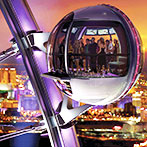
In other Caesars Entertainment news, the world’s first Nobu Hotel opened at Caesars Palace Las Vegas and includes a 327-seat Nobu Hotel Restaurant and Lounge. The 181-room boutique hotel is a partnership between Caesars Palace, celebrity chef Nobu Matsuhisa, actor Robert DeNiro, and Hollywood producer Meir Teper. Caesars Entertainment also continues to work on The Linq, a $500 million dining, entertainment and shopping district that will be anchored by the Las Vegas High Roller, a 550-foot high observation wheel with 28 giant glass-enclosed cabins that can accommodate 40 attendees.

Also on The Strip, The Venetian/The Palazzo adjacent to the recently renovated Sands Expo and Convention Center offers more than 7,000 guest rooms and suites. More than 40,000 additional rooms are located within a 10-minute walk. Environmentally conscious groups are attracted to the Venetian/Palazzo because it is one of the largest LEED-certified meeting complexes in the world.

The Venetian/Palazzo is a complete meeting property. The Palazzo features more than 60 luxury boutiques and fine-dining restaurants that include CUT by Wolfgang Puck and Table 10 by Emeril Lagasse. The Venetian features the Grand Canal Shoppes — an indoor streetscape with gondolas and singing gondoliers,as well as several upscale dining and shopping options.
One of Las Vegas’ most popular newer properties include the 4,004-room Aria Resort & Casino, located within CityCenter on The Strip. The 61-story AAA Five Diamond resort offers more than 300,000 sf of high-tech meeting and convention space that includes wireless touch panels operating videoconferencing, fiber optic cable, HD projection screens and plasma TVs.

Also new at Aria is “Zarkana”— the surreal acrobatic spectacle by Cirque du Soleil. The diverse cast of more than 75 international artists transports the audience into a fantastical and suspenseful world, blurring the boundaries between the real and imaginary.

Opening in July, the menu at the new FIVE50 Pizza Bar, the first casual concept by James Beard award-winning chef Shawn McClain, will feature McClain’s signature pizzas paired with a selection of craft beers along with small plates, handmade pastas and decadent desserts.
Also, Aria Buffet was updated and now has new culinary offerings as well. There are 11 buffet stations: Asian, Italian, Pizza, Mediterranean, Tandoori, Carvery, Diner, Salad Bar, the all-new Fish Market and Latin stations and Sweets.

Javier’s, which opened last fall, features grilled seafood, steaks, chicken and vegetarian dishes as well as premium tequila and Javier’s famous hand-shaken, made-to-order margaritas.

For culinary entertainment, attendees will enjoy Chef Masa Takayama’s new Tetsu, located inside his Japanese restaurant barMASA. Highly skilled teppan chefs do all the prepping, cooking and plating orders specific to each guest.

Atlantic City

Despite minimal residual problems — both real and perceived — left in the wake of Hurricane Sandy, Atlantic City continues to attract meetings from throughout the nation. Gary Musich, vice president of sales for the Atlantic City Convention & Visitors Authority, says 2012 ended up flat due to the storm but the prospects for 2013 and beyond are very positive. “We are projecting 12 percent growth in meetings for 2013.”

Behind that growth, says Musich, “is that we are evolving from a gaming destination to a balanced, mature destination appealing to all business segments. Our room inventory grew by over 20 percent in 2008 as the recession hit, but we have been able to absorb that. We have seen an evolution of the city as a tourism district that has been carved out in collaboration with the Atlantic City Alliance. We are aiming to lengthen the stay with attractions that are also important to planners. There has been a massive investment in retail like The Walk, a 10-square-block dining and retail center that connects the convention center and Boardwalk. And we recently got a commitment from Bass Pro Shops to build a 90,000-sf facility.”

Musich says the city’s massive ‘Do AC’ campaign to get the word out to planners is paying off. “Attendance at meetings and conventions was up 65 percent and spend was up 43 percent in January, demonstrating that the rebound from the storm was quick,” he says.

According to Jeff Vasser, president of the Atlantic City Convention & Visitors Authority division of the Casino Reinvestment Development Authority, “Even through the national recession, superstorm Sandy and increased competition from surrounding states, Atlantic City has been able to maintain an extraordinarily high occupancy rate. Atlantic City is a strong and viable destination.”

In a statement, Vasser and tourism officials pointed to “recent additions such as Revel Casino-Hotel, Golden Nugget, the Margaritaville complex, art installations, roving ambassadors, an increased calendar of special events, the new ‘Do AC’ branding and other initiatives throughout the Tourism District as signs that the city will remain relevant and maintain its visitor base in 2013 and beyond.”

A spokesperson for Caesars in Atlantic City, says, “The ‘Do AC’ campaign is spending $30 million over five years and that has been very helpful. They help to offset some costs in bringing planners to our properties. For Atlantic City, show is better than tell. Planners are always surprised at what Atlantic City has to offer as far as shopping, restaurants, etc.”
The top three reasons Atlantic City remains such a viable destination for meetings, according to Musich, are:

Convenience to major cities such as New York and Philadelphia;
One-stop shopping because the CVB owns and operates the convention center; and
Cost effectiveness.

Dubbed as “the most meeting-friendly hotel in the city,” the 2,079-suite Tropicana Casino & Resort recently completed a $180 million renovation and offers more than 100,000 sf of meeting space including a 25,000-sf grand ballroom and a 25,000-sf exhibit hall.

Planners also sing the Tropicana’s praises. Deborah Langdon, HR director, regional training for Rutherford, NJ-based SGS North America, an inspection, certification and verification company, has been a long-time Tropicana customer. “SGS is the third company I have worked for since 1996, and I have done meetings with the Tropicana for each employer since then,” says Langdon. “I have had a long-term relationship with the people who work there, and I have never had a bad meeting with them. If I say my CEO is flying in and I need certain things for him, they totally understand. They know my expectations and try to exceed them.”

Langdon has held a few SGS training and development sessions at the Tropicana every year since 2010. In January, the Tropicana hosted a three-day executive development session for 25 SGS vice presidents, directors and managing directors mostly from the U.S., Mexico, Canada, South America and Central America. Langdon chose the Tropicana partly because the property’s many self-contained offerings including 24 restaurants, 25 shops, 18 bars and a 148,000-sf casino matched the needs and goals of the meeting.

Attendees had to spend lots of time on-property because their agendas were packed with formal and informal sessions, breakouts and meetings, says Langdon. “During the day, they have the development piece of it. At night, they do fun networking dinners in some of the Tropicana’s restaurants like Fin and Carmine’s. We typically have the restaurants to ourselves. There are times when they are working through dinner and we have it catered in the meeting space. Almost all of our dinners are onsite,” she says.

Langdon continues to return to the Tropicana in no small part due to the property’s service. She cites two examples: “We had a meeting scheduled last year on the day of Hurricane Sandy. We had people flying in from all over the world. Four days before the meeting, we still hadn’t cancelled. A staff member gave me her personal number to call to keep in contact regarding the storm and cancellation. We did cancel. It’s also the little things like the person in charge of banquets always remembering that the group always wants yogurt during breakfast.”

The much anticipated Jimmy Buffett’s Margaritaville, located inside the Resorts Hotel Casino is now open. The restaurant features a stage for nightly live entertainment, a tiki bar and Buffett-inspired accent pieces. Attendees can gather on the exterior deck on the Boardwalk for alfresco networking and ocean breezes.

The popular 2,000-room Borgata Hotel Casino & Spa, is a complete, self-contained meeting property with 70,000 sf of event space. The Borgata completed a $50 million room redesign project, and introduced in-room gaming, a first for the hotel industry. Also, the hotel recently introduced a new look for one of its two nightclubs, mur mur. The Borgata features innovative and world-class dining experiences with a wide array of restaurants and world-renowned chefs under one roof, including the Old Homestead Steakhouse and legendary chefs such as Wolfgang Puck (Wolfgang Puck American Grille) and Bobby Flay (Bobby Flay Steak). A companion property, the elegant Water Club at Borgata, provides 800 guest rooms, 18,000 sf of meeting space, a 36,000-sf spa and five pools.

Planners return again and again to Caesars Atlantic City Hotel & Casino, a longtime lynchpin of Atlantic City, located along the Boardwalk just two blocks from the Atlantic City Convention Center. The fabled 1,144-room hotel offers the 17,135-sf Palladium Ballroom, 24,000 sf of meeting space and the renovated 1,500-seat Circus Maximus Theater. Attendees can spend their spare time gaming and enjoying the Qua Baths & Spa. Caesars Atlantic City, like other properties owned by Caesars Entertainment, is part of its Total Rewards Meetings and Events program, which offers reward credits to planners for their own use or to put toward future meetings.

Native American Resorts

Planners can choose from a range of top Native American-owned gaming resorts that are holding their own with competitors nationwide. The resorts typically are located in picturesque natural settings and feature décor based on Native American cultures.

Groups seeking a gaming resort graced with Southwest beauty may consider the 273-room Inn of the Mountain Gods Resort & Casino, located in Mescalero, NM, near Ruidoso. The Inn is owned by the Mescalero Apache Tribe, which also runs nearby Ski Apache, a ski resort. Planners and attendees can take advantage of the Inn’s 30,000 sf of flexible meeting space, four restaurants, 38,000-sf gaming floor and the Inn of the Mountain Gods Resort Championship Golf Course.

The Seattle Fish Company of New Mexico Inc. selected the Inn as the first gaming resort to host winners of the firm’s annual incentive contest for distributors. “It was different for us. In the past years we took the group to places like Boston,” says regional vice president Darrin Amador, who plans at least three meetings a year for the Albuquerque, NM-based company. “I like that the Inn was close because we brought people in from a 500-mile radius. They also have a very nice property. It’s cool, literally, because it’s up in the mountains, and it’s a beautiful setting. There is a forest and gorgeous lake. The casino overlooks the golf course and its well-manicured greens.”

Golf was among the activities that attendees enjoyed. “We had a contest for t-shirts and hats. I paired everybody up based on personality. I paired my partner with a company executive, and I paired with another executive. The golf was 99 percent pleasure and 1 percent business,” says Amador.

The group also enjoyed several other activities on- and off-property. “We had a dinner at the Inn’s fine-dining restaurant (Wendell’s Steak & Seafood Restaurant and Lounge),” says Amador. “We also had a dinner offsite. Some people who didn’t want to golf enjoyed a spa in Ruidoso. The group really liked the casino and had a good time in regard to that.”
Another Native American property, the AAA Four Diamond Talking Stick Resort, is located in Scottsdale, AZ, in a desert setting with views of the surrounding mountains. The 497-room resort is owned by the Salt River Pima-Maricopa Indian Community, and displays of Native American culture are featured throughout the property. Located only a 20-minute drive from Phoenix’s Sky Harbor International Airport, the resort features ample meeting space, including the 25,000-sf Salt River Grand Ballroom, 22 meeting rooms and 50,000 sf of outdoor function space. The casino spans 240,000 sf, and the 650-seat showroom features top live performances. Golfers will enjoy the resort’s two championship courses.

Prominent West Coast Native Ameri­can resorts include the 370-room Tulalip Resort Casino, located just a 30-minute drive from Seattle. The AAA Four Diamond property, operated by the Tulalip Tribes, features several tribal touches including 25-foot house posts hand carved from a 1,000-year-old red cedar tree. Meeting space totals 30,000 sf and includes the 15,000-sf Orca Ballroom and several breakout spaces. All meeting rooms include Wi-Fi, LCD projectors and drop-down screens. The Oasis Pool is located next to the meeting areas and serves as a unique function space.

Connecticut

Connecticut is home to Foxwoods Resort Casino in Mashantucket and the Mohegan Sun in Uncasville. Both properties are easy to access by air and car from New York, Boston, Hartford and Providence. Recently, it was widely reported the Mashantucket Pequot Tribal Nation, which owns Foxwoods Resort Casino, completed the restructuring of $2.3 billion in debt. As part of the restructuring, Foxwoods received $25 million of new financing.
Foxwoods, a AAA Four Diamond property, is the largest resort casino in the U.S. The Foxwoods complex offers 2,200 guest rooms among four properties — the Grand Pequot Tower, MGM Grand at Foxwoods, Great Cedar Hotel and Two Trees Inn. Combined, the properties offer more than 150,000 sf of meeting space.

The resort’s array of activities and amenities is impressive. These include the 1,400-seat Fox Theater and 4,000-seat Grand Theater, six casinos, two golf courses and the award-winning G Spa. Guests can dine at seven gourmet restaurants and enjoy friendly competition at the Rees Jones-designed championship golf course and a bowling alley. The Comix comedy venue provides laughs galore.

The Mohegan Sun is owned by the Mohegan Tribe and located along the scenic Thames River in the foothills of southeastern Connecticut. Planners will find everything they need for small and large meetings, including 1,200 rooms and suites, 100,000 sf of total meeting and function space, and the 38,000-sf Uncas Ballroom.

When it comes to activities and entertainment, Mohegan Sun offers the complete package. Following a day of meetings, groups can unwind in the 300,000 sf of gaming space and at the 20,000-sf Elemis Spa. Attendees can also hit the links at the Mohegan Sun Country Club at Pautipaug, which offers a newly renovated clubhouse and an 18-hole private course. The Mohegan Sun’s plentiful dining and shopping options include 45 restaurants, and food and beverage outlets, including Michael Jordan’s Steak House and Bobby Flay’s Bar Americain. In addition, the Mohegan Sun Arena features nightly big-name entertainment and is home to the WNBA’s Connecticut Sun pro basketball team. C&IT

Incentives: Why Do Them Wrong When You Can Do Them Right?

CIT-2013-10Nov-Sommers,BrookeBrooke Sommers, CMP, CMM, owner of Strategic Conferences & Events LLC, has been planning meetings for more than 20 years and is currently focusing on Strategic Meetings Management and the value of meetings and events for corporations. Brooke left Sun Microsystems after more than 12 years, nine of which were with StorageTek prior to their acquisition by Sun. The events team at StorageTek managed 300 meetings and events per year. At Sun, Brooke project-managed the sales events for North America. www.strategicconferences.net

According to Wikipedia, an incentive is something that motivates an individual to perform an action. In the case of our industry, that is fairly true. Typically we want to incent a group of people to perform at the very top of their performance structure. We want them to be the over-achievers, sales drivers, leaders of the pack.

I believe that an incentive should be a trip of a lifetime, something that you wouldn’t do on your own, going somewhere that you may not go on your own. It should also be with a group of your peers. Direct peers. Never a cash award — that is what a bonus is for.

Most sales organizations have quota-bearing individuals who have some sort of incentive built into their sales goals. If they achieve a certain percentage of their quota, whether it is over a certain threshold or the top designated percentage of the sales organization, then they are invited to an annual trip.

Changing Spaces: Designing the Conference Experience

Derrell Jackson is a strategic education consultant for Herman Miller where he oversees the Learning Spaces Research Program, which assists educational and corporate institutions with informing the design of their future learning environments.

The “Sage on the Stage” model of presentation is alive and thriving at conference centers and meeting venues across the country: rows of chairs face the main stage, where “sages” impart their knowledge to an audience of eager listeners. This lecture-style of space design — still prevalent throughout academia and has been since medieval times — makes sense for keynote sessions where hundreds of attendees pack a room for high-profile speakers such as General Colin Powell (who, by the way, is quite entertaining). But it’s increasingly less relevant as events become smaller and more intimate (100 or less), and attendees and presenters alike seek more collaborative engagement.

Statistics justify this shift in settings and style. According to a recent study from the National Training and Learning Institute, learners only retain half (50 percent) of the information heard when discussing a particular topic among peers. The number increases considerably (to 75 percent) in interactive settings, where people are given the opportunity to put learning into practice. Lectures round out the bottom, indicating that just 5 percent of what is heard in lecture-style presentations remains in attendees’ memories once they walk out the door. Thousands of hours and millions of dollars are invested every year with the goal of designing impactful conference experiences. And as executive leadership continues to demand more measurable returns for all facets of business, clearly something needs to change.