John Tschohl

Empowerment: The Tool for Every Successful Company

CIT-July2019-COL-Tschohl,John-ServiceQuality-147x147John Tschohl is a professional speaker, trainer and consultant. He is the president and founder of Service Quality Institute (the global leader in customer service) with operations in over 40 countries. Tschohl has written several books on customer service, including Moving Up, A step-by-step Guide to Creating Your Success and has available the 13th edition of AETCS. Both books are available on Amazon. Tschohl is a self-made millionaire, traveling and speaking more than 50 times each year. He is considered to be one of the foremost authorities on service strategy, success, empowerment and customer service in the world. Tschohl’s monthly strategic newsletter is available online at no charge. He can also be reached on Facebook, LinkedIn and Twitter.

A company’s success lies in empowered employees. It is important to train employees and make sure they have trust in what empowerment will bring to a company. Satisfying customers will quickly benefit everyone. Moreover, happy, empowered and fulfilled employees are the key to creating “over-happy customers” for your company.

When employees are empowered and given responsibility, they use their talents and skills to maximize the opportunities.

Empowerment means every employee has to make fast decisions in favor of the customer. It’s important that we are honest and sincere in our efforts to service our customers. The only way we can do that is by empowering employees to satisfy the customer quickly.

In my book “Empowerment: A Way of Life,” I illustrate four challenges that all businesses face. They are:

1st: Many executives don’t trust the customer. They believe the customer is trying to take advantage of them. Employees feel the same way.

2nd: We don’t trust employees. We pay them as little as we can and have even less confidence in their ability to make decisions. We have a belief that our lying, cheating customers are going to take advantage of our incompetent employees.

3rd: With empowerment you don’t need as many managers and supervisors. They’re not overly excited about losing their perceived power, nor are they thrilled about the potential of losing their jobs.

4th: Very few employees are on their knees at night praying for empowerment. It’s just too risky.

Never use “No”

The first rule of excellent customer service is to never use “No.” People who always manage to find a way to make things happen, to always find a “yes” and do it, are priceless. Give your employees the tools and the trust to use empowerment for the benefit of the customer and the company. Empowerment is NOT about breaking the rules, but bending them to keep the customer happy. It is making fast decisions on the spot in favor of customers.

Hyatt Hotels treats different customers differently. Since they know who their best customers are, they’re working not to charge them more, but to give them more. They’re setting out to randomly cover bar tabs, offer free massages and provide other services for which they could otherwise charge. If they do it in a corporate, by-the-book way, it’ll feel fake and will fail. But, if they empower their employees to actually be generous, it can’t help but work.

“Not My Job”

Three words that can kill an entire organization. Empowerment allows the employee to make a decision on the spot for the customer instead of working their way through a paralyzed system to figure out what to do next. Give employees the authority to take action. No one should have to go “higher up” to get permission to help a customer. Empower everyone to break the rules, thus allowing employees to have input and control over their work. When people with problems call your company, the first employee who answers the phone should be able to solve the problem.

What Are You Building?

In a world of mediocrity that relentlessly races to the bottom, you lose if you also race to the bottom. The only way to win is to race to the top, and empowerment is one of your most valuable tools. My definition of empowerment is getting an employee to make a fast decision, on the spot, in favor of the customer. If the customer wins, your organization wins.

Understand what drives customer value, then figure out where empowerment can improve the quality, speed and cost — with which that value is delivered. Empowering people in the organization to use their best judgment turns out to be faster and cheaper — but only if you hire the right people and reward them for having the right attitude.

I have been passionate about empowerment and continue to preach on the subject. It is a tool for every successful company to use to deliver exemplary service to every person who walks through your doors.

“Your empowered team will drive your business and crush your competition”— John Tschohl C&IT


CIT-Aug-19-Feature-IMEX-America-2019-14x147

IMEX America Preview 2019

IMEX America to spark imagination with educational offerings designed to engage, inspire and bring more creativity.

IMEX America to spark imagination with educational offerings designed to engage, inspire and bring more creativity.

IMEX America, the largest meetings industry trade show in the U.S., will be bigger than ever September 10-12 at the Sands Expo and Convention Center at The Venetian® | The Palazzo® in Las Vegas. IMEX America will bring together around 3,500 suppliers and 4,000 qualified buyers to plan and book everything from high-level incentives, meetings and conventions as well as to make important new contacts, strengthen existing relationships and seal critical deals.

Smart Monday helps make you smarter

IMEX America kicks off with a full day of free education September 9 with Smart Monday, powered by Meeting Professionals International (MPI). The day of cutting-edge professional development launches with an inspirational keynote address by artist and TED Talk speaker, Phil Hansen. Having developed a career-ending tremor in his drawing hand, Hansen decided to “seize the limitation.” His keynote, “Embrace The Shake: Transforming Limitations into Opportunities” will outline how limitations for meeting planners — which can be reduced budgets, limited resources, rushed timelines, etc. — can be an impetus for creativity and imagination, which ties to this year’s Talking Point. He breaks down resistance to limitations by recognizing their role in driving — not stifling — creativity.

Hansen’s keynote is part of more than 180 educational sessions over the entire show designed for meetings and events industry professionals at all levels — both buyers and exhibitors. The learning opportunities — deep dives, one-to-one sessions and hot topic tables — provide fresh thinking on how to make meetings more engaging, embrace new ways of thinking, consider the big issues and explore innovation and creativity.

Inspiring imagination

The show is especially important as a source for new ideas and for unleashing attendees’ imaginations, which ties to the Talking Point for this year’s show. The IMEX Group is championing imagination through encouraging meeting and event professionals to consider how they can collaborate with other organizations and the benefits this can bring. Through its Talking Point, IMEX celebrates diversity and focuses on best practices in event sustainability, including offering education sessions designed to encourage exhibitors and buyers to reduce the environmental impact of their show participation. EventMB, an online resource for event professionals, will present research on imagination in events.

“We’re working to bring the power of imagination to everything we’re doing at IMEX America,” says Carina Bauer, CEO of the IMEX Group. “Absolutely everything and everyone is connected or capable of becoming connected, and the driving force behind all the positive changes we’re witnessing is the power of the human imagination — a uniquely human quality. So, we’re exploring and celebrating this aspect of being human — one that we frequently take for granted. Think of it as a human superpower; our instinct to ask, without judgment or limitation, ‘What if … ?’”C&IT

CIT-Aug-19-Col-Banfield,Cate-147x147

Give Attendees a Thoughtful Experience to Remember

CIT-Aug-19-Col-Banfield,Cate-110x140Cate Banfield
Vice President, Event Solution Design & Strategy of BCD Meetings & Events
With 20+ years experience in the events industry within both agency and global corporate companies, Banfield leads the Solution Design team at BCD Meetings & Events in Chicago and is responsible for collaborating across internal departments and resources to develop innovative, integrated strategies and solutions to support the growth and expansion of our Events business.

A meeting or event begins long before attendees pick up their name badge and ends long after hotel check out.

Successful events consider and address every component of an attendee’s journey, eliciting deep emotion that creates engagement and encourage positive, post-event behaviors.

Fostering FOMO at the Get-Go

How do you break through your prospective attendee’s clutter? It’s all about harnessing the power of FOMO (Fear Of Missing Out). Delivering marketing communication that taps into the qualities, values and experiences they most covet is key.

Market Early and Often

Brand awareness starts the moment you engage your audience. Establishing a registration site early provides increased opportunity to build your brand and to build anticipation. Remember, your messages are not simply instruments to drive action, they are opportunities to build brand love.

Tap Into What Matters

As attendees navigate your registration, track what garners the most traffic, where people spend the most time; what gets bookmarked. Pay attention to what matters to attendees most to spur excitement among both newbies and legacy participants.

Make it an Event to Remember

Back in the day, attendees were delighted over goodie bags. Not any more. There’s pressure to provide more engaging and exciting experiences over swag. Today, engaging companies provide experiences like sunrise yoga, sunset fireworks, ice cream trucks, even one-on-one puppy-time during breaks.

However, please note, not all bells and whistles are created equally. If they don’t speak specifically to your audience’s interests, they will not make an impact.

Every attendee is different, but they do share commonalities with their fellow meeting-goers. A thoughtful assessment of their psychographics, demographics and behaviors provide clues as to what will resonate best with the group. Also, consider what helps them to be fully engaged and focused on your meeting/event. Perhaps it’s phone charging stations, chair massages, headshots or new business cards.

In addition, meeting-goers often only see the inside of their hotel and convention center, never sampling what the host city has to offer. Capitalize on the benefits and unique experiences of your destination. Provide opportunities to immerse guests in local culture and cuisine.

Again, rather than chasing the splashiest activities, consider first which elements will make the biggest impact on your guests. Here are other ways to heighten their event experience.

General Session

  • Consider a start to the meeting with an activity to bring the group together — something as simple as a group morning stretch or outrageous like a marching band meandering through the audience.
  • Think about ways the presenters can interact verbally and physically with the audience. Think about tweaking stage design, lighting, etc.
  • Keep things interesting and balanced. Intersperse official announcements, panel discussions, entertainment, networking, inspiring keynotes and downtime throughout the time together.

Embrace Space

The physical space of your gathering can help or hinder attendee enjoyment. The goal of the space should be to immerse participants in your brand while ensuring smooth traffic flow, opportunities for conversation, special areas/experience spaces to create buzz and space for reflection. So consider:

  • Lounges with comfy chairs and charging stations.
  • Hallways and tunnels that facilitate movement.
  • Touchscreens as guideposts.
  • Round tables with seating for conversation and networking.

Technology and Tracking

Smart tech can enhance attendees’ experience and provide you with important data.
Use your event app to gauge interest, guide traffic and encourage interaction.
From questions about a speaker to feedback about opening night events, interactive Q&A provides opportunities for real-time information sharing.

RFID tracking informs traffic flow, allowing you to make real-time changes to spaces and programs. This monitoring also gives you guidance for future planning.

It’s Not Over When it’s Over

Robust and thoughtful follow-up extends the attendee experience, provides you valuable insights on ROI and gives you guidance for your next event.

l Surveys are an absolute must. Elicit feedback about event logistics, learnings, applications, accommodations, program quality, etc.

l Start FOMO for next year! Send select content to those who didn’t attend so they will next time.

l Continue the conversation year-round with thought-leadership messaging, virtual networking, microsites for program deep dives and ongoing polling.

Thoughtful events are successful events. They create eager and active participation, brand involvement, and relevant real-world application before, during and after the gathering. Thoughtful events tap into what makes attendees the same as well as unique. Thoughtful events provide ample opportunities for comfortable, captivating, meaningful and memorable experiences. Be thoughtful and you will reap the rewards.C&IT

CIT-Aug-19-Col-Dombroff,Mark-147x147

Forward-Facing: Could Facial Recognition Turn Back the Clock on the U.S. Airport Experience?

CIT-Aug-19-Col-Dombroff,Mark-110x140Mark A. Dombroff
Mark A. Dombroff co-leads the aviation team at national law firm LeClairRyan. With decades of experience, the veteran aviation attorney has represented clients on landmark cases before the U.S. Supreme Court and federal as well as state appellate courts. A widely consulted expert on aviation law, Dombroff routinely appears in global media to comment on industry events and trends. He can be reached by email at mark.dombroff@leclairryan.com. This article originally appeared on AviationPros.com.

If you flew commercially prior to 9/11, you can recall how different the experience used to be. You could pull up to the airport 15 minutes before the flight, speed-walk to the gate, flash your boarding pass and take your seat on the plane. If your heart was racing, you saw it as a consequence of your own tardiness — not fear of terrorism or outrage over the sluggish pace of the security line. By contrast, the post-9/11 “new normal” is one in which travelers feel compelled to get to the airport two or three hours early. They expect everything from unruly passengers shouting at gate attendants to the awkwardness of holding up your pants while your belt sits in a plastic box on a conveyer.

Fortunately for airport operators, some encouraging signs suggest that this could change. An optimist might even wonder whether a trip to the airport in 2029 will feel a bit like 1999. Chalk it up to rapid advances in biometric ID technologies as well as the evolution of highly efficient approaches to passenger pre-check. One technology in particular — facial-recognition scanning — could be a game-changer. But as our society adjusts to what can seem, at least to some, like an invasive change, the aviation industry will need to handle the onboarding of this technology with care and sensitivity.

Hints of a Brighter Future

Government officials and aviation professionals have been working for years to break up the logjams at airport security checkpoints. Launched a decade after 9/11, TSA PreCheck has spread to at least 200 airports and 67 airlines. The program allows low-risk domestic travelers to move through security with minimal disruption, reportedly with wait times of less than five minutes on average. In addition to forking over an $85 enrollment fee, TSA PreCheck travelers must undergo fingerprinting and submit to an in-person interview. Meanwhile, the newer, privately administered CLEAR program is now up and running at more than 45 airports. With its slogan “You’re the perfect person to verify your identity,” CLEAR relies on fingertip and retinal scans to rapidly ID travelers. They pay a $15 monthly fee to zip to the head of security lines.

Airports across the globe are also investing in facial-recognition systems that promise to, in essence, transform the entire terminal into an always-on security checkpoint. Encino, California-based startup FaceFirst (the author has no relationship to this company) bills its Guardian system as a way to “radically reduce friction, from curbside check-in to boarding the plane.” In promotional materials, FaceFirst contends that its AI-driven system, which works in tandem with surveillance cameras, is vastly superior to approaches that rely on humans. “Guardian compares millions of images per second,” the company claims, “helping to identify travelers in checkpoints against a vast image database.”

Meanwhile, more airports and airlines are sending digital images of passengers’ faces for crosschecking against biometric profiles in a database maintained by the Department of Homeland Security (DHS).

An Increasingly Vocal Opposition

The challenge here is that facial recognition clearly spooks some Americans. Over the past few months, vocal critics of these systems appear to have gained ground. San Francisco has become the first major American city to ban government use of the technology. Meanwhile, the Bay Area cities Oakland and Berkeley, along with New York state lawmakers and officials in Somerville, Massachusetts, to name a few, were also taking aim at the technology, according to media reports.

Another headline-grabber was the $1 billion lawsuit, filed this past April, by a New York college student alleging that Apple had used facial recognition to falsely accuse him of shoplifting at several Apple stores around the Northeast. That same month, a JetBlue passenger’s outraged Twitter post went “viral” after she described being asked to peer into a camera prior to boarding a flight at JFK.

The Electronic Frontier Foundation, the ACLU and other privacy advocates have expressed alarm at U.S. government plans to roll out facial recognition for all international passengers at the top 20 American airports by 2021. They fret that airlines will get their hands on the data and use it in nefarious ways; that false positives will ruin lives; and that hackers will penetrate these systems, steal identities and otherwise invade travelers’ privacy. Alleged instances of racial bias by facial-recognition systems, and their alleged use to crack down on undocumented immigrants, have added fuel to the debate.

How Should Airports Respond?

For now at least, these systems clearly do stir fears of Big Brother in some quarters of our society. One key protection to keep in mind is the SAFETY Act of 2002. Passed in the aftermath of 9/11, it was designed to safeguard businesses offering products or services that stand to protect Americans from terrorism. Under the highest level of protection, registrants are exempt from certain punitive, exemplary and other damages. In addition, they cannot be forced to pay so-called non-economic damages unless the plaintiff suffers physical harm. That means that embarrassed or offended travelers — including, potentially, those misidentified as terrorists by facial-recognition technology — would be barred from capturing large sums in court for the likes of emotional pain and suffering, so long as the system had been successfully registered.

The PR Dimension

Ultimately, litigation may not be the greatest threat to facial recognition technology in aviation; rather, that could come in the form of growing public distrust spurred by outrage-laced social media storms, conspiracy theories and negative headlines. The JetBlue incident highlights how important it is for airlines and airports to be proactive about countering misinformation and making sure passengers understand how these systems work.

Through signage, social media messaging and other means, the industry needs to make abundantly clear when and how people can opt-out of the scans. Travelers also need to know that their biometric data will never be shopped around globally. Given that this technology is relatively young and is bound to have the expected bugs and errors, screeners also need to be trained to anticipate misidentifications. When they get a “hit,” they should respond professionally, take the passenger to the side and engage in a standard ID check. Aggressive “red alert” responses to misidentified passengers are a PR nightmare in the waiting.

Facial Recognition Technology is Here to Stay

Millions of Americans already use it to unlock their Apple iPhones, and these systems will undoubtedly get faster and more accurately. Could stakeholders in U.S. aviation leverage the technology to essentially roll back the clock on the airport experience? FaceFirst cites the potential for a combination of facial-recognition technology, walk-through scanners (they can scan multiple travelers at once without any need to stop or even slow down) and 3D CT scans for carryon luggage to radically improve the speed and efficiency of the security-screening process. The upper limits of what is possible, in other words, may outpace our imaginations — so long as we handle these tools skillfully and build in the right safeguards.C&IT

CIT-Aug-19-Destination-Atlantic-City-147x147

Getting Better All the Time

Atlantic City remains the destination of choice for many planners because of its host of activities, sparkling sea views and more.

Atlantic City remains the destination of choice for many planners because of its host of activities, sparkling sea views and more.

Atlantic City just keeps getting better. It’s long been a preferred destination for East Coast cor- porate events and meetings and with new addi- tions and/or upgrades to a slew of hotels, the convention center and the city itself, AtlanticCity continues to meet and exceed the needs of planners and groups. When it comes to entertainment and dining options in particular, Atlantic City shines.

Perhaps most notably, the city’s famed Boardwalk — more than 5 miles of continuous walkway and bikeway with new sections recently completed — stands out, along with the 227-foot-high The Wheel at Steel Pier. But there’s so much more.

“Atlantic City is the jewel of the East Coast in so many different ways,” says Larry Huttinger, CMP, director/owner of Destination Philly A.C., the only DMC with offices in Atlantic City itself. “One is that being a small community, the level of options for entertainment within the 48 blocks that make up the city can’t be replicated anywhere else. Between gaming of all levels, dining, shopping and great outdoor experiences during core spring, summer and fall seasons, you can enjoy the beach, boardwalk sights, fishing, boating and local golfing to name a few activities.”

Historic Atlantic City

In fact, Huttinger notes, the city has excelled at drawing visitors for well over a century. “The city is rich in history going back to the early days when Atlantic City became the go-to place for high society of Philadelphia in the late 1800s and on to the Roaring ’20s and Prohibition when gaming and drinking were tucked away behind hidden doors of parlors and dining establishments. Some of the grand hotels built in the 19th century and doomed due to the wooden construction and resulting fires were eventually rebuilt with more substantial materials and still exist.”

“Atlantic City is on par being one of the most value-oriented places in the United States at this time. It has plenty to offer without breaking the budget or sacrificing the experience.” Larry Huttinger, CMP

Huttinger says attendees have a wealth of ways to take advantage of what the city offers. “Visitors can enjoy the history of Atlantic City on tours of different sites. Boardwalk Hall houses the largest instrument in the world, a massive pipe organ. There are the grand hotels, such as Resorts, and Bally’s is located in the old Dennis Hotel. Additionally,” he says, “We cover the seafood industry — clams — and Atlantic City is home to the largest fishing fleet in the Northeast, supporting commercial accounts including Campbell Soup. Another site is the Absecon Lighthouse, the tallest lighthouse in New Jersey and dating back to the 1800s.”

Water views? Absolutely. “The city’s current hotels/casinos all offer incredible views of the ocean or back-bay area,” Huttinger says. “And though it’s hard to pin down specific hotels, in general corporate groups will find the level they want in Atlantic City, with a range of possibilities for budget-conscious groups as well as groups that have significant money to spend. And many experiences are in walking distance both on the boardwalk and in the marina area.”

Tops In Cost Efficiency

The city overall provides excellent options for the money. “Planners should know that the Atlantic City opportunity is one that really goes far with the money spent. The room rates can easily hover below $200 for properties year-round and certainly during shoulder season. Winter rates get into the low $100-plus range. The value you receive with this is just the beginning,” Huttinger notes. “Also we’ve found with our work experience that F&B costs are lower by 20% to 30% compared to other New Jersey-based hotels outside Atlantic City. You get real value with both the room rate and F&B. In addition, thanks to the smaller size of Atlantic City, getting around is quick and you have transportation options with train and air-service to get to this city, along with live entertainment, casino shows, dinning and shopping.”

Huttinger also points to many options for that “wow” experience planners look for. “A ‘wow’ opening could be an evening event at one of the beach bars in season with a theme such as a clam bake or other enhancements. Several hotels offer wonderful beach bars including Hard Rock, Resorts and Bally’s. Several others are located in front of Tropicana where attendees can enjoy the beach experience with excellent food and drink. Landshark at Resorts has a great deck overlooking the ocean with a private beach area featuring beach games, a bar and fire pit. Another option,” Huttinger says, “is to have an event on Steel Pier in one of two tent venues. Catered food with bar is available privately in both locations along with passes to go on all the rides on the pier.”

Team building is also easy here. “Attendees can explore the city via an Amazing Race experience that includes challenges set up across town,” Huttinger says. “They can include go-cart races, arcade-game competitions, salt water taffy tastings, pizza eating, identifying beers at an historic pub, climbing the steps of the lighthouse, listening to show tunes played by the pipe organ at Boardwalk Hall and so much more.”

Huttinger has high praise for the Atlantic City Convention Center. “It’s a place that provides incredibly large space for all types of events. The meeting space is on two separate floors and includes a 500,000-sf exhibit floor on the second level. Most of the staff have been at the center from the beginning when the building opened 22 years ago. They’re always ready to support any type of event and very helpful with a great attitude for any request.”

New And Improved

For those planners who think they know Atlantic City, Huttinger says the city has evolved in amazing ways in recent years. “The location has rebooted to show its expanded offerings with new casinos — two last year, Hard Rock and Ocean — and new restaurants, shopping areas and entertainment. Also, urban experiences in the Orange Loop branded with the North Shore location off the boardwalk have opened a trending vibe for the entire area.”

In the final analysis, Huttinger goes back to budget, among a planner’s most pressing concerns when choosing a destination. “Atlantic City is on par being one of the most value-oriented places in the United States at this time. It has plenty to offer without breaking the budget or sacrificing the experience. And when you’re here during the warm-weather season, you get even more by getting outside to enjoy the ocean and beach at the seashore.”

Radwell International Inc. held an employee event for 500 last year, using both the Sheraton Atlantic City Convention Center Hotel and the Atlantic City Convention Center. Shannon Lehmann, assistant marketing manager, says, “Atlantic City is a great destination for our event because the employees like to make a weekend out of it due to all the other attractions Atlantic City has to offer, whether it be the casinos or the outlets.”

Like Huttinger, she says one draw is that the city has so many options from which to choose. “Our event was held at the Atlantic City Convention Center, which has a great staff to work with. Once our decision was made and we discussed what our vision was, the staff worked with us and made that vision a reality. Everything worked out the way we wanted it to.”

She continues, “We chose the Sheraton because of its convenient location. The Sheraton is connected to the convention center, making it extremely easy for our employees to attend our event.”

Although they didn’t use any space at the Sheraton for this particular event, Lehmann says they have in the past. “The Sheraton is great to work with for any conference or meetings. The staff is great and will do whatever they can to make sure your event is a successful one.”

Lehmann says there were no major challenges in planning last year’s event, “and any little hiccups along the way were taken care of immediately,” she says. “Since AC has so much to offer, I truly feel you can’t go wrong. Each time we have been in AC, whether at the convention center or the Sheraton, the staff has always been wonderful to work with. They want your event to be successful just as much as you do.”

Year-Round Activities

When it comes to describing Atlantic City as a superb meeting destination, Kelly Clark, DMCP, account manager with Roberts Event Group, a Hosts Global Member, points to many of the same attributes listed by Huttinger and Lehman.

“Atlantic City is a strong destination for meetings and conventions all year round. It has proximity to the Philadelphia Airport, the Newark Airport and has its own Atlantic City airport with international flights,” she says. “During the offseason, hotel rates are incredibly reasonable and with the concerts, nightlife and casinos there is still so much to do. The spacious hotel properties are ideal for hosting meetings and conventions.”

A compelling history and the beach also rate high in Clark’s assessment. “Atlantic City has a rich history. We love to take our groups on combined scavenger hunts and tours. The group can have fun in a competitive atmosphere while learning about the city they’re in. Having the beach at your fingertips allows for tons of creative team-building options,” Clark adds. “We’ve hosted beach clean-ups so groups have opportunities to give back. We have also hosted beach Olympics and beach yoga.”

It’s hard to pick just one hotel as ideal for groups. It depends on what the group is looking for. “Harrah’s Waterfront Conference Center is the newest, largest, most technologically advanced meeting facility,” Clark says. “The conference center brings another 100,000 sf of meeting space to Atlantic City. Another ideal retreat and place to meet is Resorts Casino Hotel, which recently added 64,000+ sf to its conference center. Resorts offers a total of 24 meeting rooms, including four ballrooms.”

She continues, “Borgata Hotel Casino & Spa has added a bi-level, 18,000-sf conference center to its luxurious property, which is situated in the city’s Marina District. With the newest Ocean Casino Resort and Hard Rock Hotel & Casino, Atlantic City continues to renovate and improve on its meeting space options.”

Clark also notes that the convention center “has lots of areas to host events and meetings. I’ve had great experiences working with the staff, catering and trades.”

But it’s the city itself that commands high praise. “Atlantic City is a full destination,” Clark says. “From golf outings to happy-hour cruises to beach activities and tours, your guests will be able to get out of the hotel and enjoy the city — though with all the freshly renovated spaces they may not even want to.”

Who should planners depend on? Experts point to the CVB and hotel meeting staff. “Your CSMs will be able to recommend the best of the best for your guests,” Clark concludes. “They are knowledgeable of the area and the local vendors.”

Old And New Merge

Accolades notwithstanding, Atlantic City continues to evolve, a boon to groups that have previously visited and those who have yet to experience all this city offers. In Atlantic City, what’s old is new again.

The former Taj Mahal Casino reopened last year as the new Hard Rock Hotel & Casino Atlantic City, complete with a new brilliantly conceived restaurant and entertainment experience among other attributes. And the long beleaguered Revel is now the inviting Ocean Casino Resort with 1,399 guest rooms, 160,000 sf of indoor/outdoor space, the blissful Exhale Fitness Spa and a Topgolf Swing Suite — the largest in the country — perfect for a VIP experience. Recently, it celebrated its one-year anniversary with events, shows and more. In its first year the property generated $320 million in gaming revenue. This year it opened the Balcony Bar, a new upscale F&B outlet overlooking the Atlantic City Boardwalk.

Just off the boardwalk is the Orange Loop, a reference to Monopoly’s orange streets: Tennessee Avenue, St. James Place and New York Avenue. The Orange Loop includes a beer hall and a new distillery — the city’s only one.

Atlantic City’s convention center, which is now LEED Gold Certified, is getting a $9.1 million refresh to be completed later this year, and Boardwalk Hall is undergoing a $10 million renovation. Coming later this year: a combo microbrewery and axe-throwing venue — ideal for team-building competitions that require a little edge.

As for existing hotels, Harrah’s Resort Atlantic City is wrapping up its $56 million Coastal Tower renovation. The tower features 507 tech-rich guest rooms and suites that will appeal to planners and business attendees alike. The tower renovation is the latest facet of the $250 million Caesars Entertainment has invested in its Atlantic City properties in the past four years, including the $125 million Waterfront Conference Center, the revamped Pool After Dark nightclub and the opening of a Gordon Ramsay Steak restaurant.

Included within Tropicana Atlantic City’s $200 million investment in upgrades and renovations is the skybridge, which connects the Tropicana to Chelsea Tower — the destination for those attendees and other guests who want non-gaming amenities. Chelsea Tower offers renovated guest rooms, pools and restaurants. Of particular appeal may be the Cabana Five Bar & Pool Deck, a rooftop pool with full-service bar, poolside dining, cabana rentals and live entertainment for ages 21 and older. Last year the resort wrapped up a complete renovation of the South Tower.

Borgata Hotel Casino & Spa opened its Central Conference Center, an $11 million project featuring two stories of customizable event space with meeting rooms and boardrooms along with a 6,500-sf, clear-span ballroom. That brought the resort’s meeting and convention space to more than 106,000 sf. Later this year, the resort is opening the Moneyline Bar & Book — the venue opened originally in Las Vegas at the Park MGM — as well as the Level One Cocktail Bar & Lounge, adding another $12 million in development to the resort. The all-new Level One Cocktail Bar & Lounge is an intimate gaming and entertainment venue with experiential cocktail programming.

Atlantic City is bound to have what planners and groups need — whatever their meeting, F&B, guest room and entertainment requirements are. C&IT

CIT-Aug-19-Feat-Certification-147x147

The Benefits of Planner Certification and Education are Many

DepositPhotos.com

DepositPhotos.com

You already have a job as a meeting/event planner. It’s even possible to move up in your company over the coming months and years if you work hard. So why, then, do you need to pursue a CMP, CIS, DMCP or other certification? Why do you need to take time out of your already over-scheduled schedule to attend industry education sessions?

The answer is that the benefits are substantial, even career-changing. But don’t just take our word for it. We went to the experts — industry stars who have taken the time to get certifications in their respective areas of expertise within the meetings and incentives industry. All of these credentialed meeting planners, incentive specialists and destination experts are believers in education and certification and can tell you exactly how education and certification benefitted them — and why they know they will benefit you, too.

Stay Relevant

Lori Pugh Marcum, CMP, CMM, manager of global education and event production for Meeting Professionals International (MPI), puts it this way: “Continuing education is critical to staying relevant in our industry. I knew that the knowledge and skills I would gain through pursuing my CMP and CMM would help to advance my career. The designations act as a visual resume and I am taken more seriously when our event attendees and stakeholders see the designations on my email signature and on my name tag. I’ve used the education I received in my CMM program to make improved process changes in my department.”

“Not only do I have the tools to perform my duties with advanced education and training, but I am also more efficient due to the skills and knowledge I’ve gained.” Jane Scaletta DMCP, CIS

Planners should certainly make the investment in themselves to pursue both the CMP and CMM certifications today to advance their careers and to improve upon their meetings and events, Marcum says. But there’s another reason as well: “To help mentor junior planners with the knowledge they have gained.”

Marcum also points to interaction among peers as an important element of education classes, especially at conferences and industry events. “There are so many peer-to-peer learning activities at a conference such as WEC that you simply can’t learn from a book or webinar,” she says. “The knowledge-sharing, creative brainstorming and attendee connections that take place at conferences and industry events can be game-changers for your career advancement.”

It goes without saying that all education sessions are not equal in terms of supplying exactly what planners need. The most successful sessions, Marcum notes, are those that are interactive and provide time for reflection as to how the content can best be used in a planner’s professional as well as personal life.

And regardless of how good an education presentation may be, planners need to augment and use what they learn, and setting goals is a good way to do both. “Give yourself professional development goals that need to be met yearly,” Marcum advises. “Some examples could be: watch one webinar quarterly, attend one conference this year or earn enough clock hours to qualify for the CMM/CMP this year.”

Michelle Crosby, CMP, DMCP, general manager of Hosts Texas, a DMC focusing on events in San Antonio and Austin, emphasizes that learning is a lifelong proposition. “I personally believe that a person is never done learning. My pursuit to obtain and maintain both my CMP and DMCP certifications are my desire to keep myself on the cutting edge of education both for myself and for the clients we serve.”

Camaraderie Among Peers

She says certification has definitely advanced her along her career path. “Having and maintaining my certifications provides both a sense of accomplishment for myself and proves to the clients I work with that I am committed to the industry that I love so much. It also provides a sense of camaraderie. When I’m working with a fellow CMP or DMCP in the industry, there is an unspoken sense of comfort. Each of us have been through the study sessions, read the books, taken the exams and worked hard to maintain these certifications. It’s like a rite of passage.”

To planners and others in the industry who are unsure of why to pursue certification, Crosby provides multiple reasons for doing so.

“First, this industry is constantly evolving. Education and certification help maintain a handle on this evolution and provide the tools to keep a person on the forefront and not left in the dust. Next, additional credibility is a plus among peers and with clients and vendor partners. Who doesn’t like that?”

And finally, she says, “If nothing else, do it for personal accomplishment. It’s so gratifying to say that you took the time to invest in yourself and that you will continue to do so by maintaining a designation in the field that brings you joy.”

As for continuing education, Crosby emphasizes the importance of that as well. “One never knows when the next big idea or solution to a problem you might be experiencing will pop up. Continuing education is a great way to bounce ideas off of colleagues, learn about new cutting-edge technology and get insight into upcoming trends.”

Seeing education in action, she adds, is one of the most successful ways that adults learn. “I personally have found that it’s all about immersing yourself in an education experience with friends and fellow industry colleagues that provides the best return on my education investment.”

But we’ve all been at industry events where some education sessions become the buzz of the event and others are merely so-so. What makes the difference? “The elements that make a successful education session,” Crosby says, “lie in the details of the room layout and delivery method. Knowing the audience demographics and attendees’ learning style in advance plays a large part in getting a positive outcome from any education offering.”

As an example, she notes, “Last year, our company held our annual client forum, which provided an internal company meeting and a client meeting experience during the event. Both were approached differently with a variety of seating styles, perimeter décor, snacks and mood lighting. The internal company meeting was brightly lit and featured lots of low-seating options in the front of the room and high-table seating in the back of the room. There were power outlets available in all areas of the space and lots of high-energy snacks available to keep attendees operating at peak efficiency. Presentations were fast paced and always started and ended on time.

The client experience, she continues, was more organic. “We had a variety of table sizes, soft-seating options for lounging, greenery around the perimeter of the room, warm lighting concepts, light music and more comforting snacks to ease everyone into each education session. All elements were uplifting, insightful and presented by various industry minds and educators to provide a well-rounded experience for everyone in the room. Each group walked away with positive comments about how easy it was to collaborate with others at their specific breakouts and how much they learned throughout the week.”

In terms of advice for those debating whether to continue their education to pursue certification, Crosby has this to say: “My biggest tip if you’re considering certification in the industry is to not hesitate. Do it now. Don’t wait for someone to ask you to do it or wait until it’s necessary to obtain it. Figure out what will help catapult you to the next step in your career and aim for that certification. Go for the gusto! You won’t regret it.”

Stand Out From Competition

For Jane Scaletta, DMCP, CIS, president at Dolfin Destinations Inc., certification is a way to stand out from the competition. “I wanted to have a competitive advantage over my competitors by differentiating myself and my company from other professionals. It was important for me to demonstrate my commitment to the industry that I work in. I also wanted to learn more and stay current with the latest industry information. This advance training allowed me to gain professional credibility with our clients and show them that I have the commitment and dedication to our industry.”

Like our other credentialed industry stars, Scaletta is unequivocal that certification has helped to advance her career. “Absolutely it has,” she says. “Not only do I have the tools to perform my duties with advanced education and training, but I am also more efficient due to the skills and knowledge I’ve gained. It has also opened the doors to many opportunities as I’m recognized as a peer to clients who seek to work with a similar network of people.”

As to the primary reasons planners should move forward toward obtaining certification, Scaletta is succinct. “It will increase your learning potential and update your knowledge and skills,” she says. “It will give you a competitive advantage over your competition and it will help you build professional credibility.

While certification is certainly important, it’s not the only critical component of standing out. Like the others, Scaletta is a proponent of continuing education for those in the meetings industry, and she says there are added benefits to participating in education in person.

“We need to continue our education because there is always a faster, more efficient and highly successful way of doing business. You’re either going to stay on top of it with continuing education … or get left behind. Our industry is forever changing and it’s vast,” she points out. “We can’t know everything about it.”

In addition, she says, “We also need motivation on a regular basis to keep us fresh and alive as our industry has high demands on our professional and personal lives.”

There are of course many ways to deliver education and one design she favors is interactivity. “Continuing education is fast becoming more interactive as it’s proven that this type of learning experience helps increase the retention of material learned. So having continuing education at industry events and in interesting venues can actually draw more attendance than a three-hour computer test.”

In addition to interactive sessions, Scaletta thinks the most successful education session is the one where you actually implement what you’ve learned. To that end she provides an example from her own education experience.

“I attended a Positive Impact training session on how to create a Roadmap for Sustainability through SITE Global as I am on the SITE Global Sustainability Committee,” she says. “Through this learning, I’ve taught other SITE chapters how to implement their own Roadmap. I’m the president-elect for SITE Florida & Caribbean’s chapter. Last year we implemented the Roadmap to Sustainability for our chapter and we now work off it continuously. I have helped other chapters such as Texas, Canada, Mexico and Chicago with their Roadmap as well and they’ve all shown their passion for sustainability in the events industry.”

Pick The Right One

If you’re on the fence about whether or not to go for certification, Scaletta has three things for you to consider — and ways in which you can achieve the success you want. It all starts with choosing the right certification for you.

No. 1, she says, “Pick a certification program that enhances your day-to-day job. For instance, if you work with incentive programs, get your CIS and then your CITP. If you do meetings, then get your CMP followed by your CMM and CSEP.”

No. 2 on Scaletta’s list: “Join an association that helps you network and allows you to learn from people in your industry. There are many possible organizations to join and you need to join the one that best matches your industry and that you feel comfortable with. I’m a member of SITE, MPI and FICP because they all speak to my industry and my clientele.”

No. 3, Scaletta says, “Go big! Attend the large conferences of your association or industry. Each association takes great pride in pulling together fabulous speakers, learning experiences, destination activities and networking opportunities. I try to attend at least three to four conferences each year that are all different from each other. The result is that I come away with amazing connections, learning experiences and friendships.”C&IT

CIT-Aug-19-Feat-Challenges-147x147

Planners Explain Their Toughest Tasks

DepositPhotos.com

DepositPhotos.com

Asking planners what their biggest challenges are is like asking a firefighter what’s the most difficult part of responding to and extinguishing a multiple-alarm office building fire.

According to Mary Beth Jenson, CMP, CMM, strategic meetings manager, Travel and Transport Inc., “There are many, many challenges facing meeting planners today. These challenges can differ based on meeting type, attendee types and meeting location. So, to list the biggest challenge is a challenge within itself.”

The seemingly innumerable challenges include tighter budgets, rising costs, a seller’s market for hotels, lack of time, technology and multigenerational and multiethnic attendees. Even the smallest and simplest meetings can present big challenges. In addition, stakeholders, attendees and vendors are demanding more than ever from planners as their resources shrink.

According to a survey by Teneo Hospitality Group, tight meeting budgets, lack of time, rising F&B costs and stakeholders’ desire for more enriching experiences are among planners’ top challenges in 2019.

“Sometimes it’s challenging to set expectations when someone who isn’t in the industry makes decisions without going through the proper process.”
Gregorio Palomino, CMP, CDMP, CEP, CWP, CSEP, CTA

Another survey, the American Express 2019 Global Meetings and Events Forecast, reports that planners think that shrinking budgets will remain a top concern. Meanwhile, planners expect meetings to attract more attendees and be longer, according to the survey. Here are some of the biggest challenges planners face:

Lack of Time

Planners have always faced a time crunch, but it’s getting tighter due to heightened client demands and expectations, increasingly complex meetings, lower budgets and lack of planner resources.

Lack of time itself creates several other challenges. It’s more difficult to build in spare time for unexpected challenges. Planners are unable to discover and learn new technology tools that can increase efficiency and cut costs. There is also less time for long-term strategic planning. In addition, the procrastination of stakeholders and clients contributes mightily to planners’ time crunch.

According to Jenson, “The single most difficult challenge is getting meeting owners, hosts and VIPs to understand the importance of ‘time is of the essence.’ Meeting owners usually don’t understand the importance of early decision making around meeting management. They have to understand that hotel proposals are not good indefinitely and the original offer may be off the table if another group comes into the picture.”

It’s also time-consuming to simultaneously juggle the needs of several stakeholders and clients. According to Teri Abram, president of Dallas, Texas-based EventLink International Inc., “As a third-party corporate event planner, managing time is very important. Clients often have needs and time deadlines that coincide or conflict with each other. It is imperative that all deadlines are met, and this can create stress to get it all done.”

Abram offers the following advice on time-managing competing client deadlines:

“Create and consistently update timelines and deadlines of all tasks to be accomplished before, during and after the event,” Abram says. “Try to build in extra time into timelines for inevitable unexpected surprises and delays. There will always be pop-up client needs, which planners should be able to react to if they are staying on top of the overall planning timeline.”

Educating stakeholders about the need for timeliness can help prevent challenges. Says Jenson, “The advice I would offer is — educate your meeting owners at the start of the process. Help them understand what information you need and why you need it. The more the meeting owner knows about your challenges, the greater your chances of delivering what they expect — great event with minimal risk and maximum cost savings for the company.”

Tightening Budgets

Many planners see shrinking or flat budgets as their No. 1 challenge. The problem: Meeting-related costs are rising but budgets aren’t keeping pace, making the challenge of delivering more with less even tougher. Stakeholders expect big “wows,” memorable experiences, high attendance, engagement and value, all on lower budgets.

According to Katherine Stokoe, manager of meetings and events for Paragon Events Inc., “Cost awareness and budget management are the most difficult to manage from my perspective. The constant tug of war between big dreams and a very tight budget is something that happens to everyone. Expectations for unique and innovative experiences are higher than ever and there is a constant desire to always want the best and biggest on a limited budget.”

Stokoe suggests the following strategy for taming the low-budget, high-expectations beast: “Setting budget goals up front allows you the information to be prepared to make the best use of funds provided,” Stokoe says. “As a best practice, always ensure that you start your budget early and update it regularly. If something pops up that needs to be added or discussed, you always want to ensure that you have the most updated budget numbers.” Stokoe also suggests, if possible, adding 10% to the budget for emergencies and working with vendors who offer partner discounts.

Budget challenges are most acute for small independent, third-party corporate planners with limited budgets. Even small meetings demand more technology, services, experiences, engagement and entertainment, all of which are more difficult to provide on small-meeting budgets.

Rising Costs

As meeting budgets shrink, costs rise. According to Abram, “If you are a good event planner, your typical nature is to want to help and please others. This is especially the case with clients. We work very hard to make sure our corporate clients are delighted and that their goals are met at or under budget. This can be difficult with the rising cost of venues and activities.”

Abram fights rising costs with non-stop efforts to curtail expenses, starting with the site visit. “During the site search and budgeting phase, we often challenge the preferred hotels to go the extra mile and find unique ways to lower costs,” Abram says.

In addition, Abram finds creative ways to achieve desired outcomes for clients within their budgets. “For example, if a client wants to offer an upscale sponsored coffee lounge but their budget cannot afford to bring in an outside vendor or furniture, we will work with the venue to create the same look and feel by repurposing existing furniture and creating menus to mimic a coffee lounge.”

A Seller’s Market

Rates for sleeping rooms and meeting spaces are at or near record high rates, creating a big challenge for planners to uncover value in hotel rates and concessions. Planners lack leverage over hotel pricing because of high demand for meeting space. So, hotels can practically pick the kind of business they want to accept.

According to Genny Castleberry, CMP, director of sourcing for Brightspot Incentives and Events, “Hotel availability and rates are at a premium and we no longer have the luxury to have properties offer courtesy holds for programs. Even if hotels offer a courtesy hold on the space you may want, there is no guarantee they will keep the hold. Nothing is truly guaranteed until all contracts are signed and deposits received.”

Jenson agrees. “It’s a challenge to negotiate and execute a good hotel contract which protects the corporation’s best interests,” she says. “Agreeing to terms and conditions is sometimes a long process and planners are in a crunch for time. When time is limited, planners may lack due diligence and important terms may be omitted.”

One term Jenson makes sure to include is a construction clause, because not doing so can result in nerve-wracking challenges. Jenson offers the following example. “Having a construction clause for an incentive program I was planning proved to be invaluable when, two weeks before the start date, I was informed the swimming pool and golf course would be out of service over the program dates due to construction,” Jenson says.

Due to the construction clause, Jenson was able to cancel the booking without liquidation damages and move to another property. “The only loss was the additional collateral costs in changing the venue name on incentive-related materials,” Jenson says. “This was a small price compared to having 100 guests attend their incentive trip in Florida with no access to a pool or golf.”

High Stakeholder Expectations

Throughout the planning process, planners face more demanding and sometimes unrealistic expectations from clients, stakeholders, attendees and even vendors. Expectations are higher than ever in every area of planning, including creativity and knowledge of properties. Says Abram, “With so much information available to corporate clients and attendees, expectations for exceptional and creative events are high. As planners, we must be able to speak to and potentially recommend any new or renovated hotels or activities that are offered in the preferred city.”

Expectations for planner knowledge are also high in non-planning areas related to meetings. “We also must stay abreast of all current hotel issues, and even new laws and legislation in the cities in which our clients are having events,” Abram says.

As an example, she cites the recent passage of newly restrictive pro-life, anti-abortion legislation throughout the South.

“It provoked deep feelings on both sides and created a concern for one client that planned to hold an event in a city of one of these states,” Abram says. “We had already been following the local city’s messaging, and we quickly went into action to gather as much information as possible to make the client more knowledgeable to respond to these concerns among attendees.”

Meeting expectations is especially challenging when they come from more than one stakeholder who have different visions of a meeting. It’s also taxing when clients try to execute their visions by jumping the gun on key decisions without enough information. For example, some stakeholders shrug off a site visit and insist on making their booking decisions based on online information.

According to Gregorio Palomino, CMP, CDMP, CEP, CWP, CSEP, CTA, CRE8IVE Executive Officer (CEO) at CRE8AD8 LLC, “A property or destination can look great online but many times, in person, it’s not the same. We highly encourage clients to go with us on site visits to ensure the decisions we make and the locales are for sure of interest. We have seen some less-than-positive looks from a CEO who arrives and is disappointed.”

Palomino offers an example. “We had one software company based in Texas publish to the entire company the location, date and hotel of the annual incentive before he ever approved bidding on the property or even made sure it was available,” Palomino says. “Sometimes it’s challenging to set expectations when someone who isn’t in the industry makes decisions without going through the proper process.”

Last-Minute Changes

Practically every planner has felt a temporary surge of panic due to last-minute challenges, including sudden changes in hotel needs. According to Palomino, “We see lodging, expectations and changes as a challenge most days.”

He offers this example: “We find and source a destination, which in turn helps us with costs for larger events and city buyouts or coordination of multiple properties, only to have one client move room blocks from a hotel that we had at 80% down to 50%, and for another property that was meant for attendee overflow from 20% up to 50%,” Palomino says.

Palomino cites another example: “We see clients who, in fear of spending too much or trying to beat attrition, aim low for room counts, but then on the week of the program, somehow they’re over on the contract and we’re scrambling to find space for them,” Palomino says.

Handling F&B challenges can also be daunting because increasingly diverse attendees have a greater variety of food preferences and requirements, including vegan, vegetarian, keto, pescatarian, paleo and religious diets. As a result, menu planning is more complicated and expensive than ever, especially when menus change at the last minute.

According to Palomino, “We see food change orders when we’re three days out from the program. At this point, it’s almost impossible to alter an entire menu for hundreds of people for two to three meals a day plus breaks, but we do it. Change orders like this are rare, but it keeps us on our toes.”

Avoiding Stress

Planners carry almost non-stop stress due to myriad job tasks, their own high expectations and those of stakeholders. According to Jenson, “In my experience, changes are the causes of stress for meeting planners. The changes could be as major as date changes, location changes or, at the worst, on-site changes. After all, a planner plans and when those plans must change on the fly, stress follows.”

De-stressing is also a challenge. According to Castleberry, “Not being able to fully disconnect outside of your work week or while on vacation is a huge stress factor in this industry. Technology is present in every aspect of our daily routine and setting boundaries is a daily struggle for meeting planners.”

However, more planners are confronting the stress challenge. “Our industry is putting a big focus on wellness and how to overcome the daily challenges we face,” Castleberry says. “Planner conferences are including topics such as well-being and wellness in their agendas to address this growing need.”

Security, Safety

According to a 2018 survey, “A View from Meeting Planners: Winning Strategies in Destination Marketing” by Development Counsellors International, safety and security topped the list of concerns for meeting planners.

Jenson agrees with the survey’s results. “If ranking overall challenges, I would have to say ensuring the safety of attendees while attending your meeting is high on the list,” Jenson says. “Considering today’s environment, one can ever predict when a crisis or critical situation will occur.”

Not having a crisis management plan can greatly exacerbate a sudden security issue. “It is imperative to have a plan in place,” Jenson says. “Planning for a crisis should start at the time a new meeting request has been made. Checking with your risk management or travel department for high-risk cities is a good start.

Other Challenges

Technology is having a big impact on how meetings and events are planned and produced. However, many planners lack the funds to add or improve technology to reap the efficiency and benefits.

Meetings technology is advancing so fast that keeping up with it is essentially a job itself. As the number of tech-savvy attendees increase, planners feel more pressure to engage them with event apps and other technologies.

In addition, the nation’s fast-changing demographics is challenging the ability of planners to engage attendees who are increasingly multigenerational, female, minority and gender diverse. It’s a big challenge to simultaneously engage millennials, baby boomers and Gen Xers without some groups feeling disconnected. For example, according to the Global Meetings Survey, many millennials are dissatisfied with event ambience.

Most challenges often have one thing in common: They can be prevented or ameliorated by planners who know meeting stakeholders well and constantly communicate with them.

According to Jenson, “Most planners know their executive teams and are in tune with their past behaviors. So, if you know you’re a senior manager who is famous for changing up the order of speakers, prepare everyone to be ready.”

Also, Jenson suggests, run through the program with all stakeholders who have the power to make changes.

“Do this well in advance of the event start date,” Jenson says. “Make a point to get on their calendar and brief them about every detail, right down to the wine selection for dinner. After all, you don’t want to order chardonnay and find out the night of the event the president’s guest only drinks cabernet.”

Perhaps the biggest challenge of all is the unexpected, which happens despite the best planning. Challenges big and small will become even more numerous and complex as stakeholder expectations rise, attendees demand a greater variety of experiences and budgets tighten further. That means planners must sharpen their time-management abilities, crisis-management skills, creativity and ability to do even more with even less. C&IT

CIT-Aug-19-Feat-Teambuilding-147x147

Team Building is at the Top of the List for Corporations

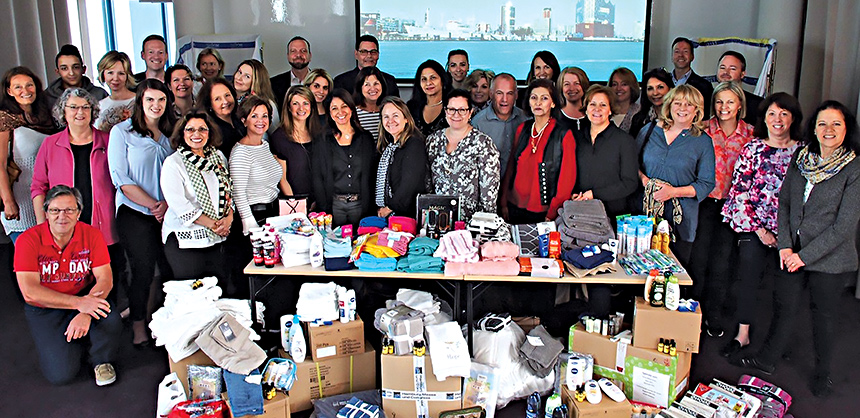
Team-building activities that give back to the community such as this “Military Home Makeover” by ACCESS Destination Services also create lasting memories for attendees.

Team-building activities that give back to the community such as this “Military Home Makeover” by ACCESS Destination Services also create lasting memories for attendees.

Before the economic crash of 2008, team-building events were often passed over in favor of conferences or fun-filled parties, according to Sharon E. Sullivan, president of Sullivan Custom Planning Inc., a full-service destination management company that serves New England and is based in Providence, Rhode Island. But when event budgets took a nosedive and planners had to rethink how they organized company gatherings, that began to change.

“During the recession, meetings were harder to justify,” she says. “Corporations could justify having team-building programs.” After all, they still needed a way to help employees perform at their best — especially as sales goals and other milestones were getting harder to reach. Planners stripped away things such as fancy décor and expensive entertainment in favor of offering more meaningful content to staff.

“We’re seeing that instead of just doing your standard building bikes for the community, we’re seeing companies that really want to get out into the community.” Amanda Hill

That change is still being felt today. “Team-buildings activities about problem solving, strategy, organizational skills, building camaraderie and group decision-making have gotten so much more popular,” Sullivan says. “I think every sales meeting I’m seeing incorporates a team-building activity, either to start off the meeting with a morale booster or an ice breaker. When you start a meeting that way, it shifts the energy and shifts the intention of the meeting. Companies know that to keep their employees happy that they need to do something special, and this doesn’t break the bank.”

Tina Boris Lafferty, DMCP, managing director of COTC Events, a Hosts Global member, agrees that team building still plays an important role in modern meetings and incentive trips. “In the 20 years I have been doing this, I have seen the team-building activity really evolve from something that planners had to do to as an essential part of their programs,” she says. “Team building is no longer an opportunity to push through management agendas; it becomes a bonding experience that will last longer than the couple of days attendees spent together.”

Lafferty continues, “In a world of remote offices and less human interaction within firms, team building is a chance to ‘play’ together while incorporating face-to-face communication, philanthropic experiences through CSR programs, and allowing people to capture all the fun in their social media for everyone else to have FOMO and want to be there next time around. It helps cause the buzz that people keep talking about so that others will work hard to be a part of that special experience year after year.”

Teams Giving Back

Planners provided input on the more microlevel trends they’ve seen in team building in recent years. Perhaps the biggest one is increasing interest in activities focused around corporate social responsibility (CSR). Sullivan often works with companies to plan philanthropic activities such as charity bike builds, stuffing backpacks with school supplies and gathering treats to send to military personnel. In her mind, the reason for the burgeoning interest in these types of programs is simple.

“The attendees feel good about giving back,” Sullivan says. “It also boosts morale. Companies always have an objective for team building, and we always find out what the objective is. More and more, companies just want to give back. I also think the attendees are more likely to show up and will be more enthusiastic because they want to give back as well.”

Amanda Hill, an account director for ACCESS Destination Services, a destination management company based in San Diego, California, says companies are eager to do more. “Especially this year, we’re seeing that instead of just doing your standard building bikes for the community, we’re seeing companies that really want to get out into the community,” she says. “They might go out as a group and do a beatification project with the Boys and Girls Club or cook a meal at the Ronald McDonald House. They’re making it more of an experiential team-building program instead of sitting in a ballroom.” These offsite activities also allow people to see the city and learn more about what’s happening there.

For groups that have to stay at their event facility, Hill has arranged for local community groups to come to them. In one recent instance, a group built dog houses for a humane society with assistance from a Girl Scout troop. The Girl Scouts earned a patch and the staff at the company got to know people in the community.

CSR projects are getting more creative as they grow more popular. “We have even seen groups ask people to bring their old jeans from home, then after all the jeans are collected there is a team-building event where we make shoes with the old jeans for kids in underprivileged countries,” Lafferty says.

When thinking about CSR projects, “A question we will always ask is are there organizations or genres of organizations that the company already supports or has a heart in?” Hill says. “We’ll have clients that always like to do a children’s charity, or they’re tied into a Boys and Girls Club.”

The audience for team building has also changed over time, which may be an important thing to take into consideration when organizing an activity. “Executive teams are no longer untouchable,” Lafferty says. “The CFO wants to be there creating hygiene kits for local homeless people right next to the salespeople who are doing well in his company.”

Team Skill Building  

Hill used to get a lot of requests for team-building activities that were little more than a reason to get out of the hotel. “These days companies are really looking to drill down the purpose behind doing the team building,” she says. “Instead of just doing a sailing regatta or a scavenger hunt, they’re really trying to focus on a team-building program that has purpose in people’s day-to-day work. For example, we’re doing a lot of escape rooms where we bring escape rooms on-site to the hotel property. It’s fun, it’s interactive, and it’s a great way to get a team together so they can find how they communicate with each other and learn more about the process of collaboration.”

Roy Charette, managing partner and director of training for Best Corporate Events, a Palm Harbor, Florida-based company that focuses on corporate events, professional development training, team building, interactive entertainment and event technology, gives an example of how technology can extend and reinforce an activity designed to bring teams closer together. When a business requests a scavenger hunt for a meeting or incentive trip, he can design a challenge that requires people to use their smart devices. The software program can prompt people to answer questions related to the company, the work environment or lessons learned during workshops in order to earn points.

In addition, the camera on an iPad or Android tablet can be used to capture images of the team finding scavenger hunt items or participating in experiences. “Those all become available to the group at the end of the program,” Charette says. “When they go to dinner, they realized there’s a screen and all those fun photos and videos they took during the day are playing while they’re having cocktails.”

Team building as a true “team-building” activity makes a lot of sense in the modern environment, he says. “When you’re growing up, in terms of your education, you’re always competing in terms of your grades, your college you went to and vying for your first job. Then all of a sudden you get into a work environment and you’re asked to collaborate. You’ve been competing your whole life, so that’s what you default to. Activities like these are about getting away from ‘Let’s have a competition’ to ‘Let’s have a winning team and we’ll all hit the pub afterward.’”

Whenever possible, Charette looks for activities that may start out seeming competitive but gradually move into being more collaborative. These exercises introduce people to the importance of acknowledging people’s ideas, rewarding them for tasks well done and positioning each other for success. Groups often end up mentoring and coaching each other or developing a lesson plan so they can teach other teams something. They’re engaging in the moment, he says, but when people are asked to reflect on how they can apply these same ideas in the office every day, they become a powerful way of providing tangible lessons.

Customized Team-Building Activities

Meeting participants want more personalized, interactive experiences in all aspects of their lives. So it probably comes as no surprise that companies are also looking for more customized, creative team-building activities.

“We did a photo hunt in Little Havana that included rolling cigars, playing dominoes, learning the local catch phrases, salsa dancing and making mojitos. This allows the participants to really get a taste of the local flavor, while bonding with each other throughout the process,” Lafferty says.

Sullivan adds, “We get a lot of inquiries for a scavenger hunt, but … they want something very creative.”

When she was working with a group at the Hotel Viking in Newport, Rhode Island, she put together a pirate scavenger hunt. Participants used a treasure map to find people dressed as pirates who provided them with further clues. In Boston, she’s arranged similar hunts but with historical figures instead of pirates.

Another really popular activity is what Sullivan calls The Incredible Race, a take on the TV show “The Amazing Race.” Similar to a scavenger hunt, teams must race around the city to find clues that will lead them to the hunt’s proverbial finish line. Sullivan has also done spy hunts and asked teams to solve a mystery as part of their activity.

Culinary programs are also big today, Sullivan says. With some groups, she’s had participants divide into teams and cook different dishes. A team of judges tries all of the finished dishes and awards winners.

With other groups, she’s set up a “moveable feast.” For this, people switch tables every time they change courses. “This is program for companies where the people don’t all know each other and it’s the first time they’re coming together. They all get to sit at each table, so they get to know everybody. We’ll do a little team-building activity, they’ll eat and then they’ll move to the next table.”

For one of her groups, Lafferty created a signature cocktail activity. Each team worked with an expert mixologist to create a mixed drink based on the gathering’s theme. The winning drink was the featured cocktail at a gathering one night.

One thing that’s proving less popular today is ropes courses and similar physical activities, Charette says. Increasingly, not all members of any given team are physically fit enough to complete these challenges. “That’s the last thing you want, is for a team-building event to eliminate people who aren’t able to even go bowling or do paintball,” he says. “Nowadays there are so many incredible team-building programs that are done primarily indoors that allow everyone to be involved — activities that are more cerebral while also being fun.”

Advice For Modern-Day Team-Building Events

One of the most important considerations for planning a team-building activity is understanding your audience. “Not everyone wants to be active and outside or likes to perform in front of others,” Lafferty says. “Make sure there are parts of the team building that will allow everyone to shine. Maybe you are not the one that will get up and do the physical activity, but you may be the one that will create the team name and sign or write the song that will be performed. All are so very important to the big picture, yet it allows everyone to be part of the experience.”

Another important thing to consider when planning a team-building activity is length, Sullivan says. “It can’t be so long that you lose people. An average program is an hour and a half to two hours. Anything over that and people get bored.”

Sullivan’s first step in planning team-building activities is to find out the group’s demographics, including age, and what the company wants to get out of the program. From there, she can start thinking about designing an exercise that will help planners meet their goals. “There are some programs that do not work if you have mistrust,” she cautions. “If you have people who don’t particularly like each other or trust each other or are highly competitive, we can help you steer your activities in the right direction to something that will work with these group dynamics.”

Hill also stays focused on understanding a company’s objectives when she plans team-building activities. “For a lot of planners, team building is a checkbox, something they have to accomplish with the meeting,” Hill says. “But it will mean more and people will remember that experience more if they are 100% bought in.

“I think the best thing that a planner can do is really come to what the purpose is behind the team-building program before they decide what they’re going to do. Is the purpose to have their team collaborate? Or is it that they really want to go out and give back to the community? When we get to the end of our program, what are the two things you want your guests to talk about? Is it a sense of community spirit? Is it that they gave back to something? Is it that they have better camaraderie with people they spend their lives with at work?” Figure out to help people achieve these lasting feelings and memories, and team building will move far beyond a reluctant checkbox on their list too. C&I


CIT-Aug-147x197

Meet 7 Women Speakers Who Are at the Top of Their Game

CIT-Aug-19-Feat-Women-Speakers-Featured-Image-860x418

Clockwise from top left: Cindy Eckert, Julia Landauer, Dr. Traci Lynn, Alison Levine, Sarah Thomas, Theresa Payton, and Siri Lindley.

Walk into any corporate meeting or incentive event and you’re bound to see a diverse group of individuals. From suit-donning executives carrying leather-bound portfolios, to sandal-wearing 30-somethings with iPads in hand, to middle-age leaders lugging their laptops from meeting to meeting. You are also likely to see and hear something else — professional speakers who are addressing these diverse audience groups and delivering powerful messages that both motivate and excite. In fact, finding the ideal speaker is part art, part science and requires due diligence on the part of meeting planners. The professional women speakers we are highlighting below are exceptional individuals; subject-matter experts who use a variety of delivery formats to connect with audiences of all ages, backgrounds and experiences.

Cindy Eckert

As a serial entrepreneur and vocal advocate for women, Cindy Eckert’s professional path has defied convention and delivered big returns. Her business results have been a globally covered business success story with Fortune magazine dubbing Eckert as a “tireless force of nature,” Entrepreneur magazine putting her on their cover of Women to Watch, Triangle Business Journal awarding her CEO of the Year and the National Association of Women Business Owners electing Eckert to the Women in Business Hall of Fame.

Eckert also is a highly regarded business owner, a strong advocate for female entrepreneurship, a pharmaceutical leader and one of the few women to have ever sold a company for a billion dollars.

“My work today continues to break barriers as I invest in and mentor other women to get to my same outcomes,” Eckert says.

Today, Eckert is focused on mentoring, launching and building other women-led or focused businesses. In recent years, she founded The Pink Ceiling, a consulting enterprise where Eckert is CEO. At The Pink Ceiling, she has invested $15 million across 10 different health tech companies at various stages of development.

In her role as a professional speaker, Eckert has had the privilege to stand on the stages of global corporations to chambers of commerce to SXSW to Fortune’s Most Powerful Women.

“I’m passionate about discussing the choices you must make to be successful, how to find opportunity in the overlooked people or projects and building a culture of ownership,” Eckert says.

When speaking, Eckert loves the moment the first hand in the audience goes up with a question and she knows she’s connected.

“There are too few women that have this opportunity,” Eckert says. “And while it is an honor to have others listen to my story, it is magical when others see themselves in it.”

Having spent her whole career in rooms where she wasn’t expected, Eckert has perfected her sense of humor.

“Humor has a way of setting the stage for hard-hitting truths,” Eckert says. “Between putting the room at ease, insisting on time for questions and prepping in advance with organizers so that I can tailor my messages with challenges and catchphrases important to those listening, I take pride in audience engagement.”

Julia Landauer

When professional speaker Julia Landauer was a senior at Stanford University, she was asked to give a talk at their TEDx Stanford event. The title of her talk was “Can Nice Girls Win Races?” and was focused around negative stereotypes that women face and how they can push past them.

“I found my voice in that talk and loved that my personal experiences and stories could make people laugh, could start discussions and could be inspiring,” Landauer says. “From there I started pitching myself and over the last four years have spoken to all types of audiences, such as AIG, Accenture and BlueCrossNC, universities, various associations and trade shows.”

Landauer typically discusses motivational topics, such as self-awareness and taking ownership, building relationships and leadership and perseverance and dealing with fear. She also discusses gender dynamics and women’s empowerment.

“I feel lucky that my talks are relatable and entertaining to a wide variety of audiences — from millennials to corporate executives to students to women’s groups, etc.,” Landauer says. “With that being the case, I speak with corporate clients, universities and colleges and various other organizations.” Landauer loves that she can be vulnerable; be herself on stage and tell stories that are entertaining and informative.

“I’m very honest with my audiences and my style on stage is very similar to my one-on-one discussions with people,” Landauer says. “It’s really rewarding to engage with an audience, especially with Q&A’s after my talks and hear their perspectives and questions.”

In fact, Landauer speaks to audiences the way she would speak to her friends. Her goal in doing so is to have a conversation with the group, rather than speaking at them.

“I strive to make them laugh, to sometimes give the kick-in-the-butt we all need from time to time and leave them with something to think about,” Landauer says. “I share videos; ask questions to my audiences. I give them a glimpse into my life and I love hearing their questions afterwards.”

Dr. Traci Lynn

Whether she’s in her role as an in-demand motivational speaker and author or as the owner and driving force behind the hugely successful direct-sales company, Traci Lynn Fashion Jewelry, entrepreneur, Dr. Traci Lynn has the same mission. “I call it ‘passing the MIC,’” Lynn says. “MIC: Motivate, Inspire, Change. My goal is to motivate people to step out of their comfort zone, inspire them to greatness and to change their lives. It’s about letting people know that they can do anything they set their mind to if they see the bigger picture. We have the power to change our own financial future and our destiny.”

Lynn has an unwavering commitment to offer women a chance to own their own businesses and achieve financial independence. This has also enabled her to grow her Fort Lauderdale-based business, launched with $200, into a multimillion-dollar enterprise with nearly 35,000 sales consultants in 47 states, Canada and the U.S. Virgin Islands.

Lynn has received several honors, including the Madam CJ Walker Award, 2017 Woman of Distinction Award, 2018 Mother of the Year Award and the 2018 Jim Moran African American Achiever Award. In 2017, Lynn was recognized by Direct Selling News as one of the most influential women in the industry. She continues to mentor and encourage young professionals to follow their dreams. “The topics I cover when speaking vary based on the audience, but I’m all about inspiring people to be the best at whatever it is that they were put on this earth to do,” Lynn says. “I speak internationally, at corporate events, award ceremonies, seminars, summits, trainings conventions, you name it. You hand me a microphone and I’m ready.”

Giving back also is something Lynn feels strongly about and for the last six years her nonprofit organization, Traci Lynn Cares, has raised more than $300,000 for the American Cancer Society. “I enjoy inspiring others to greatness and reminding the audience of the power they possess inside,” Lynn says. “I speak with an authentic heart and make sure I know exactly who my audience is so I can meet their needs.”

Alison Levine

Alison Levine is represented by one of the world’s largest speakers bureaus — Keppler Speakers — and has been their top speaker in terms of bookings and demand for eight years. Levine delivers more than 100 keynotes a year and considers it a privilege to do what she does.

“I am incredibly humbled by the number of audiences who invite me to speak year after year,” Levine says.

Last year Levine was named by Huffington Post as one of their “Top 7 Business Speakers to Hire and See.” She also had the honor of being invited to speak at the World Economic Forum at Davos and the Milken Institute Global Conference.

“It’s always a little surreal to be speaking at the same events with world leaders,” Levine says. Most recently, Levine received the Ellis Island Medal of Honor, presented annually to Americans whose accomplishments in their field and service to the United States are cause for celebration. Past medalists include seven U.S. presidents, two Nobel Prize winners and leaders of industry, education, the arts, sports and government.

Levine has two very different keynote speeches. One is based on her experience as the team captain of the American Women’s Everest Expedition and focuses on leading teams in extreme environments. Her other speech, new this year, is based on her journey of skiing 600 miles across Antarctica to the South Pole and focuses on the importance of reframing the way we view people’s strengths and weaknesses and helping people become the best possible version of themselves.

“I have spoken at global events such as the World Economic Forum at Davos and for thousands of Fortune 500 companies here in the U.S. and overseas and for professional sports teams,” Levin says. “I have spoken for an audience of 20,000 and an audience of 8.”

What Levine enjoys most is the chance to influence people positively in their careers and personal lives. “I want them to lean into the challenges that lie ahead, even when they know they might fail. And most of all I want them to know what they do and who they are matters — a lot.”

Levine is very cognizant of the fact that time is our most valuable resource, and if people are giving her an hour, she feels like she better make sure that she delivers something that will make them say, “There’s nowhere else I would have rather been than in that room listening to that keynote today.”

“In order to have maximum impact, I want people to go through a range of emotions as I am speaking to them,” Levine says. “There’s a lot of material in my keynotes that is very, very intense. And there are parts that are very, very funny. I figure if I can make an audience think a lot and also make them laugh a lot — then I’ve hit the mark.”

Siri Lindley

When Siri Lindley, a two-time world champion, retired as No. 1 in the world in triathlon, she began coaching a very select group of athletes — athletes who won multiple world championship crowns and Olympic medals. As a longtime athlete, the only speaking Lindley did was in front of her athletes by sharing stories, lessons and training.

But in 2016, her professional experience changed significantly when we was asked to do the Tony Robbins podcast.

“I thought they must be contacting me to get in touch with one of my champion athletes. When I asked which athlete they were looking for, they said, ‘We want you on the podcast,’” Lindley says. “I was so excited because Tony Robbins literally changed my life at age 20, through his book, Unlimited Power. I couldn’t believe I was going to be on his podcast.”

That same year Lindley was provided the opportunity to offer a keynote speech at Robbins’ Leadership Academy in San Diego.

“I got up and gave a 90-minute keynote, which ended up being a huge success,” Lindley says. “I was so nervous beforehand, but once I stepped out on that stage in front of 2,000 people, it’s like I was being guided. I spoke from my heart. All I knew is that I wanted to serve these beautiful humans in front of me. I wanted to give them something of value, something that would touch their lives in some way. I wanted to be a blessing. In wanting to give, wanting to serve, wanting to share my story in a way that would resonate with them, I was able to deliver exactly what they hoped for. I had never felt more aligned with my calling than in that moment.”

Today, Lindley speaks about how what we focus on, the meaning we give things and what we do about it, can change our entire lives.

“I talk about being fearlessly authentic and how this is what leads to us tapping into our fullest potential and truly allowing us to have a positive impact on the world around us,” Lindley says. “I also talk about gratitude and the gift in the struggle. And I talk about failure and how we must be willing to fail — as it is in our failures and disappointments that we learn and we grow the most.”

Lindley says that when she speaks, she is able to offer up alternative ways of managing the struggles in our lives. “I show people that in changing our ‘stories’ we can change our lives for the better,” Lindley says. “Knowing that I can truly impact someone’s life in a beautiful and powerful way is the most humbling, beautiful gift. If I can help others free themselves from what causes them pain or holds them back from achieving their goals, this is the ultimate for me. This is what I dream of — being able to touch lives, make a difference and empower others to see the beauty in themselves.”

Theresa Payton

As the first female to serve as White House chief information officer and named Enterprising Woman of the Year from Women in Business for two years in a row, Theresa Payton is one of America’s most respected authorities on Internet security, data breaches and fraud mitigation. With real-world strategies and solutions, she identifies emerging trends and techniques to help combat cyber threats.

“I am very blessed to be able to evangelize to the business person, the consumer, the fellow geek and others about the threats that are facing us,” Payton says.

Today Payton pulls from her experiences on the front lines within her company, Fortalice Solutions, of defending against “bad guys,” from her previous work in the financial services industry, her time at the White House working for President George W. Bush and her two books.

Prior to her time serving at the White House, Payton spent more than 16 years as an executive in banking technology fighting cybercrime and fraudsters at some of the largest financial institutions in the world.

“The CIO job at the White House, and really anywhere, can be a little overwhelming because it is a massive undertaking in today’s day and age,” Payton says. “I had the honor of making the operations work, while protecting the technology and the mission, for a very vast and diverse set of objectives at the White House.”

Payton has talked at events from the VIP breakfast for 10 people to the thousands in an enormous room in Las Vegas.

A side benefit at events is that Payton often gets asked to speak to women in a closed-door session.

“Those side events have always been very meaningful for me,” Payton says. “I am honored to spend time with other women to offer support and advice — to encourage them to push for their personal goals.”

There are several things Payton thoroughly enjoys by being a speaker, but what she enjoys most involves being with people and winning the war against cybercrime.

“Speaking affords me the opportunity to meet amazing, talented and smart people. I learn so much from the question- and-answer sessions and from the event sponsors and organizers,” Payton says. “I have traveled to locations and I have met people that I doubt I would have had the chance to do on my own. Many of the people I meet become friends and even clients.”

Prior to a meeting or event, Payton requests a pre-conference call to hear from the event planners. This allows her to study the purpose of the event and determine what’s one thing she wants them to take from this event and do differently when they get back home or to their office?

“If I can’t start a movement with each speech, I am not doing my job,” Payton says. “I’m not just on stage to frighten or entertain, I’m there to make everyone safer. I hate it when the ‘bad guys’ such as cybercriminals, human traffickers, child pornographers and fraudsters win. I want the ‘good guys’ to win. I focus on providing pragmatic advice so the audience can win.”

Sarah Thomas

When Sarah Thomas, the NFL’s first female official, addresses an audience, she rarely stands behind a podium. Rather she lets audiences know that her speech will be interactive.

“Right off the start, I survey the audience and ask them a question about loving football,” Thomas says. “And when almost everyone raises their hands, then I tell them to leave them up that we are going to take an oath. It’s a simple, funny oath about promising they will not boo the officials. Everyone laughs about it. This just disarms the ‘stiffness’ in the room.”

With a degree in communications with an emphasis on PR, Thomas, who has been speaking for almost 13 years, never thought she would be able to use her background as a platform about her journey.

“The topics I typically cover are about things that motivate — real stories about everyday life that have molded me and things I’ve learned along the way,” Thomas says. She typically speaks at national sales meetings, white- and blue-collar groups, Girl Scouts, churches, commencements, women’s groups, men’s groups and to students.

“There’s not an audience that my story cannot impact,” Thomas says. “I like being able to inspire and motivate others by being real, authentic and sharing who I am; things I’ve learned from not only successes, but failures too. But most of all having fun, laughing and allowing the audience to feel what I’m sharing. I’ve had mothers come up to me with tears saying how much they needed to hear this, students saying how inspired they are by knowing they can do anything they put their mind to, men saying they wish their daughters or wives were there. The joy I have in sharing with others about never giving up, believe in yourself, no matter what, is so rewarding for me.”C&IT


CIT-July2019-FEAT-All-Inclusive-Xcaret-147x147

The Pricing Structure at These Resorts Often Makes Things Easier for Planners


Hotel Xcaret Mexico offers unlimited access to its 6 parks and offers 8 bars and 10 restaurants from which attendees can choose.

Hotel Xcaret Mexico offers unlimited access to its 6 parks and offers 8 bars and 10 restaurants from which attendees can choose.

There are many reasons for planners to consider all-inclusive resorts as a setting for meetings, events and incentives. Today’s all-inclusives are not the typically downscale properties of yesteryear. All-inclusives today can be found in every hotel category, including uber luxe with amenities enough for upscale incentive programs and in every type of lodging and destination, from traditional and historic resorts to guest ranches and from Arizona and Michigan to the Caribbean and Mexico.

Perhaps best of all, all-inclusive resorts inherently take some of the work of planning an event off the shoulders of meeting planners, which is especially nice when a company’s planning department consists of a staff of one.

 An Annual Choice

Cathy Vestrand, owner of Vestrand Consulting Services, has set her company’s annual dental meeting at the Grand Hotel on Mackinac Island, Michigan, every year since 2012. Like other grand, historic resorts, the Grand Hotel runs primarily on a Modified American Plan — meaning breakfast and dinner are included in the room rate even for meeting guests — but other packages are also available. The Grand is also a great choice for meetings to which attendees bring family along, and Mackinac Island serves up a special ambiance as no cars are allowed.

“The ranch reinvests in the property every year, upgrades rooms and amenities and the service is world class.” John Severson

“This is an historical, iconic destination meeting place for Michiganders who return year after year and make the meeting a tradition,” Vestrand says. “The quality of lodging is superior and with all of the lovely color and touches, just sitting in the lobby watching people dressed for dinner listening to the harp is a treat.”

Vestrand says attendance at her meeting has increased each year “because of the value of the rooms with our discount and what the island has to offer visitors in the early fall. Mackinac Island is a wonderful, magical place with only horses and bicycles, so people come here to experience another place and time.”

A plus for Vestrand is that the resort includes A/V, a champagne reception, coffee and tea as part of the meeting package. “Grand Hotel is top-notch as far as customer service and treating the meeting planner with grand appreciation.”

Vestrand’s group uses Brighton Pavilion, part of the resort’s Woodfill Conference Center. “Our function was held mostly in the Brighton Pavilion, complete with colorful chairs and chandeliers, where we had a champagne welcome reception with hors d’oeuvres on Friday and coffee and pastries on Saturday morning,” Vestrand notes. “One year we were in the Theatre, also part of the conference center, and had a small orchestra play during our reception. In the Brighton Pavilion we have had a piano playing — all very nice details to create a wonderful event.”

Vestrand says her attendees appreciate starting the day with the included breakfast. “That’s the package I buy, which includes hotel guest rooms at a special discount and the meeting room. You could have breakfast and dinner but I prefer to let them be on their own for dinner. There are restaurants in the Grand Hotel or they can walk 10 minutes into town and find a place to eat on the island. Or if they prefer, they can take a carriage ride to The Woods, a lovely old hunting lodge with wild-game entrees.”

Vestrand doesn’t buy lunch either because the timing doesn’t work with her seminars. “People are OK with that,” she adds. And she calls the planning “easy.” For one thing, she points out, “So much is here on property — regardless of the weather — it’s always lovely inside.”

Developing relationships at preferred hotels is always the goal for planners, and Vestrand has that at the Grand. “Jane Thomas is super to work with. She really cares about me as a planner and thinks about ways she can assist. She has even linked me with other dental sales people who have attended my classes. Ashlea Flores is a top-notch meeting planner who executes my events with every detail and also anticipates my needs and makes it easy for me,” Vestrand says. “The Grand Hotel staff have this down to a science. I’ve done this meeting for so many years it runs like clockwork. I don’t have problems up there. One time I left my laptop power cord at home. They bent over backward but we couldn’t find one to fit.”

Vestrand’s advice to anyone planning a meeting at Grand Hotel is to advertise early so attendees can plan for it. “I have them pay separately for the meeting and the Grand handles the hotel reservations,” she says. “Have the hotel reservation form handy for attendees in all emails to make it easy to make a reservation. I also got the Grand to create a very cute postcard to advertise my meeting and I send it out to all of my clients every year.”

Vestrand says Once they experience the Grand Hotel, “People will come back. It’s a ‘bucket list’ kind of place.”

 Another Repeat Favorite

White Stallion Ranch in Tucson, Arizona, is also a place people return to year after year. John Severson, president of Severson Compass & Associates, has set his annual Structural Connections conference at the ranch every October since 2001.

Severson describes the ranch as a “great environment. It’s very different — it feels like another world,” he says.

Among other things he likes is that the Tucson area is warm in late fall and that the city is easily accessible. And there’s White Stallion Ranch itself. “The ranch reinvests in the property every year, upgrades rooms and amenities and the service is world class.”

Which is not to say that he’s normally a fan of the all-inclusive model. “I hate most all-inclusives,” Severson says. “They inflate choices and what’s offered really are watered-down options of the real thing with too many guests all competing for the same resources. But the ranch does things differently. They’re after an experience for each guest. You never feel hurried, rushed, crammed or have to wait in line. It’s quite remarkable.”

And the planning is easier. All meals are set at the ranch. Although it’s on the outskirts of Tucson, White Stallion feels a world away as there’s nothing conveniently close for attendees to go to on their own — and why would they want to?

That doesn’t mean a lack of choices. “There are lots of choices with F&B,” Severson says. “You just have to be vocal and active about your dietary needs. The kitchen can accommodate you, you just have to speak up.”

The ranch’s function and conference space is also included in the package and there are folks on staff who can lighten the burden for planners. Carol Moore is one staff member who stands out for Severson. “She knows how to make things simple and reliable for your group. Sometimes staff can’t facilitate every request because they have to balance your needs with the needs of the rest of the guests,” he says, “but if they can work with you they will.”

Really, Severson adds, “It’s all about the environment. You want to work with this amazing environment not against it. Work with Carol and with Russell True, one of the owners, at the ranch. Let the ranch do what it does best — your guests will be pleased.”

 Mexico Offers Great Value

Mexico and the Caribbean are well known for all-inclusive resorts, so it’s no surprise that Cancun, on Mexico’s Caribbean coast, is often a first-choice for corporate and incentive groups looking for a tropical destination.

Nell Nicholas, senior director, global accounts, with HelmsBriscoe, calls Cancun a terrific destination, “for so many reasons — breadth of airlift both domestic and international, affordable airfares from all major origination points, a variety of properties from boutique to large and a plethora of beachfront properties.”

Moreover, she adds, “You can always count on great value for money in Cancun, which has something for every budget and every type of program from large-scale incentives to small board retreats.”

The DMCs in Cancun, Nicholas notes, “are also top-notch professional and priced appropriately. And contrary to what some may think,” she says, “the food and beverage possibilities onsite are excellent. The food is very fresh. Much of our U.S. ‘off season’ fruits and vegetables come from Mexico, so a U.S. winter program in Mexico will offer your attendees some of the freshest ingredients.”

Nicholas brought an annual incentive trip to the Paradisus Cancun in 2018 with approximately 70 in attendance. While she says attendees at all-inclusives typically stay on property, this group was a bit different. “Our group likes to venture out primarily on a group catamaran ride or perhaps an afternoon shopping trip. Cancun is unique in that there are also multiple cultural choices for excursions as well, including the Mayan ruins at Tulum; Rio Secreto, a natural park featuring an underground river; and Xcaret, a park combining nature and culture.”

Paradisus Cancun was the client’s choice. “The client chose Paradisus Cancun for the access of the destination, proximity to the airport and value for money,” Nicholas says. “We were able to upgrade all attendees at the highest category of room product at Paradisus. If we did the same program in Playa Del Carmen, for example, our attendees would not have been able to enjoy a high-end room product.”

Additionally, she says, “I particularly enjoy the added service of an onsite DMC. It eliminates the guessing game of DMC selection.”

Nicholas has several clients that prefer all-inclusives, in part because setting a meeting or program at an all-inclusive makes their job a bit easier. “Many corporate meeting planners are a one-person department, so anywhere we can one-stop shop, as at an all -inclusive resort, the better from a planning standpoint. One company I work with doesn’t have the budget to send the planner to the incentive, but with a quality all-inclusive she has peace-of-mind that attendees will be well cared for. The best part? No meal planning for the attendees.”

While some program details are taken care of in the all-inclusive model, planners still have to be on top of things. “Ask about the liquor brands in the package you’re purchasing for the attendees,” Nicholas advises. “I find I need to upgrade the liquor brands for my clients from call brands to top shelf.”

Nicholas says she had no real challenges in the site-selection process for her 2018 group. “My NSO, Beatriz Kazusky, for Meliá Hotels, always does a great job and is always on top of the negotiating and contracting process.”

That said, she does have a strategy suggestion for planners looking at Cancun for their corporate meeting or incentive program. “Send the RFP to several brands across the board to show your stakeholders the variety of options,” Nicholas says. “Your stakeholders may never have considered an all-inclusive, but when you put an EP hotel bid and all-inclusive bid in front of the stakeholder, you can show tremendous value for money.”

Heidi Stevenson, global sales manager, CIS, with Destinations Inc., also went to the Riviera Maya for a February 2019 incentive trip with 188 in attendance. The chosen hotel was UNICO 20° North 87° West, just south of Cancun in Puerto Morelos.

Stevenson says the area has many benefits. “The Cancun/Riviera Maya area is a fabulous destination for groups with year-round favorable weather and a wide range of properties to select from. Most of the attendees for this program come from the West Coast and the lift to Cancun is ideal. The area has countless properties that can accommodate incentives and meetings, including many of the large all-inclusive properties.”

There’s also ample meeting and function space. “All of our events were handled onsite at UNICO 20° North 87° West,” she says.

The choice of UNICO 20° North 87° West was ideal for this program. “It’s a newer property only having been open for the last two years,” Stevenson says. “And it is without a doubt one of the higher-end, all-inclusive properties in the area. The service, lodging and food are all top-notch. The resort has great event space that can accommodate large groups.”

Like other planners, Stevenson says working with an all-inclusive property can be easier, especially on the F&B front. “There is not as much to contend with,” she says, adding that many all-inclusive properties also don’t charge extra fees for group functions, which can be a great cost savings for a group. That is the case with UNICO.

“Our CSM was amazing,” Stevenson says. “This resort does not charge fees for group events or meetings. It was part of the all-inclusive price.”

And the property works well with groups. “From the sales process all the way through execution of the program, this property is great with groups,” Stevenson says. “They’re extremely detail oriented and quick with responses and planning.”

While there were no bumps in the road in the planning process for this program, Stevenson advises planners to see the property firsthand. “Definitely include a site visit so that you can map out your group’s needs. This property really can accommodate most any group and it will also do buyouts. This should absolutely be in your considerations,” she says, “especially for an incentive program.”

Another ultra luxury all-inclusive Riviera Maya resort in Mexico for meeting and incentive planners to consider is the Grand Velas Riviera Maya, set on 206 acres of pristine jungle and mangroves and within the finest white sand beach. All 539 designer-like suites are exceptionally spacious, all with balconies and some with private plunge pools.

The AAA Five Star resort recently unveiled new meeting offerings for groups that puts an emphasis on the history, gastronomy and culture of the region. Groups can pick and choose among the options a la carte or opt for the entire experience in a Mexican fiesta program. Locally made tequila, a tasting of another ancestral drink, cooking classes, a showcase of traditional pottery and a curated welcome amenity of an Olinalá box and amber bracelet — traditional artisanal crafts — are among the possibilities.

Velas Resorts has catered to planner’s needs for over 25 years with resorts that feature excellence in service, world-class hospitality, beautifully appointed accommodations, signature luxury all-inclusive superb facilities and expansive convention centers.

Another resort operator with a proud history of satisfying meeting and incentive planner’s needs is Barceló Resorts. With the opening scheduled for December this year, the adults only Barceló Maya Riviera is perfect for meetings, conventions and incentive programs.

The resort offers 850 rooms that are junior suites and full suites, all fully equipped. The crown jewel of this resort is its convention center, which is the largest in Riviera Maya with 190,000 sf of meeting space and a capacity for 7,000 people. Additionally a 3,400-sf terrace is available for gala receptions. With a wide range of excellent facilities, the resort will offer a choice of restaurants, bars, pools, spa and gym. The resort also has its own theme park, Ventura Fly & Ride Park, offering high altitude and other rides. Attendees will discover everything the new Barceló Maya Riviera all-inclusive resort has in store. Located only 47 miles from Cancun International Airport and its amazing surroundings on a more than 1 mile beach make it a perfect resort to host any type of event.

Another exciting new destination resort in Mexico is Hotel Xcaret Mexico, which has an exceptional approach to architecture. Meeting and events attendees can enjoy spectacular views of the turquoise sea, white sand beaches, underground caves and rivers among the Mayan Riviera. The meeting spaces include an impressive convention center, useful for both large and small groups, and a Mexican Hacienda. Multifunctional rooms and venues, private beaches and the spectacular events room located in the hotel’s pyramid-shaped hill provides everything necessary to achieve a successful event.

Xcaret offers unparalleled outdoor facilities that are perfect for team building and other activities, including new product launches. Outdoor venues such as Hacienda Henequenera in Xcaret, a unique venue, will make events stand out. The hacienda has a sliding roof and its patio can accommodate 500 attendees for cocktails, dinners and endless function possibilities. The hacienda also has a room with a capacity for up to 1,420 attendees divided in to four spaces.

Hotel Xcaret Mexico has everything to make for a successful event. The resort’s experienced team specializes in coordinating everything for planners, perfectly covering every detail to make events memorable.

Whether a group prefers U.S.-based grand hotels, a rustic but amenity-filled ranch stay or a sojourn in the tropics, all-inclusive resorts should be in the mix of considerations. For some groups and planners, they are in fact the perfect answer for a meeting or incentive program. C&IT