CIT-February-2023-Cover-147x197

Golf & Spa Resorts

Omni Tucson National Resort, pictured, offers two golf courses for players of all skill levels. Courtesy of Visit Tucson

Omni Tucson National Resort, pictured, offers two golf courses for players of all skill levels. Courtesy of Visit Tucson

For decades, business professionals have recognized the need to connect with each other outside of the conference room. While late night ‘wining and dining’ is still a prevalent relationship-building tradition, more business professionals are hitting the greens — making golf and spa resorts a wonderful go-to option for today’s meetings and events.

Heather Herrig, CMP, president & chief event strategist at Every Last Detail Events, says golf and spa resorts can provide truly beautiful backdrops for the right events and meetings, but the key is to make sure you give your attendees an opportunity to hit the links or revel in a spa experience.

“If your agenda provides time for an afternoon activity, these resorts are a fantastic choice. If it’s not possible to build golf directly into the agenda itself, encourage attendees to come in early or stay later to take advantage, especially if you can help organize an optional outing on their behalf,” Herrig says. “The vistas and scenery at golf resorts can be absolutely gorgeous, complementing the environment you’re creating for your meeting or event.”

For Golf Lovers

From border to border, the U.S. offers golfers of all skill levels an array of inviting, challenging and breathtaking courses. From formidable courses that test skill levels at every hole, to wide-open courses with fairways designed for high-handicap, weekend golfers — meeting attendees will appreciate what’s available.

Top level executives, sales executives and business owners use golf as a common ground to get to know their business associates in a more casual setting. Golf was always used to entertain, so that has not changed. However, the level of entertaining has gone beyond golf, food and beverage and selling. It is now an integral part of creating long-term mutually beneficial relationships and partnerships with fellow constituents. In addition, the leisurely pace of golf allows for plenty of discussion and dissection among attendees of what is happening at their meeting or event.

The U.S.’s naturally diverse landscape, which includes rolling river valleys, desert vistas, dense forests and glacier-carved lakes, provides the perfect backdrop for numerous golf resort destinations for meetings and events. As golf resorts continue to be a favorite option among meeting planners, golf course owners and operators recognize the need to customize their offerings to the business professional.

At issue for many meeting professionals is finding golf courses that meet the needs of young and old, as well as skilled and unskilled alike. When business professionals golf together, each person is going to have different needs and want different challenges. Luckily, many golf resorts offer shorter, executive-type courses that are ideal for business people. Here, the fairways are not necessarily the flat, open fairways found at traditional three-par courses. Rather, the executive courses have good terrain, including bunkers, water hazards and trees.

In addition, many golf and spa resorts offer business-focused amenities. Today’s business golfers have access to computers, Wi-Fi, conference services, private dining, lavish locker rooms, catered functions, caddies and/or forecaddies, dual logo merchandise opportunities, fitness programs, concierge services, limousine services, tournament services — almost anything a meeting planner can think of can be provided.

Also, many golf and spa resorts work hand-in-hand with meeting planners to make golf outings special for meeting and event attendees. Amenities such as a personalized coordinator for group outings, group clinics from PGA professionals, prepaid food and beverage coupons to give to attendees, pro shops with merchandise from a PGA Tour stop, catered meals and personalized prize packages, are some of the “must have” components of an event at a golf resort.

So what should a planner do for those in attendees who simply aren’t interested in hitting the links? Herrig suggests offering alternate activity options. Thankfully, many golf resorts have phenomenal spas as well, so non-golfers can relax and unwind in a retreat oasis while others take in a round of golf.

“During your site selection phase, inquire about other opportunities for non-golfing guests. Alternatively, create a fun learning offering for guests willing to give it a try,” Herrig says. “Golf resorts have seasoned pros ready to help — from your attendees who are novice golfers just picking up a club, to your attendees with that too-low-to-be-true handicap. These pros are eager to assist all your guests. You can also consider really fun incorporations into receptions or evening events. ‘Glow ball’ [using glow-in-the-dark balls, pins and clubs] is always a hit after dark.”

During her career as a meeting and event planner, Herrig has found that golf and spa properties really have a lot to offer — not only for structured golf outings and activity options, but also for scenic event venues for day and evening gatherings.

“They make planning that much easier with so much built right into the property,” Herrig says. “Rely on the planning team and golf pros at the resort to offer recommendations and suggestions — not only based on your group’s profile, but also pulling from ideas and successes from other groups they’ve hosted. Lean on their expertise and insights for a winning event every time.”

Sanctuary Camelback Mountain, A Gurney’s Resort & Spa, offers The Sanctuary Spa, at 12,000 sf.  Courtesy Photo

Sanctuary Camelback Mountain, A Gurney’s Resort & Spa, offers The Sanctuary Spa, at 12,000 sf. Courtesy Photo

Options Aplenty

For meeting planners interested in finding memorable, awe-inspiring golf and spa resort options, there are a slew of golf resort destinations that can satisfy your attendees’ need to hits the links. And better yet, many of these golf and spa destinations appeal to a variety of budgets and interests for golfers and non-golfers alike.

Of course, the high-profile courses of Florida, Arizona and California aren’t the only places to go. Award-winning golf and spa resorts can be found across the country. One such spa resort is Boulders Resort & Spa Scottsdale, Curio Collection by Hilton. Julie Garber, director of sales at Boulders Resort & Spa, says meeting guests are drawn to Boulders for its quiet, natural wide-open setting — all surrounded by surreal boulder formations that make the perfect backdrop for a meeting. “When they leave, they have a sense of taking a vacation or retreat,” Garber says.

Boulders offers creative group activities that allow meeting attendees to really immerse in the flavors of the desert Southwest. In addition, non-stop sunshine, with an average temperature of 60 degrees with low humidity, is ideal for outdoor activities and outdoor venues. “Thanks to our 1,300 acres and unique layout, even when the resort is full, meeting attendees feel like they are the only guests here,” Garber says.

In addition to a plethora of spa experiences in its 33,000-sf wellness spa facility, Boulders Resort & Spa also boasts two on-site golf courses, and they offer event experiences right on the fairway. In addition, seven tennis courts, four pickleball courts and four swimming pools, as well as outside activities such as rock-climbing clinics, offer ample opportunities for non-golfers in the group.

“We now offer new team-building and group learning programs, as well as new golf programs offered at the Boulders Golf Academy,” Garber says. “Group attendees will also enjoy new group tennis and pickleball clinics as well as new corporate wellness programs.”

Recently, a meeting planner from a pharmaceutical company orchestrated an event at Boulders for a group of 75 sales managers as the company prepared to launch a new drug. According to this meeting planner, the layout of the property was ideal for their need.

“Our ballroom and breakout space we had all to ourselves. We truly felt like we were the only group on property,” the meeting planner says. “Spa and golf for our half meeting/half recreation days were great. Not having to leave property and still mixing it up with space selections was convenient and easy.”

Another golf and spa resort that’s a favorite among meeting planners and attendees is The Wigwam in Litchfield Park, Arizona. According to J. Green, resort vice president of sales & marketing, the resort offers, on its sprawling grounds, more than 100,000 sf of flexible indoor and outdoor event space and can accommodate a meeting solution for just about any type or size of event.

“Meeting and event guests seeking wellness offers also come for The Wigwam Wellness program, which offers guests mid-day massages and yoga breaks, team-building wellness activities and wellness menus,” Green says. The Wigwam offers a completely customizable approach to planning meetings based on the meeting planner’s interests.

“If they know that they enjoy wellness activities, we will arrange spa treatments or pool cabanas on their behalf,” Green says. “We can even arrange rounds of golf to make sure they feel appreciated during their stay, and make the time to relax while they are staying with us. Our team is a genuine extension of the meeting planner’s team. Meeting planners know that they can rely on our team as if we were in house. Additionally, our team is always there to give assistance and advice to ensure that their events run smoothly, are well-planned and perfectly executed.”

Convenience is the name of the game for many planners when selecting a golf and spa resort. One of the biggest draws of Trump National Doral Miami is that it is centrally located, minutes from Miami International Airport, as well as South Florida’s beaches and attractions.

“We are also home to first-class recreation for groups,” says Maria Orozco, director of group sales at Trump National Doral. “Groups can enjoy four championship golf courses, including the famous ‘Blue Monster’, which hosted the PGA Tour for 55 consecutive years. We also offer Har-Tru tennis courts, retail shops and a full-service spa.”

Planners will have more than 100,000 sf of completely reimagined meeting space to choose from at the resort, including more than 75,000 sf of outdoor space. From state-of-the-art A/V equipment, to full-scale production services, groups have access to a variety of exceptional services and amenities, including fine dining options and stately accommodations.

“Maintaining our property in pristine condition is our top priority,” Orozco says. “We are constantly working on improving and ensuring that groups have the best experience possible.”

Trump National Doral also advises meeting planners to work hand-in-hand with the property’s dedicated sales team. “Our team is eager to help planners create everything from memorable, creative, out-of-the-box afternoon breaks, to team-building activities such as moonlight golf, golf and tennis clinics, as well as uniquely South Florida-inspired banquet menus,” Orozco says. “We advise planners to build enough free time to enjoy the on-site resort amenities such as the pool and spa.”

Gurney’s Montauk Resort & Seawater Spa offers treatments steeped in the spirit of its seaside location.  Courtesy Photo

Gurney’s Montauk Resort & Seawater Spa offers treatments steeped in the spirit of its seaside location. Courtesy Photo

Unique Golf & Spa Options

When you think about golf and spa meeting venues, what comes to mind? Luxury travel, certainly. Challenging, yet beautiful courses, definitely. And the spas themselves: Tranquil, relaxing respites with fine restaurants, pools, salons and staff that attend to your every whim.

Just off the Georgia coast between Savannah, Georgia and Jacksonville, Florida, the Golden Isles of Sea Island, St. Simon’s Island, Jekyll Island and Little St. Simon’s Island offer more than 2,000 holes of golf on courses designed by the likes of Rees Jones and Davis Love.

With temperatures hovering in the mid-60s in the winter months, these islands are considered some of the best places to hit the links when the rest of the country is covered by snow. The well-known Sea Island Golf Club at Sea Island resort boasts three courses that constantly receive top honors in Golf Digest’s and Golf Magazine’s annual rankings of the best courses in the country.

The Golden Isles also offer several upscale resorts, all of which feature all the amenities any non-golfing meeting attendees could want, including rejuvenating spas, canoeing expeditions and horse-drawn carriage rides.

Located within the Aventura area of Miami is the much-celebrated JW Marriott Miami Turnberry Resort & Spa. With more than 120,000 sf in the resort’s conference center, including 40 flexible meeting rooms, two ballrooms and a wealth of outdoor venues, the Turnberry is ideal for events of all sizes. And when not in meetings, the resort features an array of team-building activities that will inspire and entertain attendees. The 300-acre setting includes two legendary 18-hole golf courses as well as the âme Spa & Wellness Collective, a state-of-the-art wellness and spa center.

Of course, Pebble Beach, California is synonymous with “all things golf.” Beaches, balconies and bagpipers are just a few of the reasons why the world-renowned golf course at Pebble Beach is a winner for meeting attendees. Often called the “greatest meeting of land, sea and sky” in the world, Pebble Beach has been challenging golf’s finest players for decades. Even non-golfers will revel in majestic sunsets from their resort balconies while a bagpiper roams the course. In addition to invigorating spa treatments at the Pebble Beach Resorts, guests can enjoy more than 25 miles of trails throughout the area.

Tucked in the heart of the Midwest, you will find Eagle Ridge Resort & Spa outside the historic river town of Galena, Illinois. This charming town boasts a main street that is filled with well-preserved 19th-century buildings. Featuring charming shops, delightful eateries and history aplenty, Galena feels like you have traveled back in time. Countering this historic charm is the favorite Eagle Ridge Resort, which is a favorite venue among meeting and event planners who are looking for state-of-the-art meeting amenities in a relaxing, yet expansive resort.

In addition to 63 holes of golf, Eagle Ridge boasts unique team-building and recreation programs for groups. From a cardboard sled derby to brain-buster trivia games and a competition modeled after TV show “The Amazing Race,” these activities will have everyone engaged and energized. When it’s time to unwind and relax, meeting attendees can enjoy a wealth of personalized spa treatments and services in the renowned Stonedrift Spa.

When the cold weather hits, there’s no need to stay indoors. In fact, Laughlin, Nevada offers cool season golf and spa retreats set amidst a plethora of gaming establishments. A mere 90 minutes from Las Vegas, Laughlin allows you to enhance your golf and spa getaway with picturesque views of the Mojave Desert and the Colorado River.

With temperatures hovering in the mid-60s in the winter months and with an average of more than 300 days of sunshine each year, Laughlin is considered one of the best places to hit the links when the rest of the country is enduring frigid temperatures.

One of the preeminent locales to soak in the sun while hitting the links is Laughlin Ranch Golf Club, a master-planned golfing community surrounded by dynamic desert views. The world-renowned day spa offers several signature treatments.

There’s something to be said about meetings held in mountainous regions. The majestic setting is ideal for making an impact on attendee experiences. Set in the Cheyenne Mountains in Colorado Springs, Colorado, The Broadmoor is the perfect locale for golfers and non-golfers alike to explore all the property has to offer. Recently, The Broadmoor introduced a new luxurious trade show and exhibition hall, which includes more than 110,000 sf of exhibition space and associated breakout rooms.

Of course, The Broadmoor’s two iconic golf courses are ranked among the best golf courses in the world. Designed by Robert Trent Jones Sr. and Donald Ross, these award-winning courses are ideal for golfers of all levels. After hitting the links, attendees can enjoy steam rooms, oxygen rooms, innovative spa treatments and pink Himalayan salt walls in the spa.

Another exciting venue is El Conquistador Tucson, A Hilton Resort, which offers SpaWell. It features treatments such as the SpaWell Signature Facial, Vibrational Singing Bowl Therapy, Balance-Restoring CBD Wrap and Eternal Youth Facial. As for golf, El Conquistador offers three championship golf courses — The Conquistador Course, The Cañada Course and the Pusch Ridge Course — featuring 45 challenging holes of golf.

Loews Ventana Canyon Resort is also a top-notch venue offering pampering and putting for attendees. Lakeside Spa & Fitness Center offers panoramic views of the Catalina Mountains as well as eight treatment rooms, a Relaxation Lounge, an adults-only Serenity Pool and hot tub, and more. Golfers will appreciate the resort’s two Tom Fazio-designed championship 18-hole golf courses — the Mountain Course and the Canyon Course — located just steps from the front lobby. Both courses blend into the Santa Catalina Mountains’ natural features, weaving through desert cacti and scenic canyons, the courses embody the character of the Sonoran Desert landscape, as well as a unique variety of desert fauna. The Canyon Course winds through the inspiring beauty of the Esperero Canyon and incorporates the massive rock formation known as Whaleback Rock.

Sanctuary Camelback Mountain, A Gurney’s Resort & Spa in Scottsdale, Arizona, offers The Sanctuary Spa, an award-winning, indoor/outdoor Asian-inspired facility. At 12,000 sf, it offers 14 treatment rooms, a meditation garden, a shaded 25-yard outdoor lap pool, a therapeutic Watsu immersion pool and a state-of-the art fitness center and movement studio. There is a selection of services from facials to acupuncture. Attendees who prefer a few rounds of golf over luxuriating at the spa can play the game at several nearby courses.

The resort offers 10,000 sf of event space, which includes The Views Ballroom, at 3,204 sf and is connected to the The Views Terrace. The terrace offers panoramic views of Sanctuary Resort’s sparkling infinity pool and the surrounding mountains. Outdoor space also includes Paradise Views, which offers 2,340 sf of space and can accommodate 150 attendees. Finally, there is Paradise Views Lawn, which can accommodate up to 200 attendees and offers views of the mountains, desert and Paradise Valley. It is ideal for team-building exercises and themed parties.

Another Gurney’s venue, Gurney’s Montauk Resort & Seawater Spa, offers diverse wellness treatments steeped in the spirit of its seaside location. Distinct wellness traditions and innovations include seawater and marine-based therapies, hydrotherapy and contrast bathing, advanced skin care and therapeutic body work. C&IT

Corporate Meeting Trend: Smaller Meeting Experiences Gain Popularity

COL-Logg,Lynn-Hotel-Bethlehem-110x140Lynn Logg leads corporate meeting and event planning at the Historic Hotel Bethlehem and the Historic Hotel Bethlehem Executive Conference Center. She plans more than 300 meetings and events annually at the boutique conference center hotel and has deep expertise in corporate, association, education and sports travel. She has more than 20 years of experience in the hospitality industry.

For corporate meeting planners, the word of the year is — reconnection. After years of social distancing and remote work, people are ready to reconnect. Though, they may not be quite ready to do that in large groups.

Corporate event destination teams have noticed a surge in interest in more intimate meeting venues. Kelly Ronalds, director of room sales and guest experience at Historic Hotel Bethlehem in Bethlehem, Pennsylvania says, “We’ve found people are more than ready to re-engage with their colleagues and look forward to getting together, but they are still hesitant to be in large crowds.” That’s one reason why Historic Hotel Bethlehem and its Executive Conference Center are experiencing record high corporate event booking levels that exceed even the best pre-pandemic year. Nearly two-thirds of the meetings booked there recently have been specifically designed for smaller groups.

Personal engagement and interaction are key

After enduring years of isolated work environments, people are hungry for meaningful human connection. Event planners have recognized that true relationship building doesn’t happen as well in a massive convention atmosphere as it does in a boutique meeting setting. “We have seen this to be especially true for companies booking the venue for training sessions where people need to connect on a deep level,” Ronalds says. “Planners have found people who attend in person events can concentrate better. They also report feeling more creative and energized.”

There are three main prongs to this “think-small” trend which all encourage reconnecting and engagement. First, large companies are opting to skip huge annual off-site meetings with entire workforces in favor of hosting several smaller meetings with individual teams or departments. Second, companies that have never had off-site events are exploring opportunities to bring remote or hybrid teams together. Finally, regional meetings are booming. Instead of planning national events such as an annual kickoff or year-end results meeting, companies are inviting key stakeholders and clients to regional meetings in convenient shoulder city locations that require minimal travel.

This trend is especially big among life science and finance companies

The small meeting trend seems especially prevalent among life sciences, biotech/biomedics, and financial companies. These businesses have discovered that boutique venues provide much-needed privacy. Historic Hotel Bethlehem recognized this trend brewing even before the pandemic and consulted with a well-known global life sciences company to meet the industry’s unique needs when it built its boutique conference center. A top request was for a secure IT infrastructure to host hybrid functions with both in-person and virtual participation opportunities.

Life sciences and financial companies appreciate that boutique conference centers allow them to “own” a space for the duration of their meetings. They don’t have to worry about trade secrets or data discussions being overheard in hallways or other common areas. Post-pandemic, meeting planners from these industries also appreciate that they can create their own flexible health and safety protocols.

Safety protocols remain important

The pandemic taught event planners that anything and everything can change in an instant. Working with a boutique conference center provides them with peace of mind that if another national health crisis or other impactful event occurs, that they can implement their own health and safety protocols.

Working with boutique conference centers allows companies to host a meeting and apply their own custom protocols. In a large convention space, one company may have strict health and safety protocols and another may have none. This can lead to conflict in shared public spaces.

Team-building events have become more important than ever

Controlling a space also allows organizations to embrace creative team-building opportunities. “We’re seeing a massive surge in events that want to provide reconnection opportunities. With more than a quarter of the U.S. workforce now operating remotely, it’s important that teams come together periodically to bond,” Ronalds says. Since pandemic restrictions were lifted, The Historic Hotel Bethlehem’s Executive Conference Center team has organized meetings with mixology classes, engineering projects with chocolate and candy, filling backpacks with school supplies for children in need, an escape room experience and bicycle building. Providing these creative activities in a warm and welcoming boutique setting increases participation and boosts creativity.

Teams also want to explore

Providing in-center experiences is no longer enough. Employees spent years cooped up in their homes and now they’re anxious to get out and explore new destinations. Experts have found that people bond best over shared experiences. So, with reconnection as the goal, out-of-meeting experiences are key.

Planners are choosing centrally located destinations where it’s safe and easy to walk to attractions, restaurants and other entertainment opportunities. It is clear that experiences, engagement and safety are driving the surge in boutique meeting venue bookings.

How to maximize your small meeting success

Pick a space where people will feel comfortable. Some people are still adjusting to post-pandemic life. Others may be immunocompromised or live with someone who faces health risks.

Choose a space that won’t get too crowded and where social distancing can be easily implemented. Don’t be afraid to ask about safety features in the destinations you’re considering. Staff from any reputable venue should be happy to answer all of your questions and work with you on a customized health and safety plan.

Hybrid options are still a good solution

Hybrid meetings and events are here to stay. A hybrid option allows for people who aren’t comfortable in groups or with traveling to participate. It also means you can be selective with your guest list. Key stakeholders who must be in every meeting session can attend in person while someone who might have to only attend one session can pop in via video.

Make sure your boutique venue has all the necessary tech and staff to offer hybrid options and an event recording. It’s also important to make sure there are no hidden technical or setup fees for hybrid and remote services.

Mix in some fun

If guests are going to travel, they want to have an enjoyable experience. Choose a meeting venue in a convenient location so they can walk to activities. Make sure your venue has a meeting liaison who can help you plan an itinerary that balances team building, fun and corporate needs.

Remember the basics

While the pandemic changed a lot, some cornerstone services of the traditional meeting planning model remain. For example, you can still work with a hotel to coordinate a discount room rate for your event attendees. Also, seeking a venue with attention to customer experience is key. Make sure there are quality F&B options that can cater to diverse dining. C&IT

Course Correct

Med/pharma meeting planners say attendees are pleased in-person meetings are back, allowing for more networking and camaraderie. Courtesy of Ashley Williams

Med/pharma meeting planners say attendees are pleased in-person meetings are back, allowing for more networking and camaraderie. Courtesy of Ashley Williams

The recent COVID-19 pandemic altered the meetings and events landscape in myriad ways, across all industries. And this is especially true within the medical meetings arena, where pharmaceutical, medical and health care professionals were forced to chart a new course for meetings and events, both big and small.

As Cathy Mariano, CMP, HMCC, head of the Pharmaceutical & Medical Client Group at Bishop-McCann, explains, in the past, med/pharma meetings — particularly internal meetings — were often focused around the company itself and how they could do things better and connect more cohesively as a team, thus assuming that work would benefit the patient. Also, the meetings were held because that’s what had just “always been done.”

“However, in more recent years, there is a more strategic discussion based around what is best for the patient, and thus, this is the reason for the meeting. What can we do better to ensure the patient has a better experience?” Mariano asks.

Today, there are more questions around meeting in general: Why are we doing this meeting? What is the outcome we are looking for? What is needed right now for patients and how do we solve this? “This holds true for medical meetings as well. Who is being invited and why? Do we have the right people at the table for today’s issues? Are we using the time wisely to ensure we set our medical community up for success in delivering for the patients?” Mariano says. “There is an even more concerted effort to have opportunities to listen to the medical community as they are the ‘boots on the ground’ and quickly find solutions. Of course, medical meetings are regulated and reported, thus a large focus is in this area, as well.”

Following the pandemic, and from an international perspective, clients have exerted a lot more caution in deciding when to return to planning in-person meetings, says Ella Darby, senior manager, event experience, Meetings & Incentives Worldwide. “For the U.S., pharma meetings returned in-person a lot quicker, but with so many different country rules for how COVID-19 was handled in Europe and beyond, that’s a lot to navigate when trying to plan a meeting with global attendees.”

Ashley Williams, global vice president and general manager, Life Sciences Center of Excellence at BCD Meetings & Events, agrees that the pandemic clearly had a significant impact on med/pharma meetings over the last few years, although BCD’s life sciences clients were among the first to return to live meetings.

“In fact, many didn’t stop doing live meetings during the pandemic due to the urgency associated with the meetings required to bring new therapies to market,” Williams says. “Patients can’t wait, so our clients found ways to continue to meet, whether live or virtual. Post pandemic, as our clients continue to return to live meetings, we are seeing a global trend toward smaller [less than 20 people] meetings with larger meetings continuing on in virtual or hybrid formats in some cases.”

The majority of BCD’s meetings — as much as 80% — are taking place in person as clients and health-care practitioners have been eager to return to face-to-face engagements, and the opportunities for networking and informal peer-to-peer connections are difficult to replicate as effectively in virtual and hybrid meetings.

“While the number — as a percentage of total meetings — of virtual meetings peaked during the height of the pandemic, virtual meetings continue to be about 15% of our meeting mix,” Williams says. “At its peak, hybrid meetings were never more than 7% of our meeting mix, and we see that falling as the return to live continues to increase.”

Meetings Style & Approach

Mariano and her team at Bishop-McCann are seeing a large uptick in in-person meetings after the past couple of years. While there are some virtual meetings, there are very few hybrid meetings. And the reason is simple: The power of in-person meetings has yet to be replicated in any other way.

“Allowing attendees the chance to physically have discussions within and away from the main content is such a strong way to collaborate,” Mariano says. “However, there is room for virtual meetings, and we are finding those to be more in the medical meeting arena. Virtual meetings have opened the door to include many health-care professionals, who are otherwise too busy to travel to and from an in-person meeting. Health-care professionals are able to concentrate in the meeting, provide good insight and return to work immediately. It is a win for both the health-care professionals and pharma client team.”

Virtual meetings have also proven to be a valuable option for internal meetings in some ways. Sessions that are more training oriented or content heavy have shifted into multiple smaller sessions to be done virtually throughout the year, versus adding into agendas of live meetings. “With a greater focus on attendee engagements during live meetings, there are more opportunities to build team morale and associate engagements for companies,” Mariano says.

In her experience, Darby says clients are being challenged by their leadership to consider several things, including: 1) the need for the meeting; 2) the outcome they are seeking for the purpose of the meeting; 3) the available budget and; 4) who needs to attend.

“They can then make the correct business decision as they are not solely limited to in-person meetings. Having the capability for virtual or hybrid options has really added more scope to meeting planning,” Darby says. “The additional benefit for hybrid/virtual attendees at an in-person pharma meeting includes the ability to have guest speakers join remotely should their schedule be limited for travel, but they are able to spend an hour on a web call. The same applies to attendees who are not able to travel for a variety of reasons; they, too, can join remotely and still provide and receive value through their attendance.”

Successful Elements

In 2021, Bishop-McCann was engaged with a client for five separate business unit/therapeutic area meetings. They had sourced hotels and had started the planning process for each business unit. Due to a surge with COVID cases, the team had to make a shift from five business unit meetings to 72 regional sites with a six-week lead time.

“Our team had to source locations and actively shifted gear to plan meetings across a wide range of destinations across the country,” Mariano says. “The biggest challenge was managing the constantly changing COVID regulations in our destinations and the internal guidelines from our client’s organization. The target was constantly moving and impacted how we approached the meeting, agenda development and all logistics related to attendee travel and communication.”

The Bishop-McCann team maintained constant communication with the hotel, local DMC and monitored COVID cases stats to be able to make appropriate recommendations to their clients on changes that needed to be made for the program. “This also resulted in many last-minute changes and pivots for us to edit the program to make the experience the best possible,” Mariano says. They also developed a comprehensive communication plan to ensure that there were consistent touch points with the attendees, sharing relevant program/travel information and all COVID guidelines involved so that everyone would feel safe and confident traveling to the program.

The team also integrated the meeting theme in every single touch point for the attendees. This included the digital components such as registration website, attendee communications and mobile app, pre-trip mailers, on-site materials such as wristbands and name badges, awards night décor, branding on-site such as directional signs, etc. and post-event surveys across all 72 locations.

“It was amazing to hear the positive feedback and appreciation from all the attendees seeing each other again after not attending any live events in nearly two years,” Mariano says. “We recognized the client’s need to have a live meeting in an unprecedented time, and made it all happen with a great outcome at the end.”

From Mariano’s perspective successful elements of a med/pharma meeting include:

  • A smooth registration process, including guest room and air travel management.
  • Meeting content that applies to attendee deliverables — Why am I here, and how can I put what I learn to use? — and connect to the patient.
  • Giving attendees time to take a breath and catch up on work.
  • Giving attendees the opportunity to connect with each other socially to strengthen team synergy as well as collaboratively to solve today’s issues together.
  • Determining a date for the meeting earlier on and sending a “save the date” to attendees has become more critical. Everyone is juggling more intense work and travel schedules.
  • Sourcing venues early. The compression in the meetings industry continues to increase, and companies are competing over the same dates and preferred cities, which can make it challenging to identify viable options.
  • Post meeting summaries and debriefs, which are critical to map out as part of the overall event planning process. Use the available technologies to capture attendee experience, satisfaction levels and collaborative feedback across all vendor partners is a step not to be missed. Planners are always learning and can always improve for the next one.
  • A meeting app, which has become a great tool and expectation from attendees. Meeting attendees want to know what to expect and be able to have information readily available to them. A comprehensive communication tool to access most up-to-date meeting information, engagement opportunities and the ability to personalize their experience/agenda have become a common expectation for meetings.
  • The chance for attendees to have more input in a meeting’s agenda. Rather than a small group of individuals putting all content inclusions together, it is good to use moments of engagements within company communications or post-event surveys to find out what attendees want to see next.
  • Engagement during meetings to keep the audience focused is important to consider. Many times, limiting topics to four or five things is helpful to maximize retention. Make sessions as interactive as possible.

Darby also advises that when the meetings involve health-care professionals, this is a valuable time for the pharmaceutical company to interact with the health-care professionals for feedback, advice, and in relation to investigator meetings, it offers very important training opportunities. “I believe that location also plays a very important role in the success of a meeting — any meeting, not just pharma,” Darby says. “Using major airport hubs for flight itineraries and cities that are easily accessible stops attendees being exhausted before the meeting even starts.”

Interactive elements of a meeting are also important to attendees. Gone are the days when attendees sit for hours just listening. “The progression in technology development is making meetings more engaging for the audience, the use of audience-response systems, polling and other features within a mobile app allows for interactivity,” Darby says. “The use of tablets for each attendee has become popular over the years, as attendees can follow the slide presentation themselves, make notes and ask questions to the speaker.”

Last fall, Darby managed an investigator meeting in Madrid for 75 attendees. It was the first international investigator meeting for her client since the pandemic hit, and she said they could feel the elation of all the attendees from being in-person, interacting with the clients and generally being able to receive in-person training.

“Talking to attendees during the week, the messaging was the same — how wonderful it is to be together again in a live setting. Virtual meetings served their purpose well, but you cannot replace the human interaction element of meetings,” Darby says.

It was also the first time Meetings & Incentives Worldwide used a mobile app on-site for an investigator meeting, and the feedback the team received was hugely positive and very valuable to the client. “The attendees felt a lot more engaged and informed before they traveled to Madrid, and whilst on-site, enjoyed the interactivity they could experience during the week,” Darby says.

It is also important that med/pharma meeting planners ensure they are working with stakeholders/meeting owners to incorporate attendee engagement throughout the meeting, Williams says. “Opportunities to interact with speakers, with the content and with each other are essential to the success of your meetings,” Williams says. “Educate and consult with your stakeholders about the options for accomplishing engagement objectives.”

Jacqueline Beaulieu, has worked across all sectors of the trade show, events and association industry. Currently with Poretta & Orr Exhibits & Events as the director of strategic marketing & client engagement, she spent nearly 16 years with the Healthcare Convention & Exhibitors Association (HCEA), whose mission is to educate those involved in health care convention, exhibit and event marketing.

Beaulieu notes that quality content remains top of mind for health-care professionals and attendees. Also allowing for ways to have meaningful dialogue and opportunities to meet personally is important, in addition to “planning a meeting so that the quality of learning and ability to interact is key,” she says. “That is why face-to-face is so effective — it allows for those impromptu exchanges of information, questions and relationship-building moments.”

Beaulieu adds, “Health-care professionals also appreciate the ability to reference materials electronically after the meeting. Electronic handouts that can be shared with colleagues after the meeting is also key to adding value to the experience. Often, we are all challenged with bringing information back to share with our teams and health-care professionals are no different. So, anything we can do to make it easier for them in that regard will be memorable.”

One more recent meeting Poretta & Orr orchestrated incorporated three crucial elements that Beaulieu thinks are vital to consider with all meetings. “This pharma company recruited a key opinion leader to speak on a topic that was hot at the time, allowed for questions and discussion and even incorporated a photo opportunity,” she says. “One of the reasons this meeting was a smashing success was because the planners began planning the meeting with ample time. Typically, gone are the days that you can pull off an event in a short amount of time, so timing is a key factor for success.”

A Modified Future

Meeting and event planning experts within the med/pharma and medical industries agree that med/pharma meetings will continue to evolve. As Mariano explains, there are so many moving factors that contribute to the med/pharma industry that affect the production of meetings. Patients, health-care professionals, internal issues, governmental regulations and the economy are large contributors to this evolution.

“Some of the evolution will be forced by these factors. Patients will continue to be a main focus,” Mariano says. “How often, where and the size of meetings will continue to shift in the coming years. A few other factors include getting down to basics, fewer extras, including food and beverage waste, gifts, handouts and investing in strong, appealing meeting elements will be a focus.”

Darby adds that engagement is one of the main keys to a successful med/pharma meeting. Regardless of whether the meeting is in-person, hybrid or virtual, the agenda planning is important to ensure that all the attendees have a list of takeaways at the end of the meeting to feel their attendance had either provided value or they received value.

“I feel clients will take more time to consider the agenda, perhaps engage their content vendors earlier in the agenda-planning process in order to ensure that however an attendee is joining the meeting, they are fully engaged,” Darby says. “I also believe that virtual and hybrid will be with us to stay. While yearly budgets are being considered, if an in-person meeting stretches resources, then virtual or hybrid attendance will certainly lower the financial commitment, so I think we will see a variety of meeting types for a long time to come.”

And Williams thinks we will continue to see improvements in technology that enable attendee engagement before, during and after the meetings — particularly as it relates to leveraging and better integrating meeting technologies with existing technologies clients use today to communicate and interact with health-care professionals and patients.

“We will likely see virtual meetings and attendee engagement platforms continue to improve as platforms evolve to meet demands to replicate some of the networking experiences which are, right now, best accomplished at in-person events,” Williams says.

Beaulieu adds that compliance and regulatory issues will continue to change and evolve over time, and increase. This will require med/pharma meeting planners to continue to stay on their “A game” and to partner with those who understand the unique needs of health care meeting planners and the industry.

“We are a lucky group of individuals who work in this field, and we can help ourselves by developing a network of dependable colleagues, industry peers and resources to rely on and to discuss new regulations and challenges,” Beaulieu says. “This will always be key to our success.” C&IT

Cruising Along

Celebrity Summit is the first cruise ship to receive a rating from the Forbes Travel Guide. Courtesy of Celebrity Cruises

Celebrity Summit is the first cruise ship to receive a rating from the Forbes Travel Guide. Courtesy of Celebrity Cruises

Three years ago, as the COVID-19 crisis brought meeting and incentive programs to a halt, the cruise industry was impacted dramatically. For 15 months, U.S.-based cruise companies shut down operation of all ships, and only slowly resumed cruising in summer 2021, with numerous pandemic-related hiccups along the way.

But by the end of last year, the cruise industry had come back in full. Protocols established by the industry helped navigate the choppy waters as the pandemic moved into the rear-view mirror, and today every ship is back at sea, with many sailing at full capacity recently.

For meeting and incentive planners, the return to cruise events has been more cautious, in part due to the lead time usually required for a successful group event. But one factor above all will seal the deal for many companies looking for alternatives to the typical resort or meeting venue: value.

“My experience is that a cruise typically trumps a land package in pricing, variety and value,” says Janis Walter, Travel Advisor, CLIA, IATA, with Travel Dreams Plus. “An all-inclusive resort may come close, but the variety of food and entertainment does not compare. In addition, A/V costs, meeting room rentals and resort transfers add to the price tag for a land package. A cruise gives the corporate office confidence in knowing and keeping within their budget. As for the attendees, there is always something that motivates, whether it is one or more of the ports of call, the ultimate in relaxation or having a floating casino.”

The benefits of using cruise ships for meeting and incentive programs aren’t new, but a growing number of companies have found that the sea offers an edge over traditional land-based programs. Meeting planners who’ve handled the logistics know how challenging it can be to assemble the many and various pieces for a successful event, especially one that takes place in another country. Between room blocks, transportation, dining venues, meeting rooms, A/V requirements and activities to appeal to a multifaceted group, fitting together the puzzle pieces requires a commitment of time, energy and money. But cruise-based programs streamline many elements of event planning. And, by assembling the disparate functions under one umbrella, logistics can be contained, budgeting is more predictable and bundling also usually leads to cost savings over comparable land-based meeting options.

New Ships Are Appealing

For a 70-person incentive program scheduled for next March, Walter’s client, a marketing firm, will use the 6,762-passenger MSC World Europa on a Mediterranean itinerary visiting four different countries. “MSC Cruises is the first checkpoint when I’m looking for clients who want a European experience,” Walter says. “The cruise line staff and the ports of call both provide a great cultural experience for those who are used to a Caribbean cruise out of the U.S.”

Walker calls the beverage packages offered by MSC very affordable for incentive groups. “Not only do those who qualify for the trip experience a fantastic cruise, but they are welcomed with free alcohol and beverages for the entire duration.” Walker continues: “Most of my clients always prefer a newer ship, and World Europa just launched. In addition, this itinerary sails out of Rome, which was within the budget for flights. Since this is a smaller group, a charter is not really an option. But I find the guests truly enjoy meeting other people from around the world, which is a benefit of cruising — especially with MSC. The price point typically cannot be beat, making it affordable for companies of any size to offer a top-notch incentive trip.”

Walker adds that cruises provide value because accommodations, meals, entertainment and varied destinations are all included. Even A/V requirements can be met in most situations. “I find the technology on board ships to be very competitive with what is available at resorts and land options. There are, of course, limitations in lighting and décor depending on the venue, but even those options can be increased by working with the cruise line ahead of time.”

Walker has done previous incentive programs with MSC Cruises for several years, and since the pandemic, the line has put a new emphasis on incentive travel. “There has been a noticeable difference in the planning stage,” Walkers says. “Working with MSC’s director of charter sales & M.I.C.E. … has been extremely efficient and a pleasure. [The] knowledge and efforts have been as good as any of the other cruise line incentive departments I have worked with. Going through the planning process with someone who has an understanding of incentive travel makes a big difference, and certainly keeps MSC at the top of my list for overseas incentive travel.” Walker continues: “As with any event, you need to know your clients, but even more so when booking a cruise. From cabin type to destination preferences to entertainment interests, it’s important to choose the right ship for the group traveling.”

And, notes Walker, whether for a corporate event or individual travel, not everyone is up for the experience at sea. “Some people don’t like the idea of a cruise. For this reason, it’s important to market the benefits that are not about being on the ocean,” she says. “For example, reminding travelers that they get to visit six distinctive European cities but will only have to unpack their suitcase once — that can be just the inspiration needed to change the mindset of a non-cruiser.”

More Options Coming Online

Despite supply- and pandemic-related delays, shipbuilding didn’t cease during the last few years. If there is a common theme to be gleaned from all the new tonnage, it’s a wide variety of sizes. The ships debuting offer a variety of capacities, allowing for almost any size group to find a ship that fits for their event. Last year’s arrivals included new vessel classes ranging from Seabourn Cruise Line’s first expedition ship, the 264-passenger Seabourn Venture, and the 298-passenger Ritz-Carlton Yacht Collection’s Evrima — a new brand for the high seas — to Celebrity Cruises’ 3,260-passenger Celebrity Beyond and the 216,000-ton MSC World Europa, which represents the largest cruise ship at sea not sailing under the Royal Caribbean flag.

This year, a wealth of new vessels will enter the sea aiming to cater to the U.S. market.

Explora Journeys will debut the first in a new brand of upscale ships as part of Geneva-based MSC Cruises. Explora 1 will offer all-suite accommodations for 922 guests, 18 food and beverage options, four pools and staterooms with balconies starting at 301+-sf — sold on an all-inclusive basis. During its first year of operation, starting in mid summer, no two itineraries will be alike, as Explora 1 ventures from Northern Europe to New England, Canada, the Caribbean, South America, California, Hawaii and on to Alaska next summer. Four sister ships are set to follow, two of which are expected to be powered by hydrogen.

Oceania Cruises’ Vista represents the line’s first new build in 11 years, a 1,200-passenger Allura-class vessel, slightly smaller than Oceania’s previous Marina and Riviera ships. A favorite among foodies, Oceania builds on the culinary focus with new dining venues, a fully-equipped cooking school, along with cabins conceived for solo travelers and Owner’s Suites designed by Ralph Lauren Home. Offering the largest “standard” balconies at sea, Vista sets sail in June.

With Silver Nova, arriving in August, Silversea Cruises will introduce the largest member in its fleet of luxury ships. Using an asymmetrical design almost unseen in the industry, Silver Nova will be one of the world’s most environmentally forward-looking cruise ships, powered by dual engines running on hydrogen fuel cells and liquid natural gas (LNG), and utilizing shore power for emissions-free operations while in port. Silver Nova will carry 728 guests in all-suite comfort, and includes Silversea’s popular Sea And Land Taste (S.A.L.T.) program, an immersive culinary concept to enable guests to travel deeper into the destinations based on gastronomic experiences.

All three of these new ship concepts will offer capacity in a rare, but coveted, size for meeting planners, around 1,000 passengers. But also on deck for this year: In late spring, adults-only Virgin Voyages will debut its third ship, 2,770-passenger Resilient Lady, a sister to the line’s original vessel Scarlet Lady; the 4,810-passenger MSC Euribia is the latest in MSC’s Meraviglia-class vessels, coming in early summer; the 3,219-passenger Norwegian Viva, second in Norwegian Cruise Line’s lineup of less-crowded Prima-class vessels, will debut in late summer; and Regent Seven Seas Cruises’ 750-passenger Seven Seas Grandeur, latest sister to Seven Seas Explorer and Seven Seas Splendor, arrives in late fall.

This year will also see the revival of a beloved brand, as Crystal Cruises relaunches under the guardianship of A&K Travel Group. Following liquidation by parent company Genting Hong Kong early last year, A&K acquired rights to the line’s brand and its two main ships for $128 million, and both ships are currently undergoing extensive refurbishments. The line has a new tagline, “Crystal: Exceptional at Sea,” and the line’s name will now be simply Crystal.

The refurbishments will reduce overall capacity by combining three staterooms into two, or two into one. On Crystal Serenity, capacity will be reduced by 24%, to 740 passengers; on Crystal Symphony, capacity will be reduced by 28%, to 606 guests. The smallest guest rooms on either ship will come in at 215 sf, and butler service will now be offered in all room categories. Crystal Serenity sets sail with a Mediterranean cruise in mid summer, and Crystal Symphony follows with an early fall sailing out of Athens. The two ships will then travel the world, with Symphony following its Mediterranean summer with Southeast Asia and Australia/New Zealand itineraries, and Serenity cruising Northern Europe, Canada/New England and the Caribbean before setting course for a world cruise next year.

In early winter, the 3,260-passenger Celebrity Ascent, the fourth ship in Celebrity Cruises’ Edge class, will continue many of the design concepts that made the original Edge a hit — innovative accommodations that meld indoor and outdoor living, a terraced pool deck, rooftop garden and a Magic Carpet that doubles as tender boat access as well as a dining option. The Edge-class ships, like most of the Celebrity fleet, have dedicated meeting venues — in this case, the 1,970-sf Meeting Place, which is situated to provide ocean views. The space can be configured for general sessions, conferences, banquets or cocktail seating, and is equipped with top-notch A/V.

Service Stands Out

Late last fall, Cathy Watkins, CIS, manager of operations for SMI Travel Inc., attended a three-night event aboard Celebrity Edge. “It was my very first time being on Celebrity, and it was outstanding,” says Watkins, who is currently negotiating with Celebrity to host an HVAC company’s 120-person event next year. “What stood out most was the service, which was beyond exceptional. They far exceeded any other cruise line I’ve been on. We’ve used a variety of cruise lines for events — Royal Caribbean, Carnival, Windstar and others, but this client wants something new and fresh, and Celebrity piqued our interest,” she says.

Watkins notes that her client’s meeting budget will go a lot farther at sea. “The advantages of a cruise are having the activities, the dining venues with their different menus, and there’s Broadway-style entertainment,” she says. “That doesn’t happen on land, unless you’re buying tickets to go to a play. When the client wants an opportunity to meet their producers and interact with them one on one, if they have the budget, we’ll do a buyout of a restaurant on the ship. They’ll also have a day at sea when the guests can’t go anywhere, and this also gives the client an opportunity to interact. On land, the participant can have their own agenda and be gone from the hotel the whole day.”

Tara Carpenter, charter and group account manager at Worldwide Cruise Associates, says compared to land-based events, organizing at sea is significantly more streamlined. “All your points of contact are in one location, everyone works well together and does this day in and day out, so they have a well-oiled system in place. Being able to board the ship and have all your events, meeting spaces and food and beverage — even specialty restaurants — be taken care of is very appealing.”

For a law firm’s annual training meeting of lawyers coming in the summer, Carpenter needed an upscale ship with meeting space for daily educational sessions lasting two to four hours each. “This particular group sails at minimum once a year, and they always do a group versus charter,” Carpenter says. “They are well seasoned in knowing the ins and outs of being a group. The biggest requirement was meeting space for multiple hours, which isn’t always easy to get.”

Carpenter continues: “Seabourn has been great to work with and we have collaborated to make sure the group as well as passengers have a fantastic experience and have all their needs met,” says Carpenter, who notes the client requests meeting space well in advance to ensure it is reserved for them. The all-inclusive nature of Seabourn was also appealing. “Having a 5-star luxury product with built-in signature events that make the trip extra special was also a huge selling point. We know the quality of service and food that Seabourn offers is always top notch, and sure to impress the end user.”

Once they determined that the client wanted Seabourn, they matched the ship to the requested itinerary and embarkation location, Carpenter says. “We select certain cruise lines based on our history with them, of knowing which ones can truly accommodate the requests we will put in for each individual group or charter. A great product with a poorly matched ship won’t work, so it’s crucial to make sure the match is right.”

Carpenter contracted for 51 suites aboard Seabourn Encore, a 604-passenger ship that will sail out of Athens. She says the customer service during planning has been on par with what she expected from Seabourn, and interaction with the ship’s staff as well as shoreside has been seamless. “I know we are in excellent hands,” Carpenter says. “The F&B really stands out, with so many options capable of being truly customized to produce a unique experience for our client. I don’t think most people really understand how much is customizable when on a ship, especially of this caliber. If you can dream it, we can come up with a way to make it happen in conjunction with Seabourn.”

Carpenter says an experienced partner such as Worldwide can make a huge difference in the planning process. “If you have never done a program on a ship, I would highly recommend using a brokerage agency,” Carpenter says. “There are hundreds of ships available to the corporate market, and it’s impossible for clients to know which ship and cruise line best fits their needs.” C&IT

California

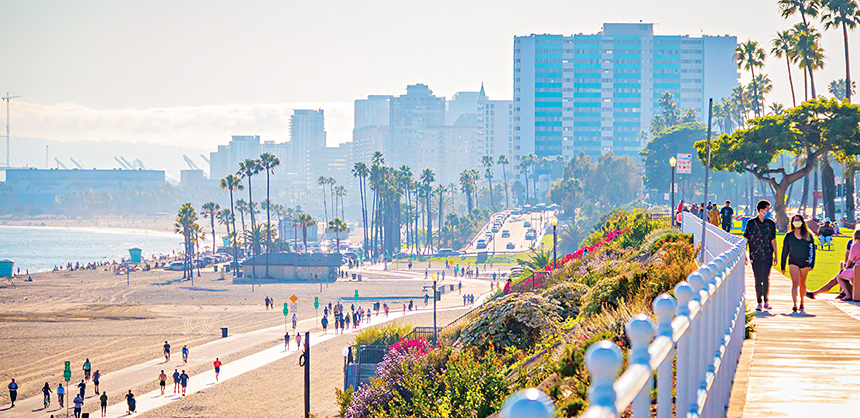
Los Angeles offers a variety of venues to suit any event. Courtesy Photo

Los Angeles offers a variety of venues to suit any event. Courtesy Photo

For meeting planners looking west, the biggest challenge in selecting a site in California might be winnowing all the options down to the perfect choice. From the entertainment hub and cultural scene of buzzy Los Angeles and Hollywood, to the idyllic forest settings of Lake Tahoe, there is no shortage of backdrops from which to choose. And, from the sophisticated environs of intimate Monterey to Anaheim, home of the largest convention center on the West Coast, any size meeting can be accommodated.

For Jennifer Manley, group account director at experiential marketing agency MAS, California was the ideal fit for a human resources tech conference held in October. “Our client’s criteria for where to host the conference included states with a great climate and easy access for national and international travelers,” says Manley, who adds that the client wanted judicious COVID-19 policies and a location that embraced diversity, equity and inclusion. Also important: “A state that supports business from all sectors and sizes, from large, multinational corporations to small businesses and entrepreneurs. California fit the bill on all fronts.”

In selecting Los Angeles for the event, Manley explains: “To celebrate the return to [face-to-face] meetings after two-plus years, our client wanted a culturally relevant and high-energy city that is an iconic destination. We flipped the script on traditional conferences to create a campus setting that encouraged exploration and curiosity, keeping attendees on their toes and wondering what they might find around the corner. Downtown Los Angeles and L.A. LIVE, specifically, brought that vision to life.”

L.A. LIVE is at the western edge of downtown Los Angeles, and includes multiple venues, such as the Crypto.com Arena — formerly the Staples Center — a multipurpose indoor arena; Microsoft Theater, an indoor venue that can accommodate up to 2,400 guests; the Event Deck, a 90,000-sf rooftop deck suited for large-scale tents and platforms; Xbox Plaza, a 40,000-sf outdoor venue; and a 14-screen Regal Cinemas multiplex. Next door is the 5G-equipped Los Angeles Convention Center with 720,000 sf of exhibit hall space.

“It’s difficult to find a venue for 1,800 attendees that offers outdoor space, infrastructure to support keynotes and breakout sessions, broadcast capabilities and spaces for social gatherings,” Manley says. “The combo of Microsoft Theater, Regal Cinemas, Xbox Plaza and the Event Deck gave us the flexible space we needed, plus the technology and preferred vendors to produce an event of this scale. Considering security, technology, vendors and F&B, at times it was challenging to manage multiple venues, but that’s what had to happen to ensure a seamless guest experience.” Manley suggests that the video boards on Xbox Plaza would have been ideal for a brand takeover, but buying space entailed a significant media budget.

The 878-room JW Marriott Los Angeles L.A. LIVE and 889-room InterContinental Los Angeles Downtown served as the event’s main hotels, due to their proximity to L.A. LIVE, and they matched attendee expectations. The JW Marriott is located almost next door to L.A. LIVE, while Manley says the InterContinental, four blocks away, offers spectacular views from its 70th-floor lobby.

One off-site event was scheduled, a closing party at Paramount Studios. “The events team was fantastic to work with and was a well-oiled machine,” Manley says. “They have premium partners, including Schaffer Catering, who thoroughly understood our expectations of quality and service. We had fun using Paramount’s New York City soundstage to announce next year’s location, New York City; it was a very L.A.-meets-NYC moment.”

Manley adds that it was a “daunting” process to work with more than 10 different sales teams, from hotels to event venues. “But … the Los Angeles Tourism and Convention Board helped us every step of the way,” Manley says. “The possibilities to curate a unique experience in downtown L.A. are endless. Just give yourself some extra time to plan and coordinate with multiple venues, hotels and vendors.”

While L.A.’s revitalization is focused on the downtown convention core, the 400-room Fairmont Century Plaza recently reopened following a $2.5 billion renovation that modernized the iconic property while maintaining touches of its history, including 24,000 sf of indoor meeting space. The 305-room Conrad Los Angeles opened last summer, a new downtown centerpiece designed by Frank Gehry — the first Conrad property on the West Coast — and offers 8,800 sf of indoor event space. Upcoming openings include the Moxy Downtown Los Angeles and the AC Downtown Los Angeles.

The $14 billion modernization program at Los Angeles International Airport (LAX) includes major renovations to the terminals and a monorail that will connect all terminals to public transportation, allowing greater ease of travel to and from the city. It is expected to open this year.

Marina del Rey

Planners seeking an airport-close destination in the Los Angeles area might consider Marina del Rey, a beach community located just 5 miles from LAX. During the pandemic, Marriott International Inc. opened a pair of side-by-side waterfront hotels, the Courtyard Marina del Rey and Residence Inn Marina del Rey, with 159 and 129 rooms, respectively. The hotels offer 2,200 sf of event space and flexible indoor/outdoor capacity for up to 300 people. Options include a private waterfront room dining space and a large outdoor rooftop event space with breathtaking marina views.

Meanwhile, the Marina del Rey Marriott on Mother’s Beach has completed a nearly $20 million renovation of all 370 spacious guest rooms and suites. All rooms offer panoramic views that overlook the Pacific coastline, city and mountain views in the Los Angeles area. The property features 20,000 sf of flexible meeting space, including a rooftop ballroom with views of the marina and Pacific Ocean. Also overlooking the sails, the Marina del Rey Hotel completed a nearly $1 million renovation project, including a full redesign of the indoor and outdoor dining spaces of its on-site restaurant, SALT; and the pool deck and bar area. The hotel offers more than 10,000 sf of flexible indoor and outdoor venues, each with waterfront views.

Anaheim

In nearby Anaheim, the development of land surrounding the Disneyland Resort continues, which includes the 618-room The Westin Anaheim Resort across the street from the Disney parks. With design hinting at Anaheim’s citrus history, the hotel is equipped with 47,542 sf of indoor/outdoor meeting and event space. The 23 event rooms and 18 breakout rooms are named after original Anaheim orange brand labels, and all offer state-of-the-art technology, including color-changing LED ceiling lights, remote-control lighting and sound panels, large TVs in breakout rooms with videoconferencing capabilities and on-site Encore Global A/V services.

Located at the Anaheim GardenWalk, a short stroll from both the Anaheim Convention Center and Disneyland Resort, sits the 446-room JW Marriott, Anaheim Resort. The hotel is infused with modern décor and augmented reality technology, with subtle design touches also inspired by Orange County’s agricultural history. The hotel features 43,000 sf of indoor and outdoor function space, along with pre-function areas offering floor-to-ceiling windows. The Grand Ballroom measures at 13,440 sf, suitable for up to 1,400 guests, as well as 15 meeting rooms and breakout spaces.

Looking forward, a new Anaheim development anchored by the Honda Center will open in phases starting next year. Known as ocV!BE, the 115-acre project will include a 5,700-capacity concert venue, more than 30 restaurant concepts, four public plazas, office space and two new hotels with a planned 550 total rooms.

Greater Palm Springs

Carrie Jennissen, associate director, special projects for the BARR Center, says many of her Midwest- and East Coast-based clients look forward to meetings in California — for the state’s weather and unique scenery. For its first event after COVID restrictions were lifted, the BARR Center selected Greater Palm Springs for a 700-attendee national conference held last April, drawing school administrators, funders and policy makers.

The event was held at the 512-room The Westin Rancho Mirage Golf Resort & Spa. With 129,000 sf of meeting space, including a 17,325-sf ballroom, Jennissen says the resort’s outdoor spaces, pools and walking paths provided a fun environment to a working conference. “The resort-style layout offered so many outdoors spaces for breakfast, lunch, dinners and receptions,” Jennissen says. “There is a variety of outdoor seating areas, fire pits and walking paths to support all our networking opportunities. We also liked being right on a golf course and able to host an event which we had never offered before.”

Jennissen says the resort’s general manager and staff were very accommodating, supportive and creative during the prep time and week of event. “So many of our attendees noted the fantastic staff,” Jennissen says. “Many of our team members shared stories about how helpful the A/V, food service and managers were. Having confidence in the hotel staff alleviated so much stress — someone was always there to problem solve.”

Jennissen continues: “All the food was great, and staff were helpful in making recommendations for budgets and themes. A/V offered creative lighting ideas for our general session so it would stand out and be different from our other spaces. We noted that you didn’t need to add as many visuals in the networking space, because the venue itself is pretty and the large windows brought the outside in. The large conference spaces provided enough space for us to host theater-style or round table meetings.”

Jennissen notes that Palm Springs Airport is not a hub for any carrier, meaning Midwest- and East Coast-based attendees had trickier flight itineraries. “And we couldn’t offer weekend extensions to our guests due to Coachella and Stagecoach events in Palm Springs during the month of April,” Jennissen says. “But the Greater Palm Springs Visitor Bureau was fantastic to work with. Their responses were timely and the connections so helpful.”

San Diego

For a 250-attendee business meeting for professionals in the food distribution industry, Suzanne Markarian, director of planning & purchasing at Landmark Incentive Marketing, says her client sought favorable winter weather and a change of venue from their traditional Florida locations. They still wanted a city that could be accessed from across the U.S. and also desired a location where they could hold their annual golf tournament — factors that led them to San Diego and one of the top golf courses in the country.

“San Diego has an airport offering accessibility from most cities and the hotel was close enough for an easy transfer,” Markarian says. “There was a wide assortment of choices when it came to selecting a top-end resort with quality golf. Ultimately, The Lodge at Torrey Pines was selected for its intimacy, the superb golf and the proximity to other activities.” The program was set for the 170-room lodge, with an additional room block at the 394-room Hilton La Jolla Torrey Pines next door. But the pandemic forced the event to be postponed, and the lodge worked with Markarian and the client to accommodate the evolving circumstances.

“The client wanted a complete property buy-out, but not at a premium surcharge,” Markarian says. “The Lodge at Torrey Pines sales team made that happen, and worked with the Hilton to handle the overflow, adjusting their F&B minimum so we could be accommodated. They also gave the client exclusive use of the property. The leadership and owners at the lodge made every possible accommodation to rebook the program and worked with the client to waive any penalty. They honored all pricing and original conditions of the booking. In short, they were excellent partners, working in the best interest of the client to do what was needed in order to proceed with the business meeting.”

The Lodge at Torrey Pines overlooks the renowned 36-hole Torrey Pines Golf Course, situated on the coastal bluffs immediately north of La Jolla, and offers a full-service spa and fine-dining at A.R. Valentien restaurant. With more than 13,000 sf of meeting space, the lodge’s common areas are graced by outdoor painting, glasswork and wood-burning fireplaces.

“The resort is compact and very easy to maneuver for guests,” Markarian says. “The lodge does not have extra-large ballrooms, but they do have a collaborative relationship for guest room and function space overflow at the Hilton next door. The sales team was agreeable to everything — they flipped meeting and banquet rooms for us with very tight timelines in order to accommodate our itinerary. You’re not dealing with a huge brand and a lot of layers — the resort owners are proud longtime San Diego residents that put their name behind the quality that the hotel and its employees offer, including the exceptional sales and conference services.”

San José

San José is the gateway to Silicon Valley. Located an hour south of San Francisco, the destination specializes in diverse experiences amidst technological innovation and creativity. For planners seeking a “green” meeting destination, the City of San José has developed a community-wide climate action plan to reduce greenhouse gas emissions. Climate Smart San José was one of the first plans aligned with the Paris Climate Agreement, promoting bold goals around energy efficiency, the electrification of buildings, transportation and water conservation. From partner hotels to the San José McEnery Convention Center to the Norman Y. Mineta San José International Airport (SJC), San José’s visitor industry is collectively putting its best carbon footprint forward.

When meeting in San José, planners can enjoy a fully customizable approach, all under one roof, offering a combined 550,000 sf of meetings space within a two-block radius. Accommodation options are abundant, convenient and accessible. Downtown is just 10 minutes from Mineta International Airport and steps away from convenient public transportation, ride shares and scooters.

The 805-room Signia by Hilton San José is Silicon Valley’s largest hotel. It was recently reimagined following an extensive renovation, including a makeover of the lobby and bar, upgrades to the main entrance foyer and the guest registration areas. The property features 65,000 sf of meeting space, just two blocks from the convention center.

For its seventh annual Putting Care at the Center conference, the Camden Coalition of health care providers chose Sacramento’s SAFE Credit Union Convention Center. The event, held last September, drew 540 in-person attendees, with another 110 joining virtually.

Alice Smart, COO at Horizon Meeting Management, which planned the event, says Sacramento’s convention center, which just completed a $180 million renovation and expansion, proved to be a great venue for the conference. “The space is beautiful,” Smart says. “It’s so updated, and the staff is really easy to work with — they’re friendly and communicative.”

The convention center now has two ballrooms measuring up to 39,224 sf, along with 16 breakout rooms, plus the 159,500-sf exhibit hall. Two hotels are located within a block of the convention center, the 505-room Hyatt Regency Sacramento and the 503-room Sheraton Grand Sacramento Hotel. The hotels were central to a number of restaurants, which made networking over dinner easy.

Smart particularly lauds the Hyatt Regency, and had accolades for the Visit Sacramento team. “They were super instrumental in helping understand when things were going on,” Smart says. “Use your CVB in planning. Sacramento’s really stood out, and they were very helpful with dinearound options. I meshed really well with my event manager. We were able to plan things out far in advance, and in the end, we felt like we were each working with the same person.” C&IT


Colorado

Colorado Springs offers an array of activities, including hot-air balloon rides. Courtesy photo

Colorado Springs offers an array of activities, including hot-air balloon rides. Courtesy photo

For planners seeking a destination that features wide-open spaces and spellbinding panoramic beauty of mountains, rivers and plains, Colorado, aka “The Centennial State,” more than fulfills that promise. From Aspen to Vail, Colorado Springs to Denver and locations in between, Colorado ranks high on the list of desirable meeting and conference locations.

Colorado Springs

When it comes to selecting a site for TWO MEN AND A TRUCK’s annual conference, Cindy Wilhelm, executive assistant and special events coordinator, often chooses company favorite, The Broadmoor. “We are in the customer-service industry,” Wilhelm says. “The Broadmoor customer service is amazing — the best ever. Expect the best, and you will get it. Everyone loves The Broadmoor.”

The venerable resort has achieved legendary status as a Forbes Five-Star, AAA Five-Diamond service property. Combined with its Seven Falls and the Wilderness Experience boutique camps portfolio — The Ranch at Emerald Valley, Cloud Camp and the Orvis-endorsed Fly-Fishing Camp — The Broadmoor encompasses 5,000 acres with its campus conveniently located just 15 minutes from the Colorado Springs Airport. It offers 784 guest rooms, suites, cottages and brownstones, and the five-bedroom Estate House provides for luxurious retreats with timeless elegance. Private cabins and upscale ranch accommodations are also available at the Wilderness Experience properties. Distinct European-inspired elegance abounds in plush furnishings, warm decor, cozy fireplaces and expansive bathrooms with large soaking tubs, while large picture windows invite lake and mountain views.

For memorable events, 315,000 sf of flexible indoor/outdoor inspiring spaces can accommodate 10 to 5,000 meeting attendees. With the recent addition of Bartolin Hall, The Convention Center at The Broadmoor provides 200,000 sf of meeting, trade shows and exhibit space. Attendees can enjoy fine dining to casual food fare featuring locally sourced, seasonal products at an abundance of restaurants, cafes and lounges.

For a recent first team event post-COVID-19, Brian Hillegass, digital marketing/communications manager with Leybold, wanted the opportunity to unite as a group and bond in a unique and beautiful location, which was absolutely captured in Cheyenne Mountain Colorado Springs, A Dolce Resort hotel, Hillegass says. “The location, stunning views and non-chain hotel feel were unmatched,” he says. “It felt like a unique experience in Colorado.”

The AAA Four-Diamond property covers 200 acres, and is a mere 20-minute drive from The Colorado Springs Airport, which offers 120 daily flights from 10 commercial airlines.

Featuring 316 guest rooms set in eight residential lodges, the resort offers sweeping views of the surrounding mountainscape, 40,000 sf of flexible event space and 38 meeting rooms. It also offers 20,000 sf of functional outdoor space, which includes the 3,200-sf Grand Rivers Terrace and the 5,600-sf Cheyenne Courtyard. Dedicated conference planners can curate unique indigenous team-building activities such as the Cheyenne Dauntless Dash, Build-A-Canoe and Cause & Effect Charity Challenge to connect with the local community.

On-site recreational activities include an 18-hole Pete Dye designed golf course, a 9,000-sf fitness center featuring a schedule of free training classes, 17 indoor/outdoor tennis courts, a private 35-acre lake for watersports and beach-like fun such as volleyball, and boat rentals. Hillegass also recommends event organizers plan plenty of off-site activities. Area adventures run the gamut from hiking and biking to fishing, hot-air balloon rides, zip lining and scenic train rides.

Attendees can enjoy breakfast at the Mountain View restaurant and casual gourmet food fare at Gates Grille along with the spellbinding views while dining al fresco after a round of golf. Attendees can also soak up the scenery when dining around the fire pit or settle inside in cozy ambiance at Elevations. Both pub food and entrees highlight the locally sourced, seasonal menu.

The Lodge at Flying Horse has achieved distinction as a boutique AAA Four-Diamond property, and was the welcomed choice of Carol McCormack, senior event strategist at Maritz Global Events, whose client was looking for a more intimate setting for their small strategic planning meeting in a mountain destination. In addition, McCormack says, “The Lodge at Flying Horse provided them with a unique venue that was extremely comfortable for their size group. The affordability of Colorado Springs and the resort were also huge factors in their decision.”

Eight indoor function rooms provide nearly 7,500 sf of meeting and event space. An added 10,000 sf of outdoor event space for up to 200 guests comes with views of the Audubon-certified Tom Weiskopf golf course against the backdrop of the Rocky Mountain Front Range. Floor-to-ceiling windows inside two large conference rooms feature natural light, with the added amenity of fireplaces, while the more intimate executive boardroom also features natural light and an 84-inch built-in presentation monitor.

The lodge offers 96 luxurious guest accommodations ranging from 580 sf to 1,000 sf, and features oversized showers, large work/study desk stations and 55-inch flat-screen TVs. Private balconies provide stunning views of the Rocky Mountain Front Range. Accommodations also include four separate 1,600-sf two-bedroom Villas, with a 600-sf great room separating the two bedrooms, plus private terraces, fireplaces, free-standing tubs and walk-in closets.

In addition to four golf course eateries, world-class dining options at the property feature The Steakhouse & The Bar/Lounge, serving dinner and small bites. Located within The Club at Flying Horse are the Fortezza Dining Room and Lobby Bar in the East Lodge building, and The Athletic Grill, serving health-conscious salads, flat breads and sandwiches, as well as beverages and smoothies.

State-of-the-art athletic equipment and a robust schedule of fitness classes, including Yoga, Pilates, Zumba and high-intensity cardio set the stage for healthy lifestyle offerings on the property. Added amenities feature a heated 25-yard lap pool, seasonal adult activities, splash pools, indoor basketball, volleyball and clay tennis courts.

“Based upon my client’s feedback,” McCormack says, “I think the attendees loved the location, beauty and service of the resort. My client indicated that if they return to the area, The Lodge at Flying Horse would be at the top of their list.”

Denver

There’s a lot to love in Colorado’s “Mile-High City,” from food, whiskey and walking history tours, to exploring unique neighborhoods, museums and more.

A focus on sustainable meetings starts with the centrally located LEED Gold-Certified Colorado Convention Center, easily accessible via light-rail service from Denver International Airport and within walking distance of more than 13,000 hotel rooms. Amenities feature three covered drop-off points, 600+ parking spaces, 48 covered loading docks and easy-to-read signage throughout the building.

Visitors need only look for the 40-foot, 10,000-pound Blue Bear peering into the windows of the convention center to find one’s bearings. Bountiful public art projects, such as a series of 10 massive murals depicting the Denver landscape transformation over 500,000 years also grace the interior.

At a glance, planners have access to 577,000 sf of exhibit space on one level and 63 meeting rooms and 100,000 sf of meeting space. Two ballrooms provide a total of 85,000 sf of flexible meeting space, including the 35,000-sf Four Seasons Ballroom and 50,000-sf Mile High Ballroom. In addition, the Bellco Theatre features state-of-the-art A/V capabilities and seats up to 5,000 attendees.

Scheduled for opening late this year, a new convention center expansion will feature 80,000 sf of versatile column-free meeting and ballroom space with 35,000 sf of pre-function space offering spectacular Rocky Mountain views, plus a 20,000-sf outdoor terrace on the roof of the existing building.

For accommodations, the adjacent Hyatt Regency Denver at Colorado Convention Center offers easy accessibility to desirable downtown locations beyond the convention center, such as the 16th Street Mall and Denver Center for the Performing Arts. The Hyatt Regency’s 1,100 newly refreshed guest rooms include 59 suites with views of the surrounding Rocky Mountains, downtown Denver and the state’s Capitol building.

The hotel’s more than 60,000 sf of versatile event space features pre-function space and 35 hybrid-capable meeting rooms. The 30,000-sf Centennial Ballroom, with 30-foot ceilings, can accommodate up to 3,000 attendees, while the Capitol Ballroom spans 14,000 sf and has a spacious foyer on either side of the ballroom for an additional 8,000 sf. Special features include the Centennial Ballroom’s glass lighting in the shape of mountain peaks and the Capitol Ballroom’s hand-blown Italian light fixtures. Planners can also reserve the 2,250-sf, 27th-floor Peaks Lounge for daytime events that accommodates up to 200 attendees or the 3,500-sf terrace for up to 300 attendees.

Find grab-and-go food options or a quick bite and glass of wine at the new lobby Assembly Hall Bar + Market. A variety of downtown restaurants and bars support the city’s food and craft beer culture within easy walking distance. Catering menus for attendees highlight Colorado food fare while being mindful of lifestyle preferences, whether vegan, gluten-free, vegetarian or nut- or dairy-free.

A reimagined AAA Four-Diamond Sheraton Denver Downtown Hotel on the popular 16th Street Pedestrian Mall invites guests to connect and converse at the hotel’s Community Tables in the lobby. Modern phone booths for video or audio calls and collaborative meeting studios in high-tech, light-filled spaces are among the special features. A massive $80 million transformation highlights a vibrant lobby atmosphere, world-class culinary experiences, more than 133,000 sf of flexible meeting space and 1,238 redesigned guest rooms.

The event space includes 52 meeting rooms and stunning event venues with the largest capacity space at 2,100 attendees. High-speed internet and state-of-the-art A/V equipment serviced by on-site technicians is designed to accommodate attendee needs. The 28,000-sf Plaza Ballroom features 20,000 sf of dedicated exhibit space.

Dining options start with the stylish new BEZEL Bar serving innovative craft cocktails and mocktails along with small plates, such as the Bezel Bison Sliders and Colorado Lamb Lili Pops. Guests can cozy up at the classy bar in an intimate indoor setting or gather around the outdoor fire pit while an on-site DJ spins tunes, adding to the chic, sophisticated ambiance. Open daily from 6 a.m. to 10 p.m., the 16th Street Commons Coffee Bar in the hotel’s renovated lobby offers a welcome transitional space serving coffee to help attendees ease into the day and wind down in the evening with a beer or glass of wine. The adjacent 16th Street Commons Café features sweet and savory flavors and fresh, locally sourced cuisine in a casual setting. Or, attendees can stop by the hotel’s nearby Yard House for steak and seafood specialities.

Aspen

Clean mountain air, bountiful sunshine and year-round outdoor activities invite attendees to Aspen, which offers renowned arts and culture, exceptional cuisine, world-class accommodations and countless outdoor pursuits. Convention venues include Aspen Meadows Resort, where beauty, art and nature thrive on 40 pristine acres with panoramic mountain views. The environmentally friendly resort is currently undergoing a renovation — expected to wrap up in the spring — of all 98 guest suites with floor-to-ceiling windows and contemporary decor, suitable for business and leisure travelers with families. For meetings and events, 22,000 sf of space provides 16 meeting rooms in six different buildings, each with state-of-the-art A/V equipment and business center.

Other meeting and convention venues in Aspen include Hotel Jerome, An Auberge Resort, which offers 7,500 sf of event space that includes the 3,450-sf Grand Ballroom; and The Gant Aspen, which offers the Molly Campbell Conference Center, with the 1,380-sf Conundrum Room and the 1,820-sf Maroon Room.

Vail

From hiking in the summer to skiing in the winter, Vail offers some of the best alpine resorts in the world with a friendly, small-town feel. Upscale, luxurious convention hotels in Vail include Grand Hyatt Vail, located at the base of Vail Mountain. The hotel features plentiful outdoor recreational opportunities, 40,000 sf of versatile meeting and event space and 285 guest rooms, many with balconies to take in the sweeping mountain views and fireplaces for warming up after a brisk walk or play day on the slopes.

Other meeting and convention hotels include The Hythe, a Luxury Collection Resort, Vail, which offers nearly 29,000 sf of meeting and event space that includes the 8,296-sf Grand Ballroom and the 4,400-sf, Colorado Ballroom; and Four Seasons Resort And Residences Vail, which offers 8,480 sf of meeting space that includes the Bighorn Ballroom, at 3,550 sf.

Breckenridge

This mountain town at the base of the Rocky Mountains’ Tenmile Range is a 90-minute drive west of Denver. Known for its ski resort, year-round alpine activities and Gold Rush history, visitors are encouraged to leave behind their cars and explore on foot. Its popular Breckenridge National Historic District runs primarily along Main Street and features colorfully painted buildings from the 1880s and as well as housing shops, galleries and restaurants. The town offers 100,000+ sf of meeting space, more than 100 restaurants and bars and more than 200 shops. Convention hotels include the Beaver Run Resort & Conference Center, which offers 40,000 sf of meeting space that includes the 5,400-sf Breckenridge Ballroom and the 7,200-sf Colorado Ballroom; and the DoubleTree by Hilton Hotel Breckenridge, which offers 9,207 sf of space that includes the 6,351-sf Columbine and Mt. Elbert rooms.

Aurora

Aurora is located between the Rocky Mountains and Eastern Plains, giving every visitor the opportunity to explore all sides of Colorado. Aurora offers more than 65 hotel properties with 13,000+ guest rooms, and more than 1 million sf of meeting space. Convention venues include the state’s largest and newest resort, Gaylord Rockies Resort & Convention Center. The resort offers nearly 518,000 sf of meeting space, which includes the 59,467-sf Aurora Ballroom, 34,467-sf Adams Ballroom and 34,463-sf Colorado Ballroom. Another convention hotel is the 249-guest room Hyatt Regency Aurora/Denver Conference Center, which offers 36,000 sf of meeting and event space that includes the 11,800-sf Aurora Ballroom and a 4,000-sf outdoor terrace. C&IT

Louisiana

The iconic St. Louis Cathedral in Jackson Square. Photo by Rebecca Todd

The iconic St. Louis Cathedral in Jackson Square. Photo by Rebecca Todd

When you think of New Orleans and greater Louisiana, what comes to mind? Incredible food? A vibrant nightlife? Memorable music? History aplenty? From the eclectic experiences in New Orleans to the Southern charm in Baton Rouge, Louisiana is filled with a wealth of meeting and event locales that are sure to please.

New Orleans

New Orleans is known for executing logistically complex events with an elevated level of success. Hundreds of hotels, restaurants, venues and attractions are nestled within a 2-mile downtown area, making it convenient and easy for attendees to explore on foot.

“Add cultural richness, unmatched cuisine, world-class live entertainment and experienced and committed hospitality community, and what you have is a premiere destination ‘Built to Host’ meetings and events,” says Stephanie Turner, senior vice president, convention sales & strategies with New Orleans & Company.

Melva LaJoy Legrand, CMP, DES, CEO & founder of LaJoy Plans, started planning events in New Orleans in 2010 and, from her experience, New Orleans provides an excellent meeting oasis where there is an extremely vibrant music, arts, museum and architecture culture paired with a city that has quality venues of all sizes and price points. “I have never had anyone say they had a bad meal [of various price points] in New Orleans,” Legrand says. “The ‘Big Easy’ makes meetings experiential and truly enjoyable. I know many people who want to return every year if they could.”

Legrand has planned company all-staff retreats at the iconic The Roosevelt New Orleans, A Waldorf Astoria Hotel; smaller workshops at the Renaissance New Orleans Arts Warehouse District Hotel, and she is currently planning a large conference at the New Orleans Marriott. “When my clients have selected New Orleans, it has been for a few reasons,” Legrand says. First, they recognize that while attendees value good content, having their event in a desirable destination matters, and New Orleans is often on the list; second, for her East Coast clients, climate is a draw for people in Boston and New York trying to get out of the cold; third — and this varies by property and time of the year — but by and large, pricing overall as compared to some other destinations tends to be more affordable than other locations.

“It goes without saying — good food can keep meeting attendees happy,” Legrand says. “Finally, I have to say that in every meeting planner experience I’ve had, including the one I am having right now at the New Orleans Marriott, the hospitality pros are extremely collaborative and communicative. The Southern hospitality in New Orleans is palpable.”

Melissa Park, global event producer at Melissa Park Events, has also planned a wealth of events in New Orleans. Park says New Orleans is more than a city, it’s a destination with a vibe all its own. In addition to offering a host of meeting facilities large and small, the city is known for its diverse culture, arts and entertainment, incredible cuisine, live music and nightlife — making it a perfect choice for programs that include off-sites and partner activities.

“As we venture back into the world of in-person events, with tighter budgets than ever before, I am always on the lookout to get the biggest bang for my client’s buck,” Park says. “Two factors I consider are accessibility and being able to affordably lean into a theme. New Orleans ticks both boxes and then some with its power punch of personality plus.”

Event pro and New Orleans native, D. Channing Muller, principal at DCM Communications, says New Orleans is so much more than a city. It’s a melting pot of various different cultures all coming together to be their own unique New Orleans culture.

“The easy draws for why you’d want to host an event there are the food, music and revelry, hands down. The planner who goes beyond that though, and taps into the history and unique New Orleans experience, is the one who will truly set their event apart for attendees,” Muller says.

Louisiana history and architecture is fascinating, as Muller explains. Whether you are in the French Quarter, downtown or the Garden District, you are going to be immersed in what brought the city to being the destination it is today.

“Attendees want to escape their lives a bit, and New Orleans is more than happy to welcome them. We specialize in revelry and hosting,” Muller says. “We love to showcase our city to the world and have them join the party as if they were locals, and we know tourists love that. After all, you won’t have a true New Orleans experience — be it the food, hospitality, history, theme or parties — anywhere but there.”

Distinct Venues

While the nightlife and cuisine in New Orleans is as diverse as the visitors themselves, so too, are the hotel and venue offerings in the city. Virgin Hotels New Orleans offers seven different meeting and event spaces including a ballroom, The Manor, at 1,860 sf.

Virgin Hotels New Orleans’ Dreamboat space is on the 13th floor, and is an indoor event space perfect for parties, receptions, meetings and intimate weddings. Adjacent to The Pool Club, Dreamboat is an intimate indoor air-conditioned space that evokes a sense of the outdoors with lush greenery, lanterns and locally designed latticework.

And the hotel’s Sandbox is a traditional meeting space that is equally as versatile. The 800-sf space is great for networking, meeting with colleagues or socializing, and features floor-to-ceiling windows with sweeping views of Baronne Street and allows for plenty of natural lighting.

The Hilton New Orleans Riverside offers more than 130,000 sf of event space, and can accommodate a multitude of specialized events, including meetings and conferences of all sizes, board retreats, team-building events, network gatherings and large dinners.

For a classically historic New Orleans venue experience, The Roosevelt New Orleans, A Waldorf Astoria Hotel, is ideal for meetings and events. Having recently completed a $40 million renovation of guest rooms, banquet spaces and public spaces, The Roosevelt offers more than 60,000 sf of meeting space, including the historic Blue Room, which is one of the original supper theaters from the 1930s and 1940s.

The New Orleans Ernest N. Morial Convention Center (NOENMCC) is an award-winning convention center and staff. As Michael J, Sawaya, president of the NOENMCC, says, the convention center boasts more than 1 million sf of contiguous prime exhibit space, a 65,000-sf ballroom, 36,000-sf ballroom, a 4,000-seat theater, 140 meeting rooms and several unique meeting options.

“We also offer a park with several activation spaces the length of the convention center,” Sawaya says. “Recently designated Gold LEED Certified, the renovations to all meeting rooms and public spaces at the convention center will soon be underway.”

And while New Orleans offers exceptional hotel offerings, the area is also celebrating recent hotel projects including The Four Seasons Hotel + Residences, and an expansion at the Kimpton Hotel Fontenot. Also, a complete remodel, expansion and rebranding of Caesars Entertainment’s Harrah’s New Orleans hotel is underway — bringing the room inventory to nearly 26,000 in a 2-mile area downtown.

Cultural attractions such as Vue Orleans Observatory — on top of the Four Seasons Hotel — and a $400 million expansion of the National WWII Museum also provide more offerings to attendees. Two blocks from the NOENMCC on the Mississippi River, the Audubon Aquarium of the Americas is undergoing a $34 million renovation to the entrance and lobby, along with the addition of 17,000 sf of exhibit space; the Butterfly Garden and the Insectarium.

“There are many new developments not to be missed in New Orleans, however, the new Expressions of America Exhibit at the National World War II Museum uniquely combines the latest outdoor projection technology with wartime letters and oral histories from the museum’s collection to allow audiences to experience the stories of the WWII generation like never before,” Turner says.

Shreveport-Bossier

Tucked into Louisiana’s extreme northwest, Shreveport-Bossier is also rich in its own food, music, history, unique architecture and culture. According to Katharyn DeVille, vice president of marketing and communications at the Shreveport-Bossier Convention and Tourist Bureau (SBCTB), the area is rich with assets to which meeting, sports and event planners and individual visitors are drawn.

“From the 350,000-sf Shreveport Convention Center, to more than 10,000 hotel rooms supporting citywide conferences, tournaments or smaller needs, we have what meeting planners are looking for and provide a great value to them,” DeVille says.

Conveniently connected to the Shreveport Convention Center is the Hilton Shreveport hotel, which is complete with more than 244,000 sf of event space, including 22 distinct meeting rooms.

“Shreveport-Bossier is growing and changing as quickly as the mighty Red River that flows between our two cities,” says David Bradley, vice president of business development for the SBCTB.

Plans are underway for a new riverfront casino resort; a new multiuse sports complex in downtown Shreveport and renovations for a state-of-the-art baseball complex in Bossier City. Additionally, many of the area’s local hotels are updating their accommodations this year. Shreveport-Bossier also is a perfect place for foodies to tour, with new venues opening frequently.

No two visits to Shreveport-Bossier are the same, as the area offers more than 55 events and festivals each year. The Paddy in the Plaza commemorating St. Patrick’s Day is returning to downtown following a hiatus. Other popular festivals include the area’s own version of Mardi Gras, the Mudbug Madness Festival, the Red River Balloon Rally, the Let the Good Times Roll Festival, the Red River Revel Arts Festival and Prize Fest.

DeVille points out that the SBCTB and Shreveport-Bossier Sports Commission are free resources to help meeting and event planners host a successful event. “Whether it’s all-in, sleeves-up and hands-on, or an advisory capacity, we can help secure event space, plan meals, get room blocks and so much more,” DeVille says. “We want you to be the hero of a successful event in Shreveport-Bossier, and we want your guests to love the accommodations, the food, the attractions and more.”

Baton Rouge

Alysia Guin, sales and marketing manager at the Raising Cane’s River Center, says the biggest draw for meeting planners and attendees to Baton Rouge — an hour-and-a half drive northwest of New Orleans — is the walkability of the city’s downtown. “The convenience of several hotels options, restaurants and local attractions is a draw,” Guin says. “The advantage of being located in downtown Baton Rouge is that our facility is located off the interstate and only 10 minutes from the Baton Rouge Metro Airport.”

In addition, the Raising Cane’s River Center’s 16 meeting rooms offer meeting planners plenty of flexibility. “Planners love the open concept of the Galleria that marries our meeting rooms, along with the ballroom and exhibition hall,” Guin says.

The Galleria boasts more than 27,000 sf of space, perfect for trade shows and more. Additionally, the Riverview Room, which is 3,100 sf, overlooks the banks of the Mississippi River, providing attendees the opportunity to view downtown Baton Rouge.

In addition to the convention center, the Raising Cane’s River Center campus also offers an 8,900-seat arena and a 2,000-seat theater. “This is unique in that convention-goers could attend concerts or other ticketed events that may be occurring during their stay in Baton Rouge,” Guin says. “Also, planners have the option to utilize these spaces to enhance their attendees’ experience.” C&IT


3 Ways Female Founders Can Realign the Capital Landscape

CIT-Col3-Kern,Merilee-110x140As the executive editor and producer of “The Luxe List,” Merilee Kern is an internationally regarded brand analyst, strategist and futurist. As a prolific branding and marketplace trends pundit, Kern spotlights noteworthy industry innovators, change makers, movers and shakers. Experts, brands, products, services, destinations and events across all categories are spotlighted in her exclusive cross-media platform through print and online publications, TV and radio. Connect with her at TheLuxeList.com, on Instagram at LuxeListReviews, on Twitter at LuxeListEditor, on Facebook at TheLuxeList and on LinkedIn at Merilee Kern.

Relative to global entrepreneurship, the proverbial glass ceiling has seemingly been shattered. This amid reports revealing statistics that nearly half of entrepreneurs worldwide — 252 million — are women. As impressive as that metric is, it’s curious that Census Bureau Annual Business Survey reporting cites that a mere 20.9% (1.2 million) of U.S. businesses are women-owned. On a worldwide scale, just 4.7% of American business owners are women. Whether considering statistics at the global or U.S. national level, the disparity begs the most fundamental question: “Why?”

Perhaps one glaring reason is lack of capital, since women reportedly receive less than 3% of available venture capital funding. Other findings show that, in 2019, only 2.8% of venture capital in the United States went to women-led startups; it dropped to 2.3% in 2020.

These numbers reveal that, despite the hustle, heart and high revenues, women are suffering from less-than-adequate and equitable access to capital. What’s more, the ripple effects of the unprecedented global pandemic on companies with a female founder may actually exacerbate the funding gap.

But, all is not lost. There are ways the startup funding process can be democratized to help better position women to navigate the shifting capital landscape. Here are three.

1. Fix Your Expectations of Fairness

If you’ve ever heard the phrase “read the room,” then you’ve also heard the phrase “know your audience.” In fundraising — at any round — there are a few universal truths to recognize. Many investors use pattern recognition. In other words, they believe that by investing in the products or people that are most similar to their past successes, then they will have a greater probability of future success. This pattern is based on an unconscious bias and reinforced by influences that cannot be controlled, such as ones experiences, childhood upbringing and environment.

Thea Myhrvold, CEO and founder of Getbee — a female entrepreneur who recently raised $1.8 million from top venture capitalists — recounts her own experience with bias. “From my own fundraising experience, without fail there were questions hurled at me that I don’t believe would have been asked of a male founder, such as ‘how will you make sure not to lose key clients?’ or ‘how will you prevent bankruptcy?’ It’s not that I was asked these important and fundamental questions, but rather that they dominated the conversation.”

Based on Myhrvold’s track record and professional pedigree — having received LinkedIn Power Profile and Cartier Women’s Initiative awards; amassed a world-class client list and logged more than a decade of front-line tech experience — she had expected a different line of questioning. “I anticipated having to respond to questions about the market, my balance sheet, my projections and strategy,” Myhrvold says. “The skepticism about my expertise and experience in this space shook me. I walked away disillusioned.”

This was until Myhrvold discovered Dr. Dana Kanze’s TEDxPeachtree presentation, “The Real Reason Female Entrepreneurs Get Less Funding,” from which she says she learned three simple truths: unconscious bias exists, deal with it and get on with it.

Because we are bombarded with millions of messages our brain is working to organize and translate, your brain will take shortcuts. Sometimes those shortcuts short-circuit opportunities for meaningful interactions. So, before you step foot into a pitch meeting again, or for the first time, spend some time reflecting on the details of your presentation so you can discover your own fundraising-success correlations. That way you can effectively circumnavigate the punch of a potential investor’s unconscious bias.

2. Tweak Your Fundraising Mindset

Simply having a great business idea is not enough to get a venture capitalist to invest millions in your company. Back in the day, venture capitalists were in a race to discover the next Facebook, eBay or even Spanx, but now they’ve cooled their heels and are becoming increasingly selective. Studies show the average deal size has shrunk, as well as the number of seed-stage deals.

If you’ve ever watched the TV series “Shark Tank,” you’ve watched the Sharks circle the water and go in for the kill with anyone who dared to step into the proverbial tank without a strong sense of sales, marketing and other key financials and data. It makes for good reality TV and it is a lesson for us in real life. Where do you start, or level up?

Fans of the British-American author and speaker Simon Sinek know any great endeavor starts with knowing your why. For every point you make in your pitch deck, you must be able to respond to any form of the “why” question a prospective investor might throw at you. You might be asked: Why do you perceive this or that to be a problem in the market? Why do you believe you — or your team — are bringing a viable, sustainable solution to the market? Why now? You should spend time crafting responses that not only reinforce what drives and scales your business, but also why your investors should go beyond the usual level of care and concern about your success.

Indeed, a key aspect of your fundraising mindset is also about knowing your own value. Your business’s value proposition is like an uncut diamond. Your task is to slice and dice the numbers so all the facets of your idea shine brilliantly.

Alicia Hanf, founder and managing partner of Dear Mama Ventures, adds, “My fundraising mindset evolved from who is giving me money into who do I want to make money for … and why are we mutually a good fit for each other? Your startup offers everyone who invests in it a chance to multiply their investment significantly, and you are giving them as much of an opportunity as they are giving you. This awakening challenged me personally as well, to know my ‘why.’ To not only understand the significant value my business brings to the market, but also the impact my business has on the communities I serve.”

3. Find Your Voice & Turn up the Volume

Simply put, speak to everyone … speak up for yourself and those women coming behind you. “Some of my best funds have come through warm introductions and others have come through by striking up what felt like random conversations while waiting in line to order a cup of coffee,” Myhrvold says. “One time, I was attending a conference and slipped away on a break to find a cup of coffee. As I was waiting in line, I noticed the guy next to me and I were wearing matching red trousers. I thought about breaking the ice by making a simple joke about great minds thinking alike. I learned he was a senior executive at a tech company. We [exchanged] business cards and promised to stay in touch. One day, he suggested we collaborate. Jackpot!”

On any given day, you never know who you might meet. You never know who is listening to you and organizing the information their brain is receiving to form a judgment about whether or not to help you. Be genuinely curious about the people around you and invest in your relationships. One of the best ways to accomplish this is to actively look for ways to be both a giver and a gracious receiver. Be sure to be clear in your ask from your network and offer to support them in return.

We all operate at some level based on unconscious biases. Your mission is to examine them. And, while the odds might seem like they are stacked against female and minority founders, I encourage you to speak up, share your stories and pay it forward. It is up to all of us to change this narrative.

My hope is that the modern investor community will advocate for inclusive growth and capitalize more equitably. Deploying dollars for the benefit of female founders is a clear-cut way to boost the global economy, certainly, as we recover from adverse pandemic impacts.

It still will not be easy. Business fundraising even in the best of circumstances is challenging. When you find yourself “swimming upstream,” these mindsets and maneuvers can help position you to win while also better aligning the venture capital landscape at large. C&IT

What Leaders Need to Know About the Post-COVID Workplace

Diana Hendel, Pharm.DMark Goulston, M.D.Diana Hendel, Pharm.D, and Mark Goulston, M.D., are the authors of “Trauma to Triumph: A Roadmap for Leading Through Disruption and Thriving on the Other Side” and “Why Cope When You Can Heal?: How Healthcare Heroes of COVID-19 Can Recover from PTSD.” Hendel is an executive coach and leadership consultant, and former hospital CEO. Goulston is a board-certified psychiatrist, former assistant clinical professor of psychiatry at UCLA-NPI, and a former FBI and police hostage negotiation trainer.

Have you noticed your colleagues and employees seem a little stressed lately? It’s understandable: The pressures we face and the hurdles we must jump are quite stressful. Yet the truth is far more worrisome: There’s a good chance your company has moved past stress and into trauma territory.

Yes, COVID-19 was a big part of it. The pandemic disrupted every industry and changed our lives forever. But also factor in the economic and social turmoil of the past year. And consider that for decades we’ve been battered by an onslaught of tech-driven shake-ups and other challenges.

Any of these changes and crises by themselves would be tough to deal with. But add them all together — and factor in the frequency, intensity and duration that characterizes them — and you have a “perfect storm” for trauma.

Stress and trauma must be treated differently. Stress shakes our balance and is unpleasant to experience, but we’re able to power through it, build resilience and go on with our lives. Trauma causes us to act from a place of fear. We go into survival mode and get caught up in the “fight, flight or freeze” response. It changes how we see the world — and it’s not something companies or workers can cope with long-term.

Unprocessed trauma is dangerous for organizations. It causes individual employees and leaders to act in destructive ways. Companywide, it compromises your structures, systems and values. This is why it’s important to “name, claim and frame” trauma. It’s the most effective way to fix what’s wrong now and prepare to deal with traumatizing events.

Luckily there are some tactics to help leaders create stability in the midst of chaos, move productively through a traumatic event and come out even stronger on the other side.

Recognize the Types of Trauma

Trauma doesn’t always look like “shock and awe.” It can also be a “boiling frog” scenario. Sometimes trauma is ongoing and cumulative. For example, it may take the form of sexual harassment, racism or some other type of discrimination. When trauma is not connected to a single event, many of us may not even realize we’re experiencing its effects. In these kinds of scenarios, where the trauma is chronic, the organization is like the proverbial frog in the cooking pot. You know the story: At first the frog is sitting in lukewarm water. Over time, the heat slowly intensifies until, finally, it is at the boiling point, and the frog is in serious trouble.

Many leaders think trauma doesn’t apply to them because there’s not a single dramatic event. But trauma can happen in a variety of ways, all of them destructive.

Learn to recognize these red flags. When people go into “fight, flight or freeze” mode, they may respond differently. Some people might become hostile, belligerent, aggressive or otherwise “difficult” — often seemingly without adequate cause. Others might cling to their “competence zone,” blindly doing what they’ve always done even though it no longer works. People dig in and resist change. Or they may insist they are “fine,” even when it is clear they are struggling.

Meanwhile, leaders may behave in distinctively un-leaderly ways as well. They might hide out in their office instead of jumping into action, or make rash, knee-jerk decisions when they were previously known for level-headed steadiness.

Certain “common threads” define traumatized organizations. Blaming and finger-pointing ensue, and often, people divide into opposing camps and the workforce rapidly polarizes. Opposing views can be taken to the extreme, and rifts can divide an organization.

Because it isn’t being addressed, people continue to struggle, and the ongoing, perhaps deepening, division/polarization, blame, shame and guilt hurts the culture. All of this can damage collaboration, cooperation, cohesiveness and teamwork and erode their belief and trust in one another.

Fortunately, there are strategies for addressing and mitigating the impact trauma has on individuals — and on the culture of the organization. When leaders navigate trauma effectively, they can minimize risks to employees and to the organization, help people recover and heal, and position the organization to thrive in the future.

A Rapid Response Process enables you to spring into action when a crisis occurs. You might think of this as a “Code Blue.” It’s a standardized, pre-planned approach for dealing with disruption. Getting one in place helps everyone know exactly what to do so decisions can be made quickly, efficiently and with a focus on safety. Here are the components to focus on.

Gather your Rapid Response Team. Appoint people to this team before a crisis happens and make sure they know their respective roles. It should include all senior leaders and leaders of key functions such as operations/logistics, security, finance, HR, communications/PR, facilities, etc.

Allow the leader in charge to delegate. You need a central commander to manage response activities such as assigning personnel, deploying equipment, obtaining additional resources, etc.

Have the team report to the command center. This is a pre-determined location — whether physical or virtual — for monitoring and reacting to events. You should also select a code word that puts the process into action.

Gather relevant information. In a crisis it’s critical to centralize information. The goal is to organize and coordinate response activities, ensuring that the most pressing needs are met and that resources are properly allocated.

Promote a unifying message. It is vital to deliberately shape and disseminate a message of unity. Make sure your message is one of “we are all in it together.” This helps people transcend the impulse to split into factions.

In times of crisis, employees need frequent, real-time, transparent communication more than ever. The acronym VITAL will help you remember the tenets around communicating in the aftermath of trauma:

Visible. Leaders must be highly visible and take the lead in communication. Don’t hide behind a spokesperson. Communicate quickly and clearly to reduce ambiguity.

In it together. Double down on messages that connect to team building, camaraderie and purpose. Acknowledge people’s fears, worries and anxieties as normal.

Transparent. Align leadership in how they see the external environment and make sure everyone agrees on what “success” looks like. Don’t create voids with silence, and tackle rumors head-on. Don’t downplay, and share bad news the minute you have it.

Accessible. Use all modalities — video, email, intranet, text, town halls, etc. — to convey messages from the senior leader. Have a central repository/FAQ where people can get info. Establish a central number/site for employees to ask questions in between regular communication sessions.

Listening. This is the most important piece of the communication formula. Ask questions and leave room for inquiry. Resist the temptation to just listen for what you want to hear.

Also, a “both/and” approach can turn things around. In the best of times, businesses routinely struggle with dilemmas that can lead to polarization. People tend to have different ideas even in the best of times, but trauma can stoke and inflame them. Instead of approaching these issues with an either/or mentality, remember these are false choices, and organizations can, instead, leverage each side of these polarities with a both/and approach.

We live in a time of constant flux and chaos, and that will never change. Putting a solid framework into place to lead organizations through trauma is not just a good idea but, increasingly, a necessity. It’s the only way to successfully navigate the future. C&IT

CIT-dest-Arizona-147

Arizona

Courtesy of Visit Mesa

Courtesy of Visit Mesa

From Tucson to Sedona, Phoenix to the Grand Canyon, Arizona offers everything meeting and incentive planners could want — outdoor adventure, healing spas, urban sophistication, diverse culture, downtown hotels and expansive resorts from budget-friendly to super luxe.

The state’s reputation as a top-ranked meeting destination is well deserved, says Danny T., principal creative at Imagine Events DMC, a Global DMC partner. He works with groups throughout the state and points to the sun, weather, beauty of the Sonoran Desert, diverse cultures and easy access via Phoenix Sky Harbor International Airport as just a few of Arizona’s compelling attributes.

As for hotels, there’s a huge range of options. “From basic hotels with basic meeting necessities to lavish, luxurious resorts and spas with full amenities and services, planners can find what they need to give their attendees the perfect program experience,” he says.

For high-end incentive programs there are Five-Star resorts, spas and retreats. Standouts, he says, include “The Four Seasons Resort in Scottsdale, Ritz-Carlton Dove Mountain in Marana and L’Auberge de Sedona. All of these provide exclusivity and solitude as well as luxury away from the hub of city life. And Sedona’s Ambiente A Landscape Hotel has yet to open, but is on the horizon of what looks to be an incredible and unique experience as well.”

For planners needing a secure location for high-level corporate meetings, he suggests The Phoenician, a Luxury Collection Resort, Scottsdale, which has a separate wing of boardrooms away from the main convention area, and the Arizona Biltmore, A Waldorf Astoria Resort, with its famous “hidden room,” — it was once a speakeasy — in an undisclosed location on the property.

Additionally, he says, “Our boutique and historic resorts, such as Sanctuary Camelback Mountain and Hermosa Inn in Paradise Valley and Royal Palms Resort & Spa in Phoenix, offer the perfect backdrop for board meetings with award-winning restaurants on property, board rooms and personalized experiences.”

If privacy and seclusion are paramount, he notes, “Castle Hot Springs is the ultimate oasis in the desert. It has just 30 rooms and the room rate includes all meals [not beverages], the hot springs, on-site activities, farm and Via Ferrata course.”

Arizona also offers a slew of one-of-a-kind venues and experiences, “starting with the obvious,” Danny T. says, “one of the seven natural wonders of the world, the Grand Canyon. We are the ‘Grand Canyon State’ after all.” To that he adds, “Antelope Canyon, where you can see the wind-sculpted canyon walls; Horseshoe Bend, one of the most photographed places in Arizona and Havasu Falls, with its blue-green waters cascading more than 100 feet.”

Of course, there’s the Sonoran Desert itself, where groups can take advantage of hiking, rafting, paddleboarding on the Salt River and dining outdoors in the desert. He suggests the annual Waste Management Open golf tournament, dubbed “The Greatest Show on Grass,” as a perk for attendees, and points to the Phoenix Art Museum, Heard Museum and Desert Botanical Garden, all in Phoenix, as venues planners can incorporate into programs.

Finally, he says, Arizona’s most precious resource is its people. “We’re proud to be a diverse people with so much to offer, and that permeates the moment business travelers step off the plane and are surrounded by this energy. Our hope is they take some of it back to their homes and lives when they leave, but it also stands as a beacon for them to return to this amazing state.”

Courtesy of Omni Tucson National Resort

Courtesy of Omni Tucson National Resort

Tucson

The post-pandemic recovery is strong, says J. Felipe Garcia, CTA, Visit Tucson president & CEO. “Our brand — outdoor adventure and nature — really resonated with leisure travelers as well as group clients, so the initial rebound was dramatic. Many Tucson properties took advantage of slower times and invested in major upgrades and renovations. We also launched our ‘Destination Downtown’ meetings package, featuring two new hotels in the downtown core — and more in development — to complement an expanded, renovated Tucson Convention Center. ‘Urban meetings with a desert vibe’ is an entirely new option for planners considering Tucson.”

Kay Mayes, meeting planner and executive assistant with conduit manufacturer Dura-Line, brought a group to the Omni Tucson National Resort last spring for an annual sales meeting. Mayes says her company goes into the office when needed for meetings, etc., but emphasizes that her team does not hesitate to travel these days.

She says Tucson is always a good fit for the company’s spring meeting thanks to the climate, and the Omni’s indoor and outdoor spaces meet her group’s needs. “The meeting space, the rooms, the outdoor space, the beauty of the space, the graciousness of the staff — all played a role in choosing this hotel,” she says. “The staff is the most gracious I’ve ever worked with.”

Mayes says she’d definitely meet at the Omni again. To planners considering Tucson, she says, “Use this hotel. It’s in a great location, it has great rooms for meetings, excellent service and is absolutely lovely with helpful, gracious staffing.”

Watch company Citizen held a national sales conference for 180 in Tucson in late spring. Heidi Gerritt, senior vice president, sales operations, notes the company is proceeding with its meetings in the same manner as pre-COVID-19, “except for scaling back attendees that we can have virtually attend meetings.”

Gerritt says Citizen is at pre-pandemic levels as an organization, but notes, “We hold many hybrid meetings for those who work from home and those in the office.”

About Tucson, Gerritt says, “The destination fits our needs for cost, weather and location,” and she calls the CVB “very knowledgeable in directing us for events and suggestions.”

For the spring meeting, the group was based at The Westin La Paloma Resort & Spa, and Gerritt calls the staff there “outstanding,” but says they chose another venue for their next event. “Our Tucson meeting [this year] will be at Loews Ventana Canyon Resort. It’s clean and up-to-date with great pricing. The services, staff and cleanliness of the hotel made the decision for us to hold our next meeting there.”

She advises planners to do their homework and arrange a site visit. “A site visit is critical to ensure that expectations are met.”

JW Marriott Tucson Starr Pass Resort & Spa checked all the boxes — F&B, the variety of meeting spaces and amenities — for Caterpillar Inc.’s recent event. Courtesy Photo

JW Marriott Tucson Starr Pass Resort & Spa checked all the boxes — F&B, the variety of meeting spaces and amenities — for Caterpillar Inc.’s recent event. Courtesy Photo

Caterpillar Inc. met at JW Marriott Tucson Starr Pass Resort & Spa in mid-fall with about 250 attendees. Angela Baer, CMP, CMM, says her meetings are back to normal, fully in person and exceeding pre-pandemic levels. “Hybrid can be very expensive depending on the type of show, so those are rare, and everyone is very sick of virtual. Everyone,” she adds, “wants to travel.”

About the JW Marriott, Baer says, “This property is really good as their ballroom space cannot be beat in Tucson, and the resort offers ease of getting to and from the airport. On top of that, the food is excellent, and the staff is excellent, too.” Baer adds that the sales staff is willing to work with her when necessary, “and that’s a big deal in terms of my contracting somewhere. I always want to work with people … not properties.”

Although she didn’t utilize Visit Tucson for this meeting, Baer says she has worked with the CVB in the past, and calls the staff “really responsive and knowledgeable.” She has high praise for the JW Marriott staff as well.

“All the staff here — front desk, banquet, sales, CSMs, accounting, all the people in the restaurants and bars — are super great to work with and so very nice. They often remember us from event to event, sometimes years apart, and that’s a huge draw. Again, I like to work with people, not properties if I can. Starr Pass is a great example of that. I work mostly with [their] director of group sales, and she’s amazing. We can be honest with each other, and we know what’s a firm yes or no and what has some wiggle room. These are things that come over time with a property and are priceless to planners. I have great relationships with some of the CSMs and even some in the front office doing reservations. They just understand more than most what we all go through and how best to help.”

To create a successful meeting, Baer says it’s important to be honest with hotel staff, including those at JW Starr Pass Tucson. “Be honest — they will truly work with you to the best of their ability if they know what you really need or want. There’s no need to ‘pad’ anything here as they really understand what planners are looking for and how to present them in the best light. They want you to win as they win, too.”

Omni Tucson National Resort is undergoing a multimillion-dollar renovation, with completion slated for early this year. Loews Ventana Canyon Resort completed a renovation of its F&B outlets, and Hacienda Del Sol Guest Ranch Resort wrapped up a multiyear renovation and expansion that added 40 new guest rooms.

Due to open early this year is The Leo Kent Hotel, Tucson, a Tribute Portfolio Hotel downtown, and The Eddy Hotel Tucson, Tapestry Collection by Hilton, a boutique property in the foothills. Wine-centric The Citizen Hotel Tucson opened last year and features a 5,000-sf tasting room.

Scottsdale

Rachel Sacco, president & CEO of Experience Scottsdale, says meetings are back, but there are also challenges. “In many ways, Scottsdale’s meetings landscape has returned to form, with our hotels and resorts playing host to groups of all varieties and sizes. However,” she cautions, “the entire industry is likely to see challenges with availability and pricing in 2023 due to strong leisure demand and inflation, but Experience Scottsdale is prepared to help planners navigate any challenges ahead.”

Jeff Welger, director, meetings and events, with a New Jersey-based organization, set a small meeting at Hyatt Regency Scottsdale Resort & Spa at Gainey Ranch last fall. Since the pandemic, Welger says, some aspects of choosing destinations and venues have changed. “We consider locations that allow for direct flights or no more than one air transfer. Additionally, we look for properties that have a larger space and more space options so the group can spread out more than average. We also seek venues that have outdoor/open-air space(s) to hold events if desired and weather permitting.”

The group currently meets fully in person, though Welger says they’ve had a few virtual meetings for events that were shorter in duration with less interactive content. He doesn’t think hybrid meetings provide the same experience for virtual and in-person participants, so those are not part of the repertoire; however, in-person meetings are sometimes recorded for on-demand viewing. And though he saw some hesitancy to travel in late 2021 and early 2022, he’s not seeing much hesitation to attend in-person events now.

As for Scottsdale’s attributes, Welger says it’s a good location for groups looking for a blend of business, networking and social activities. “Airlift is good, the destination is well-liked and well-received by attendees and the choice of venue options is plentiful. Also, hotel options align with the varied requests for resort, traditional, mid-century modern and even newer/contemporary. Equally, the location allows for varied group activities and experiences from the more traditional golf and spa to alternative options like wine tasting, hiking, off-roading, etc.”

In the initial selection and planning process, Welger worked with Experience Scottsdale, which he calls “an invaluable asset with the wealth of knowledge of the area, options and partnerships. Experience Scottsdale is my go-to team whenever doing an event or program in Scottsdale.”

The recent meeting wasn’t the first at Hyatt Regency Scottsdale, which Welger attributes to a combination of factors, including past positive experiences and the resort’s variety of indoor and outdoor spaces. “We were able to hold two evening events outdoors in different locations on property, and when planning the meetings, we had over six outdoor options to choose from.”

Welger’s group was also offered a larger space than would be typical for a group of that size. “They understood our request for a larger space and were willing to accommodate us; they listened to our needs,” Welger says. Additionally, “The property was an acceptable distance from the airport and had a variety of activities and amenities for attendees to take advantage of — golf, spa, multiple pools and relaxation spaces — as well as varied on-property outlets for F&B. We will definitely consider the Hyatt Regency Scottsdale Resort for future events.”

Welger says one Hyatt staffer who stood out was the senior event planning manager. “She was my contact for planning and on-site for the program. She’s excellent at listening to and assessing the needs of the group, and often provided proactive suggestions on ways to best manage the program,” he says. “An example of her engagement and dedication was exemplified in the welcome amenity she selected for me. During my planning visit, we had the opportunity to get to know one another over lunch. We discussed a special connection I have to the Olympics and Paralympics and how we had a combined unique connection to the Broadway show, “Wicked.” He continues, “For my welcome amenity, she asked the chef to prepare two large cookies with the Olympic rings on them and paired that with a ‘private label’ beverage for which she crafted the label to reference the drink based on “Wicked.” Not only was the effort so very appreciated, it demonstrated how dedicated she is to knowing her clients and making sure they have a unique, special and memorable experience.”

Welger calls Scottsdale an excellent option for meetings regardless of size, industry, focus and/or attendee profile. “It truly has options for everyone that will be well-received and enjoyed. There are many choices, and I encourage everyone to include the Hyatt Regency Scottsdale in that process.”

The 119 new luxury suites of Privado Villas at Fairmont Scottsdale Princess, a boutique hotel within a hotel, will have a grand opening early this year. Hilton North Scottsdale at Cavasson recently opened with 237 guest rooms and a 15,000-sf event center, while The Ritz-Carlton Paradise Valley, The Palmeraie is slated to open in the fall with 215 guest accommodations. A first for Ritz-Carlton, this resort will feature ionized air throughout, part of a health and safety system designed to eliminate over 95% of airborne viruses and bacteria within 60 minutes. The resort is within the $2 billion Palmeraie community. In early 2024, Caesars will open its first non-gaming property in the U.S., Caesars Republic Scottsdale, with 256 rooms. Additionally, Omni Scottsdale Resort & Spa Montelucia and The Scottsdale Resort at McCormick Ranch will undergo extensive renovations and upgrades to be completed in this year.

Mesa

Like everywhere else, things in Mesa changed during the pandemic, but are now shifting back. “The first market segments to recover after the pandemic were sports and leisure, core groups for Mesa visitation, meaning the normal pre-pandemic stay patterns shifted from strong weekday occupancy to Thursday to Sunday,” says Dávid Kolozár, director, national sales for Visit Mesa. “We’re now seeing the pattern normalizing back to Monday to Friday driven by the return of group meetings and individual business travel.” Overall, he adds, “year-over-year occupancy is up 3.5% and average daily rate is up 7.5%.”

The newest addition to Mesa is expansive Bell Bank Park, a 320-acre complex geared for youth and amateur sports, community activities, events, concerts, tournaments and more. The facility, which opened a year ago, is a terrific spot for team-building programs or other group activities across the 2.7-acre Great Lawn. It also has a multipurpose arena, and many spaces within the complex are available for group events.

JW Marriott Phoenix Desert Ridge Resort & Spa offers two competitive, championship golf courses. Courtesy Photo

JW Marriott Phoenix Desert Ridge Resort & Spa offers two competitive, championship golf courses. Courtesy Photo

Phoenix

Ron Price, CDME, president & CEO of Visit Phoenix, points to phenomenal growth in the Greater Phoenix area as an indicator of market strength. “Since March 2020, the Greater Phoenix area welcomed more than 30 new hotel properties with over 3,000 rooms. In the next three years, more than 14,000 hotel rooms will enter the market, with brands including The Ritz-Carlton Paradise Valley, The Palmeraie; The Global Ambassador hotel; Omni Tempe Hotel at ASU and VAI Resort, all bringing elevated stays and amenities for group business.”

Renovations are completed or underway at several properties. Gila River Resorts & Casinos – Wild Horse Pass just doubled the hotel’s capacity and added amenities, including a massive pool area and revamped guest rooms. JW Marriott Phoenix Desert Ridge Resort & Spa completed phase 1 of a renovation that focused on enhancements to guest rooms, suites and the lobby, as well as a new restaurant. The next phase wraps this year. Footprint Center, home of the National Basketball Association’s Phoenix Suns and Women’s National Basketball Association’s Phoenix Mercury, completed a $230 million renovation with nearly 70,000 sf of new space available for groups.

Recently opened venues include Caesars Sportsbook at Chase Field, a 10,000-sf, multilevel venue that includes a VIP Sports Lounge reservable by groups. Warehouse 215, a venue in the city’s Warehouse District, held a huge launch party in early fall to unveil its updates and renovations. Also, multiple new food and beverage outlets have recently opened in Phoenix.

Late this year, the aforementioned VAI Resort will open as the largest resort in Arizona, with 1,050 guest rooms, a Mattel Adventure Park, 20 dining venues, a massive artificial island surrounded by “Caribbean-style waters” and a 20,000-sf spa, among other amenities.

Wherever you meet in Arizona, the weather is bound to be sunny and the options many, from upscale restaurants and compelling venues, to one-of-a-kind attractions and hotels with spectacular outdoor spaces. That makes setting a meeting in Arizona an easy decision. C&IT